Polymer science research depends on software as much as it depends on spectroscopy, rheology, or synthesis. Whether a team is designing a new thermoplastic elastomer, characterizing branching in polyethylene, modeling ion transport in a solid polymer electrolyte, or teaching undergraduates how chain conformation affects properties, the right digital tools determine how quickly data becomes insight. In practice, “software for polymer science research” spans several categories: molecular modeling platforms, simulation engines, cheminformatics and materials informatics tools, data analysis environments, instrument control packages, and reference managers that support reproducible scholarship. Treating those categories as a connected workflow rather than isolated purchases is what separates efficient labs from labs that spend months moving files between incompatible systems.
Polymer science is unusually software intensive because polymers are multiscale materials. A single project may move from monomer structure to reaction kinetics, from chain architecture to morphology, and from morphology to bulk mechanical, thermal, barrier, dielectric, or biomedical performance. No single program covers that full range well. I have seen research groups waste grant money on expensive platforms that handled atomistic modeling beautifully but offered little support for molecular weight distribution analysis, scattering data fitting, or design-of-experiments. The best software stack is therefore not one “best” package, but a practical combination chosen around the questions the lab asks most often.
This hub article maps the top software for polymer science research across those questions. It explains what each class of tool does, which established programs are most useful, where open-source options are strong, and what tradeoffs matter before adoption. It also serves as a navigation point for deeper articles in the broader software and tools cluster, including simulation workflows, data analysis methods, and educational platforms. If you need a direct answer, here it is: for atomistic and mesoscale polymer modeling, Materials Studio, LAMMPS, GROMACS, and HOOMD-blue are leading choices; for quantum chemistry tied to polymer fragments and reaction mechanisms, Gaussian and ORCA are common; for analysis and automation, Python with NumPy, pandas, SciPy, and Jupyter is indispensable; for thermal, spectroscopic, and chromatographic instrument data, vendor software remains important but often needs export into broader analysis environments; and for learning and collaboration, open notebooks, version control, and curated databases matter as much as any simulation engine.
Core modeling and simulation software for polymer structure and properties
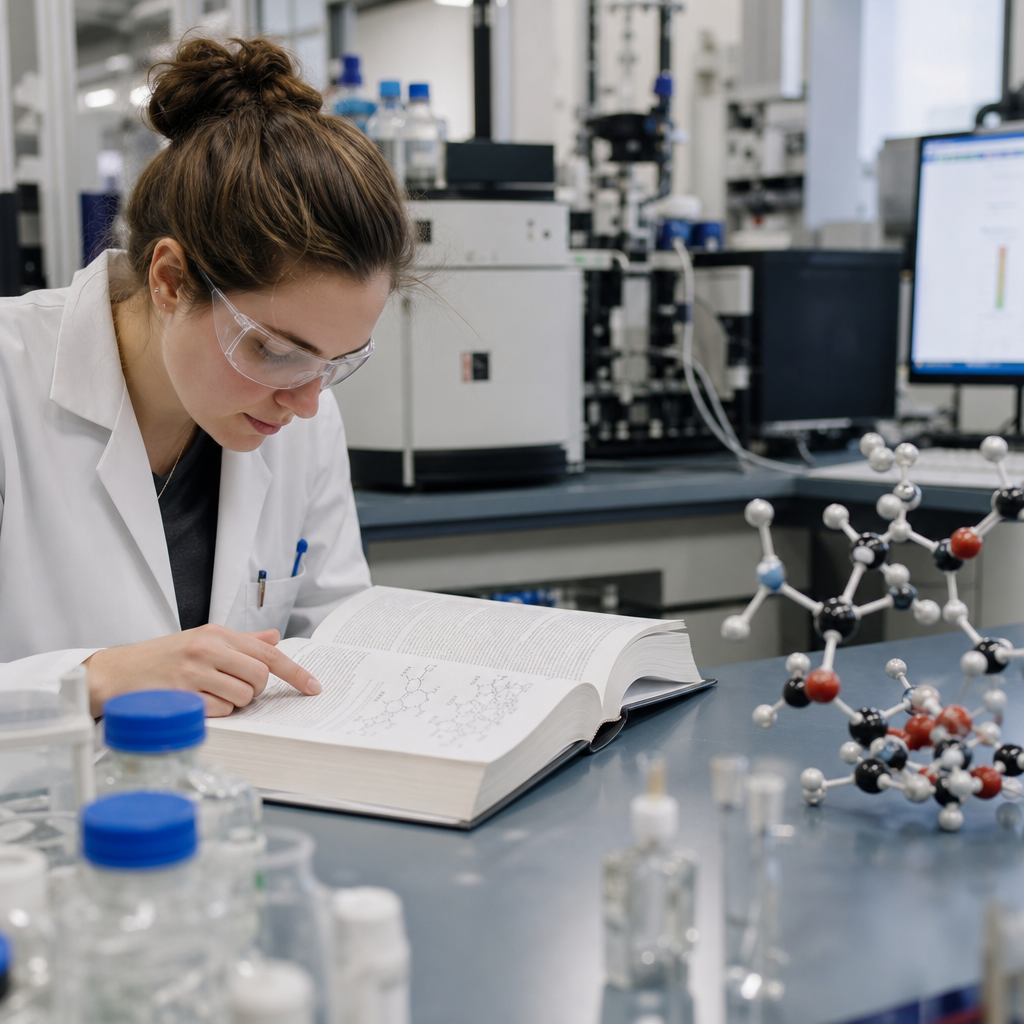
When researchers ask what software is best for polymer science, they usually mean modeling and simulation first. The answer depends on scale. For atomistic structure building, amorphous cell generation, force-field assignment, and integrated workflows, BIOVIA Materials Studio remains one of the most widely used commercial environments in polymer labs. Its strength is not that every underlying method is unmatched, but that it lowers friction. Building copolymers, assigning COMPASS or PCFF force fields, relaxing structures, and launching molecular dynamics can be done in one interface. That matters for teaching labs and multidisciplinary teams where not every user is comfortable scripting from scratch.
For high-performance molecular dynamics, LAMMPS is a standard because it is flexible, well validated, and deeply adopted in soft matter and polymer physics. Research groups use it for bead-spring models, coarse-grained melts, deformation studies, crystallization, diffusion, interfacial behavior, and reactive simulations when paired with suitable force fields. Its learning curve is real, but the payoff is scale and control. If a paper reports nonequilibrium shear behavior in entangled polymer melts or coarse-grained self-assembly in block copolymers, there is a good chance LAMMPS sits somewhere in that workflow. GROMACS is also important, especially when polymer research overlaps with biomaterials, solvated systems, or all-atom simulations where speed on CPUs and GPUs matters. HOOMD-blue is another strong option for GPU-accelerated soft matter simulations, particularly in colloidal and coarse-grained polymer studies.
Quantum chemistry packages matter when polymer scientists study monomer reactivity, catalyst interactions, oligomer conformations, charge transfer, or spectroscopic assignment. Gaussian has long been entrenched in academic chemistry, while ORCA has gained major traction because it is powerful, actively developed, and accessible for many academic users. These tools are rarely used to model full industrial molecular weight distributions directly; instead, researchers study representative oligomers, repeat units, transition states, and local interactions. For example, a lab developing conjugated polymers for organic electronics may use density functional theory to estimate HOMO-LUMO levels and torsional barriers, then feed those insights into larger-scale morphology simulations and experimental design.
Mesoscale and continuum methods fill the gap between atoms and macroscopic parts. Dissipative particle dynamics, phase-field methods, and finite element analysis become essential when studying block copolymer microphase separation, polymer blend morphology, curing stresses, or mechanical performance in processed parts. COMSOL Multiphysics is frequently used for transport, electrochemical, thermal, and coupled phenomena problems, including ion conduction in polymer electrolytes or diffusion through barrier films. Abaqus is a leading choice when constitutive models and structural mechanics dominate, such as simulating viscoelastic response, large deformation, or failure in polymer components. In industrial settings, these tools often connect directly to process decisions, not just publications.
Data analysis, scripting, and reproducible polymer workflows
Even the best simulation or instrument platform fails if data analysis is weak. In modern polymer science, Python is the default analysis language because it combines readability, a strong scientific ecosystem, and straightforward automation. NumPy handles numerical arrays, pandas organizes chromatography or rheology datasets, SciPy supports fitting and statistics, Matplotlib and Seaborn generate publication-quality figures, and Jupyter notebooks make workflows transparent for students and collaborators. In my experience, a polymer lab becomes dramatically more efficient once routine tasks such as gel permeation chromatography calibration, differential scanning calorimetry peak integration, tensile test averaging, or molecular dynamics trajectory parsing are scripted rather than repeated manually.
MATLAB still has a strong place in academia, particularly in engineering departments and legacy codebases for viscoelastic modeling, signal processing, and control. OriginPro remains common for quick plotting and nonlinear fitting because many scientists learned it early and trust its interface. The limitation is reproducibility. Point-and-click graphs are fast, but they are hard to audit six months later. That is why the best labs often use vendor software or Origin for rapid inspection, then move final analysis into scripted environments. R is less dominant than Python in polymer research, yet it is valuable for advanced statistics, experimental design, and multivariate analysis when materials informatics projects involve larger datasets.
Version control deserves more attention than it receives. Git and platforms such as GitHub or GitLab are not only for software developers. They are effective for managing analysis scripts, simulation inputs, manuscript figures, and lab documentation. When multiple graduate students edit force-field files, notebook analyses, or machine-learning preprocessing steps, version control prevents silent errors and lost work. Pair that with clear folder conventions and metadata files, and a lab gains something more important than convenience: traceability. In fields where slight changes in fitting windows or equilibration criteria can alter reported conclusions, traceability is a quality standard.
| Research need | Leading software | Best use case | Main limitation |
|---|---|---|---|
| Atomistic polymer modeling | Materials Studio, GROMACS | Structure building, force-field workflows, solvated systems | Commercial cost or setup complexity |
| Large-scale molecular dynamics | LAMMPS, HOOMD-blue | Coarse-grained melts, deformation, self-assembly | Requires scripting and validation expertise |
| Quantum chemistry | Gaussian, ORCA | Monomer reactivity, oligomer energetics, spectra | Too expensive computationally for full polymer ensembles |
| Multiphysics and mechanics | COMSOL, Abaqus | Transport, viscoelasticity, structural response | Model accuracy depends on input constitutive data |
| Analysis and automation | Python, MATLAB, OriginPro | Data cleaning, fitting, plotting, reproducibility | Mixed workflows can fragment records if unmanaged |
Software for polymer characterization instruments and laboratory data
Polymer characterization generates diverse file formats, and software choices are often constrained by instrument vendors. For chromatography, gel permeation chromatography and size exclusion chromatography systems commonly rely on Waters Empower, Agilent OpenLab, or Malvern and OMNISEC ecosystems, depending on detectors and hardware. These packages handle calibration, dn/dc inputs, light scattering integration, and routine reporting. Yet serious research rarely ends inside vendor outputs. Polymer scientists usually export molecular weight distributions, intrinsic viscosity traces, or detector signals into Excel, Origin, or Python for cross-sample comparison, custom normalization, and publication graphics.
Thermal analysis follows a similar pattern. TA Instruments TRIOS and Netzsch Proteus dominate many differential scanning calorimetry, thermogravimetric analysis, and dynamic mechanical analysis labs. They are strong for acquisition and standard calculations such as glass transition temperature determination, onset detection, frequency sweeps, and modulus extraction. The problem appears when a project involves dozens of formulations, aging intervals, or processing conditions. At that point, manual report generation becomes a bottleneck. Automated export pipelines and scripted post-processing become essential. I have watched labs reduce a week of repetitive DSC comparison work to an afternoon by standardizing file names and processing transitions in a notebook.
For spectroscopy, Bruker OPUS, Thermo OMNIC, MestReNova, and similar packages remain entrenched for FTIR, Raman, and NMR workflows. MestReNova is especially useful in polymer chemistry because it handles routine NMR processing cleanly and supports structure assignment, which is critical when confirming copolymer composition, end-group fidelity, or post-polymerization modification. Scattering and microscopy data add another layer. SAXS, WAXS, AFM, SEM, and TEM often come with specialized analysis packages, but many researchers ultimately rely on ImageJ, Fiji, GSAS-II, SASView, or custom Python scripts to obtain domain spacing, particle size, orientation, or crystallinity metrics consistently across datasets.
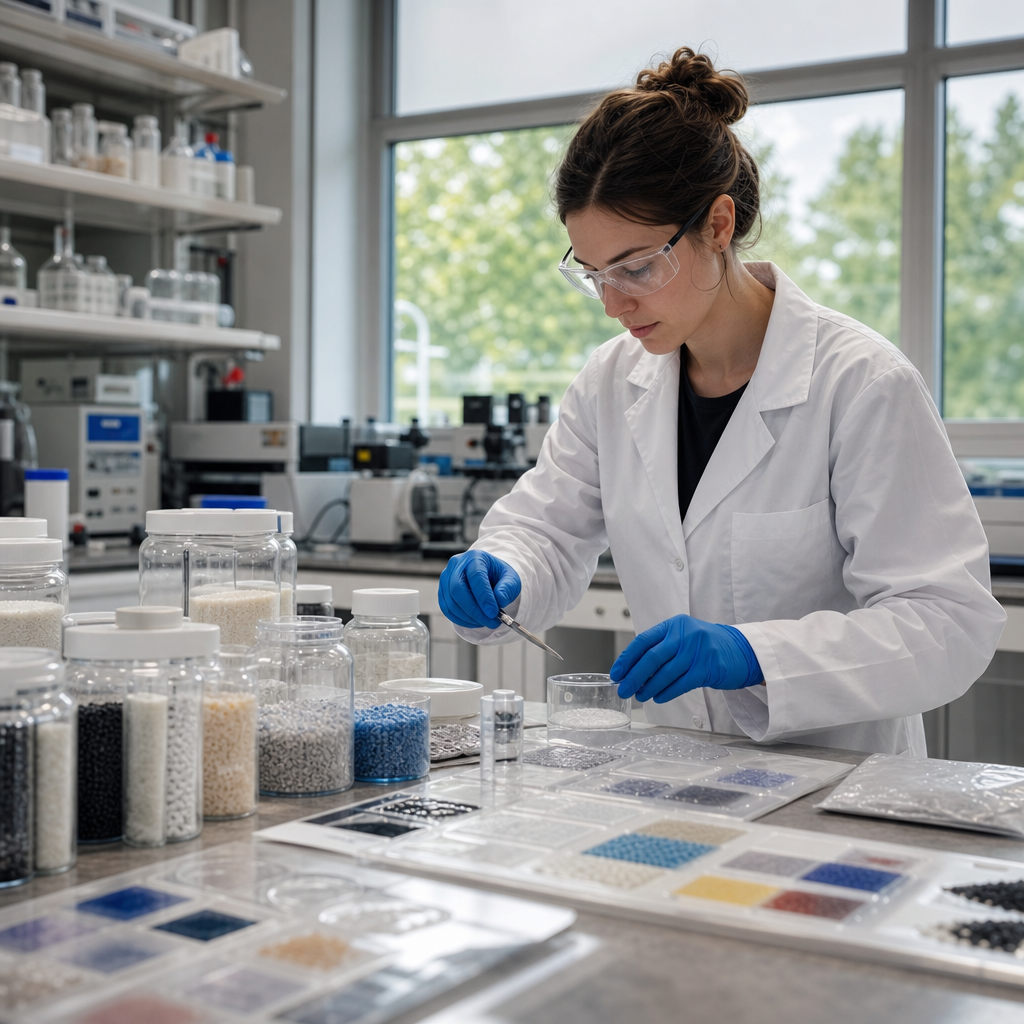
A laboratory information management system can be transformative in polymer programs with high sample throughput. Benchling, LabVantage, and other electronic lab notebook or LIMS platforms are more common in regulated or industrial settings, but academic centers are starting to adopt them for sample registration, reaction tracking, and instrument booking. This is especially valuable when polymers are identified by coded formulations rather than simple compound names. A spreadsheet may work for twenty samples; it breaks down when a project reaches hundreds of blends, copolymers, or aging conditions.
Materials informatics, databases, and software for discovery
Materials informatics is becoming central to polymer science because formulation spaces are too large for intuition alone. Software in this category includes machine-learning libraries, descriptor-generation tools, curated databases, and active-learning frameworks that guide what experiment to run next. Python again anchors much of the work through scikit-learn, XGBoost, PyTorch, and TensorFlow. For descriptor generation and cheminformatics, RDKit is widely used, though polymers require care because repeat-unit representations can oversimplify architecture, tacticity, branching, and polydispersity. Good polymer informatics does not treat a polymer as a small molecule with longer bonds; it represents uncertainty and distribution explicitly.
Established resources are improving. The Polymer Genome project is a recognized example of a platform linking polymer chemistry to predicted properties through data-driven models. The Materials Project, NOMAD, and related materials data infrastructures are more focused on inorganic systems, yet their standards around metadata, interoperability, and reproducibility are instructive for polymer research. In industrial R&D, bespoke internal databases often remain more useful than public datasets because they contain formulation history, processing conditions, and failed experiments. That last category is valuable. Negative data teaches models where not to search, which saves months of trial and error.
The practical use case for discovery software is decision support. Suppose a team is screening membrane polymers for gas separation. Instead of synthesizing every candidate, they can combine literature-derived permeability data, calculated free-volume descriptors, and molecular simulations to rank candidates before lab work begins. In battery research, polymer electrolyte teams increasingly combine impedance datasets, molecular descriptors, and composition-processing records to identify chemistries that balance conductivity, modulus, and oxidative stability. Software does not replace domain judgment here; it narrows the search space and exposes patterns humans miss.
Choosing the best polymer research software for your lab or classroom
The best polymer science software stack is the one that matches research questions, team skills, and budget while keeping data portable. Start with the primary tasks. A synthesis-heavy lab focused on characterization may need robust instrument software, MestReNova, OriginPro, and Python long before it needs expensive finite element tools. A computational soft matter group may prioritize LAMMPS, GROMACS, HPC access, and visualization tools such as VMD or OVITO. An engineering program studying viscoelastic components may gain more from Abaqus, MATLAB, and DMA data pipelines than from quantum chemistry packages.
Licensing model matters. Commercial suites offer support, validation, and integrated interfaces, which are valuable for training and regulated environments. Open-source tools offer flexibility, transparency, and lower cost, but they require internal expertise. The strongest labs often blend both. They use vendor or commercial interfaces where hardware integration or teaching accessibility matters, and open-source environments where scale, automation, or customization are critical. Validation should be nonnegotiable. Before adopting any package for publishable results, test it on a benchmark problem with known behavior, such as polyethylene density trends, canonical glass transition analysis, or a literature rheology dataset.
For educational resources, software selection should also teach scientific habits. Students should learn not only where to click, but how assumptions enter a model, how file provenance is maintained, how uncertainty is reported, and why two packages can disagree. If this article is your starting point, use it as a hub: map your work to modeling, analysis, characterization, and discovery, then build a software stack that covers each stage without trapping data in silos. The payoff is faster iteration, stronger papers, and research that other scientists can trust and extend. Review your current toolkit, identify the gaps, and choose one workflow to improve this semester.
Frequently Asked Questions
1. What types of software are most important in polymer science research?
The most important software in polymer science research usually falls into several core categories, because polymer work rarely depends on just one digital tool. Molecular modeling and simulation software is essential for understanding chain conformation, packing, diffusion, crystallization behavior, interfacial interactions, and structure-property relationships at atomistic or coarse-grained scales. These platforms are often used when researchers want to predict how a polymer backbone, side-chain architecture, copolymer composition, or crosslink density may affect mechanical, thermal, dielectric, or transport properties before extensive lab work begins.
Data analysis software is equally critical. Polymer researchers routinely process results from spectroscopy, chromatography, thermal analysis, rheology, microscopy, scattering, and mechanical testing. That means they need robust tools for curve fitting, baseline correction, peak deconvolution, molecular weight distribution analysis, viscoelastic modeling, kinetics extraction, and statistical comparison across formulations. In many labs, this category includes both instrument-specific software and broader scientific computing environments used to combine datasets from multiple techniques into a single interpretation.
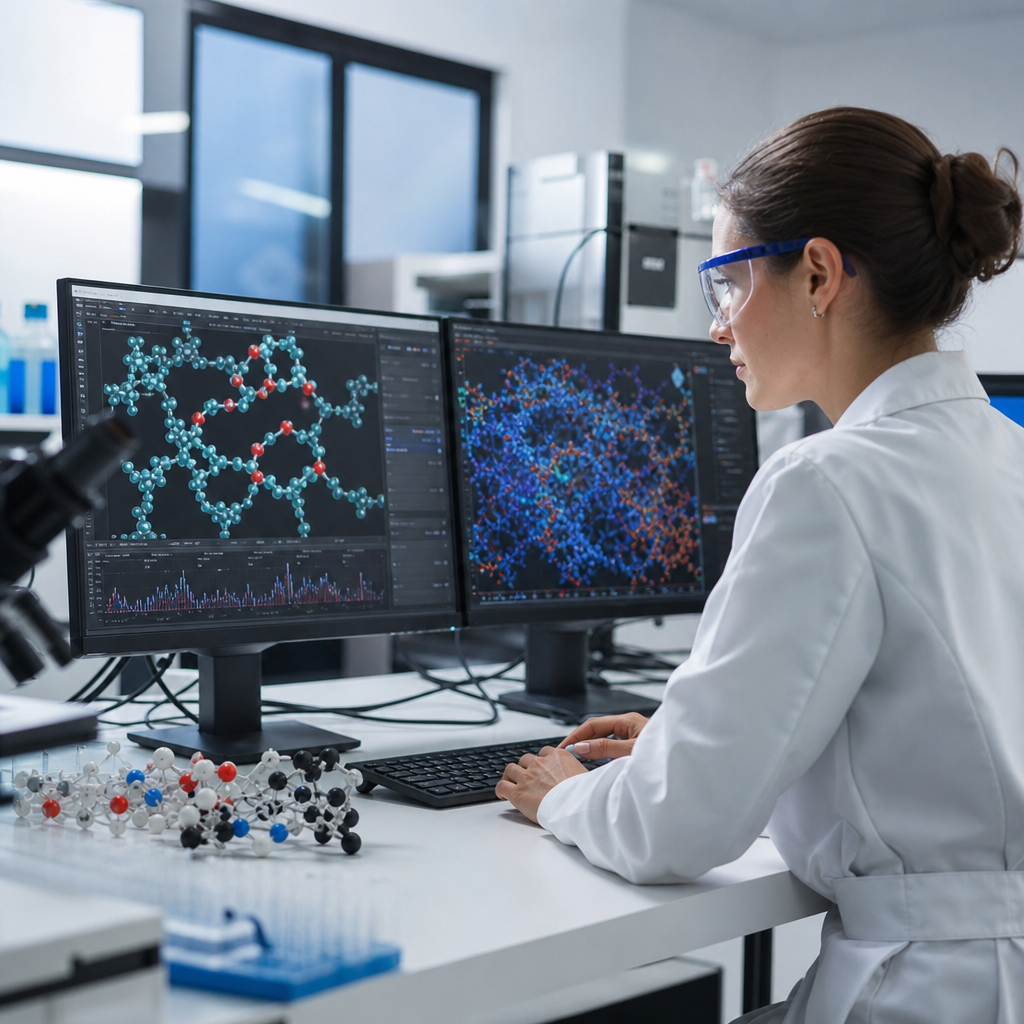
Visualization tools also play a major role, especially when communicating complex polymer structures and behaviors. Researchers may need to visualize amorphous versus semicrystalline morphology, domain separation in block copolymers, ion pathways in polymer electrolytes, entanglement behavior, or simulation trajectories over time. Good visualization software turns abstract numerical results into interpretable images and helps teams make faster decisions.
Finally, workflow, documentation, and reproducibility tools matter more than many people expect. Polymer science often involves long experimental timelines, many sample variants, and iterative synthesis-characterization-modeling cycles. Software for electronic lab notebooks, version-controlled scripts, database management, and collaborative analysis can dramatically improve research quality. In practice, the “top” software stack in polymer science is usually not one product but a combination of modeling, analysis, visualization, and research-management tools selected to fit a lab’s specific materials systems and goals.
2. How do researchers choose the best software for polymer modeling and simulation?
Choosing the best software for polymer modeling and simulation starts with defining the scientific question, because different tools are optimized for very different length scales, time scales, and types of polymer behavior. If a team is studying local chain geometry, torsional energetics, hydrogen bonding, or short-range interactions in a new thermoplastic elastomer, atomistic simulation tools may be appropriate. If the goal is to examine large-scale morphology, long-time diffusion, entanglement effects, or self-assembly in block copolymers, coarse-grained or mesoscale approaches may be more practical. The right choice depends on whether the research question is fundamentally chemical, structural, dynamical, or process-oriented.
Researchers also need to evaluate force fields, polymer-building capabilities, and support for the kinds of systems they actually study. A platform that works well for small molecules may not be ideal for long-chain macromolecules, branched architectures, polyelectrolytes, or crosslinked networks. For example, a lab working on solid polymer electrolytes will care about ion coordination, transport mechanisms, dielectric environment, and coupled segmental motion, while a team focused on polyethylene branching may prioritize chain topology generation, crystallization behavior, and molecular weight effects. Software that cannot represent the relevant chemistry or physics will limit the usefulness of the results no matter how polished the interface is.
Usability and computational cost are just as important as scientific capability. Some packages offer extensive flexibility but require strong scripting skills, careful parameterization, and access to high-performance computing resources. Others are more user-friendly and may be better for teaching, rapid prototyping, or multidisciplinary teams that include experimentalists who are not full-time computational specialists. Many successful polymer groups balance convenience and rigor by using easier tools for structure building and initial screening, then more advanced engines for production simulations and validation.
Finally, the best choice often comes down to ecosystem and reproducibility. Researchers should look for software with strong documentation, active community support, transparent methods, exportable data formats, and compatibility with downstream analysis tools. A platform is more valuable when it fits into a broader workflow that includes simulation setup, trajectory analysis, visualization, and publication-quality reporting. In polymer science, software selection is less about finding a universally “best” program and more about assembling the right toolchain for the material class, scale of interest, and research objectives.
3. Why is data analysis software so important for polymer characterization?
Data analysis software is central to polymer characterization because raw instrument output rarely answers the scientific question on its own. Polymer systems are structurally complex, often polydisperse, and frequently sensitive to processing history, composition, and morphology. A single material may be characterized by FTIR, NMR, DSC, TGA, DMA, rheology, GPC/SEC, XRD, SAXS, microscopy, and electrochemical techniques, with each method producing different data structures and different sources of uncertainty. Without strong analysis software, researchers can collect large amounts of data but still struggle to extract reliable insight.
One reason this software matters so much is that polymer interpretation often depends on fitting and comparison rather than simple direct measurement. Molecular weight distributions may need calibration and integration. Rheological data may need time-temperature superposition, model fitting, or conversion to relaxation spectra. Thermal transitions may require baseline correction and careful assignment. Spectroscopic peaks may overlap, especially in copolymers, blends, functionalized materials, or partially reacted systems. In these situations, software determines how accurately a researcher quantifies branching, crystallinity, conversion, crosslinking, degradation, ionic conductivity trends, or structure-property relationships.
Another key factor is correlation across techniques. Polymer science becomes much more powerful when researchers can connect chemistry, morphology, and performance. For example, a team developing a new solid polymer electrolyte may want to relate NMR evidence of segmental dynamics to impedance-derived conductivity, DSC-measured glass transition, and simulation-based ion coordination structure. A group studying chain branching in polyethylene may compare chromatographic distributions, rheological signatures, and scattering results. Good analysis software makes these cross-technique comparisons faster, more rigorous, and more reproducible.
It also supports better decision-making in research and development. Instead of relying on qualitative impressions, teams can identify trends quantitatively, flag outliers, automate repetitive processing steps, and document exactly how conclusions were reached. That is especially valuable in industrial polymer development, high-throughput experimentation, and collaborative academic projects where consistency matters. In short, analysis software is not just a convenience in polymer characterization; it is one of the main ways raw measurements are turned into defensible scientific understanding.
4. Can general scientific software work for polymer research, or is specialized polymer software necessary?
General scientific software can absolutely play a major role in polymer research, and in many labs it forms the backbone of daily analysis. Broad platforms for numerical computing, statistics, plotting, scripting, and data management are extremely useful for handling rheology datasets, fitting kinetic models, processing spectroscopy results, comparing mechanical tests, and automating repetitive workflows. These tools are often flexible, well supported, and ideal for custom pipelines, especially when a research group needs to combine outputs from multiple instruments or adapt methods to unusual polymer systems.
That said, specialized polymer software becomes necessary when the problem requires domain-specific models, representations, or workflows that general-purpose tools do not provide out of the box. Polymer systems introduce challenges such as chain architecture generation, polydispersity handling, entanglement-aware simulation, crystallinity analysis, sequence distribution interpretation, and viscoelastic modeling rooted in polymer physics. Specialized programs may include built-in support for molecular weight distribution analysis, polymer chain builders, mesoscale morphology prediction, dielectric or transport modeling, and interpretation frameworks tailored to macromolecular behavior. These features can save substantial time and improve accuracy.
In practice, the strongest research environments use both. A specialized polymer package may be used to generate structures, run simulations, or analyze SEC distributions, while general scientific software is used to clean data, perform custom statistical analysis, create publication-ready figures, and integrate results from experiments and modeling. This hybrid approach gives researchers the benefit of polymer-specific functionality without losing the flexibility needed for novel projects and interdisciplinary work.
The decision should therefore be based on the complexity of the research question. For undergraduate teaching, exploratory analysis, and many routine tasks, general scientific software may be entirely sufficient. For advanced materials design, multiscale simulation, or detailed interpretation of branching, self-assembly, conductivity, or nonlinear rheology, specialized polymer tools often become indispensable. The most effective strategy is usually not choosing one category over the other, but understanding where each adds the most value.
5. What should labs look for when building a software workflow for polymer science research?
When building a software workflow for polymer science research, labs should focus first on continuity from experiment or simulation to interpretation. A good workflow should make it easy to move from raw data acquisition to cleaned datasets, quantitative analysis, visualization, and final reporting without unnecessary manual reformatting or loss of metadata. Polymer projects often involve many iterations, such as synthesis changes followed by repeated characterization and model updates, so disconnected software systems can quickly create bottlenecks. Labs benefit from choosing tools that exchange data reliably and support standardized file organization.
Reproducibility should be a top priority. In polymer science, subtle differences in sample history,