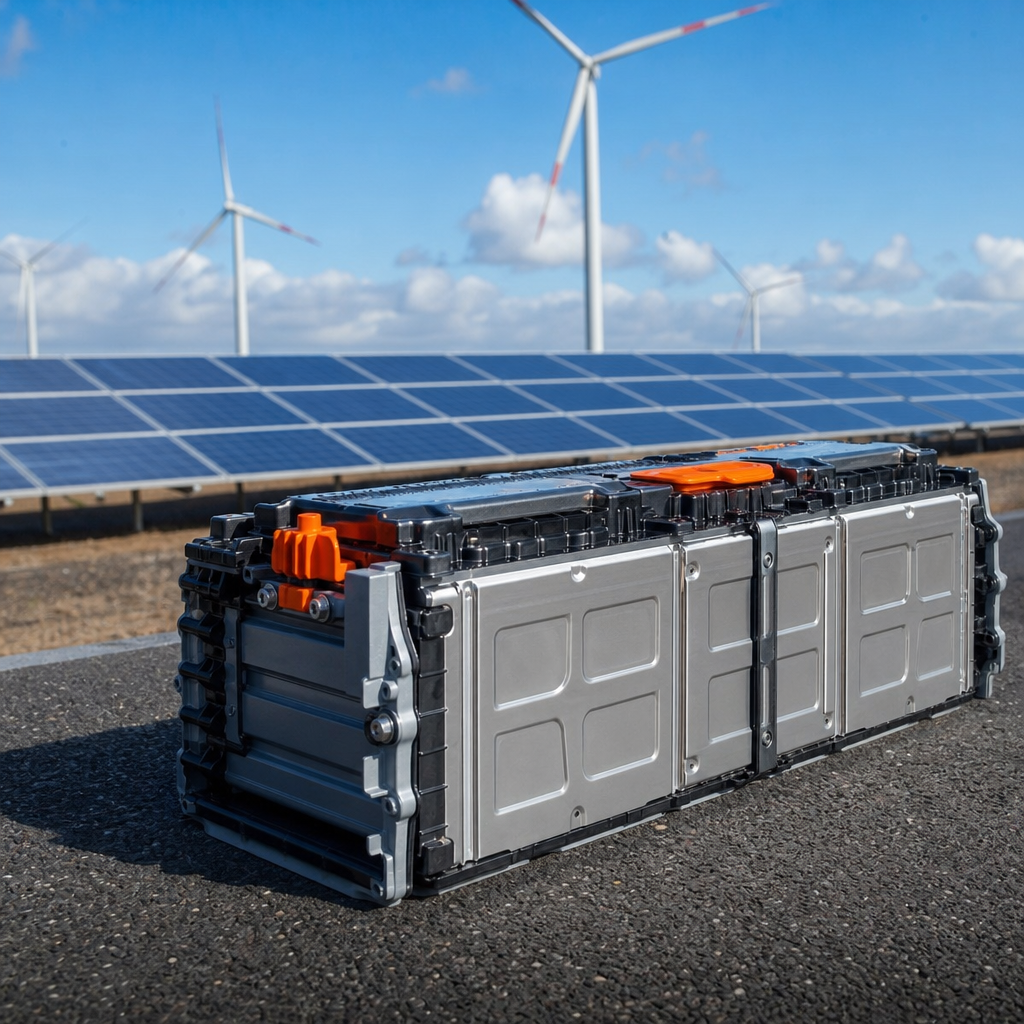
High-performance polymers are reshaping energy storage by solving a problem battery engineers, grid designers, and device manufacturers face every day: conventional materials often fail under heat, voltage, chemical exposure, or repeated cycling. In this context, high-performance polymers are advanced plastic materials engineered for exceptional thermal stability, mechanical strength, dielectric behavior, chemical resistance, and long service life. They include families such as polyimides, polyether ether ketone, polysulfones, fluoropolymers, aramids, and specialized polymer electrolytes. I have worked with teams selecting separator coatings, cell housing components, and dielectric films, and the pattern is consistent: when performance limits rise, polymer choice becomes a strategic design decision, not a procurement afterthought. These materials matter because energy storage systems now operate across harsher conditions, from fast-charging electric vehicles to utility-scale batteries cycling daily with renewable power.
Energy storage is no longer only about packing more energy into a smaller space. It is equally about safety, cycle life, manufacturability, and total cost of ownership. A battery pack can contain excellent active materials and still underperform if its separator shrinks at elevated temperature, if insulation degrades under voltage stress, or if moisture ingress attacks sensitive chemistries. High-performance polymers improve these weak points. They appear in separators, binders, solid electrolytes, thermal interface layers, busbar insulation, flexible circuit substrates, capacitor films, seals, gaskets, and structural enclosures. In supercapacitors, they help maintain dielectric reliability and ion transport. In hydrogen-adjacent storage systems and flow batteries, they provide chemical compatibility and membrane selectivity. For manufacturers building next-generation products, these polymers are becoming foundational materials that connect electrochemistry with durable system engineering.
The reason this topic deserves a hub page is simple: high-performance polymers are not one material and not one use case. Their value depends on where they sit in the storage system and which failure mode they are preventing. A polymer that excels as a high-temperature separator coating may not be ideal as a structural enclosure. A fluoropolymer with outstanding chemical resistance may be expensive or difficult to bond. A polymer electrolyte can simplify cell design while introducing conductivity tradeoffs. Understanding the field requires looking at performance properties, application areas, manufacturing methods, and commercial constraints together. That broader view helps engineers, procurement teams, product managers, and sustainability leaders make better decisions. It also helps readers navigate related topics such as battery safety materials, lightweighting, dielectric films, thermal management, and advanced composites within the larger innovative products and solutions landscape.
What high-performance polymers do inside energy storage systems
High-performance polymers improve energy storage systems by performing four critical functions: insulation, separation, containment, and ion transport. In lithium-ion batteries, polymer separators keep the anode and cathode apart while allowing lithium ions to pass through the electrolyte. Polyethylene and polypropylene dominate standard separators, but advanced systems increasingly use ceramic-coated and high-temperature polymer structures to reduce shrinkage and improve puncture resistance. Polyimides, aramids, and fluorinated polymers are often introduced where higher thermal endurance or better wetting behavior is required. In practical testing, separator dimensional stability at elevated temperatures can be the difference between controlled shutdown and thermal runaway propagation.
Polymers also act as binders and coatings that stabilize electrodes. Polyvinylidene fluoride remains widely used as a cathode binder because it offers strong adhesion and electrochemical stability, while water-processable options such as styrene-butadiene rubber and carboxymethyl cellulose are common on graphite anodes. As silicon-rich anodes expand and contract, more advanced elastic polymer binders are being adopted to maintain contact and reduce particle isolation. In my experience, binder selection is frequently undervalued early in development, yet it strongly influences cycle life, swelling behavior, and line yield during coating and drying.
Containment is another major function. Battery modules depend on polymeric films, gaskets, potting compounds, vent components, and electrically insulating barriers to survive vibration, impact, and electrolyte exposure. High-performance polymers such as PEEK, PPS, PEI, and specialty polyamides are selected for connectors, carriers, and precision parts because they retain mechanical properties under temperature and chemical stress. In grid storage, where batteries may cycle in hot outdoor enclosures for years, resistance to humidity, flame, and creep becomes as important as initial tensile strength. That is why material data sheets alone are not enough; long-duration aging under representative conditions matters.
Finally, some polymers directly enable new architectures through solid or gel electrolytes. Polyethylene oxide, polyacrylonitrile, polymethacrylates, and block copolymer systems can host lithium salts and create safer, leak-resistant ion-conducting phases. These materials have not replaced liquid electrolytes at scale, largely because room-temperature ionic conductivity and interfacial resistance remain challenges. Still, they are central to solid-state battery research because they can improve manufacturability and suppress leakage while supporting thin-film designs. As a result, polymers are not peripheral to energy storage innovation; they sit at the center of reliability and next-generation performance.
Key polymer families and the properties that matter most
Different high-performance polymers solve different engineering problems, so material selection starts with properties, not brand names. Thermal stability is often first. Polyimides can tolerate high continuous-use temperatures and are widely used in insulating films and high-temperature separators. PEEK offers excellent mechanical strength, wear resistance, and chemical durability, making it valuable for precision components and demanding structural parts. PPS combines dimensional stability with flame resistance and processability, which is useful for electrical housings and battery pack hardware. Fluoropolymers, including PVDF and PTFE, provide outstanding chemical resistance and dielectric properties, supporting binders, membranes, wire insulation, and seals.
Dielectric performance is crucial in capacitors and high-voltage battery packs. Films based on polypropylene have long been standard in many capacitor applications, but higher temperature environments drive interest in polymers that maintain dielectric strength and low loss under thermal stress. Polyimide films and fluorinated materials are often evaluated where compact designs and harsh operating conditions intersect. Mechanical performance matters just as much. Separators and insulating parts must resist puncture, creep, and fatigue. Aramid-based materials are known for strength and thermal resilience, which is why they appear in reinforced separators and protective barriers.
Chemical compatibility is another decisive factor. Electrolytes containing lithium hexafluorophosphate, carbonate solvents, or emerging salts can attack susceptible materials over time. In redox flow batteries, membranes and seals may face bromine, vanadium electrolytes, or strongly acidic environments. The wrong polymer can swell, embrittle, leach additives, or lose adhesion. The right one extends service life and reduces maintenance. Engineers therefore rely on a combination of standards-based testing, supplier chemical resistance charts, and application-specific validation rather than generic assumptions.
| Polymer family | Key strengths | Typical energy storage uses | Main limitation |
|---|---|---|---|
| Polyimides | High thermal stability, strong dielectric performance | Insulating films, separator substrates, flexible circuits | Higher cost than commodity polymers |
| PEEK | Mechanical strength, chemical resistance, dimensional stability | Connectors, structural parts, insulation components | Processing cost and premium pricing |
| PVDF and other fluoropolymers | Chemical resistance, electrochemical stability, binder performance | Electrode binders, membranes, wire coatings, seals | Environmental scrutiny and recycling complexity |
| Aramids | Strength, puncture resistance, heat tolerance | Separator reinforcement, barriers, protective layers | More complex conversion into some part geometries |
| Polymer electrolytes | Safety potential, design flexibility, leak reduction | Solid-state and gel electrolyte systems | Lower ionic conductivity at room temperature |
Processing behavior must also be considered. A polymer with ideal laboratory properties may be difficult to extrude into thin films, may absorb too much moisture before molding, or may require narrow thermal windows during lamination. For commercial deployment, manufacturability is inseparable from performance. The best materials teams evaluate melt behavior, solvent compatibility, coating rheology, and joining methods as early as possible, because a polymer that cannot be scaled consistently will not improve energy storage economics.
How these materials improve batteries, supercapacitors, and grid storage
In lithium-ion batteries, high-performance polymers improve safety and cycle life most visibly through separators, binders, and pack-level insulation. Shutdown separators are designed so pores close at elevated temperature, slowing ion flow before catastrophic failure. More advanced multilayer structures and coated separators raise puncture resistance and thermal integrity. In electric vehicles, this helps prevent internal short circuits during abuse events such as overcharge, crush, or localized overheating. At the pack level, polymeric barriers and flame-retardant insulators delay thermal propagation between cells, buying time for detection and intervention systems.
For fast-charging batteries, polymers support durability in less obvious ways. Higher charging rates increase lithium plating risk, electrode stress, and localized heat generation. Elastic or functional binders can keep active particles electrically connected under repeated expansion and contraction, especially in silicon-containing anodes. Stable insulating films around tabs, busbars, and module interfaces also become more important as voltage architectures move upward. Systems shifting toward 800-volt platforms place heavier demands on dielectric strength, partial discharge resistance, and long-term insulation reliability.
Supercapacitors also benefit from advanced polymers. These devices excel at rapid charge and discharge, but they still require separators with controlled porosity, electrolyte compatibility, and mechanical robustness. Polymer films and porous membranes help maintain low internal resistance while preventing shorts. In hybrid capacitor designs, polymer binders and coatings influence electrode adhesion and cycle stability. Because supercapacitors often serve in power buffering, regenerative braking, and industrial backup, long service life under repeated cycling is a primary requirement, and durable polymer components directly support that outcome.
In stationary energy storage, the operating context expands. Containers and cabinets can face desert heat, coastal humidity, or cold starts. Fire performance, UV resistance, ingress protection, and long-term creep become procurement-level concerns. High-performance polymers are used in cable management, cooling interfaces, sensor housings, venting components, dielectric barriers, and structural supports that must survive for ten to twenty years. Flow batteries add membrane considerations, where ion selectivity and chemical endurance determine efficiency and maintenance intervals. Across all these systems, the common benefit is not simply better material performance in isolation; it is a reduction in failure pathways that would otherwise erode safety, uptime, and warranty margins.
Design, manufacturing, and sustainability considerations
Selecting high-performance polymers for energy storage requires balancing technical gains against cost, manufacturability, compliance, and end-of-life realities. The first design question is always application-specific: what failure mode must the polymer prevent? If the issue is separator shrinkage, thermal dimensional stability and pore architecture dominate. If the issue is pack insulation at higher voltage, dielectric breakdown strength, comparative tracking resistance, and aging under humidity may matter more. Using premium polymers everywhere is rarely justified. The most effective programs place advanced materials only where they remove a known bottleneck or safety risk.
Manufacturing discipline is critical. Moisture-sensitive polymers can hydrolyze during processing and lose properties if drying protocols are ignored. Film orientation, coating uniformity, and lamination conditions affect pore structure, adhesion, and breakdown resistance. Injection-molded parts may show weld lines or anisotropy that reduce impact strength. In battery factories, even minor contamination from additives, fibers, or residual solvents can interfere with electrochemistry. That is why qualification plans typically combine thermal cycling, electrolyte soak tests, dielectric testing, flammability screening, and long-duration aging before a material is approved.
Regulatory and sustainability pressures are also changing material strategies. Fluorinated chemistries remain highly valuable in energy storage, but scrutiny around persistent substances is increasing in several jurisdictions. Manufacturers are responding by improving emissions controls, reducing solvent use, and researching alternative binders and membranes. Recyclability is another challenge. High-performance polymers often outlast the cells they protect, yet complex bonded assemblies can make separation difficult. Design for disassembly, material traceability, and simplified multilayer constructions will become more important as battery recycling scales globally.
Looking ahead, the biggest opportunities are in polymer electrolytes, multifunctional composites, and materials engineered for both electrical and thermal performance. As solid-state batteries mature, polymers that combine ion transport with interfacial stability could unlock safer, thinner cells. In structural battery concepts and lightweight packs, polymer composites may carry load while insulating and protecting sensitive components. Companies that understand these materials now will be better positioned to build safer, longer-lasting, and more manufacturable energy storage products. The next step is practical: map each storage application to its dominant failure modes, then evaluate where high-performance polymers deliver measurable value.
Frequently Asked Questions
1. What are high-performance polymers, and why do they matter in energy storage?
High-performance polymers are advanced engineered plastics designed to maintain their properties in demanding conditions such as high heat, electrical stress, chemical exposure, pressure, and repeated mechanical or electrochemical cycling. In energy storage systems, those conditions are common rather than exceptional. Batteries, supercapacitors, film capacitors, and grid-scale storage units all operate in environments where conventional materials can soften, crack, degrade, swell, lose insulation performance, or become chemically unstable over time. High-performance polymers help address those weaknesses by offering a combination of thermal stability, mechanical toughness, dielectric control, flame resistance, chemical durability, and long service life.
This matters because energy storage performance is not determined only by active materials such as lithium, graphite, or electrolyte chemistry. It also depends heavily on the supporting materials that separate electrodes, insulate components, bind particles together, encapsulate cells, manage heat, and preserve structural integrity. If those polymer-based components fail, the entire system can lose efficiency, suffer accelerated aging, or face serious safety risks. Materials such as polyimides, polyether ether ketone (PEEK), fluoropolymers, aramids, and other specialty polymer families are increasingly used because they can keep systems operating reliably at higher voltages, higher temperatures, and longer cycle lives. In practical terms, they enable safer batteries, more compact devices, more robust electric vehicle packs, and more dependable stationary storage for renewable energy integration.
2. How do high-performance polymers improve battery safety and thermal stability?
One of the most important contributions of high-performance polymers is their ability to reduce the likelihood of failure under heat and electrical stress. Batteries generate heat during charging, discharging, and fast cycling. If that heat is not contained or managed, materials inside the cell can deform, shrink, melt, or chemically break down. High-performance polymers are specifically valued because they can retain dimensional stability and insulating performance at temperatures where conventional polymers may begin to fail. This makes them especially useful in separators, insulation films, wire coatings, cell holders, thermal barriers, gaskets, and module-level protective components.
In addition to thermal endurance, these materials support safety through better chemical resistance and stronger mechanical performance. A separator or insulating layer must remain intact even after thousands of charge-discharge cycles, vibration, pressure changes, and exposure to aggressive electrolytes. If a separator tears or contracts excessively, electrodes can come into direct contact and create an internal short circuit. If insulating films lose dielectric strength, the risk of arcing or localized failure increases. High-performance polymers help prevent these events by resisting puncture, maintaining shape, and continuing to insulate under stress.
They also support thermal management strategies. Some are used as part of multilayer barriers, flame-retardant structures, or composite systems that slow heat propagation from one cell to another. That is critical in electric vehicles and large battery packs, where limiting thermal runaway propagation can reduce the severity of an incident. So while these polymers may not be the energy-storing material themselves, they play a central role in making modern energy storage systems more stable, safer, and better suited for real-world operating conditions.
3. Where are high-performance polymers used inside batteries and other energy storage devices?
High-performance polymers appear in far more places than many people realize. Inside batteries, they are commonly used in separators, binders, coatings, electrolyte-compatible membranes, insulating tapes, wire insulation, gaskets, seals, and cell packaging layers. Separators are especially important because they must physically keep the anode and cathode apart while still allowing ion transport. To do that reliably, the separator material needs excellent pore stability, chemical resistance, mechanical strength, and thermal behavior. Advanced polymer formulations are helping separators become thinner, safer, and more durable.
At the electrode level, polymers can function as binders that hold active particles together and keep them attached to current collectors through repeated expansion and contraction. This is a demanding job, particularly in next-generation chemistries where electrode materials may undergo greater volume change than in conventional lithium-ion designs. A better binder can improve cycle life, reduce cracking, and support more stable electrical pathways. Polymers are also used in solid-state and gel-polymer electrolyte systems, where they help create ion-conductive structures with improved safety compared with fully liquid electrolytes.
Beyond individual cells, these materials are vital at the pack and system level. They appear in busbar insulation, flexible circuit layers, module spacers, enclosure linings, adhesives, potting compounds, thermal interface structures, and protective housings. In supercapacitors and film capacitors, high-performance polymers can serve as dielectric films that must deliver consistent electrical behavior across a wide range of temperatures and voltages. In grid storage, they support long-term durability under outdoor exposure, humidity, mechanical shock, and continuous cycling. Their versatility is one reason they are becoming so important across nearly every segment of the energy storage market.
4. What advantages do high-performance polymers offer over conventional materials?
The main advantage is that they allow energy storage systems to operate more reliably under harsher conditions and for longer periods. Conventional polymers may be acceptable in low-stress applications, but advanced batteries and high-voltage systems demand more. High-performance polymers generally offer better heat resistance, stronger dielectric properties, lower flammability, improved mechanical integrity, and greater resistance to solvents, salts, and reactive environments. That means engineers can design systems that are thinner, lighter, more compact, and more powerful without compromising safety to the same extent.
Another major benefit is durability over time. Repeated cycling causes thermal expansion, contraction, vibration, pressure changes, and chemical exposure that slowly wear down internal materials. High-performance polymers are engineered to resist fatigue, creep, embrittlement, and chemical breakdown, which helps extend component life and preserve system performance. This can translate into longer-lasting electric vehicle batteries, more dependable consumer electronics, and lower maintenance demands in industrial and grid storage installations.
They can also improve manufacturability and design flexibility. Compared with metals or ceramics in certain roles, polymers can be easier to process into films, fibers, coatings, precision parts, or multilayer composites. That flexibility supports advanced cell architectures and lightweight construction. In many cases, engineers are not choosing polymers simply as substitutes for traditional materials; they are using them to enable designs that would otherwise be difficult, too heavy, or too failure-prone. The overall result is better energy density potential, stronger safety margins, improved efficiency, and a more practical path to scaling advanced storage technologies.
5. How are high-performance polymers shaping the future of energy storage technology?
High-performance polymers are becoming increasingly important as the industry moves toward faster charging, higher energy density, higher operating voltage, and longer service life. Each of those goals places more stress on internal materials. As next-generation batteries evolve, especially solid-state batteries, lithium-metal systems, sodium-ion designs, and advanced supercapacitors, the need for materials that can combine electrochemical compatibility with mechanical and thermal resilience becomes even more critical. Polymers are expected to help bridge that gap by serving as tailored separators, solid or gel electrolyte matrices, advanced binders, protective coatings, and lightweight structural components.
They are also helping energy storage scale into broader applications. Electric vehicles require lightweight, safe, vibration-resistant materials. Grid storage needs long-term reliability, weather resistance, and low maintenance. Aerospace and defense applications demand performance under extreme temperatures and high mechanical loads. Wearable and flexible electronics need bendable, thin, durable materials that still provide insulation and chemical stability. High-performance polymers can be tuned for these different needs, which makes them highly valuable in a market that is diversifying rapidly.
Looking ahead, one of the most promising trends is the development of multifunctional polymer systems. Instead of serving only as insulation or only as a binder, future polymers may combine several roles at once, such as structural support, flame resistance, ion transport assistance, and thermal management. Researchers are also exploring nanocomposites and reinforced polymer architectures that push performance even further. As a result, high-performance polymers are not just supporting energy storage innovation in the background. They are increasingly becoming one of the enabling material platforms that make safer, more efficient, and more durable energy storage possible.