High-performance polymers have become essential materials in telecommunications because they combine low signal loss, thermal stability, chemical resistance, and design flexibility in ways metals, commodity plastics, and ceramics often cannot. In network hardware, mobile infrastructure, data centers, fiber-optic systems, antennas, connectors, cable insulation, and printed circuit assemblies, these advanced polymers help engineers reduce weight, improve reliability, and support higher frequencies. When I have worked with materials teams on telecom product selection, the conversation rarely starts with polymer chemistry alone; it starts with performance targets such as dielectric constant, dissipation factor, flame resistance, moisture uptake, processing window, and long-term dimensional stability. High-performance polymers are a class of engineered resins that maintain critical mechanical, thermal, electrical, or chemical properties under demanding operating conditions. Common families include PEEK, PEI, PPS, LCP, PTFE, FEP, PFA, polyimides, and advanced fluoropolymers. Their importance is growing as 5G, fiber expansion, satellite communications, cloud computing, edge devices, and AI-driven network loads push telecom components to operate faster, hotter, smaller, and longer. This hub article explains the material landscape, the property requirements that matter most, the manufacturing methods shaping adoption, and the real tradeoffs engineers must evaluate when specifying high-performance polymers for telecommunications systems.
Why Telecommunications Demands Better Polymer Performance
Telecommunications equipment is no longer confined to benign indoor racks. It operates on towers, rooftops, under streets, in vehicles, in aircraft, in marine settings, and inside dense data halls where thermal loads are high and space is limited. These conditions make material selection a system-level decision. A polymer used in a 5G antenna radome must resist ultraviolet exposure, rain, salt spray, thermal cycling, and impact while remaining transparent to radio frequency signals. A connector housing for fiber equipment must hold tight tolerances, pass flammability standards such as UL 94, and survive repeated mating cycles without creep. Cable insulation in high-speed transmission lines must preserve impedance control and low attenuation over distance.
The technical drivers are specific. As frequencies move upward, dielectric constant and dissipation factor become more influential because they affect insertion loss, signal speed, and crosstalk. Moisture absorption matters because absorbed water changes electrical properties and can swell precision parts. Coefficient of thermal expansion matters because mismatches between polymers, copper, glass, and ceramics can stress solder joints or alter alignment. Telecom product designers also care about outgassing, ionic purity, arc resistance, and compliance with standards such as IPC, ASTM, IEC, and Telcordia requirements depending on application. In practice, the best telecom polymers are not simply strong or heat resistant; they are balanced materials engineered to preserve electrical performance while surviving manufacturing and field exposure.
Core High-Performance Polymers Used in Telecom Systems
Several polymer families dominate advanced telecommunications because each solves a different problem. Liquid crystal polymer, or LCP, is widely used in high-frequency connectors, antennas, and miniature electronic parts because it offers low dielectric loss, low moisture absorption, and excellent flow in thin-wall molding. Polyether ether ketone, or PEEK, is chosen when mechanical strength, wear resistance, and high temperature capability are critical, especially in demanding connector, insulator, and structural applications. Polyetherimide, often known by the SABIC brand Ultem, provides a strong combination of dimensional stability, flame resistance, and processability for precision housings and electrical components.
Polyphenylene sulfide, or PPS, is a workhorse for connectors and electronic assemblies because it withstands solder reflow, resists chemicals, and maintains dimensions well. Fluoropolymers such as PTFE, FEP, and PFA are central to coaxial cables, wire insulation, microwave components, and RF substrates due to their exceptionally low dielectric constants and high chemical inertness. Polyimides remain important in flexible circuits and insulation films where thermal endurance is essential. Engineers increasingly evaluate compounded and filled grades, including glass-filled, mineral-filled, carbon-filled, and ceramic-enhanced formulations, because additives can improve stiffness or thermal conductivity, though often at the cost of dielectric performance or process simplicity. No single polymer family is best for every telecom use case. Selection depends on frequency band, operating environment, assembly method, target cost, and expected service life.
Electrical Properties That Directly Affect Signal Integrity
For telecommunications applications, electrical properties are usually the first screening criteria. Dielectric constant, also called relative permittivity, affects how quickly signals propagate and how tightly fields are confined within a material. Lower dielectric constant generally helps reduce delay and supports high-speed signaling. Dissipation factor, or loss tangent, measures how much electromagnetic energy is lost as heat. Lower values are preferred for antennas, RF connectors, millimeter-wave components, and high-speed interconnects. Volume resistivity and surface resistivity are also important, particularly where insulation reliability must be maintained in humid or contaminated environments.
At frequencies used in modern telecom systems, material data must be interpreted carefully. Values measured at 1 megahertz may not predict performance at 28 gigahertz, 39 gigahertz, or higher millimeter-wave bands. That is why engineers rely on frequency-specific test data and often validate candidate materials with network analyzer measurements, insertion loss testing, and environmental aging. PTFE-based materials typically deliver some of the lowest dielectric loss available, which is why they remain strong choices for RF transmission. LCP has gained attention because it offers attractive high-frequency behavior together with scalable thermoplastic processing for compact consumer and infrastructure components. In real product development, I have seen teams reject mechanically excellent resins because a small increase in dielectric loss would have compromised antenna efficiency or link budget. In telecom, signal integrity is a material property as much as a circuit design outcome.
Thermal, Mechanical, and Environmental Reliability Requirements
Telecommunications hardware must deliver stable performance across years of temperature swings, vibration, contamination, and maintenance handling. Thermal performance starts with glass transition temperature, continuous use temperature, heat deflection temperature, and resistance to solder reflow or assembly heat. If a polymer softens, creeps, or warps under service conditions, alignment shifts and contact pressure drops can cause failures. Mechanical properties including tensile strength, modulus, elongation, impact resistance, and fatigue behavior determine whether thin clips, latches, housings, and supports survive installation and repeated service operations.
Environmental resistance is equally important. Outdoor telecom enclosures and antenna components face ultraviolet radiation, pollution, salt fog, and freeze-thaw cycles. Underground and industrial network installations may encounter oils, cleaning agents, fuels, and process chemicals. Low moisture absorption is especially valuable because it helps maintain electrical and dimensional stability. LCP and fluoropolymers are often favored where moisture control is critical, while PPS and PEEK excel in harsher thermal or chemical environments. Flame performance cannot be treated as an afterthought. Network equipment sold into regulated markets often requires materials that meet specific flammability ratings without compromising electrical behavior. The best material choices are therefore validated through accelerated aging, thermal cycling, mechanical testing, and standards-based qualification rather than relying on a single datasheet number.
Manufacturing Advances Expanding Telecom Applications
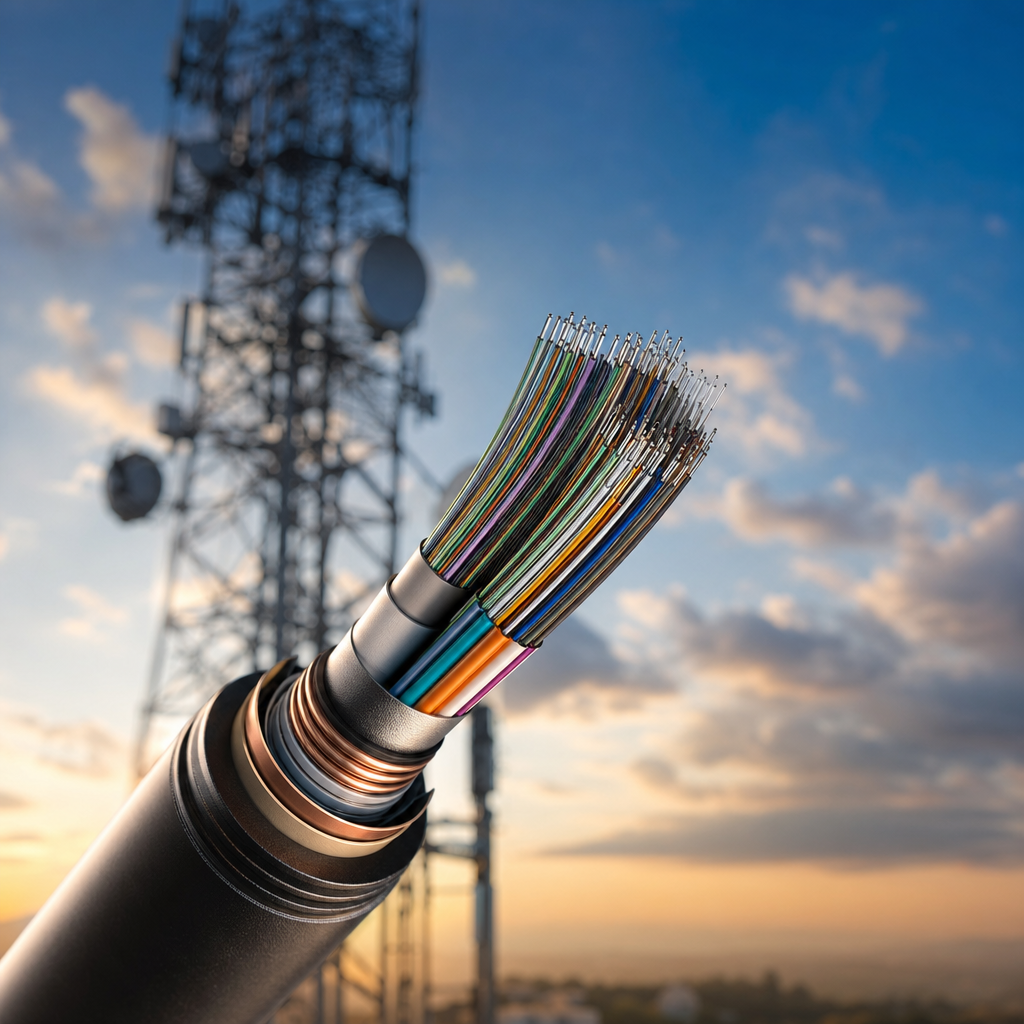
Material capability alone does not create adoption. Manufacturing compatibility determines whether a promising polymer can scale into telecom production. Injection molding remains the most common route for high-volume connectors, insulators, miniature housings, and antenna parts because it supports tight tolerances and repeatability. Advances in mold design, hot-runner control, and simulation software have made it easier to process demanding resins such as LCP, PPS, and PEI into thin-wall geometries. Extrusion is central for wire and cable insulation, jacketing, tubing, and fiber-buffer structures, especially when fluoropolymers are required for low-loss transmission and harsh-environment durability.
Additive manufacturing is also becoming more relevant, though it remains selective. High-performance polymer grades for 3D printing can accelerate prototyping of waveguide supports, tooling, custom fixtures, and low-volume components, but many printed materials still trail molded grades in dielectric consistency and surface finish. Film casting and laminating are important for flexible circuits and specialty substrates. Metallization processes, including electroless plating, sputtering, and printed conductive traces, enable polymer parts to serve as structural and functional telecom elements. One of the most significant recent shifts is the closer integration between material suppliers, molders, and OEM design teams. Instead of selecting a resin late in development, teams now co-optimize geometry, processing, filler content, and finishing methods early, which reduces failures linked to warpage, poor adhesion, or unstable RF performance.
Where These Polymers Are Used Across Telecom Infrastructure
High-performance polymers appear throughout the telecom value chain, from backbone networks to end-user devices. In fiber-optic systems, they are used in connector components, ferrule support structures, cable coatings, and protective housings where precision and low contamination are necessary. In radio access networks, they appear in radomes, antenna elements, cable insulations, gaskets, and low-loss interconnect assemblies. Data centers rely on advanced polymers in high-speed connectors, transceiver modules, cable management parts, fan systems, and thermal isolation components. Satellite and aerospace communications use them because reducing weight without sacrificing thermal or chemical resilience is a direct system benefit.
Consumer devices also contribute to demand. Smartphones, routers, wearables, and IoT gateways use miniature RF parts, flexible circuits, and compact antennas that increasingly depend on materials like LCP and polyimide. Automotive telecommunications, including vehicle connectivity, radar, V2X, and infotainment networks, adds another layer of requirements involving vibration resistance, elevated temperatures, and long validation cycles. The broad application map explains why this topic works well as a sub-pillar hub: each material family and end use can support its own detailed article, whether focused on RF connectors, cable insulation, flexible printed circuits, 5G antenna packaging, or flame-retardant polymers for network hardware.
Material Comparison for Common Telecommunications Needs
| Polymer | Key Strength in Telecom | Typical Uses | Main Limitation |
|---|---|---|---|
| LCP | Low moisture uptake and low dielectric loss | Antennas, miniature connectors, high-frequency parts | Can be anisotropic, affecting dimensional behavior |
| PTFE | Excellent dielectric performance | Coaxial cable insulation, RF substrates, microwave components | More difficult to process than standard thermoplastics |
| PPS | High temperature stability and chemical resistance | Connectors, electronic housings, solder-exposed parts | Electrical properties may not match premium RF materials |
| PEEK | Mechanical strength and harsh-environment durability | Structural insulators, specialty connectors, aerospace telecom parts | High cost |
| PEI | Dimensional stability and flame resistance | Precision housings, electrical supports, optical hardware | Not the lowest-loss option for very high frequencies |
Tradeoffs, Compliance, and How Engineers Choose the Right Polymer
Choosing a high-performance polymer for telecommunications is always an exercise in prioritization. The lowest-loss dielectric may be too expensive, too soft, or too difficult to process for the intended form factor. The toughest material may introduce too much signal loss at the target frequency. Filled grades may improve stiffness and thermal conductivity but worsen surface finish, mold wear, or RF transparency. Flame-retardant packages can support compliance but change processing behavior and electrical properties. This is why experienced teams build a weighted decision matrix around actual use conditions rather than chasing a single best-in-class property.
Qualification should combine datasheet review with application-specific testing. Engineers typically assess dielectric behavior over the relevant frequency range, dimensional stability after humidity and thermal aging, compatibility with assembly temperatures, and resistance to chemicals expected in service or maintenance. Supply chain resilience also matters. A polymer that performs well but is available from only one source may introduce program risk. Regulatory needs can add constraints, including RoHS, REACH, halogen preferences, UL recognition, and customer-specific telecom standards. In my experience, successful material selection happens when procurement, design, manufacturing, and reliability teams review the same evidence early. That approach prevents common failures such as selecting an excellent RF material that later proves impossible to mold consistently, or approving a tough connector resin that drifts dimensionally after environmental exposure.
Advances in high-performance polymers for telecommunications are reshaping how networks are designed, built, and maintained. The most important takeaway is simple: material choice now directly influences signal integrity, thermal reliability, manufacturability, compliance, and lifecycle cost. As telecom systems move toward higher frequencies, tighter packaging, and broader environmental exposure, advanced polymers such as LCP, PTFE, PPS, PEEK, PEI, polyimides, and specialty fluoropolymers provide engineers with options that conventional plastics cannot match. Their value lies not in marketing claims but in measurable properties like dielectric loss, moisture uptake, dimensional stability, flame resistance, and chemical durability.
This hub article provides the foundation for deeper exploration across the full High-Performance Polymers topic. From RF connectors and fiber hardware to cable insulation, antenna packaging, flexible circuits, and outdoor network enclosures, each application demands a careful balance of electrical, thermal, mechanical, and processing requirements. The best results come from matching the material to the operating environment, validation plan, and production method from the start. If you are building or sourcing telecom components, use this page as your starting point, then map each product requirement to the polymer family most likely to deliver reliable long-term performance.
Frequently Asked Questions
What makes high-performance polymers so important in modern telecommunications?
High-performance polymers are important in telecommunications because they solve several engineering challenges at the same time. Unlike many conventional plastics, they can maintain stable electrical, mechanical, and thermal properties under demanding operating conditions. This matters in telecommunications equipment, where even small changes in dielectric behavior, heat resistance, or dimensional stability can affect signal integrity, reliability, and long-term performance. Materials used in antennas, connectors, cable insulation, circuit carriers, and fiber-optic components must perform consistently across a wide range of temperatures, frequencies, and environmental conditions, and advanced polymers are especially well suited for that role.
Another major advantage is their ability to support high-frequency and high-speed signal transmission with low loss. As telecommunications systems move toward higher data rates, denser hardware, and more complex architectures, materials must minimize attenuation, crosstalk, and distortion. Many high-performance polymers offer low dielectric constant and low dissipation factor, which helps preserve signal quality in applications such as 5G infrastructure, high-speed connectors, radomes, and printed circuit assemblies. At the same time, these polymers often weigh far less than metals and can be processed into intricate shapes, helping designers reduce component mass, simplify assembly, and create compact devices without sacrificing durability.
They also provide excellent chemical resistance and environmental durability, which are critical for outdoor infrastructure, industrial telecom systems, and data center hardware exposed to heat, moisture, cleaning agents, and airborne contaminants. In practical terms, this means longer service life, fewer failures, and better performance consistency over time. Because telecommunications networks are expected to operate continuously and with minimal interruption, the ability of high-performance polymers to support reliability at scale makes them foundational materials rather than niche alternatives.
Which properties are most critical when selecting a high-performance polymer for telecom applications?
The most critical properties depend on the specific component, but in telecommunications, electrical performance is usually one of the first considerations. Engineers often look closely at dielectric constant, dissipation factor, insulation resistance, and dielectric strength. For high-frequency applications, a low and stable dielectric constant helps maintain predictable signal propagation, while a low dissipation factor reduces energy loss and heat generation. These characteristics are particularly important in antennas, microwave components, cable insulation, high-speed connectors, and advanced circuit substrates, where signal integrity directly influences system efficiency and data throughput.
Thermal performance is equally important. Telecom hardware routinely operates in environments where heat buildup can compromise performance, especially in base stations, routers, switches, optical transceivers, and dense data center systems. A high-performance polymer must withstand elevated temperatures without softening, deforming, cracking, or drifting out of tolerance. Properties such as continuous-use temperature, glass transition temperature, thermal conductivity, coefficient of thermal expansion, and soldering resistance can all play a role. Dimensional stability is especially valuable in miniaturized assemblies, where tiny shifts can create alignment issues or electrical discontinuities.
Mechanical and chemical properties also matter significantly. Components may need high strength, stiffness, impact resistance, fatigue resistance, and creep resistance to survive installation and long-term operation. In cable systems and outdoor telecom enclosures, exposure to UV radiation, humidity, salt spray, fuels, oils, and cleaning chemicals can degrade lesser materials. Flame resistance is another common requirement, especially in infrastructure and indoor electronics where fire safety standards must be met. Finally, manufacturability is a major selection factor. A polymer may have excellent lab performance, but if it cannot be molded, extruded, machined, or integrated economically into telecom components, it may not be practical for large-scale deployment. The best materials combine electrical precision, environmental durability, and processing flexibility.
How do high-performance polymers improve signal integrity and support higher frequencies?
High-performance polymers improve signal integrity primarily by reducing electrical losses and helping electromagnetic performance remain stable across operating conditions. In high-speed and high-frequency telecommunications systems, signals are more sensitive to the materials that surround them. If a material has a high dielectric constant or high dissipation factor, it can slow signals unpredictably, increase attenuation, and contribute to unwanted heating. Advanced polymers with low-loss dielectric behavior help minimize these effects, making them ideal for components such as RF housings, antenna substrates, precision connectors, cable dielectrics, and parts used near signal paths in printed circuit assemblies.
They also help maintain consistency. At higher frequencies, even minor variations in geometry, moisture absorption, or thermal expansion can affect impedance control and electromagnetic behavior. Many high-performance polymers are engineered to resist moisture uptake, hold tight dimensional tolerances, and remain stable under thermal cycling. That stability is especially valuable in 5G and emerging telecommunications systems, where millimeter-wave performance, dense packaging, and strict reliability demands leave very little margin for material drift. A stable material platform allows engineers to design for predictable transmission characteristics over time rather than only under ideal initial conditions.
In addition, these polymers support advanced device architectures by enabling lightweight, compact, and highly engineered component designs. Unlike brittle ceramics or heavier metallic solutions, polymers can often be formed into thin walls, complex internal features, precision insulating structures, and integrated assemblies that simplify the signal path and reduce parasitic effects. This design freedom can improve connector performance, antenna efficiency, and packaging density while supporting the move toward smaller, faster, and more power-efficient telecom equipment. In short, high-performance polymers do not just survive high-frequency operation; they actively help enable it.
Where are high-performance polymers used across telecommunications systems?
High-performance polymers are used throughout the telecommunications ecosystem, from core network infrastructure to end-point hardware. In cable and wire systems, they are widely used as insulation and jacketing materials because they offer strong dielectric performance, flexibility, flame resistance, and durability under mechanical and environmental stress. In fiber-optic systems, they appear in coatings, buffer tubes, connector parts, and protective components that help preserve alignment, reduce damage risk, and maintain dependable performance in both indoor and outdoor installations. These applications benefit from polymers that can handle temperature changes, moisture exposure, and long deployment cycles without significant degradation.
In electronic hardware, advanced polymers are commonly found in connectors, sockets, coil forms, insulators, printed circuit substrates, component housings, and structural parts. Data centers and network switching equipment rely on materials that can support dense packaging, thermal management needs, and precise electrical performance. In mobile and wireless infrastructure, high-performance polymers are used in antenna components, radomes, RF insulating parts, and structural elements where low weight and weatherability are essential. Because telecom equipment often needs to be mounted on towers, rooftops, poles, or inside compact cabinets, materials that combine mechanical strength with corrosion resistance and reduced mass are especially attractive.
They are also increasingly important in next-generation systems that demand higher frequencies, faster interconnects, and more integrated designs. As hardware becomes smaller and more complex, polymers are helping engineers replace heavier or less adaptable materials in places where precision, repeatability, and multifunctional performance are required. This includes miniaturized connector systems, advanced board-level components, optical module elements, and high-reliability parts for harsh environments. Their broad use across telecom systems reflects a larger shift toward materials that can contribute not only to protection and structure, but also to electrical performance, manufacturability, and lifecycle efficiency.
What recent advances are shaping the future of high-performance polymers in telecommunications?
Recent advances are centered on improving electrical performance at higher frequencies, expanding thermal capability, and enabling more complex component designs. One of the most significant trends is the development of polymer formulations with even lower dielectric loss and more stable performance across a wider frequency range. As telecommunications systems push further into high-speed digital signaling, advanced RF applications, and millimeter-wave communications, material developers are working to reduce signal attenuation while preserving processability and mechanical robustness. This is helping manufacturers create lighter, more precise components for antennas, interconnects, and packaging systems that would have been difficult to produce with older materials.
Another key area of progress is polymer engineering for harsher operating environments. Telecommunications hardware is facing growing thermal loads due to greater power density and tighter packaging in network equipment and data centers. New material grades are being designed to resist heat, thermal cycling, and oxidation more effectively while maintaining dimensional accuracy. Some advances also focus on balancing flame retardancy, environmental compliance, and long-term reliability without compromising dielectric properties. That balance is increasingly important as the industry seeks materials that meet strict safety and regulatory requirements while still delivering top-tier electrical performance.
Manufacturing innovation is also playing a major role. High-performance polymers are benefiting from better compounding methods, cleaner processing windows, precision molding capabilities, and increased compatibility with complex assembly techniques. This allows telecom designers to integrate multiple functions into single components, reduce part counts, and improve consistency in mass production. Looking ahead, the most promising developments will likely come from materials tailored for high-frequency communication, lightweight infrastructure, optical-electronic integration, and more sustainable product lifecycles. In practical terms, the future of telecommunications will rely not only on faster chips and smarter network architectures, but also on advanced polymer materials that make those technologies physically and economically viable.