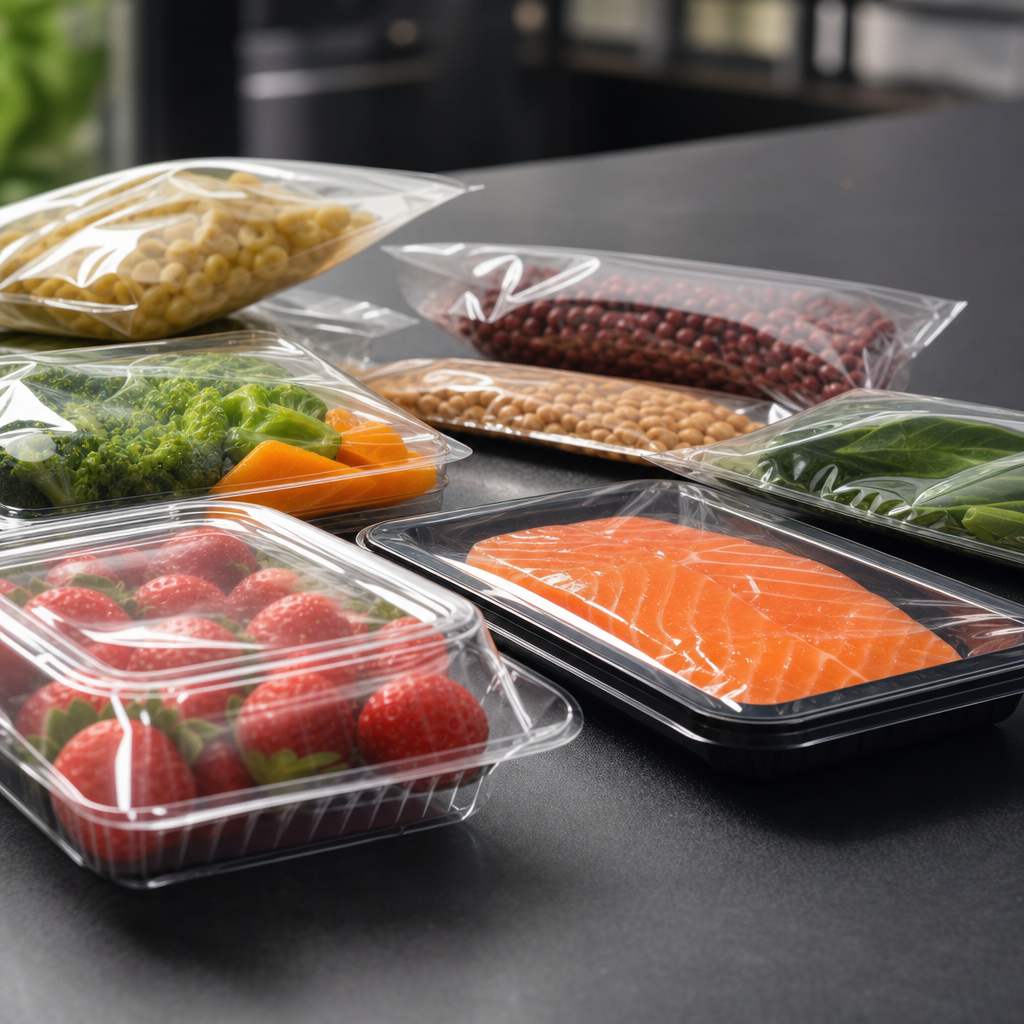
High-performance polymers are reshaping food packaging by delivering stronger barriers, lower weight, better heat resistance, and more precise protection for products that move through long, complex supply chains. In packaging, the term refers to polymer materials engineered to maintain mechanical, thermal, and chemical performance under demanding conditions, often beyond the limits of commodity plastics such as standard polyethylene or polypropylene. For food applications, that performance matters because shelf life, safety, appearance, and processing efficiency all depend on how a package behaves when exposed to oxygen, water vapor, grease, light, pressure, and temperature swings. I have worked with packaging teams evaluating these materials for retort pouches, thermoformed trays, lidding films, and recyclable mono-material concepts, and the same pattern appears repeatedly: when the polymer choice improves, waste often falls, line performance stabilizes, and product quality becomes easier to protect.
Food packaging is a technical balancing act. A yogurt cup, vacuum meat pouch, frozen meal tray, or coffee structure cannot be judged on strength alone. The package must also survive filling and sealing, resist puncture in distribution, meet migration rules, preserve aroma, and fit the economics of high-speed production. High-performance polymers matter because they help converters and brand owners solve several of those requirements at once. They can provide oxygen barriers that slow oxidation, high heat deflection for hot fill and retort, toughness at freezer temperatures, or seal performance across contaminated sealing areas. They also play a central role in current industry goals: downgauging, design for recyclability, replacement of multi-material laminates where possible, and the growing use of recycled content without sacrificing package integrity.
This hub article explains the main innovations in high-performance polymers for food packaging, including the materials themselves, the properties that matter most, processing methods, sustainability tradeoffs, regulatory considerations, and where the market is moving next. It is designed as a practical foundation for deeper articles on barrier films, retort structures, recyclable packaging, and advanced coatings. If you need a direct answer, here it is: the most important innovations today combine barrier performance, processability, and circularity. In other words, the winning materials are not simply stronger plastics. They are polymers and polymer systems engineered to protect food effectively while fitting modern manufacturing lines and evolving recovery systems.
What counts as a high-performance polymer in food packaging
In food packaging, high-performance polymers include both specialty resins and advanced versions of familiar packaging plastics. Common examples are ethylene vinyl alcohol, polyethylene terephthalate grades designed for heat and barrier performance, polyamide variants, high-barrier polyolefin blends, fluoropolymer-free high-slip materials, cyclic olefin copolymers, and polyether-based materials used in niche multilayer structures. Not every premium polymer belongs in every package. The classification depends on whether the resin provides a meaningful performance advantage in a food-packaging environment, such as high oxygen barrier, dimensional stability, chemical resistance, transparency after processing, or retention of toughness under heat or cold.
Ethylene vinyl alcohol, usually called EVOH, remains one of the best-known examples because it delivers exceptional oxygen barrier at low thickness when kept relatively dry inside a multilayer structure. Polyamides are valued for puncture resistance and toughness, especially in vacuum pouches and thermoforming webs for meat and cheese. PET and specialty copolyesters offer stiffness, clarity, and temperature tolerance in trays, bottles, and lidding applications. Newer all-polyolefin barrier approaches use oriented polyethylene, metallization, or functional layers to approach the performance once reserved for mixed-material laminates. In practice, converters rarely choose a single resin in isolation. They choose a structure, then match each layer to a job: sealant, abuse resistance, barrier, stiffness, tie layer, or print web.
The reason this definition matters is simple. Food packaging performance is system performance. A resin that looks ideal in a data sheet may fail on the line if it curls, shrinks, seals unpredictably, or loses barrier after thermoforming. The most useful innovation is not the resin with the highest headline number. It is the resin that delivers measurable package performance at commercial speed and acceptable cost.
Barrier performance is the core driver of innovation
The primary job of many food packages is to control transmission of gases, moisture, aromas, and light. Oxygen transmission rate and water vapor transmission rate are foundational measurements because oxygen fuels oxidation, color loss, flavor degradation, and microbial growth in many products, while excess moisture transfer can stale dry foods or dry out fresh ones. High-performance polymers are advancing because brand owners increasingly need longer shelf life with less material. Better barrier allows thinner structures, fewer preservatives in some categories, and broader distribution reach.
EVOH remains central in high-barrier packaging because its oxygen barrier can be orders of magnitude better than standard polyolefins under dry conditions. In practical terms, that is why it appears in ketchup bottles, mayonnaise containers, meat films, and shelf-stable pouches. The limitation is humidity sensitivity. When EVOH absorbs moisture, barrier drops. Experienced packaging engineers handle this by burying EVOH between hydrophobic layers such as polyethylene or polypropylene. Polyamide provides mechanical toughness but is not a moisture barrier, so it is often paired with polyolefins or coatings. PET contributes stiffness and dimensional stability, and when metallized or coated it can reach much stronger barrier performance for snacks, coffee, and dry foods.
Recent innovation is not only about absolute barrier. It is about maintaining barrier after conversion and use. Thermoforming stretches material and can thin the barrier layer at corners, so new resin combinations are designed to retain protection after drawdown. Retort processing exposes packages to temperatures around 121 degrees Celsius in steam or water, which can distort lower-performance materials and weaken seals. High-performance retort structures now use optimized polypropylene, polyamide, and barrier combinations that preserve integrity while reducing foil dependence. That shift matters because foil delivers excellent barrier but complicates recycling and limits microwave use. As the industry pushes toward simpler recovery pathways, polymer barrier systems are becoming more sophisticated and more important.
Material innovations shaping next-generation packaging
Several distinct innovation tracks are shaping the market. First, advanced mono-material polyethylene and polypropylene structures are improving enough to replace some mixed laminates in dry food, frozen food, and selected refrigerated applications. These designs rely on orientation, sealant tuning, compatibilizer chemistry, and sometimes vacuum-deposited barrier layers. Second, high-performance tie layers and functionalized resins are improving adhesion between otherwise incompatible layers, which helps converters build thinner, more stable coextrusions. Third, specialty copolymers and reactor-grade polyolefins are expanding the property window, allowing unusual combinations of toughness, stiffness, low seal initiation temperature, and clarity.
Fourth, coated and plasma-treated polymer films are opening a path to high barrier without heavy use of aluminum foil or difficult laminations. Silicon oxide and aluminum oxide coatings on PET or oriented polypropylene can deliver strong gas barrier for dry applications while preserving transparency. Fifth, polymer design is increasingly linked to recyclability. Resin suppliers now formulate grades that either tolerate mechanical recycling better or fit polyethylene and polypropylene recycling streams more cleanly. In development work I have seen, the best projects begin with the end-of-life route and then build backward toward performance targets, not the other way around.
| Polymer or System | Key Strength | Typical Food Packaging Use | Main Limitation |
|---|---|---|---|
| EVOH multilayer | Excellent oxygen barrier | Meat films, sauces, trays, pouches | Barrier declines with humidity exposure |
| Polyamide-based structures | Puncture resistance and toughness | Vacuum packs, thermoform webs, cheese packaging | Limited moisture barrier on its own |
| High-performance PET or copolyester | Clarity, stiffness, heat tolerance | Trays, bottles, lidding, ovenable formats | Often needs added barrier layer or coating |
| Advanced mono-material PE or PP | Recyclability pathway and downgauging potential | Pouches, frozen food bags, dry food packaging | Barrier may not match complex laminates |
Another important development is the use of compatibilized recycled content in demanding applications. Post-consumer recycled PET already has an established role in bottles and trays when feedstock and decontamination systems meet regulatory requirements. For polyolefins, recycled content in direct food contact remains more constrained by supply and regulation, but work on advanced sorting, dissolution, and chemical recycling could expand options. The innovation is not simply adding recycled resin. It is engineering polymer systems that can absorb variability without compromising sealing, odor, appearance, or food safety.
Processing, converting, and performance on the packaging line
A food package succeeds only if the chosen polymer works in real production. That means stable extrusion, consistent gauge, predictable orientation, printability, sealability, and machinability on filling equipment. High-performance polymers often create line advantages because they expand operating windows. A lower seal initiation temperature can improve throughput and reduce thermal distortion. Better hot tack can reduce leakers on vertical form-fill-seal lines. Greater stiffness can improve package presentation and denesting in trays. These gains are commercially significant because a small reduction in scrap or downtime can justify a more expensive resin.
Coextrusion is one of the most important technologies in this field because it allows multiple polymers to be combined into a single film or sheet, with each layer performing a defined function. A common example is a thermoforming web with polyethylene for sealing, polyamide for toughness, and EVOH for oxygen barrier. The art is in balancing layer thickness and interface adhesion so the structure performs after stretching, sealing, and distribution. Lamination remains essential for many pouches and lidding materials, especially where print protection, gloss, dead fold, or aggressive barrier targets are required. However, converters increasingly evaluate whether a laminated structure can be replaced by a coextruded or mono-material alternative to simplify recovery.
Testing is where many promising concepts succeed or fail. Standard methods such as ASTM and ISO procedures for oxygen and moisture transmission, seal strength, puncture, coefficient of friction, and migration are not box-checking exercises; they are the basis for commercial confidence. For retort and hot-fill packaging, processors also run sterilization simulations, burst tests, dye penetration checks, and shelf-life validation. The practical lesson is that material innovation must be verified at package level, under product-specific conditions. A polymer that performs well with dry snacks may not work for oily sauces, acidic products, or freezer-to-microwave use.
Sustainability, compliance, and the tradeoffs brands must manage
The most common question from packaging buyers today is whether high-performance polymers are compatible with sustainability goals. The answer is yes, but only when sustainability is defined carefully. A lighter package with superior barrier can reduce food waste, and in many food categories the climate impact of wasted food is greater than the impact of the package itself. That is why downgauged high-barrier packaging can be an environmental improvement even if the structure is technically more complex. At the same time, complexity can undermine recyclability, so companies must weigh source reduction against end-of-life performance.
Regulation is another critical factor. Food-contact materials must comply with jurisdiction-specific frameworks such as U.S. FDA requirements and European Union rules for plastics, additives, and overall and specific migration. Recycled-content claims, compostability claims, and chemical safety documentation all require substantiation. In my experience, successful packaging programs bring regulatory and procurement teams into material selection early, because redesigns become expensive when compliance issues appear late. Migration behavior can change with fatty foods, high temperatures, or long storage durations, so test conditions must reflect actual use rather than idealized assumptions.
There are also practical tradeoffs. A recyclable mono-material pouch may offer a clear recovery narrative but lower oxygen barrier than a legacy foil laminate. A high-barrier structure may protect fresh coffee perfectly but be harder to sort in municipal systems. Bio-based content may reduce fossil dependence without guaranteeing biodegradability or better shelf life. The right answer depends on product sensitivity, distribution distance, retail environment, local collection infrastructure, and brand priorities. The strongest packaging teams use life cycle assessment, shelf-life modeling, and pilot-scale trials together. That approach prevents a narrow focus on any single metric.
Where high-performance polymers in food packaging are headed next
The next phase of innovation will center on convergence. Material science, package design, digital quality control, and recovery infrastructure are moving closer together. Expect more recyclable all-polyolefin structures with improved barrier through orientation and coatings, more retort-ready polypropylene systems, better use of post-consumer recycled PET in rigid food packaging, and smarter compatibility additives that preserve properties in recycled blends. Machine learning is also starting to help resin suppliers predict structure performance, reducing development cycles for seal design, drawability, and shelf-life targets.
Another major direction is package simplification. Over the past decade, many food packages accumulated layers for historical reasons rather than current technical need. As brands revisit those specifications, they are discovering that newer high-performance polymers can eliminate redundant layers, lower total gauge, or remove foil while preserving shelf life. That creates value beyond sustainability. Simpler structures can improve line efficiency, purchasing flexibility, and resilience when one specialty material becomes constrained. The companies that lead in this space will be the ones that treat polymer selection as a strategic capability, not a commodity purchase.
For manufacturers, converters, and brand owners, the main takeaway is clear: innovations in high-performance polymers for food packaging are no longer niche material upgrades. They are central tools for protecting food, improving operations, and meeting changing market expectations. The best solutions match barrier, sealing, thermal resistance, and recovery pathway to the actual product risk. Use this hub as the starting point for evaluating specific polymer families, package formats, and application guides, then map those insights to your own shelf-life, processing, and sustainability goals. When the polymer system is engineered correctly, food quality lasts longer, waste drops, and packaging becomes a measurable competitive advantage.
Frequently Asked Questions
What are high-performance polymers in food packaging, and how are they different from standard plastics?
High-performance polymers are advanced plastic materials designed to deliver reliable mechanical strength, thermal stability, chemical resistance, and barrier performance in conditions where standard packaging plastics may fall short. In food packaging, that means they can better protect products from oxygen, moisture, grease, aroma loss, contamination, and temperature swings across production, filling, transport, storage, and retail display. While common materials such as conventional polyethylene or polypropylene are widely used because they are versatile and cost-effective, high-performance polymers are engineered for more demanding applications where shelf life, food safety, processing efficiency, and package durability are critical.
What makes these materials different is not just that they are “stronger,” but that they are tailored for specific performance requirements. Some are selected for outstanding gas barrier properties, others for heat resistance in retort or hot-fill systems, and others for puncture resistance in vacuum packaging or compatibility with multilayer structures. Examples used in advanced packaging systems may include EVOH for oxygen barrier, polyamides for toughness, PET variants for strength and clarity, fluoropolymers or specialty coatings in niche applications, and other engineered resins designed to perform under rigorous handling and environmental exposure. The result is packaging that can be lighter, thinner, and more functional while still preserving product quality.
In practical terms, high-performance polymers help food brands solve modern supply chain challenges. As products travel farther and consumer expectations rise, packaging has to do more than simply contain food. It must help maintain freshness, support processing speeds, withstand sterilization or refrigeration, and sometimes integrate with smart packaging or sustainability strategies. That is why innovation in this category matters so much: these materials are becoming a key enabler of safer, longer-lasting, and more efficient food packaging.
How do innovations in high-performance polymers improve food shelf life and product protection?
One of the most important benefits of high-performance polymers is their ability to create more effective barriers against the external factors that degrade food over time. Oxygen is a major cause of spoilage in many foods because it drives oxidation, color changes, flavor loss, and nutrient degradation. Moisture can either dry out products or create conditions that promote microbial growth, depending on the food type. Advanced polymers help control these exchanges more precisely than many conventional materials, allowing manufacturers to design packaging around the specific preservation needs of meat, dairy, snacks, coffee, sauces, frozen meals, and other sensitive categories.
Recent innovations have made these barrier systems more sophisticated and efficient. Instead of relying only on thickness, packaging engineers can use multilayer constructions that combine different polymers, each contributing a specific function. One layer may provide sealability, another toughness, another oxygen barrier, and another printability or heat resistance. This selective design approach can deliver excellent protection with less material overall. In some cases, polymer science also supports the use of active or functional packaging features, such as structures that help manage gas transmission or maintain package integrity under changing environmental conditions.
Improved product protection also extends beyond shelf life alone. High-performance polymers can reduce package failure during transportation, resist punctures in sharp or irregular foods, maintain seals during temperature fluctuations, and stand up to filling and processing stresses. For food companies, that means lower waste, fewer returns, more consistent quality, and better brand protection. For consumers, it means food that looks, smells, tastes, and performs as intended for a longer period. In a market where freshness and convenience are central purchasing factors, these packaging improvements have direct commercial and operational value.
Why are heat resistance and mechanical strength so important in modern food packaging materials?
Heat resistance and mechanical strength are essential because food packaging must often perform far beyond the shelf. Many food products are filled, sealed, sterilized, pasteurized, frozen, microwaved, or transported through demanding distribution systems before they are opened. If a material softens, warps, cracks, delaminates, or loses barrier integrity during any of those stages, the package can fail even if it looked acceptable at first. High-performance polymers are developed to maintain their properties through these real-world stresses, which is especially important for ready meals, retort pouches, hot-fill beverages, processed foods, and temperature-sensitive products.
Heat resistance matters because packaging increasingly has to survive elevated temperatures during production or consumer use. For example, packages for sauces, soups, and shelf-stable meals may be exposed to retort processing, where high heat is used to achieve commercial sterility. Other applications involve hot filling, sealing at high line speeds, or reheating by the end user. A high-performance polymer can retain dimensional stability, avoid distortion, and preserve seal strength under those conditions. That helps protect both food safety and package appearance, two factors that are closely linked in consumer trust.
Mechanical strength is just as critical. Packages are stacked, compressed, dropped, flexed, and exposed to vibration through warehousing and shipping. Foods with sharp edges, vacuum-packed formats, and large-format family packs all place added strain on packaging materials. High-performance polymers help prevent punctures, tears, and stress cracking while also allowing downgauging, which means using less material without losing performance. This combination of toughness and efficiency is one reason these materials are increasingly valuable in global food distribution systems, where packaging must be reliable from the processing plant to the consumer’s kitchen.
Are high-performance polymers compatible with sustainability goals in food packaging?
Yes, but the answer is nuanced. High-performance polymers can support sustainability goals when they are used to reduce food waste, lower package weight, improve transport efficiency, and enable more precise material usage. In food packaging, preventing spoilage is itself a major environmental benefit because the resource footprint of wasted food is often far greater than the footprint of the package protecting it. If an advanced polymer significantly extends shelf life, reduces damage in transit, or allows a thinner package to perform as well as a heavier one, it may deliver meaningful lifecycle advantages even if the material itself is more specialized.
At the same time, sustainability in packaging is not determined by one property alone. A material can perform extremely well technically but present challenges in recycling if it is part of a complex multilayer structure or if regional waste systems are not equipped to process it. That is why current innovation is increasingly focused on balancing performance with circularity. Researchers and packaging developers are working on mono-material high-barrier solutions, compatibilizers that improve recyclability, advanced coatings that replace harder-to-recycle layers, and new polymer formulations that maintain food protection while aligning better with existing recovery systems.
The most responsible way to evaluate sustainability is through a full systems perspective. Brands need to consider shelf life, package-to-product ratio, transportation emissions, manufacturing efficiency, end-of-life pathways, and regulatory expectations. High-performance polymers are not automatically the most sustainable option in every use case, but they are often a crucial part of smarter packaging design. When selected carefully, they can help companies reduce total environmental impact by combining protection, efficiency, and material optimization in ways that standard packaging materials may not achieve on their own.
What trends are shaping the future of high-performance polymers for food packaging?
Several important trends are driving the next generation of high-performance food packaging materials. One major trend is the move toward highly engineered structures that deliver better barrier performance with less overall material. This includes thinner films, more efficient coextruded layers, and advanced resin blends that improve toughness, clarity, and sealing without adding unnecessary weight. As manufacturers look for productivity gains, there is also strong demand for polymers that run well on high-speed equipment and maintain consistent performance across a wide range of filling and storage conditions.
Another major trend is the convergence of performance and sustainability. The industry is investing heavily in materials that can meet demanding food protection requirements while also fitting more easily into recycling systems or reducing dependence on difficult-to-process multilayer combinations. That includes developments in recyclable barrier packaging, drop-in material improvements, specialty coatings, and engineered polymers compatible with circular packaging design strategies. Regulatory pressure, retailer requirements, and consumer expectations are all accelerating this shift, making material innovation not just a technical issue but a strategic business priority.
There is also growing interest in packaging that is more intelligent and application-specific. High-performance polymers are increasingly being designed to work alongside active packaging systems, digital traceability features, tamper-evident formats, and packaging optimized for e-commerce distribution. As supply chains become longer and food formats more diverse, one-size-fits-all materials are becoming less practical. The future belongs to polymer systems that are lighter, smarter, more resilient, and more targeted to the needs of specific foods. In that sense, innovation in high-performance polymers is not only changing packaging materials; it is reshaping how the food industry thinks about protection, shelf life, efficiency, and value.