Polymers are transforming the medical field by enabling safer devices, smarter drug delivery, lighter equipment, and more personalized care across nearly every stage of treatment. In medicine, a polymer is a large molecule made of repeating units that can be engineered to be flexible, rigid, absorbable, nonreactive, conductive, porous, or antimicrobial depending on the clinical need. That design freedom matters because healthcare rarely needs one universal material; it needs catheters that bend without kinking, sutures that dissolve on schedule, implants that match tissue mechanics, and packaging that protects sterile products through shipping and storage. Over years of working with product teams evaluating material choices, I have seen polymer selection determine whether a device passes sterilization testing, whether a wound dressing maintains moisture balance, and whether a prototype ever becomes a scalable product. Innovations in polymer solutions now sit at the center of medical progress because they improve performance while helping manufacturers manage cost, weight, processing speed, and regulatory demands. From silicone and polyethylene to PEEK, polyurethane, hydrogels, and bioresorbable polymers such as PLA and PGA, the category spans commodity materials and highly specialized formulations. Understanding how these materials work is essential for engineers, procurement leaders, clinicians, and healthcare innovators who want better outcomes, reliable manufacturing, and practical pathways from concept to patient care.
Why polymers have become foundational in modern healthcare
Polymers became foundational because they solve problems that metals, glass, ceramics, and textiles cannot solve alone. Many medical applications require a combination of biocompatibility, processability, transparency, toughness, and sterilization resistance. Medical-grade polycarbonate, for example, can deliver optical clarity for housings and fluid management components, while polypropylene offers chemical resistance and cost efficiency for disposables. Silicone remains a standard for tubing and long-term implants because it is flexible across a wide temperature range and has a long clinical history. Thermoplastic polyurethane is widely chosen for catheters because it can balance softness with abrasion resistance and kink performance. High-performance polymers such as PEEK are increasingly used where radiolucency, fatigue resistance, and lower weight provide advantages over metal, especially in spinal and orthopedic applications.
The reason this matters is straightforward: material properties directly affect patient safety, clinician usability, and product manufacturability. A syringe component must maintain dimensional stability after ethylene oxide or gamma sterilization. A wearable sensor patch must conform to skin without causing irritation or losing adhesion under sweat. A surgical instrument handle must survive repeated autoclave cycles without cracking or warping. In each case, the polymer is not a passive ingredient. It is an active part of the device’s performance profile. This is why innovations in polymer solutions are not a niche topic. They are a central driver of product reliability, supply chain efficiency, and treatment effectiveness across diagnostics, drug delivery, surgery, rehabilitation, and home care.
Medical devices and disposables: the broadest impact area
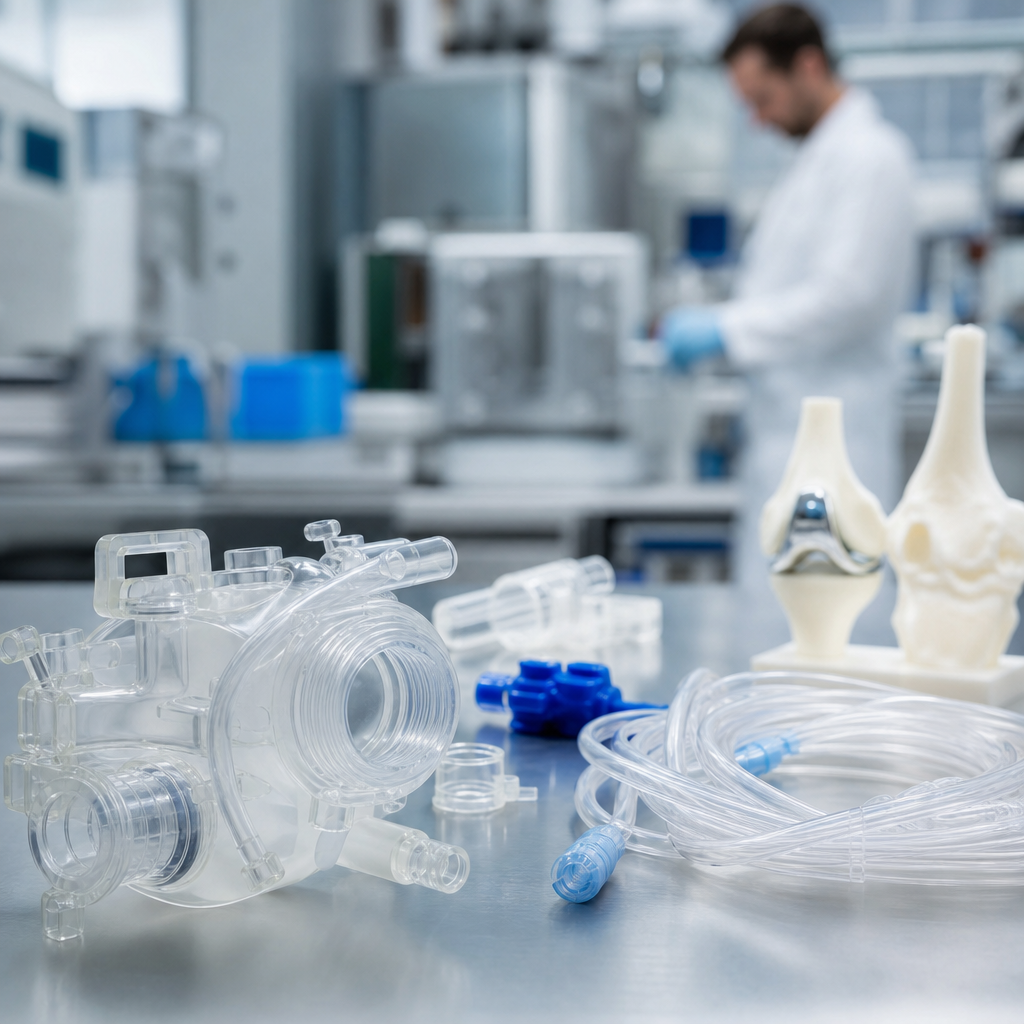
The most visible impact of polymers appears in devices and disposables used every day in hospitals, clinics, and homes. IV sets, blood bags, test cartridges, inhalers, pipette tips, specimen containers, dialysis components, ostomy products, wound drains, and single-use surgical tools all rely on engineered polymers. The rise of minimally invasive procedures has increased demand for small, precise, durable polymer parts produced by injection molding, extrusion, blow molding, thermoforming, and additive manufacturing. In catheter design, for instance, multilayer constructions can combine a lubricious outer layer, a structural middle layer, and a softer patient-contact segment to improve insertion performance and comfort. That kind of layered engineering would be difficult and costly with traditional materials.
Medical disposables also show how polymer innovation supports infection control. Single-use components reduce the risk of cross-contamination, but only if the materials remain stable during sterilization and maintain package integrity. Tyvek-based sterile barriers, polyethylene films, and medical adhesives are part of a larger polymer ecosystem that protects the device until use. During the pandemic, demand for swabs, test cassettes, face shields, tubing, and vaccine-related packaging highlighted how rapidly polymer-based manufacturing can scale. Companies with robust resin qualification and tool validation were able to expand output far faster than producers dependent on slower fabrication methods. In practical terms, polymer processing speed often becomes a public health advantage.
Drug delivery systems are becoming more precise and patient-friendly
One of the most important advances in polymer solutions is the evolution of controlled drug delivery. Instead of delivering a medication all at once, polymer matrices, coatings, capsules, and microspheres can release active ingredients over hours, days, or months. Bioresorbable polymers such as polylactic acid, polyglycolic acid, and PLGA have been used in depot injections, sutures, and implantable systems because they break down into compounds the body can metabolize. Hydrogels can absorb large amounts of water and release drugs in response to pH, temperature, or diffusion gradients. These capabilities help maintain therapeutic levels, reduce dosing frequency, and improve adherence, which is a major issue in chronic disease management.
Real-world examples make the benefit clear. Drug-eluting stents use polymer coatings to release antiproliferative agents that reduce restenosis after coronary intervention. Transdermal patches depend on backing films, adhesives, and membrane technologies made from specialized polymers to control the rate at which medication moves through the skin. Ocular inserts, long-acting contraceptive implants, and sustained-release oncology formulations all rely on polymer science to improve pharmacokinetics. In product development, however, precision comes with tradeoffs. The polymer must be compatible with the active drug, stable through shelf life, and predictable under storage and body conditions. Small changes in molecular weight, crystallinity, residual solvent content, or processing temperature can alter release behavior. That is why successful drug delivery programs pair formulation chemistry with rigorous analytical testing from the earliest feasibility stages.
Implants, prosthetics, and tissue engineering are pushing material performance
Polymers are changing long-term care not only through disposables but also through implantable and restorative applications. Orthopedic bearings made from ultra-high-molecular-weight polyethylene have a long track record in joint replacements because they offer low friction and wear performance when properly processed. PEEK has gained attention in spinal cages and trauma fixation because its modulus is closer to cortical bone than many metals, which can help reduce stress shielding, and because it is radiolucent on imaging. Dental applications use polymer-based composites, aligners, and temporary materials that balance aesthetics, strength, and process efficiency. Prosthetic liners and socket interfaces rely on elastomeric polymers to distribute pressure and reduce skin breakdown, a practical improvement that directly affects quality of life for users.
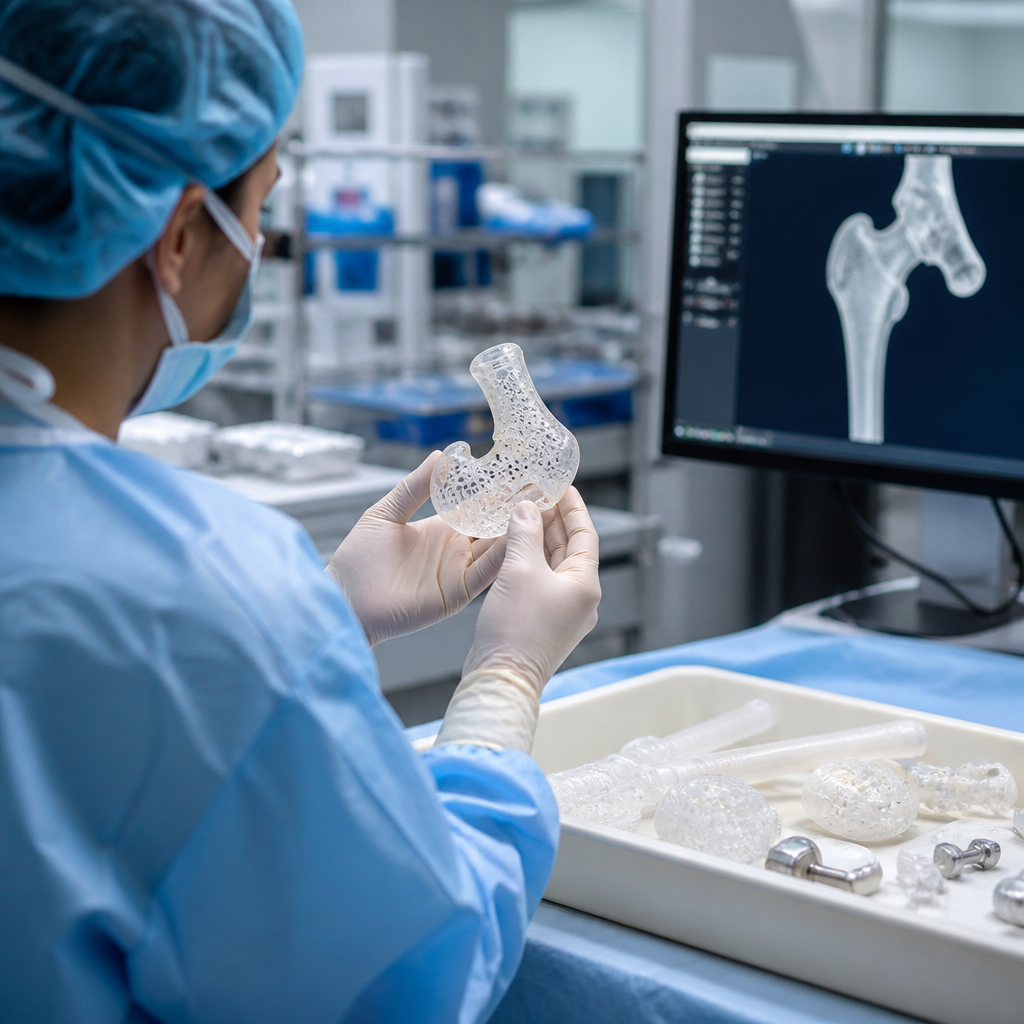
Tissue engineering expands the role of polymer solutions further. Electrospun scaffolds, porous foams, and hydrogel networks can provide temporary structures that support cell attachment and tissue regeneration. Researchers tailor porosity, degradation rate, surface chemistry, and mechanical properties to match the target tissue, whether skin, cartilage, vascular tissue, or nerve pathways. In wound care, hydrocolloids, alginates reinforced with polymer films, and foam dressings maintain a moist environment while managing exudate and protecting from external contaminants. These are not abstract laboratory ideas. Hospitals already use polymer-based matrices for negative pressure wound therapy interfaces, anti-adhesion barriers after surgery, and hemostatic materials that improve intraoperative control. The future direction is clearer customization, where material architecture is designed around biological function rather than forcing tissue to adapt to a generic substrate.
Key polymer families and where they fit best
Different clinical needs require different polymer chemistries, and material selection should always start with the application environment, not with cost alone. The table below summarizes common polymer families used in healthcare and the roles they typically fill.
| Polymer family | Typical medical uses | Core advantages | Main limitations |
|---|---|---|---|
| Silicone | Tubing, catheters, seals, long-term implants | Biocompatibility, flexibility, thermal stability | Can tear, may need reinforcement, relatively high cost |
| Polyurethane | Catheters, dressings, films, device housings | Toughness, softness range, abrasion resistance | Formulation sensitivity, hydrolysis risk in some grades |
| Polyethylene and polypropylene | Packaging, disposables, containers, labware | Chemical resistance, low cost, easy processing | Lower heat resistance, limited load-bearing use |
| PEEK | Spinal implants, surgical instruments, structural parts | Strength, fatigue resistance, radiolucency | High material cost, demanding processing window |
| PLA, PGA, PLGA | Absorbable sutures, drug delivery, scaffolds | Bioresorbability, tunable degradation | Mechanical limits, degradation byproducts must be managed |
| Hydrogels | Wound care, contact lenses, drug delivery, tissue scaffolds | High water content, tissue-like behavior | Often weaker mechanically, handling can be complex |
In practice, good teams rarely choose a polymer based on one property. They compare sterilization compatibility, extractables and leachables, bondability, colorability, shelf-life stability, regulatory history, and available medical-grade supply. A resin that performs beautifully in benchtop testing may fail when exposed to gamma radiation or may become difficult to source in validated grades. That is why cross-functional material reviews involving design, quality, manufacturing, and regulatory specialists consistently produce better results than isolated selection by one department.
Manufacturing innovation, compliance, and the road ahead
Polymer innovation is accelerating because processing technologies now allow far more control over geometry, surface behavior, and production efficiency than even a decade ago. Microinjection molding supports tiny diagnostic and fluidic components with tight tolerances. Multi-shot molding combines materials in a single part to create soft-touch seals or integrated windows. Extrusion advances enable multilumen tubing for complex catheter systems. Additive manufacturing is opening new possibilities for patient-specific guides, porous structures, and rapid development cycles, particularly when paired with validated medical polymers. Surface modification methods such as plasma treatment, hydrophilic coatings, and antimicrobial treatments extend the functional range of base resins without requiring a completely new material platform.
None of this progress eliminates regulatory discipline. Material innovation in healthcare must align with standards such as ISO 10993 for biocompatibility evaluation, ISO 13485 for quality management systems, and application-specific FDA or EU requirements. Extractables and leachables testing, sterilization validation, particulate control, aging studies, packaging qualification, and change control remain essential. Sustainability is also shaping the next phase of development. Hospitals are under pressure to reduce waste, yet infection control and performance needs still favor many single-use products. The realistic path forward is not simplistic replacement. It is smarter design: thinner walls where possible, recyclable secondary packaging, solvent reduction, cleaner processing, and selective use of bio-based or recyclable polymers where clinical risk is low and regulatory evidence is strong. If you are building a roadmap under innovative products and solutions, start by auditing where polymer choice affects outcomes, manufacturability, or total cost, then prioritize projects where a material change can solve a clinical problem rather than merely refresh a specification. That is where polymer innovation delivers lasting value.
Polymers are transforming the medical field because they give healthcare designers a material toolkit that can be tuned to the exact demands of treatment, diagnosis, protection, and recovery. They matter in the obvious places, such as tubing, packaging, and disposables, but their deeper value is their adaptability. The same broad class of materials includes transparent housings for diagnostics, absorbable carriers for drug delivery, structural implant polymers, pressure-relieving prosthetic interfaces, and moisture-managing wound dressings. That range is why innovations in polymer solutions belong at the center of any serious discussion about modern medical manufacturing.
The strongest lesson from real product development is that polymer performance is never just about a datasheet. Success depends on matching chemistry, processing method, sterilization route, regulatory history, and clinical use conditions. A polymer that excels in a short-term disposable may be the wrong choice for an implant. A promising sustainable option may still fail if it cannot maintain barrier performance or validated supply continuity. Teams that evaluate materials with this full context move faster and make fewer expensive changes later. They also build devices that clinicians trust and patients benefit from in measurable ways.
Looking ahead, the direction is clear: more targeted drug delivery, more patient-specific devices, more functional surfaces, and smarter combinations of polymers with sensors, biologics, and digital health platforms. For organizations exploring the broader innovative products and solutions landscape, this hub should be the starting point for deeper work on biocompatible materials, advanced extrusion, implant polymers, sustainable medical packaging, and next-generation wound care. Review your current products, identify where material limitations are constraining performance, and use polymer innovation as a practical lever for better care and stronger product strategy.
Frequently Asked Questions
1. What are polymers, and why are they so important in modern medicine?
Polymers are large molecules made from repeating chemical units, but in healthcare their importance goes far beyond basic chemistry. What makes polymers especially valuable in the medical field is that they can be engineered to deliver very specific performance characteristics for very specific clinical needs. A polymer can be made soft and flexible for a catheter, strong and durable for a prosthetic component, absorbable for a temporary surgical implant, nonreactive for long-term contact with tissue, porous for wound care, or even conductive for certain advanced monitoring and therapeutic technologies. That level of design control gives manufacturers and clinicians a material platform that can be tailored to the body, the treatment, and the intended lifespan of the device.
Polymers matter because medicine rarely needs a one-size-fits-all material. A surgeon, pharmacist, and device designer all face different challenges, and polymers can be customized to meet each one. In practical terms, they help reduce device weight, improve comfort, support minimally invasive procedures, protect sensitive medications, and lower the risk of complications related to material incompatibility. Many of the advances patients now take for granted, such as disposable medical supplies, precision tubing, advanced wound dressings, controlled drug-release systems, and biocompatible implants, rely heavily on polymer science. As healthcare continues moving toward safer, smarter, and more personalized care, polymers remain one of the foundational material technologies making that progress possible.
2. How are polymers used in medical devices and equipment?
Polymers are used throughout the entire medical device ecosystem, from simple single-use products to highly engineered implantable technologies. Common examples include IV tubing, syringes, blood bags, catheters, surgical drapes, wound dressings, diagnostic cartridges, inhaler components, contact lenses, and the housings for many monitoring and imaging devices. Their popularity comes from a combination of useful properties: they can be lightweight, moldable into complex shapes, transparent when visibility is important, chemically resistant, and suitable for sterilization under the right conditions. In many cases, polymers replace heavier or less adaptable materials while preserving safety and improving usability.
In more advanced applications, polymers contribute directly to better clinical performance. Flexible polymers allow catheters and guidewires to move more safely through the body during minimally invasive procedures. High-performance polymers can withstand repeated stress in orthopedic and cardiovascular applications. Antimicrobial or low-friction surface treatments can help reduce infection risk and improve insertion comfort. Polymers also support the miniaturization of medical technology by enabling intricate components in diagnostic devices, wearable sensors, and portable treatment systems. This is one reason the medical field increasingly depends on polymer-based design: the material does not just serve as a passive container or shell, but often plays an active role in safety, precision, patient comfort, and overall treatment effectiveness.
3. How do polymers improve drug delivery and pharmaceutical treatments?
One of the most transformative roles polymers play in medicine is in drug delivery. Traditional medication methods do not always deliver the right amount of drug to the right place at the right time. Polymers help solve that problem by acting as carriers, coatings, matrices, gels, microneedle components, and encapsulating materials that control how a medication is protected, released, and absorbed. For example, a polymer coating on a tablet can delay release until it reaches the intestine instead of the stomach. A biodegradable polymer matrix can release a drug gradually over days, weeks, or even months. Injectable polymer-based systems can form depots that steadily deliver medication, reducing the need for frequent dosing.
This capability has major benefits for both patients and providers. Controlled-release polymer systems can improve adherence because patients do not have to remember as many doses. Targeted delivery can reduce side effects by limiting exposure to healthy tissues. Sensitive drugs, including certain biologics, can be shielded from degradation until they reach the intended site of action. In fields such as oncology, ophthalmology, pain management, and hormone therapy, polymer-enabled drug delivery is helping make treatments more precise and more tolerable. Looking ahead, polymers are also central to personalized medicine, where formulations may be designed around an individual’s physiology, treatment response, or disease profile. In that sense, polymers are not just packaging for pharmaceuticals; they are becoming an essential part of how therapies are engineered and optimized.
4. Are polymers safe for use inside the human body?
Polymers can be very safe for medical use, but their safety depends entirely on the specific material, the way it is processed, and the clinical purpose it serves. In medicine, polymers intended for contact with the body must be evaluated for biocompatibility, which means they should perform their intended function without causing unacceptable irritation, toxicity, inflammation, allergic response, or other harmful effects. Some polymers are designed to remain stable in the body for long periods, while others are deliberately made to break down safely after they have done their job. This distinction is critical in applications such as sutures, orthopedic fixation devices, drug-delivery implants, and tissue scaffolds.
Medical-grade polymers undergo extensive testing and regulatory review before they are used in approved devices or treatments. These evaluations may include testing for cytotoxicity, sensitization, irritation, sterility compatibility, extractables and leachables, mechanical reliability, and long-term performance under real-world conditions. Manufacturers also consider how a polymer reacts to body fluids, temperature changes, mechanical stress, and sterilization methods. When properly selected and validated, polymers can offer excellent safety profiles and may even reduce risk compared with more rigid, heavier, or reactive materials. That said, no material is universally safe in every situation, which is why healthcare applications rely on careful design, clinical testing, and regulatory oversight rather than broad assumptions. The safety of medical polymers comes from precision engineering and evidence-based validation.
5. What does the future of polymers in healthcare look like?
The future of polymers in healthcare is exceptionally promising because these materials sit at the intersection of medicine, engineering, and personalization. Researchers are developing smart polymers that respond to temperature, pH, moisture, electrical signals, or biological markers, allowing devices and drug systems to behave more dynamically inside or on the body. That could mean wound dressings that react to infection, implants that release medication only when needed, or biosensors embedded in soft wearable materials that continuously monitor health in real time. These innovations are especially important as healthcare shifts toward prevention, remote monitoring, and individualized treatment strategies.
Polymers are also expected to play a growing role in regenerative medicine, 3D printing, and next-generation implants. Tissue engineering scaffolds made from carefully designed polymers may help support cell growth and tissue repair. Custom polymer formulations in 3D-printed medical products could enable patient-specific surgical guides, dental devices, prosthetics, and implant components. At the same time, sustainability and supply chain resilience are becoming more important, pushing development toward recyclable materials, improved manufacturing efficiency, and safer alternatives to legacy chemistries. In short, the future is not just about using more polymers in medicine; it is about using more intelligent, responsive, and tailored polymers to improve outcomes, reduce burden on patients and clinicians, and expand what modern healthcare can achieve.