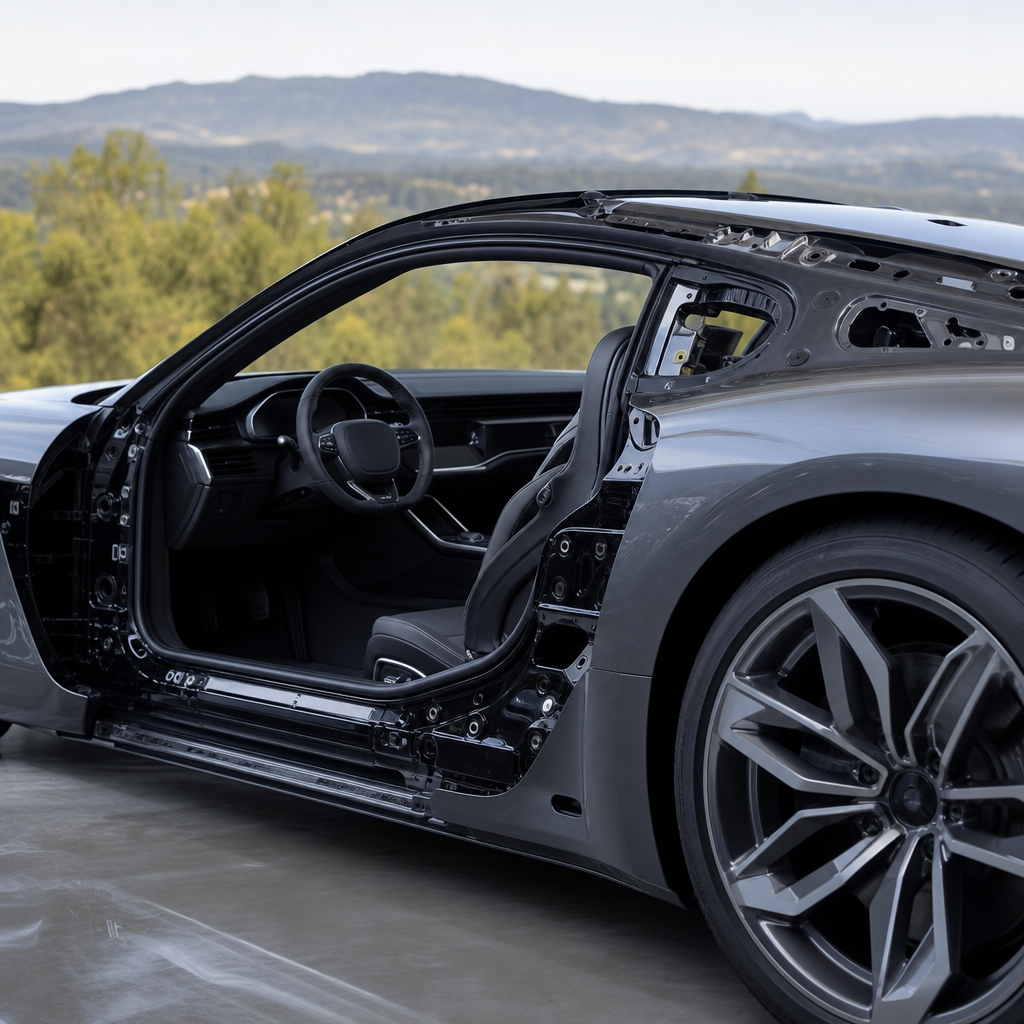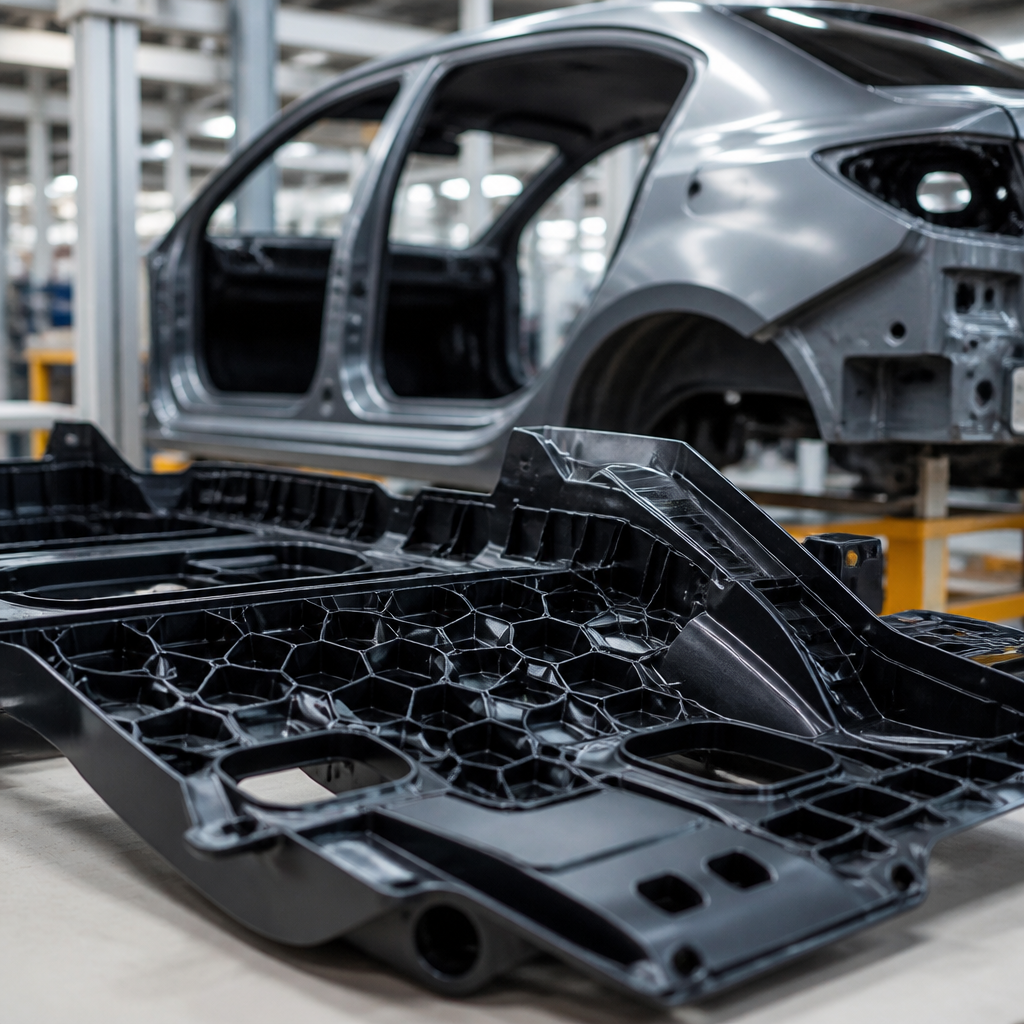
New high-performance polymers for automotive applications are moving from niche engineering materials to core vehicle platform enablers, especially as automakers launch lighter, safer, more heat-resistant, and more sustainable products across electric, hybrid, and internal-combustion programs. In practical terms, high-performance polymers are plastics engineered to retain mechanical strength, dimensional stability, chemical resistance, and electrical performance under demanding temperatures, loads, and environmental exposure. In the automotive sector, that means materials that survive battery heat, road salt, underhood fluids, high-voltage architectures, radar integration, and strict durability targets without adding unnecessary mass.
I have worked with product launch teams that evaluated polymers not as simple metal replacements, but as system-level design tools. That distinction matters. A polymer launch can reduce part count, simplify assembly, improve crash-energy management, and support styling freedom at the same time. It can also fail if engineers ignore creep, moisture uptake, weld line weakness, recycling constraints, or supply chain readiness. The current wave of new product launches reflects that maturity. Suppliers are introducing grades tuned for specific use cases: flame-retardant battery housings, laser-weldable sensor covers, low-warpage structural brackets, bio-based interior compounds, and thermally conductive yet electrically insulating formulations for power electronics.
This topic matters because the automotive industry is under simultaneous pressure to cut emissions, extend electric vehicle range, manage cost, and accelerate model refresh cycles. Lightweighting remains essential, but the discussion has become broader. Engineers now ask whether a new polymer can integrate functions, support automated manufacturing, meet FMVSS, UL, ISO, and OEM validation requirements, and fit circularity goals. Procurement teams want supply stability. Program managers want validated processing windows. Designers want better surface quality and color stability. A successful new product launch in this segment therefore depends on material science, application engineering, manufacturing support, and regulatory alignment working together.
As a hub for new product launches, this article maps the major polymer categories entering automotive programs, the applications where they create measurable value, the standards shaping adoption, and the launch criteria that separate promising materials from production-ready solutions. It is designed to answer the practical questions engineers, sourcing managers, product marketers, and technical buyers ask when reviewing innovative products and solutions in this fast-moving market.
What qualifies as a new high-performance polymer in automotive
In automotive development, a new high-performance polymer is not merely a recently branded resin. It is usually a material platform with improved performance in one or more critical dimensions: continuous-use temperature, stiffness-to-weight ratio, impact retention, dielectric behavior, hydrolysis resistance, flame retardancy, chemical compatibility, processing speed, or recycled or bio-based content. Common families include polyamides such as PA6T, PA9T, and long-chain nylons; polyphthalamide, often abbreviated PPA; polyphenylene sulfide, or PPS; polyether ether ketone, known as PEEK; polycarbonate blends; liquid crystal polymers; thermoplastic polyurethane; and advanced polypropylene compounds with glass, mineral, or elastomer modification.
Not every application needs the most exotic resin. In fact, one of the most important launch trends is the use of highly engineered mid-tier materials that deliver most of the required performance at lower cost and higher processing ease than premium aerospace-grade polymers. For example, a glass-fiber-reinforced PPA may replace aluminum in a thermostat housing because it resists glycol, holds dimensions near engine temperatures, and supports complex molded features. A conductive or antistatic thermoplastic may be selected for a fuel-system component. A low-dielectric polymer may be used in connectors or radar-related parts where signal integrity matters.
When suppliers announce new products, the useful questions are direct: What property gap does the material close? Which OEM qualification pathway has it entered? What processing method does it support, such as injection molding, blow molding, extrusion, overmolding, or additive manufacturing? And what application data exist beyond a datasheet? Strong launches provide comparative data, not just headline numbers.
Why automakers are accelerating polymer launches now
The timing of current launches is driven by vehicle electrification, software-defined architectures, safety integration, and sustainability mandates. Electric vehicles create new thermal and electrical demands. Battery packs need insulating materials around cells, busbars, and module frames, but they also need housings that tolerate abuse, resist flame propagation, and meet demanding structural criteria. Power electronics expose materials to repeated thermal cycling. Charging systems need durable connector polymers with arc resistance and dimensional control. These requirements are expanding the addressable market for higher-spec materials faster than traditional underhood substitution alone ever did.
Advanced driver assistance systems also raise the bar. Radar-transparent fascias, lidar covers, camera housings, and sensor brackets require predictable electromagnetic performance, weatherability, and tight tolerances. In several launch programs I have seen, material selection was driven as much by sensor function as by mechanical design. A front-end part that distorts a radar signal or creeps out of tolerance after humidity exposure can compromise system calibration. That makes polymer consistency and molded-part validation critical.
Meanwhile, sustainability targets are reshaping product portfolios. Suppliers are launching grades with post-consumer recycled content, mass-balance feedstocks, renewable monomers, and easier mechanical recycling pathways. The key change is that sustainability claims are now expected to coexist with OEM durability requirements. Automotive buyers increasingly ask for lifecycle data, not just recycled-content percentages.
Where new polymer products are being used in vehicles
The strongest product launches target applications where polymers provide multiple benefits at once. Underhood systems remain important: air-intake manifolds, coolant pipes, thermostat housings, charge-air ducts, pump components, and fluid reservoirs all use specialized grades selected for heat, chemical, and pressure resistance. Glass-filled polyamides and PPAs are common because they balance cost and performance, while PPS appears where chemical resistance and high-temperature stability are priorities.
In electric vehicles, battery and e-mobility applications are now central. Cell spacers, module end plates, busbar carriers, high-voltage connectors, charging inlets, inverter covers, and thermal-management components all depend on carefully specified polymers. Flame-retardant formulations must often achieve robust electrical insulation while maintaining mechanical integrity after aging. Thermally conductive compounds are increasingly used near power electronics to move heat without creating electrical pathways.
Vehicle interiors are another launch hotspot. Soft-touch surfaces, lightweight seat structures, instrument-panel carriers, acoustic components, and sustainable trim materials are seeing rapid innovation. Here, performance is broader than heat and strength. Low odor, low fogging, UV stability, scratch resistance, color consistency, and perceived quality all matter. Exterior applications include liftgates, glazing alternatives, lamp housings, body panels, and radar-compatible bumper systems. Chassis and structural uses are growing as long-fiber thermoplastics and hybrid metal-polymer designs mature.
| Application area | Typical new polymer focus | Main value delivered |
|---|---|---|
| Battery systems | Flame-retardant PPA, PPS, thermally conductive compounds | Electrical insulation, thermal management, weight reduction |
| Underhood fluid handling | Glass-filled polyamides, hydrolysis-resistant grades | Chemical resistance, dimensional stability, part integration |
| Sensors and ADAS | Low-warpage, radar-transparent polymers | Signal reliability, precise tolerances, weatherability |
| Interior systems | Recycled-content PC blends, TPO, bio-based compounds | Surface quality, sustainability, mass reduction |
| Structural brackets and modules | Long-fiber thermoplastics, hybrid compounds | Stiffness, impact performance, assembly simplification |
How leading launches differentiate themselves
The best new product launches do more than present a resin family with marginal property improvements. They show application-specific engineering. For example, a battery-housing material launch may include comparative UL 94 results, RTI data, glow-wire performance, dielectric strength, thermal conductivity, and mold-flow guidance for large thin-wall parts. A connector resin launch may provide CTI performance, laser-marking behavior, color stability, and terminal-retention data. These details matter because automotive validation is not won by tensile strength alone.
Another differentiator is processing support. I consistently trust launches more when suppliers publish recommended drying conditions, mold temperatures, expected shrinkage, gate-design advice, weld line considerations, and post-mold conditioning effects. Materials that look excellent in a datasheet can generate scrap, warpage, or poor surface appearance if the process window is narrow. Serious suppliers address this early and often provide CAE data for Moldflow, structural FEA inputs, and design allowables.
Strong launches also acknowledge tradeoffs. A very high glass loading may improve stiffness but worsen surface aesthetics and tool wear. A flame-retardant package may affect impact performance or colorability. A recycled-content polymer may require tighter quality controls to maintain consistency. Credible product introductions explain how those compromises were managed and where the material fits best.
Standards, validation, and what engineers should verify
Automotive polymer adoption depends on test evidence. Core standards often include ISO 527 for tensile properties, ISO 178 for flexural behavior, ISO 179 or ISO 180 for impact, ISO 75 for heat deflection temperature, UL 94 for flammability, and electrical tests relevant to connectors and high-voltage systems. OEMs then add internal specifications covering long-term aging, media resistance, dimensional stability, creep, stone impact, weathering, fogging, odor, and assembly performance. In e-mobility, thermal runaway mitigation and electrical isolation requirements have become especially important.
Engineers should verify property retention, not just initial properties. A polymer that is strong at room temperature may lose too much stiffness after exposure to glycol, transmission fluid, humidity, or repeated thermal cycling. For structural or semi-structural parts, creep and fatigue data are essential. For visible parts, color shift and gloss retention matter. For sensor applications, dielectric and electromagnetic behavior may be decisive. For recycled or bio-based grades, lot-to-lot consistency and traceability should be checked before nomination.
Launch teams should also examine joining and assembly behavior. Can the material be vibration welded, laser welded, ultrasonically welded, bonded, insert molded, or mechanically fastened without cracking? Does it support overmolding onto metal inserts? How does it behave around brass, copper, aluminum, and coatings? These practical questions often determine whether a promising launch becomes a production program.
Commercial trends shaping new product launches
Several commercial patterns define this market. First, suppliers are moving from broad portfolio announcements to narrow, application-led releases. Instead of promoting a generic engineering resin, they launch a grade specifically for battery module carriers, e-compressor housings, or radar sensor brackets. That makes technical evaluation faster for OEMs and Tier 1 suppliers. Second, partnerships are becoming more visible. Resin producers increasingly collaborate with compounders, molders, toolmakers, simulation firms, and automakers to prove manufacturability before full commercialization.
Third, regionalization matters. North America, Europe, China, Japan, and South Korea each have different regulatory pressures, EV adoption curves, and supply chain dynamics. A launch positioned for China may emphasize EV scale and local sourcing, while a European launch may highlight recycled feedstocks and CO2 reduction. Fourth, lifecycle economics are replacing simple price-per-kilogram comparisons. When a new polymer eliminates machining, corrosion treatments, brackets, fasteners, or secondary sealing steps, total system cost can beat metal even if the resin itself is more expensive.
For content strategy within innovative products and solutions, that means the most useful launch coverage connects chemistry to application, validation, manufacturing, and business case. Readers do not need vague innovation language. They need to know where the material fits, what problem it solves, what standards it meets, and what adoption barriers remain.
How to evaluate future launches as this hub expands
As new product launches continue, use a practical screening framework. Start with the application environment: temperature range, media exposure, electrical demands, mechanical load, and expected life. Next, compare candidate materials on retained properties rather than brochure claims. Then review processing compatibility with existing tooling, cycle time targets, and assembly methods. After that, assess compliance evidence, OEM approvals, and supply security. Finally, test the economics at system level, including weight, part consolidation, scrap, warranty risk, and end-of-life pathways.
Based on launch activity over the past few years, several themes will likely dominate future coverage under this hub. Expect more halogen-free flame-retardant systems for battery-adjacent parts, more thermally conductive compounds tailored for power electronics, more recycled-content engineering plastics that can meet visible-part requirements, and more hybrid solutions that combine polymer matrices with fibers, inserts, or coatings to achieve structural performance once reserved for metals. Additive manufacturing materials for low-volume automotive programs will also gain importance, especially for prototyping, service parts, fixtures, and customized components.
The underlying opportunity is clear. New high-performance polymers for automotive applications give manufacturers more ways to design for efficiency, safety, manufacturability, and sustainability at the same time. If you are tracking innovative products and solutions, use this hub to compare launches critically, follow application-specific developments, and identify which materials are truly ready for vehicle production. The companies that evaluate these launches rigorously will make better material decisions, reduce program risk, and bring stronger products to market. Explore the related articles in this subtopic and build your shortlist with evidence, not assumptions.
Frequently Asked Questions
1. What are high-performance polymers, and why are they becoming so important in automotive applications?
High-performance polymers are advanced plastic materials designed to maintain strength, stiffness, dimensional stability, chemical resistance, and electrical performance in conditions that would cause conventional plastics to soften, deform, crack, or degrade. In automotive applications, that matters because modern vehicles operate in increasingly demanding environments, including higher under-hood temperatures, exposure to aggressive fluids, repeated mechanical loading, and strict electrical insulation requirements. These materials are no longer limited to specialty parts; they are becoming central to how automakers design next-generation vehicle platforms.
Their growing importance is closely tied to the industry’s push for lightweighting, electrification, and sustainability. Replacing metal with high-performance polymers can reduce component weight, improve fuel economy in internal-combustion vehicles, and extend range in electric vehicles. At the same time, these polymers can support complex part geometries, integrate multiple functions into a single molded component, and simplify assembly. That combination of design freedom and performance is especially attractive for battery housings, connectors, thermal management systems, structural brackets, pump components, and high-temperature electrical parts.
Another major factor is platform diversification. Automakers now need materials that perform across electric, hybrid, and conventional powertrains while meeting demanding safety, durability, and manufacturing targets. High-performance polymers offer a practical way to meet those goals because they can be tailored for flame retardancy, dielectric strength, wear resistance, low moisture uptake, or compatibility with automated high-volume production. In short, they are becoming core enablers of vehicle innovation rather than just substitutes for traditional materials.
2. How do new high-performance polymers help make vehicles lighter without sacrificing safety or durability?
One of the biggest advantages of high-performance polymers is their ability to deliver significant weight reduction while still meeting demanding structural, thermal, and functional requirements. Compared with metals, many engineered polymers have much lower density, which allows automakers to reduce mass at the component level. That lighter weight can improve acceleration, efficiency, handling, emissions performance, and electric driving range. However, the real value is not just in replacing a metal part with a plastic one; it is in redesigning the part so it uses the material more efficiently.
Modern high-performance polymers can be reinforced with glass fiber, carbon fiber, mineral fillers, or specialty additives to raise stiffness, strength, creep resistance, and impact performance. This means they can be used in demanding areas such as housings, mounting systems, valve components, cooling modules, and certain semi-structural applications. In many cases, engineers can consolidate multiple metal parts into a single molded polymer component, eliminating fasteners, welds, and secondary assembly operations. That not only reduces weight but also improves manufacturing consistency and lowers the risk of part-to-part failure points.
Safety and durability are preserved through careful material selection and validation. Automotive-grade high-performance polymers are tested for heat aging, fatigue, chemical exposure, vibration, crash-related loading, and long-term dimensional stability. Some materials are specifically formulated to withstand road salt, oils, brake fluids, coolants, and battery-related chemicals, while others are optimized for flame retardancy or electrical isolation. When properly engineered, these polymers can provide durable performance over the full life of the vehicle, even in harsh service conditions. That is why automakers increasingly view them as performance materials, not compromises.
3. Which automotive systems benefit most from new high-performance polymers?
High-performance polymers are creating value across nearly every major vehicle system, but they are especially influential in electrified powertrains, thermal management, electrical architecture, and under-hood applications. In electric and hybrid vehicles, these materials are widely used in battery pack components, busbar supports, high-voltage connectors, sensor housings, charger interfaces, inverter components, and insulation systems. Their ability to combine electrical insulation with heat resistance and dimensional precision makes them highly suited for environments where reliability and safety are critical.
Thermal management is another major area of adoption. Modern vehicles rely on increasingly complex cooling circuits for engines, batteries, power electronics, and cabin systems. High-performance polymers are being used for pump housings, thermostat modules, coolant manifolds, valve bodies, connector systems, and fluid-handling assemblies because they can resist elevated temperatures, hydrolysis, and exposure to automotive fluids. In many cases, they also enable more compact designs and improved flow path integration compared with traditional metal assemblies.
Under the hood, these polymers are used in air-intake systems, charge-air ducts, fuel system components, electrical enclosures, transmission-related parts, and bearings or wear surfaces. Their value is particularly clear where heat, vibration, and chemical exposure occur together. Beyond that, automakers are exploring them in interior and exterior applications where dimensional stability, surface quality, low emissions, and durability are important. As vehicle architectures become more integrated and electronically complex, the number of systems that can benefit from high-performance polymers continues to expand.
4. What performance challenges must these polymers overcome in electric, hybrid, and internal-combustion vehicles?
Although the exact requirements vary by vehicle type, high-performance polymers must consistently perform under combinations of heat, stress, chemical exposure, and long service life. In internal-combustion vehicles, under-hood components may face sustained high temperatures, pressure cycling, oils, fuels, transmission fluids, and vibration. A polymer used in those locations must resist warping, embrittlement, creep, and chemical attack while maintaining tight tolerances. For many automotive systems, dimensional stability is just as important as raw strength because sealing performance, fit, and electrical reliability depend on it.
In hybrid and electric vehicles, the challenge expands beyond mechanical and chemical resistance to include electrical and thermal demands. Materials may need to provide high dielectric strength, resistance to tracking, flame retardancy, and stability near high-voltage systems. Battery environments can introduce exposure to heat buildup, thermal cycling, moisture, and specialized chemistries. Power electronics also create localized thermal loads that require polymers capable of withstanding elevated temperatures without degrading or losing insulating performance. This is why not all engineering plastics qualify as high-performance automotive solutions; the bar is much higher for these applications.
Another critical challenge is long-term reliability under real-world conditions. Automotive materials must survive years of daily use, seasonal temperature swings, road vibration, and manufacturing variation. They also must be processable at industrial scale, whether by injection molding, extrusion, overmolding, or composite fabrication. The best new high-performance polymers succeed because they balance material properties with manufacturability, cost control, and regulatory compliance. In other words, a polymer must do more than perform well in the lab; it must deliver consistent, validated performance in mass-produced vehicles.
5. Are new high-performance polymers also supporting automotive sustainability goals?
Yes, and this is one of the reasons interest in these materials is accelerating. Sustainability in automotive manufacturing is no longer limited to tailpipe emissions; it now includes vehicle mass reduction, energy efficiency, material sourcing, manufacturing emissions, end-of-life recovery, and compatibility with circular economy strategies. High-performance polymers can contribute on several of these fronts. By reducing component weight, they help improve fuel economy in conventional vehicles and extend range in electric vehicles, which directly supports efficiency targets over the life of the vehicle.
They can also reduce environmental impact at the manufacturing stage. Many polymer components can be produced through highly efficient molding processes that minimize machining, reduce scrap, and enable part integration. When multiple metal parts are replaced with a single molded polymer assembly, manufacturers may lower energy use, shorten assembly time, and reduce logistics complexity. In addition, some material developers are introducing grades that incorporate recycled content, bio-based feedstocks, or formulations designed for improved recyclability, although suitability always depends on the demands of the automotive application.
That said, sustainability claims must be evaluated carefully. For critical applications such as battery systems, power electronics, and high-temperature under-hood components, performance, safety, and regulatory compliance remain non-negotiable. The most meaningful progress comes from materials that deliver both environmental benefits and uncompromised durability. As automotive design moves toward lifecycle-based decision-making, new high-performance polymers are increasingly being assessed not just for how they perform in a single part, but for how they improve the total system across manufacturing, vehicle operation, and end-of-life recovery.