Polymer-based sports equipment has moved from niche engineering to mainstream performance design, and the latest product launches show how completely advanced plastics, elastomers, foams, and composite matrices now shape modern play. In practical terms, polymer-based sports equipment includes any bat, racket, shoe, helmet, pad, ball, wearable, or training tool that relies on synthetic long-chain materials for structure, cushioning, energy return, impact control, grip, or weather resistance. I have worked on product content and launch analysis across sporting goods categories, and the pattern is clear: the newest releases are not simply lighter versions of old gear. They are materially different systems built around polymer science.
That matters because sports performance is increasingly decided by marginal gains and durability under repeated stress. A cyclist wants a helmet liner that manages both linear and rotational impacts. A runner wants a midsole foam that rebounds after hundreds of miles instead of packing out. A tennis player wants strings and grommets that preserve tension while reducing arm fatigue. Brands now launch products around measurable polymer properties such as tensile strength, durometer, glass transition behavior, viscoelastic damping, and abrasion resistance rather than around broad claims alone.
For buyers, coaches, retailers, and product teams, following new product launches in this space is essential because polymers influence safety, rules compliance, sustainability, and cost of ownership. Governing bodies also affect adoption. World Athletics rules on stack height changed how super shoes are designed. Helmet certification protocols from NOCSAE, ASTM, CPSC, CE, and Virginia Tech testing shape materials and architectures. Even recreational users feel the impact, because polymer innovations developed for elite competition often reach mass-market equipment within one or two release cycles.
This hub article explains the latest in polymer-based sports equipment by focusing on new product launches across key categories, the material technologies behind them, how brands evaluate performance, and what to watch next. It is designed to anchor deeper articles on individual launches and product classes within the broader Innovative Products and Solutions topic. If you want a clear view of where the market is heading, start with the materials, because the most important launches today are being won in the polymer lab long before they reach the shelf.
Why polymer innovation is driving new product launches
Polymer innovation drives new launches because it solves multiple design problems at once. Metals, wood, and natural fibers still matter in sports equipment, but polymers offer tunable properties that can be adjusted by chemistry, processing, and geometry. Engineers can alter chain length, crosslink density, filler content, and cell structure to control stiffness, damping, resilience, and weight. That flexibility is why one family of materials can appear in a football helmet shell, a ski boot, a pickleball paddle core, and a high-rebound running shoe.
Recent launches increasingly combine several polymer types in a single product. A contemporary trail-running shoe may use a thermoplastic polyurethane plate, a supercritical foamed polyether block amide midsole, a high-abrasion rubber outsole, and a woven upper reinforced with thermoplastic films. A hockey stick may pair carbon fiber with a toughened epoxy resin system and vibration-damping inserts. In each case, the product story is no longer about one material, but about an integrated polymer architecture tuned for a specific sport.
The commercial pressure is intense. Brands need visible differentiation, but meaningful gains are harder to achieve than marketing copy suggests. In my experience reviewing launches, the strongest products are those tied to testable outcomes: lower peak acceleration in impact tests, measurable energy return, longer shape retention, improved coefficient of friction in wet conditions, or lower weight at the same stiffness. Buyers should look for those specifics, not just claims of “game-changing” foam or “next-gen” composite construction.
New launches in footwear, helmets, rackets, and protective gear
Footwear remains the most active launch category for polymer innovation. The super shoe era accelerated demand for advanced foams such as PEBA blends, expanded thermoplastic polyurethane, EVA copolymers, and nitrogen- or CO2-infused midsoles. Nike’s ZoomX, Adidas Lightstrike Pro, Saucony PWRRUN PB, ASICS FF Turbo, and Brooks DNA Gold are examples of launch platforms built around polymer behavior rather than conventional cushioning language. The newest releases focus on balancing rebound with stability, because very soft foams can feel fast but become unstable during cornering or under fatigued mechanics.
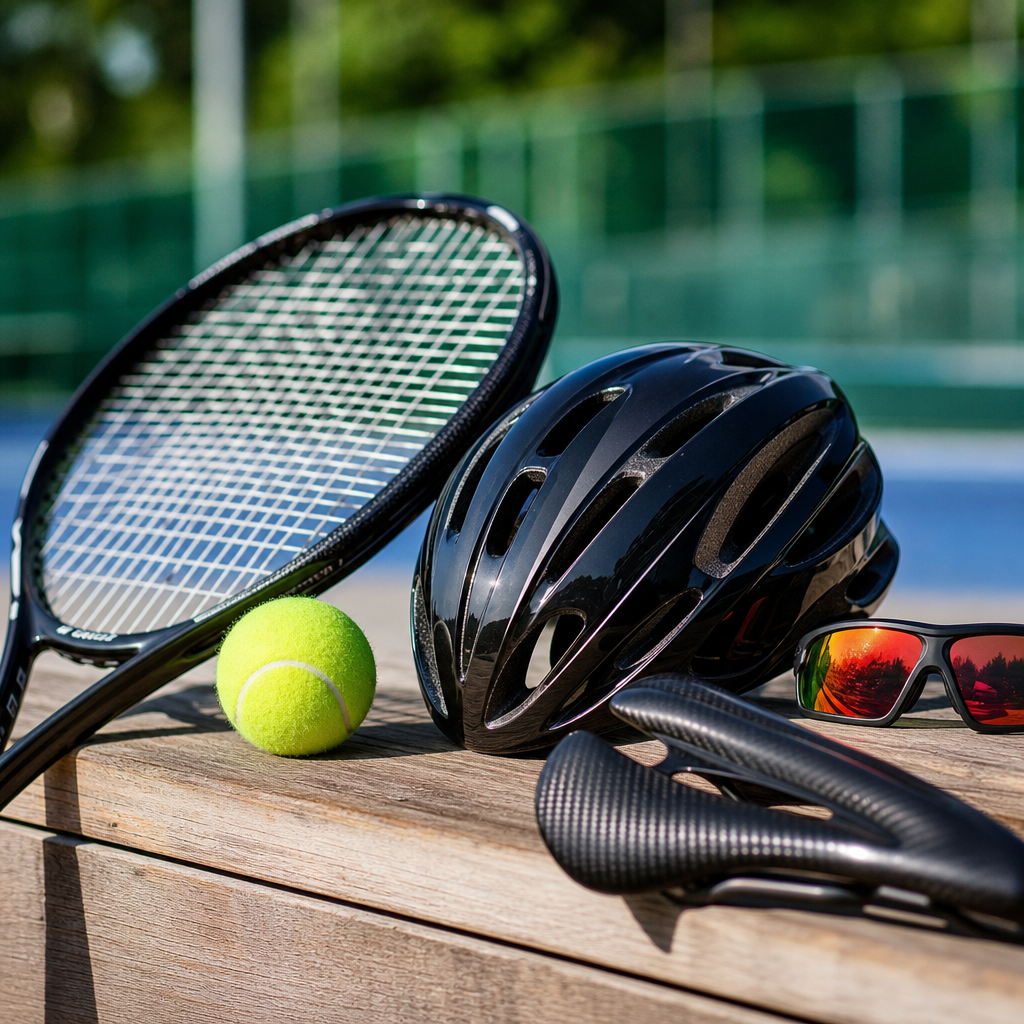
Helmet launches are another major area. Modern designs use polycarbonate or ABS outer shells paired with expanded polystyrene, expanded polypropylene, vinyl nitrile foams, or proprietary elastomeric slip systems. New bike, football, snow, and lacrosse helmets increasingly feature multi-density liners and rotational energy management layers. Mips, WaveCel, Koroyd, and 3D-printed lattice approaches all intersect with polymer engineering, even when the visible innovation appears structural. The practical change for users is better energy management across a wider range of impacts, not just a harder shell.
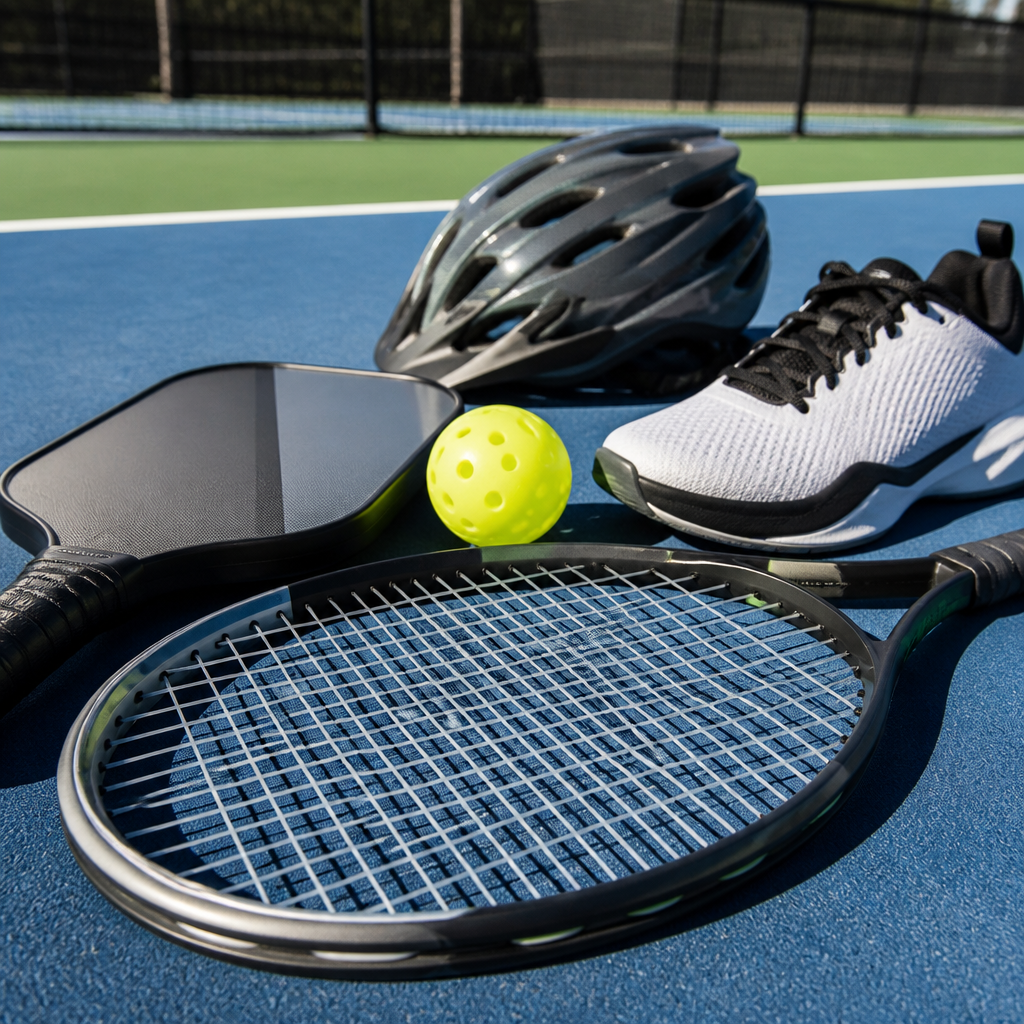
Racket sports have produced a steady wave of launches as tennis, padel, badminton, and pickleball grow. Manufacturers are refining polymer grommets, dampening inserts, string compositions, edge guards, and honeycomb cores. In pickleball especially, new paddle launches often center on polymer core design, surface texture durability, and foam perimeter construction that affects twist weight and forgiveness. Thermoformed paddles, foam-injected edges, and improved polypropylene honeycomb consistency are now common talking points because they change feel as much as power.
Protective gear has also advanced beyond simple hard-shell padding. Shin guards, shoulder pads, sliding mitts, mouthguards, and impact shorts increasingly use viscoelastic polymers that remain flexible during movement and stiffen under sudden load. D3O made this concept familiar, but many brands now offer proprietary non-Newtonian or rate-sensitive materials. The best new launches in this category reduce bulk while preserving certified protection, which matters for athlete compliance. If the gear is uncomfortable, it will not be worn consistently.
Material platforms behind the newest sports equipment
Understanding the latest product launches requires understanding the material platforms that keep reappearing across categories. The table below summarizes the main polymer families now shaping sports equipment innovation.
| Material platform | Common sports applications | Why brands use it in new launches |
|---|---|---|
| PEBA and related block copolymers | Running midsoles, ski boots, cycling shoes | High energy return, low density, cold-weather performance |
| Expanded TPU | Footwear midsoles, insoles, protective padding | Durability, rebound, broad consumer familiarity |
| EVA and supercritical EVA blends | Shoes, pads, helmet liners | Cost-effective cushioning with tunable softness |
| Polycarbonate and ABS | Helmet shells, guards, protective housings | Impact resistance, moldability, surface durability |
| Polypropylene honeycomb | Pickleball paddles, lightweight cores | Low weight, stiffness-to-mass efficiency, consistent feel |
| Thermoplastic polyurethane | Outsoles, overlays, plates, bladders | Abrasion resistance, flexibility, processing versatility |
| Viscoelastic elastomers | Impact pads, insoles, helmet systems | Shock absorption and rate-sensitive protection |
| Epoxy matrix systems | Composite sticks, rackets, bikes, boards | Binds reinforcement fibers while controlling stiffness and toughness |
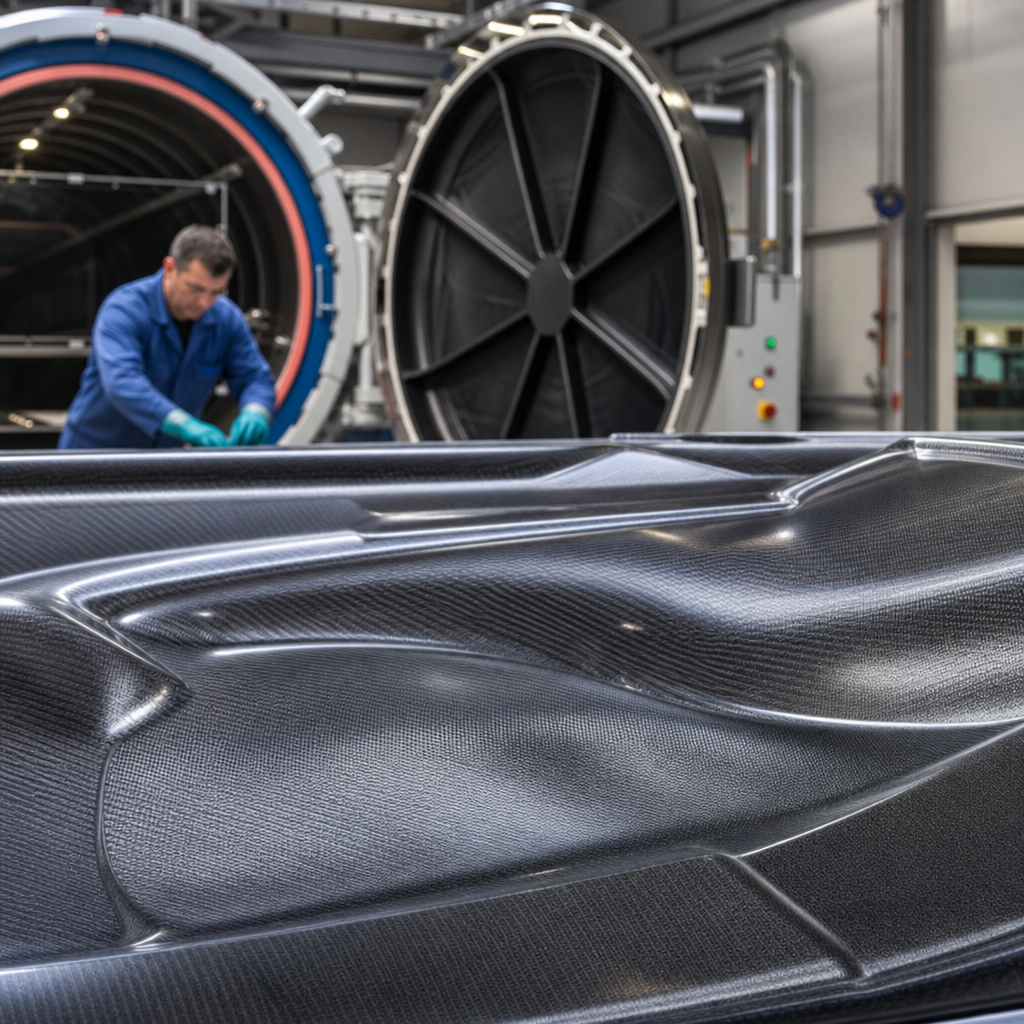
These materials matter because launch cycles now depend on processing as much as chemistry. Supercritical foaming can create lighter, more resilient midsoles by controlling cell morphology. Injection molding and overmolding enable complex multi-material assemblies. Additive manufacturing is beginning to matter in lattice padding and custom fit components, especially where localized stiffness and airflow are critical. Thermoforming, resin transfer molding, and automated layup also affect how polymer-rich products reach market at scale.
Another important trend is hybridization. Brands rarely rely on a single polymer property anymore. They layer foams, films, plates, and surface treatments to solve contradictory needs such as comfort and control or cushioning and stability. That is why launch notes increasingly mention dual-density constructions, perimeter weighting with foam support, co-molded inserts, and zonal reinforcement maps. The product is being tuned by location, not merely by overall material choice.
How brands validate performance and safety claims
When a new polymer-based sports product launches, the quality of evidence behind it matters as much as the claim itself. Serious brands validate products through lab testing, field testing, and standards compliance. For footwear, that can include compression set testing, resilience measurement, flex testing, outsole abrasion, and biomechanical trials with force plates or motion capture. For helmets, it includes drop tests, peak acceleration analysis, rotational protocols, retention system checks, and heat or aging exposure. For rackets and paddles, common validation points include swingweight, stiffness, coefficient of restitution, vibration frequency, and durability under repeated impact.
In product reviews I trust most, brands explain not only what improved but how it was measured. For example, a midsole foam that shows lower compression set after repeated loading will usually maintain ride characteristics longer. A helmet liner that broadens impact management across multiple velocities can be more protective in real conditions than one optimized for a single test point. A pickleball paddle with better bond integrity around the edge and face is less likely to delaminate or lose consistency over time. Specifics like these help buyers distinguish engineering progress from launch theater.
There are tradeoffs. Lighter can mean less durable if the cell structure becomes too fragile. Softer can improve comfort but reduce precision. More grip can increase wear. Sustainability additives or recycled content can alter consistency if sourcing is not tightly controlled. The best launches acknowledge these compromises and show how designers balanced them, often by changing geometry, layering materials, or refining processing tolerances rather than relying on one miracle polymer.
What sustainability means in polymer sports equipment launches
Sustainability is now part of nearly every launch conversation, but it needs careful interpretation. In polymer-based sports equipment, progress usually appears in four forms: recycled content, bio-based feedstocks, longer product life, and improved end-of-life planning. Recycled polyester uppers, bio-based EVA alternatives, castor-derived polyamides, solvent-free lamination, and reduced packaging are becoming common in launch materials. Some ski, outdoor, and cycling brands also discuss repairability and component replacement.
However, sustainability claims in sports equipment are constrained by safety and performance. A helmet shell or impact liner cannot sacrifice protective consistency for marketing value. Running shoe foams with excellent rebound may still be difficult to recycle because they are bonded into multi-material systems. Composite-rich products such as bikes, paddles, and sticks remain especially challenging at end of life. As a result, the most credible launches are those that make targeted, verifiable improvements rather than implying full circularity where none exists.
For buyers, the practical question is not whether a product is perfectly sustainable. It is whether the launch materially reduces waste or extends useful life without compromising function. A more durable outsole, replaceable padding set, or better moisture resistance can reduce replacement frequency, which often matters more than a small percentage of recycled content. In sports equipment, longevity is one of the most meaningful environmental metrics.
How to evaluate new product launches as a buyer or industry watcher
If you are using this page as a hub for new product launches, evaluate each release through the same lens. Start with the use case. A polymer breakthrough in marathon racing may be irrelevant for daily training. A high-end helmet feature may matter more for mountain biking than commuting. Then examine the material story. Does the launch specify the polymer platform, processing method, or performance target? Vague language usually signals weak differentiation.
Next, check for standards, test methods, and rule compliance. Look for certification marks, governing body limits, and independent testing where available. In footwear, consider ride stability, stack geometry, and expected mileage, not just energy return. In paddles and rackets, assess durability and control alongside power. In protection, fit and coverage are as important as material sophistication. Finally, compare the launch against the previous model. True innovation is often incremental but measurable.
As this sub-pillar hub expands, it should connect readers to detailed articles on individual categories: new running shoe foams, next-generation helmet systems, advanced pickleball paddle cores, polymer-rich protective wearables, and sustainable materials programs. The central takeaway is simple. The latest in polymer-based sports equipment is not one product trend but a broad shift toward material-led design, where foams, elastomers, thermoplastics, and resin systems determine how athletes move, feel, and stay protected.
Follow launches with a critical eye, ask what the polymer is doing inside the product, and use that answer to separate meaningful innovation from temporary buzz. That approach will help you buy smarter, report more accurately, and stay ahead of the next wave of sports equipment releases.
Frequently Asked Questions
What counts as polymer-based sports equipment, and why is it becoming so common?
Polymer-based sports equipment includes a wide range of products that depend on synthetic materials such as engineered plastics, elastomers, foams, and composite resin systems to deliver performance. That can mean carbon-fiber composite rackets bound with polymer matrices, running shoes built around responsive foam midsoles, helmets with impact-managing liners, shin guards and pads made from molded thermoplastics, weather-resistant balls, flexible wearables, and training tools designed for repeated load and deformation. In other words, polymers are no longer just secondary materials used for trim or coating; they are often central to how the equipment performs.
The reason polymer-based gear has become so common is simple: these materials let designers fine-tune performance in ways traditional materials often cannot. Manufacturers can control stiffness, rebound, flexibility, impact absorption, grip texture, moisture resistance, and overall weight with a very high degree of precision. That means a tennis racket can feel more stable without becoming too heavy, a cycling helmet can absorb impact more effectively while staying comfortable, and a basketball shoe can provide cushioning and energy return without adding bulk. As sports technology has advanced, polymers have become one of the most important tools for balancing speed, protection, comfort, and durability.
What are the latest innovations in polymer-based sports equipment?
The latest innovations are centered on more specialized foam chemistry, smarter composite layups, improved elastomer performance, and better multi-material construction. In footwear, brands are pushing advanced superfoams that deliver higher energy return, lower weight, and more resilient cushioning over time. In rackets, bats, and sticks, manufacturers are refining composite polymer matrices to improve vibration dampening, power transfer, and feel. In protective gear, newer thermoplastics and viscoelastic polymers are being engineered to react differently under low and high loads, staying flexible during normal movement but stiffening or dispersing force during impact.
Another major trend is the use of tuned polymer systems rather than one single material. A modern shoe, helmet, or pad may combine multiple polymers in layered structures, each serving a different purpose such as comfort, structural support, abrasion resistance, traction, or shock management. Product developers are also investing in additive manufacturing and precision molding to create equipment with highly customized internal geometries, especially in helmets, insoles, saddle components, and grips. These manufacturing advances allow brands to build lattice-like structures and targeted cushioning zones that would have been difficult or impossible to produce at scale just a few years ago.
There is also growing interest in sustainability-focused innovation. Some launches now feature bio-based polymers, partially recycled plastics, or redesigns meant to improve repairability and reduce material waste. While performance remains the top priority in competitive sports, the latest generation of polymer-based equipment increasingly tries to combine elite function with better lifecycle thinking.
How do polymers improve performance in sports equipment compared with traditional materials?
Polymers improve performance by giving engineers more control over mechanical behavior. Traditional materials such as wood, leather, or basic metal alloys often have strong natural characteristics, but they can be harder to tune with precision across different performance categories. Polymers and polymer composites, by contrast, can be engineered to be stiff in one area, flexible in another, soft under light load, and highly resistant under impact. This ability to tailor response is one of the biggest reasons they have become essential in modern equipment design.
In practical performance terms, that translates into several benefits. Weight reduction is one of the most obvious. Lighter shoes, rackets, helmets, and pads can help reduce fatigue and improve speed or maneuverability. Cushioning and energy return are another major advantage, especially in footwear and protective gear, where advanced foams and elastomers can absorb shock while also returning useful force to the athlete. Grip, weather resistance, and dimensional consistency also matter. Polymer-based surfaces can maintain traction in wet conditions, resist sweat and UV exposure, and hold their shape more reliably across temperature changes than many traditional materials.
Equally important is athlete comfort and confidence. Equipment that fits better, vibrates less, absorbs impacts more effectively, and performs consistently can help athletes focus more on technique and less on distraction. That does not automatically mean polymer-based gear is always superior in every category, since some players still prefer the feel of traditional materials in certain sports, but it does explain why polymers dominate where precision engineering and repeatable performance matter most.
Are polymer-based sports products durable and safe enough for serious use?
Yes, high-quality polymer-based sports products are absolutely designed for serious use, and in many categories they now set the standard for both durability and safety. The key is understanding that “polymer-based” does not mean cheap or fragile. Advanced polymers used in sports equipment can be extremely robust, especially when they are reinforced, layered, or formulated for specific stress conditions. Composite polymer structures in rackets, hockey sticks, and bicycle components are developed to withstand repeated loading, while impact-rated foams and thermoplastics in helmets and pads are built around established testing protocols and certification requirements.
Safety depends heavily on design quality, intended use, and product certification. A well-engineered helmet, mouthguard, chest protector, or training mat made with advanced polymer systems can offer excellent impact management, force dispersion, and user comfort. In some cases, polymer-based materials outperform older materials because they can be optimized to manage energy more effectively. Viscoelastic foams, crushable liner materials, and flexible shells with controlled deformation are all examples of how polymers contribute directly to player protection.
That said, consumers should still pay close attention to product standards, sport-specific certifications, and replacement guidelines. Polymer materials can degrade over time from repeated impact, UV exposure, heat, sweat, or improper storage. A helmet that has taken a major hit, a running shoe with compressed foam, or a bat with internal structural damage may no longer perform as intended even if it looks acceptable externally. For serious athletes, the best approach is to choose reputable brands, verify compliance with the relevant safety standards for the sport, and replace equipment according to manufacturer recommendations rather than appearance alone.
What should athletes and buyers look for when choosing the latest polymer-based sports equipment?
Buyers should start by focusing on sport-specific needs rather than assuming that the newest material automatically means the best choice. The right polymer-based equipment depends on how the athlete plays, their competition level, their body mechanics, and the conditions in which the gear will be used. For example, a runner may care most about cushioning balance, energy return, and stability, while a tennis player may prioritize frame stiffness, vibration control, and grip feel. In protective gear, fit, coverage, impact management, and certification should come before marketing claims about material innovation.
It is also important to evaluate the total construction, not just the headline material. A shoe marketed around a premium foam still needs a stable platform and durable outsole. A composite racket still needs the right weight distribution and handle feel. A helmet with advanced liner technology still must fit correctly to work properly. The best polymer-based products succeed because the material system, geometry, and manufacturing process all work together. That is why reading technical specifications, comparing independent reviews, and trying products in person when possible can be more useful than relying on buzzwords alone.
Finally, consider durability, maintenance, and value over time. Some high-performance polymer systems are optimized for elite responsiveness but may wear faster under heavy use. Others are built for everyday training and offer a better long-term balance of resilience and cost. Athletes should ask whether the product is designed for competition, regular practice, recovery, or protection, and whether it will hold up in the environments they actually face, including heat, rain, turf abrasion, or repeated impact. The smartest buying decision is usually the one that matches material technology to real-world use rather than chasing novelty for its own sake.