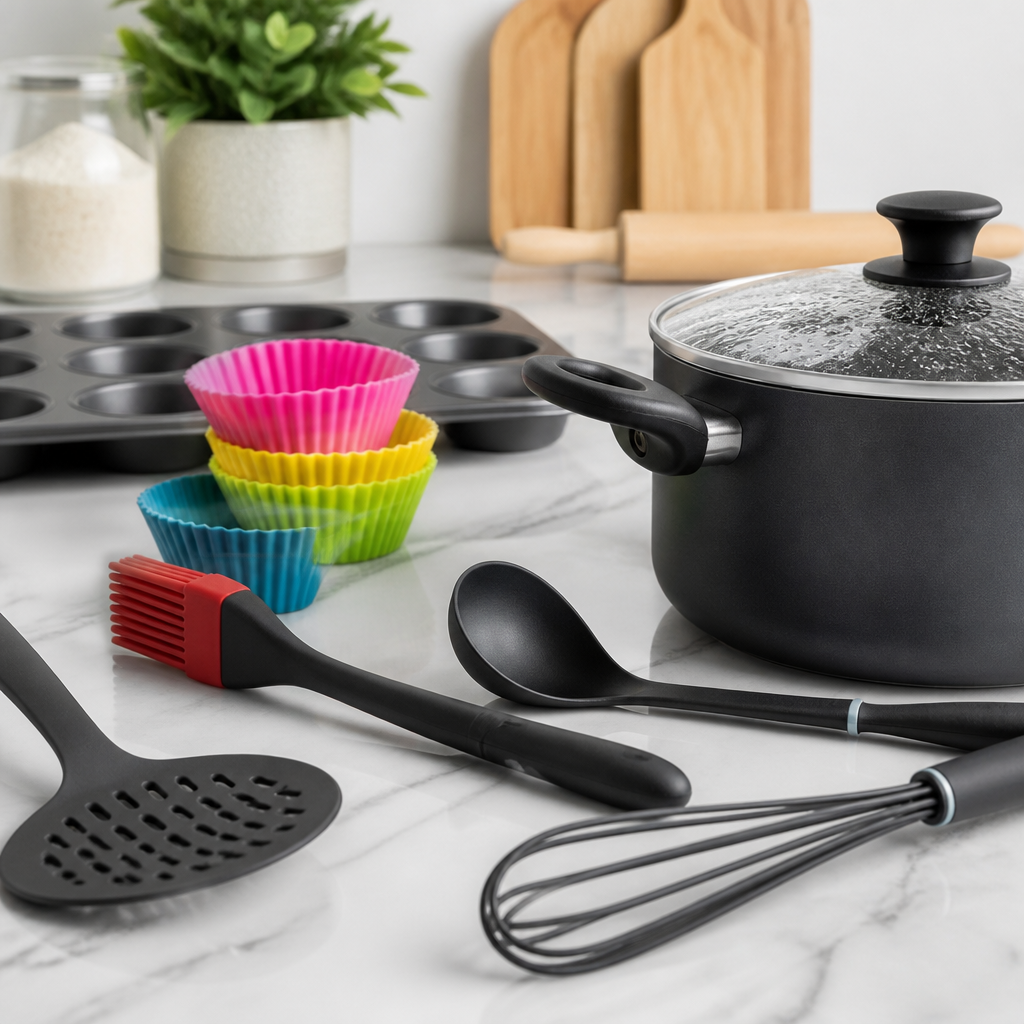
Polymers are quietly reshaping the tools people use to cook, bake, store food, and clean up, turning ordinary kitchens into safer, lighter, and more precise workspaces. In practical terms, a polymer is a material made of long repeating molecular chains, and that broad category includes silicone spatulas, nylon turners, nonstick fluoropolymer coatings, polyethylene storage containers, polyester baking mats, and high-performance engineering plastics used in appliance housings and handles. When I evaluate kitchen products, I do not look at polymers as generic “plastic.” I look at thermal stability, flexural modulus, food-contact compliance, hydrolysis resistance, coefficient of friction, impact strength, and how the material behaves after hundreds of dishwashing cycles. Those properties determine whether a whisk handle cracks, whether a measuring cup clouds, whether a baking mat scorches, and whether a pan coating releases food consistently.
Understanding polymers in daily life matters because the kitchen is one of the most demanding consumer environments. Tools face heat, steam, grease, acids, detergents, abrasion, freezing temperatures, and repeated mechanical stress. A wooden spoon can split, untreated metal can react with acidic foods, and glass can shatter under impact. Modern polymers solve many of these problems by combining low weight, moldability, chemical resistance, and cost-effective manufacturing. They also make product design more inclusive: cushioned thermoplastic elastomer grips improve usability for people with arthritis, translucent polypropylene containers simplify portioning, and silicone bakeware helps home bakers release delicate foods with less added fat.
This article serves as a hub for polymers in daily life by using cooking and baking tools as the clearest, most familiar example. Kitchens show how polymers move from abstract materials science into daily routines. They appear in spoons, bowls, blender jars, stand-mixer gears, coffee maker reservoirs, air fryer baskets, cutting boards, piping bags, sealing gaskets, and microwave steamers. Their role is not uniformly positive, and the details matter. Some polymers tolerate high oven temperatures; others soften or warp. Some are excellent for food storage but poor for direct heat. Some coatings are durable when used correctly but degrade quickly when scratched or overheated. The most useful question is not whether polymers are good or bad. It is which polymer is being used, where, and why.
For consumers, designers, and manufacturers, that distinction leads to better decisions. Choosing the right material improves food safety, extends tool life, reduces waste, and can lower energy use because lightweight, insulating components often improve appliance efficiency. It also supports smarter buying. A cheap spatula and a premium spatula may look similar, yet one may use low-grade filler-heavy plastic while the other uses platinum-cured silicone over a fiberglass-reinforced nylon core. By the end of this guide, you will understand how polymers improve cooking and baking tools, where their limitations lie, and how this everyday product category connects to the wider world of polymers in daily life.
Why polymers work so well in kitchen environments
Polymers improve cooking and baking tools because they can be engineered around a specific performance target rather than forced into a single material tradition. In cookware-adjacent products, the most valuable traits are heat resistance, low mass, corrosion resistance, and the ability to be injection molded or extruded into precise forms. Polypropylene, for example, is widely used in food containers and measuring tools because it resists many chemicals, has a relatively high melting point for a commodity plastic, and maintains good fatigue resistance in living hinges like flip-top lids. Silicone elastomers excel where flexibility and temperature tolerance matter, which is why they dominate spatula heads, muffin cups, and oven mitt grips.
Another major advantage is surface performance. Many cooking tasks depend on friction management: dough should release from a mat, batter should not cling to every contour of a scraper, and food residues should wash away without aggressive scouring. Fluoropolymer coatings such as PTFE provide very low surface energy, helping food release cleanly. Silicone also offers release benefits, though not to the same extent as a premium nonstick pan coating. In my experience testing baking accessories, the difference is obvious when making sticky products like caramel cookies or meringue. A quality silicone-lined tool reduces waste and preserves product shape, which matters to both home bakers and commercial kitchens.
Polymers also support manufacturing consistency. Metals often require secondary finishing, while many polymer tools come out of a mold with the final geometry, texture, and even color coding already built in. That matters for food prep workflows. Commercial pastry kitchens often use color-coded bowls, scrapers, and squeeze bottles to separate allergens or stages of production. The same material flexibility enables ergonomic handles with overmolded grips, transparent viewing windows in lids, and integrated measurement marks. Those features are not cosmetic. They reduce errors, improve safety, and shorten cleanup time.
Key polymers found in cooking and baking tools
Different tools rely on different polymer families, and performance depends on matching the chemistry to the task. Silicone is one of the most recognized because it stays flexible across a broad temperature range and generally performs well from freezer use to oven service. Food-grade silicone spatulas, loaf molds, and baking mats are popular because they resist staining better than many rubbers and do not become brittle in the cold. Platinum-cured silicone is typically preferred in higher-end products because it tends to have fewer residual byproducts than peroxide-cured alternatives.
Nylon is common in utensils designed for use on nonstick cookware. It offers a useful balance of stiffness, toughness, and affordability. However, nylon utensils vary significantly by grade. Standard nylon may deform around higher pan temperatures, while glass-filled or heat-stabilized variants perform better. Polyester and PET appear in utensils, appliance parts, and some storage applications, especially where dimensional stability is needed. Polypropylene dominates storage containers, microwave-safe tubs, and many mixing accessories because it is lightweight and chemically resistant. Polyethylene, especially HDPE, is common in cutting boards and squeeze bottles because it is durable and moisture resistant.
Higher-performance polymers appear in less visible but equally important places. PEEK, PPS, and polyimide-based materials are used in demanding appliance components because they tolerate higher temperatures and maintain mechanical properties under stress. Thermoplastic elastomers improve grip comfort on peelers, knives, and measuring cups. Fluoropolymers, including PTFE, are still central to nonstick release systems when properly applied over suitable pan substrates. None of these materials is interchangeable. A silicone oven mat cannot replace a rigid polypropylene measuring jug, and a low-cost polyethylene spoon is not a safe substitute for a high-heat turner. Material selection is the foundation of good kitchen product design.
| Polymer | Typical Kitchen Uses | Main Benefit | Primary Limitation |
|---|---|---|---|
| Silicone | Spatulas, bakeware, mats, seals | Flexible and heat resistant | Can tear if poorly reinforced |
| Polypropylene | Food containers, measuring cups, lids | Lightweight and chemical resistant | Not for direct high-heat contact |
| Nylon | Turners, spoons, tongs, appliance parts | Tough and pan-friendly | Lower heat tolerance than silicone or metal |
| HDPE | Cutting boards, bottles | Impact and moisture resistant | Surface can scar with knife use |
| PTFE coatings | Nonstick pans and trays | Excellent food release | Performance drops when scratched or overheated |
How polymers improve performance, safety, and user experience
The clearest benefit of polymers in cooking and baking tools is performance under real use. Silicone spatulas scrape bowls more completely than rigid metal tools because the edge conforms to curved surfaces. Nylon turners protect ceramic and fluoropolymer pan coatings from abrasion. Polycarbonate and copolyester measuring tools can be made transparent, helping users read volume lines precisely. In stand mixers and food processors, polymer gears and housings can reduce noise, weight, and manufacturing cost while maintaining adequate service life. Good polymer design often makes a tool feel simple, but that simplicity is engineered.
Safety is another major gain. Polymer handles stay cooler than bare metal because many polymers are poor heat conductors. That lowers burn risk on utensils left near a hot pan. Impact resistance also matters in busy kitchens. A polypropylene mixing bowl dropped on tile is more likely to survive than a ceramic one. Flexible polymer lids reduce spill hazards during storage and transport. In commercial foodservice, color-coded polymer cutting boards and utensils support hazard control systems by reducing cross-contact between raw proteins, produce, and allergen-sensitive prep areas.
User experience often improves through ergonomics and maintenance. Overmolded grips made from thermoplastic elastomers add traction when hands are wet or oily. Lightweight polymer colanders and bowls are easier for children and older adults to handle. Dishwasher compatibility saves labor, especially in high-use homes. One subtle improvement I have seen repeatedly is noise reduction. Polymer tools are quieter against metal bowls and pans than stainless steel tools, which makes open kitchens and teaching spaces more pleasant. When consumers say a tool feels modern, they are often responding to this combination of grip, weight, texture, and reduced friction rather than to appearance alone.
Limits, tradeoffs, and what buyers should watch closely
Not every polymer kitchen tool is automatically better, and misuse creates avoidable failures. Heat remains the biggest point of confusion. A microwave-safe food container is not necessarily broiler-safe. A nylon spoon that survives simmering soup may still warp if left in a dry skillet. Silicone bakeware is generally oven-safe, but maximum temperatures vary by formulation and reinforcement. Reputable brands publish clear heat ratings and food-contact certifications. Vague labels like “high temperature resistant” without a tested limit should be treated cautiously.
Durability also depends on design details beyond raw material choice. A one-piece silicone spatula is usually more hygienic than a detachable head that traps moisture in the joint. Thin-gauge storage containers may crack at the corners even if the polymer itself is appropriate. Cutting boards made from HDPE resist water well, but deep knife scars can harbor residue unless the board is cleaned and replaced when excessively worn. Nonstick coatings deserve especially balanced treatment. When used with moderate heat, soft utensils, and nonabrasive cleaning, quality coatings perform well. When overheated or scraped with metal, they lose release performance and should be replaced.
Buyers should also pay attention to compliance and transparency. In the United States, food-contact materials are expected to meet FDA requirements, while in Europe manufacturers often reference EU framework regulations and migration limits. Serious brands provide material information, temperature ratings, and care instructions. That level of disclosure is a strong quality signal. If you are comparing products, inspect seam quality, wall thickness, odor on opening, rigidity where support is needed, and whether the product is molded from a single suitable material or assembled from mismatched low-cost parts. Those clues tell you more than marketing copy.
Polymers in daily life beyond the spatula: the hub perspective
Cooking and baking tools are the ideal hub for understanding polymers in daily life because they connect to almost every other consumer category. The same principles that make silicone useful in a spatula help it function in baby products, wearable devices, and medical tubing. The same polypropylene used in leftover containers appears in automotive trims, laboratory ware, and household organizers. PET and related polyesters move from kitchen storage and appliance components into beverage packaging and textiles. Once you learn to evaluate polymers by properties rather than by broad labels, the whole materials landscape becomes easier to read.
That broader perspective matters for sustainability and purchasing decisions. Durable polymer tools can reduce breakage and replacement frequency, but short-lived disposable items create waste. Repairability, recyclability, and lifespan are therefore as important as initial performance. In practical buying guides I have written, the best polymer products are rarely the cheapest. They are the ones designed around realistic use conditions: repeated dishwashing, temperature cycling, food acidity, and mechanical fatigue. For readers exploring innovative products and solutions, kitchen tools provide an accessible entry point into a bigger topic with implications for packaging, home appliances, health products, and smart materials.
The main lesson is simple: polymers improve cooking and baking tools when the right material is matched to the right job. Silicone, nylon, polypropylene, HDPE, thermoplastic elastomers, and fluoropolymer coatings each solve distinct problems, from heat resistance and food release to grip comfort and impact durability. Their benefits are visible every day in spatulas that scrape cleanly, containers that seal reliably, handles that stay cooler, and bakeware that releases delicate foods with less damage. Their limits are just as important, especially around temperature, scratching, wear, and product quality variation.
As a hub for polymers in daily life, the kitchen shows why material literacy matters. Better material choices lead to safer cooking, longer-lasting tools, less waste, and more predictable results. When you shop, look past the generic word “plastic” and ask specific questions about polymer type, heat rating, construction, and care. That one habit will improve every buying decision you make in this category. Use this guide as your starting point, then apply the same material-first thinking across the rest of daily life.
Frequently Asked Questions
1. What does “polymer” mean in the context of cooking and baking tools?
In the kitchen, the word “polymer” refers to a wide family of materials made from long chains of repeating molecules. That may sound highly technical, but in everyday use it simply means many of the tools people rely on for cooking, baking, food storage, and cleanup are made with materials engineered for specific performance benefits. Silicone spatulas, nylon turners, polyethylene storage containers, polyester baking mats, and fluoropolymer nonstick coatings are all examples of polymers used in kitchen products.
What makes polymers so useful is that they can be designed to solve very practical kitchen problems. Some are flexible and heat resistant, which is why silicone works so well for spatulas, loaf pans, and muffin molds. Others are lightweight yet durable, making them ideal for utensil handles, appliance housings, measuring tools, and food containers. Certain polymers also reduce sticking, improve grip, resist staining, and help tools hold their shape after repeated use.
Polymers are improving cooking and baking tools because they allow manufacturers to balance performance, safety, comfort, and cost in ways traditional materials alone often cannot. Instead of relying only on wood, glass, ceramic, or metal, modern kitchens now benefit from materials that are easier to handle, gentler on cookware, simpler to clean, and often better suited to precise everyday tasks.
2. Why are polymer-based cooking tools often considered safer and easier to use?
Polymer-based tools are often seen as safer and more user-friendly because they address several common kitchen risks at once. First, many polymers are much lighter than metal, which makes utensils, bowls, appliance parts, and storage containers easier to lift, hold, and control. That matters when you are working quickly over a hot stove, transferring a heavy mixture, or baking with children or older adults who may need tools that are less tiring to handle.
Second, many polymers provide excellent thermal insulation compared with metal. Handles made with engineering plastics or silicone overmolds stay cooler to the touch, helping reduce the chance of burns. This is one reason polymers are widely used in pan handles, appliance exteriors, lids, and grip surfaces. Even when a product includes metal for strength, polymer components often improve comfort and handling where the user interacts with it most.
Another key benefit is surface friendliness. Nylon, silicone, and similar polymers are generally gentler on nonstick cookware, ceramic-coated pans, and bakeware than stainless steel utensils. That helps preserve coatings and prevents scratches that can shorten the life of cookware. In baking, flexible polymer tools can also scrape bowls more completely, helping reduce waste and improve consistency in recipes.
Ease of cleaning is another major advantage. Many polymer tools resist moisture, staining, and odor absorption better than some traditional materials, especially when properly formulated for food contact. Smooth surfaces and one-piece molded designs can also reduce crevices where food residue collects. Overall, polymer-based kitchen tools improve safety not because they replace all other materials, but because they often make daily cooking tasks more controlled, comfortable, and practical.
3. How do heat-resistant polymers like silicone and nylon improve cooking and baking performance?
Heat-resistant polymers improve performance by allowing tools to withstand demanding kitchen conditions without becoming brittle, overly hot to handle, or damaging delicate cookware surfaces. Silicone is one of the best-known examples. It remains flexible across a wide temperature range, which makes it ideal for spatulas, baking molds, pastry brushes, and oven mitt grips. In baking, silicone’s flexibility makes release easier, especially for sticky batters and delicate finished products like muffins, cakes, or candies.
Nylon is another important kitchen polymer, particularly for utensils such as slotted turners, spoons, ladles, and pasta servers. It offers a useful combination of strength, low weight, and resistance to wear. In many cases, nylon utensils can handle the temperatures involved in stovetop cooking while remaining less abrasive than metal. That makes them well suited for use with coated cookware, where preserving the pan surface is important for performance and longevity.
These materials also improve precision. A silicone spatula can conform closely to the inside of a mixing bowl or saucepan, making it easier to fold batters, scrape custards, or stir sauces thoroughly. That level of control is valuable in baking, where texture and ingredient distribution matter. Similarly, polymer components in measuring cups, digital scales, mixer housings, and appliance controls can improve ergonomics and usability, helping cooks work more accurately and efficiently.
It is still important to use each tool within its intended temperature range. Not every polymer performs the same way, and premium kitchen tools typically specify heat limits for a reason. When matched correctly to the task, however, heat-resistant polymers help create tools that are more adaptable, cookware-friendly, and reliable in both everyday cooking and precision baking.
4. Are nonstick coatings and plastic food containers made from polymers safe for kitchen use?
When produced to meet food-contact regulations and used according to manufacturer instructions, polymer-based nonstick coatings and food containers are generally considered safe for normal kitchen use. Nonstick cookware often relies on fluoropolymer coatings designed to reduce sticking and make cleanup easier. These coatings can perform very well when the pan is used properly, especially at the temperatures recommended by the manufacturer. Problems are more likely to arise when cookware is overheated, misused, or damaged through aggressive scraping or abrasive cleaning.
Food storage containers made from polymers such as polyethylene or polypropylene are also common because they are lightweight, durable, and resistant to moisture. In practical terms, these materials help with meal prep, leftovers, dry ingredient storage, and transport. Their usefulness comes from a balance of toughness, low weight, and convenience that glass or metal cannot always match in every situation. Many are also designed to tolerate refrigeration, freezing, or microwave reheating, although not every container is suitable for every use.
The most important rule is to choose products clearly labeled for food contact and to follow care guidelines closely. That means respecting temperature limits, avoiding the use of damaged containers or chipped coatings, and using microwave-safe products only as directed. It also helps to understand that “polymer” is a broad category, not a single material. Safety depends on the specific formulation, how the product was manufactured, and whether it is being used in the way it was designed to be used.
For most households, the takeaway is simple: high-quality polymer-based kitchen products from reputable manufacturers offer strong performance and convenience, but proper use matters. Replacing worn tools, not overheating nonstick pans, and using the right container for the right job are the best ways to maintain both safety and long-term value.
5. What should you look for when buying polymer-based cooking and baking tools?
When shopping for polymer-based kitchen tools, the first thing to consider is task-specific performance. A silicone spatula used for folding cake batter needs flexibility and heat resistance, while a nylon turner for sautéing needs stiffness, edge control, and durability. A storage container should seal well and resist warping, and a baking mat should provide consistent release and even performance over repeated oven cycles. The best tool is not simply the one made from a polymer, but the one made from the right polymer for the intended job.
Build quality matters just as much as material type. Look for products from reputable brands that clearly state temperature limits, food-contact suitability, and care instructions. One-piece silicone utensils can be especially useful because they eliminate seams where food can collect. For handles and appliance parts, sturdy construction, comfortable grip design, and secure bonding between materials are good signs of long-term reliability. If a tool feels flimsy, bends too easily, or lacks clear use guidance, it may not perform well under regular kitchen stress.
It is also worth paying attention to compatibility with the rest of your kitchen. If you use nonstick or ceramic-coated cookware, softer polymer utensils can help preserve those surfaces. If you bake frequently, polymer-based mats, scrapers, and mixing tools can improve efficiency and reduce sticking. If storage is a priority, lightweight stackable containers made from durable polymers can make a noticeable difference in organization and convenience.
Finally, think in terms of longevity rather than novelty. The most valuable polymer tools are the ones that solve real problems: reducing scratches, improving grip, resisting heat, simplifying cleanup, and making food preparation more precise. In that sense, polymers are improving cooking and baking tools not because they are trendy, but because they help modern kitchens function better on a daily basis.