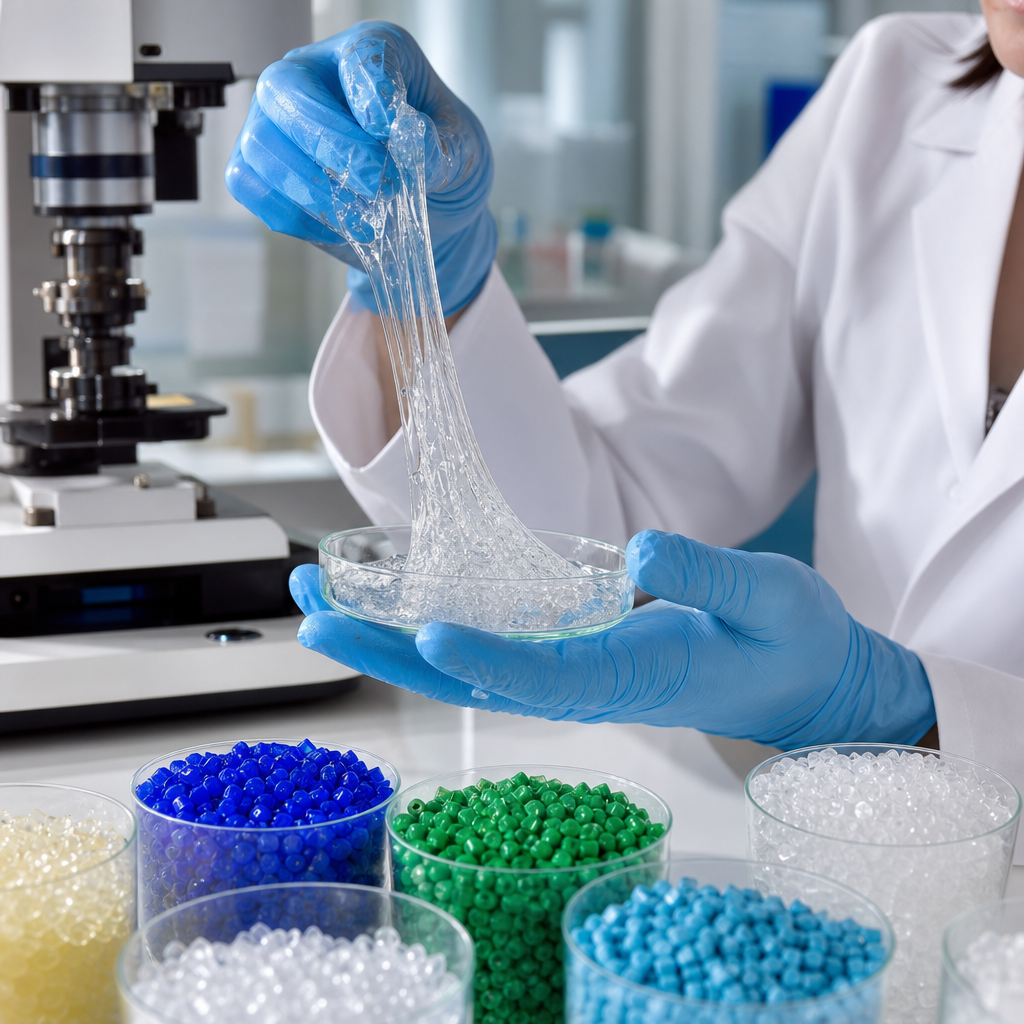
Polymer science explains how giant molecules are built, how they behave, and why they appear in products as different as food packaging, running shoes, medical implants, paints, and spacecraft components. A polymer is a substance made of repeating molecular units called monomers, linked into long chains or networks. Polymer science combines chemistry, physics, materials engineering, and manufacturing to understand how those chains form, how their structure controls properties, and how processing changes performance. For beginners, this field can seem crowded with technical words such as molecular weight, crystallinity, glass transition, copolymer, rheology, and crosslinking. Once those terms are defined in plain language, the subject becomes much easier to follow, and each concept connects directly to familiar real-world materials.
This beginner’s guide is designed as a central educational resource for tutorials and guides on polymer science. It introduces the core ideas that every newcomer should know before moving into deeper topics such as polymer synthesis, plastics testing, recycling systems, biomaterials, elastomers, composites, or additive manufacturing. In my own work reviewing material datasheets, comparing test reports, and troubleshooting production issues, I have found that beginners learn fastest when chemistry, structure, processing, and application are explained together rather than as separate subjects. A polyethylene grocery bag, a silicone sealant, and a carbon-fiber epoxy panel are all polymers, but they behave differently because their molecular architecture, intermolecular forces, additives, and manufacturing histories are different.
Understanding polymer science matters because polymers dominate modern material use by volume. Commodity plastics such as polyethylene, polypropylene, polyvinyl chloride, and polystyrene support packaging, construction, and consumer goods. Engineering polymers such as nylon, polycarbonate, PEEK, and acetal serve in automotive, aerospace, electronics, and medical devices. Thermosets, elastomers, adhesives, and coatings extend the field even further. Decisions about product durability, cost, weight, safety, sustainability, and recyclability often depend on polymer selection. If you can read a polymer datasheet, interpret terms like tensile modulus and melt flow index, and connect processing to final properties, you can make better technical and purchasing decisions. That practical benefit is why polymer science deserves a clear, beginner-friendly foundation.
What polymers are and how scientists classify them
A polymer is a macromolecule composed of many repeating units. Some polymers are natural, including cellulose in plants, proteins in living tissue, natural rubber from latex, and DNA in cells. Others are synthetic, produced through industrial chemistry from petroleum-derived or bio-based feedstocks. Scientists classify polymers in several useful ways. By source, they are natural, semi-synthetic, or synthetic. By thermal behavior, they are thermoplastics, thermosets, or elastomers. Thermoplastics soften when heated and can often be remolded, which is why polyethylene bottles and polypropylene caps are widely recycled mechanically. Thermosets cure into permanent networks and do not melt again; epoxy adhesives and many printed circuit board resins fit this category. Elastomers stretch and recover because their chains are flexible and lightly crosslinked, as seen in tires and seals.
Another important classification concerns chain architecture. Linear polymers have long unbranched chains, branched polymers contain side chains, and crosslinked polymers form three-dimensional networks. Architecture changes packing, viscosity, toughness, and heat resistance. High-density polyethylene is more linear and packs more efficiently than low-density polyethylene, giving it greater stiffness and density. Copolymers contain more than one monomer type, and the arrangement matters. Random copolymers can balance properties, block copolymers can self-assemble into nanoscale domains, and alternating copolymers can deliver regularity. Tacticity, the stereochemical arrangement of side groups along a chain, also matters. Isotactic polypropylene crystallizes well and becomes strong, while atactic polypropylene is softer and less ordered. These categories are the starting map for every polymer tutorial because they explain why similar chemistries can produce very different materials.
How polymers are made from monomers
Most beginners first ask how small molecules become giant chains. The answer depends on the polymerization mechanism. In chain-growth polymerization, reactive centers add monomers one at a time, often rapidly, until termination occurs. Polyethylene and polystyrene are classic examples, typically formed from alkene monomers through free-radical, coordination, or other catalytic routes. Ziegler-Natta and metallocene catalysts are especially important in polyolefin manufacturing because they control chain structure, molecular weight distribution, and stereochemistry. In step-growth polymerization, molecules with reactive functional groups combine gradually, producing longer chains as the reaction proceeds. Polyesters and nylons commonly form this way. Nylon 6,6, for example, is produced from hexamethylenediamine and adipic acid, while polyethylene terephthalate, better known as PET, comes from terephthalic acid and ethylene glycol.
Processing chemistry must be controlled carefully because conversion alone does not guarantee good material performance. Molecular weight strongly influences strength, melt viscosity, and impact behavior. If the chains are too short, a material may process easily but perform poorly. If they are too long, toughness may improve while molding becomes difficult. Manufacturers therefore target a molecular weight range suited to the intended method, whether extrusion, injection molding, blow molding, fiber spinning, or film casting. Additives are also introduced during compounding rather than initial synthesis. Stabilizers slow oxidation and UV damage, plasticizers increase flexibility, pigments add color, fillers reduce cost or improve stiffness, and flame retardants help meet safety standards such as UL 94 classifications. In practice, the final commercial polymer grade is rarely pure resin; it is a tuned formulation designed for a process window and an application requirement.
Structure-property relationships: why molecular design changes behavior
The central idea in polymer science is that structure determines properties. Chain length, branching, polarity, crystallinity, crosslink density, and molecular mobility all influence how a polymer behaves under heat, stress, moisture, chemicals, and time. Crystallinity does not mean a polymer becomes a perfect crystal like salt. Instead, some chain segments pack into ordered regions while others remain amorphous. Semi-crystalline polymers such as polyethylene, polypropylene, and nylon often show better chemical resistance and higher stiffness than fully amorphous materials. Amorphous polymers such as polystyrene and polycarbonate can offer transparency because they lack crystalline regions that scatter light. A beginner who understands this single distinction can explain why one clear plastic cup is brittle while another clear shield is impact resistant.
Two temperatures are especially important. The glass transition temperature, or Tg, marks the range where amorphous regions shift from hard and glassy to soft and rubbery. The melting temperature, or Tm, applies to crystalline regions and marks their loss of ordered structure. Below Tg, many polymers are stiff and prone to brittle fracture. Above Tg, they gain segmental mobility and become more flexible. This is why a rubbery seal can harden in winter if its Tg is too high for the service environment. Mechanical behavior also depends on strain rate and time. Polymers are viscoelastic, meaning they respond partly like elastic solids and partly like viscous fluids. A bumper material may absorb impact well in a quick test yet creep under a sustained load. In design reviews, this time-temperature dependence is one of the first issues I check because it often explains field failures that standard room-temperature tensile data miss.
Common polymer families and what they are used for
Beginners benefit from learning polymers by family because applications become easier to remember than abstract formulas. Polyethylene is the most widely used plastic family and appears in films, bottles, geomembranes, toys, and pipes. Low-density polyethylene is flexible and useful for film, while high-density polyethylene is stiffer and common in blow-molded containers. Polypropylene is lightweight, fatigue resistant, and widely used in caps, living hinges, automotive trim, and nonwoven fabrics. Polyvinyl chloride can be rigid for pipes and window profiles or plasticized for cables and flooring. Polystyrene is inexpensive and easy to process, showing up in disposable packaging and insulation foam, though its brittleness limits tougher applications. PET is known for beverage bottles and fibers because it offers clarity, strength, and good gas barrier performance.
Engineering polymers serve where commodity plastics fall short. Polycarbonate is transparent and impact resistant, making it useful for machine guards, lenses, and protective glazing. Polyamides, often called nylons, provide toughness and wear resistance in gears, bearings, and textiles, although they absorb moisture and change dimensions. Acetal, also called POM, offers low friction and excellent dimensional stability for precision parts. ABS balances toughness, processability, and appearance in housings and consumer products. High-performance materials such as PEEK, PPS, and fluoropolymers withstand aggressive chemicals, high temperatures, or demanding electrical conditions. Thermosets such as epoxy, unsaturated polyester, and phenolic resins dominate many adhesives, coatings, laminates, and composites. Silicones and polyurethanes occupy broad middle ground, ranging from soft elastomers to durable foams and sealants. Learning these families gives beginners a practical vocabulary for evaluating product choices and reading technical guides.
| Polymer family | Typical properties | Common applications |
|---|---|---|
| Polyethylene | Chemical resistance, toughness, low cost | Films, bottles, pipes |
| Polypropylene | Low density, hinge fatigue resistance, heat tolerance | Caps, containers, automotive trim |
| PET | Clarity, strength, gas barrier | Beverage bottles, fibers, trays |
| Polycarbonate | Transparency, impact resistance | Safety glazing, lenses, guards |
| Nylon | Wear resistance, toughness | Gears, textiles, fasteners |
| Epoxy | Adhesion, stiffness, chemical resistance | Adhesives, coatings, composites |
How processing shapes final polymer performance
A polymer’s chemistry matters, but processing often decides whether the finished part succeeds or fails. Injection molding pushes molten polymer into a mold cavity, where cooling rate, gate design, pressure, and shrinkage affect warpage, weld lines, residual stress, and cycle time. Extrusion forces melt through a die to make pipe, sheet, fiber, or film. Blow molding expands a heated parison or preform into a hollow container. Thermoforming shapes heated sheet over a mold, while rotational molding forms large hollow parts such as tanks. Thermosets and composites often rely on curing reactions rather than cooling alone. In each method, temperature history and flow history influence orientation, crystallization, and defect formation. I have seen the same resin grade pass one qualification trial and fail another simply because drying, melt temperature, or residence time shifted outside a narrow process window.
Moisture control is a classic example. Hygroscopic polymers such as nylon, PET, and polycarbonate absorb water, and that moisture can cause hydrolytic degradation during melt processing. The result may be lower molecular weight, reduced toughness, cosmetic defects, or poor dimensional consistency. That is why processors use desiccant dryers and monitor dew point, not just dryer temperature. Regrind management is another practical concern. While many thermoplastics can tolerate some recycled internal scrap, too much heat history may reduce impact strength or alter color. Orientation is equally important in films and fibers. Biaxially oriented PET gains strength and barrier performance because chains become aligned during stretching. This illustrates a broader rule: a polymer article is not defined only by resin name. Its actual performance comes from resin, additives, process conditions, tool design, and post-processing acting together.
Testing, sustainability, and how beginners should continue learning
Polymer science becomes useful when you can measure claims rather than repeat them. Common mechanical tests include tensile strength and modulus from ASTM D638, impact behavior from Izod or Charpy methods, hardness, flexural properties, and creep. Thermal analysis tools such as DSC measure transitions including Tg and Tm, while TGA tracks mass loss and thermal stability. DMA is especially valuable because it reveals temperature-dependent stiffness and damping, often exposing differences that simple tensile tests miss. Rheometers and melt flow tests help predict processability. Spectroscopy, including FTIR, supports material identification and contamination checks. Microscopy can reveal spherulites, fillers, fractures, or poor dispersion. When beginners learn to connect these methods to specific questions, polymer science stops being a list of terms and becomes a decision-making discipline.
Sustainability is now part of any serious polymer guide. Recycling is possible for many thermoplastics, but not all systems are equally practical. Mechanical recycling works best with cleaner, sorted streams and tends to degrade properties over multiple cycles. Chemical recycling can recover feedstocks from mixed or contaminated waste, but economics and energy use remain major constraints. Bio-based polymers, including polylactic acid and bio-derived polyethylene, can reduce fossil dependence, yet they are not automatically biodegradable in ordinary environments. Compostability requires specific standards and infrastructure, often defined by industrial composting conditions. Lightweighting, design for disassembly, mono-material packaging, and longer service life usually deliver more immediate environmental gains than simple material switching. If you want to keep learning, start by reading datasheets from major suppliers, comparing ASTM and ISO test methods, and studying one polymer family at a time. That approach builds durable intuition quickly.
Polymer science is easier to grasp when you treat it as a chain of cause and effect: monomers determine structure, structure influences processing, processing shapes properties, and properties define applications and end-of-life options. For beginners, that framework turns a huge field into a practical learning path. You do not need to memorize every resin grade to make progress. Focus first on the basics covered here: classification, polymerization, molecular structure, thermal transitions, common families, processing methods, and core testing concepts. Those fundamentals explain why a milk jug, a smartphone housing, a surgical suture, and a wind turbine blade can all belong to the same scientific field while performing such different jobs.
As a hub within educational resources, this guide should help you navigate more specialized tutorials and guides with confidence. When you encounter topics like extrusion troubleshooting, polymer recycling, composite layups, elastomer formulation, or barrier packaging, return to the same questions: what is the polymer structure, how is it processed, what properties matter, and what tradeoffs are involved? That habit will keep your learning grounded in evidence rather than marketing claims. Polymer science rewards curiosity because every product around you is a case study in material choice. Use this guide as your starting point, then continue by exploring detailed articles, supplier data, and standards-based testing methods to build real competence.
Frequently Asked Questions
What is polymer science, and why is it important?
Polymer science is the study of very large molecules made from repeating building blocks called monomers. These molecules, known as polymers, can exist as long chains, branched structures, or interconnected networks. The field looks at how polymers are synthesized, how their molecular structure affects their behavior, and how they can be processed into useful materials. It sits at the intersection of chemistry, physics, materials science, and engineering, which is why it plays such a central role in both research and manufacturing.
Its importance comes from the fact that polymers are everywhere in modern life. Common plastics, synthetic fibers, adhesives, coatings, elastomers, and many biomedical materials are all based on polymer science. The same principles help explain why a food package needs to be light and moisture-resistant, why a running shoe sole needs flexibility and rebound, why a medical implant must be biocompatible, and why aerospace components must survive heat and stress while remaining lightweight. In short, polymer science helps us design materials with specific combinations of strength, softness, durability, transparency, barrier performance, and thermal stability.
For beginners, one of the most useful ways to think about polymer science is as the study of structure-property relationships. Scientists ask questions such as: How long are the chains? Are they packed neatly or randomly? Are they flexible or rigid? Are they chemically linked to each other? The answers determine whether a material behaves like a brittle plastic, a stretchy rubber, a tough fiber, or a gel. That ability to connect molecular design to real-world performance is what makes polymer science so important.
What exactly is a polymer, and how is it different from a monomer?
A monomer is a small molecule that can react with other similar molecules to form a larger structure. A polymer is the resulting large molecule, made by linking many monomers together into repeating sequences. You can think of a monomer as a single link and a polymer as the full chain. In some cases, the repeating units are very regular and uniform. In others, the chain may contain more than one type of repeating unit, different sequence arrangements, or complex branching. Even with that variety, the basic idea remains the same: polymers are built from many smaller molecular pieces joined together.
This distinction matters because the properties of the final material are very different from the properties of the starting ingredients. A monomer may be a liquid or gas, while the polymer made from it may become a solid plastic, a flexible film, or an elastic rubber. Once monomers are connected into long chains, the size, mobility, and interactions of those chains create entirely new behavior. The resulting material can become tougher, more viscous, more heat resistant, or more stretchable depending on how the chains are assembled.
Polymers can also be classified in several useful ways. Natural polymers include cellulose, proteins, DNA, natural rubber, and starch. Synthetic polymers include materials such as polyethylene, polypropylene, nylon, polyester, polystyrene, and silicone. Some polymers are thermoplastics, meaning they can be softened and reshaped with heat. Others are thermosets, meaning they form permanent networks that do not melt in the same way after curing. Understanding the difference between monomers and polymers is one of the first foundational concepts in polymer science because it explains how simple chemical units become materials with highly engineered functions.
How does the structure of a polymer affect its properties?
In polymer science, structure is everything. The length of the polymer chains, the way they are arranged, the amount of branching, the presence of crosslinks, and the chemical groups attached to the backbone all influence how the material performs. Long chains tend to become more entangled, which can improve toughness and strength. Branched chains may pack less efficiently than linear chains, often changing density, flexibility, and melting behavior. Crosslinked polymers, where chains are chemically tied together, can become more elastic, more dimensionally stable, or more heat resistant depending on the degree of crosslinking.
Another key factor is how ordered the chains are. Some polymers are more crystalline, meaning parts of the chains line up in an organized way. Crystalline regions often increase stiffness, chemical resistance, and strength. Amorphous regions, where the chains are more randomly arranged, often contribute to transparency, flexibility, and easier processing. Most practical polymers contain a mix of both types of regions, and the balance between them strongly affects the final material. This is why two materials made from similar chemistry can feel and behave very differently.
Chain mobility also plays a major role. Flexible chains can move more easily, leading to softer or more rubbery behavior. Rigid chains tend to create harder, stronger, or more temperature-resistant materials. Scientists also pay close attention to the glass transition temperature, which marks the range where a polymer changes from a hard, glassy state to a softer, more mobile one. That transition helps determine whether a material performs well in a freezer, at room temperature, or in high-heat applications. Ultimately, polymer properties are not controlled by chemistry alone, but by the full molecular architecture of the material.
How are polymers made and processed into useful products?
Polymers are typically made through polymerization reactions, where monomers join together to form long chains or networks. Two broad categories are commonly introduced to beginners: addition polymerization and condensation polymerization. In addition polymerization, monomers add together without producing small byproducts, often through chain-growth mechanisms. In condensation polymerization, monomers react step by step and commonly release small molecules such as water or alcohol during the process. The exact route depends on the chemistry of the monomers and the desired polymer structure.
Once the polymer is made, processing becomes just as important as synthesis. A polymer’s final properties are shaped not only by what it is made of, but also by how it is formed into a product. Common processing methods include extrusion, injection molding, blow molding, compression molding, thermoforming, fiber spinning, and 3D printing. During these operations, heat, pressure, cooling rate, and flow conditions can change chain orientation, crystallinity, surface quality, and internal stress. That means the same polymer can be turned into a flexible film, a rigid bottle, a strong fiber, or a foam with very different performance characteristics.
Additives are also widely used to tailor performance. Plasticizers can increase flexibility, fillers can improve stiffness or reduce cost, stabilizers can protect against heat and UV damage, pigments add color, and reinforcing fibers can dramatically boost mechanical strength. In advanced applications, manufacturers may blend polymers together or create composites that combine polymers with glass, carbon fibers, ceramics, or nanoparticles. Polymer science therefore extends well beyond the chemical reaction in the lab. It includes the full path from molecular design to industrial processing to final product performance.
What are some everyday and advanced applications of polymer science?
Polymer science has an enormous range of applications because polymers can be engineered to meet very specific demands. In everyday life, polymers appear in packaging films, water bottles, food containers, carpets, clothing fibers, phone cases, sealants, paints, disposable medical products, and household appliances. Their popularity comes from their versatility: they can be lightweight, low-cost, chemically resistant, transparent, impact resistant, soft, or rigid depending on how they are designed and processed. This versatility makes polymers some of the most useful materials in modern manufacturing.
In performance applications, polymer science becomes even more impressive. Athletic footwear uses carefully tuned polymer foams and elastomers for cushioning, resilience, and durability. In medicine, polymers are used in contact lenses, catheters, prosthetics, tissue scaffolds, controlled drug delivery systems, and implants designed to interact safely with the human body. In electronics, polymers can serve as insulating layers, flexible substrates, encapsulants, and even active materials in specialized devices. Automotive and aerospace industries rely on polymer composites and high-performance resins to reduce weight while maintaining strength and thermal stability, which improves energy efficiency and overall performance.
Polymer science is also increasingly important in sustainability. Researchers are developing recyclable polymers, biodegradable materials, bio-based feedstocks, and more efficient processing methods to reduce environmental impact. They are also working on better ways to recover and reuse polymer materials after their first life cycle. For beginners, this is an exciting part of the field because it shows that polymer science is not only about making useful products, but also about solving major global challenges related to waste, energy use, and resource management. That combination of practical value and scientific depth is a big reason the field continues to grow.