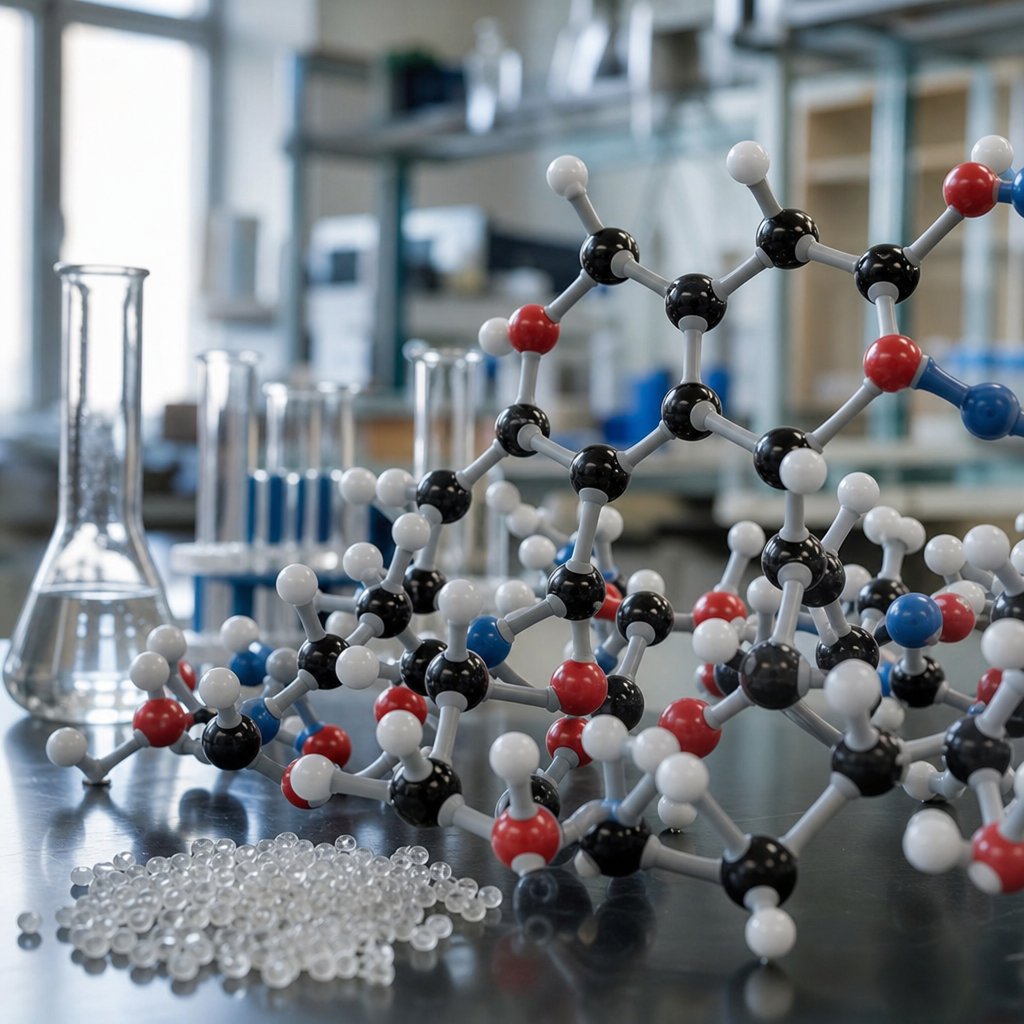
Polymer chemistry explains how small molecules called monomers join into long chains or networks that become plastics, fibers, rubbers, coatings, adhesives, and biomaterials. In practice, it sits at the intersection of organic chemistry, physical chemistry, and materials science, because the same repeat unit can behave very differently depending on molecular weight, architecture, crystallinity, and additives. I have seen this firsthand in formulation work: a resin that looked identical on paper changed from brittle to tough simply because its chain length distribution and crosslink density shifted during scale-up. Understanding polymer chemistry therefore means understanding both structure and process.
A polymer is a macromolecule built from repeating constitutional units linked by covalent bonds. Monomers are the starting molecules. Polymerization is the reaction that converts monomers into polymers. Copolymers contain two or more monomer types, while homopolymers contain one. Thermoplastics soften on heating and can often be remelted; thermosets form permanent networks and do not melt cleanly after curing. Elastomers are lightly crosslinked polymers that stretch and recover. These definitions matter because they connect chemistry directly to performance, processing, cost, and recyclability.
This tutorial serves as a hub for broader educational resources on tutorials and guides in polymer science. If you are moving into plastics engineering, coatings development, biomedical materials, or academic research, the fundamentals here will help you interpret technical datasheets, reaction schemes, and processing limits with confidence. Polymer chemistry also matters far beyond the lab. Packaging shelf life, vehicle lightweighting, semiconductor photoresists, water treatment membranes, textile durability, and controlled drug delivery all depend on polymer design. A useful tutorial must therefore answer not only what polymers are, but how they are made, how chemists characterize them, why properties emerge, and where the practical tradeoffs lie.
The field is broad, yet its logic is teachable. Chain structure controls intermolecular forces. Intermolecular forces influence glass transition, melting behavior, solubility, and mechanical response. Polymerization mechanism shapes molecular weight and architecture. Processing then locks in morphology, which can amplify or undermine the intended properties. Once you grasp those links, technical literature becomes much easier to read. The sections below provide that map in plain language, with concrete examples and standard concepts used by practicing chemists.
Core polymer structures and the language chemists use
Most introductory confusion comes from vocabulary, so it helps to anchor a few core ideas. The repeat unit is the pattern that recurs along the chain, but it is not always identical to the monomer. Polyethylene comes from ethylene, CH2=CH2, and its repeat unit is -CH2-CH2-. Nylon 6,6 comes from hexamethylenediamine and adipic acid, yet the polymer repeat unit reflects a condensation product, not either feed molecule alone. Degree of polymerization describes how many repeat units are present on average, while molecular weight describes the mass of the chains. Because polymer samples contain many chain lengths, chemists use averages such as number-average molecular weight, Mn, and weight-average molecular weight, Mw.
Architecture matters as much as composition. Linear polymers like high-density polyethylene can pack efficiently and crystallize, while branched polymers like low-density polyethylene pack less efficiently and are usually lower in density and stiffness. Star, comb, graft, and dendritic structures create different viscosities and self-assembly behavior. Crosslinked systems form three-dimensional networks. Epoxy thermosets are a familiar example: once cured with amines or anhydrides, the network restricts flow and improves heat resistance, but it also complicates recycling. Tacticity, the stereochemical arrangement of side groups along a chain, also changes properties. Isotactic polypropylene crystallizes well and is commercially important; atactic polypropylene is largely amorphous and much softer.
Copolymers offer another powerful design tool. Random copolymers distribute monomers statistically, block copolymers place long sequences together, and alternating copolymers switch regularly between monomers. Styrene-butadiene rubber uses copolymerization to balance elasticity, abrasion resistance, and cost in tires. Block copolymers such as styrene-butadiene-styrene can microphase separate into hard and soft domains, giving elastomeric behavior without permanent chemical crosslinks. In everyday development work, selecting architecture is often more effective than simply chasing a new monomer, because architecture controls phase behavior, processability, and final performance.
How polymers are made: major polymerization mechanisms
Polymerization mechanisms are usually grouped into chain-growth and step-growth processes. In chain-growth polymerization, an active center adds monomer rapidly one unit at a time. Free-radical polymerization, cationic polymerization, anionic polymerization, coordination polymerization, and ring-opening metathesis polymerization all fit under this broad logic, though their kinetics and control differ sharply. Polyethylene made with Ziegler-Natta or metallocene catalysts is a classic coordination example. Polystyrene and poly(methyl methacrylate) are commonly made by free-radical routes. The mechanism matters because it determines molecular weight development, tolerance to impurities, branching, stereochemistry, and reactor design.
Step-growth polymerization follows a different pattern. Any two reactive species can combine, and high molecular weight appears only at very high conversion. Polyesters, polyamides, and polyurethanes are standard examples. Nylon 6,6 forms from a diamine and a diacid derivative; polyethylene terephthalate, or PET, forms from terephthalic acid or dimethyl terephthalate with ethylene glycol. In these systems, stoichiometric balance is critical. Even a small imbalance in functional groups can cap chains and limit molecular weight. Moisture control also matters, especially for isocyanate chemistry in polyurethanes, where water side reactions generate carbon dioxide and urea linkages that alter foam structure and performance.
Modern polymer chemistry increasingly uses controlled or living methods when narrow distributions or advanced architectures are needed. Atom transfer radical polymerization, reversible addition-fragmentation chain-transfer polymerization, and anionic living polymerization allow better control over chain length and block formation than conventional free-radical methods. These methods are central in research, specialty coatings, dispersants, and biomedical delivery systems. They are not always the cheapest routes at commodity scale, but they enable structure-property control that conventional chemistry cannot match. When a formulation requires a targeted dispersity, defined end groups, or amphiphilic block copolymers for self-assembly, controlled polymerization is often the reason it works.
| Mechanism | Common polymers | Key advantage | Main limitation |
|---|---|---|---|
| Free-radical chain-growth | Polystyrene, PMMA, acrylics | Robust and scalable | Broader molecular weight distribution |
| Coordination polymerization | Polyethylene, polypropylene | Stereochemical and branching control | Catalyst sensitivity and cost |
| Step-growth polymerization | PET, nylons, polyurethanes | Broad monomer flexibility | Needs high conversion and stoichiometric balance |
| Controlled/living methods | Block copolymers, specialty materials | Precise architecture | More complex execution |
Molecular weight, thermal behavior, and morphology
Many beginners assume composition alone determines properties. In polymers, molecular weight is often the hidden variable that decides whether a material behaves as a useful solid, a tacky oligomer, or a brittle film. As molecular weight rises, chain entanglement increases, usually improving toughness and melt strength while also increasing viscosity. That is why resin producers carefully control initiator level, catalyst activity, residence time, and chain transfer agents. A small shift in Mw can change extrusion stability, coating flow, or fiber drawability. Dispersity, defined as Mw/Mn, indicates how broad the molecular weight distribution is and affects processing consistency.
Thermal behavior is another foundation. The glass transition temperature, Tg, marks the range where amorphous polymer segments gain mobility. Below Tg, the material is typically glassy and rigid; above it, it becomes softer or rubbery. The melting temperature, Tm, applies to crystalline regions. Amorphous polymers such as polystyrene have a Tg but no true Tm. Semicrystalline polymers such as polyethylene and nylon show both. This distinction is essential in processing and product design. A food container made from polypropylene can tolerate higher service temperatures than one made from low-density polyethylene because its crystalline morphology and higher softening behavior provide better dimensional stability.
Morphology links chemistry to visible performance. Crystallinity can increase stiffness, barrier properties, and chemical resistance, but it may reduce clarity and impact strength. Orientation during fiber spinning or film stretching aligns chains and can dramatically raise tensile strength, as seen in PET beverage bottles and high-performance polyethylene fibers. Phase separation also matters. Thermoplastic polyurethanes contain soft and hard segments that organize into domains, giving a combination of flexibility and abrasion resistance. In practice, processing conditions such as cooling rate, shear history, and annealing often matter nearly as much as the polymer recipe. A well-designed polymer can underperform if morphology develops poorly during manufacturing.
How polymer chemists characterize materials
Polymer characterization answers four practical questions: what was made, how big are the chains, how does the material transition with temperature, and how will it perform in use. Nuclear magnetic resonance spectroscopy confirms structure, copolymer composition, and sometimes tacticity. Fourier transform infrared spectroscopy quickly identifies functional groups and cure progress, making it common in quality control for coatings, adhesives, and thermosets. Gel permeation chromatography, also called size exclusion chromatography, estimates molecular weight distribution relative to standards. Differential scanning calorimetry measures Tg, Tm, and crystallization behavior, while thermogravimetric analysis tracks decomposition and volatile loss.
Mechanical and rheological tests are equally important because polymers are process-dependent materials. Dynamic mechanical analysis reveals storage modulus, loss modulus, and transition behavior across temperature, making it especially useful for elastomers and composites. Rotational rheometers and melt flow measurements show how a resin will pump, coat, extrude, or fill a mold. X-ray diffraction helps evaluate crystallinity and crystal form. Microscopy, including scanning electron microscopy and atomic force microscopy, exposes fracture surfaces, phase domains, and filler dispersion. In one troubleshooting project, a simple SEM image of a failed adhesive joint showed filler agglomerates that had escaped routine viscosity checks; the chemistry was acceptable, but the dispersion process was not.
No single test is sufficient. Good polymer analysis combines orthogonal methods because similar observations can have different causes. A rise in modulus might come from higher crystallinity, greater crosslink density, loss of plasticizer, or simple moisture changes in a hygroscopic polymer such as nylon. Reliable interpretation depends on sample history, conditioning, and the right baseline comparisons. For students and new practitioners, this is one of the biggest lessons: polymer data make sense only when chemistry, processing, and environment are considered together.
Applications, sustainability, and how to keep learning
Polymer chemistry becomes most meaningful when tied to applications. Commodity polymers such as polyethylene, polypropylene, PVC, PET, and polystyrene dominate packaging and consumer goods because they balance cost and performance. Engineering polymers including polycarbonate, POM, PEEK, and polyamides serve more demanding environments involving heat, load, or chemicals. Specialty polymers extend further into membranes, photoresists, dental composites, hydrogels, and conductive materials. Selection is rarely about finding the “best” polymer in absolute terms. It is about matching chemistry, processing route, regulatory constraints, and lifecycle expectations to the use case.
Sustainability now shapes nearly every serious discussion in polymer science. Mechanical recycling works best for relatively clean thermoplastics with stable property retention, while multilayer packaging and heavily filled systems remain difficult. Chemical recycling, depolymerization, solvent-based purification, and mass-balance feedstocks are advancing, but economics and energy intensity still decide adoption. Bio-based monomers such as polylactic acid, bio-PET components, and polyamides from renewable feedstocks can reduce fossil dependence, yet renewable origin alone does not guarantee lower impact or superior end-of-life outcomes. The honest view is nuanced: better polymer chemistry must work alongside better product design, collection systems, and policy.
As a hub page for tutorials and guides, this article gives you the framework to explore deeper topics with purpose. Focus next on polymerization kinetics, thermal analysis, rheology, polymer spectroscopy, recycling technologies, and structure-property case studies. The key takeaway is simple: polymer performance is not mysterious. It follows from repeat unit chemistry, molecular architecture, molecular weight, morphology, and processing history. Learn those relationships and you can predict behavior, troubleshoot failures, and design better materials. Use this tutorial as your starting point, then continue into the linked educational resources to build practical fluency in polymer chemistry.
Frequently Asked Questions
What is polymer chemistry, and why is it important in real-world materials?
Polymer chemistry is the branch of chemistry that studies how small molecules, known as monomers, react to form large molecules made of repeating units called polymers. These polymers may exist as linear chains, branched structures, crosslinked networks, or more complex architectures, and their final properties depend not only on the chemical identity of the repeat unit but also on how those units are connected and organized. This is why polymer chemistry is far more than simply “making long molecules.” It is about understanding how molecular design translates into performance in finished materials.
Its importance comes from the fact that polymers are everywhere. Plastics, synthetic fibers, rubbers, paints, pressure-sensitive adhesives, protective coatings, sealants, electronic materials, medical devices, and drug-delivery systems all rely on polymer science. A polymer can be engineered for flexibility, impact resistance, transparency, chemical resistance, thermal stability, or biodegradability depending on the application. Even when two materials appear similar at first glance, subtle differences in molecular weight, chain branching, crystallinity, tacticity, or additive package can lead to major changes in processing behavior and end-use performance.
In practical formulation and manufacturing work, this becomes especially clear. A resin that looks identical on paper may process differently in an extruder, cure differently in a coating, or show very different toughness, viscosity, or shelf stability in an adhesive. Polymer chemistry matters because it provides the framework for predicting and controlling these outcomes. It connects molecular structure to manufacturability, durability, cost, and safety, making it one of the most important scientific foundations behind modern materials design.
How do monomers become polymers, and what are the main types of polymerization?
Monomers become polymers through chemical reactions that link many small molecules into much larger structures. The exact mechanism depends on the functionality of the monomer and the polymerization method being used. At the most basic level, polymerization can be divided into two broad categories: chain-growth polymerization and step-growth polymerization. Understanding this distinction is central to understanding polymer chemistry as a whole.
In chain-growth polymerization, the polymer chain grows from an active site such as a free radical, cation, anion, or metal-coordinated center. Once initiation occurs, monomers add one at a time to the growing chain. Common examples include polyethylene, polystyrene, polyvinyl chloride, and many acrylic polymers. These systems can often achieve high molecular weight early in the reaction, and the mechanism strongly influences polymer architecture, molecular weight distribution, and end-group chemistry. Variations such as free-radical polymerization, controlled radical polymerization, ionic polymerization, and coordination polymerization are widely used depending on the desired level of control.
In step-growth polymerization, molecules react through functional groups such as alcohols, acids, amines, or isocyanates. Any two reactive species can combine at almost any stage, so molecular weight builds more gradually. Polyesters, polyamides, polyurethanes, and many epoxy networks are formed this way. High conversion is usually needed before very high molecular weight is reached, which is a key practical consideration in process design.
Another useful distinction is between addition and condensation polymerization. Addition processes generally do not eliminate small molecules during bond formation, while condensation processes often release byproducts such as water, methanol, or hydrogen chloride. However, the chain-growth versus step-growth framework is usually more informative when predicting kinetics and molecular weight development.
In industry, the choice of polymerization route affects more than chemistry alone. It influences heat management, reactor design, purification requirements, environmental controls, processing windows, and final material properties. That is why polymerization method is not just a synthetic detail; it is one of the main levers used to engineer a polymer for a specific application.
What factors determine the properties of a polymer material?
Polymer properties are determined by a combination of chemical structure, molecular size, molecular architecture, morphology, and formulation details. This is one of the defining ideas in polymer chemistry: the repeat unit matters, but it is only part of the story. Two polymers made from the same monomer can behave very differently if they differ in molecular weight, branching, tacticity, crosslink density, crystallinity, or additive content.
Molecular weight is one of the first major variables. As molecular weight increases, strength, toughness, entanglement, and melt viscosity often increase as well. This can improve mechanical performance but may make processing more difficult. Molecular weight distribution also matters, because a broad distribution can affect flow, film formation, and consistency in manufacturing.
Chain architecture is equally important. Linear polymers often pack differently from branched polymers, while crosslinked polymers can become insoluble, dimensionally stable, and heat resistant. Copolymer composition and sequence distribution introduce another layer of control. Random, block, graft, and alternating copolymers can display dramatically different flexibility, phase behavior, impact resistance, and adhesion even when they share similar monomer ingredients.
Morphology plays a major role as well. Some polymers are amorphous, while others are semicrystalline. Crystallinity can increase stiffness, chemical resistance, and barrier performance, but it may reduce transparency or impact resistance. Glass transition temperature and melting temperature define how a polymer behaves under thermal stress, whether it remains rigid, softens, or flows. Intermolecular forces, such as hydrogen bonding or dipole interactions, further influence mechanical and thermal properties.
Finally, additives and processing history can transform the behavior of a polymer system. Plasticizers, fillers, pigments, stabilizers, flame retardants, tougheners, and reinforcing fibers all change the final material. Processing conditions such as cooling rate, shear history, curing schedule, and moisture exposure can alter orientation, residual stress, phase separation, or network formation. In real applications, performance is often the result of this full combination rather than the polymer backbone alone. That is why polymer chemists and formulators must think at both the molecular and systems levels.
What is the difference between thermoplastics, thermosets, and elastomers?
Thermoplastics, thermosets, and elastomers are three broad classes of polymer materials, and they differ mainly in how their molecular structures respond to heat and mechanical deformation. These categories are essential because they help explain why one polymer can be remelted and reshaped, another becomes permanently set, and a third can stretch and recover like rubber.
Thermoplastics consist of polymer chains that are not permanently crosslinked, although they may be entangled or held together by secondary interactions. When heated, they typically soften or melt, allowing them to be processed by extrusion, injection molding, blow molding, thermoforming, or 3D printing. Once cooled, they harden again. Common examples include polyethylene, polypropylene, polystyrene, polycarbonate, and nylon. Their reprocessability makes them valuable for manufacturing efficiency and, in many cases, recycling. However, their heat resistance and dimensional stability can be limited depending on the polymer.
Thermosets begin as reactive systems that cure into highly crosslinked three-dimensional networks. Once cured, they do not melt upon reheating in the way thermoplastics do. Instead, they tend to char, crack, or degrade if exposed to sufficient heat. Epoxy resins, many polyurethanes, phenolics, and unsaturated polyester resins fall into this category. Because of their network structure, thermosets often offer superior chemical resistance, thermal performance, rigidity, and creep resistance. They are widely used in coatings, composites, adhesives, encapsulation, and structural applications where long-term stability matters.
Elastomers are polymers designed to undergo large reversible deformation. Their chains are flexible, and they usually contain either light crosslinking or strong physical associations that allow them to stretch and return to their original shape. Natural rubber, silicone rubber, nitrile rubber, and many thermoplastic elastomers are examples. The key property is elasticity, which arises from chain mobility combined with enough network integrity to prevent permanent flow. Elastomers are essential in seals, tires, gaskets, medical tubing, vibration damping, and soft-touch applications.
It is also important to recognize that these categories can overlap in practice. Some materials are thermoplastic elastomers, meaning they behave like rubber in use but can still be melt processed. Others may be lightly crosslinked systems that sit between conventional categories. This is where polymer chemistry becomes especially useful, because it explains the structural reasons behind the material behavior rather than relying only on labels.
How does polymer structure influence processing, performance, and product design?
Polymer structure influences nearly every stage of a material’s life cycle, from synthesis and formulation to manufacturing, end-use performance, and failure mode. In product design, this relationship is critical because a polymer that is chemically suitable on paper may still fail in processing, assembly, or service if its structure is not matched to the application requirements.
During processing, structure affects melt viscosity, solubility, cure speed, flow behavior, and thermal stability. High molecular weight can improve toughness but may increase viscosity enough to complicate molding or coating. Branching can lower crystallinity and change melt behavior. Crosslinkable systems may offer excellent final properties, yet their pot life, gel time