Polymer recycling techniques sit at the center of modern materials management because plastics are durable, versatile, and widely used, yet too valuable to discard after a single life cycle. In practice, polymer recycling means collecting plastic products, sorting them by resin type and quality, and processing them into feedstock that can be used again in manufacturing. I have worked with packaging, automotive, and consumer goods waste streams, and the lesson is always the same: the best recycling system matches the polymer, the contamination level, and the intended end use. A clear guide matters because no single method works for every plastic article, every municipality, or every factory.
To understand polymer recycling, it helps to define the main categories. Primary recycling usually refers to reusing clean industrial scrap in a closed loop. Secondary recycling, often called mechanical recycling, turns post-industrial or post-consumer plastic into regrind, flakes, pellets, or compounds with some loss of properties. Tertiary recycling breaks polymers down into monomers, oils, syngas, or other chemical intermediates through processes such as depolymerization, pyrolysis, and gasification. Quaternary recovery captures energy through incineration, although many technical discussions separate it from recycling because the material itself is not retained. These distinctions shape plant design, economics, and environmental impact.
Why does this topic matter now? Global plastic production exceeds hundreds of millions of metric tons per year, while recycling rates remain uneven by region and resin. At the same time, regulations are tightening. The European Union is pushing recycled-content targets and extended producer responsibility schemes, while major brands are committing to incorporate more post-consumer resin into packaging. Manufacturers also face volatile virgin resin prices, pressure to reduce greenhouse gas emissions, and growing scrutiny over landfill dependence. For engineers, procurement teams, sustainability managers, and students, understanding polymer recycling techniques is no longer optional. It is a practical requirement for product design, compliance, and long-term cost control.
This guide serves as a hub for tutorials and guides across the broader educational resources section. It explains how the major recycling techniques work, what equipment and standards are commonly used, where each method succeeds, and where limitations remain. If you need a reliable starting point for related topics such as PET bottle recycling, film recycling, design for recyclability, or contamination control, this page gives the framework. The most useful way to read it is to move from polymer fundamentals to process choices, then to application fit. That approach mirrors how recycling decisions are made in real operations, from materials characterization to final product qualification.
Understanding polymers and waste stream classification
Polymer recycling begins with identification. Thermoplastics such as PET, HDPE, LDPE, PP, PS, PVC, ABS, PA, and PC can often be reheated and reprocessed, although repeated heat histories can reduce molecular weight, toughness, color, or melt strength. Thermosets and elastomers are harder to recycle mechanically because their crosslinked structures do not melt cleanly. In mixed waste streams, resin identification codes help with consumer sorting, but plants rely on more precise methods: near-infrared spectroscopy for polymer recognition, X-ray transmission for density and chlorine detection, sink-float separation for polyolefins versus denser plastics, and melt flow index testing to assess processability. Good recycling starts with good data on composition and contamination.
Waste stream classification is equally important because polymer recycling performance is determined less by the theoretical recyclability of a resin and more by the quality of the incoming material. Post-industrial scrap from a film extrusion line is usually clean, homogeneous, and highly suited to mechanical recycling. Post-consumer packaging from curbside collection is different: labels, inks, multilayer structures, food residue, metals, paper fibers, and incompatible polymers all complicate recovery. Agricultural film, automotive shredder residue, electrical and electronic equipment waste, and textile waste each require different pretreatment steps. In facilities I have assessed, the biggest process gains rarely came from adding exotic chemistry; they came from better bale specifications, more consistent sorting, and tighter contamination thresholds.
Mechanical recycling: the workhorse technique
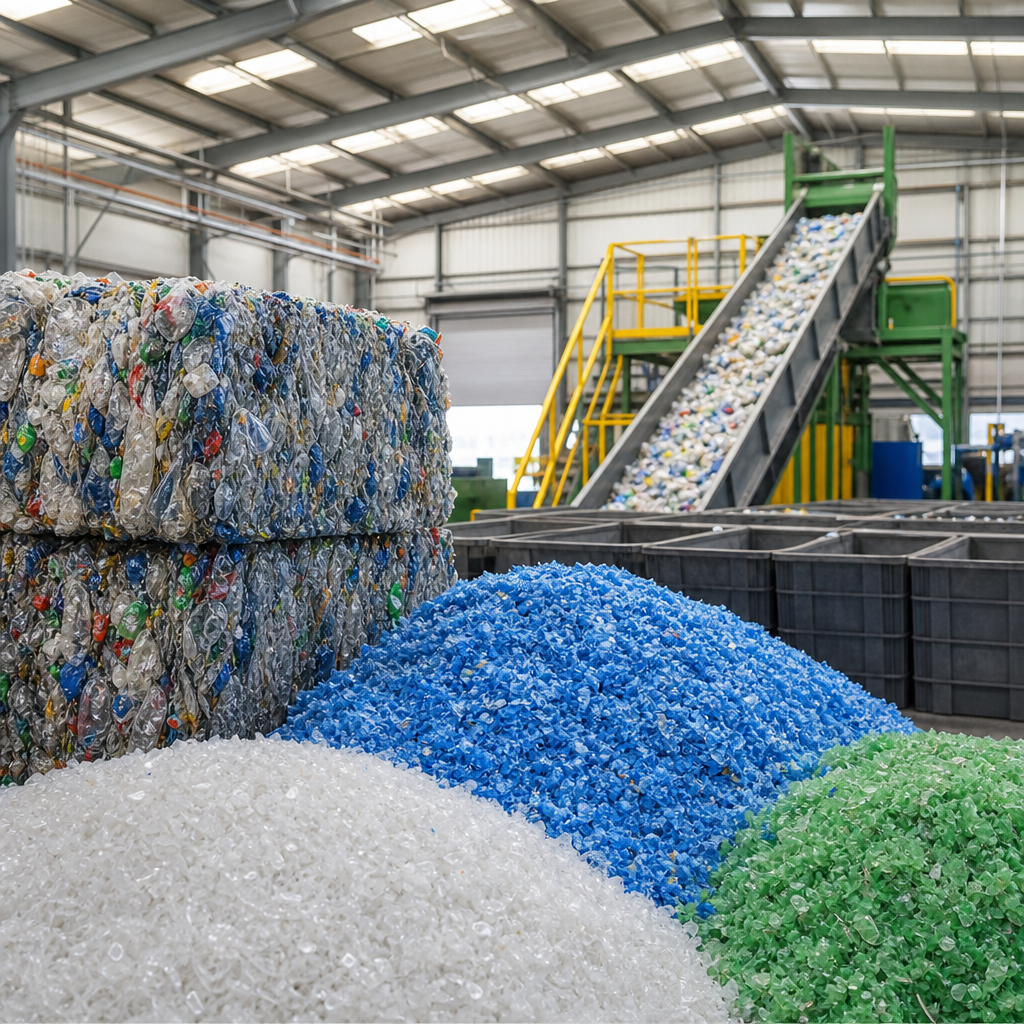
Mechanical recycling is the most established polymer recycling technique because it uses proven equipment, consumes less energy than most chemical pathways, and can deliver high-value output when the feedstock is well controlled. The standard process sequence includes collection, bale breaking, presorting, size reduction, washing, drying, optical sorting, metal removal, extrusion, filtration, pelletizing, and quality control. For rigid packaging, granulators and friction washers are common. For film, plants often use agglomeration or densification before extrusion to stabilize feeding. Melt filtration screens remove paper, aluminum, gels, and char, while vacuum degassing helps strip moisture and volatiles. The final pellets may be compounded with stabilizers, chain extenders, impact modifiers, or color masterbatch to restore performance.
PET bottle recycling shows the strengths of mechanical recycling clearly. Clear bottles are collected, labels and caps are removed, the bottles are ground into flakes, and hot caustic washing removes adhesives and residue. Food-grade recycled PET often requires super-clean processes with solid-state polycondensation or advanced decontamination steps to meet regulatory requirements. HDPE milk jugs follow a similar path but need careful color separation, since natural HDPE commands a premium over mixed-color grades. Polypropylene from crates, buckets, and automotive trim can also recycle well if sorted by application and additive package. The challenge is that mechanical recycling preserves much of the original polymer structure, so contaminants and incompatible blends remain a serious issue.
| Technique | Best suited polymers or waste streams | Main advantages | Key limitations |
|---|---|---|---|
| Mechanical recycling | PET bottles, HDPE containers, PP rigid packaging, clean industrial scrap | Commercially mature, lower energy demand, established markets | Sensitive to contamination, property degradation after repeated cycles |
| Solvent-based purification | Targeted multilayer or contaminated streams, polystyrene, some engineering plastics | Can remove additives and recover high-purity polymer | Solvent management complexity, selective economics |
| Depolymerization | PET, PA, PU, PLA in selected systems | Recovers monomers or oligomers for high-quality reuse | Requires specific feedstock and process control |
| Pyrolysis | Mixed polyolefins, films, flexible packaging | Handles difficult mixed streams, yields oil or naphtha-like feedstock | Chlorine, oxygenates, and residue can reduce output quality |
| Gasification | Highly mixed residual plastics and contaminated waste | Produces syngas for chemicals or fuels | High capital cost, complex gas cleanup |
Solvent-based and dissolution recycling
Between conventional mechanical recycling and full chemical breakdown sits a family of solvent-based polymer recycling techniques often described as dissolution or purification. The principle is simple: dissolve the target polymer in a selected solvent, separate insoluble contaminants, and then precipitate or recover the polymer in a cleaner form. Unlike depolymerization, the polymer chain is largely retained. This can be especially useful for difficult streams such as multilayer packaging, flame-retardant-containing plastics, or polymers carrying heavy pigment loads. The approach has attracted attention because it can preserve higher material value than converting everything to fuel or mixed hydrocarbon output.
Polystyrene is one example where dissolution routes can be practical, particularly for expanded polystyrene that is mostly air and expensive to transport in bulky form. Solvent densification reduces volume dramatically, improving logistics before purification or reprocessing. Selective dissolution has also been explored for separating PE and EVOH layers, recovering ABS from electronic waste, and purifying polyolefins with embedded additives. The technical hurdle is solvent selection, recovery efficiency, and residue control. Plants must manage flammability, worker exposure, and solvent losses carefully. Economics depend on throughput, solvent recycle rate, utility demand, and whether the output displaces premium virgin grades. This is not a universal answer, but for niche streams it can outperform traditional washing and extrusion.
Chemical recycling: depolymerization, pyrolysis, and gasification
Chemical recycling is an umbrella term, but the processes within it are fundamentally different. Depolymerization aims to reverse polymerization by converting plastics back into monomers or oligomers. PET can be processed through glycolysis, methanolysis, or hydrolysis to recover intermediates such as BHET or dimethyl terephthalate and terephthalic acid, depending on the route. Polyamides can be depolymerized to caprolactam or other precursors in selected systems. Polyurethane recycling may involve glycolysis to produce polyol-rich streams. When the chemistry is well matched to the polymer, depolymerization can create feedstock suitable for near-virgin quality applications. The catch is feedstock specificity: mixed bales undermine yield and raise purification costs quickly.
Pyrolysis and gasification target more heterogeneous material. In pyrolysis, plastics are heated in low-oxygen conditions, often between about 300 and 700 degrees Celsius, producing oil, gas, and char. Polyolefins such as PE and PP are generally favorable feedstocks, while PVC is problematic because chlorine forms HCl and contaminates products if not removed. Pyrolysis oil can be upgraded and used as feedstock in steam crackers, allowing recycled carbon to re-enter petrochemical production. Gasification operates at higher temperatures with controlled oxygen or steam to produce syngas, mainly carbon monoxide and hydrogen. Syngas can then support methanol, ammonia, or Fischer-Tropsch pathways. These technologies widen the range of recoverable plastics, but they demand strict feed preparation, robust emissions control, and honest mass-balance accounting.
Process design, quality control, and product performance
A polymer recycling plant succeeds or fails on process control. Moisture is a classic example. PET hydrolyzes during melt processing if not dried sufficiently, causing intrinsic viscosity loss and brittle products. Polyamide has similar sensitivity. Polyolefins are less moisture-critical but can carry odorants, inks, and low-molecular-weight contaminants that affect consumer acceptance. That is why quality assurance in recycling uses a full toolkit: DSC for thermal behavior, FTIR for polymer identification, MFI or rheometry for flow properties, ash testing for filler content, GC-MS for volatile analysis, and colorimetry for appearance. In food-contact applications, decontamination validation and migration testing are essential, often under guidance from agencies such as EFSA or the FDA depending on jurisdiction.
Manufacturers should also think in terms of end-use specifications, not just recycling rates. Recycled PP for battery cases, for example, must meet stiffness, impact, and dimensional stability targets. Recycled PE film may need controlled gel count, dart impact, and seal performance. Compounding can bridge some gaps. Antioxidants limit thermo-oxidative degradation, chain extenders rebuild molecular weight in PET, compatibilizers such as maleic-anhydride-grafted polyolefins improve mixed polymer blends, and deodorization systems address persistent odors from household waste streams. However, additives are not magic. If the feedstock contains PVC in a PET stream or silicone contamination in a film stream, downstream product quality can collapse. The most profitable recyclers prevent defects upstream rather than trying to correct them later.
Design for recyclability and the economics of scale
The easiest polymer to recycle is the one designed for recycling before it reaches the market. Packaging designers now know that dark carbon-black containers can be missed by near-infrared sorters, full-body shrink sleeves can confuse identification, and multilayer laminates combining PE, PET, aluminum, and barrier layers often have little practical recyclability at scale. Better choices include mono-material structures where performance allows, detachable labels, washable adhesives, clear pigmentation, and closures made from compatible resins. Industry groups such as APR in North America and RecyClass in Europe publish design guidance that directly affects whether packaging will run cleanly through material recovery facilities and reprocessors.
Economics are just as decisive as engineering. Mechanical recycling usually wins when there is a large, relatively clean stream and an established buyer for pellets or compounds. Chemical pathways become more attractive when the waste is too mixed or contaminated for high-quality mechanical output, but only if plants can secure reliable feedstock and off-take agreements. Capital intensity, energy pricing, transport distance, residue disposal costs, and policy incentives all matter. Deposit return schemes often improve PET bottle quality dramatically. Extended producer responsibility can fund collection and sorting infrastructure. Recycled-content mandates create demand pull. If you are building a learning path under tutorials and guides, start with resin identification, move to sorting and washing, then compare mechanical and chemical options against real economics. That sequence gives decision-makers a framework they can apply immediately.
Polymer recycling techniques are not interchangeable tools; they are a hierarchy of options matched to material type, contamination level, product requirements, and regional infrastructure. Mechanical recycling remains the backbone for PET, HDPE, and many PP applications because it is mature, efficient, and commercially proven. Solvent-based purification fills an important gap for selected complex streams where preserving polymer value matters. Depolymerization offers strong potential for polymers such as PET and some polyamides when feedstocks are controlled. Pyrolysis and gasification expand recovery for mixed residual plastics, but they demand disciplined operations and careful environmental accounting. Across every method, the fundamentals stay constant: accurate sorting, contamination control, process monitoring, and clear end-market specifications determine success.
As a hub within educational resources, this guide should help you navigate the broader tutorials and guides landscape with more confidence. Use it to frame deeper reading on bottle recycling, film recovery, additives, testing methods, and design for recyclability. The main benefit of understanding polymer recycling techniques is practical clarity: you can choose the right process for the right polymer instead of treating all plastic waste as a single problem. Review your current materials, map the waste stream, and identify the highest-value recycling pathway next.
Frequently Asked Questions
What are the main polymer recycling techniques, and how do they differ from one another?
The main polymer recycling techniques are typically grouped into mechanical recycling, chemical recycling, feedstock recycling, and energy recovery, although not all of these are considered equal from a circularity standpoint. Mechanical recycling is the most established approach. It involves collecting plastic waste, sorting it by polymer type and quality, washing it, shredding it, melting it, and reprocessing it into pellets or finished products. This method works especially well for relatively clean, well-sorted waste streams such as PET bottles, HDPE containers, and certain industrial scrap materials. Its biggest advantage is efficiency, because it preserves much of the original material value with comparatively low processing complexity.
Chemical recycling refers to processes that break polymers down into monomers, oligomers, or other hydrocarbon intermediates. Depending on the polymer and technology, this can include depolymerization, solvolysis, pyrolysis, or gasification. These methods are often discussed when dealing with mixed, contaminated, or difficult-to-recycle plastics that cannot be easily handled through conventional mechanical methods. In principle, chemical recycling can restore materials to a quality closer to virgin feedstock, but it generally requires more energy, more specialized infrastructure, and tighter economic controls to be viable at scale.
Feedstock recycling is sometimes used as an umbrella term for chemical pathways that convert polymers into raw materials for new chemicals or fuels. Energy recovery, by contrast, captures heat or electricity from plastic waste through controlled combustion, but it does not keep the polymer in circulation as a material. From a resource management perspective, the preferred route is usually to maximize reuse and mechanical recycling first, then use chemical approaches where they are technically justified, and treat energy recovery as a lower-priority option. The right technique depends on resin type, contamination level, color, additive package, product design, and the end-market requirements for recycled content.
Why is sorting so important in polymer recycling?
Sorting is one of the most important steps in polymer recycling because plastics that look similar can behave very differently during processing. Polyethylene terephthalate, high-density polyethylene, polypropylene, polystyrene, and polyvinyl chloride all have distinct melting points, molecular structures, densities, and additive profiles. If incompatible polymers are mixed together, the recycled output can lose strength, appearance, processability, and reliability. Even small amounts of the wrong material in a batch can create serious quality issues. For example, PVC contamination in a PET stream can degrade product quality during remelting, while multilayer packaging can complicate both mechanical and chemical recovery routes.
Effective sorting improves yield, lowers processing costs, and increases the market value of recycled resin. In real-world facilities, sorting may involve a combination of manual picking, size reduction, sink-float separation, optical sorting, near-infrared detection, color sorting, metal removal, and density-based systems. The goal is not just to identify the broad plastic category but also to separate according to color, food-contact status, contamination level, and product format where necessary. Clean and consistent feedstock is what allows recyclers to produce recycled polymers that manufacturers can trust in packaging, automotive parts, consumer goods, and other applications.
From a practical standpoint, sorting is also where design decisions made upstream become very visible. Labels, adhesives, pigments, fillers, barrier layers, and mixed-material assemblies can all make separation more difficult. That is why design for recyclability is so closely linked to recycling performance. The better a product is designed for identification and separation, the better the chances that the material can remain in circulation through a high-value recycling pathway instead of being downgraded or discarded.
What challenges make some plastics harder to recycle than others?
Some plastics are harder to recycle because recycling performance depends on far more than the base polymer alone. One major challenge is contamination. Food residue, oils, paper labels, inks, dirt, and incompatible materials can reduce the quality of recycled resin or increase the cost of cleaning and processing. Another challenge is polymer degradation. Each time a thermoplastic is heated and reprocessed, there is some risk of chain scission, oxidation, or loss of mechanical properties. While many polymers can be recycled successfully, they may require stabilizers, blending, or quality controls to maintain performance in new applications.
Product design is another critical factor. Multi-layer films, composite structures, fiber-reinforced plastics, thermosets, heavily filled compounds, and black or dark-colored plastics can be especially difficult to sort or reprocess. Flexible packaging is a good example. It often combines multiple materials to achieve barrier performance, sealability, stiffness, or print quality, but that same complexity can make conventional recycling far more difficult. In automotive and consumer goods waste streams, mixed polymers, coatings, flame retardants, and legacy additives can further complicate recovery.
Economics also matter. A plastic may be technically recyclable yet still fail to be recycled at scale if collection rates are low, sorting costs are high, or end-market demand is weak. Recycling systems need consistent feedstock, reliable processing performance, and buyers willing to use recycled material. That is why the “best” recycling option is not always just a lab-proven technology. It must also make sense in terms of infrastructure, regulation, logistics, and product specifications. In practice, the hardest plastics to recycle are often those that combine technical complexity with weak collection systems and limited demand for the recovered output.
How does mechanical recycling affect polymer quality, and can recycled plastics still be used in high-value products?
Mechanical recycling can affect polymer quality because plastics experience thermal and mechanical stress during grinding, melting, filtration, and extrusion. Over time, these stresses can reduce molecular weight, alter viscosity, change color, increase odor, or lower impact resistance and elongation. Contamination from other polymers, additives, moisture, or residual product contents can also reduce consistency. That said, quality loss is not automatic or uniform. With good feedstock control, proper washing, optimized processing conditions, and additive stabilization, mechanically recycled polymers can perform very well in demanding applications.
The idea that recycled plastics are only suitable for low-grade products is outdated. Today, high-quality recycled PET, HDPE, and polypropylene are widely used in packaging, consumer goods, building products, and automotive components. Success depends on matching the recycled resin to the right application and maintaining disciplined quality assurance. Recyclers often rely on melt flow testing, contamination screening, spectroscopy, color control, odor assessment, and mechanical property testing to ensure the output meets customer specifications. In some cases, recycled resin is blended with virgin polymer to balance performance, processability, and sustainability goals.
It is also important to recognize that “high-value” can mean different things in different industries. For one manufacturer, it may mean food-grade packaging with strict compliance requirements. For another, it may mean dimensionally stable interior automotive parts or attractive consumer product housings. The key is not whether a polymer has been recycled, but whether the recycling system can deliver the consistency and traceability required for the intended end use. When collection, sorting, and processing are done well, mechanically recycled plastics can absolutely remain part of high-performance, high-value manufacturing.
What role does design for recyclability play in improving polymer recycling outcomes?
Design for recyclability plays a foundational role because the recyclability of a plastic product is largely determined before it ever reaches a sorting line. When packaging or durable goods are designed with compatible materials, minimal contamination risk, and easy-to-remove components, they are much more likely to move successfully through established recycling systems. That means choosing polymers that have viable collection and recycling pathways, avoiding unnecessary multi-material combinations, limiting problematic pigments or fillers, and selecting labels, inks, closures, and adhesives that do not interfere with sorting or remelting.
In practical terms, good design for recyclability makes each downstream step easier. Clear mono-material packaging is typically easier to identify and reprocess than dark, multi-layer structures. Closures and sleeves that can be separated cleanly improve resin purity. Standardized material choices across product lines can also increase recovery rates and simplify bale specifications for recyclers. For durable goods such as automotive and consumer products, design for disassembly can help separate polymer components by resin family, making closed-loop or near-closed-loop recovery more realistic.
Perhaps most importantly, design for recyclability connects product development with real infrastructure. A package is not truly recyclable just because it can be recycled in theory. It needs to be compatible with the collection, sorting, and reprocessing systems that actually exist in the market where it is sold. That is why the most effective strategy is to align material selection, performance needs, and end-of-life recovery from the beginning. When designers, converters, brands, and recyclers work from the same practical criteria, polymer recycling becomes more efficient, more economical, and much more likely to keep valuable plastic materials in circulation.