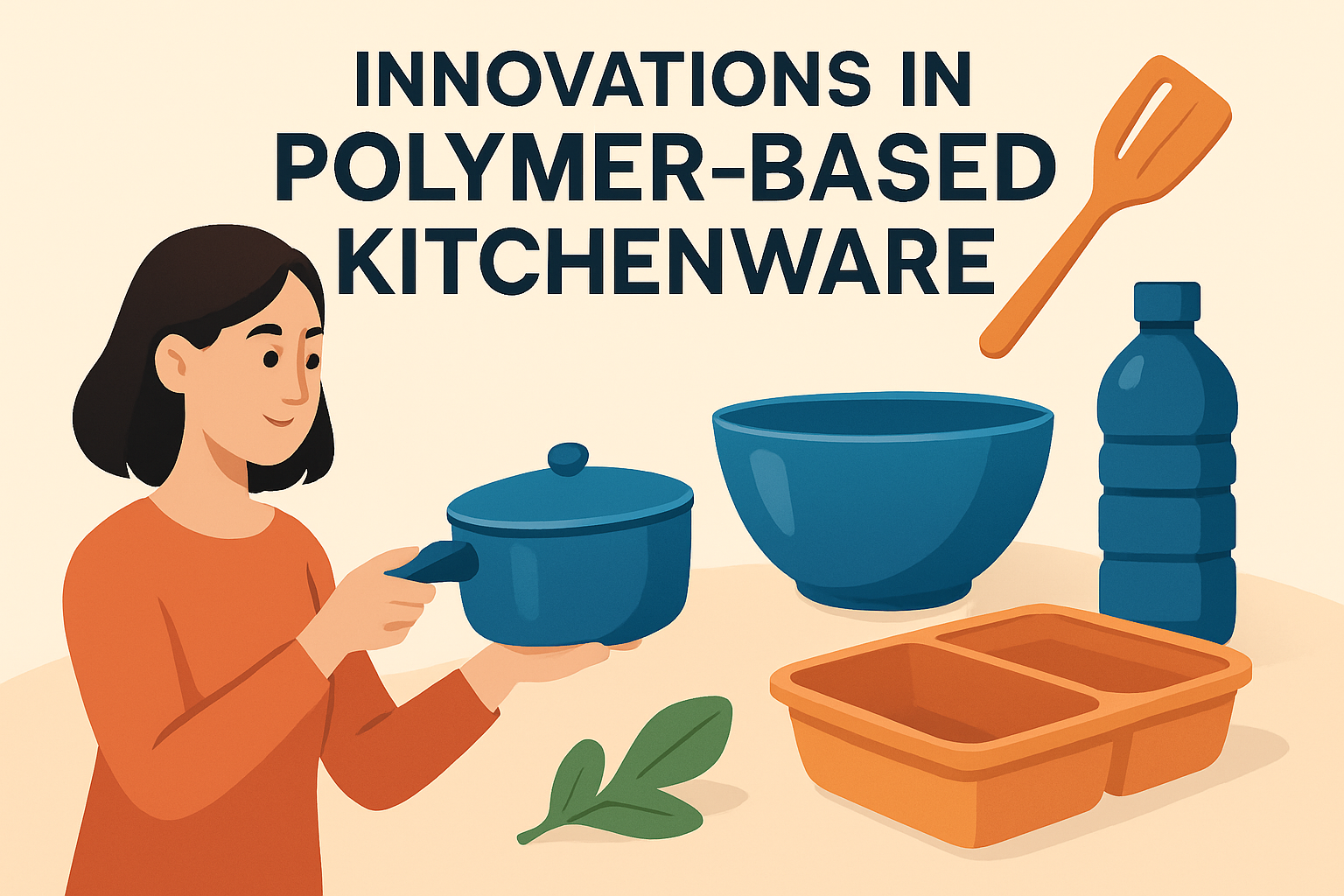
Polymer-based kitchenware has moved far beyond cheap plastic bowls and disposable containers, becoming one of the most important categories in modern consumer goods. In this context, polymers are long-chain materials engineered for specific properties such as heat resistance, flexibility, transparency, impact strength, chemical stability, and low weight. Kitchenware includes food storage containers, cutting boards, utensils, drinkware, bakeware, appliance housings, reusable lunch systems, infant feeding products, and smart accessories that combine polymers with sensors or barrier coatings. As someone who has worked with product teams evaluating resin choices, migration testing, and dishwasher durability, I have seen how a small change in polymer formulation can reshape cost, safety, and user experience across an entire line.
This matters because the kitchen is one of the most demanding environments for consumer products. Materials must tolerate heat, oils, acids, detergents, repeated washing, freezer conditions, staining ingredients, and constant handling. They must also satisfy regulatory requirements for food contact, hold up to daily abuse, and meet rising expectations around sustainability. Consumers now ask practical questions before buying: Is it microwave safe? Does it absorb odors? Will it crack in the dishwasher? Is it recyclable? Can it replace glass or metal without sacrificing performance? Innovations in polymer-based kitchenware answer those questions through better resin chemistry, advanced manufacturing, safer additive packages, and designs built for circular use rather than single ownership cycles.
The category is especially significant as a hub within consumer goods because kitchenware sits at the intersection of convenience, health, affordability, and environmental pressure. A successful polymer product must balance all four. Polypropylene dominates food storage because it handles fatigue and heat well at reasonable cost. Tritan copolyester grew rapidly by offering glass-like clarity without the bisphenol concerns associated with legacy polycarbonate. Silicone created a new class of flexible bakeware and tools by withstanding broad temperature swings. Fiber-filled bio-composites, monomaterial packs, and refillable systems are now expanding what kitchenware can be. Understanding these innovations helps brands choose materials wisely, helps buyers evaluate quality accurately, and provides a practical roadmap to the broader consumer goods landscape.
Material innovations redefining kitchen performance
The biggest driver of innovation in polymer-based kitchenware is material selection. Different polymers solve different problems, and the best products are usually specific rather than universal. Polypropylene, often abbreviated PP, remains the workhorse resin for food containers, microwaveable tubs, living hinges, and many utensil handles because it combines low density, good chemical resistance, and excellent fatigue performance. In testing programs I have reviewed, quality PP containers routinely survived hundreds of lid-opening cycles and repeated dishwasher exposure better than cheaper polystyrene alternatives. High-density polyethylene, or HDPE, remains valuable for cutting boards and storage canisters because it resists moisture uptake and many household chemicals, though it scratches more easily than harder engineering polymers.
Higher-performance kitchenware increasingly uses engineered materials. Tritan copolyester, developed for clarity and toughness, became a preferred option for reusable water bottles, blender jars, and food containers where transparency matters. Polyamide and glass-filled nylon appear in utensils and appliance-adjacent parts that need higher heat resistance and stiffness. Thermoplastic elastomers improve grip zones on handles and lids without requiring separate rubber inserts. Liquid silicone rubber and solid silicone dominate spatulas, baking mats, collapsible bowls, and air-fryer liners because they retain flexibility over a wide temperature range, typically from well below freezing to oven-level heat. That broad operating window is difficult for most rigid plastics to match.
Additive technology is also changing performance. Mineral fillers can improve stiffness and dimensional stability in lids or trays. Clarifying agents make polypropylene more transparent, reducing the need to move to more expensive resins. Nucleating agents can shorten cycle times while improving consistency. New color systems are being formulated for food-contact compliance and lower migration risk. Manufacturers are also using barrier layers and surface treatments to reduce oxygen transmission, odor retention, or staining from foods such as tomato sauce, turmeric, and curry. These are not cosmetic tweaks. They directly affect product lifespan, warranty rates, and whether consumers continue to reuse an item or throw it away after frustration.
Safety, compliance, and food-contact trust
For polymer-based kitchenware, innovation is only valuable if safety is proven. Food-contact materials are regulated, and reputable suppliers build around those requirements from the start. In the United States, manufacturers commonly assess compliance with FDA food-contact regulations. In Europe, kitchenware may be evaluated under framework rules for food-contact materials, with additional scrutiny for specific substances and migration limits. Good products are supported by declarations of compliance, migration testing, and traceable raw material documentation. When I have audited development files, the strongest programs did not rely on a marketing claim like “BPA-free” alone. They documented resin source, colorant approval, use conditions, and testing against realistic food simulants.
Migration is the key concept consumers rarely see but should understand. It refers to the movement of chemicals from a material into food under expected conditions such as heating, fatty contact, acidic ingredients, or long storage times. A safe material is not simply one that feels sturdy. It is one whose formulation and processing keep migration within established limits. For example, silicone bakeware must be properly post-cured to reduce volatile residues. Recycled-content plastics for food contact require especially careful control, often through super-clean recycling processes or authorized feedstocks. Melamine tableware has known temperature limitations, which is why responsible brands clearly state that it is unsuitable for microwave use.
Trust also depends on durability. A polymer item that crazes, warps, or sheds after repeated use creates both safety and perception problems. Dishwasher stress cracking, knife gouging on boards, and embrittlement from UV exposure all matter in kitchen environments. The best manufacturers validate products through accelerated aging, thermal cycling, top-rack dishwasher tests, drop testing, and stain-retention analysis. They also specify end-use limitations honestly. No single polymer is perfect for every task, and credible brands explain where a product performs well and where metal, glass, or ceramic is still the better choice.
Sustainability and circular design in consumer goods
Sustainability has become central to innovations in polymer-based kitchenware, but the smartest advances focus on systems, not slogans. Lightweight polymers already reduce transport emissions compared with heavier materials in many categories, yet that advantage disappears if products fail quickly or cannot be recovered. The current shift is toward durable reuse, mono-material design, repairability, and credible recycled or bio-based content. Reusable polypropylene food storage often delivers a better environmental outcome than fragile multi-material alternatives because it is light, long-lasting, and widely processable. However, real performance depends on local collection infrastructure, contamination rates, and whether consumers actually keep the item in use.
Brands are responding with practical circular strategies. Some are redesigning lids and bases in the same polymer family so they are easier to recycle together. Others reduce dark pigments because near-infrared sorting systems in materials recovery facilities often struggle with black plastics. Bio-based feedstocks, including bio-attributed polypropylene produced through mass-balance approaches, are entering premium kitchenware lines without changing product performance. Fiber-reinforced composites using bamboo, wood flour, or agricultural residues can lower virgin polymer content, although they may complicate recycling and moisture behavior. Compostable polymers generate interest for niche food-service items, but they are rarely the best answer for durable kitchenware intended to survive years of use.
The most credible sustainability programs measure tradeoffs explicitly. Life cycle assessment compares impacts across raw material extraction, manufacturing energy, transport, use phase, and end-of-life. In practice, extending service life often beats switching resin classes. A container that lasts five years usually outperforms a trend-driven alternative replaced annually. Packaging also matters. Several consumer brands now ship nested kitchenware sets with reduced void space and minimal mixed-material inserts, cutting logistics cost and waste at once. These changes may seem small individually, but at consumer-goods scale they materially affect emissions, landfill volume, and overall product economics.
Manufacturing technologies accelerating product innovation
Process innovation is transforming what polymer-based kitchenware can do and how efficiently it reaches market. Injection molding remains the dominant method because it supports tight tolerances, integrated features, and high-volume economics. Advances in hot-runner systems, mold-flow simulation, and in-mold labeling have improved cosmetic consistency while reducing scrap. Gas-assist and structural foam molding allow lighter parts without severe sink marks, useful for appliance housings and larger storage components. Compression molding and transfer molding remain important for silicone bakeware and specialty seals, while thermoforming supports thin-wall trays and lids where material efficiency is critical.
Digital engineering now shortens development cycles. Product teams use finite element analysis to predict hinge fatigue, snap-fit stress, and warpage before steel is cut. Rheological modeling helps gate placement and fill balance in thin-wall containers. Additive manufacturing is increasingly used for ergonomic prototypes, jig fixtures, and pilot tooling inserts, letting designers evaluate grip comfort, lid closure force, and stacking geometry early. In my experience, this front-loaded testing prevents expensive late-stage corrections, especially in products where a one-millimeter tolerance stack can mean a leaking seal or a frustrating user experience.
| Technology | Typical kitchenware use | Main benefit | Key limitation |
|---|---|---|---|
| Injection molding | Containers, utensils, lids | High precision and scale | Tooling cost is high |
| Silicone compression molding | Bakeware, spatulas, seals | Excellent heat performance | Longer cycle times |
| Thermoforming | Thin trays, insert packaging | Low material usage | Less structural rigidity |
| Overmolding | Soft-grip handles, sealed lids | Combines comfort and function | Material compatibility matters |
| 3D printing | Prototypes, fixtures, pilot parts | Fast design iteration | Limited for mass production |
Automation and quality control have improved as well. Vision systems check flash, short shots, and color consistency. Leak testing verifies seal integrity on food boxes and drinkware. Robotics reduce contamination risk in food-contact production cells. These manufacturing upgrades matter because kitchenware is deceptively complex: consumers expect low prices, perfect fit, and years of use, all from products made at enormous scale.
Smart design trends shaping the next generation
Design innovation in consumer kitchenware is increasingly user-centered, not merely material-centered. Stackability, modular sizing, venting features, integrated measurement marks, and one-handed opening systems all reflect observation of real kitchen routines. The best products reduce friction in storage, prep, cooking, and cleanup. Modular pantry systems, for example, often use clear copolyesters or clarified polypropylene so households can see inventory quickly, reducing food waste. Leak-resistant lunch containers now use multi-lip geometries and tuned closure force rather than brute stiffness, making them easier for children and older adults to open while still controlling spills.
Smart features are beginning to appear, though the category is still early. Some premium storage systems pair polymer containers with NFC tags or QR-linked inventory apps for meal planning and expiration tracking. Appliance-compatible accessories are being designed with embedded magnets, steam valves, or sensor windows that align with countertop cookers and connected devices. Antimicrobial claims are common in marketing, but in practice they should be treated cautiously; cleanliness still depends primarily on smooth surfaces, complete washability, and resistance to scratches where residues can remain.
Accessibility is another important innovation area. Textured grip zones, high-contrast translucency, audible lid clicks, and lighter-weight constructions can make kitchen tasks easier for users with reduced hand strength or vision limitations. This is where polymer-based kitchenware offers a real advantage over glass and metal. Through geometry and resin tuning, manufacturers can lower opening torque, improve impact resistance, and reduce noise during use without sacrificing aesthetics. As a result, kitchenware is no longer just a utility purchase. It is becoming a design-led, data-informed segment of consumer goods with clear links to health, waste reduction, and daily convenience.
How brands and buyers should evaluate polymer-based kitchenware
For brands building a kitchenware portfolio, the first question is not which polymer is newest, but which use case matters most. A freezer container, a baby bottle, a cutting board, and a spatula each require different performance priorities. Evaluate heat resistance, impact strength, transparency, odor retention, hinge life, dishwasher survivability, and regulatory pathway together. Ask suppliers for food-contact documentation, migration data, and details on recycled or bio-based claims. Confirm whether colorants, slip agents, and reinforcements are approved for the intended market. Product validation should include actual kitchen abuse, not only lab benchmarks.
For consumers, the practical checklist is straightforward. Look for clear temperature guidance, microwave or dishwasher instructions, and any limits around oil-rich foods or oven use. Inspect wall thickness, closure fit, and molded finish quality. Trusted brands usually provide care guidance because they understand how material choice affects longevity. When possible, buy products designed for repeated use over many years and replace items that are deeply scratched, warped, or no longer sealing properly. For anyone mapping the broader Applications landscape in consumer goods, polymer-based kitchenware is an essential hub because it shows how materials science, design engineering, compliance, and sustainability come together in one everyday product category. Follow those signals when comparing adjacent articles on packaging, household storage, appliances, and reusable food systems.
Innovations in polymer-based kitchenware are redefining consumer goods through better materials, safer formulations, more efficient manufacturing, and smarter design. The most important takeaway is that performance depends on fit between polymer and purpose. Polypropylene, copolyesters, silicone, engineered nylons, and emerging bio-based options each solve specific kitchen problems when selected carefully. Safety comes from compliance, migration control, and honest use guidance. Sustainability comes from long life, recyclability, and system-aware design rather than superficial claims. Manufacturing advances and digital development tools are making these improvements faster and more reliable, while user-centered features are turning ordinary containers and utensils into high-value daily tools.
If you are building, sourcing, or buying within the Consumer Goods segment, use kitchenware as a model category. It reveals which material innovations are mature, which sustainability claims are credible, and which design choices truly improve everyday use. Explore the related articles in this Applications hub to connect these lessons to food packaging, household products, and smart consumer devices.
Frequently Asked Questions
1. What makes modern polymer-based kitchenware different from traditional plastic kitchen products?
Modern polymer-based kitchenware is very different from the older generation of basic plastic products that many consumers associate with low durability or disposable use. Today’s kitchen polymers are engineered materials designed for specific performance requirements, which means manufacturers can tailor them for heat resistance, flexibility, stiffness, clarity, impact strength, stain resistance, and chemical stability. Instead of relying on one generic plastic for everything, product designers now choose from a wide range of advanced polymers such as polypropylene, Tritan-type copolyesters, silicone, nylon, thermoplastic elastomers, and high-performance composites depending on the intended application.
This material-specific approach has transformed the category. A food storage container may be optimized for microwave reheating, freezer storage, and leak resistance, while a cutting board may be designed for impact absorption, knife friendliness, and dishwasher durability. Similarly, polymer-based utensils can now withstand repeated contact with hot cookware, and reusable lunch systems can be manufactured to be lightweight, modular, and highly resistant to cracking or odor retention. In many cases, modern polymer kitchenware also incorporates improved surface engineering, reinforced structures, and better sealing technologies, which greatly extend product life and usability.
Another major difference is the emphasis on user safety, compliance, and product longevity. Reputable manufacturers now design products to meet food-contact regulations, reduce unwanted additives, and perform under real household conditions such as repeated washing, thermal cycling, and daily handling. As a result, polymer-based kitchenware is no longer viewed simply as a cheap alternative to glass, metal, or ceramic. In many applications, it is a purpose-built solution that offers advantages those materials cannot, especially where low weight, break resistance, portability, and ergonomic design are important.
2. Which innovations are improving the safety and performance of polymer-based kitchenware?
Several important innovations are driving both safety and performance in polymer-based kitchenware. One of the biggest is the development of polymers with more predictable thermal and chemical behavior. Advanced formulations can better tolerate microwaving, dishwashing, refrigeration, and exposure to acidic or oily foods without deforming, cracking, or absorbing strong odors. This has made modern kitchenware more reliable for repeated use and more suitable for demanding household routines.
Another key innovation is the use of multi-material engineering. Manufacturers increasingly combine rigid polymers with softer sealing materials to create leak-resistant lids, slip-resistant grips, or comfort-focused handles. This allows products to perform better without sacrificing convenience. For example, a storage container may use a rigid body for shape retention and stackability, while the lid incorporates an elastomeric gasket for an airtight seal. In utensils and infant feeding products, softer-touch surfaces can improve comfort and handling while keeping the overall product durable and easy to clean.
Surface technology is also playing a growing role. Improved finishes can help resist staining, reduce clouding, and make products easier to wash. In cutting boards, bowls, and drinkware, manufacturers often focus on reducing scratches and minimizing the tiny surface irregularities where odors or residues can accumulate over time. In addition, better mold design and precision manufacturing have improved wall thickness consistency, lid fit, and structural integrity, all of which contribute to safer everyday use.
From a safety standpoint, innovation also includes stronger testing and regulatory alignment. High-quality polymer kitchenware is commonly evaluated for food-contact suitability, thermal endurance, and migration performance under intended use conditions. Consumers are also seeing more products marketed around durability and reusability rather than disposability, which reflects a broader shift toward kitchenware that is designed to stay in service for years. Together, these advances have made polymer-based products more dependable, more specialized, and better suited to modern expectations around health, convenience, and daily performance.
3. Are polymer-based kitchenware products safe for hot foods, microwaves, and dishwashers?
They can be, but the answer depends on the specific polymer, product design, and intended use. Not all polymer materials behave the same way under heat. Some are engineered to handle hot foods, microwave reheating, or repeated dishwasher cycles, while others are better suited to cold storage or room-temperature serving. That is why product labeling and manufacturer instructions are so important. A well-designed microwave-safe food container, for example, is made from a polymer selected for thermal stability and dimensional performance under reheating conditions. By contrast, a lightweight serving bowl may not be intended for the same level of heat exposure.
Microwave performance is especially nuanced. A polymer may be safe for reheating food in a microwave, but that does not necessarily mean it is suitable for convection ovens, broilers, or stovetop use. Similarly, dishwasher-safe ratings can vary depending on whether the item is placed on the top rack, exposed to heated drying, or washed repeatedly over a long period. Products made from high-quality polypropylene, silicone, and certain engineered copolyesters often perform well in common household dishwashing and reheating scenarios, but even durable materials have defined limits. Exceeding those limits can shorten product life, cause warping, or compromise seals and fit.
Consumers should also pay attention to product age and condition. Deep scratches, cracks, loose seals, or visible warping can indicate that a piece of kitchenware is no longer performing as intended. The safest approach is to use each product according to its labeled purpose, avoid exposing it to temperatures beyond its design range, and replace items that show significant wear. When sourced from reputable manufacturers and used properly, modern polymer-based kitchenware can be a safe and highly practical option for handling hot foods, microwave reheating, and dishwasher cleaning.
4. How are sustainability and circular design influencing innovations in polymer-based kitchenware?
Sustainability has become one of the most important forces shaping innovation in polymer-based kitchenware. Instead of focusing only on low cost or convenience, many manufacturers are now designing products around durability, reusability, material efficiency, and end-of-life considerations. This means creating containers, utensils, drinkware, lunch systems, and infant feeding products that can withstand long-term household use rather than being quickly discarded. A durable polymer product that replaces many single-use items can provide a meaningful functional and environmental benefit when used consistently over time.
Circular design principles are also influencing how products are engineered. Companies are increasingly considering whether a kitchenware item can be made with fewer material types, easier-to-separate components, or recycled and recyclable feedstocks where regulations and performance requirements allow. Some brands are incorporating post-consumer or post-industrial recycled content into non-critical components, while others are redesigning packaging and manufacturing methods to reduce waste and energy use. Lightweighting is another important innovation because polymers can often deliver strength with less mass than alternatives, reducing transportation burdens and improving portability for consumers.
At the same time, sustainability in this category is not just about the raw material source. It also depends on product lifespan, cleaning efficiency, break resistance, and user behavior. A reusable polymer storage system that resists cracking, seals reliably, and survives years of dishwashing may be more sustainable in practice than a fragile alternative that needs frequent replacement. The strongest innovations combine environmental thinking with realistic performance expectations. In other words, the goal is not simply to make kitchenware from a different polymer, but to design systems that last longer, work better, and fit into more responsible patterns of consumption.
5. What types of polymer-based kitchenware are seeing the most innovation right now?
Some of the most active innovation is happening in food storage and meal-prep systems. Consumers now expect containers that are stackable, leak-resistant, freezer-friendly, microwave-capable, and easy to clean, all while remaining lightweight and durable. This has led to major improvements in lid geometry, gasket design, transparency, stain resistance, and modular sizing. Reusable lunch systems are also evolving quickly, with compartmentalized designs, improved closures, and more portable formats tailored to work, school, and family use.
Utensils and food-prep tools are another important area. Polymer-based spoons, spatulas, tongs, mixing tools, and cutting boards are being redesigned for better heat tolerance, grip comfort, and resistance to scratching, warping, and odor retention. In many cases, designers are using reinforced polymers or hybrid material construction to improve stiffness where needed while preserving flexibility in functional zones. Cutting boards, for example, may be optimized for impact absorption, slip resistance, and easier sanitation, while spatulas may combine flexible edges with stronger internal support for better control during cooking.
Drinkware and infant-related kitchen products are also seeing substantial development. Reusable cups, bottles, and travel drinkware increasingly use advanced transparent or high-impact polymers that offer clarity and toughness without the breakage risk of glass. Meanwhile, infant feeding systems such as bottles, bowls, plates, and utensils benefit from soft-touch elements, ergonomic forms, and polymers selected for repeated cleaning and food-contact reliability. Even bakeware and small appliance housings are part of this trend, with specialized polymers enabling better heat management, lighter designs, and more contemporary aesthetics.
Overall, the greatest innovation is occurring where consumer expectations are highest: products that must combine safety, durability, comfort, portability, and long service life. Polymer-based kitchenware is advancing most rapidly in categories where engineered materials can solve several problems at once, making everyday cooking, storage, serving, and feeding more efficient and user-friendly.