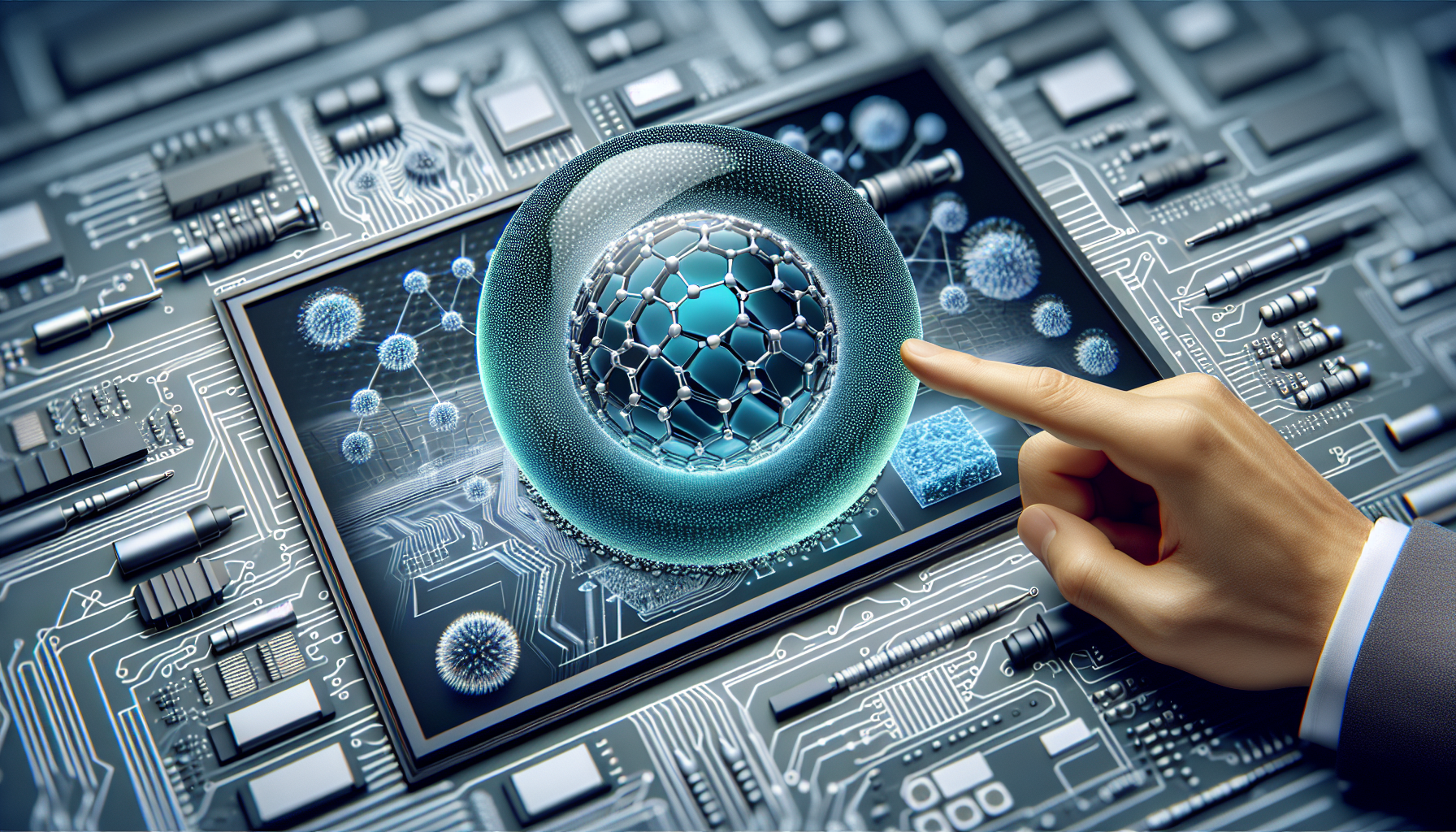
Polymers in display technologies sit at the center of modern electronics, shaping how screens are built, how they perform, and how they can evolve into thinner, lighter, and more flexible products. In this context, polymers are large-chain organic materials engineered to deliver specific optical, electrical, thermal, and mechanical properties inside a display stack. They appear as substrates, alignment layers, encapsulants, optical films, dielectric layers, conductive composites, photoresists, and structural adhesives. I have worked with display material evaluations where one polymer layer changed yield, color uniformity, or lifetime more than a costly change in the active device itself. That is why understanding polymers in display technologies matters: they often determine manufacturability and reliability as much as the emissive or liquid crystal material does.
Display technologies include liquid crystal displays, organic light-emitting diode panels, electrophoretic displays, microLED architectures, and emerging quantum dot or holographic systems. Each platform depends on polymers for functions that users never see directly but always experience through brightness, contrast, response time, durability, and form factor. A smartphone OLED uses polymer planarization and barrier structures to protect sensitive layers from oxygen and moisture. A television LCD relies on polymer polarizers, compensation films, and alignment coatings to control light transmission and viewing angle. An e-reader uses polymer binders and encapsulation materials to maintain image stability under repeated handling. In every case, the polymer is not a filler component. It is a performance component.
The electronics industry values polymers because they can be processed at scale using coating, printing, lamination, spin deposition, slot-die coating, and roll-to-roll methods. Compared with glass, ceramics, and many metals, polymers offer lower density, tunable flexibility, and lower processing temperatures. Those advantages support foldable phones, curved automotive displays, wearable devices, and large-area signage. At the same time, polymers bring real tradeoffs. Many absorb moisture, outgas volatile species, yellow under ultraviolet exposure, creep under load, or lose dimensional stability at elevated temperatures. The practical engineering challenge is matching polymer chemistry to the operating environment and fabrication route. This hub article on electronics explains where polymers fit across display systems, which material classes matter most, how they are selected, and where the next generation of display innovation is likely to emerge.
Core Functions of Polymers Across Display Architectures
In display engineering, polymers are chosen by function first and chemistry second. The same panel can contain more than ten polymeric layers, each optimized for a narrow role. Optical films manage reflection, polarization, retardation, diffusion, and brightness enhancement. Structural layers provide adhesion between glass, metal foil, barrier film, and cover lenses. Electronic layers act as dielectrics, passivation coatings, patternable insulators, or binders for conductive particles. Surface-active polymer coatings establish alignment in LCD cells, determine wetting for inkjet patterning, and influence defect formation during lithography.
In LCD manufacturing, polyimide alignment layers are a textbook example of a polymer doing precision work. After coating and curing, the film is rubbed in a defined direction to orient liquid crystal molecules, which directly affects viewing angle, contrast, and switching behavior. If rubbing depth, cure profile, or surface energy are off target, mura defects and nonuniform electro-optic response can appear across the panel. Similarly, triacetyl cellulose and other polymer films are central to polarizer construction, while cyclic olefin polymers and related materials are used where high transparency and low birefringence are required.
In OLED systems, polymers often serve as bank materials, pixel defining layers, planarization coatings, thin-film encapsulation components, optical adhesives, and flexible substrates. Polyimide has become especially important for flexible OLED backplanes because it tolerates higher process temperatures than many commodity plastics while maintaining mechanical resilience. Yet even high-performance polyimide can contribute color tint and dimensional movement, so formulations and cure schedules are tightly controlled. Engineers regularly balance modulus, coefficient of thermal expansion, water vapor transmission rate, and optical transmittance rather than optimizing a single property in isolation.
MicroLED and quantum dot displays also depend on polymers even though their headlines focus on semiconductors and nanomaterials. Mass transfer processes need temporary bonding adhesives and release layers. Color conversion systems use polymer matrices to hold quantum dots in stable dispersion while minimizing oxygen ingress and blue-light driven degradation. Encapsulation materials must avoid ionic contamination that can corrode contacts or reduce luminous efficiency. In short, display polymers are enabling materials that make advanced electronics manufacturable at commercial yield.
Key Polymer Classes Used in Electronics Displays
Several polymer families dominate display technologies because their property sets are well matched to electronics production. Polyimides are widely used in flexible substrates, alignment layers, and stress-buffer applications. They offer thermal stability, chemical resistance, and strong mechanical endurance, which is why they appear in foldable OLED lines and advanced LCD processes. Acrylics are common in optically clear adhesives and coating systems because they can be formulated for transparency, low haze, and controlled tack. Epoxies are heavily used in sealing, underfill, edge bonding, and encapsulation due to their adhesion and chemical durability, although brittleness and moisture sensitivity must be managed through formulation.
Polyethylene terephthalate and polyethylene naphthalate remain relevant for optical films and lower-temperature flexible electronics where cost and dimensional consistency are important. Cyclic olefin polymer and cyclic olefin copolymer are used where low moisture uptake, high optical clarity, and low birefringence matter, including light guide and lens applications. Fluoropolymers appear in specialty coatings because of their chemical inertness and low surface energy. Polyurethane systems are used in some adhesive and coating roles where toughness and flexibility are needed. Silicone polymers are critical in optical encapsulants and gap fillers because they handle thermal cycling well and maintain transparency over long lifetimes.
Selection is rarely based on a data sheet alone. In development programs I have seen two similar optically clear adhesives behave very differently after lamination simply because one trapped more microbubbles under low-vacuum conditions and the other maintained bond integrity after damp heat exposure at 85 degrees Celsius and 85 percent relative humidity. Display qualification therefore tests chemistry, process compatibility, and long-term aging together. Standards from organizations such as IEC and ASTM help define environmental and optical testing methods, but each manufacturer still builds proprietary acceptance windows around yield-critical defects.
| Polymer class | Common display use | Primary advantage | Main limitation |
|---|---|---|---|
| Polyimide | Flexible substrates, alignment layers | High thermal stability | Possible color tint, moisture sensitivity |
| Acrylic | Optically clear adhesives, coatings | Excellent transparency | Can soften under heat |
| Epoxy | Seals, encapsulation, bonding | Strong adhesion | Brittleness if over-crosslinked |
| PET/PEN | Optical films, flexible carriers | Cost-effective dimensional control | Lower heat resistance than polyimide |
| Silicone | Encapsulants, optical gap fillers | Thermal and UV durability | Potential contamination in some processes |
Polymers in LCD, OLED, MicroLED, and E-Paper Systems
LCDs remain one of the clearest examples of polymer-intensive display design. A standard LCD module contains polarizer films, compensation films, diffusion films, prism films, optical adhesives, sealants, and alignment layers in addition to the liquid crystal cell itself. Brightness enhancement films from suppliers such as 3M have shown how polymer microstructures can redirect light efficiently enough to reduce backlight power. For laptops, monitors, and televisions, these gains affect battery life, thermal load, and product thickness. Automotive LCDs add another requirement: polymer layers must survive wider temperature swings and prolonged solar exposure without delamination or yellowing.
OLED displays rely on polymers differently. Because OLED emitters are highly sensitive to water and oxygen, encapsulation becomes mission critical. Flexible OLED panels often use multilayer thin-film barriers that alternate inorganic and polymeric layers to interrupt defect pathways. Polymer planarization layers smooth topography above thin-film transistor backplanes so the organic emissive stack can be deposited uniformly. Pixel defining layers, frequently based on photo-patternable polymers, control aperture ratio and color mixing. Foldable phones raised the bar further, requiring polymer systems that can withstand repeated bending at small radii while preserving optical clarity and touch performance.
MicroLED development has revealed another important role for polymers: integration support. Transfer printing and bonding of microscopic LEDs require temporary adhesives with carefully tuned release force, thermal behavior, and residue control. Color conversion approaches that place quantum dots above blue microLEDs often use polymer matrices and barrier coatings to preserve quantum yield. If the matrix scatters too much light, absorbs blue emission, or allows oxygen ingress, color purity and lifetime suffer quickly. This is why polymer design in microLED is tightly linked to photostability, interfacial adhesion, and low outgassing.
E-paper and reflective displays also benefit from polymers. Electrophoretic films use polymer binders, microcapsule walls, and top-layer protection materials to enable low-power readability in ambient light. These systems are especially useful in retail labels, logistics tags, and e-readers because the image can persist with near-zero holding power. Here, polymer chemistry influences particle mobility, mechanical durability, and environmental sealing. As electronics applications diversify, the same core lesson holds across every architecture: polymers are not interchangeable commodities. They are system-level design variables.
Manufacturing, Reliability, and Performance Tradeoffs
The best polymer for a display is the one that survives the full manufacturing route and the full product life, not the one with the single highest headline property. Process integration exposes weaknesses quickly. A coating with superb transparency may shrink too much during cure and cause registration errors. A flexible substrate with great bend endurance may absorb enough moisture to destabilize downstream vacuum deposition. An adhesive with excellent peel strength may reflow under heat and create edge squeeze that interferes with narrow bezels. These are common realities in electronics production, especially when yields are measured across millions of units.
Reliability testing for display polymers typically includes damp heat, thermal cycling, high-temperature storage, UV exposure, mechanical bending, pencil hardness, haze growth, ionic contamination checks, and outgassing analysis. Water vapor transmission rate is critical for OLED and quantum dot systems because even tiny ingress levels can shorten lifetime. Coefficient of thermal expansion matters whenever polymers interface with glass, silicon, metal lines, or brittle inorganic barriers. Mismatched expansion leads to stress accumulation, cracking, and delamination. Modulus also matters: too stiff and the stack fractures under bending; too soft and the layer pumps stress into neighboring interfaces during repeated use.
Manufacturing method shapes material choice. Spin coating is common in development because it is fast and controllable on small substrates, but large-scale production often favors slot-die, gravure, screen printing, or lamination. Ink rheology, solvent choice, drying profile, and surface treatment all influence final film quality. Plasma treatment, corona treatment, and silane primers are often used to raise surface energy and improve adhesion. Metrology tools such as ellipsometry, profilometry, contact angle measurement, FTIR, TGA, DSC, and haze meters provide the process control needed to keep polymer performance consistent from lot to lot.
Future Directions for Polymer Electronics in Displays
The next phase of polymers in display technologies is being shaped by flexibility, sustainability, and integration with new device concepts. Flexible and stretchable electronics are pushing researchers toward elastomeric substrates, self-healing coatings, and conductive polymer composites that tolerate repeated deformation. Automotive interiors are driving demand for polymer systems that can conform to curved surfaces while meeting strict optical, flame, and durability requirements. Augmented reality and mixed reality devices need lightweight optical elements, waveguides, and nanoimprint-compatible materials with exceptionally low birefringence and stable refractive index.
Sustainability is becoming a harder requirement, not a marketing add-on. Display manufacturers are under pressure to reduce solvent emissions, lower cure temperatures, and improve recyclability of laminated assemblies that currently mix glass, metals, and crosslinked polymers in ways that are hard to separate. Waterborne coatings, UV-curable formulations, and debond-on-demand adhesives are receiving more attention because they can cut energy use and simplify repair or disassembly. Even incremental improvements matter at display scale, where a single smartphone production line can consume enormous volumes of films, coatings, and laminating materials each year.
Another major direction is functional integration. Instead of treating polymers as passive support layers, developers increasingly want materials that combine optical management, barrier performance, sensing capability, and mechanical resilience in one coating or film. That could mean encapsulants with embedded moisture scavengers, substrates with improved thermal spreading, or light-management films that also suppress fingerprints and surface reflections. For electronics teams building the next generation of displays, the practical advantage is clear: better polymer engineering unlocks thinner stacks, higher yields, longer lifetimes, and new product formats. If you are exploring the applications side of advanced materials, use this hub as your starting point and map each display architecture by the polymer functions it cannot operate without.
Frequently Asked Questions
What roles do polymers play in modern display technologies?
Polymers are essential functional materials throughout the display stack, not just supporting components. In modern display technologies, they can serve as flexible or rigid substrates, alignment layers for liquid crystals, optical films that manage brightness and color, encapsulants that protect sensitive layers from oxygen and moisture, dielectric materials in thin-film transistor structures, photoresists used in patterning, and even conductive or semiconductive materials in specialized applications. Their importance comes from the fact that they can be engineered very precisely to deliver a required combination of transparency, refractive index, surface energy, thermal stability, flexibility, barrier performance, and processability.
In practical terms, polymers help determine how thin a display can be, how well it survives bending or impact, how efficiently it uses light, and how long it lasts in real-world conditions. For example, in LCDs, polymer films are widely used in polarizers, compensation layers, and alignment coatings that help control liquid-crystal orientation and viewing performance. In OLED displays, polymer-based encapsulation and barrier layers are especially important because organic emissive materials are highly sensitive to moisture and oxygen. In flexible and foldable devices, advanced polymer substrates often replace glass to reduce weight and allow mechanical deformation without catastrophic fracture.
What makes polymers especially valuable is their tunability. Manufacturers can modify chemistry, molecular weight, crosslinking behavior, and additives to target specific display requirements. That flexibility has made polymers central to innovation across smartphones, televisions, wearables, automotive displays, e-paper platforms, and next-generation form factors such as rollable and stretchable screens.
Why are polymers so important for flexible, foldable, and lightweight displays?
Polymers are critical for flexible and lightweight displays because they offer a combination of low density, mechanical compliance, and scalable manufacturing that traditional brittle materials often cannot match. Glass remains useful in many display applications due to its excellent optical clarity and barrier performance, but it has clear limitations when designers want screens that bend, fold, curve, or weigh less. Polymer materials can be processed into thin films with high transparency, tailored stiffness, and strong resistance to impact, making them a natural fit for next-generation devices.
In flexible displays, polymer substrates such as polyimide and other engineered high-performance films provide the structural foundation for the device. These materials must withstand deposition, lithography, lamination, and thermal processing while maintaining dimensional stability. At the same time, they need to tolerate repeated mechanical stress without cracking or permanently deforming. That balance is not easy to achieve, which is why polymer selection in flexible electronics is highly specialized.
Polymers also support foldable display design through adhesive systems, optical clear resins, stress-distribution layers, and protective coatings. Each of these layers helps control how strain moves through the display stack during bending. If the wrong material is chosen, problems such as delamination, haze, wrinkling, crease formation, or optical distortion can appear. Carefully engineered polymer systems reduce these risks by absorbing or redistributing stress while preserving optical performance.
From a product-design perspective, polymers enable thinner assemblies and lower overall device weight, both of which are major advantages in consumer electronics and automotive applications. They also open the door to roll-to-roll processing and other high-throughput manufacturing approaches that may lower cost and increase scalability for certain display architectures. In short, polymers are not just helpful in flexible displays; they are one of the main reasons these formats are commercially possible.
How do polymer materials affect display performance, including brightness, color, and durability?
Polymer materials strongly influence both visual quality and long-term reliability. On the optical side, polymers are used in films and coatings that control light transmission, reflection, scattering, polarization, and phase retardation. These functions directly affect brightness, contrast, viewing angle, color uniformity, and glare reduction. In LCD systems, polymer-based optical films can improve backlight efficiency and help guide light more effectively, which supports brighter screens and lower power consumption. In OLED and other emissive displays, polymer layers may contribute to light extraction, encapsulation, and planarization, all of which can affect image consistency and overall performance.
Color performance is also linked to polymer engineering. The refractive index, birefringence, and surface smoothness of polymer films can influence how light behaves as it travels through the display stack. Even small imperfections in thickness control or surface morphology can create visible artifacts, color shifts, or uneven luminance. That is why display-grade polymers are manufactured to tight tolerances and carefully integrated with surrounding layers.
Durability is another area where polymers have a major impact. Displays are routinely exposed to heat, humidity, ultraviolet light, mechanical stress, and chemical contaminants during both manufacturing and consumer use. Polymer encapsulants and barrier films help protect vulnerable components, especially in OLED devices where moisture ingress can severely reduce lifespan. Adhesives and coatings must remain stable over time without yellowing, shrinking, cracking, or losing adhesion. Thermal expansion is also a key concern, since mismatches between polymer layers and inorganic layers can create stress that affects reliability.
Ultimately, the best polymer systems improve performance on multiple fronts at once: they preserve optical clarity, protect sensitive electronics, support mechanical integrity, and remain compatible with high-volume manufacturing. When polymer selection is optimized, the result is a display that looks better, lasts longer, and performs more consistently across different environments.
What are the biggest challenges of using polymers in display manufacturing?
Although polymers offer many advantages, they also introduce important engineering and manufacturing challenges. One of the biggest is thermal limitation. Many display fabrication steps involve elevated temperatures, vacuum environments, or aggressive chemical exposure. Compared with inorganic materials such as glass or certain oxides, polymers can be more vulnerable to deformation, outgassing, shrinkage, or chemical incompatibility if they are not specifically designed for the process. Maintaining dimensional stability is especially important in high-resolution displays, where even slight changes can affect alignment and pattern accuracy.
Barrier performance is another major challenge. Many polymers are naturally more permeable to oxygen and water vapor than glass, yet modern displays, particularly OLEDs, are extremely sensitive to environmental exposure. To solve this, manufacturers often use multilayer barrier structures that combine polymer layers with inorganic thin films. These hybrid stacks can achieve much better protection, but they also increase complexity and require precise control to avoid defects such as pinholes, cracking, or interfacial delamination.
Optical consistency can also be difficult to maintain. Polymers may exhibit birefringence, haze, yellowing, or surface roughness depending on their chemistry and processing history. These effects must be minimized in applications where image quality is critical. Mechanical fatigue is another concern in flexible displays, where repeated bending can gradually damage interfaces or create microcracks in adjacent layers. The polymer itself may remain intact, but the full stack has to survive as a system.
There are also cost and scale considerations. High-performance display polymers often require sophisticated synthesis, purification, coating, and curing methods. Meeting display-industry standards for defect control, uniformity, and long-term reliability is demanding. In addition, sustainability is becoming a more important issue, pushing manufacturers to consider recyclability, solvent use, and environmental impact. So while polymers unlock major design advantages, using them successfully requires careful materials engineering, process integration, and rigorous quality control.
How are polymers shaping the future of display technologies?
Polymers are playing a central role in the future of displays because they expand what screens can be physically and functionally. As the industry moves beyond flat, rigid panels, polymer materials are enabling flexible, foldable, rollable, transparent, and potentially stretchable display formats. Their value lies in the ability to tailor chemistry for very specific needs, whether that means higher thermal resistance, better moisture protection, improved optical performance, lower dielectric loss, or more robust mechanical cycling.
One major area of development is advanced substrate technology. New polymer substrates are being designed to offer glass-like optical quality and dimensional stability while still supporting bending or folding. Another important direction is thin-film encapsulation, where polymer-inorganic hybrid barrier systems are being refined to protect sensitive emissive materials without adding excessive thickness or weight. Adhesives, planarization layers, and optical clear materials are also evolving to help reduce crease visibility, improve touch integration, and maintain image quality in dynamic form factors.
Polymers are also relevant to printed and solution-processed electronics, which may become increasingly important for cost-effective, large-area, or customized displays. Because many polymers can be coated, patterned, or printed at relatively low temperatures, they align well with emerging manufacturing methods. In some applications, conductive polymers and polymer composites may also contribute to flexible electrodes, antistatic layers, sensors, or functional coatings integrated directly into the display module.
Looking ahead, the importance of polymers will likely grow as display makers pursue lighter devices, more immersive form factors, and better energy efficiency. Success will depend on continued progress in materials science, especially in balancing flexibility with barrier performance, optical precision, thermal resilience, and sustainability. For anyone studying where display innovation is headed, polymers are not a side topic; they are one of the foundational material platforms shaping the next generation of screens.