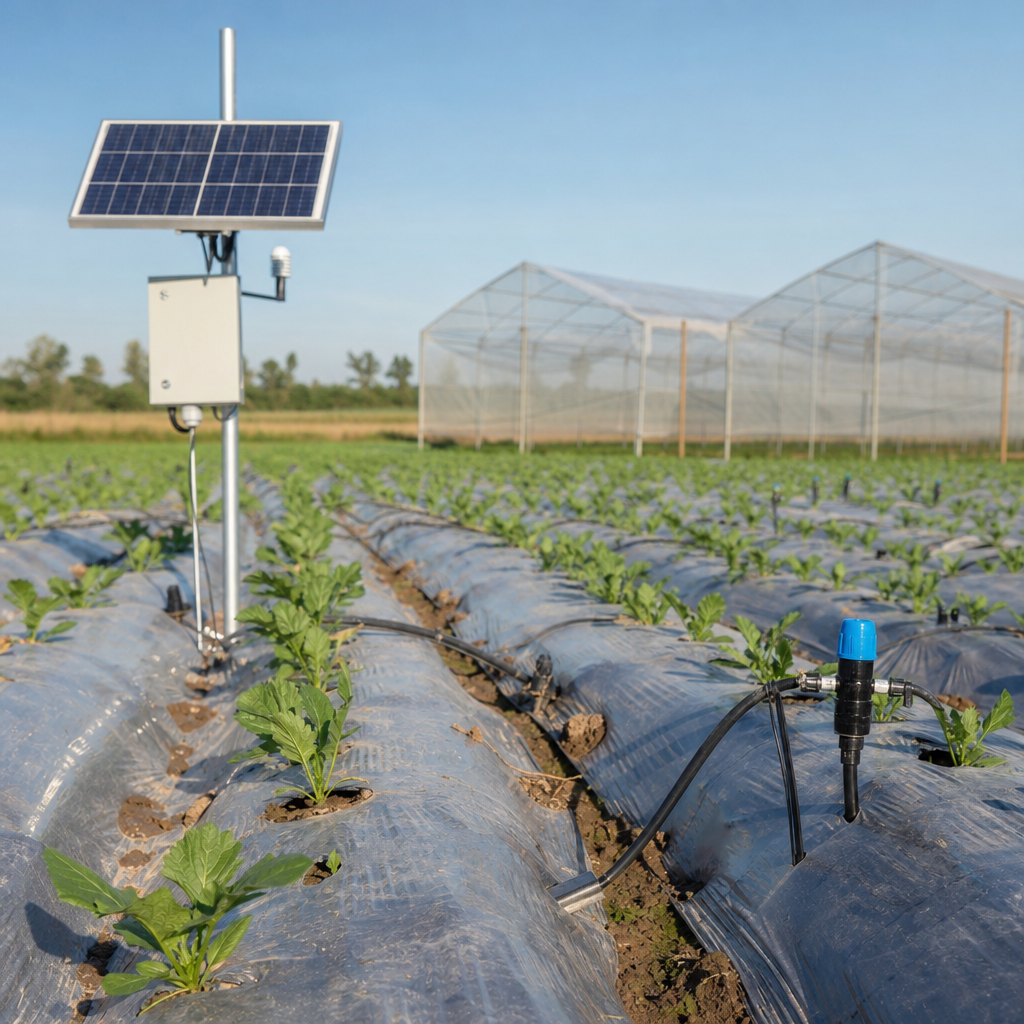
Polymers are becoming essential tools in smart agriculture because they solve practical problems that farmers face every day: water scarcity, nutrient loss, soil degradation, crop waste, and the need to produce more food with fewer inputs. In agricultural practice, a polymer is a large molecule made of repeating units, either synthetic, bio-based, or hybrid, engineered to deliver a specific function such as water retention, controlled release, mulching, sensing, coating, or structural protection. Smart agricultural practices use data, automation, and precision management to improve efficiency and resilience, and polymers fit naturally into that model because they can be tuned to respond to moisture, temperature, pH, light, and mechanical stress.
I have worked with growers, irrigation designers, and materials suppliers on field projects where polymer performance determined whether a system produced measurable savings or became an expensive trial. The lesson was consistent: polymer selection matters less as a buzzword than as a match between chemistry, climate, crop, and management style. A hydrogel that works in a greenhouse substrate may underperform in saline open fields. A mulch film that suppresses weeds well can still fail if it fragments before harvest. Understanding the use of polymers in smart agricultural practices therefore matters for both agronomic performance and long-term sustainability.
This hub article explains the major polymer applications shaping modern farming, the benefits and tradeoffs of each, and the standards growers should use when evaluating products. It covers water management polymers, controlled-release fertilizers, smart coatings and packaging, greenhouse films, sensor materials, seed technologies, and biodegradable alternatives. It also connects these applications to real deployment questions: where they work best, what can go wrong, how to compare options, and how polymer innovation is changing agricultural case studies and applications across high-value crops, broadacre systems, protected cultivation, and regenerative farming.
Water Management Polymers and Soil Conditioning
Water management is the most visible area where polymers deliver value. Superabsorbent polymers, often based on crosslinked polyacrylate, polyacrylamide, starch graft copolymers, or cellulose blends, absorb and retain many times their weight in water, then release it gradually near the root zone. In sandy soils with low cation exchange capacity and poor water holding ability, these materials can reduce irrigation frequency and buffer plants during short dry periods. Their effect is strongest in horticulture, nurseries, transplant production, urban farming, and arid-zone cropping where irrigation is expensive or inconsistent.
Field results depend on placement and chemistry. When growers broadcast hydrogels shallowly over the soil surface, benefits are often limited because heat and ultraviolet exposure accelerate degradation while roots may not access the stored moisture efficiently. When the same materials are banded in the root zone or blended into potting substrates, water retention and transplant survival improve more reliably. In one vegetable production project, we saw better stand establishment not because the polymer created extra water, but because it reduced short-term fluctuations in soil moisture between irrigation cycles. That distinction is important: hydrogels are moisture managers, not drought miracles.
Soil-conditioning polymers also include anionic polyacrylamide used in erosion control and infiltration management. Applied correctly, it stabilizes soil aggregates, reduces crusting, and limits sediment loss in furrow irrigation. Research and extension guidance in the United States has shown that specific low-toxicity formulations can significantly reduce runoff sediment when paired with good water management. The practical advantage is not only cleaner water leaving the field but also better infiltration uniformity across beds, which supports precision irrigation scheduling and more even crop emergence.
Controlled Release Fertilizers and Nutrient Efficiency
Controlled-release fertilizers are one of the most established innovative polymer applications in agriculture. These products use polymer coatings around nutrient granules to regulate dissolution and diffusion over time. Instead of releasing nitrogen, phosphorus, or potassium immediately after irrigation or rainfall, the coating slows nutrient movement so the crop receives a steadier supply. This reduces leaching, volatilization losses, and labor associated with multiple fertilizer passes. For growers managing high-value crops such as strawberries, tomatoes, ornamentals, turf, or citrus, the operational savings can be as meaningful as the agronomic benefit.
The coating chemistry varies. Sulfur-coated fertilizers may include polymer sealants. Polyolefin, polyurethane, and resin-based coatings create semipermeable barriers through which water enters and dissolved nutrients diffuse outward. Release rates depend on coating thickness, soil temperature, and moisture, which means product labels should be matched to expected field conditions. In warm climates, nutrients can release faster than growers expect, especially when irrigation is frequent. In cool-season crops, the opposite can happen. That is why controlled-release fertilizer performance should always be validated against tissue testing and fertigation records rather than assumed from brochure claims.
These products fit smart agriculture because they support variable-rate nutrition strategies and reduce timing risk. A potato grower using yield maps and soil zones can pair controlled-release nitrogen in leaching-prone areas with conventional split applications elsewhere. A greenhouse operator can use polymer-coated micronutrients to stabilize feeding between injector cycles. The main tradeoff is cost per unit nutrient, which is higher than commodity fertilizer. However, total system cost often narrows once application labor, equipment passes, nutrient-use efficiency, and environmental compliance are included in the analysis.
Mulch Films, Greenhouse Covers, and Protective Polymer Systems
Plasticulture depends heavily on polymers, particularly polyethylene, ethylene vinyl acetate, polypropylene, and specialized multilayer films. Mulch films suppress weeds, conserve moisture, moderate soil temperature, and reduce soil contact with fruit. In smart agricultural practices, these films are not passive covers; they are climate-management tools selected for light transmission, reflectance, barrier performance, tensile strength, and service life. Black mulch warms soil and blocks light. White-on-black films cool the bed in hot regions. Reflective silver films can deter certain insect pests by disrupting host-finding behavior.
Greenhouse and tunnel films are equally sophisticated. Modern films may include anti-drip additives to reduce condensation, infrared blockers to retain heat, UV stabilizers for longer life, or light-diffusion properties that improve canopy penetration and reduce hotspots. I have seen light-diffusing films improve crop uniformity in protected vegetable production because more leaves receive usable light rather than only the top canopy. That can translate into better fruit set and lower disease pressure when humidity is managed properly. The polymer is doing physical work that would otherwise require additional energy or structural modification.
The challenge is end-of-life management. Conventional agricultural films are difficult to recycle because they are contaminated with soil, plant residues, and agrochemicals. Collection programs exist in some regions, but they are inconsistent. As a result, biodegradable mulch films have attracted interest, especially materials based on polylactic acid blends, polybutylene adipate terephthalate, starch composites, and other compostable systems. These products can reduce removal labor, but performance varies widely by soil biology, temperature, and moisture. A film that biodegrades well in one climate may persist too long or fail too soon in another, so field validation is mandatory.
Polymers in Seed Coatings, Crop Protection, and Delivery Systems
Seed coatings are a high-impact, low-visibility application of polymers in agriculture. Film coatings made from polymers such as polyvinyl alcohol, cellulose derivatives, acrylics, and natural binders improve seed flowability, reduce dust-off, and hold active ingredients uniformly on the seed surface. This matters operationally because modern planters depend on consistency. Better seed singulation and less abrasion support precise spacing, especially in crops like corn, sugar beet, canola, and many vegetables. From a stewardship perspective, stronger adhesion lowers the movement of insecticidal or fungicidal dust during handling and planting.
Polymer-enabled delivery systems also improve how crop protection products behave after application. Microencapsulation can protect active ingredients from premature breakdown, reduce odor, improve handling safety, and provide slower release. Herbicides, pheromones, biologicals, and micronutrients can all be incorporated into polymer carriers or capsules designed to respond to moisture, pH, or time. The practical benefit is better placement and persistence with less off-target movement. In orchards and vineyards, trunk wraps, grafting tapes, and wound-seal materials are additional examples of polymer systems quietly supporting crop establishment and plant health.
For biological agriculture, polymers are especially useful because living microbes are sensitive to ultraviolet radiation, desiccation, and temperature swings. Encapsulation matrices based on alginate, chitosan, gelatin, or synthetic blends can protect microbial inoculants and improve shelf life. Inoculants for legumes, phosphate-solubilizing bacteria, and biocontrol fungi all benefit when the carrier helps organisms survive storage and then release near the root zone. The limitation is formulation complexity. A product can show excellent lab viability yet still disappoint if the polymer matrix restricts release too much under field conditions.
Sensors, Precision Farming, and Responsive Polymer Materials
One of the most promising directions for innovative polymer applications is in sensing and responsive materials. Conductive polymers, flexible substrates, and printable polymer composites make it possible to build low-cost agricultural sensors that conform to leaves, soil surfaces, irrigation lines, or greenhouse structures. These materials are used in humidity sensors, strain gauges, pH indicators, gas sensors, and wearable plant-monitoring devices. Instead of relying only on a distant weather station, growers can collect data closer to the biological process they are managing, which improves irrigation timing, fertigation decisions, and stress detection.
Smart polymers can also change properties when exposed to environmental triggers. Hydrogels that swell with moisture, films that alter permeability with temperature, and colorimetric indicators that respond to spoilage gases are examples already moving through commercial development. Postharvest agriculture benefits here as much as field production. Packaging films incorporating oxygen scavengers, ethylene absorbers, or antimicrobial polymer layers can extend shelf life of produce and reduce waste through the supply chain. For export-oriented fruit operations, a small gain in storage life can mean the difference between premium pricing and rejection at destination.
| Application | Typical Polymer Types | Main Benefit | Key Limitation |
|---|---|---|---|
| Hydrogels | Polyacrylate, starch grafts, cellulose blends | Improved water retention near roots | Reduced performance in saline soils |
| Controlled-release fertilizers | Polyurethane, polyolefin, resin coatings | Steadier nutrient supply, less leaching | Higher upfront cost |
| Mulch and greenhouse films | Polyethylene, EVA, polypropylene | Climate control, weed suppression | Difficult disposal and recycling |
| Seed coatings | PVA, cellulose derivatives, acrylics | Better seed handling and active adhesion | Needs crop-specific formulation |
| Sensor materials | Conductive polymers, printable composites | Low-cost flexible monitoring | Durability in field conditions |
Adoption still depends on ruggedness and integration. Farmers do not need elegant prototypes; they need sensor materials that survive dust, UV, field washing, heat, and rough handling. The best polymer-based sensor systems are the ones that link directly into irrigation controllers, fertigation software, or scouting workflows. If a sensor requires constant recalibration or proprietary maintenance, growers will abandon it quickly. In practice, durable materials and clear decision thresholds matter more than novelty.
Bio-Based Polymers, Sustainability, and Evaluation Criteria
Bio-based polymers are receiving attention because agriculture needs materials that perform well without worsening plastic pollution or greenhouse gas intensity. These materials may be derived from starch, cellulose, lignin, chitosan, polylactic acid, polyhydroxyalkanoates, or blended systems combining renewable feedstocks with conventional polymers. Not every bio-based polymer is biodegradable, and not every biodegradable polymer breaks down effectively in agricultural soil. That distinction is critical. Growers should ask whether a material is industrially compostable, home compostable, soil biodegradable, or simply partially bio-sourced, because those categories have different practical outcomes.
Evaluation should be disciplined. Start with the agronomic objective: water saving, nutrient efficiency, weed control, shelf-life extension, soil stabilization, or sensor function. Then review chemistry, field life, compatibility with irrigation water quality, climate sensitivity, and disposal pathway. Established test methods and standards matter. For biodegradability and compostability, standards from ASTM and EN frameworks provide more reliable comparison than marketing language alone. For greenhouse films, mechanical strength, light transmission, haze, and UV stability should be assessed. For coatings and delivery systems, release curves and interaction with salinity, pH, and temperature must be understood.
The use of polymers in smart agricultural practices will expand because the pressure on farming systems is intensifying. Water constraints, labor shortages, environmental regulations, and demand for traceable production all favor materials that can make inputs more precise and crops more resilient. The strongest results come when polymer technologies are treated as components of a management system, not standalone fixes. A hydrogel works best with sound irrigation design. A controlled-release fertilizer works best with crop monitoring. A biodegradable mulch works best when matched to local soil conditions and crop cycle length.
For growers, consultants, and agribusiness teams building a strategy around innovative polymer applications, the practical next step is simple: audit where inputs are being lost today, then evaluate polymer solutions against measurable field outcomes. Focus on water use, nutrient recovery, labor time, crop uniformity, and disposal cost. The right polymer choice can improve efficiency, reduce waste, and support better decisions across the farm. Use this hub as the starting point for deeper case studies and application guides, and compare every product by performance in real conditions rather than promises on a label.
Frequently Asked Questions
1. How are polymers used in smart agricultural practices?
Polymers are used in smart agriculture as functional materials designed to improve efficiency, protect resources, and support more predictable crop production. In practical terms, they appear in products such as water-retaining hydrogels, controlled-release fertilizer coatings, biodegradable mulch films, seed coatings, greenhouse covers, irrigation components, crop protection delivery systems, and soil-stabilizing materials. What makes polymers especially valuable is that they can be engineered for a very specific job, whether that means holding water near plant roots, releasing nutrients gradually over time, shielding seedlings during establishment, or improving the durability of agricultural infrastructure.
In smart farming systems, polymers are not simply passive materials; they often help farmers manage inputs more precisely. For example, polymer-coated fertilizers can match nutrient release more closely to plant demand, reducing waste and limiting runoff. Superabsorbent polymers can capture and store water in the soil profile, then release it as conditions become drier, which is particularly useful in water-stressed regions. Polymer films can suppress weeds, reduce evaporation, and improve soil temperature regulation. Advanced polymer systems are also used in sensors and precision agriculture technologies because certain polymer materials respond to moisture, temperature, chemicals, or mechanical stress. Altogether, polymers support the broader goals of smart agriculture: producing more with fewer resources, improving resilience, and reducing environmental losses.
2. Why are polymers important for water management in farming?
Water management is one of the most important reasons polymers have gained attention in agriculture. Farmers everywhere face pressure to use water more efficiently due to drought, irregular rainfall, groundwater depletion, and rising competition for water resources. Certain polymers, especially superabsorbent hydrogels, can absorb many times their own weight in water and then release that moisture gradually into the root zone. This helps crops maintain access to water for longer periods between irrigation events or rainfall, which can improve plant survival, reduce water stress, and support more stable yields.
Beyond simple water storage, polymers contribute to smarter soil-water dynamics. In sandy soils, where water drains quickly, hydrogel-type polymers can increase water-holding capacity and reduce deep percolation losses. In degraded soils, polymer amendments can help improve aggregation and moisture distribution, creating a more favorable root environment. Mulch films made from polymer materials also play a major role by reducing evaporation from the soil surface, moderating temperature, and limiting weed competition for water. In irrigation systems, durable polymer components such as pipes, emitters, and liners improve delivery efficiency and reduce losses. When used correctly, these polymer-based tools allow growers to stretch limited water supplies further and make irrigation decisions more precise.
3. Can polymers help reduce fertilizer loss and improve nutrient efficiency?
Yes, one of the most valuable applications of polymers in agriculture is improving nutrient use efficiency. Conventional fertilizers are often vulnerable to leaching, volatilization, runoff, or fixation in the soil before crops can fully use them. Polymer-based coatings and encapsulation systems are designed to address this problem by controlling how quickly nutrients are released. Instead of delivering a large burst of nitrogen, phosphorus, or potassium all at once, polymer-coated fertilizers can release nutrients gradually in response to moisture, temperature, or time. This better aligns nutrient availability with crop growth stages and root uptake patterns.
The benefits of this approach are significant. Farmers may achieve better crop response from the same or even lower fertilizer input because less nutrient is lost to the environment. Reduced nutrient loss can mean fewer applications, lower labor costs, and less risk of contamination in nearby water bodies. In high-value cropping systems, controlled-release polymer technologies can also improve consistency, which is critical for crop quality. Some polymer carriers are further engineered to deliver micronutrients, biostimulants, or crop protection compounds in a more targeted way. While performance depends on soil type, climate, crop, and product quality, polymer-enabled nutrient delivery is widely recognized as a practical strategy for making fertilization more efficient, economical, and environmentally responsible.
4. Are agricultural polymers environmentally friendly or sustainable?
The sustainability of agricultural polymers depends heavily on the type of polymer, how it is used, and what happens to it after its useful life. Not all polymers are the same. Some are conventional synthetic materials valued for strength, stability, and long service life, while others are bio-based, biodegradable, or designed as hybrid systems that balance performance with reduced environmental persistence. In agriculture, the sustainability discussion usually centers on whether a polymer creates long-term value by reducing water use, fertilizer waste, crop loss, and soil disturbance, and whether it can do so without creating disposal or residue problems.
For example, biodegradable mulch films are being developed and adopted in some systems as alternatives to conventional plastic mulches that require retrieval and disposal. Bio-based polymers derived from renewable feedstocks can lower dependence on fossil-based raw materials. At the same time, durable synthetic polymers may still be the better option in applications where long-term structural performance is needed, such as irrigation infrastructure or greenhouse materials, because their lifespan can offset frequent replacement. The key issue is responsible selection and management. Farmers and agribusinesses should evaluate durability, biodegradability claims, local regulations, field conditions, and end-of-life options before choosing a product. When matched properly to the application, polymers can support sustainability goals, but they should be assessed on full lifecycle performance rather than marketing language alone.
5. What should farmers consider before adopting polymer-based agricultural products?
Before adopting polymer-based products, farmers should start with the problem they are trying to solve rather than the material itself. A polymer product may be highly effective for water retention, nutrient control, mulching, seed protection, or sensing, but its value depends on local conditions and management goals. Key considerations include soil texture, crop type, climate, irrigation method, input costs, labor availability, and expected return on investment. For example, a water-retaining polymer may show the greatest benefit in sandy soils or drought-prone regions, while controlled-release nutrient systems may be most useful where fertilizer losses are consistently high or application timing is difficult to manage.
It is also important to evaluate product quality, application rate, compatibility with existing practices, and long-term field behavior. Farmers should ask whether the polymer is synthetic, bio-based, or biodegradable, how long it is intended to function, whether it leaves residues, and whether it has been tested under conditions similar to their own. Regulatory compliance, food safety considerations, and local environmental guidance should also be part of the decision. Ideally, growers should begin with small-scale trials to compare performance against standard practice. Working with agronomists, extension specialists, or trusted suppliers can help ensure that the selected polymer technology is technically sound and economically justified. In smart agriculture, the best polymer solutions are those that solve a clearly defined farm problem in a measurable, practical, and sustainable way.