Innovations in polymers for biomedical engineering are reshaping how clinicians repair tissue, deliver drugs, prevent infection, and monitor recovery. In biomedical engineering, a polymer is a large molecule built from repeating units that can be natural, synthetic, or hybrid, while an innovation is not simply a new material but a clinically useful improvement in performance, manufacturability, safety, or cost. I have worked with polymer selection in device development and translational research, and the pattern is consistent: the best biomaterials succeed because they solve practical constraints at the bedside as well as technical ones in the lab. This matters because modern healthcare increasingly depends on materials that interact predictably with blood, bone, soft tissue, microbes, imaging systems, and manufacturing processes. Polymers meet that need better than many metals or ceramics when flexibility, tunable degradation, surface chemistry, or scalable processing are essential. They can be engineered as hydrogels, fibers, films, foams, microspheres, nanoparticles, coatings, and 3D printed scaffolds. They also underpin many of the most important innovative polymer applications in cardiovascular devices, wound care, orthopedics, regenerative medicine, and controlled release therapeutics. For readers exploring case studies and applications, this hub article maps the field, defines the major classes of biomedical polymers, explains where each class performs best, and shows how recent advances are moving from academic prototypes into regulated products. The central point is straightforward: polymer innovation in biomedical engineering is no longer about finding one perfect material; it is about designing purpose-built systems that balance biocompatibility, mechanics, degradation, sterilization compatibility, and clinical workflow.
How Biomedical Polymer Design Has Evolved
Biomedical polymers were once chosen mainly for inertness. Early devices relied heavily on silicone, polyethylene, polyurethanes, and polymethyl methacrylate because they were processable and relatively stable in the body. That approach produced important successes, including intraocular lenses, catheters, bone cement, and long-term implants. Yet it also exposed limitations. A polymer that is merely inert may still trigger fouling, fibrous encapsulation, thrombosis, stress shielding, or poor integration with surrounding tissue. Over the last two decades, design priorities have shifted from passive compatibility to active biological performance. Engineers now tune molecular weight, crystallinity, crosslink density, hydrophilicity, surface charge, and ligand presentation to control how cells and proteins respond.
This shift has practical consequences. In cardiovascular engineering, heparin-mimetic coatings and hydrophilic surfaces reduce protein adsorption and clot formation on blood-contacting components. In tissue engineering, biodegradable polyesters such as polylactic acid, polyglycolic acid, and polycaprolactone are combined with collagen, gelatin, or bioactive ceramics to create scaffolds that support cell attachment while gradually transferring load to new tissue. In drug delivery, polymer chemistry determines not only release rate but also particle stability, immune recognition, and residence time. Polyethylene glycol historically extended circulation time, while newer zwitterionic and polysarcosine-based systems are being studied to address limitations associated with repeated exposure.
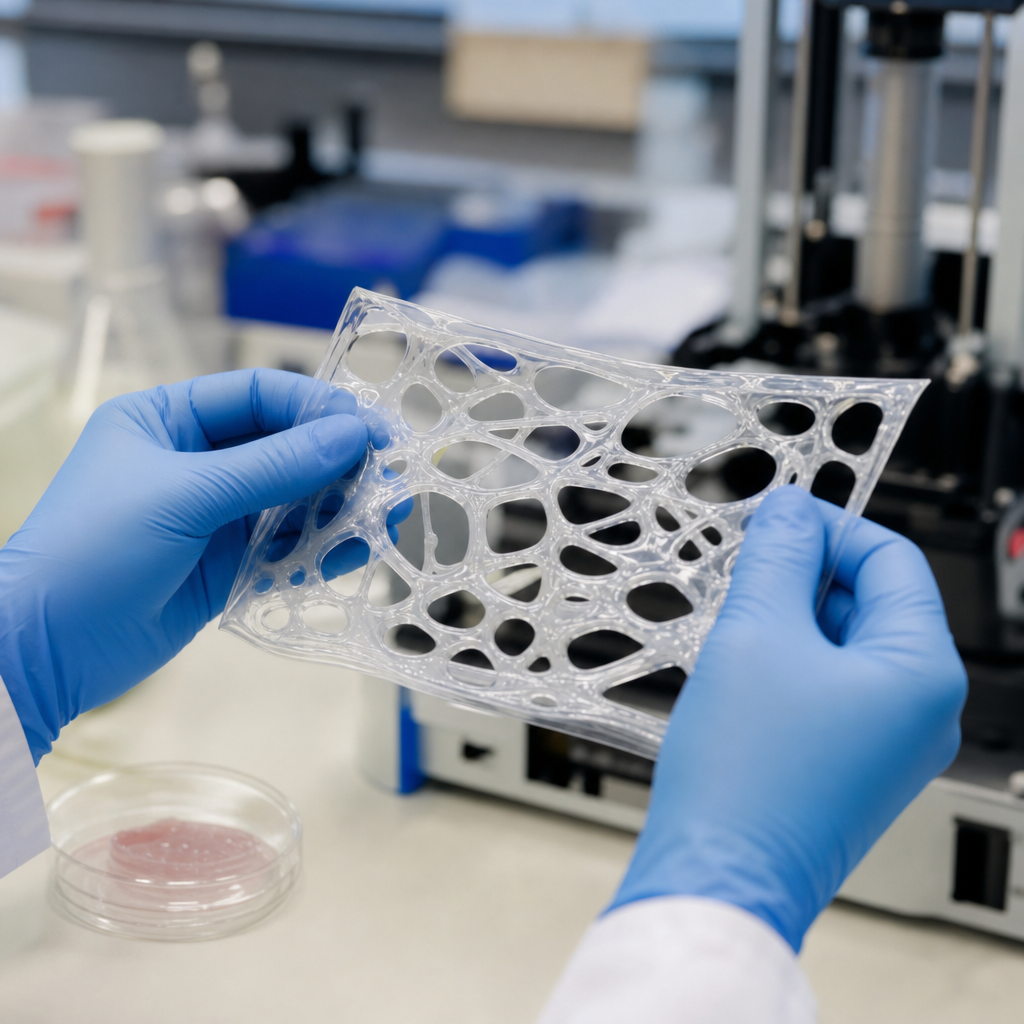
The strongest recent innovations come from combining material science with manufacturing. Electrospinning creates extracellular matrix-like fiber networks for wound dressings and vascular grafts. Photocurable hydrogels enable precise patterning for microfluidics and bioprinting. Additive manufacturing allows patient-specific geometries in airway splints, craniofacial implants, and porous bone scaffolds. Surface grafting, plasma treatment, and layer-by-layer assembly permit local modification without changing bulk mechanics. The result is a generation of polymer systems designed around application-specific performance rather than generic material catalogs.
Biodegradable Polymers in Tissue Repair and Regeneration
Biodegradable polymers remain the backbone of regenerative biomedical engineering because they provide temporary structure and then disappear as tissue heals. The most established family includes PLA, PGA, PLGA, and PCL. Their value lies in tunable hydrolytic degradation. By changing copolymer ratio, molecular weight, end-group chemistry, and device geometry, engineers can adjust strength retention from weeks to many months. PLGA, for example, degrades faster than PCL and is widely used in resorbable sutures, fixation devices, and microsphere drug depots. PCL is slower, more flexible, and often preferred for long-term scaffolds in bone, nerve, and cartilage research.
In practice, success depends on matching degradation to healing biology. A fast-resorbing scaffold in a slow-healing tendon can collapse before the tissue bears load. A slow-degrading implant in a pediatric setting may persist too long and interfere with growth. I have seen teams improve outcomes simply by revising porosity and fiber diameter rather than changing the base polymer. Pore interconnectivity controls nutrient transport and vascular ingrowth. Surface roughness influences osteoblast attachment. Mechanical anisotropy matters in ligaments and myocardium, where native tissues are directionally organized.
Natural polymers also play a major role. Collagen, gelatin, hyaluronic acid, alginate, chitosan, and silk fibroin bring intrinsic bioactivity that many synthetic materials lack. Collagen supports cell adhesion through well-known motifs, while hyaluronic acid contributes to hydration and signaling in soft tissue environments. Chitosan offers antimicrobial and hemostatic benefits useful in wound care. Their main tradeoffs are batch variability, weaker mechanical strength, and more complex sterilization. That is why many commercial and translational systems use composites: a synthetic polymer supplies structural reliability, and a natural polymer improves cellular interaction.
| Polymer class | Common biomedical uses | Main advantage | Key limitation |
|---|---|---|---|
| PLGA | Drug depots, sutures, scaffolds | Tunable degradation and established regulatory history | Acidic degradation products can affect local tissue response |
| PCL | Bone, cartilage, nerve scaffolds | Flexible and slow degrading | Limited cell affinity without surface modification |
| Collagen/Gelatin | Dressings, matrices, soft tissue scaffolds | Excellent cell interaction | Lower mechanical stability and batch variability |
| Chitosan | Wound care, antibacterial coatings | Hemostatic and antimicrobial potential | Processing sensitivity and inconsistent solubility behavior |
Among the most promising innovative polymer applications are bioresorbable vascular scaffolds, guided tissue regeneration membranes, and injectable scaffolds formed in situ. Some first-generation bioresorbable stents illustrated both promise and caution. They aimed to provide temporary vessel support and then resorb, potentially restoring vasomotion and reducing long-term foreign body burden. However, thick struts and deployment sensitivity affected outcomes. That lesson pushed the field toward thinner architectures, improved radial strength, and better imaging visibility. In regenerative medicine more broadly, the best-performing biodegradable systems are those designed around mechanical environment, degradation kinetics, and surgical handling from the beginning.
Smart Polymers for Drug Delivery and Responsive Therapies
Smart polymers respond to changes in pH, temperature, ionic strength, enzymes, light, magnetic fields, or specific biomarkers. In biomedical engineering, that responsiveness enables controlled release and more selective therapy. Thermoresponsive systems such as poly(N-isopropylacrylamide)-derived materials have been studied for gels that flow during injection and solidify near body temperature. pH-responsive polymers are useful in tumor targeting or oral delivery, where local acidity differs across tissues or along the gastrointestinal tract. Enzyme-sensitive linkers can trigger release in inflamed or diseased microenvironments.
The clearest clinical value appears when responsive behavior solves a delivery problem conventional formulations cannot. Ophthalmic drug delivery is a good example. Standard eye drops are cleared quickly, so only a small fraction of dose reaches target tissue. Mucoadhesive and in situ gelling polymers can extend contact time and reduce dosing frequency. In oncology, polymer-drug conjugates and nanoparticles attempt to improve exposure at the tumor while limiting systemic toxicity. Results are mixed because human tumors are heterogeneous, but the principle remains sound: polymer architecture can influence pharmacokinetics as much as active ingredient selection.
Hydrogels are especially important here. Their high water content and soft mechanics resemble living tissue, making them suitable for cell delivery, depot formulations, and minimally invasive therapies. Polyethylene glycol hydrogels, alginate gels, and hyaluronic acid systems are used in applications ranging from cartilage repair to embolic therapy. Newer designs incorporate shear-thinning behavior for injectability, self-healing bonds for durability, and microporous architectures that encourage cell infiltration. In wound management, hydrogel dressings can maintain moisture, absorb exudate, and release antimicrobials or growth factors over time.
Still, responsive polymers are not automatically better. Trigger thresholds must be precise, degradation products must be safe, and manufacturing must remain reproducible. A pH-sensitive carrier that works elegantly in a benchtop buffer can fail in blood because proteins, shear forces, and immune clearance alter performance. The most credible advances therefore pair sophisticated chemistry with rigorous transport modeling, in vitro-in vivo correlation, and clear release analytics.
Antimicrobial, Hemocompatible, and Bioactive Surface Innovations
Many biomedical failures begin at the surface. Bacteria adhere, proteins denature, platelets activate, and macrophages drive foreign body responses long before bulk material properties become relevant. Surface engineering has therefore become one of the fastest moving areas in innovative polymer applications. Hydrophilic coatings based on polyvinylpyrrolidone and related chemistries reduce friction on catheters and guidewires, improving navigation and limiting tissue trauma. Polyethylene glycol brushes and zwitterionic polymers reduce nonspecific protein adsorption, which can lower fouling on sensors and implants. Nitric oxide-releasing and heparin-inspired coatings are being developed for blood-contacting devices where thromboresistance is critical.
Antimicrobial polymer strategies span passive and active approaches. Passive surfaces resist adhesion through hydration layers or low-fouling chemistry. Active systems release silver, chlorhexidine, antibiotics, or antimicrobial peptides, or they present contact-killing quaternary ammonium groups. Each method has tradeoffs. Release-based systems may lose effectiveness over time and raise stewardship concerns if antibiotics are involved. Contact-killing surfaces can be potent, but activity may drop after protein conditioning films form. For that reason, combination strategies are gaining traction, especially in wound dressings, orthopedic coatings, and urinary devices.
Bioactive surface modification is equally important for integration. Grafting RGD peptides onto otherwise inert polymers can improve cell attachment. Calcium phosphate mineralization on polymer scaffolds encourages osteoconduction. Plasma treatment raises surface energy and improves wettability before bonding or coating. In my experience, simple surface interventions often outperform more exotic material substitutions because they preserve proven processing and mechanical behavior while solving the biological bottleneck. That is why surface innovation remains central across catheter technology, biosensors, contact lenses, extracorporeal circuits, and implantable electronics.
Polymers in 3D Printing, Bioprinting, and Personalized Devices
Additive manufacturing has changed polymer biomedical engineering from mass production toward application-specific design. Thermoplastics such as PEEK, PLA, PCL, TPU, and medical-grade photopolymers can be shaped into complex, patient-matched geometries that are difficult or impossible with molding alone. In surgical planning, polymer models derived from CT or MRI help teams rehearse procedures. In implant fabrication, customized cranial plates, dental guides, airway splints, and orthotic components can be produced rapidly with a close anatomical fit.
PEEK deserves special attention because it occupies a valuable middle ground between metals and softer polymers. Its modulus is closer to cortical bone than titanium, it is radiolucent in many imaging contexts, and it tolerates sterilization well. That has supported use in spinal cages, trauma implants, and craniofacial reconstruction. Yet PEEK is biologically inert, so surface texturing, plasma activation, and ceramic-filled composites are often used to improve osseointegration. This illustrates a recurring theme in biomedical polymers: no single material solves every requirement, but processing and surface design can extend utility significantly.
Bioprinting pushes the concept further by depositing cell-laden bioinks, often based on gelatin methacrylate, alginate, fibrin, collagen, or decellularized matrix blends. The goal is not just shape but function. Printed constructs for skin, cartilage, liver models, and vascularized tissue analogs are now common in research and preclinical studies. The biggest challenge is balancing printability with biology. A bioink needs viscosity and crosslinking behavior that preserve structure, but excessive stiffness or reactive chemistry can damage cells. Crosslinking methods, nozzle shear, nutrient diffusion, and post-print maturation all determine viability.
Personalization also extends to drug delivery and wearables. Polymer microneedle arrays can be designed for specific skin thickness, release profiles, and analyte sensing tasks. Flexible polymer substrates support skin-mounted electronics that conform better than rigid boards. When these devices work well, patients notice convenience first, but engineers know the real achievement is integrating mechanics, adhesion, permeability, and biostability in one platform.
Translation, Standards, and What Determines Clinical Success
The path from polymer concept to clinical product is defined by translation discipline, not novelty alone. Material characterization must include chemistry, molecular weight distribution, extractables, leachables, sterilization effects, shelf stability, and degradation behavior under realistic conditions. Biocompatibility assessment typically follows ISO 10993 principles, but passing a cytotoxicity screen is only a starting point. Blood-contacting devices require hemolysis, thrombogenicity, and complement considerations. Resorbable implants need degradation mapping and local tissue response analysis over time. Combination products may also face drug-device regulatory complexity.
Manufacturing is often where promising polymer applications succeed or fail. Residual solvents, uncontrolled moisture, inconsistent crosslink density, and batch-to-batch variation can erase the gains seen in early prototypes. Scaling electrospun mats, nanoparticle formulations, or hydrogel chemistries requires process analytical controls and robust release criteria. Sterilization compatibility is another common stumbling block. Gamma irradiation can induce chain scission in some polymers, ethylene oxide may leave residues, and steam can deform temperature-sensitive devices. These are not late-stage details; they should guide material choice from the outset.
Clinical adoption also depends on workflow. Surgeons favor materials that are easy to trim, suture, visualize, and store. Nurses prefer dressings that remove cleanly and reduce dressing-change burden. Pharmacists need predictable stability. Procurement teams require dependable supply and cost control. The strongest case studies in biomedical engineering are therefore not just material stories. They are systems stories, where polymer science, device design, sterilization, packaging, and user training align. Looking ahead, expect the next wave of innovation to center on multimaterial systems, better long-term host response control, and more reliable links between in vitro testing and human performance.
Innovations in polymers for biomedical engineering have moved the field from static materials toward adaptive, application-specific systems that support healing, deliver therapy, and improve device performance. The key lessons are clear. First, polymer selection must match biological context, mechanical demand, degradation timeline, and clinical handling requirements. Second, the most effective advances often come from interfaces, including coatings, surface chemistry, and composite architectures, rather than from replacing an entire material platform. Third, additive manufacturing, smart hydrogels, and bioactive scaffolds are expanding what biomedical engineers can personalize and control, but translation still depends on standards, reproducibility, and realistic validation. For anyone building a knowledge base around case studies and applications, this hub provides the framework for understanding innovative polymer applications across regenerative medicine, drug delivery, implants, wound care, and personalized devices. Use it as the starting point for deeper exploration of individual material classes, device categories, and clinical case studies, then map those insights back to the practical question that always decides success: how will this polymer improve outcomes in the real world?
Frequently Asked Questions
1. What makes a polymer innovation truly meaningful in biomedical engineering?
A meaningful polymer innovation in biomedical engineering goes far beyond introducing a new chemistry. In practice, it must solve a real clinical or manufacturing problem better than existing materials. That could mean improving biocompatibility, reducing inflammation, enabling more predictable degradation, delivering drugs with greater precision, lowering infection risk, or making a device easier and more cost-effective to manufacture at scale. In device development and translational research, polymer selection is rarely about finding the most novel material on paper. It is about choosing a material system that performs reliably in the body, withstands sterilization, meets regulatory expectations, and can be processed consistently into the final product.
For example, a polymer used in a wound dressing may be considered innovative if it not only maintains moisture balance but also releases antimicrobial agents in a controlled way and remains comfortable for the patient. In a drug delivery implant, innovation may involve tuning molecular structure so the polymer degrades at a rate that matches the therapeutic timeline. In tissue engineering, a polymer scaffold becomes truly valuable when its mechanical properties, porosity, and biological cues support cell attachment and tissue regeneration while remaining manufacturable and safe.
The strongest innovations typically improve multiple dimensions at once: clinical performance, reproducibility, safety profile, and commercial viability. That is why hybrid systems, surface-modified polymers, smart polymers, and bioresorbable materials have attracted so much attention. Their value lies in how effectively they translate scientific advances into practical outcomes for surgeons, patients, and manufacturers.
2. How are advanced polymers improving drug delivery in biomedical applications?
Advanced polymers are transforming drug delivery by giving engineers much finer control over when, where, and how therapeutics are released. Traditional drug delivery often relies on systemic dosing, which can expose the entire body to a drug even when only one tissue needs treatment. Polymer-based delivery systems can localize therapy, protect sensitive molecules, and release active agents over hours, days, or even months. This helps improve efficacy while reducing side effects and dosing burden.
One of the most important advances is the use of biodegradable polymers such as polylactic acid, polyglycolic acid, and their copolymers. These materials can be formed into microspheres, nanoparticles, hydrogels, films, or implants that gradually break down in the body as they release a drug. That makes them particularly useful for long-acting injectables, post-surgical therapies, cancer treatment, and regenerative medicine. Hydrogels are also highly important because they can hold large amounts of water and mimic soft tissue environments, making them suitable for protein delivery, wound care, and injectable therapeutic systems.
Another major area of innovation is stimuli-responsive or “smart” polymers. These materials can change their behavior in response to pH, temperature, enzymes, light, or other biological signals. In practical terms, this means a polymer can be designed to release a drug preferentially in a tumor microenvironment, inflamed tissue, or infected wound. That kind of responsiveness can significantly improve therapeutic targeting. Surface-functionalized polymers also help stabilize fragile biologics such as peptides, proteins, and nucleic acids, which is increasingly important as advanced therapeutics expand.
From a translational perspective, the best polymer drug delivery systems balance sophisticated release behavior with manufacturability, shelf stability, sterilization compatibility, and regulatory clarity. A promising formulation in the lab only becomes impactful when it can be produced consistently and integrated into a clinically usable product.
3. Why are biodegradable and bioresorbable polymers so important for tissue repair and medical devices?
Biodegradable and bioresorbable polymers are important because they allow a device or scaffold to provide temporary support and then gradually disappear once healing or regeneration has progressed. This is especially valuable in biomedical engineering because many clinical needs are temporary. A scaffold may only be needed until new tissue forms. A fixation device may only need to maintain stability during healing. A localized drug depot may only need to function over a defined treatment window. In these cases, a permanent implant can create unnecessary long-term risks, while a resorbable polymer can reduce the need for surgical removal and lower chronic foreign-body burden.
In tissue engineering, these polymers are used to create scaffolds that guide cell infiltration, vascularization, and extracellular matrix formation. Their degradation rate can be tailored through molecular weight, crystallinity, copolymer composition, and device geometry so that mechanical support fades as native tissue takes over. This timing is critical. If a scaffold degrades too quickly, it may fail before the tissue is ready. If it degrades too slowly, it can interfere with remodeling or prolong inflammation. Successful design depends on aligning material behavior with the biology of healing.
In sutures, orthopedic fixation devices, stents, and drug-eluting implants, bioresorbable polymers can also simplify patient care. They eliminate some removal procedures and can improve patient comfort. However, their performance must be evaluated carefully. Degradation byproducts, local pH changes, mechanical weakening over time, and sterilization effects all matter. The real innovation lies in making these materials more predictable, more mechanically reliable, and more compatible with living tissue across the full product lifecycle.
4. How do polymer innovations help reduce infection and improve biocompatibility?
Reducing infection and improving biocompatibility are two of the most important goals in biomedical polymer design, because even technically advanced devices can fail if they trigger adverse biological responses or allow microbial colonization. Modern polymer innovations address these challenges through both bulk material design and surface engineering. The surface of a polymer often dictates how proteins adsorb, how cells respond, and whether bacteria can attach and form biofilms. That makes surface chemistry, wettability, charge, topography, and coating strategy central to performance.
One common innovation is the use of antimicrobial polymer coatings or polymer matrices that release silver ions, antibiotics, antiseptics, or other anti-infective agents in a controlled manner. These systems are used in catheters, wound dressings, implants, and surgical materials to reduce early-stage colonization. Another strategy is to create anti-fouling surfaces that resist protein and bacterial adhesion from the start. Hydrophilic coatings, zwitterionic polymers, and polyethylene glycol-based modifications have all been explored to reduce biofilm formation and undesirable biological interactions.
Biocompatibility improvements also come from designing polymers that better match the mechanics and chemistry of surrounding tissue. A material that is too stiff, too reactive, or prone to unfavorable degradation can provoke inflammation, fibrosis, thrombosis, or poor integration. Softer hydrogels, tailored elastomers, and bioactive hybrid polymers can improve tissue interaction by presenting cues that cells recognize or by reducing mechanical mismatch. In blood-contacting applications, for example, hemocompatibility is essential, so polymer surfaces may be engineered to reduce clotting and platelet activation.
In real-world development, it is important to remember that infection prevention and biocompatibility are not single test results. They emerge from the total system: polymer chemistry, additives, processing conditions, sterilization method, packaging, and intended use. The most successful innovations are those that maintain these benefits consistently from prototype through commercial production.
5. What role do smart polymers and hybrid polymer systems play in the future of biomedical engineering?
Smart polymers and hybrid polymer systems are playing an increasingly important role because they allow biomedical devices and therapies to become more adaptive, multifunctional, and personalized. Smart polymers respond to environmental cues such as temperature, pH, electrical signals, enzymes, or mechanical stress. Hybrid systems combine polymers with other materials such as ceramics, metals, nanoparticles, biologics, or natural extracellular matrix components. Together, these approaches make it possible to design materials that do more than passively occupy space in the body. They can sense, respond, protect, release, support, and communicate.
In practical terms, smart polymers are being explored for injectable gels that solidify in the body, dressings that respond to infection-related changes, drug carriers that release therapeutics only under disease-specific conditions, and soft biosensors that conform to tissue while tracking healing or physiological signals. Hybrid polymer systems are especially powerful in regenerative medicine. A polymer may provide processability and tunable degradation, while a ceramic phase improves osteoconductivity for bone repair, or a biological component enhances cell signaling for soft tissue regeneration. This kind of materials integration helps engineers overcome the limitations of single-material systems.
These technologies also support the growth of additive manufacturing and patient-specific devices. Polymers can be formulated for 3D printing to create customized scaffolds, implants, and microstructured devices with precise architecture. That enables control over pore size, mechanical behavior, and spatial distribution of bioactive agents. As wearable and implantable monitoring systems expand, flexible and conductive polymer-based materials are also becoming important for interfaces that are less invasive and more comfortable than rigid electronics.
Looking ahead, the biggest impact will likely come from polymer systems that combine responsiveness, manufacturability, and clinical practicality. The future is not just about making polymers more complex. It is about making them more useful: easier to translate, safer in patients, better aligned with biological healing, and more capable of supporting precision medicine across prevention, treatment, and recovery.