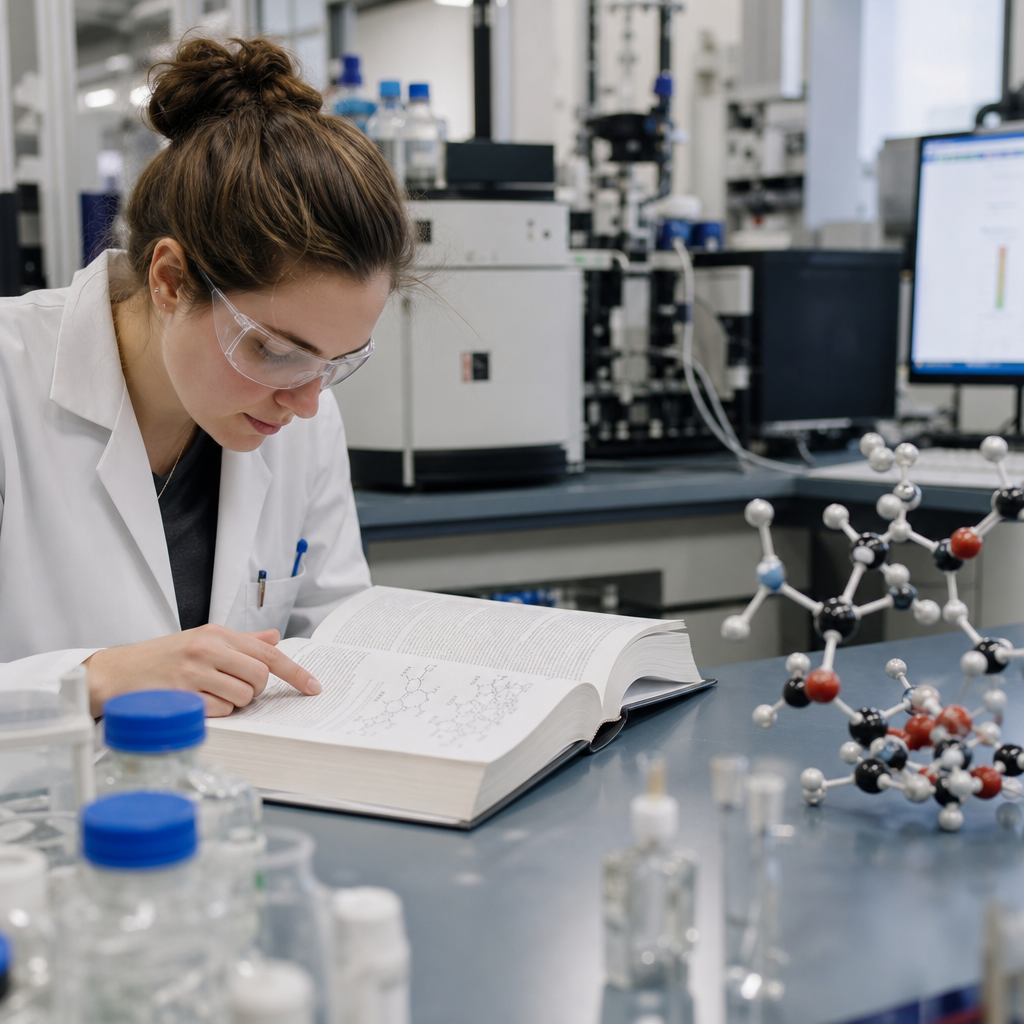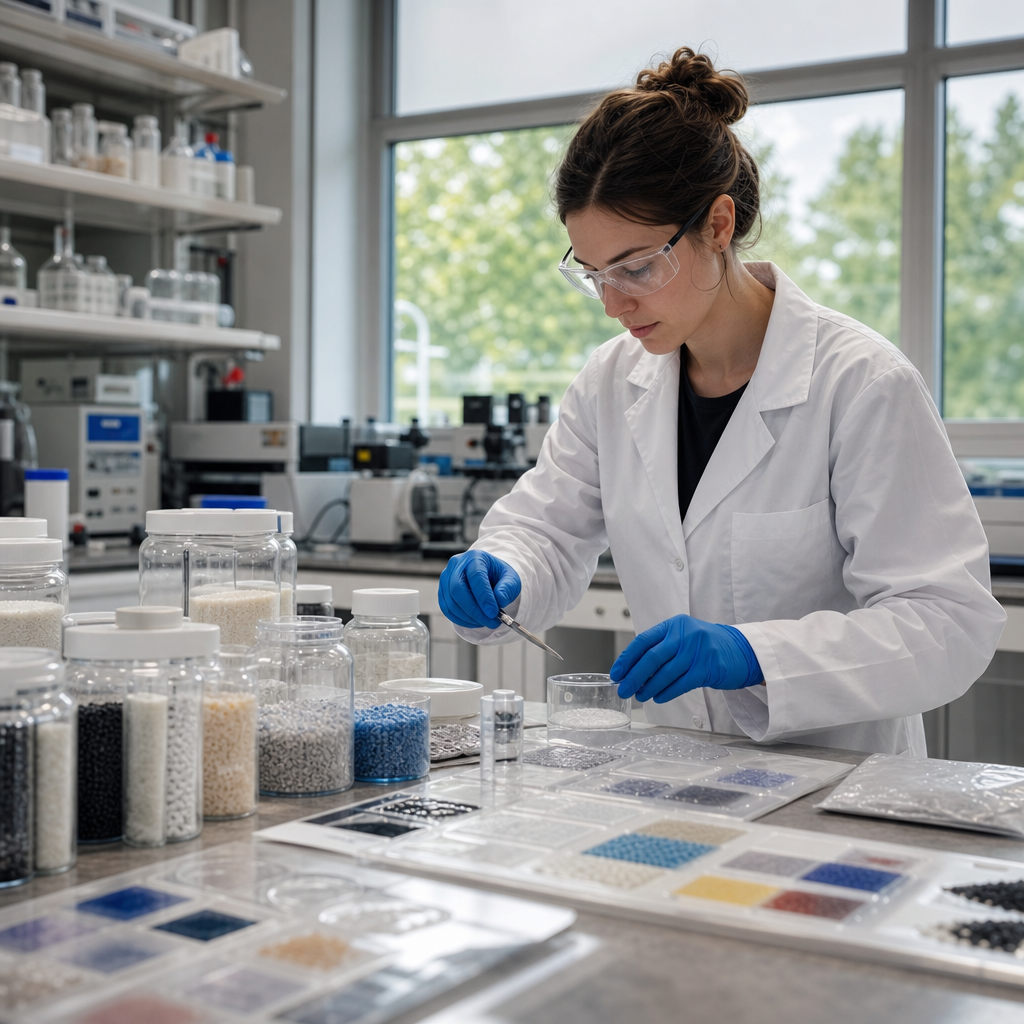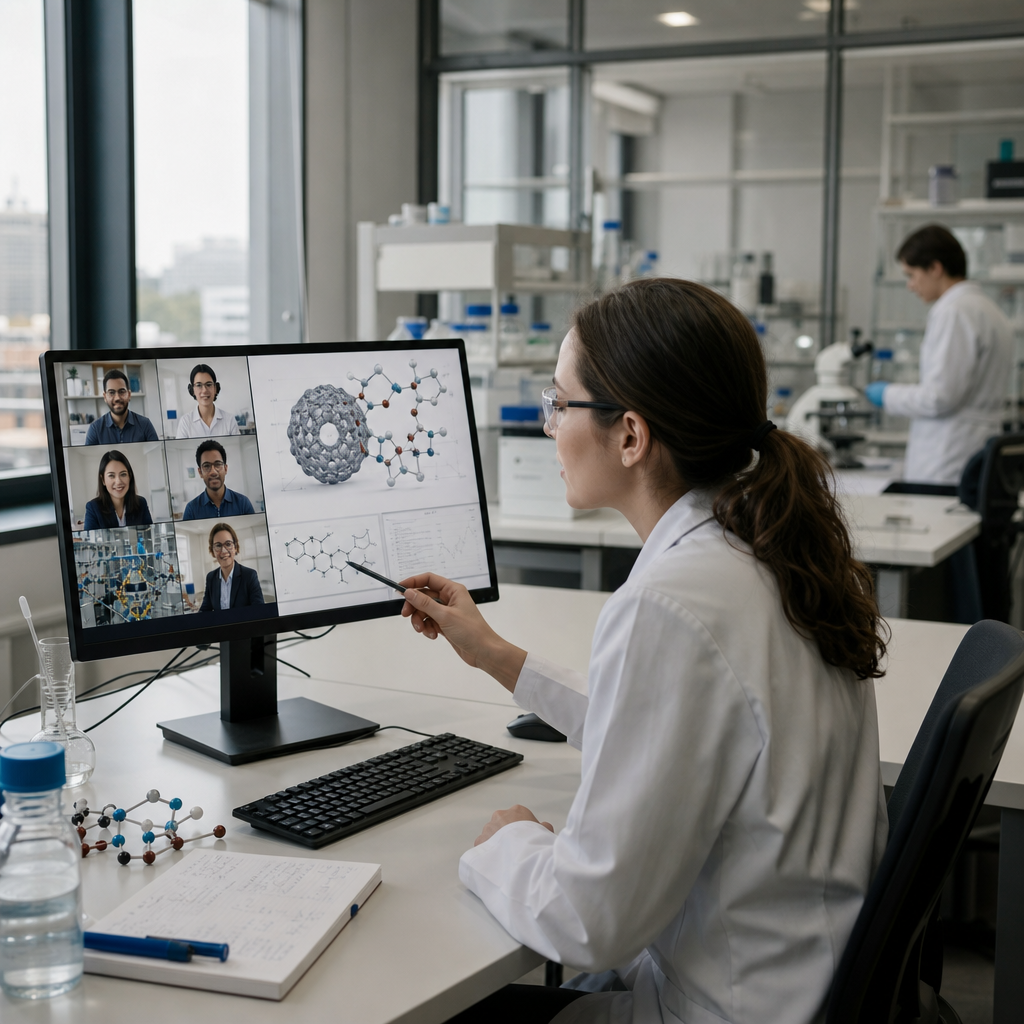
Online collaboration platforms have changed polymer research from a largely local, lab-bound activity into a distributed, data-rich discipline where chemists, materials scientists, engineers, and computational modelers work together across institutions and time zones. In this context, online collaboration platforms include cloud document systems, electronic lab notebooks, shared code repositories, video conferencing tools, project management software, data repositories, and specialized scientific environments that support experiment planning, characterization review, modeling, and publication workflows. Polymer research covers the design, synthesis, processing, testing, and application of macromolecular materials such as polyethylene, epoxy resins, hydrogels, biodegradable plastics, conductive polymers, and high-performance composites. The impact matters because modern polymer problems are inherently multidisciplinary: a team developing a recyclable thermoset may need synthetic chemistry, rheology, spectroscopy, machine learning, life-cycle analysis, and manufacturing input before a material ever reaches pilot scale.
I have seen this shift directly in collaborative materials programs where progress accelerated only after teams stopped treating data, protocols, and analysis scripts as private files on local computers. Once groups moved to shared repositories and structured communication channels, routine delays shrank. Graduate students no longer waited days for instrument notes, industrial partners could review nonconfidential dashboards in near real time, and modelers could work from raw thermal or mechanical data instead of static figures pasted into slides. That practical change is the core reason this topic deserves a hub-level overview within educational resources. Researchers, students, librarians, and R&D managers all need a clear map of the online resources that now shape polymer discovery, reproducibility, and technology transfer.
Understanding the impact requires a few key terms. Synchronous collaboration means people work together live through video meetings, shared whiteboards, or simultaneous editing. Asynchronous collaboration means work moves forward without everyone being present at the same moment, often through issue trackers, comments, version histories, and shared notebooks. Reproducibility refers to obtaining consistent results when methods, data, and analysis are repeated. Version control is the formal tracking of changes in code, manuscripts, datasets, and sometimes even protocols. Interoperability means one system can exchange usable information with another, an issue that becomes critical when polymer teams combine spectroscopy files, molecular simulations, instrument outputs, and metadata from multiple labs.
Online resources now influence nearly every stage of the polymer research lifecycle. They help teams search literature, design experiments, register samples, coordinate instrument time, analyze characterization data, compare formulations, document failures, write papers, and preserve knowledge after students graduate. They also support broader goals that matter in education and research strategy: reducing duplicate work, improving data quality, building transparent training environments, and enabling collaboration between academia, national laboratories, startups, and established manufacturers. For a field facing urgent demands in sustainable materials, battery polymers, biomedical devices, membranes, packaging, and composites, the quality of collaboration infrastructure increasingly determines how quickly good ideas become verified results.
Why online collaboration matters in modern polymer workflows
Polymer research is unusually dependent on coordination because materials behavior emerges from many linked variables rather than a single measurement. A small change in monomer purity, catalyst loading, curing temperature, molecular weight distribution, solvent removal, humidity, or processing shear can alter final properties dramatically. When those variables are tracked poorly, teams waste months trying to reproduce tensile strength, glass transition temperature, ionic conductivity, or degradation rates. Online collaboration platforms address that risk by centralizing records and making assumptions visible. In practical terms, a shared electronic lab notebook can capture the exact initiator concentration for a free-radical polymerization, while a linked repository stores DSC files, NMR assignments, SEC chromatograms, and analysis scripts together.
This matters most when teams are distributed. A computational chemist optimizing a polymer electrolyte model may sit in one country while the electrochemist testing coin cells sits in another. Without a common platform, communication degrades into email attachments and contradictory file names. With organized systems such as Benchling, LabArchives, Microsoft Teams, Slack, GitHub, GitLab, Overleaf, OSF, or institutional data repositories, information becomes traceable. A student can inspect an earlier batch record, compare processing notes, and identify whether a mechanical failure came from crosslink density, residual solvent, or sample conditioning. The gain is not just convenience. It is faster root-cause analysis and stronger scientific confidence.
Core categories of online resources used in polymer research
Most polymer groups use a mix of general-purpose and scientific platforms rather than one universal system. Communication tools such as Zoom and Teams support meetings, instrument troubleshooting, and joint seminars. Project management systems such as Trello, Asana, Notion, or Jira help track synthesis campaigns, manuscript milestones, and shared deliverables. Electronic lab notebooks store procedures, observations, calculations, and attachments. Version control systems such as GitHub and GitLab are essential when teams write Python or MATLAB scripts for rheology fitting, molecular dynamics workflows, cheminformatics pipelines, or automated microscopy analysis. Cloud storage and institutional repositories preserve large datasets including AFM images, SAXS results, spectroscopy outputs, and CAD files for sample fixtures.
Specialized scientific resources are increasingly important. The Materials Project, Polymer Genome, PubChem, Crossref, ORCID, ChemRxiv, Zenodo, and figshare contribute to discovery, identity management, preprint dissemination, and data preservation. Molecular modeling teams often integrate Jupyter notebooks, high-performance computing portals, and workflow tools that let experimental collaborators inspect results without learning command-line systems. In education, learning management systems and shared annotation platforms expose students to collaborative review of papers, protocols, and lab reports. The best online resource strategy is therefore layered: one set of tools for communication, one for formal records, one for code and analysis, and one for long-term archiving.
| Resource type | Main use in polymer research | Example platforms | Primary benefit |
|---|---|---|---|
| Electronic lab notebooks | Protocols, synthesis records, instrument notes | Benchling, LabArchives | Structured reproducibility |
| Version control | Code, data processing, manuscript drafting | GitHub, GitLab | Transparent change tracking |
| Communication tools | Meetings, quick decisions, file discussion | Zoom, Teams, Slack | Faster coordination |
| Data repositories | Dataset sharing and preservation | Zenodo, figshare, OSF | Citable, accessible outputs |
| Writing platforms | Collaborative papers and reports | Overleaf, Google Docs | Parallel authoring |
How platforms improve reproducibility, data quality, and research speed
The most measurable impact of online collaboration platforms is improved reproducibility. In polymer science, reproducibility often fails because researchers record outcomes but not context. A tensile dataset without sample conditioning history, gauge dimensions, strain rate, or molding conditions is incomplete. A swelling test without pH, ionic strength, or drying protocol may be impossible to interpret. Platforms that enforce templates and metadata fields reduce these omissions. I have found that even basic standardized forms for synthesis batches and characterization requests can prevent recurring ambiguity. When every sample receives a unique identifier linked to molecular structure, processing history, and storage conditions, later comparisons become meaningful rather than speculative.
Research speed also improves because teams spend less time searching for scattered information. A PhD student should not need to reopen six emails to locate the FTIR baseline correction script or the exact annealing schedule for a semicrystalline film. Shared digital workspaces solve this by linking samples, raw files, analysis notebooks, and discussion threads in one place. In one common scenario, a team studying self-healing polyurethane can upload optical microscopy videos, DMA curves, and healing efficiency calculations immediately after testing. Collaborators can review anomalies within hours, suggest repeat experiments, and update the next formulation matrix before the next synthesis cycle begins. That compression of decision time is especially valuable in iterative design projects.
Better documentation also strengthens publication quality. Journals increasingly expect detailed methods, data availability statements, and image integrity. Funding agencies and institutional review processes increasingly ask how data will be managed and shared. Teams already working in online platforms are better positioned to meet those expectations because methods, provenance, and contributor roles are documented continuously rather than reconstructed at the end. The result is not only a smoother writing process but also more defensible science.
Effects on interdisciplinary teamwork, education, and global access
Polymer research rarely sits inside one discipline. A biodegradable packaging project may involve organic synthesis, extrusion, barrier testing, compostability standards, and supply-chain economics. Online collaboration platforms make this interdisciplinary work manageable by translating specialized tasks into visible workflows. Engineers can comment on processing constraints while chemists refine molecular design and environmental analysts review end-of-life assumptions. Shared dashboards, meeting recordings, and searchable decisions reduce the knowledge gap between subfields. This is especially useful for students, who often learn faster when they can trace how one experimental choice affects downstream testing and final application claims.
Education benefits substantially. Within educational resources, online platforms serve as both infrastructure and pedagogy. Students can compare protocol versions, annotate landmark papers on polymer blends or vitrimer chemistry, and learn how data moves from instrument output to polished figure. In my experience mentoring junior researchers, the ability to inspect a complete project trail teaches scientific reasoning better than reading only a final article. They see failed batches, calibration issues, coding revisions, and the rationale for excluding outliers. That visibility builds stronger judgment about uncertainty, controls, and evidence.
Global access is another major impact. Researchers in smaller institutions may not have the same instrument base as a flagship materials center, but they can still join virtual seminars, share datasets, contribute modeling expertise, and coauthor papers through online platforms. Open repositories and preprint servers lower entry barriers to current knowledge, especially in fast-moving areas such as polymer upcycling, solid polymer electrolytes, and bio-based monomers. Access is not equal everywhere because bandwidth, subscription costs, and software restrictions still matter, yet online collaboration has unquestionably widened participation compared with older, highly local research models.
Limits, risks, and best practices for using online resources well
Online collaboration platforms are not automatically beneficial. Poor implementation can create clutter, compliance problems, and false confidence. Polymer datasets are often large, heterogeneous, and sensitive, particularly in industry collaborations involving formulations, additives, or processing know-how. Intellectual property controls, export restrictions, and confidentiality agreements must shape platform choices. A public repository is appropriate for a published SAXS dataset; it is not appropriate for undisclosed resin formulations tied to patent strategy. Security, access permissions, and retention policies need explicit governance rather than ad hoc decisions by individual lab members.
Another limitation is standardization fatigue. If researchers must duplicate the same entry across a lab notebook, shared drive, project tracker, and manuscript draft, they eventually stop maintaining the system. Effective setups minimize duplication and define a source of truth for each asset. For example, the lab notebook may hold experimental records, GitHub may hold analysis code, and an institutional repository may preserve final datasets. Clear naming conventions, sample identifiers, and metadata standards matter more than flashy interfaces. Training matters too. Many platform failures are really onboarding failures, where students never learn how files should be structured or how decisions should be documented.
Best practice is to start with the research questions and workflow bottlenecks, then select tools accordingly. Teams should ask: Where do errors occur? Which data need version control? What must be searchable in two years? Which collaborators need external access? What standards apply to data retention and authorship? In polymer research, a workable answer usually includes standardized templates, persistent identifiers, routine backup, role-based permissions, and periodic audits of whether the system actually supports science instead of adding administrative drag.
Building a strong online resource hub for polymer researchers
As a hub page within educational resources, this topic should point readers toward the full ecosystem of online resources rather than treat platforms as isolated software choices. A strong hub helps different audiences quickly find what they need: students looking for open polymer databases, faculty setting up a digital lab workflow, librarians supporting data management plans, and industry researchers benchmarking collaboration practices. The most useful hub structure typically covers literature databases, preprint and repository options, virtual learning tools, ELN guidance, version control basics, open data standards, computational resources, and collaborative writing environments. Internal links to detailed articles on each of these topics improve discoverability and give readers a logical next step.
The central benefit remains simple: better collaboration produces better polymer research. When records are structured, discussions are searchable, data are linked to methods, and teams can contribute asynchronously, discovery becomes more efficient and more trustworthy. That does not eliminate the need for careful experiments, critical interpretation, or hands-on materials intuition. It does ensure that valuable knowledge is not lost in inboxes, disconnected spreadsheets, or undocumented student memory. If you are building or updating a polymer research workflow, start by auditing your current online resources, identify the points where information breaks down, and create a shared system that your team will actually use consistently.
Frequently Asked Questions
How have online collaboration platforms changed the way polymer research is conducted?
Online collaboration platforms have fundamentally reshaped polymer research by moving it from a mostly local, lab-centered workflow to a distributed, continuously connected research model. In the past, polymer scientists often relied on in-person meetings, emailed document versions, and isolated data storage systems, which made collaboration slower and more fragmented. Today, cloud-based documents, electronic lab notebooks, shared data repositories, code platforms, and video conferencing tools allow researchers to coordinate experiments, exchange results, and refine ideas in near real time, even when they are spread across multiple universities, companies, or countries.
This shift is especially important in polymer research because the field is inherently interdisciplinary. A single project may involve synthetic chemists designing macromolecules, materials scientists characterizing structure-property relationships, engineers testing processing methods, and computational researchers modeling molecular behavior. Online collaboration platforms make it much easier for these groups to work from a common knowledge base. Experimental protocols, spectroscopy data, rheology results, microscopy images, simulation outputs, and manuscript drafts can all be stored, annotated, and updated in shared digital environments.
As a result, research becomes faster, more transparent, and more reproducible. Teams can identify problems earlier, avoid redundant work, and make decisions based on a broader and better-organized evidence base. The overall impact is not simply convenience; it is a meaningful change in how polymer science is planned, executed, validated, and communicated.
Why are online collaboration platforms especially valuable for interdisciplinary polymer research teams?
Polymer research rarely happens within a single disciplinary boundary. Modern studies often connect polymer synthesis, analytical chemistry, mechanical testing, computational modeling, processing science, and application development. Because each specialty uses different methods, terminology, software, and data formats, interdisciplinary coordination can become a major challenge. Online collaboration platforms help solve this problem by creating a central digital workspace where all contributors can share information in structured, accessible ways.
For example, a synthetic chemist may upload reaction conditions and molecular characterization data to an electronic lab notebook, while a computational modeler adds simulation files and predicted polymer conformations to a shared repository. At the same time, an engineer can document processing parameters and performance tests in project management or data-sharing tools. With the right platform setup, every team member can see how their work connects to the broader project, reducing silos and improving scientific alignment.
These platforms also improve communication across time zones and institutions. Instead of waiting for the next formal meeting, researchers can leave comments on datasets, suggest protocol revisions, track milestones, and flag issues as they arise. This creates a more iterative and integrated workflow, which is particularly important when polymer systems are complex and results depend on subtle changes in composition, morphology, or processing. In practice, online collaboration tools help interdisciplinary teams move from parallel work streams to truly coordinated scientific problem-solving.
What role do shared data repositories and electronic lab notebooks play in improving polymer research quality?
Shared data repositories and electronic lab notebooks play a central role in improving research quality because they make polymer research more organized, traceable, and reproducible. Polymer experiments often generate large amounts of varied data, including molecular weight distributions, thermal analysis, mechanical testing results, spectroscopy files, imaging datasets, and processing records. When this information is stored in disconnected notebooks, personal hard drives, or informal spreadsheets, it becomes difficult to verify findings, compare results across experiments, or reproduce procedures accurately.
Electronic lab notebooks help standardize how experiments are documented. Researchers can record raw materials, reaction schemes, instrument settings, purification steps, observations, and deviations from planned protocols in a searchable digital system. This level of documentation is extremely valuable in polymer science, where small variations in monomer ratios, curing conditions, solvent systems, or thermal history can significantly influence final material properties. A well-maintained electronic lab notebook preserves this context and makes it easier for others to interpret results correctly.
Shared repositories extend these benefits by allowing teams to store processed datasets, metadata, analysis scripts, and supporting files in one place. That improves version control, facilitates peer review within the research group, and supports long-term project continuity when students or staff transition out of the lab. It also strengthens reproducibility, which remains a major issue in many scientific fields. In polymer research, better digital recordkeeping means teams can more confidently validate conclusions, compare materials across studies, and build on previous work without losing critical experimental detail.
How do online collaboration platforms support computational modeling and data-driven polymer discovery?
Online collaboration platforms are especially powerful in computational and data-driven polymer research because they connect modeling, code development, experimental validation, and dataset management into a single collaborative ecosystem. As polymer science increasingly incorporates machine learning, molecular simulation, informatics, and high-throughput experimentation, researchers need tools that can support large files, structured workflows, and frequent iteration across teams. Shared code repositories, cloud computing interfaces, data platforms, and collaborative analysis environments make that possible.
For instance, computational scientists can use version-controlled repositories to develop and refine scripts for molecular dynamics simulations, polymer property prediction, or structure-performance modeling. Those repositories allow team members to track changes, review code, reproduce analyses, and integrate improvements without confusion over file versions. Experimental collaborators can then access the resulting models, compare predictions against measured data, and provide feedback that informs the next modeling cycle. This tight digital loop shortens the time between hypothesis generation and validation.
In data-driven discovery, collaboration platforms also help standardize datasets and metadata, which is crucial for training reliable predictive models. Polymer systems are often difficult to represent consistently because of chain length distributions, copolymer architectures, processing histories, and environmental effects. Shared digital infrastructures help teams define naming conventions, data schemas, and documentation practices that improve dataset quality. The broader effect is that online platforms do not just support communication; they actively enable a more scalable, computationally integrated approach to polymer innovation.
What challenges come with using online collaboration platforms in polymer research, and how can teams address them?
Despite their advantages, online collaboration platforms also introduce several practical and strategic challenges. One of the most common is data standardization. Polymer research produces highly diverse datasets, and if team members use inconsistent naming systems, file formats, metadata fields, or experimental templates, shared platforms can become cluttered rather than useful. Another challenge is intellectual property and data security, particularly in industry partnerships, pre-publication research, or projects involving proprietary formulations and processing methods. Teams must also manage access control carefully when working across institutions with different compliance policies.
There is also a human factor. Not all researchers adopt new digital tools at the same pace, and some may resist changing established lab practices. If platforms are poorly chosen or inconsistently used, they can create duplicate work instead of streamlining it. In addition, maintaining high-quality digital documentation requires discipline. A collaboration system is only as valuable as the information entered into it, so incomplete records, delayed uploads, or weak version control can undermine the benefits.
The best way to address these issues is through clear governance and training. Teams should establish agreed standards for file organization, metadata, protocol documentation, authorship tracking, and data sharing at the start of a project. They should also select tools that match the technical complexity and compliance needs of the research rather than adopting platforms simply because they are popular. Regular check-ins, onboarding support, and defined responsibilities for data stewardship can greatly improve consistency. When implemented thoughtfully, online collaboration platforms can deliver major benefits in polymer research while minimizing confusion, security risks, and workflow inefficiencies.