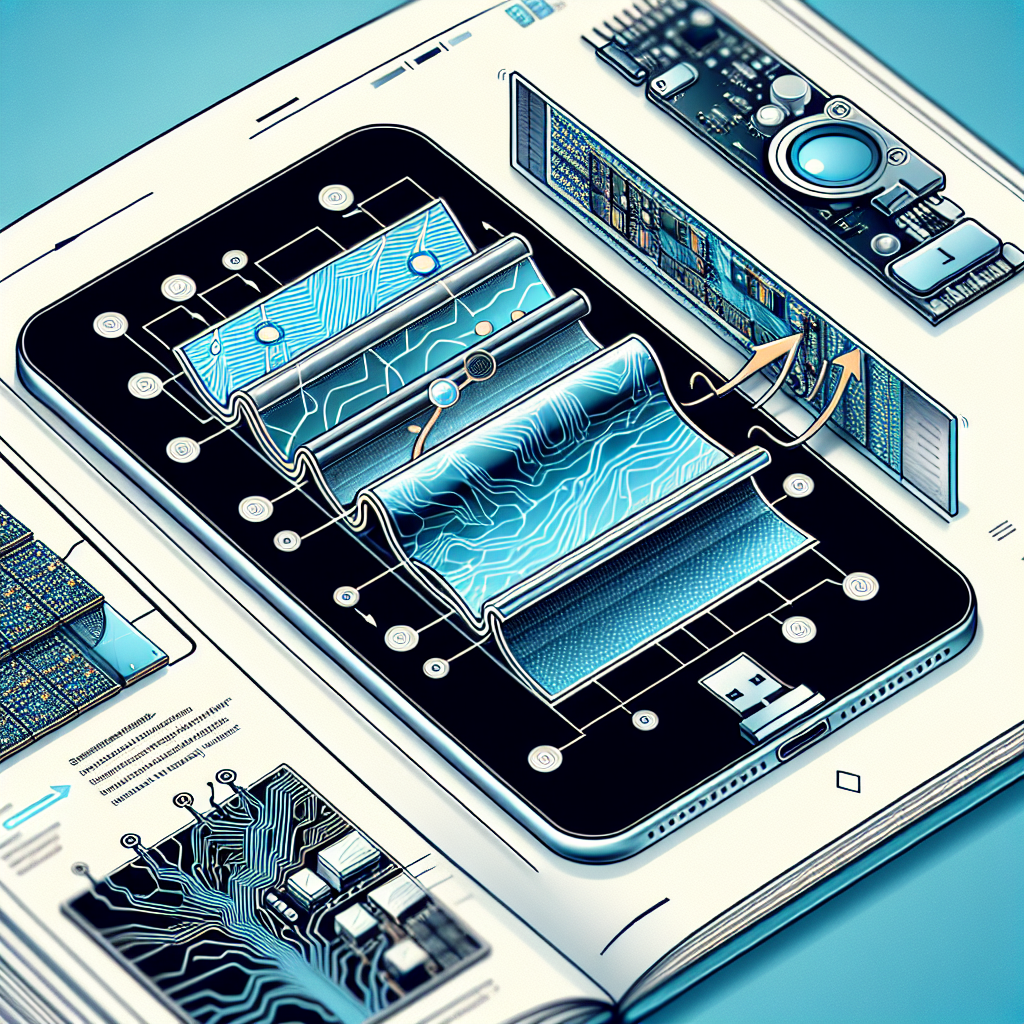
The polymer industry has experienced a dynamic evolution, leading to incredible innovations across various fields. Among the different types of polymers, elastomers hold a unique place due to their versatility, durability, and adaptability. These properties make elastomers an integral part of numerous applications, including flexible electronics. Flexible electronics represent a groundbreaking shift from the traditional rigid systems, offering unprecedented possibilities in wearable devices, sensors, medical diagnostics, and more. In this article, we shall delve deep into the world of elastomers, exploring their role, significance, and future potential in the realm of flexible electronics.
But first, what exactly are elastomers? Simply put, elastomers are polymers with viscoelasticity, generally having low Young’s modulus and high failure strain compared with other materials. They can be stretched and deformed significantly without losing their original shape, which is a property known as elasticity. This behavior is due to their unique molecular structure, consisting of long, flexible chains that can be coiled and uncoiled with ease.
In flexible electronics, the shift towards materials with mechanical compliance has become crucial. Traditional electronics are built on rigid substrates like silicon, which limits their application to flat, non-deformable surfaces. Elastomers, however, bring flexibility, stretchability, and conformity to electronic systems, enabling them to adapt and integrate seamlessly with curved surfaces and dynamic environments. This flexibility opens up a myriad of applications, propelling the next wave of technological advancements in consumer electronics, healthcare, automotive, and beyond.
Unpacking the Properties of Elastomers
To comprehend why elastomers are ideal for flexible electronics, it’s vital to examine their essential properties. One of the distinguishing characteristics of elastomers is their elasticity— the ability to endure large deformations and return to their original shape. This property is crucial for any electronic component that needs to flex, bend, or stretch without losing functionality.
Another significant property is their viscoelasticity, which means elastomers exhibit both viscous and elastic characteristics when undergoing deformation. This property is beneficial in dissipating energy, reducing noise and vibration, and enhancing the longevity of electronic components.
The chemical resistance of elastomers is another noteworthy advantage. They remain stable in the presence of various chemicals and environmental exposures, which is imperative for electronics that may be exposed to varying conditions. Furthermore, elastomers can maintain their performance in a wide temperature range, making them suitable for applications that demand reliability in diverse environmental conditions.
One cannot overlook the electrical properties of elastomers, especially when utilized as substrates in flexible electronics. While some elastomers are used for their insulating properties, advancements in material science have led to the development of conductive and semiconductive elastomers. These allow the creation of stretchable circuits, sensors, and even batteries that maintain electrical performance under mechanical stress.
Application of Elastomers in Wearable Technology
Wearable technology is one of the most exciting developments enabled by elastomers. These materials make it possible to create devices that are not only flexible but also conform to the human body’s shapes and movements. Imagine smartwatches that mold to your wrist’s contours, or fitness trackers that comfortably stretch across your chest, seamlessly monitoring vital signs without causing any discomfort.
Elastomers’ inherent flexibility and stretchability make them ideal for these applications. They provide the comfort and adaptability needed for continuous wear, reducing the risk of irritation or injury, even over prolonged periods. Additionally, the durability and resilience of elastomers ensure that these devices can withstand the daily wear and tear associated with active lifestyles.
Beyond comfort, elastomers also contribute to the functionality of wearable devices. They can embed sensors that track physiological parameters such as heart rate, temperature, and movement, transmitting this data in real-time to users and healthcare providers. This real-time biometric monitoring holds great promise for preventive healthcare, personalized medical treatments, and enhanced athletic performance.
Moreover, advancements in material design have led to the creation of biocompatible elastomers, which can be safely used in direct contact with the skin. This development paves the way for a new generation of medical devices, from non-invasive monitoring patches to drug delivery systems, that offer both flexibility and safety.
The Role of Elastomers in Flexible Displays
One of the most visible applications of elastomers in flexible electronics is in the development of flexible displays. Flexible displays, commonly seen in foldable smartphones and rollable screens, represent a significant leap from traditional glass-based technologies. These displays require substrates that are not only flexible but also transparent, durable, and resistant to environmental factors. Elastomers check all these boxes.
The use of elastomers in display technology allows for innovative designs and functionalities that were previously unimaginable. For instance, smartphones with screens that fold or roll open to larger sizes, offering more screen real estate without increasing the device’s footprint. These advancements are not just limited to smartphones but extend to tablets, wearables, and even larger screens like televisions.
The primary advantage of elastomers in flexible displays is their ability to maintain optical clarity while being deformed. This ensures that the display quality remains high, without distortions or loss of resolution, no matter how the screen is bent or folded. Additionally, elastomers’ durability means that these displays can withstand repeated folding and unfolding without damage.
Furthermore, elastomers are compatible with various printing and deposition techniques used in display manufacturing. This compatibility facilitates the integration of different layers, such as the conductive and emissive materials that make up an OLED display, onto a single elastomeric substrate. By streamlining the manufacturing process, elastomers contribute to more cost-effective and scalable production of flexible displays.
Elastomers in Stretchable Sensors and Circuitry
The integration of stretchable sensors and circuitry is another area where elastomers play a crucial role. Traditional rigid sensors and circuits are unsuitable for applications that require movement and flexibility—criteria that stretchable electronics meet head-on. Elastomers provide the mechanical properties needed to allow sensors and circuits to stretch, compress, and conform to various surfaces, maintaining functionality throughout.
Stretchable sensors have application in a myriad of fields, from healthcare to robotics. In healthcare, they can be used to create skin-mounted sensors that continuously monitor various parameters, such as hydration levels, glucose, and even neural activity. These sensors offer greater comfort for the patient, making continuous monitoring more feasible and less intrusive.
In the realm of robotics, stretchable circuits and sensors enable the creation of soft robots that can move more fluidly and adapt to their environment. These advancements enhance a robot’s ability to perform delicate tasks, interact safely with humans, and navigate complex, unstructured environments.
What makes elastomers particularly valuable in this context is their ability to undergo large strains while maintaining their structural integrity and functional properties. They can be engineered to contain interconnections of conductive materials, such as silver nanowires or carbon nanotubes, which maintain electrical conductivity even under deformation. This makes them ideal for creating circuits that can endure bending, twisting, and stretching without breaking or losing functionality.
Future Prospects of Elastomers in Flexible Electronics
The future of elastomers in flexible electronics is brimming with potential. As material science and manufacturing techniques continue to advance, we can expect elastomers to push the boundaries of what’s possible in flexible, stretchable, and adaptable electronics. One of the key areas of development is the enhancement of the mechanical and electrical properties of elastomers to meet the growing demands of high-performance applications.
Self-healing elastomers are an exciting development on the horizon. These materials can autonomously repair damage, such as cracks or tears, extending the lifespan and reliability of flexible electronic devices. Such self-healing properties could be particularly transformative for medical devices and wearables, where maintaining functionality without frequent replacements is crucial.
Another promising direction is the development of more efficient and sustainable production methods. Innovations in green chemistry and bio-based elastomers are paving the way for environmentally friendly alternatives that do not compromise on performance. As industries move towards sustainability, these developments will become increasingly important.
Furthermore, the integration of elastomers with emerging technologies, like the Internet of Things (IoT) and artificial intelligence (AI), could lead to new paradigms in smart systems. Smart elastomeric materials, embedded with sensors and actuators, could create responsive environments that adapt to user actions and preferences, enhancing the interactivity and functionality of everyday objects.
In summary, the continuous exploration and exploitation of the unique properties of elastomers promise to fuel innovations across various domains. From wearable health monitors to foldable smartphones and adaptive robotics, elastomers are set to usher in a new era of flexible, durable, and intelligent electronics.
Conclusion: Elastomers Pave the Way for Future Innovations
The role of elastomers in flexible electronics cannot be overstated. These versatile materials have transformed traditional rigid electronic systems into adaptive, dynamic, and user-friendly devices. By providing the necessary flexibility, durability, and functionality, elastomers have opened new frontiers in various applications—from wearable technology and medical devices to flexible displays and stretchable sensors.
As we look to the future, the integration of elastomers in flexible electronics will continue to expand, driven by ongoing innovation and research. The development of new elastomeric materials with enhanced properties, sustainable production methods, and integration with cutting-edge technologies will further solidify their place at the forefront of electronic advancements.
For industry players, researchers, and consumers alike, understanding the capabilities and potential of elastomers is crucial. These materials not only enhance the functionality and user experience of electronic devices but also contribute to the broader goal of creating more sustainable and efficient technologies.
In conclusion, elastomers symbolize the perfect synergy between material science and technological innovation, paving the way for a future where flexible electronics are not just a possibility but a ubiquitous reality. As we continue to explore their potential, the horizon for elastomers and flexible electronics appears exceedingly bright, full of disruptive innovations that will shape our lives in unimaginable ways.