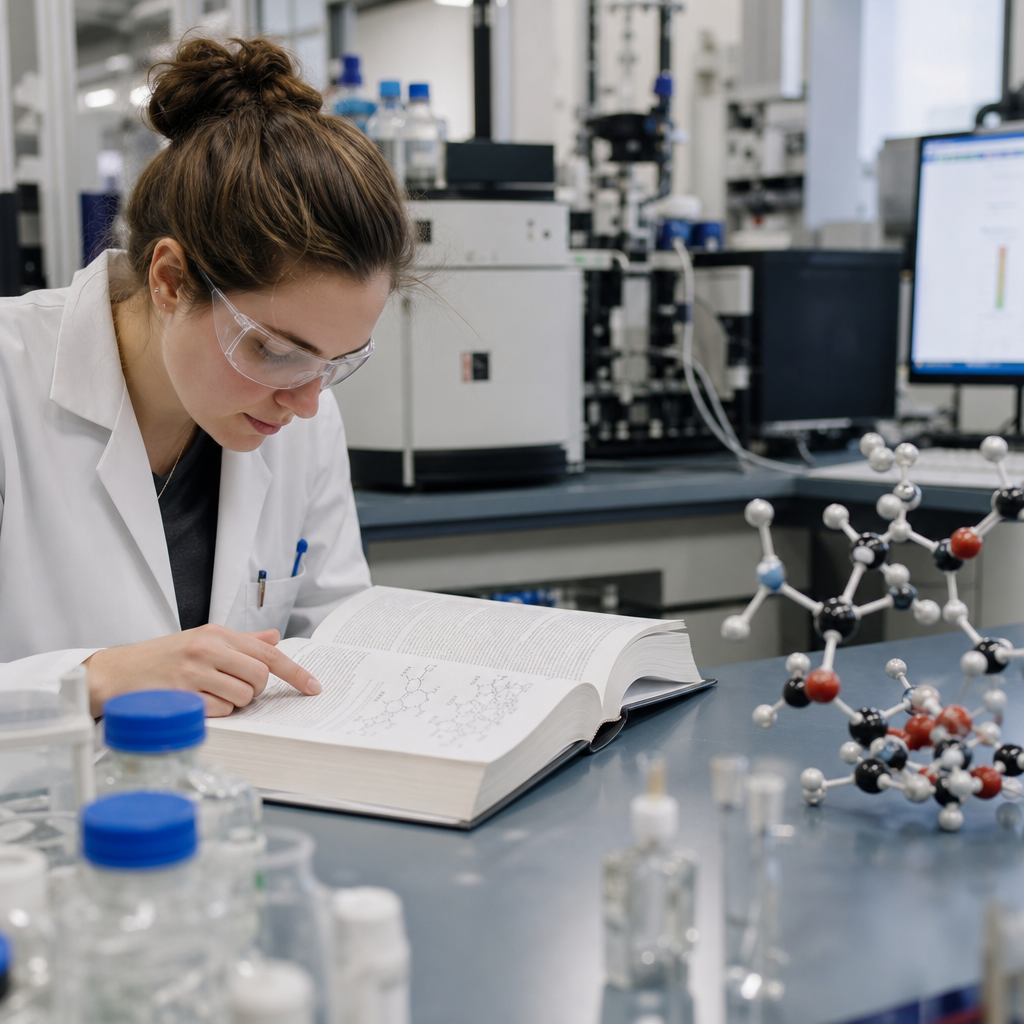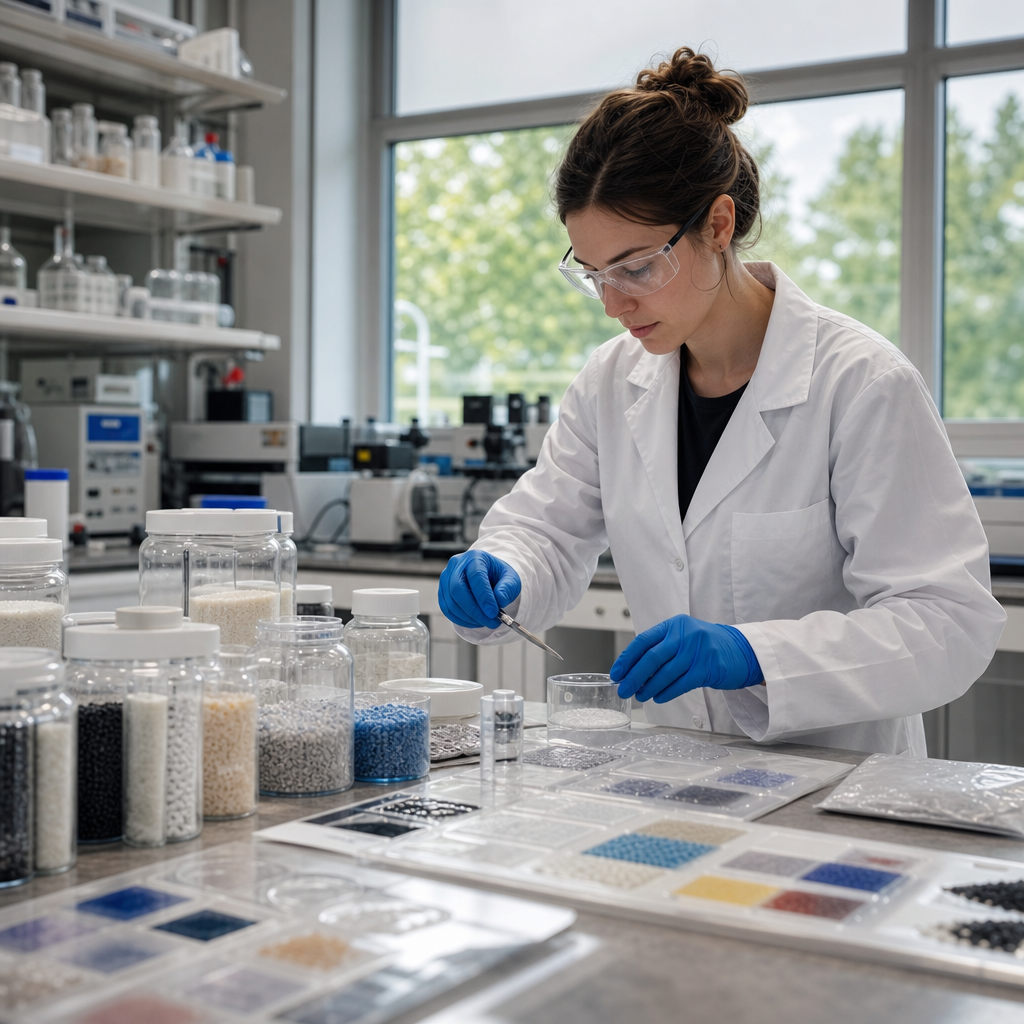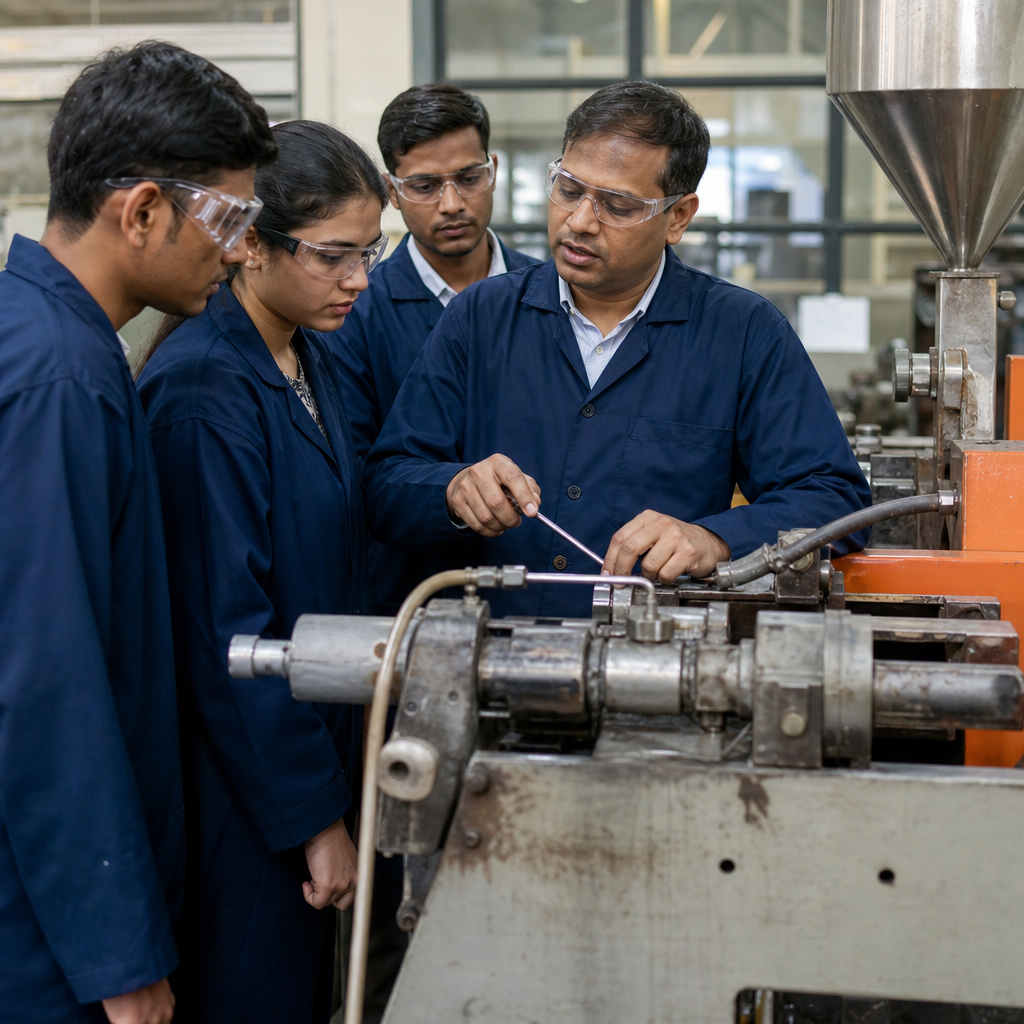
Workshops play a central role in polymer industry training because they turn abstract materials science into repeatable shop-floor decisions, faster troubleshooting, and safer product development. In the polymer sector, training does not simply mean learning terminology such as thermoplastics, thermosets, rheology, compounding, extrusion, injection molding, blow molding, additive packages, or quality assurance. It means understanding how those concepts behave under pressure, temperature, shear, moisture variation, and production deadlines. A workshop is the setting where that understanding becomes practical. Unlike a lecture-only format, workshops combine expert instruction with demonstrations, problem solving, equipment exposure, and peer discussion. That combination matters in an industry where a small process change can alter melt flow, part strength, cycle time, scrap rate, and regulatory compliance.
I have seen this firsthand in polymer plants and technical training programs. A team can read a supplier data sheet, yet still struggle to set barrel temperatures correctly, dry hygroscopic resin adequately, or distinguish between a weld line issue and gas trapping. After a well-designed workshop, the same team often diagnoses root causes more confidently because they have handled case studies, reviewed actual defect samples, and compared machine settings against material behavior. This is why conferences and workshops remain essential educational resources across the polymer value chain, from resin production and additive formulation to converting, testing, recycling, and end-use design.
For professionals searching for conferences and workshops in polymer industry training, this hub article explains what workshops are, why they matter, what topics they should cover, and how companies can use them to build technical capability. It also serves as a starting point for deeper educational resources on event formats, technical conferences, process seminars, and workforce development. Whether the learner is a process engineer, quality manager, lab technician, maintenance specialist, product designer, sales engineer, or plant supervisor, workshops reduce the gap between theory and performance. They support faster onboarding, better process control, stronger cross-functional communication, and more reliable customer outcomes. In a competitive manufacturing environment, those benefits are not optional; they are operational advantages.
Why Workshops Matter in Polymer Industry Training
Workshops matter because polymers are highly sensitive to processing conditions, and that sensitivity is difficult to master through self-study alone. Polypropylene, PET, nylon, PVC, PEEK, silicone, epoxy, and polyurethane all respond differently to heat history, residence time, moisture, screw design, mold temperature, and additives. A technician may know that nylon absorbs moisture, but a workshop shows what under-drying looks like in splay, dimensional instability, and mechanical property loss. A product developer may know that fillers change stiffness, but a workshop reveals how talc, calcium carbonate, and glass fiber influence viscosity, warpage, and tool wear in practice.
These events also improve retention. Adult learners in manufacturing absorb more when they connect information to a real decision: why a regrind ratio changed impact strength, why a color concentrate caused dispersion defects, or why a DSC curve confirmed crystallinity changes after a process upset. Good workshops use hands-on examples, short technical modules, and live troubleshooting, which aligns closely with how polymer professionals solve problems at work. Instead of memorizing formulas, participants learn diagnostic logic.
Another reason workshops matter is speed. Polymer operations often cannot wait months for expertise to develop informally. New materials, sustainability targets, customer audits, and equipment upgrades force teams to learn quickly. A focused workshop can compress years of trial-and-error into one or two days by exposing participants to best practices, common failure modes, and accepted test methods such as ASTM and ISO standards. That accelerated learning directly affects waste, uptime, and customer satisfaction.
How Workshops Differ From Conferences, Seminars, and Webinars
Conferences and workshops are related but not identical. A conference usually offers broad exposure: keynote talks, panel discussions, market updates, technical papers, vendor exhibits, and networking across multiple themes. In the polymer industry, conference agendas may span resin innovation, compounding, recycling policy, biopolymers, tooling, simulation, and application trends in packaging, automotive, medical, and electronics. Conferences are excellent for scanning the field, meeting suppliers, and identifying emerging issues.
A workshop is narrower and more action-oriented. It is built around skills, not just information. Participants might interpret rheometer results, compare gate designs, calculate drying requirements, review FTIR spectra, optimize a twin-screw compounding profile, or conduct a design of experiments study on molding parameters. The best workshops require interaction. In my experience, when participants bring actual production problems, the learning becomes immediate and memorable.
Seminars sit between these formats, often offering structured presentations with limited practice. Webinars extend access and work well for updates on regulations, resin trends, or introductory theory, but they rarely replace physical exposure to machines, samples, and lab methods. For this educational resources hub, the practical distinction is simple: conferences broaden perspective, while workshops build capability. Most polymer organizations need both. A strong training plan uses conferences to discover what is changing and workshops to implement what must improve.
Core Topics a Polymer Workshop Should Cover
The strongest polymer workshops focus on decisions people make every day. That usually includes material selection, processing fundamentals, testing, troubleshooting, quality systems, safety, and sustainability. Material selection training should address polymer families, molecular weight effects, crystallinity, additives, reinforcements, compatibility, and end-use requirements such as chemical resistance, sterilization tolerance, UV stability, flame performance, and regulatory contact approvals. Without this foundation, downstream process choices are often flawed.
Processing instruction should be specific to the operation. Extrusion workshops need die swell, melt temperature control, screen changes, output stability, and gauge consistency. Injection molding workshops need fill, pack, hold, cooling, venting, clamp force, and cavity balance. Compounding workshops need feeder accuracy, screw configuration, dispersive versus distributive mixing, devolatilization, and pellet quality. Testing modules should cover tensile, impact, melt flow index, DSC, TGA, DMA, density, hardness, color measurement, and failure analysis, always linked back to process or formulation decisions.
| Workshop topic | Key questions answered | Real-world application |
|---|---|---|
| Material selection | Which polymer matches performance, cost, and compliance needs? | Choosing between PP, ABS, PC, or PA for a consumer housing |
| Processing fundamentals | How do heat, shear, pressure, and cooling affect quality? | Reducing sink marks and warpage in injection molded parts |
| Compounding and additives | How do fillers, stabilizers, and colorants change behavior? | Improving stiffness without unacceptable brittleness |
| Testing and analysis | Which methods confirm property changes or defects? | Using DSC and FTIR to investigate a customer complaint |
| Recycling and sustainability | How can recycled content be processed reliably? | Stabilizing reprocessed PET for packaging applications |
Workshops should also address documentation and standards. In regulated markets, participants need to understand traceability, validation, change control, and specification management. Medical device molders, for example, face very different training requirements than commodity film producers. A useful workshop does not ignore that context. It connects polymer science to the standards and customer expectations that govern daily work.
Hands-On Learning for Processing, Testing, and Troubleshooting
The main advantage of workshops in polymer industry training is hands-on learning. In processing sessions, trainees can see how a minor change in back pressure, screw speed, or mold cooling affects a finished part. That direct observation builds intuition faster than slides ever can. When an instructor places short shots, burn marks, silver streaks, flash, voids, and warped parts on a table and asks a group to identify causes, participants start thinking like process engineers rather than passive listeners.
Testing workshops are equally valuable. Many organizations own DSC, FTIR, melt flow testers, moisture analyzers, or universal testing machines, yet use them reactively instead of strategically. A workshop teaches not just how to run the test, but why results matter. For example, a shift in melt flow index may indicate resin lot variation, degradation, or regrind effects. A DSC endotherm can clarify whether a part experienced unexpected crystallization behavior. An FTIR spectrum can distinguish contamination from simple oxidation. Once teams understand those links, they make better decisions under pressure.
Troubleshooting sessions produce some of the highest returns. In one common workshop exercise, participants trace a defect from symptom to root cause using process data, maintenance records, resin certificates, and lab results. This mirrors real production conditions, where the answer rarely sits in one place. The value is not only technical. Cross-functional workshops teach operators, quality staff, toolmakers, and engineers to use shared language. That reduces finger-pointing and shortens problem resolution time.
Workshops Across the Polymer Value Chain
Workshops are not only for processors. Resin manufacturers use them to train technical sales teams, application development staff, and customers on property-performance relationships. Compounders use them to explain additive interactions, filler dispersion, and scale-up risks. Toolmakers and mold designers benefit from sessions on flow paths, venting, hot runners, shrinkage prediction, and mold maintenance. Product designers need workshops on design for manufacturability, tolerance stack-up, anisotropy, creep, and environmental stress cracking.
Recycling operations especially benefit from this format. Post-consumer and post-industrial streams introduce contamination, odor, variable melt flow, color inconsistency, and mechanical property drift. A workshop can show how sorting, washing, compatibilizers, chain extenders, filtration, and devolatilization improve output. It can also explain the limits. Not every recycled polymer can replace virgin material one-for-one, and responsible training must say so clearly.
End-use sectors shape workshop priorities as well. Automotive teams focus on lightweighting, dimensional stability, and thermal cycling. Medical manufacturers emphasize biocompatibility, sterilization, cleanliness, and validation. Packaging companies prioritize barrier performance, sealing, clarity, and recyclability. Electronics producers care about flame retardancy, dielectric properties, and miniaturization. A hub page on conferences and workshops should recognize this diversity because the most effective event is always tied to an application and a business objective.
Choosing the Right Workshop Format and Provider
Not all workshops deliver equal value. The best ones define learning outcomes, participant level, prerequisites, and take-home tools before registration opens. A beginner workshop should cover polymer basics, common processes, and major defect types without assuming advanced rheology knowledge. An intermediate event should expect familiarity with machines and data sheets. An advanced workshop can move into viscoelastic modeling, statistical process control, finite element simulation, degradation kinetics, or multi-material bonding.
Provider quality matters. Strong options include university extension programs, recognized industry associations, major machinery OEMs, testing laboratories, standards organizations, and experienced independent consultants with documented plant experience. When evaluating a workshop, review the instructor biography, agenda specificity, sample exercises, and whether the content includes current standards and equipment. Generic titles without technical depth often disappoint.
Format decisions also affect outcomes. On-site workshops allow teams to work with their own resin, tooling, scrap patterns, and historical process data. Public workshops bring broader benchmarking and networking. Hybrid delivery can support pre-work theory online, then reserve in-person time for labs and troubleshooting. From experience, the most effective model is blended: assign foundational learning before the event, use the workshop for applied problem solving, and follow up with implementation reviews thirty to sixty days later.
Measuring Impact and Building a Long-Term Training Program
Workshop value should be measured, not assumed. Companies can track scrap reduction, first-pass yield, cycle time, machine uptime, customer complaints, changeover duration, and test turnaround before and after training. Skills assessments are also useful. If participants cannot explain why residence time affects thermal degradation or when to use DSC instead of TGA, the training did not go deep enough. Good workshops produce behavioral change: better setup sheets, tighter drying discipline, more consistent sampling, and cleaner root-cause documentation.
Long-term polymer industry training works best when workshops are part of a structured pathway. New hires need fundamentals. Experienced technicians need process optimization. Engineers need advanced materials, simulation, and data analysis. Managers need enough technical literacy to allocate resources wisely. This hub under educational resources should connect readers to conference calendars, specialized workshop guides, supplier training opportunities, and articles on certification, laboratory methods, and manufacturing best practices.
In the end, the role of workshops in polymer industry training is straightforward: they convert knowledge into competence. Conferences help professionals see the bigger picture, but workshops teach them how to act on it. When designed well, they improve process control, product quality, safety, and collaboration across the polymer value chain. For any company serious about capability building, workshops are not a side activity; they are part of operational strategy. Use this page as your starting point, then map the conferences and workshops that match your materials, processes, and business goals.
Frequently Asked Questions
Why are workshops so important in polymer industry training?
Workshops are essential in polymer industry training because they bridge the gap between theory and production reality. In polymers, people may understand definitions such as thermoplastics, thermosets, rheology, compounding, extrusion, injection molding, or quality assurance in a classroom setting, but that knowledge becomes valuable only when it can be applied under real processing conditions. Workshops allow trainees to see how materials respond to heat, pressure, shear, cooling rates, and residence time, which are the variables that determine whether a process runs efficiently or produces defects, waste, and downtime.
What makes workshops especially valuable is their hands-on, problem-solving structure. Instead of memorizing concepts, participants work through actual scenarios such as melt inconsistency, warpage, poor dispersion, short shots, burn marks, dimensional instability, or surface defects. They learn how to connect machine settings, material properties, and part performance in a practical way. This helps operators, technicians, engineers, and supervisors make faster and more accurate shop-floor decisions. In a fast-moving manufacturing environment, that ability improves consistency, supports quality targets, and reduces trial-and-error thinking.
Workshops also strengthen communication across departments. Polymer manufacturing often depends on collaboration between materials teams, production staff, maintenance personnel, tooling specialists, and quality professionals. A workshop creates a shared language around process behavior and troubleshooting logic. As a result, teams are better able to identify root causes, improve process control, and support safer, more reliable product development from raw material handling through finished part inspection.
How do workshops help employees understand polymer behavior in real manufacturing conditions?
Workshops help employees understand polymer behavior by putting materials science into a practical processing context. Polymers do not behave the same way in a textbook as they do inside an extruder barrel, injection molding machine, compounder, or blow molding system. Their performance changes with temperature, moisture, shear rate, pressure, screw design, cooling conditions, and additive interactions. In a workshop environment, trainees can observe these relationships directly, which makes the learning far more durable and useful than theory alone.
For example, a workshop may demonstrate how a small increase in melt temperature affects viscosity, flow, cycle time, part fill, degradation risk, and final appearance. It may show how poor drying influences hydrolysis in hygroscopic resins, or how excessive shear can damage a polymer and alter mechanical properties. Participants learn why one material may process well in extrusion but require tighter control in injection molding, or why compounding conditions influence dispersion, color consistency, and end-use performance. These are not minor details; they are core to repeatable manufacturing success.
This kind of training builds what many companies value most: process intuition supported by technical reasoning. Instead of responding to problems by changing multiple settings at once, trained employees learn to interpret symptoms, isolate variables, and make controlled adjustments. That improves process stability and gives teams a better understanding of how resin selection, additive packages, tooling, and machine settings interact. Over time, workshops turn abstract polymer science into practical judgment that supports quality, efficiency, and stronger product outcomes.
What skills can professionals gain from polymer industry workshops?
Polymer industry workshops develop a wide range of practical and technical skills that directly support day-to-day manufacturing performance. One of the most important skills is structured troubleshooting. Participants learn how to evaluate defects and process variation by examining material condition, machine parameters, tooling design, and environmental influences in a logical sequence. This prevents guesswork and helps professionals identify whether an issue is related to resin moisture, melt flow behavior, thermal degradation, poor mixing, cooling imbalance, venting limitations, or another root cause.
Workshops also build stronger process optimization skills. Employees gain experience in setting and adjusting variables such as barrel temperature profiles, screw speed, back pressure, injection speed, hold pressure, cooling time, and line speed. In compounding and extrusion settings, they may also learn how feeder accuracy, screw configuration, die conditions, and dispersion quality affect output. These skills are valuable because they improve productivity while also protecting part quality and material performance. Better process control typically means lower scrap rates, fewer customer complaints, and more reliable production planning.
Beyond machine and material knowledge, workshops often improve quality awareness, safety habits, and cross-functional decision-making. Professionals learn how to connect processing conditions to final product properties such as impact strength, dimensional stability, chemical resistance, transparency, and surface finish. They become more capable of documenting trials, interpreting data, and communicating findings with engineering, quality, and operations teams. In many organizations, these workshop-based skills contribute to faster onboarding, better workforce confidence, and a more resilient production culture.
Can workshops improve safety and quality in polymer manufacturing?
Yes, workshops can significantly improve both safety and quality in polymer manufacturing because they teach employees how to recognize risk before it becomes a defect, an equipment issue, or a workplace hazard. Polymer processing involves high temperatures, rotating equipment, pressurized systems, volatile fumes in some applications, and materials that can degrade if mishandled. A workshop gives participants practical exposure to correct setup, handling, monitoring, and shutdown procedures, making safety instruction more concrete and memorable than policy documents alone.
From a safety standpoint, workshops help workers understand the consequences of improper resin drying, overheating, contamination, blocked vents, poor housekeeping, and unsafe responses to machine problems. They also reinforce the importance of personal protective equipment, lockout procedures, thermal hazard awareness, and disciplined process monitoring. When employees understand not just what to do, but why it matters in polymer-specific operations, they are more likely to follow procedures consistently and respond effectively under pressure.
On the quality side, workshops create a clearer link between process discipline and product performance. Participants learn how variation in temperature, shear, mixing, cooling, mold conditions, and raw material consistency can lead to defects such as voids, sink marks, brittleness, warpage, gels, contamination, dimensional drift, or weak weld lines. They also learn how to use inspection data and process observations together, rather than treating quality as something checked only at the end. This mindset supports in-process control, better repeatability, and stronger customer confidence. In short, workshops help create safer operations and more dependable products at the same time.
Who benefits most from polymer industry workshops, and how do they support long-term career growth?
Polymer industry workshops benefit a broad range of professionals, including machine operators, process technicians, production supervisors, quality specialists, maintenance staff, product developers, and manufacturing engineers. Because polymer processing is highly interconnected, each role gains value from understanding how materials behave in real operating conditions. Operators benefit by learning how to identify early warning signs of process instability. Technicians improve their ability to fine-tune equipment and troubleshoot defects. Engineers gain a better understanding of how design choices and material selection translate into actual production behavior.
Workshops are also highly valuable for new employees entering the polymer sector. They accelerate the learning curve by turning unfamiliar terminology into practical knowledge. Rather than spending months learning through avoidable mistakes, new team members can develop a strong foundation in materials behavior, processing logic, and quality expectations much more quickly. At the same time, experienced professionals benefit by refreshing core principles, learning updated methods, and comparing best practices across processes such as extrusion, injection molding, blow molding, and compounding.
In terms of long-term career growth, workshops help professionals become more versatile and more credible within their organizations. People who can connect polymer science with process performance are often better positioned for advancement into technical leadership, process engineering, quality management, or product development roles. They are also more effective contributors to continuous improvement efforts, scale-up activities, and customer-facing technical discussions. In an industry where performance depends on both scientific understanding and production discipline, workshop-based training is one of the most practical ways to build lasting expertise and career momentum.