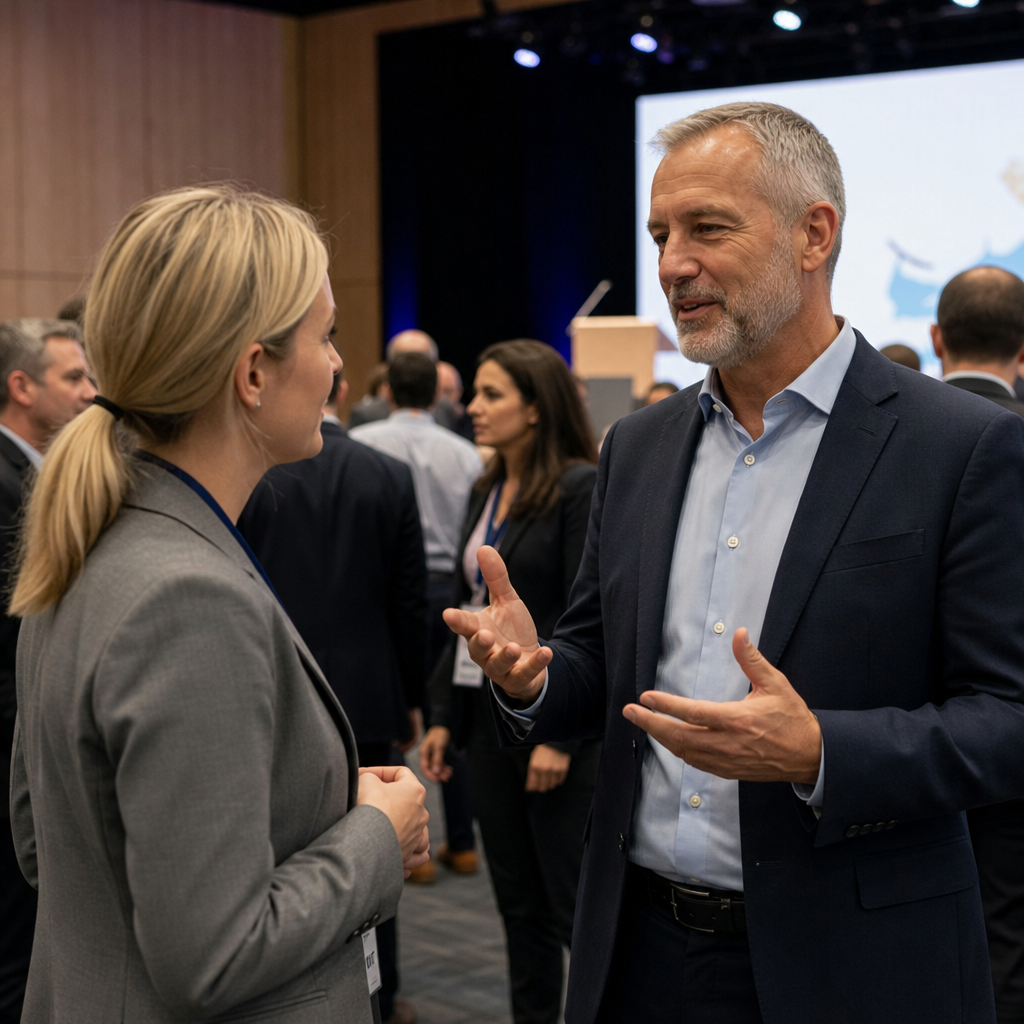
Conferences and workshops create rare opportunities to learn directly from experts, and knowing how to engage with keynote speakers at conferences can turn a passive event into a career-shaping experience. A keynote speaker is the featured presenter who sets the tone for an event, often bringing recognized expertise, original research, or high-level industry perspective. Engagement means more than asking for a selfie or delivering a quick compliment after the session. It includes preparing before the event, listening actively during the talk, asking useful questions, following up professionally, and building a relationship that respects the speaker’s time and role.
I have worked with conference programs as an attendee, moderator, and content planner, and the pattern is consistent: attendees who gain the most value are rarely the loudest people in the room. They are prepared, specific, and courteous. They understand the structure of conferences and workshops, from opening keynotes and breakout sessions to roundtables, panels, office hours, sponsor lounges, and post-event networking. This matters because keynote speakers often influence hiring decisions, partnerships, publishing opportunities, research collaborations, and future invitations. A short, thoughtful exchange can open a door, while a rushed or self-centered approach can close one immediately.
This article serves as a hub for the broader conferences and workshops topic within educational resources. It explains how to approach keynote speakers effectively, but it also helps readers understand the event ecosystem that shapes those interactions. Whether you attend academic conferences, professional association meetings, trade events, leadership summits, or skills-based workshops, the same principles apply. You need context, timing, relevance, and follow-through. You also need to recognize the difference between transactional networking and genuine professional engagement. The best interactions leave both people feeling that the conversation was worthwhile, clear, and easy to continue later.
Why does this topic matter so much? Because conferences compress access. In one day, you can hear cutting-edge ideas, test your assumptions, meet practitioners, and discover where your field is heading. Keynote speakers are often central nodes in that network. They may publish influential books, lead labs, run companies, advise policymakers, or shape best practices across an industry. Engaging them well helps you ask better questions, connect your work to larger trends, and become more visible in a meaningful way. For students and early-career professionals, this can accelerate learning. For established professionals, it can improve collaboration, reputation, and strategic insight.
Understand the Conference Environment Before You Approach Anyone
The first step in learning how to engage with keynote speakers at conferences is understanding the environment they are operating in. A keynote slot is different from a workshop, a panel, or a casual networking reception. Keynote speakers usually move on a compressed schedule. They may arrive shortly before speaking, handle AV checks, meet organizers, present, join a moderated Q&A, and then leave for a media interview, sponsor meeting, book signing, airport transfer, or private executive session. Assuming they are freely available right after the talk is the first mistake many attendees make.
Read the agenda closely. Conference apps such as Whova, Cvent, EventMobi, and Guidebook often show whether a speaker is appearing at additional sessions. If the event offers speaker office hours, birds-of-a-feather discussions, workshops, or meet-the-expert tables, those are usually better places for substantive conversation than the crowded space beside the stage. In academic settings, presenters may also list poster sessions, lab affiliations, or receptions where discussions naturally continue. In industry settings, look for fireside chats, sponsor booths, author signings, or VIP networking segments where interaction is expected.
It also helps to understand event roles. Organizers want sessions to stay on time. moderators manage the flow of questions. AV staff need clear pathways. Security and volunteers may move people along quickly. Respecting these constraints signals professionalism. When I brief attendees before major events, I tell them to treat the conference like a system, not a spontaneous social gathering. People who know where and when conversation is appropriate are more likely to have a useful exchange and less likely to create friction for everyone around them.
Research the Speaker So Your Conversation Has Substance
Preparation is the clearest separator between memorable engagement and forgettable networking. Before the conference, learn what the keynote speaker actually works on. Read the event bio, but do not stop there. Review recent articles, books, interviews, podcasts, LinkedIn posts, company announcements, or research abstracts. If the speaker is academic, search Google Scholar, ORCID, or their university profile. If the speaker is in business, review their organization’s annual report, product launches, market commentary, or case studies. If they lead a nonprofit or public initiative, examine mission statements, measurable outcomes, and recent policy positions.
Strong preparation lets you ask narrow, relevant questions. Instead of saying, “I loved your talk on innovation,” you can say, “In your Harvard Business Review interview, you argued that cross-functional teams fail when incentives stay siloed. In our hospital system, we see that exact issue between clinical and administrative teams. What metric would you change first?” That question shows you listened to previous work, connected it to a practical setting, and gave the speaker something concrete to respond to. Specificity increases the odds of a meaningful answer.
Research also helps you avoid asking questions the speaker has answered many times. Experienced keynote speakers are generous, but they quickly recognize when someone wants attention more than insight. I have seen the best results when attendees identify one idea they genuinely want help applying. That can be a framework, a research method, an implementation challenge, or a career decision. If your goal is vague, your interaction will be vague too. If your goal is defined, even a ninety-second exchange can be valuable.
Use the Session Itself to Build a Better Opening
Your engagement should begin while the keynote is happening, not after it ends. Listen actively. Take notes on key arguments, data points, examples, and unanswered questions. Mark the exact phrase or slide that connects to your work. Many conferences prohibit photography of slides, so handwritten or digital notes matter. Capture enough detail that you can reference a specific concept accurately when you speak to the presenter later. Misquoting a speaker or flattening a nuanced point into a slogan makes a poor impression.
During the talk, look for three things: the main thesis, the evidence used to support it, and the practical implication. This structure helps you ask sharper questions. For example, if a keynote on workforce development claims apprenticeships outperform short boot camps for long-term retention, ask about the labor-market conditions where that finding may not hold. If a speaker presents a case study from Microsoft, NASA, or the World Health Organization, ask how the principle scales down for smaller institutions with fewer resources. Good questions extend the conversation instead of repeating the presentation.
Body language matters too. Put away distractions, avoid whispering, and stay until the end unless you truly must leave. Speakers notice audience behavior more than many attendees realize. The people who appear attentive, curious, and respectful are easier to remember later. If the event uses a Q&A platform such as Slido or Pigeonhole Live, submit concise questions early. Well-written questions often get selected by moderators, and hearing your question answered publicly gives you a natural follow-up when you meet the speaker afterward.
Choose the Right Moment and the Right Method
Timing can determine whether an interaction feels welcome or intrusive. The busiest moment is often right after the keynote, when dozens of attendees converge at once. If the speaker is surrounded, do not force your way in. Wait, move to a side area, or attend the next session where interaction is expected. The best method depends on the event format, the crowd size, and the speaker’s availability. In some cases, a short in-person introduction is ideal. In others, a post-event email or LinkedIn message is more respectful and more likely to receive a thoughtful reply.
| Situation | Best engagement method | Why it works |
|---|---|---|
| Large keynote with crowded exit | Ask a concise question through the moderator or app, then follow up later by email | Reduces pressure and gives the speaker space |
| Workshop or small seminar | Speak briefly after the session or during a break | Interactive formats are designed for direct discussion |
| Book signing or sponsor lounge | Offer one specific takeaway and one short question | These settings allow quick, structured conversations |
| Virtual conference | Use chat, Q&A, and a thoughtful follow-up message referencing the session | Digital events reward concise written communication |
| Multi-day conference | Wait for a quieter later moment if the first opportunity is crowded | Better timing usually leads to better conversation |
When you do approach, start with context. State your name, role, and connection to the topic in one sentence. Then offer one precise comment or question. For example: “I’m Priya, a curriculum designer at a community college. Your point about assessment validity in short-format workshops matched a problem we are seeing in faculty training. Have you found a reliable way to measure transfer of learning after thirty days?” That is focused, useful, and easy to answer. It is also far more effective than trying to summarize your entire career in the hallway.
Ask Questions That Invite Insight, Not Self-Promotion
The quality of your question shapes the quality of the interaction. The best questions are answerable, relevant to the session, and framed to invite insight rather than performance. Avoid long monologues disguised as questions. Avoid starting with five minutes of background. Avoid asking for free consulting on a problem so large that it would require a scheduled meeting. Keynote speakers appreciate curiosity, but they are not there to solve every operational challenge on the spot.
Useful question formats include application questions, boundary questions, and evidence questions. Application questions ask how to adapt an idea in a specific context. Boundary questions ask where a framework stops working or what conditions change the result. Evidence questions ask what data, benchmark, or observation the speaker relies on when making a decision. For example: “If budget limits prevent a full mentorship program, which one element would you preserve first?” or “What early signal tells you a workshop is engaging participants but not changing behavior?” These questions lead to practical answers.
There is also value in asking for clarification when a concept is complex. If a speaker references Bloom’s taxonomy, Kirkpatrick’s training evaluation model, design thinking, adult learning theory, or diffusion of innovations, ask how they operationalize that concept in practice. Experts often welcome questions that move from theory to implementation because that is where many audiences struggle. I have seen keynote speakers become notably more engaged when attendees demonstrate they are trying to use the idea responsibly rather than simply repeat the terminology.
Follow Up Professionally and Build a Real Connection
Most conference interactions are brief, so the follow-up is where long-term value often emerges. Send it within forty-eight hours while the event is still fresh. Email is usually best if the speaker’s contact information is public or was shared by the event. LinkedIn works well for industry events, especially if you personalize the request. Your message should do three things: remind the speaker who you are, reference the exact point you discussed, and state a modest next step. Modest means realistic: a resource request, a thank-you with a short result, or permission to stay in touch about a clearly related project.
A strong follow-up might say: “Thank you for your keynote at the regional workforce summit. I was the attendee from the manufacturing training consortium who asked about retention metrics in apprenticeship programs. Your suggestion to compare completion data with ninety-day supervisor feedback was immediately useful. We are testing that approach this quarter. I appreciate the insight, and I would be glad to share what we learn if helpful.” This message is specific, respectful, and easy to respond to. It does not demand attention, yet it keeps the relationship open.
For the educational resources hub, this is the broader lesson across conferences and workshops: engagement is part of a learning cycle. Prepare, participate, reflect, apply, and reconnect. That pattern works whether you are meeting a keynote speaker, workshop facilitator, panelist, or peer attendee. The people who gain the most from events do not treat networking as collection. They treat it as disciplined professional learning. If you want better outcomes from conferences, start by engaging keynote speakers with preparation, precision, and respect. Choose one upcoming event, research the featured speaker, prepare two strong questions, and follow up within two days.
Frequently Asked Questions
What is the best way to prepare before trying to engage with a keynote speaker at a conference?
The strongest interactions usually begin before the conference even starts. If you want to engage meaningfully with a keynote speaker, research their background, current work, recent articles, interviews, or books, and the topic they are expected to cover. This helps you move beyond generic praise and ask informed questions that show genuine interest. Review the conference agenda as well, because understanding the broader theme of the event can help you connect the speaker’s message to the goals of the audience and the industry. It is also useful to identify what you want from the interaction. You may want clarity on an idea they presented, advice on a professional challenge, insight into a trend, or guidance on where to keep learning.
Good preparation also means being realistic and respectful. Keynote speakers are often managing a packed schedule, so prepare one or two concise questions instead of trying to force a long conversation. If possible, follow the speaker on professional platforms before the event so you are familiar with their perspective and current projects. Bring a notebook or keep a note on your phone with the key points you want to mention. When you approach a speaker with context, intention, and a focused question, the conversation feels more natural, more memorable, and far more valuable for both sides.
When is the right time to approach a keynote speaker during a conference?
Timing matters just as much as what you say. Immediately after a keynote session, many speakers are surrounded by attendees, organizers, and event staff, so that moment can be crowded and rushed. That does not mean you should avoid it entirely, but you should recognize that post-session interactions often work best for a brief introduction, a thank-you, or a short question rather than a deep discussion. If there is a designated Q&A, book signing, networking reception, speaker lounge access, or meet-and-greet session, those settings are usually better structured for engagement and allow for more relaxed conversation.
You should also watch for cues. If a speaker is in active conversation with sponsors, event organizers, or a line of attendees, it may be better to wait or return later. Sometimes the best opportunities happen in transition moments, such as before a breakout session, during a coffee break, or at a networking event connected to the conference. The right approach is polite and situational: introduce yourself clearly, acknowledge their time, and keep your first interaction concise. If the conversation goes well, you can ask whether it would be appropriate to continue over email or LinkedIn afterward. Respectful timing shows professionalism and increases the chance of a positive response.
What should I say when speaking to a keynote speaker for the first time?
Start with clarity, relevance, and brevity. Introduce yourself with your name and, if helpful, your role or area of work, then reference a specific idea from the keynote that stood out to you. For example, instead of saying, “Great talk,” you might say, “I appreciated your point about how emerging leaders should communicate change early; it directly relates to a challenge my team is facing.” This shows that you paid attention and gives the speaker something concrete to respond to. After that, ask one focused question or make one thoughtful observation. The goal is not to impress them with everything you know, but to create a useful exchange.
A strong first interaction is professional without sounding stiff. Avoid turning the moment into a long personal pitch, a résumé dump, or a request for favors. Most keynote speakers respond best to curiosity, sincerity, and respect for their time. If you are nervous, keep a simple structure in mind: introduction, specific takeaway, concise question. For example: “Hello, I’m Maya, and I work in healthcare operations. Your comments on cross-functional leadership really resonated with me. In organizations with strong silos, what is the first practical step you recommend for building trust across teams?” That kind of opening is thoughtful, easy to answer, and much more likely to lead to a memorable conversation.
Is it appropriate to ask a keynote speaker for career advice, mentorship, or contact information?
It can be appropriate, but the way you ask matters a great deal. A conference is usually not the ideal setting to request immediate mentorship or a lengthy career consultation, especially during a brief in-person interaction. However, it is perfectly reasonable to ask a concise career-related question if it connects naturally to the speaker’s expertise. For instance, you might ask what skills they believe are becoming more important in the field, how they recommend staying informed, or what common mistake early professionals should avoid. These questions are practical, respectful, and easier to answer in a short exchange.
If the interaction goes well, you can ask whether they would be open to connecting professionally after the event. Keep that request light and low-pressure. Something like, “Would it be alright if I connected with you on LinkedIn?” or “May I follow up by email with one brief question?” is far more effective than asking, “Will you mentor me?” right away. If they agree, follow through professionally: send a short message, remind them where you met, mention the topic you discussed, and keep your follow-up focused. Relationships with keynote speakers, like any professional relationship, are built over time through respectful communication and demonstrated interest, not through one ambitious request in a crowded hallway.
How can I follow up after the conference to build a meaningful professional connection?
Following up is where many promising conference interactions either become valuable connections or disappear completely. The best follow-up is prompt, personal, and concise. Reach out within a few days while the event is still fresh. Mention the conference name, remind the speaker where you spoke, and reference the specific idea or question you discussed. This helps them place the interaction quickly. A message such as, “Thank you for your insights after the keynote at the leadership summit. I appreciated your perspective on decision-making under uncertainty, especially your point about communicating principles before tactics,” is much stronger than a generic note.
If you want to continue the connection, give the speaker a clear and reasonable next step. You might share how their advice helped you think differently, ask one focused follow-up question, or mention a related article or project that connects to the conversation. Avoid overwhelming them with long messages, multiple asks, or attachments they did not request. It is also wise to engage with their work over time by reading their publications, commenting thoughtfully on professional posts, or attending future sessions they lead. Meaningful engagement is not about constant contact; it is about relevant, respectful interaction that shows you value their expertise. Done well, thoughtful follow-up can turn a brief conference conversation into an ongoing professional relationship.