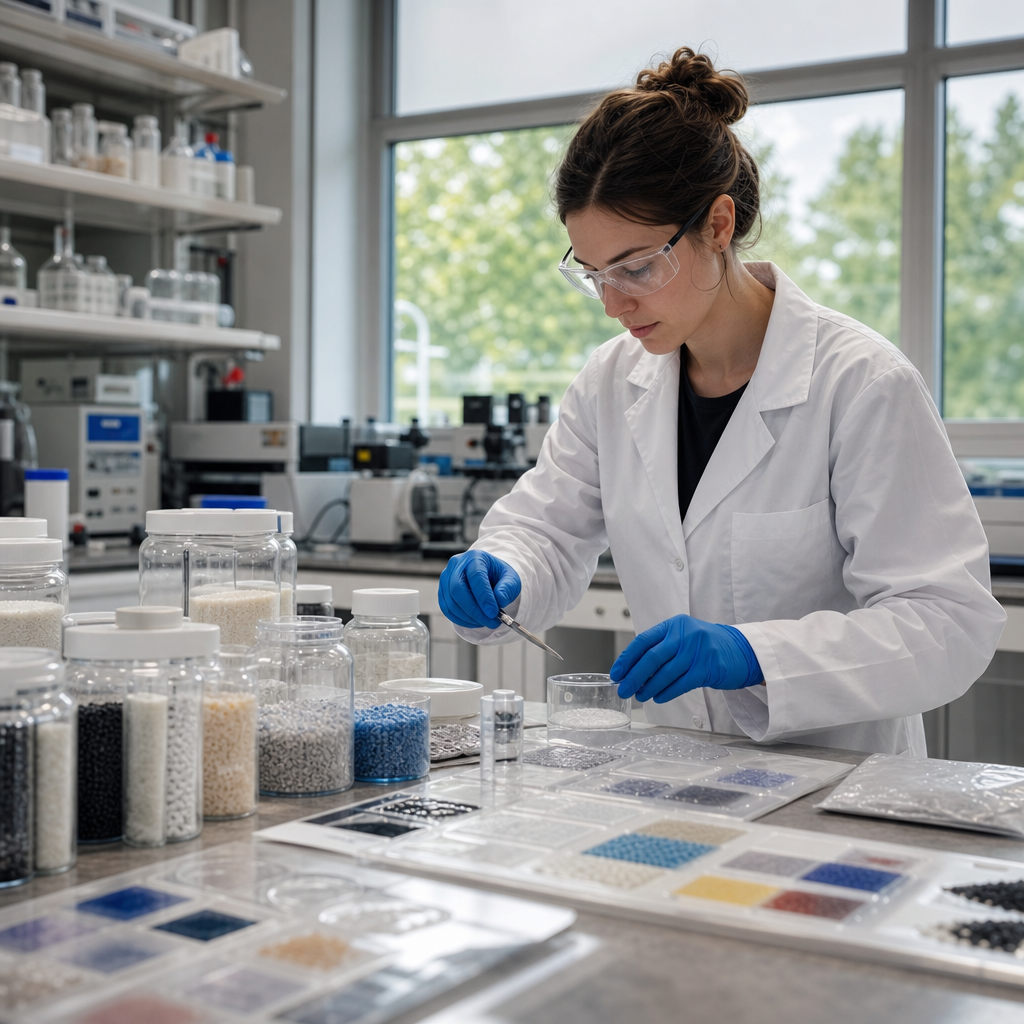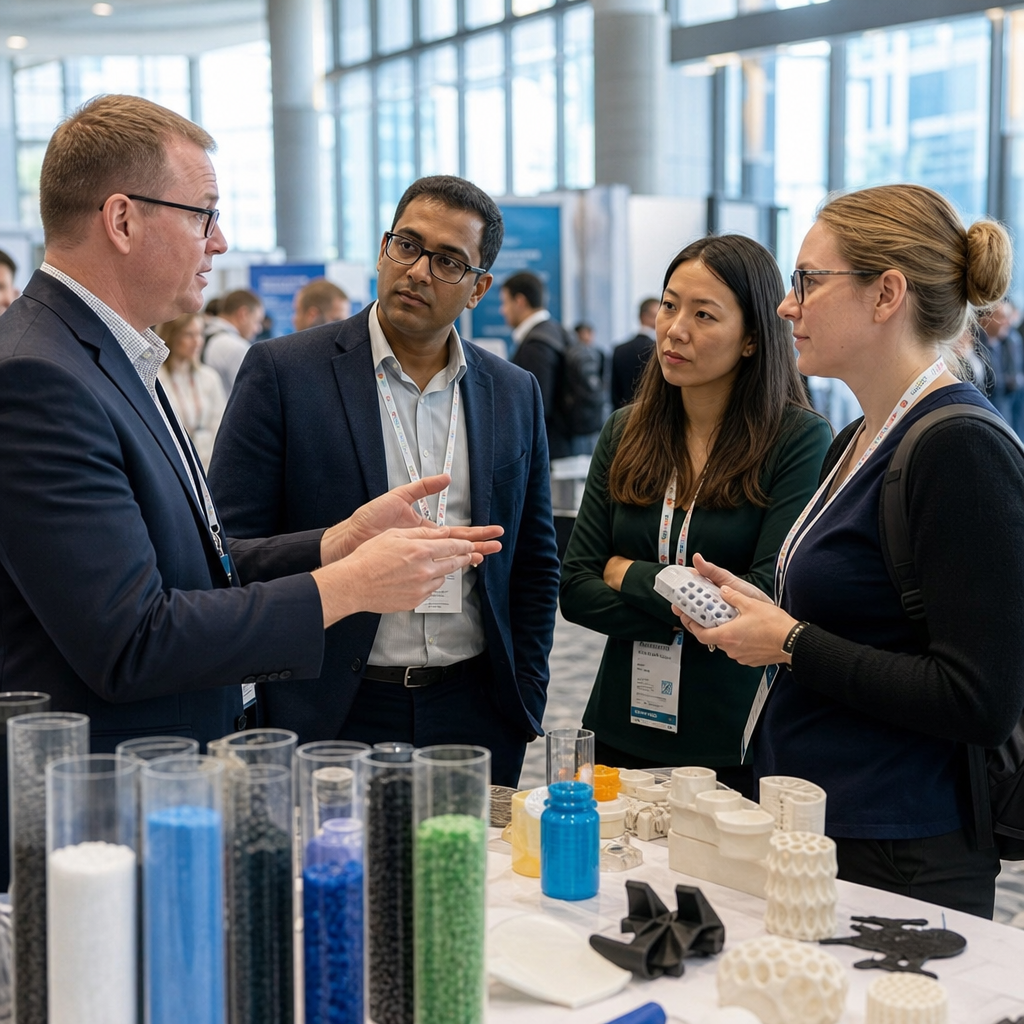
Industry conferences play a decisive role in polymer innovation because they compress years of scattered research, supplier development, processing know-how, and commercial feedback into a few days of direct exchange. In polymers, innovation means more than inventing a new resin. It includes improving compounding, additives, recycling systems, barrier performance, flame retardancy, biocompatibility, manufacturing throughput, and end-of-life recovery. Conferences and workshops are where these advances become visible, testable, and commercially meaningful.
Within the broader educational resources landscape, conferences and workshops form a practical bridge between formal research and day-to-day industrial execution. Academic papers explain mechanisms. Standards define minimum requirements. Plant trials reveal operating constraints. A strong conference program brings all three together. I have seen technical teams arrive with a narrow question about melt flow, discoloration, or poor adhesion and leave with supplier contacts, processing advice, benchmark data, and a clearer decision path. That speed matters in an industry where tooling, qualification timelines, and regulatory approvals can delay progress for months.
This hub article explains the impact of industry conferences on polymer innovation and serves as a starting point for deeper exploration of conferences and workshops across the polymer sector. It covers how events influence materials discovery, product commercialization, sustainability, equipment adoption, workforce development, and strategic partnerships. It also explains the limits of conferences. Not every presentation is transformative, and not every networking conversation produces a viable project. Still, the best events consistently accelerate learning, reduce duplication, and help organizations identify useful ideas earlier than they would through isolated research alone.
For polymer professionals, the core value of conferences is structured access to concentrated expertise. Attendees can compare thermoplastics, thermosets, elastomers, composites, coatings, adhesives, and recycling technologies in one place. They can hear processors discuss screw design, residence time, drying protocols, and warpage control alongside brand owners discussing sustainability claims, design-for-recycling targets, and regulatory risk. That cross-functional exposure is especially important now, as material selection decisions increasingly depend on carbon reporting, PFAS restrictions, food-contact rules, medical validation, and circular economy demands, not just mechanical performance or price per kilogram.
Why conferences accelerate polymer innovation
Conferences accelerate polymer innovation by reducing information friction. In a normal product development cycle, a formulator may need to gather data from journal articles, resin technical data sheets, machine suppliers, compounders, converters, and testing labs. At a well-run event, those conversations happen in sequence, often on the same day. This density changes decision quality. Teams can challenge assumptions quickly, compare test methods, and understand whether a problem is rooted in material chemistry, process settings, tooling, or unrealistic application requirements.
The best conferences also expose participants to adjacent technologies they might not actively search for. A packaging engineer attending a session on multilayer films may discover advances in compatibilizers for polyolefin recycling. An automotive materials manager may learn that long-fiber thermoplastics now meet stiffness targets once reserved for metal assemblies. A medical device designer may hear a workshop on sterilization stability and realize that a preferred polymer grade loses impact strength after repeated gamma exposure. These moments matter because many valuable innovations emerge from transfer, not invention.
Event formats influence results. Technical conferences emphasize peer-reviewed findings, characterization methods, and material science principles. Trade shows and application conferences tend to highlight commercialization, machinery, and supply chain readiness. Workshops are often the most actionable format because they allow deeper treatment of design of experiments, rheology interpretation, failure analysis, finite element modeling, or regulatory documentation. In practice, innovation gains are strongest when teams combine all three: broad scanning at conferences, supplier validation at exhibitions, and skill building in workshops.
How research, processing, and commercialization connect at events
Polymer innovation succeeds only when chemistry, processability, compliance, and market fit align. Conferences make that alignment more visible. Researchers present structure-property relationships, crystallization behavior, additive interactions, and degradation pathways. Processors respond with realities from extrusion lines, injection molding cells, blow molding operations, thermoforming systems, or reactive compounding plants. Commercial teams add application constraints such as color consistency, scratch resistance, cycle time, customer qualification, and total landed cost. When these perspectives meet, weak concepts are filtered out early and stronger concepts gain momentum.
I have repeatedly seen conference discussions correct false confidence around laboratory results. A polymer may show excellent tensile strength and barrier properties in controlled testing, yet perform poorly in high-humidity storage, weld line regions, or regrind-rich production conditions. A paper alone may not reveal those issues. A panel discussion with a converter, OEM, and test lab usually does. This is one reason conferences often influence adoption more than publication counts do. Industry needs implementation evidence, not just promising data.
Commercialization benefits from this multidirectional feedback. Resin producers can learn whether datasheet metrics match what processors actually optimize. Equipment makers can observe whether their mixing, venting, feeding, or pelletizing systems solve practical pain points. Startups can test how buyers react to recycled-content claims, biobased feedstocks, or chemical recycling output quality. Investors and corporate strategy teams also use conferences to judge technical credibility. A crowded booth never guarantees market success, but sustained technical scrutiny from informed attendees is a reliable early filter.
Major innovation themes that conferences shape
Across the polymer sector, several recurring themes dominate conference agendas because they directly affect innovation pipelines. Sustainability remains central, including mechanical recycling, chemical recycling, mono-material packaging, life cycle assessment, and design for disassembly. Performance engineering is another major theme, covering lightweighting, thermal management, conductivity, toughness, flame retardancy, and UV durability. Digitalization has grown quickly as processors adopt machine monitoring, statistical process control, simulation software, and AI-assisted formulation screening. Regulatory readiness is equally important, especially in food packaging, medical devices, construction, and transportation.
Conferences shape these themes by turning abstract priorities into specific technical roadmaps. For example, sustainability sessions often move beyond general recycling claims to address melt filtration limits, odor control, contaminant management, compatibilizer selection, and property retention after multiple processing loops. In medical polymers, workshops frequently examine ISO 10993 biocompatibility pathways, extractables and leachables, sterilization methods, and change-control expectations. In automotive applications, speakers may compare polypropylene compounds, polyamide blends, and thermoplastic composites against weight, acoustic, impact, and paintability targets.
Because this page is a hub for conferences and workshops, it is useful to understand how different event types support different innovation goals.
| Event type | Primary value | Best use case |
|---|---|---|
| Technical conference | Peer-reviewed data, mechanisms, standards context | Evaluating new materials or failure causes |
| Trade show | Supplier access, equipment demos, market signals | Comparing commercial readiness and sourcing options |
| Hands-on workshop | Skill development, problem solving, method training | Improving processing, testing, or compliance capability |
| User group meeting | Operational lessons from existing customers | Benchmarking tools, software, or machinery performance |
Collaboration, standards, and faster problem solving
One of the most overlooked impacts of conferences is their role in standardization and problem framing. Polymer innovation depends heavily on comparable data. If one company reports impact performance using one specimen geometry, another uses a different conditioning protocol, and a third uses nonstandard aging conditions, the market learns very little. Conferences help align methods by bringing standards bodies, laboratories, OEMs, and producers into the same discussion. Organizations such as ASTM International, ISO technical committees, and industry associations often use event forums to clarify evolving requirements and interpretation issues.
These interactions directly influence problem solving. Consider recycled polyolefins for durable goods. A converter may blame resin inconsistency, while the recycler points to feedstock variation, and the OEM points to cosmetic defects. Conference roundtables often reveal that all three are partially correct. The solution may involve incoming bale quality controls, near-infrared sorting, deodorization, melt filtration, stabilizer packages, and revised surface-finish expectations. Without cross-industry discussion, each party tends to optimize only its own step and miss the system-level fix.
Collaboration formed at events can also shorten development cycles. Universities gain access to industrially relevant test questions. OEMs find niche additive suppliers with specialized expertise in nucleation, slip control, antistatic behavior, or chain extension. Compounders meet equipment makers able to solve feeder bridging, devolatilization, or dispersion limits. In my experience, the most productive conference contacts are rarely the most promotional. They are the people willing to discuss failed trials, boundary conditions, and what the data does not yet prove.
How to choose the right conferences and workshops
Not every event deserves the same investment, so polymer teams need a selection framework. Start with the business objective. If the goal is to scout emerging materials, prioritize technical conferences with strong abstracts, credible speakers, and published proceedings. If the goal is near-term sourcing or equipment upgrades, trade shows with live demonstrations and scheduled supplier meetings are usually more effective. If the issue is internal capability, such as DSC interpretation, rheology troubleshooting, mold design, or life cycle assessment, a focused workshop often delivers the best return.
Evaluate audience composition carefully. A conference dominated by academics can be excellent for early-stage science but weaker for implementation details. An event dominated by sales activity may provide market intelligence yet offer little rigorous analysis. Review the agenda for named standards, test methods, application sessions, and case studies with measurable outcomes. Strong conferences usually include specifics: resin family, additive loading range, processing window, test protocol, failure mode, and commercial limitation. Vague language is a warning sign.
Attendees should also plan how to convert event learning into organizational value. Before travel, define target questions, priority suppliers, and internal stakeholders who need answers. During the event, document actionable findings, not just interesting ideas. Afterward, hold a debrief with engineering, procurement, quality, and commercial teams. Good conference ROI comes from implementation: a revised material shortlist, a new pilot trial, a better validation plan, or a partnership worth pursuing. Educational resources are most useful when they improve decisions, not when they simply accumulate slides.
Limits, tradeoffs, and the future of conference-driven innovation
Conferences are powerful, but they are not substitutes for disciplined development. Presentations can overstate readiness, especially when scale-up, long-term aging, or regulatory approval remains unresolved. Competitive concerns mean speakers often omit exact formulations, process settings, or cost structures. Networking can also introduce bias if teams rely too heavily on anecdotal success stories. The right approach is to treat conference insights as directional evidence, then verify them through lab work, pilot runs, supplier audits, and structured qualification testing.
Cost is another tradeoff. Travel, exhibition fees, and staff time can be substantial, particularly for smaller processors or startups. Hybrid and virtual formats have improved access, yet they rarely match the technical depth of in-person troubleshooting around samples, molded parts, or machine components. Polymers are physical materials; seeing weld lines, gels, splay, voids, fiber orientation, or plaque discoloration often changes the conversation. For that reason, the future is likely blended rather than fully digital: online discovery supported by targeted in-person events for high-value technical exchange.
As this conferences and workshops hub grows, readers should use it to identify the event formats, subject areas, and learning paths most relevant to their polymer goals. The impact of industry conferences on polymer innovation is clear: they help professionals connect science to production, reduce costly blind spots, and accelerate smarter material decisions. Use this page as your starting point, then explore related resources, compare event types, and choose the conferences and workshops that will move your next polymer project forward.
Frequently Asked Questions
Why are industry conferences so important to polymer innovation?
Industry conferences matter because they accelerate how quickly ideas move from theory to commercial use. In the polymer sector, innovation rarely comes from one discovery in isolation. It usually develops through a chain of improvements involving resin chemistry, additives, compounding methods, processing conditions, testing, compliance, and customer feedback. Conferences bring all of those perspectives together in one place. Instead of waiting months or years for insights to travel through publications, supplier visits, internal trials, and market reports, professionals can compare findings directly with formulators, processors, equipment manufacturers, recyclers, and end users over the course of a few days.
That compression of knowledge is especially valuable in polymers because the field is so interconnected. A new additive package may change extrusion behavior. A promising recycled feedstock may affect color stability, odor, or mechanical performance. A high-barrier material may introduce trade-offs in sealing, thermoforming, or end-of-life recovery. Conferences help companies understand those trade-offs faster by exposing them to case studies, technical papers, panel discussions, and practical demonstrations. They also create a setting where people can ask the questions that are often missing from formal literature, such as what failed during scale-up, which processing window proved most stable, or how a formulation performed under real customer conditions. That direct exchange is one of the biggest reasons conferences continue to shape polymer innovation so decisively.
How do conferences help companies turn polymer research into market-ready products?
Conferences help bridge the gap between laboratory success and commercial viability. In polymer development, it is not enough for a material to perform well in a controlled test. It must also be manufacturable at scale, cost-effective, compliant with regulations, reliable across different production environments, and suitable for the intended application. Conferences support this transition by connecting researchers with the exact stakeholders needed to solve commercialization problems. A scientist presenting a new flame-retardant compound, for example, may receive immediate feedback from molders, OEMs, testing labs, and additive suppliers who understand what will be required for actual adoption.
These events also expose companies to market signals much earlier than they might otherwise receive them. By listening to presentations from brand owners, converters, and sustainability leaders, polymer developers can see where demand is moving, whether toward recyclable mono-material structures, lower-carbon feedstocks, PFAS alternatives, improved medical biocompatibility, or faster processing systems. That guidance helps technical teams prioritize the innovations most likely to succeed commercially. In addition, exhibition floors and networking sessions often lead to pilot collaborations, material trials, equipment evaluations, and supply chain partnerships. In practical terms, conferences reduce the distance between invention and implementation by aligning technical capability with manufacturing reality and customer need.
What kinds of polymer innovations are most influenced by conference collaboration?
Some of the most conference-driven advances are the ones that require multiple disciplines to work together. Compounding is a strong example, because improvements in fillers, stabilizers, impact modifiers, color systems, and processing aids depend on constant interaction between material suppliers and production teams. The same is true for recycling innovation, where progress depends on collection systems, sorting technology, decontamination methods, compatibilizers, formulation changes, and product design for circularity. Conferences provide a rare environment where each piece of that system can be discussed together rather than in isolation.
Other highly influenced areas include barrier packaging, flame retardancy, lightweighting, medical polymers, electrical and electronic materials, and high-throughput manufacturing. In barrier applications, developers may need to balance oxygen resistance, moisture protection, clarity, sealability, and recyclability all at once. In flame-retardant systems, they may be navigating regulation, smoke performance, mechanical retention, and processing stability. In medical and biocompatible polymers, conference discussions often help clarify sterilization effects, extractables concerns, validation requirements, and long-term performance expectations. Even incremental improvements, such as cycle-time reduction, lower scrap rates, or better dispersion of additives, can become major innovations when shared broadly. That is why conferences are so influential: they support both breakthrough materials and the many practical refinements that determine whether a polymer technology actually succeeds in the market.
How do conferences support sustainability and recycling advances in the polymer industry?
Conferences have become one of the most effective platforms for moving polymer sustainability from broad ambition to technical action. Sustainability in polymers is complex because it touches raw material selection, product design, process efficiency, recycled content, chemical and mechanical recycling, emissions, legislation, and infrastructure realities. No single company controls all of those variables. Conferences allow resin producers, converters, recyclers, brand owners, policymakers, and equipment suppliers to compare what is technically possible with what is commercially and operationally practical.
This matters because many sustainability goals involve trade-offs that need open, informed discussion. A package designed for excellent barrier protection may be harder to recycle. A bio-based polymer may lower fossil dependency but raise questions about performance, cost, composting conditions, or feedstock sourcing. Recycled content targets may sound straightforward, yet they can introduce variability in odor, viscosity, contamination levels, or appearance. At conferences, these issues are discussed through real case studies rather than abstract claims. Attendees learn which compatibilizers improved recycled resin performance, which sorting technologies increased yield, which design changes made products easier to recover, and which policies are shaping future material choices. That shared learning helps companies avoid repeating mistakes and adopt more effective strategies faster. In short, conferences accelerate sustainable polymer innovation by creating a common forum for technical honesty, cross-sector coordination, and faster problem-solving.
What should professionals look for at polymer conferences to gain the most innovation value?
To get the most value from a polymer conference, professionals should look beyond headline presentations and focus on the full innovation ecosystem around the event. Technical sessions are important, but some of the most useful insights come from panel debates, poster sessions, workshops, exhibitor conversations, and informal networking. Attendees should pay attention to recurring themes across these different formats. If multiple speakers are discussing the same challenge, such as improving recycled content consistency, replacing halogenated flame retardants, increasing throughput without degrading polymer performance, or meeting new regulatory standards, that usually signals a meaningful shift in the market.
It is also smart to evaluate innovation through a practical lens. Instead of asking only whether a new polymer or additive is impressive, professionals should ask whether it is scalable, process-friendly, cost-justified, compliant, and compatible with existing manufacturing systems. The best conference takeaways often come from detailed questions: What processing adjustments were required? How did the material perform after aging or sterilization? What happened during scale-up? Was the claimed sustainability benefit verified through data? Could the formulation be integrated into current recycling streams? By combining technical curiosity with commercial realism, attendees can identify which ideas are ready for adoption, which need further development, and which may not survive real-world constraints. That disciplined approach turns conference participation from simple information gathering into a strategic advantage for polymer innovation.