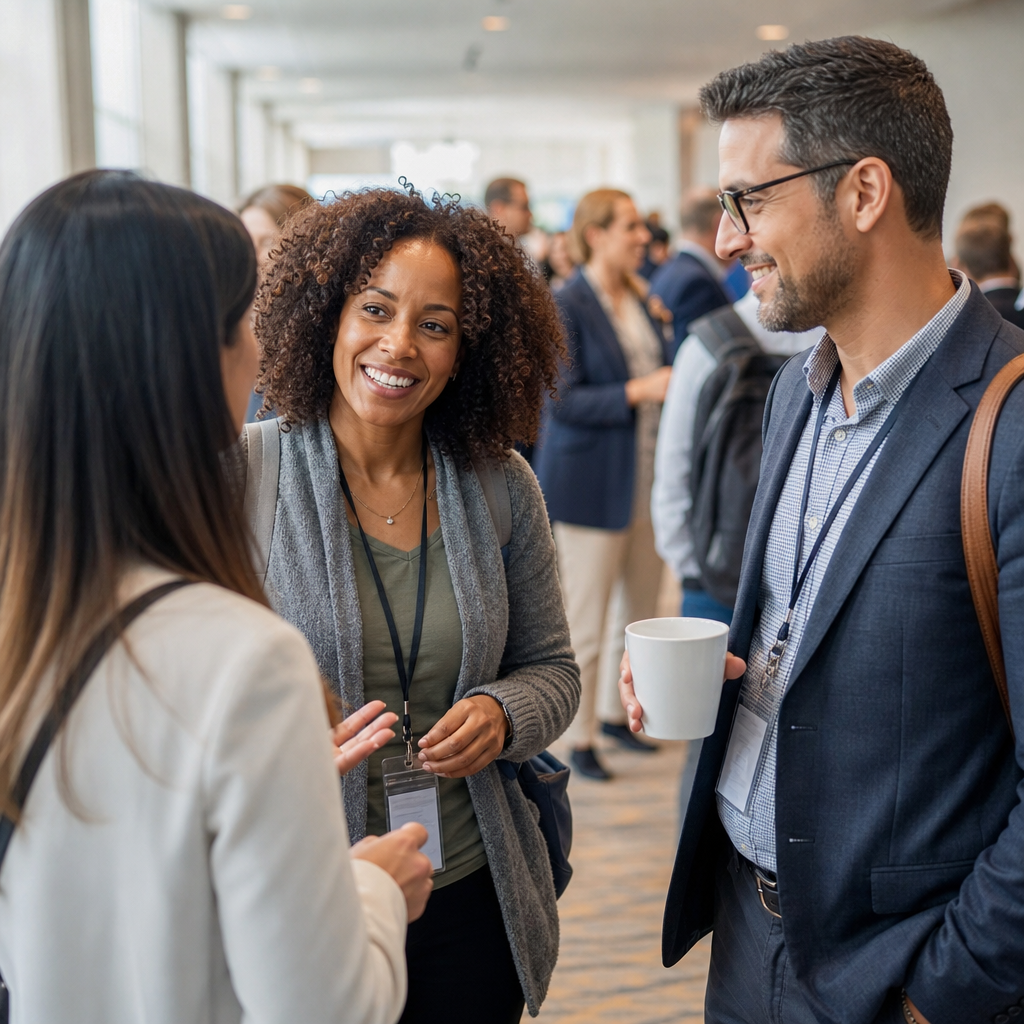
How to stay connected with conference attendees is a practical question with measurable business impact. A conference creates a short burst of attention, but relationships only become valuable when communication continues after the event. In my experience supporting event marketing programs, the teams that treat follow-up as part of conference strategy consistently generate more meetings, stronger partnerships, and better renewal rates than teams that simply collect badges and hope people remember them later. Staying connected means building a repeatable system for capturing attendee information, organizing it, following up with relevance, and creating reasons to interact long after the closing keynote.
Within conferences and workshops, attendee connection covers every touchpoint before, during, and after the event. It includes contact collection, consent management, CRM tagging, personalized outreach, social engagement, community building, and content distribution. Workshops often allow deeper interaction because the setting is smaller and more collaborative, while conferences offer scale and broader visibility. Both formats require the same core principle: if you do not give people a clear next step, most promising conversations disappear into crowded inboxes and forgotten business card piles.
This topic matters because events remain one of the fastest ways to build trust. A face-to-face conversation can accomplish what months of digital outreach cannot, especially in education, software, healthcare, nonprofit leadership, and professional services. According to long-standing B2B event benchmarks from Exhibitor and CEIR, marketers continue to rank in-person events among their highest-performing channels for lead quality and pipeline influence. Yet event ROI often breaks down in the handoff between the booth, session, or workshop table and the follow-up process. That gap is exactly where connection strategy determines results.
As a hub page for conferences and workshops, this article explains the full system. You will learn how to prepare before the event, gather meaningful attendee data during the event, choose the right communication channels, avoid common mistakes, and measure whether your outreach is working. The goal is not to send more messages. The goal is to stay relevant, welcome, and useful so attendees want to hear from you again.
Start Before the Conference: Build the Connection Plan Early
The best post-event follow-up starts before registration opens. When I build event plans, I begin with a simple question: what should happen after a promising attendee conversation? The answer shapes every tactic that follows. If your next step is a sales demo, your team needs lead qualification fields and calendar links. If your next step is workshop enrollment, you need segmented nurture emails and reminder sequences. If your goal is community growth, you need a compelling invitation to a LinkedIn group, member forum, or email series.
Start with audience segmentation. Not every attendee should receive the same follow-up. Speakers, exhibitors, sponsors, students, customers, prospects, and partners all have different motivations. A workshop participant who asked detailed implementation questions needs different outreach than a conference attendee who briefly scanned your QR code. Segmenting early lets you tailor both messaging and cadence. Most modern systems support this well, including HubSpot, Salesforce, Marketo, and Cvent integrations.
Pre-event preparation also means deciding how data will flow. Registration platforms, badge scanners, meeting schedulers, and CRM records should connect cleanly. Standardize fields such as company, role, interest area, source event, consent status, and follow-up owner. This sounds operational, but it directly affects relationships. If attendee notes are incomplete or trapped in disconnected tools, your follow-up becomes generic. People notice when you forget what they asked at the booth or which workshop session they attended.
Finally, prepare the assets that make staying connected easy. These usually include a short thank-you email template, a longer resource follow-up, a meeting booking page, a workshop recap page, speaker slide access, and social profile links. The most effective event teams do not improvise connection at the last minute. They build it into the event lifecycle.
Capture Useful Information During Conversations, Not Just Contact Details
Collecting names and email addresses is not enough. To stay connected with conference attendees, you need context. During live events, I train teams to capture three categories of information immediately after each interaction: what the attendee cares about, what next step they agreed to, and when follow-up should happen. These notes turn a cold record into a warm relationship.
For example, consider three attendees who all visited the same exhibit booth. One is a university program director looking for workshop curriculum tools. Another is an operations manager comparing conference vendors for next year. The third is an existing customer asking about advanced training. If all three are tagged only as booth leads, every follow-up message will be weak. If their records include needs, timeline, and conversation summary, the outreach can be specific: a case study for the director, a planning checklist for the operations manager, and a customer training invitation for the existing client.
Use badge scans carefully. They are efficient, but they often create false confidence. A scan means contact was possible, not that interest was real. Pair badge scans with quick note capture in a mobile app or CRM form. Some event teams use short internal labels such as hot, active, nurture, partner, media, or customer expansion. That is helpful only if everyone applies the labels consistently. Define terms in advance so your sales, marketing, and event staff classify contacts the same way.
Consent matters as well. If you are collecting attendee information in regions covered by GDPR, CASL, or similar privacy rules, make sure your process distinguishes between legitimate business follow-up and broader promotional email consent. Trust is easier to preserve than repair.
Choose Follow-Up Channels Based on Attendee Behavior
The right channel depends on the interaction and the attendee’s preferences. Email remains the backbone of post-conference communication because it scales, supports personalization, and is easy to measure. However, email alone is rarely enough. Strong event follow-up often combines email, LinkedIn, calendar invitations, community platforms, text reminders for opted-in attendees, and occasional phone outreach for high-value conversations.
If someone attended your workshop and requested materials, send the promised resources by email within twenty-four hours. If someone had a substantial strategic conversation, send a personalized LinkedIn connection request the same day and reference the discussion. If an attendee asked for a meeting, skip a long message and send a direct scheduling link with two suggested times. Match the channel to the commitment level.
Social engagement works best when it extends a real interaction. Commenting on an attendee’s post about the conference, sharing photos from a workshop, or tagging speakers in a recap can keep your organization visible without feeling intrusive. Community spaces can deepen this further. Private Slack groups, association forums, and LinkedIn groups are useful when they provide actual value, such as templates, peer discussion, or office hours. They fail when they become low-effort promotional streams.
Cadence matters as much as channel. A practical sequence is immediate thank-you, one helpful resource within two days, one personalized check-in within a week, and one broader invitation within two to three weeks. After that, contacts should move into a segment-appropriate nurture path rather than continuing to receive event-specific messages.
Use a Structured Follow-Up Workflow That Scales
Consistent systems outperform heroic individual effort. The table below shows a simple event follow-up structure I have seen work across conferences, trade shows, and multi-session workshops.
| Timeline | Audience | Action | Purpose |
|---|---|---|---|
| Same day | High-intent attendees | Personal email or LinkedIn message with specific reference to conversation | Confirm relevance while memory is fresh |
| 24 hours | Workshop participants | Send slides, recap, worksheet, or recording link | Deliver promised value quickly |
| 48 to 72 hours | General booth or session contacts | Segmented email with targeted resource based on interest area | Move from contact to meaningful engagement |
| One week | Qualified prospects or partners | Invite to meeting, demo, planning call, or collaboration discussion | Create a clear next step |
| Two to three weeks | All relevant segments | Add to nurture track, newsletter, or community invitation | Maintain long-term connection |
This workflow succeeds because it balances speed with relevance. Most attendees expect quick follow-up, but they do not want a barrage of repetitive messages. Automation helps, especially for large conferences, yet automation should never erase context. Dynamic fields, behavior-based branching, and sales alerts are useful only when the underlying notes are accurate.
Set service-level agreements between teams. For example, marketing sends workshop materials within one day, business development follows up with qualified prospects within two business days, and customer success contacts existing clients within three days if expansion interest was noted. Clear ownership prevents promising contacts from going untouched.
Create Reasons to Reconnect After the Event Ends
Connection fades when there is no ongoing value. The strongest conference follow-up strategies give attendees a reason to engage again. In educational settings, that often means continuing the learning journey. A workshop can lead to an implementation checklist, office hours, a certificate pathway, a resource library, or a future webinar. A conference conversation can lead to benchmark data, a peer roundtable, a product walkthrough, a funding guide, or a curated reading list.
Recap content is especially effective. Publish a post-event summary that highlights key themes, notable speaker insights, practical takeaways, and next-step resources. If your conference track focused on leadership development, do not just post photos. Share the five frameworks speakers referenced, link to deeper guides, and explain how attendees can apply the lessons within thirty days. Useful recap content keeps your organization associated with learning, not just promotion.
Invite two-way participation. Ask attendees what challenge they are tackling now, which session topic they want expanded, or what resource would help them most. Surveys can work, but direct replies often yield better insight. In my experience, the most valuable reconnections happen when attendees feel they are joining an ongoing conversation rather than entering a marketing funnel.
This is also where internal educational resources become important. A conferences and workshops hub should connect naturally to event planning checklists, networking guides, workshop facilitation advice, speaker preparation resources, and post-event measurement articles. When attendees can move from one useful resource to another, your organization remains top of mind.
Avoid the Common Mistakes That Break Attendee Trust
Most connection failures are preventable. The first mistake is delayed follow-up. After a busy conference, teams often wait a week or more to contact attendees. By then, the event is already fading and inbox competition is high. The second mistake is generic messaging. “Great to meet you at the conference” is not memorable unless it is followed by something specific and useful.
Another common problem is over-communication without value. Attendees may receive a thank-you, a sales email, a newsletter signup notice, and a webinar promotion within a few days, all from different departments. That feels disorganized. Coordinate communication so outreach appears intentional. One relevant message beats four disconnected ones.
Data hygiene issues are equally damaging. Duplicate records, misspelled names, wrong job titles, and missing notes make your organization look careless. Before launching outreach, clean lists, merge records, and check segmentation logic. It is also important to respect boundaries. Not every attendee wants a sales conversation. Some want educational materials only. Others may be peers, media contacts, or future collaborators. A good system recognizes those differences.
Finally, do not treat workshops and conferences the same in every case. Workshops usually justify more detailed educational follow-up because attendees invested time in active participation. Large conferences may require lighter, more selective outreach based on interaction depth. Matching the method to the format improves response rates and preserves goodwill.
Measure What Connection Is Actually Producing
To improve conference attendee engagement, measure outcomes beyond open rates. Useful metrics include response rate, meeting conversion rate, resource downloads, community joins, pipeline created, customer expansion conversations, repeat event attendance, and influenced revenue. For educational programs, you may also track course enrollment, certification progress, or workshop completion after the event.
Attribution should be realistic. A single conference rarely causes a sale by itself, but it can accelerate trust, shorten sales cycles, or re-engage dormant accounts. Multi-touch attribution in Salesforce, HubSpot, or similar platforms helps reveal this influence. Qualitative signals matter too. If attendees reply with detailed questions, share your recap internally, or invite colleagues into the conversation, your connection strategy is working.
The most useful review happens within two weeks of the event. Compare segments, channels, and messages. Which workshop follow-up generated replies? Which attendee tags produced meetings? Which conference sessions led to the most downstream engagement? Turn those findings into the next event playbook so each conference improves the system.
Staying connected with conference attendees is not a single tactic. It is a disciplined process that starts before the event, captures meaningful context during interactions, follows up through the right channels, and keeps delivering value after everyone goes home. Conferences and workshops are powerful because they create concentrated trust quickly, but trust only compounds when your organization responds with relevance and consistency.
The central lesson is simple: people remember useful follow-up, not just friendly conversation. Prepare your data flow, segment your audience, send timely personalized outreach, and create continuing educational value through recaps, resources, and community. When you do that well, event contacts become ongoing professional relationships instead of one-time badge scans.
Use this conferences and workshops hub as your starting point. Review your current event follow-up process, identify where attendee context is getting lost, and build one repeatable system for connection. The next conference should not just generate leads. It should strengthen a network you can keep growing all year.
Frequently Asked Questions
What is the best way to follow up with conference attendees after the event?
The most effective follow-up starts quickly and feels relevant. In most cases, the best practice is to reach out within 24 to 72 hours while the event is still fresh in people’s minds. Instead of sending a generic “great to meet you” message to every contact, segment attendees based on how you interacted with them. Someone who requested a demo, stopped by your booth for a product discussion, joined a speaking session, or had a partnership conversation should not receive the same message. The strongest post-conference communication references a specific conversation, challenge, goal, or takeaway from the event. That level of personalization signals professionalism and makes it much easier for the other person to respond.
It also helps to use the right channel for the right relationship. Email is usually best for sending a thoughtful recap, a resource, or a meeting invitation. LinkedIn works well for reinforcing the connection and staying visible over time. If the attendee showed clear buying intent or requested immediate next steps, a phone call or direct meeting follow-up may be appropriate. The key is to make the first outreach useful, not promotional. Share the presentation deck they asked about, send the case study that matches their use case, or provide a short summary of the solution you discussed. Good follow-up continues the conversation; weak follow-up restarts it from scratch.
How can I stay connected with conference attendees without sounding pushy or overly sales-focused?
The easiest way to stay in touch without creating friction is to lead with value instead of pressure. Conference attendees are often flooded with outreach after an event, so messages that immediately ask for a sale, a contract, or a long meeting tend to underperform. A better approach is to think in terms of relevance and timing. If you promised to send an article, industry benchmark, event recap, product comparison, or speaker insight, send it promptly and explain why it matters to that specific contact. This makes your outreach feel helpful rather than transactional.
Consistency matters more than intensity. Staying connected does not mean messaging people every few days. It means creating a steady pattern of useful touchpoints over time. You might begin with a personalized thank-you email, then connect on LinkedIn, then share a relevant resource a week or two later, and later invite them to a webinar, roundtable, or follow-up discussion that aligns with their interests. If your company produces strong educational content, customer stories, or research, these can support relationship-building in a natural way. The rule of thumb is simple: every message should answer the question, “Why is this worth their attention right now?” When you respect that standard, your communication is much more likely to feel welcome.
What tools and systems help teams manage conference attendee follow-up more effectively?
The most successful teams treat attendee follow-up as an organized process, not an improvisation. A customer relationship management platform is usually the foundation because it allows you to capture contacts, assign owners, track conversations, log next steps, and measure outcomes such as meetings booked, opportunities created, and renewals influenced. Marketing automation tools are also valuable for sending segmented follow-up sequences based on attendee behavior, interest level, job role, product focus, or event interaction. This helps teams avoid sending the same message to everyone and makes communication much more relevant at scale.
Beyond CRM and automation, strong operational habits make a major difference. Build a standardized lead capture method before the conference so notes are clean and consistent. Decide which tags matter, such as prospect, customer, partner, press, speaker, high intent, or follow-up priority. Make sure sales and marketing agree on service-level expectations, including how quickly leads should be contacted and what qualifies as a meaningful follow-up. Calendar links, meeting schedulers, LinkedIn Sales Navigator, event apps, and internal collaboration tools can all support execution, but the bigger issue is discipline. The best systems are the ones your team actually uses to turn conference conversations into ongoing relationships. Without clear ownership, tagging, and reporting, even the best software will not fix weak follow-up.
How often should I communicate with conference attendees to maintain the relationship?
There is no single perfect frequency, because communication cadence should reflect the attendee’s level of interest and the type of relationship you are building. A highly engaged prospect who asked for pricing or requested a meeting can justify immediate and more frequent outreach. A customer you met briefly at the event may be better served by a thoughtful check-in followed by occasional updates tied to their goals. In general, the first follow-up should happen within a few days of the conference, and the next touchpoint should be based on either a promised next step or a genuinely useful reason to reconnect.
For long-term relationship building, many teams do best with a light but intentional cadence. That might mean a short follow-up after the event, another outreach one to two weeks later, and then periodic contact through relevant content, invitations, product updates, customer success stories, or industry insights over the following months. What matters most is that your communication feels earned. If you only reach out when you want something, people notice. If you stay visible through helpful, timely, and relevant contact, the relationship stays warm without becoming intrusive. A good test is whether each message would still make sense from the attendee’s perspective even if they were not actively buying today.
How do I measure whether my post-conference attendee engagement strategy is actually working?
Effective measurement starts by connecting follow-up activity to business outcomes, not just contact volume. It is easy to report how many badges were scanned, emails were sent, or LinkedIn requests were accepted, but those numbers do not tell you whether the conference produced lasting value. More meaningful metrics include response rates to personalized follow-up, meetings scheduled after the event, sales conversations advanced, opportunities created, pipeline influenced, partnerships started, customer expansion discussions opened, and renewal or retention impact where relevant. These indicators show whether your team is building momentum beyond the event itself.
You should also evaluate quality alongside quantity. Compare results by attendee segment, message type, timing, and channel to see what produces the strongest engagement. For example, you may find that outreach sent within 48 hours performs better than messages sent a week later, or that contacts with detailed booth notes convert at much higher rates than contacts with no context attached. Review what happened at 30, 60, and 90 days after the conference, not just in the first week. That longer view helps you understand whether your strategy is creating real relationships rather than short-term activity. When teams track follow-up rigorously, they can improve future event planning, allocate budget more intelligently, and prove that staying connected with conference attendees has measurable business impact.