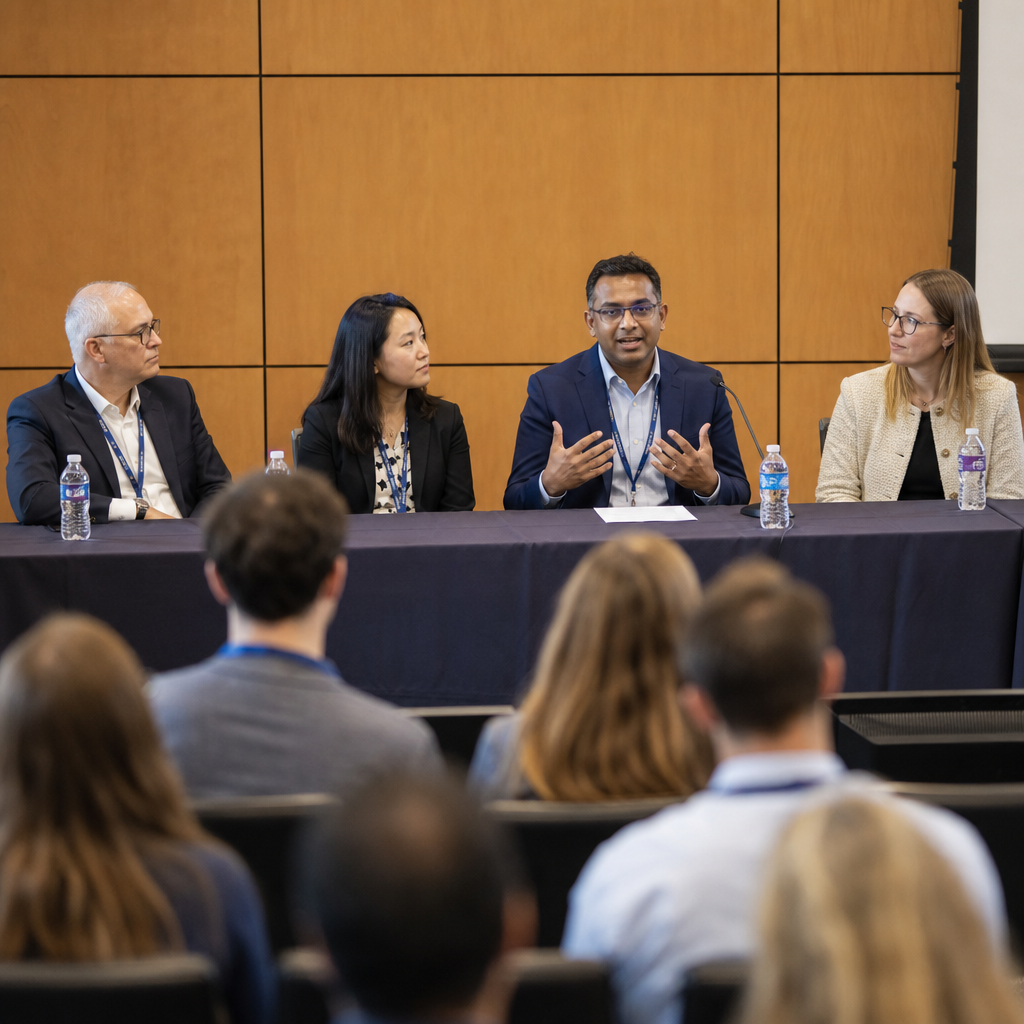
Participating in polymer science panels is one of the fastest ways to build credibility, sharpen scientific judgment, and contribute meaningfully to the conversations shaping materials research today. In the context of conferences and workshops, a panel is a structured discussion featuring multiple experts who address a defined topic before an audience, usually with a moderator guiding the exchange and audience questions extending the discussion. For polymer scientists, these sessions can cover everything from rheology and recycling to biomedical devices, reactive extrusion, additive manufacturing, regulation, and commercialization. Unlike a formal lecture, a panel rewards concise insight, practical examples, and the ability to respond intelligently to perspectives that differ from your own.
This matters because conferences and workshops remain central to how polymer science advances. Peer-reviewed journals establish the archival record, but panels often reveal what researchers are struggling with now: scale-up barriers, reproducibility issues, test method disputes, supply chain constraints, and the tension between sustainability claims and measured performance. I have sat on technical panels at academic meetings, industry symposia, and standards-focused workshops, and the pattern is consistent. The panelists who create the most value are rarely the ones with the longest publication lists alone. They are the ones who can define the problem clearly, explain tradeoffs in plain language, and connect laboratory findings to manufacturing, regulation, and end use.
A strong guide to participating in polymer science panels therefore needs to do more than tell you to “prepare.” It should explain how panel formats differ, how expectations change between conferences and workshops, what organizers look for when selecting speakers, how to frame technically accurate answers under time pressure, and how to follow up so the panel leads to collaborations, invitations, or better teaching. It should also treat this article as a hub for conferences and workshops more broadly. If you are planning your first major meeting, refining your conference speaking strategy, or moving from attendee to recognized subject-matter contributor, panel participation is one of the most practical skills to develop.
Understanding panel formats in polymer science conferences and workshops
Not all panels are built the same, and understanding the format is the first step to performing well. At a large scientific conference such as an ACS meeting, SPE event, MRS symposium, or Gordon-style workshop, a panel may follow a session of technical talks and focus on synthesis pathways, characterization methods, or commercialization outlooks. In an industry workshop, the same term can mean a problem-solving session centered on processing defects, regulatory updates, or sustainability metrics. Some panels are tightly moderated with opening remarks limited to two minutes per speaker. Others are more conversational and depend on spontaneous exchange among panelists.
The practical implication is simple: you should ask organizers for the session objective, expected audience, timing, and rules well in advance. A panel for graduate students deciding between ATRP, RAFT, and ring-opening polymerization needs a different level of explanation than a workshop panel for plant engineers troubleshooting melt fracture in fluoropolymer extrusion. Audience composition changes your vocabulary, your examples, and even the way you define common terms such as molecular weight distribution, viscoelasticity, barrier performance, or chemical recycling. When I prepare, I always request the panel prompt list and the names of the other speakers, then map where my expertise overlaps and where it complements theirs.
Panels at conferences usually emphasize perspective and synthesis. Panels at workshops often emphasize application and decision-making. That distinction matters. Conference audiences may want to know where the field is going over the next five years, which methods are becoming standard, or why contradictory papers continue to appear in emerging areas like vitrimer networks or bio-based feedstocks. Workshop audiences usually want actionable guidance they can apply on Monday, such as which thermal analysis method best identifies degradation onset in a specific polymer family or which compatibility strategy improves recycled blend performance without destroying economics.
How to earn a place on a polymer science panel
Panel invitations rarely come from visibility alone. Organizers usually want evidence that you can contribute distinct, reliable insight in a public setting. That can come from publications, patents, standards work, teaching, leadership in a technical division, or repeated conference presentations that demonstrate clarity and command. If you want to be invited, start by becoming visible in narrower ways. Chair a session. Ask thoughtful questions after talks. Submit abstracts that solve a concrete problem. Participate in workshop roundtables where organizers can see how you think in real time.
It also helps to position your expertise around recognizable themes. “Polymer scientist” is too broad for panel selection. “Polymer scientist focused on polyolefin recycling and interfacial compatibilization” is useful. “Researcher working on hydrogel mechanics for drug delivery” is useful. “Process engineer specializing in residence time distribution, devolatilization, and reactive extrusion scale-up” is useful. Organizers build panels the way editors build a balanced issue: they look for coverage, contrast, and credibility. A panel on sustainable packaging might need one expert in barrier materials, one in life cycle assessment, one in conversion and processing, and one in policy or extended producer responsibility.
Good outreach is direct and professional. If you are seeking opportunities, write to conference track chairs or workshop organizers with a concise note that names your specialty, links your experience to likely panel themes, and includes a short bio highlighting recent talks, publications, or implementation work. Mention outcomes, not just titles. For example, state that your team reduced oxygen transmission in a multilayer structure while maintaining seal integrity, or that you validated DMA and DSC findings against long-term creep data in a medical device polymer. Specificity signals that you will bring substance rather than generic commentary.
Preparing content that works under panel conditions
Panel preparation in polymer science is different from preparing a slide deck. You need modular answers: short, accurate responses that can expand if the moderator gives you room. I recommend preparing five to seven core talking points, each built around one claim, one reason, and one example. A useful template is: define the issue, state the governing scientific principle, then connect it to a real material, process, or dataset. If asked why recycled polymers often underperform virgin resins, for instance, you can discuss chain scission, contamination, additive depletion, variable melt history, and the resulting changes in molecular weight, viscosity, odor, color, and property consistency.
Because conferences and workshops attract mixed audiences, every answer should exist in two versions: technical and plain-language. The technical version might reference SEC, DSC, TGA, DMA, SAXS, FTIR, rheometry, ASTM methods, or ISO standards. The plain-language version should explain what those tools reveal and why that matters in design or manufacturing. This is especially important in cross-functional panels where attendees include chemists, materials scientists, mechanical engineers, procurement teams, and sustainability managers. The best panelists never dilute the science; they translate it without losing precision.
| Preparation area | What to do before the panel | Polymer science example |
|---|---|---|
| Audience analysis | Confirm career stage, sector, and technical depth | Differentiate answers for graduate researchers versus converters evaluating PET reprocessing |
| Evidence set | Prepare 3 to 5 named studies, standards, or datasets | Reference ASTM tensile testing, FDA material considerations, or LCA assumptions for packaging |
| Core messages | Draft concise answers around recurring questions | Explain why morphology control affects impact strength in polymer blends |
| Risk topics | Identify areas of uncertainty or controversy | Acknowledge limits of chemical recycling economics across feedstock streams |
| Moderator alignment | Share your strongest angles before the event | Offer to address scale-up, not just lab synthesis, in a workshop on reactive extrusion |
One habit that consistently improves performance is writing out your answer to the three hardest questions you might receive. In polymer science, those questions often involve tradeoffs. Is biodegradable always better environmentally? No; end-of-life infrastructure, contamination, application lifetime, and total life cycle impacts matter. Does a lower melt flow index always mean better mechanical performance? No; performance depends on architecture, crystallinity, additives, orientation, and processing history. Can one recycled-content target fit every product category? No; food contact rules, optical requirements, weld line sensitivity, and failure risk vary by application. Prepare nuanced answers before you are on stage.
Speaking effectively during the session
Once the panel begins, discipline matters more than brilliance. Keep opening remarks short, define terms that can confuse non-specialists, and make your first answer useful enough that someone in the room could repeat it accurately afterward. In practice, that means avoiding meandering literature tours. If the topic is polymer characterization for failure analysis, start with a direct framework: identify the failure mode, verify service conditions, compare virgin and failed material, then use complementary methods rather than relying on one technique. A compact framework is easier for an audience to retain than a list of instrument names.
Strong panelists also listen actively. In multi-speaker sessions, your job is not to restate what another panelist already covered. Add a different layer. If one speaker explains the chemistry of crosslinking in elastomers, you might add what that means for reprocessing, test selection, or durability in the field. If another panelist describes life cycle assessment results for a polymer packaging format, you might point out how assumptions about collection rates, transport distance, and contamination shift the conclusion. The audience benefits most when panelists build on each other rather than compete for airtime.
Moderators often ask broad questions because they need range, not a single correct answer. A useful approach is to state your position, note the boundary conditions, and then give one example. For instance: “For high-volume packaging, mechanical recycling remains the most practical first pathway when collection and sorting are strong, but multilayer structures and contaminated streams may require redesign or alternative recovery routes.” That answer is firm, technically grounded, and realistic. It avoids absolutist claims that can be undermined by obvious exceptions.
When audience questions arrive, repeat or reframe them if needed. This protects accuracy and helps the room follow the exchange. If a question is based on a misconception, correct it respectfully. I have found that saying “the key distinction is” works well in scientific panels. It lowers tension while moving the discussion toward evidence. If you do not know an answer, say so plainly, then point to the variable that likely determines the outcome or the source the person should consult. Credibility rises when your limits are clear and your reasoning remains sound.
Navigating difficult topics, disagreements, and interdisciplinary panels
Polymer science panels frequently touch contested territory: microplastics, greenwashing, PFAS restrictions, recycled-content mandates, compostability claims, additives of concern, and the gap between pilot results and commercial economics. These topics require balance. A panelist should not flatten legitimate complexity into slogans. For example, bio-based does not automatically mean biodegradable, and biodegradable does not automatically mean suitable for every waste system. Likewise, a polymer may show excellent lab-scale depolymerization results while remaining uncompetitive after accounting for collection, separation, purification, and energy inputs.
Disagreement among panelists is not a problem unless it becomes vague or personal. Productive disagreement clarifies assumptions. If someone claims a certain barrier polymer has no realistic circularity pathway, a better response than simple contradiction is to specify the application, local infrastructure, and performance requirement. In medical packaging, sterilization and shelf-life constraints may narrow options dramatically. In dry goods packaging, redesign flexibility may be greater. By naming conditions, you turn conflict into analysis. Audiences remember panels that sharpen thinking, not panels where everyone politely says the same thing.
Interdisciplinary panels deserve special care because the word “best” changes meaning across fields. A synthetic chemist may optimize monomer conversion and catalyst efficiency. A processor may care most about melt stability and throughput. A product engineer may prioritize toughness, clarity, and weld strength. A sustainability lead may focus on carbon intensity, recyclability, and data quality. During conferences and workshops, the most effective contributors recognize those shifting criteria explicitly. That is how you help attendees compare options honestly and avoid category errors that waste time later in development.
Using panels to build long-term value from conferences and workshops
A polymer science panel should not end when the moderator says thank you. The real value often appears in the follow-up. After the session, expect questions from students, postdocs, suppliers, startup founders, and engineers facing practical constraints they did not want to raise at the microphone. These conversations are where collaborations begin. Keep notes on recurring questions. They often reveal gaps worth addressing in future talks, review articles, workshops, internal training, or method papers. Repeated questions about moisture sensitivity in polyamides, for example, may indicate a need for a short educational resource on conditioning, storage, and test reproducibility.
Follow-up also strengthens your standing within the conferences and workshops ecosystem. Send a concise note to the organizer, thank the moderator, and share any promised references promptly. If the panel exposed unresolved issues, suggest a focused workshop, tutorial, or future session. Organizers remember panelists who improve the program, not just fill a seat. You can also extend the session’s impact by publishing a summary on your lab page, association profile, or company knowledge center, linking readers to related educational resources on conference planning, workshop formats, poster sessions, and technical presentation skills.
For early-career scientists, panel participation compounds over time. It improves how you synthesize evidence, speak to mixed audiences, and identify where your expertise fits within the broader polymer field. For established professionals, panels provide a way to shape standards, mentor the next generation, and test whether current narratives align with field reality. Across both groups, the main benefit is not visibility by itself. It is becoming known as someone who brings disciplined judgment to important technical discussions. If you want to contribute more effectively at conferences and workshops, start by volunteering thoughtfully, preparing rigorously, and treating every panel as a service to the field as well as an opportunity for your own growth.
Frequently Asked Questions
What is a polymer science panel, and how is it different from giving a traditional conference talk?
A polymer science panel is a structured, moderator-led discussion in which several experts explore a focused topic in front of an audience. Unlike a traditional conference presentation, where one speaker delivers a prepared talk with a fixed set of slides and a clearly defined time slot, a panel is more interactive, comparative, and conversational. In polymer science settings, panels often address timely issues such as sustainable materials, characterization methods, polymer processing, biomaterials, regulatory trends, commercialization pathways, or the future of advanced functional polymers. The moderator frames the discussion, invites each panelist to respond, and helps connect different viewpoints so the audience can hear a broader range of perspectives than a single lecture would provide.
For participants, this format requires a different kind of preparation. A successful panelist is not just presenting results; they are interpreting the field, weighing tradeoffs, responding to colleagues in real time, and translating technical complexity into useful insight. That means your role is often to contribute judgment, context, and perspective as much as raw data. In polymer science, where decisions can involve balancing performance, scalability, sustainability, cost, and reproducibility, panels are especially valuable because they reveal how experts think through uncertainty and disagreement.
Panels also create stronger opportunities for visibility and credibility. When you contribute thoughtfully in a live exchange, audiences can quickly recognize your command of the science, your communication skills, and your ability to collaborate with peers. That can be professionally meaningful whether you work in academia, industry, government, or applied research. In short, a polymer science panel is less about delivering a polished monologue and more about demonstrating scientific maturity, practical insight, and the ability to engage constructively in the conversations shaping the field.
How should I prepare to participate effectively in a polymer science panel?
Effective preparation begins with understanding the panel’s exact scope. “Polymer science” is a broad domain, so you need to know whether the discussion will focus on fundamental chemistry, processing and manufacturing, materials performance, end-use applications, recycling, policy, or commercialization. Review the session title, description, audience profile, and event format carefully. If possible, speak with the organizer or moderator in advance to clarify the key themes, expected level of technical detail, and the kinds of questions likely to come up. A panel for graduate students at a specialized workshop will require a different tone and depth than a cross-sector panel at a major industry conference.
Next, define your contribution clearly. You do not need to be prepared to answer every question across the entire field. Instead, identify the two or three areas where your expertise is strongest and where you can add distinct value. For example, you may be especially well positioned to speak about polymer characterization, rheology, additive manufacturing feedstocks, membrane materials, degradable polymers, scale-up challenges, or structure-property relationships. Good panelists know their lane, but they also connect their specialty to the broader discussion. Prepare concise examples, recent findings, and practical takeaways that illustrate your points without turning your remarks into a mini-lecture.
It is also important to familiarize yourself with the other panelists. Review their backgrounds, publications, institutional roles, or company perspectives so you can anticipate where agreement and contrast may emerge. This helps you avoid repetition and enables you to build on others’ comments intelligently. In polymer science discussions, some of the most useful moments occur when panelists compare academic, industrial, and regulatory viewpoints on the same issue. If you know who is bringing which perspective, you can contribute more strategically.
Finally, prepare for spontaneity. Panels reward brevity, clarity, and adaptability. Draft short responses to likely questions, but do not memorize scripts that will make you sound rigid. Practice explaining technical ideas in plain but accurate language, especially if the audience may include chemists, chemical engineers, materials scientists, product developers, or students with varying levels of specialization. Bring a few memorable examples, a handful of current references or trends, and several thoughtful questions you can pose to fellow panelists if the discussion needs energy. The best preparation equips you to be both precise and flexible.
What makes a strong panel contribution in polymer science, especially when topics become highly technical?
A strong contribution is one that is scientifically sound, clearly communicated, and relevant to the audience’s real interests. In highly technical polymer science discussions, it can be tempting to answer every question with maximum complexity, but effective panelists know how to scale their response. Start with the central point, explain why it matters, and then add technical nuance only as needed. For instance, if the discussion turns to polymer degradation, you might first distinguish between laboratory evidence of degradability and real-world environmental breakdown, then elaborate on mechanisms, testing standards, or application constraints. That approach keeps your answer accessible without oversimplifying the science.
Another hallmark of a strong contribution is the ability to connect evidence with judgment. Audiences do not attend panels just to hear facts they could read in a paper; they want to understand how experts interpret those facts. In polymer research, that may mean discussing the limitations of certain characterization techniques, explaining why promising lab-scale materials fail during processing, or comparing competing sustainability claims with a critical eye. If you can articulate not just what is known, but what remains uncertain and how scientists should think about that uncertainty, you immediately become a more valuable panelist.
Strong contributors also engage with the panel as a conversation rather than a sequence of isolated statements. Listen carefully to what others say, acknowledge useful points, and add perspective without forcing disagreement for effect. If you do disagree, do so constructively and specifically. For example, instead of saying a colleague is wrong, you might explain that the conclusion depends on molecular weight distribution, processing history, or the distinction between bench-scale feasibility and manufacturing readiness. That kind of response advances the discussion while preserving professional respect.
Finally, the best panelists remember that clarity is part of scientific leadership. Avoid jargon when a simpler term will do, define specialized concepts when necessary, and keep answers structured. A useful pattern is: state the issue, identify the scientific principle, explain the practical implication, and end with a takeaway. That format works especially well in polymer science because many questions span chemistry, engineering, application performance, and market considerations all at once. When you make complex material understandable, you help the entire audience participate more deeply.
How can participating in polymer science panels help build credibility and advance my career?
Participating in polymer science panels can accelerate professional credibility because it puts your expertise on display in a public, high-trust format. When you speak effectively on a panel, people are not only evaluating your scientific knowledge; they are also assessing your judgment, composure, communication skills, and ability to think across disciplines. Those qualities matter enormously in polymer science, where impactful work often requires collaboration among chemists, engineers, physicists, manufacturing teams, sustainability specialists, and business stakeholders. A well-executed panel appearance signals that you can operate at that broader level.
Panels also give you a chance to be associated with important field-level conversations rather than just a single research result. If you contribute to discussions on advanced recycling, biomedical polymers, circular materials design, nanocomposites, or processing innovation, you become visible as someone engaged with the future direction of the field. That visibility can lead to invitations for keynote talks, collaborations, peer review roles, advisory boards, workshop leadership, editorial opportunities, and internal leadership responsibilities within your institution or company. In many cases, panel participation helps others see you as a trusted interpreter of the science, not just a producer of data.
There is also a networking advantage that is often underestimated. Panels create natural follow-up conversations with audience members, fellow panelists, organizers, and potential collaborators. Because the discussion is public and interactive, people often approach you afterward with highly specific questions about methods, applications, or partnership opportunities. In polymer science, where applied relevance is frequently as important as scholarly excellence, these exchanges can open doors to translational research, funding opportunities, industry engagement, and multi-institutional projects.
Most importantly, regular panel participation helps sharpen your own scientific thinking. Explaining your views under time pressure, responding to competing perspectives, and addressing audience questions forces you to refine your reasoning. Over time, that improves how you present, teach, write, mentor, and make strategic research decisions. So while panels are certainly a visibility tool, they are also a professional development tool. They help you become the kind of scientist others trust to guide discussion, evaluate evidence, and represent the field thoughtfully.
What are the most common mistakes to avoid when serving on a polymer science panel?
One of the most common mistakes is treating the panel like a formal lecture. Panel answers that are too long, overly rehearsed, or packed with excessive detail can stall the conversation and reduce audience engagement. In a polymer science setting, it is especially easy to drift into dense explanations about synthesis routes, instrument settings, morphology analysis, or processing conditions without first clarifying the main point. A better approach is to answer in layers: begin with the headline insight, then add technical depth only if the discussion calls for it. This makes your expertise more usable and keeps the session dynamic.
Another mistake is speaking beyond your actual expertise. Polymer science is interdisciplinary by nature, and audiences often ask questions that touch chemistry, engineering, toxicology, economics, regulation, and sustainability