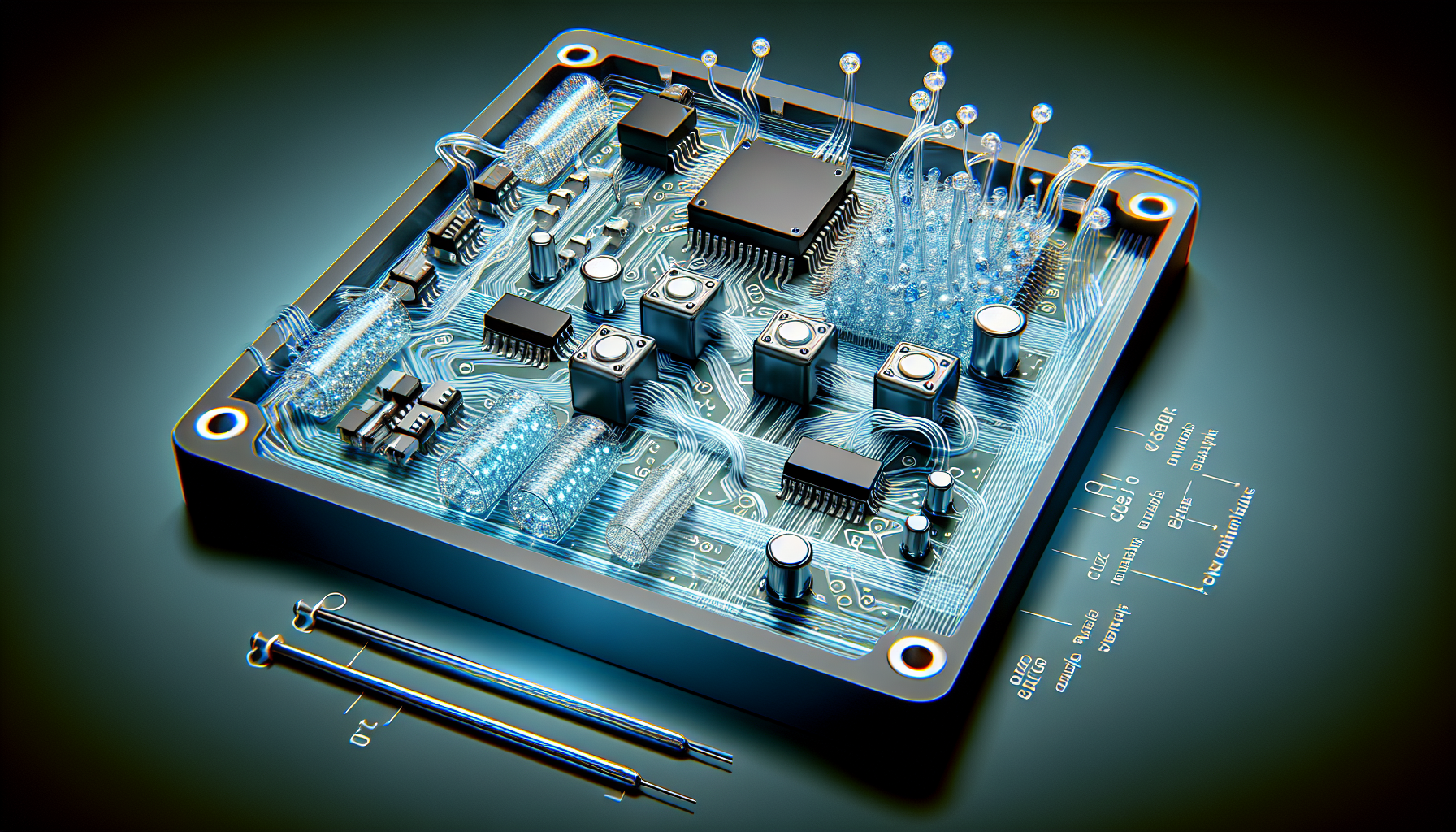
Polymers are foundational materials in modern electronics because they provide insulation, structural support, heat resistance, flexibility, and processability across circuit boards and components. In the electronics context, polymers include thermosets such as epoxy resins, thermoplastics such as polycarbonate and liquid crystal polymer, elastomers such as silicone, and high performance films such as polyimide and fluoropolymers. I have worked with these materials in board design reviews, failure analysis meetings, and supplier qualification projects, and the pattern is consistent: when a product succeeds in reliability, manufacturability, and cost control, polymer selection is usually part of the reason. When a product fails early from delamination, moisture uptake, dielectric loss, or thermal cracking, the root cause often traces back to the wrong polymer system.
This matters because nearly every electronic device depends on polymers at multiple levels. A smartphone uses polymer laminates in its printed circuit boards, polymer encapsulants around semiconductor packages, polymer coatings to protect against humidity, polymer dielectrics in connectors and antennas, and polymer adhesives in assembly. An electric vehicle relies on polymers that can survive elevated temperatures, high voltages, vibration, and long service life. Medical electronics need biocompatibility, sterilization resistance, and stable electrical performance. Industrial controls need flame resistance, dimensional stability, and dependable insulation under contamination and thermal cycling. As the electronics industry pushes toward higher frequencies, smaller geometries, lead-free solder temperatures, and lighter products, the use of polymers in circuit boards and components becomes more technically demanding, not less.
At a practical level, the key properties engineers evaluate are dielectric constant, dissipation factor, glass transition temperature, coefficient of thermal expansion, moisture absorption, chemical resistance, flammability rating, adhesion, and long term aging behavior. These terms are not abstract. A lower dielectric constant helps high speed signals travel with less delay. A low dissipation factor reduces signal loss in radio frequency designs. A higher glass transition temperature helps a board maintain stiffness during solder reflow. Lower moisture absorption reduces conductive anodic filament risk and dimensional drift. Better adhesion keeps copper traces bonded through repeated thermal cycles. Understanding how polymers behave in electronics is essential for anyone selecting materials, designing products, troubleshooting failures, or planning manufacturing processes across the broader applications landscape.
Why polymers dominate printed circuit boards
Printed circuit boards are the clearest example of polymer importance in electronics. The standard rigid board material, commonly called FR-4, is a composite of woven glass reinforcement embedded in an epoxy resin system with flame retardant chemistry. The glass provides dimensional stability and mechanical strength; the polymer matrix provides insulation, binds the structure together, and enables lamination with copper foil. FR-4 became dominant because it balances cost, electrical insulation, drillability, copper adhesion, and thermal performance well enough for consumer, industrial, and computing products. In real factory environments, it is also forgiving. Fabricators know how it responds to drilling, desmear, plating, imaging, etching, solder mask cure, and assembly reflow, which lowers production risk.
Still, FR-4 is not a single material. Suppliers offer many formulations tailored for different needs, including high Tg epoxy systems for lead-free assembly, low loss grades for faster digital links, and halogen-free variants for environmental compliance goals. In server backplanes and networking hardware, enhanced epoxy materials are often selected to support higher data rates with tighter impedance control. In automotive modules, tougher resin systems are used to improve resistance to thermal shock and vibration. When engineers say a board is “just FR-4,” they often hide important differences in resin chemistry, filler content, and reinforcement style that directly affect reliability and signal performance.
Flexible circuit boards depend even more heavily on specialized polymers. Polyimide film is the workhorse because it combines high thermal stability, excellent dielectric properties, and the flexibility needed for repeated bending or tight installation spaces. Adhesiveless laminates improve dimensional stability and support finer features. Wearables, cameras, foldable devices, and printers all use flex circuits where copper must remain bonded while the polymer substrate bends without cracking. Rigid-flex constructions combine epoxy glass laminates with polyimide sections, allowing three-dimensional packaging and reduced connector count. These assemblies save space and improve reliability, but only when polymer thickness, coverlay design, bend radius, and adhesive choices are engineered carefully.
Electrical performance: dielectrics, signal integrity, and frequency
In circuit boards and components, polymers are not passive bystanders. Their dielectric behavior directly shapes electrical performance. Dielectric constant, usually denoted Dk, influences how fast signals propagate and affects impedance. Dissipation factor, or Df, indicates how much electromagnetic energy converts to heat as signals pass through the dielectric. For low frequency control boards, standard epoxy systems are usually adequate. For multi-gigabit digital channels, radar modules, 5G infrastructure, satellite electronics, and millimeter-wave sensors, polymer choice becomes critical because insertion loss and phase stability can determine whether the design works at all.
Epoxy based laminates are widely used, but hydrocarbon ceramics, PTFE composites, modified PPE systems, cyanate ester blends, and liquid crystal polymer structures are often chosen for higher frequency applications. PTFE, known by the DuPont trade name Teflon for some grades, offers very low dielectric loss and is common in RF microwave boards, although it can be harder to process because of softness, drill smear behavior, and metallization challenges. Cyanate ester and hydrocarbon ceramic laminates are used in aerospace and telecom designs where stable electrical properties over temperature are essential. Liquid crystal polymer appears in antenna substrates and high frequency packaging because it combines low moisture uptake with favorable RF performance.
A straightforward comparison helps explain why engineers move beyond commodity materials in advanced electronics.
| Polymer system | Typical electronics use | Main advantage | Main limitation |
|---|---|---|---|
| Epoxy glass laminate | General rigid PCBs | Low cost and broad process compatibility | Higher loss at very high frequencies |
| Polyimide | Flex circuits, high temperature boards | Excellent heat resistance and flexibility | Higher moisture uptake than some alternatives |
| PTFE composite | RF and microwave boards | Very low dielectric loss | More difficult fabrication and higher cost |
| Liquid crystal polymer | Antennas, packages, high frequency interconnects | Low moisture absorption and stable RF behavior | Material and tooling cost |
| Silicone | Encapsulation and conformal coating | Flexibility over wide temperature ranges | Lower mechanical strength than hard thermosets |
In practice, electrical performance cannot be separated from manufacturing reality. A board stackup with a low loss polymer may still fail if glass weave effects create skew, if resin content varies, or if moisture changes dielectric behavior before test. That is why experienced design teams review laminate data sheets, process windows, and field history together rather than chasing one headline property.
Thermal and mechanical demands in components and assemblies
Electronics polymers must survive heat during manufacturing and during service. Lead-free solder assembly routinely exposes boards and packages to peak temperatures around 245 degrees Celsius, and power electronics can see sustained high operating temperatures near hotspots. The critical point is not simply whether a polymer melts. Engineers look at glass transition temperature, decomposition onset, modulus retention, thermal conductivity, coefficient of thermal expansion, and resistance to thermal cycling. A mismatch between the expansion of copper, ceramic chips, solder joints, and polymer substrates creates stress. Over time, that stress can produce barrel cracking in plated through holes, pad cratering under components, solder fatigue, or package delamination.
Epoxy molding compounds in semiconductor packages illustrate this balancing act. These compounds encapsulate the die and wire bonds, protect against moisture and contamination, and help distribute mechanical stress. Fillers such as silica are added to reduce thermal expansion and improve dimensional stability. Underfill materials beneath flip chips reduce strain on solder bumps by redistributing stress between silicon and the substrate. Die attach adhesives must maintain adhesion and thermal path performance over years of operation. In LED modules, optically clear silicones often outperform organic alternatives because they resist yellowing better under heat and blue light exposure. In battery management electronics and inverter controls, potting compounds protect circuits from vibration and contaminants, but they also influence repairability and heat dissipation.
Mechanical durability matters just as much in connectors, housings, switches, and sensors. Liquid crystal polymer, polybutylene terephthalate, polyphenylene sulfide, nylon, and polycarbonate blends are widely used because they mold precisely and retain properties under heat. Fine pitch connectors need polymers with dimensional stability and flame resistance. Sensor housings may need chemical resistance to fuels, oils, or cleaning agents. Relay bobbins and coil formers must withstand solder heat without warping. In many teardowns, what looks like a simple plastic part is actually a carefully chosen engineering polymer that determines whether the component survives assembly and field use.
Protection, insulation, and environmental reliability
Polymers also serve as the protective layer that keeps electronics alive in real environments. Conformal coatings, solder masks, encapsulants, sealants, and insulating films all rely on polymer chemistry. Solder mask, typically an epoxy based photoimageable polymer, prevents solder bridging and protects copper surfaces from oxidation and contamination. Conformal coatings made from acrylic, urethane, silicone, parylene, or epoxy create thin barriers against humidity, dust, salt spray, and chemicals. The correct choice depends on the environment and service needs. Acrylics are easy to apply and repair. Urethanes resist solvents and abrasion. Silicones perform well across wide temperature ranges and high humidity. Parylene, deposited in a vapor phase, provides highly uniform coverage even on complex geometries and is valued in medical and aerospace electronics.
Moisture management is one of the most underestimated polymer issues in electronics. Absorbed water can lower insulation resistance, change dielectric properties, accelerate corrosion, and trigger delamination during solder reflow. Standards such as IPC material classifications, UL flammability requirements, and JEDEC moisture sensitivity levels exist because these effects are well documented. In package assembly, components classified with higher moisture sensitivity must be stored dry and handled within floor life limits before reflow. In board fabrication, resin systems with poor moisture performance can contribute to conductive anodic filament formation between vias under bias and humidity. I have seen apparently random field failures traced to exactly this combination of material choice, contamination, and environmental exposure.
Fire safety and compliance are equally important. Many board and component polymers are selected to meet UL 94 flammability ratings, but compliance choices can affect performance. Some halogen-free flame retardant systems alter moisture behavior, drilling quality, or dielectric loss compared with traditional brominated systems. Regulations and customer specifications increasingly push toward lower halogen content, especially in consumer and automotive supply chains. The right answer is not universal. Engineers must weigh safety, processability, signal integrity, sustainability goals, and cost rather than assuming one formulation is best in every application.
How polymer selection is changing electronics design
Several industry trends are reshaping how polymers are used in circuit boards and components. First, miniaturization demands finer features and denser packaging, which requires polymers with better dimensional control, smoother surfaces, and compatibility with advanced processes such as laser drilling and semi-additive fabrication. Second, higher data rates and radio frequencies push designers toward lower loss dielectric materials and more stable laminates. Third, electrification in vehicles and energy systems increases demand for polymers that withstand higher voltages, tracking resistance requirements, and harsher thermal cycles. Fourth, flexible and stretchable electronics are expanding the use of polyimide, thermoplastic polyurethane, silicones, and printed polymer inks in medical wearables, soft robotics, and consumer devices.
Sustainability is influencing the field as well, although progress is uneven. Thermoset laminates are difficult to recycle because crosslinked polymers do not remelt. Researchers and manufacturers are developing recyclable or debondable adhesives, bio-based resin content, and processes for recovering glass and copper from printed circuit boards. There is also strong interest in halogen-free laminates, lower volatile formulations, and life-cycle assessment of electronics materials. However, reliability requirements in electronics are unforgiving. A greener polymer only succeeds if it can match established materials in dielectric stability, flame resistance, moisture control, and manufacturing yield.
For teams building an electronics materials strategy, the practical approach is clear. Define the operating environment, electrical frequency range, assembly profile, compliance requirements, and expected service life first. Then match polymer systems to those constraints using supplier data, standards, and qualification testing rather than generic assumptions. Link this hub to deeper topics such as flexible circuits, encapsulation materials, conformal coatings, high frequency laminates, thermal interface materials, and polymer selection for automotive electronics. The main benefit of understanding polymers in electronics is better decisions: more reliable products, fewer field failures, and designs that meet performance targets without unnecessary cost. If you are planning new electronics applications, start by reviewing where polymers sit in your stackup, package, and protection strategy, then validate those choices early.
Frequently Asked Questions
1. Why are polymers so important in circuit boards and electronic components?
Polymers are essential in electronics because they do far more than simply “hold things together.” In circuit boards and components, they provide electrical insulation, mechanical structure, thermal stability, chemical resistance, and in many cases the flexibility needed for advanced designs. A printed circuit board, for example, depends on polymer-based resin systems to bind reinforcing materials, support copper circuitry, and maintain dimensional stability during fabrication and assembly. Without these materials, boards would struggle to survive lamination, drilling, soldering, and long-term field use.
Different classes of polymers contribute different properties. Thermosets such as epoxy resins are widely used because they cure into rigid, durable networks that resist heat and deformation. Thermoplastics such as polycarbonate and liquid crystal polymer are valued in connectors, housings, and precision parts because they can be molded accurately and can offer good dielectric performance. Elastomers like silicone bring compliance, sealing, vibration damping, and environmental protection. High-performance films such as polyimide and fluoropolymers are especially important where flexibility, high temperature resistance, or low dielectric loss is required.
From an engineering standpoint, polymers are often the hidden enablers of reliability. They help manage spacing between conductors, protect sensitive assemblies from moisture and contamination, and allow components to survive thermal cycling and mechanical stress. In other words, polymers are not secondary materials in electronics; they are foundational design materials that directly influence performance, manufacturability, and service life.
2. What polymer materials are most commonly used in circuit boards, and how do they differ?
The most common polymer families in circuit boards include epoxy systems, polyimide, fluoropolymers, liquid crystal polymer, polycarbonate, and silicone, each selected for a specific balance of electrical, thermal, mechanical, and processing requirements. The most familiar example is epoxy resin in FR-4 laminates. In these boards, epoxy works with glass fiber reinforcement to create a rigid substrate that offers good insulation, solid mechanical strength, and cost-effective manufacturability. FR-4 remains dominant because it meets the needs of a wide range of consumer, industrial, and general electronic applications.
Polyimide is often chosen when the application demands higher thermal endurance or flexibility. It is common in flexible circuits and in environments where elevated temperatures or repeated bending would challenge standard epoxy systems. Fluoropolymers, including PTFE-based materials, are used in high-frequency and RF designs because of their excellent dielectric properties and low signal loss. These materials can be more difficult to process than standard epoxies, but they are highly valuable in communications, radar, and other signal-sensitive systems.
Liquid crystal polymer is especially useful in compact, high-performance connectors, antennas, and miniature electronic structures because it combines precise moldability, low moisture absorption, and favorable electrical behavior. Polycarbonate appears more often in housings, covers, and structural parts than in the main board laminate, but it remains important where impact strength, dimensional control, and transparency may matter. Silicone is commonly used in potting, encapsulation, gap filling, and sealing because it remains stable across wide temperature ranges and retains elasticity over time.
The right material depends on the design objective. If the priority is mainstream board fabrication at reasonable cost, epoxy systems are often the answer. If the design calls for flexing, high heat resistance, or superior dielectric performance, then films like polyimide or fluoropolymers become more attractive. Material selection is ultimately about matching polymer behavior to electrical loads, assembly conditions, environmental exposure, and product life expectations.
3. How do polymers affect thermal performance and reliability in electronics?
Polymers have a major influence on thermal performance because they determine how a board or component behaves when exposed to soldering temperatures, power dissipation, thermal cycling, and environmental aging. One of the key considerations is the glass transition temperature, often referred to as Tg for thermoset materials. Below Tg, the polymer is relatively stiff and dimensionally stable; above Tg, it becomes more compliant and more vulnerable to expansion, softening, and stress-related damage. In board design, selecting a resin system with an appropriate Tg is critical for surviving assembly processes and maintaining plated through-hole integrity over time.
Another major factor is coefficient of thermal expansion, or CTE. Polymers generally expand more than metals and ceramics when heated, so mismatches between substrate materials, copper features, and mounted components can create stress during thermal cycling. Over time, that stress can contribute to issues such as barrel cracking, pad lifting, solder joint fatigue, and warpage. High-performance polymers are often selected not only for heat resistance but also for improved dimensional stability under these repeated thermal excursions.
Thermal conductivity is also part of the story. Most polymers are naturally poor conductors of heat, which is useful for electrical insulation but can be a limitation in high-power electronics. To address this, engineers may use filled polymer systems, thermal interface materials, or specialized encapsulants that help transfer heat away from components. Silicone-based gap fillers and thermally enhanced polymer compounds are common examples. Even then, the polymer must continue to provide insulation and mechanical compliance without degrading under operating temperature.
In reliability work, polymer aging is a frequent concern. Long-term exposure to heat, humidity, chemicals, voltage stress, and mechanical loading can lead to embrittlement, cracking, delamination, moisture uptake, or changes in dielectric properties. That is why polymer selection cannot be based on datasheet values alone. It must also consider real operating conditions, manufacturing history, and expected field life. When chosen correctly, polymers support robust, durable electronics. When chosen poorly, they can become the root cause of latent failures.
4. What role do polymers play in flexible circuits, coatings, encapsulation, and component packaging?
Polymers are the backbone of many specialized electronic formats beyond rigid circuit boards. In flexible circuits, polymer films such as polyimide serve as the substrate that carries copper traces while allowing the assembly to bend, fold, or fit into compact spaces. This is what makes flex circuits practical in smartphones, wearables, cameras, medical devices, and aerospace systems where three-dimensional packaging and weight reduction matter. The polymer must be thin, dimensionally stable, electrically insulating, and capable of enduring repeated mechanical strain without cracking or losing adhesion.
Protective coatings also rely heavily on polymers. Conformal coatings made from acrylics, silicones, urethanes, or parylenes shield assemblies from moisture, dust, salt spray, chemicals, and electrical arcing. These coatings are often crucial in automotive, industrial, marine, and defense electronics. The choice of coating polymer depends on the environment and the service requirements. Silicone coatings, for instance, are attractive for high-temperature and high-humidity settings because they remain flexible and stable, while other chemistries may be chosen for abrasion resistance or easier rework.
Encapsulation and potting are additional areas where polymers make a direct reliability difference. Epoxies, silicones, and urethanes are used to surround components, protect wire bonds, immobilize delicate assemblies, and improve resistance to vibration and contamination. In power electronics, sensors, and harsh-environment modules, the encapsulant often becomes a critical part of the design. It must bond well, manage stress, and withstand thermal expansion differences without damaging the parts it protects.
In component packaging, polymers appear in mold compounds, connector bodies, cable insulation, socket materials, and many internal support structures. Liquid crystal polymer and other high-performance thermoplastics are widely used in miniature connectors and chip packaging because they combine precision molding with strong electrical insulation and good resistance to moisture and heat. These applications show that polymers are not limited to the board itself; they are integral across the entire electronic system, from the substrate to the final protective layer.
5. What should engineers consider when selecting a polymer for circuit boards or electronic components?
Polymer selection should start with the actual demands of the application rather than with a familiar material name or a legacy specification. The first questions should be electrical: what voltages, frequencies, insulation requirements, and signal integrity limits are involved? Dielectric constant, dissipation factor, dielectric strength, and surface resistance can all become important depending on whether the design is a low-cost control board, a high-speed digital platform, or an RF assembly. A material that performs well in one of those categories may not be ideal in another.
Next come the thermal and mechanical requirements. Engineers need to look at operating temperature, assembly temperature, Tg, CTE, thermal conductivity, stiffness, flexibility, and resistance to creep or fatigue. A polymer that works well in a rigid enclosure may fail quickly in a flexing application. Likewise, a board material that survives normal commercial soldering may not hold up in repeated thermal cycling or under the power densities seen in demanding industrial or automotive systems. Mechanical stress, shock, vibration, and dimensional tolerance should all be considered early in the design process.
Environmental resistance is equally important. Moisture absorption, chemical exposure, UV stability, flammability, outgassing, and resistance to contamination can strongly influence long-term performance. In reliability investigations, moisture-related degradation and delamination are recurring issues, particularly where the wrong polymer was paired with a harsh environment or inadequate process controls. The manufacturing process also matters: curing behavior, moldability, lamination compatibility