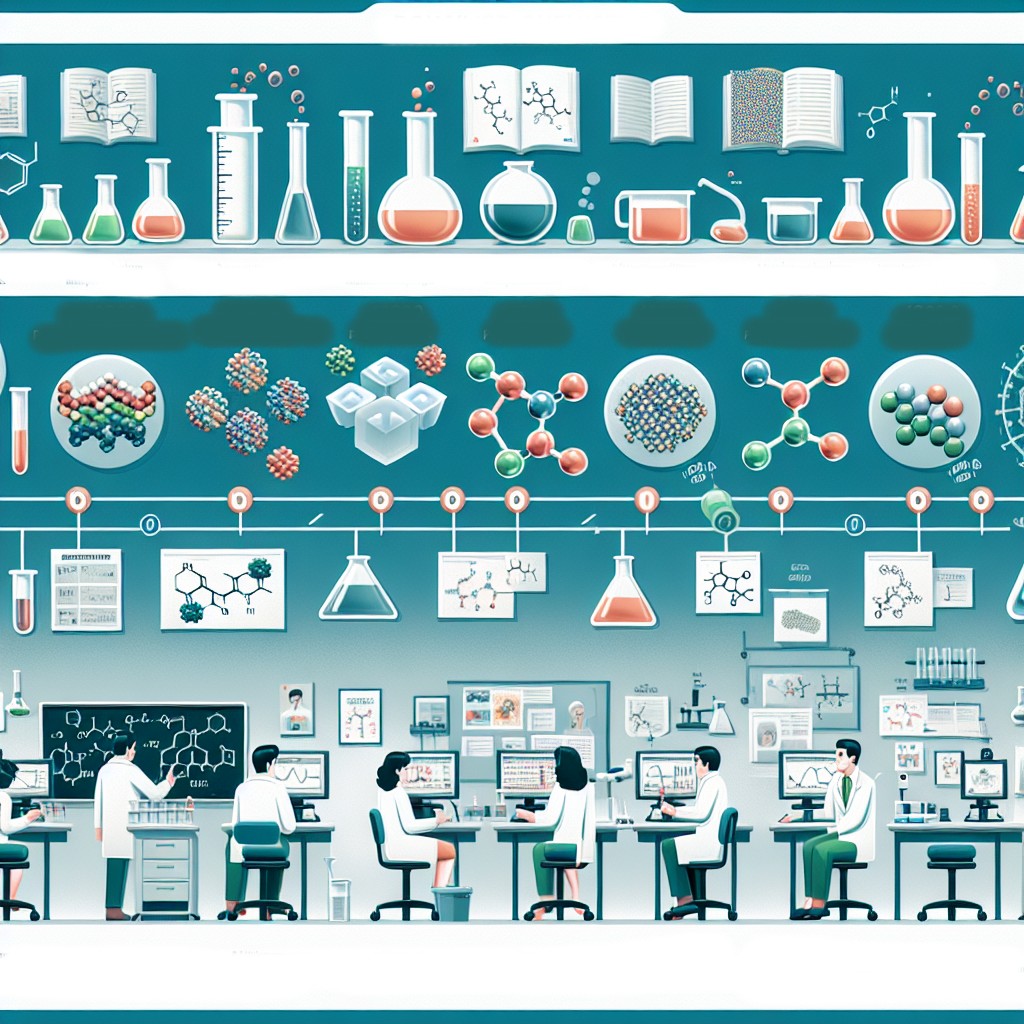
In today’s rapidly evolving industrial landscape, polymers have become a cornerstone material across sectors including automotive, aerospace, healthcare, and consumer electronics. The evolution and refinement of manufacturing techniques have played a pivotal role in enhancing the properties and applicability of these versatile materials. Advanced manufacturing techniques such as additive manufacturing, computer-aided design, and nano-fabrication are now at the forefront of polymer innovation. These technologies not only expand the potential applications for polymers but also drive cost efficiency, reduce waste, and enable the creation of complex geometries that were previously impractical or impossible. This exploration into the impact of advanced manufacturing techniques on polymers will shed light on how these methods are transforming polymer science and industry, stimulating new discoveries and applications across various fields. Understanding this impact is essential for stakeholders to harness these advancements effectively in the ever-competitive global market.
At the interaction of innovative processes and polymer technology, businesses can now conceive products that are lighter, stronger, and more adaptable than their predecessors. Advanced techniques have also unlocked the potential for customisation and personalisation at an unprecedented scale, paving the way for tailored medical devices, precisely engineered automotive parts, and adaptable consumer products. With this transformation, companies can rapidly pivot to meet specific demands and trends, enhancing their agility and responding deftly to market shifts. Moreover, the intersection of sustainability and technology has encouraged the development of environmentally friendly approaches to polymer production, considering energy consumption, waste management, and lifecycle impacts. This article delves into these progressive aspects, exploring the comprehensive influence that advanced manufacturing techniques exert on polymers today and will continue to exert in the future.
Advanced Manufacturing Techniques and Their Applications
Advanced manufacturing techniques have vastly improved the way polymers are processed and utilised. One of the most influential techniques is additive manufacturing, commonly known as 3D printing. This technology enables the layer-by-layer construction of polymer-based items, offering unparalleled design freedom and complexity at reduced costs. Additive manufacturing is particularly beneficial when creating prototypes or low-volume production runs, where traditional molding or machining methods are too costly or inefficient.
Computer-aided design (CAD) plays an integral role in polymer manufacturing, facilitating the design and optimisation of parts before they are produced. By using sophisticated software, engineers can simulate the performance of polymer parts under various conditions, allowing for pre-emptive adjustments that ensure efficiency and performance. Combined with finite element analysis, CAD not only reduces the time required for product development but also enhances the precision and quality of the final product.
In addition to 3D printing and CAD, techniques such as nano-fabrication have made significant inroads into the polymer domain. Nano-fabrication allows the manipulation of materials at the atomic or molecular level, producing polymers with unique nano-scale features that imbue them with enhanced properties like increased strength, conductivity, or chemical resistance. These properties can result in polymers that serve more demanding applications, including in the aerospace industry, where materials must withstand extreme conditions.
Another critical advancement is in the field of polymer composites, which involves the incorporation of materials such as carbon fibers or nanoparticles into a polymer matrix. These composites are known for their high strength-to-weight ratios, making them crucial in industries where weight reduction is paramount, such as automotive and aerospace. Advanced manufacturing techniques like automated fiber placement and resin transfer molding facilitate efficient production of these composites, allowing for complex geometries and large-scale applications.
The medical field has also witnessed significant advancements due to improved polymer manufacturing techniques. Biopolymers, which are naturally derived materials, are used in applications ranging from drug delivery systems to biodegradable implants. Techniques such as electrospinning have been crucial in fabricating biopolymer materials with specific properties tailored to medical needs, such as mimicking natural tissue architectures, promoting cellular growth, or delivering controlled drug release. These advancements have paved the way for the creation of new medical devices that are safer, more effective, and economically viable.
Sustainability and Efficiency in Polymer Manufacturing
As the global focus shifts towards sustainable practices, advanced manufacturing techniques have put polymers at the forefront of eco-friendly initiatives. Modern techniques not only minimise waste through precise material usage but also optimise energy consumption, thus reducing the overall environmental footprint of polymer production. 3D printing, for instance, predominantly employs additive processes that produce minimal waste compared to subtractive manufacturing techniques that often generate significant scrap material.
Furthermore, modern polymer manufacturing processes often incorporate environmentally friendly materials. Biodegradable and bio-based polymers have become increasingly viable alternatives to traditional petroleum-based plastics, driven by innovative manufacturing techniques and growing environmental consciousness. These bio-polymers are not only derived from renewable resources like corn or sugarcane but also designed to decompose naturally, significantly reducing pollution.
The use of life-cycle analysis in conjunction with advanced manufacturing enables manufacturers to assess the long-term environmental impact of their polymers, from raw material sourcing through production, use, and disposal. This holistic approach ensures that companies are better informed in managing the life cycle of their products, prioritising sustainability without sacrificing performance or profitability.
Recycling is another area where advanced manufacturing techniques have made substantial strides. Developments such as chemical recycling allow polymers to be broken down at the molecular level and reconstituted into new products, a drastic improvement over traditional mechanical recycling methods that often degrade the material quality. These methods not only bolster the circular economy but also help industries meet rigorous regulatory standards concerning waste management and material reuse.
The Future of Polymers and Advanced Manufacturing
The future of polymers in advanced manufacturing is poised to be dynamic, with continued advancements likely to unfold over the coming decade. Smart polymers, which respond to environmental stimuli like temperature or pH changes, hint at potential revolutions in fields ranging from medical implants to self-healing structures. As manufacturing methods become increasingly sophisticated, the production of such intelligent materials may become more routine, expanding their applications and affordability.
Moreover, the integration of artificial intelligence and machine learning with manufacturing processes presents exciting possibilities. These technologies can optimise polymer production in real time, monitoring manufacturing environments to ensure consistent quality and performance. Predictive analytics might also be leveraged to anticipate material failures or optimize resource allocation, making polymer manufacturing more efficient and robust.
In industrial applications, collaboration between manufacturers, materials scientists, and end-users will foster innovations that meet specific needs across sectors. This cooperative approach will enable the tailored development of polymers, taking into account the nuanced requirements of each application—whether they are enhanced thermal properties for electronics or improved biocompatibility for healthcare devices.
Conclusion
In conclusion, advanced manufacturing techniques have altered the landscape of polymer production, enhancing the material’s capabilities and broadening their applicability. As these techniques evolve, polymers will continue to meet the high demands of modern technology, offering solutions that are not only efficient and cost-effective but also environmentally sustainable. The convergence of manufacturing innovation and polymer science represents a vital frontier for future industrial advancements, promising materials that are lighter, stronger, and more adaptable.
The interplay between technology and polymer development will undoubtedly lead to unprecedented product designs and functionality. Companies leveraging these advanced techniques will find competitive advantages in better performance, greater economic viability, and stronger alignment with regulatory and environmental standards. As the pace of technological progress continues, stakeholders must remain attuned to these advancements, ensuring that they fully capitalize on the opportunities presented by advanced manufacturing to propel the polymer industry into a new era of discovery and application.
With polymers playing a crucial role in the fabric of modern life, the impact of advanced manufacturing techniques is profound, setting the stage for an exciting future filled with innovation and possibility.