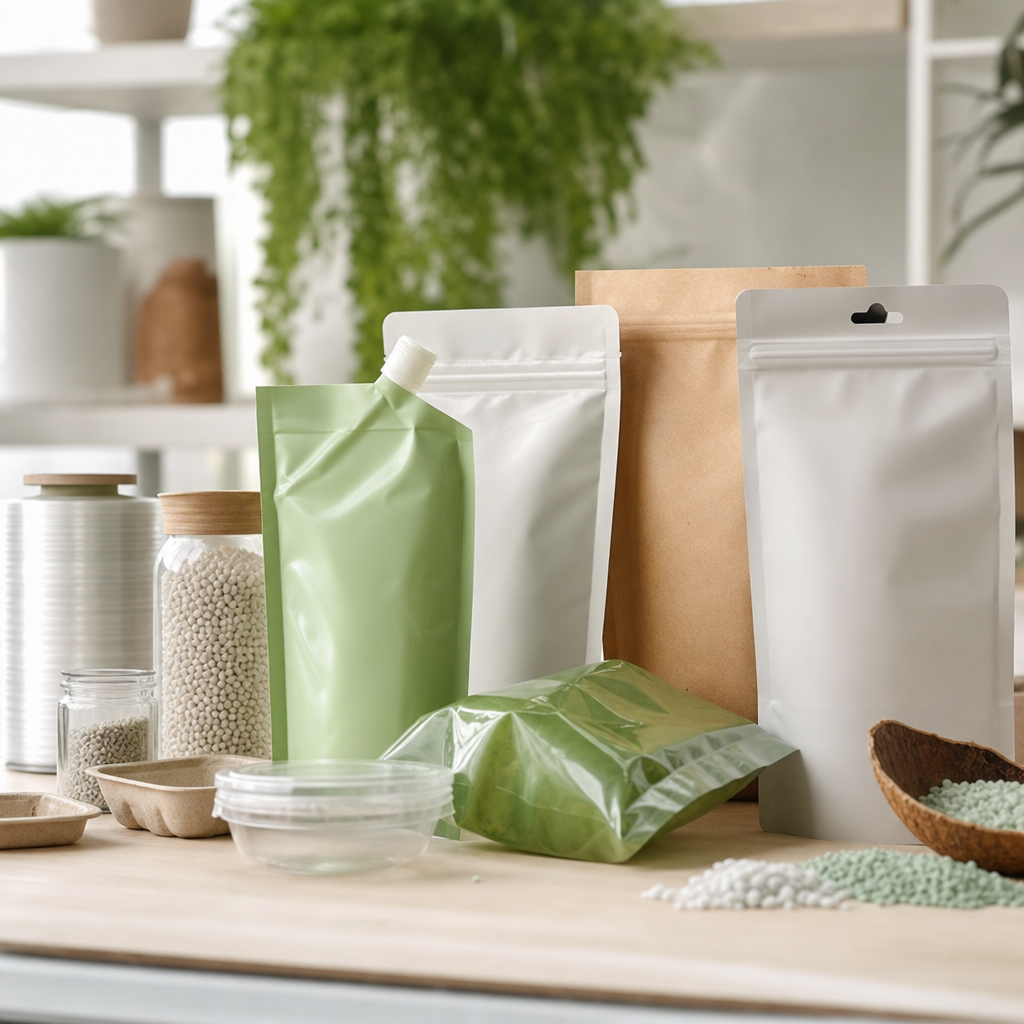
Polymer packaging technologies are entering a decisive period as brands, regulators, converters, and material scientists push packaging to do more than contain and protect products. In practical terms, polymer packaging refers to films, rigid containers, closures, foams, coatings, laminates, and molded components made from long-chain synthetic or bio-based materials such as polyethylene, polypropylene, PET, polyamide, EVOH, PLA, and PHA. These materials dominate modern packaging because they are lightweight, formable, scalable, and cost efficient across food, beverage, pharmaceutical, industrial, and e-commerce applications. Yet the future of packaging is no longer defined only by performance and price. It is now shaped by recyclability, carbon intensity, digital traceability, barrier engineering, reuse systems, and compliance with rapidly tightening laws.
I have worked with packaging teams evaluating films, bottles, pouches, and multilayer structures, and the shift is unmistakable: decisions that once centered on seal strength or downgauging alone now include design for recycling, PCR content targets, and compatibility with mechanical or chemical recovery routes. Packaging engineers are balancing oxygen transmission rate, water vapor transmission rate, stiffness, clarity, migration limits, and line speed while also answering sustainability scorecards from retailers and brand owners. That complexity matters because packaging sits at the intersection of product safety, consumer convenience, logistics efficiency, and environmental impact. Understanding future trends in polymer packaging technologies helps companies choose materials that will remain technically viable and commercially acceptable over the next decade.
This packaging hub article maps the most important developments across the field. It explains where mono-material structures are replacing traditional multilayer packs, how advanced recycling is influencing resin strategy, why smart packaging is moving from pilots into scaled use cases, and what role bio-based and compostable polymers can realistically play. It also highlights the testing methods, processing constraints, and application-specific tradeoffs that determine whether a promising packaging innovation succeeds in the market.
Mono-material packaging and design for recycling
The clearest trend in polymer packaging technologies is the move toward mono-material packaging designed for established recycling streams. For decades, packaging performance often relied on combining incompatible layers: PET for stiffness, PE for sealing, PA for puncture resistance, aluminum for barrier, and adhesives to hold everything together. Those structures worked well in use but created severe end-of-life problems because sorting systems and mechanical recycling plants cannot efficiently recover mixed laminates. As a result, packaging developers are redesigning pouches, lidding, tubes, and thermoformed packs around predominantly polyethylene or polypropylene families.
In practice, this shift does not mean performance requirements disappear. It means they are achieved differently. A recyclable PE stand-up pouch may use oriented PE films, metallocene PE sealant layers, EVOH in carefully limited amounts, and compatibilized tie layers that stay within recycling design guidelines from groups such as the Association of Plastic Recyclers and RecyClass. A PP retort tray may incorporate high-heat polypropylene grades and mineral-filled structures to preserve shape through sterilization. The technical challenge is to approach the barrier, stiffness, and abuse resistance of legacy laminates without compromising sortability or reprocessing yield. This is where advances in orientation, catalyst technology, and coextrusion are changing what polymer packaging can do.
Brands are adopting these designs because regulation is forcing the issue. Extended producer responsibility fees in Europe increasingly reward packages that fit real recycling systems, while retailer scorecards penalize non-recyclable flexible packaging. The result is a broad replacement cycle. Snack pouches, detergent refill packs, frozen food bags, and personal care tubes are being reformulated with simpler polymer families. For converters, the winning capability is no longer only converting speed; it is knowing how to engineer recyclable packaging structures that still run well on filling lines and survive distribution.
Advanced barrier technologies for lighter, longer-lasting packs
Barrier performance remains central to packaging because shelf life depends on it. Oxygen, moisture, aroma transfer, UV exposure, and carbon dioxide loss can quickly degrade foods, beverages, and pharmaceuticals. Future polymer packaging technologies will therefore focus on achieving high barrier in thinner, more recyclable, and more resource-efficient formats. The most important developments include plasma coatings, atomic-layer scale surface treatments, improved EVOH formulations, nanocomposite approaches, and precision coextrusion that distributes expensive barrier materials only where they are needed.
A useful example is dry food packaging. Traditional high-barrier snack or coffee pouches often relied on PET/aluminum foil/PE laminates. Newer alternatives replace foil with transparent barrier coatings or optimized EVOH-containing polyolefin structures. That substitution can improve microwave compatibility, reduce material complexity, and enable better detection in optical sorting systems. In beverage packaging, PET bottles with oxygen scavengers or improved multilayer barrier designs extend shelf life for juices and sensitive products without shifting to heavier materials. In medical and pharmaceutical packs, barrier upgrades are paired with strict extractables and leachables requirements, so formulation control matters as much as transmission rate data.
Lightweighting remains part of this trend. Better barrier lets companies reduce wall thickness without sacrificing product protection, cutting both resin use and freight emissions. But there is a limit. I have seen packaging projects fail because teams pushed downgauging too far and ignored top-load strength, dart impact, or seal contamination tolerance. Future-ready packaging must be optimized across the whole system, not only around one sustainability metric.
Recycled content, resin circularity, and feedstock diversification
Another defining trend is the integration of recycled content into mainstream packaging. Brand commitments and legal mandates are accelerating demand for post-consumer recycled polyethylene, polypropylene, and PET. PET leads because bottle collection and recycling infrastructure is relatively mature, enabling recycled PET in beverage bottles, thermoforms, and fiber applications. Polyolefins are catching up, especially in non-food contact uses such as household cleaners, personal care, transport packaging, and some industrial containers. The real challenge is not whether recycled resin can be used, but whether supply can meet quality, odor, color, and compliance requirements at scale.
Food contact applications are especially demanding. In many markets, recycled resin for direct food contact must come from approved processes capable of demonstrating contaminant removal. That is why super-clean mechanical recycling and depolymerization technologies have received so much investment. Advanced recycling, including pyrolysis and solvent-based purification, is being positioned as a route for mixed or contaminated plastic waste that mechanical systems cannot easily handle. The promise is broader feedstock acceptance and near-virgin quality output. The limitation is equally real: economics, energy demand, mass balance accounting, and infrastructure scale remain under scrutiny. Companies planning future packaging portfolios should treat advanced recycling as a growing tool, not an instant solution.
| Trend | Main packaging benefit | Typical applications | Key limitation |
|---|---|---|---|
| Post-consumer recycled PET | High circularity potential in clear rigid packs | Beverage bottles, thermoforms, trays | Color control and food-contact compliance |
| Post-consumer recycled PE/PP | Lower virgin resin demand in polyolefin packs | Detergent bottles, caps, secondary packaging | Odor, consistency, and limited premium supply |
| Chemically recycled feedstock | Potential virgin-like quality from difficult waste streams | Food packaging, films, specialty resins | Cost, energy use, and limited scale |
| Bio-based drop-in polymers | Reduced fossil feedstock dependence | PET bottles, PE films, rigid containers | Feedstock sourcing and price premiums |
Feedstock diversification also matters. Bio-based polyethylene, bio-PET intermediates, and mass-balanced circular polymers are expanding procurement options for companies seeking lower fossil dependence without changing converting equipment. These materials often perform like conventional resins because their chemistry is equivalent. That makes them operationally attractive, though procurement teams still must evaluate land-use concerns, certification credibility, and premium costs.
Smart packaging, digital watermarking, and connected functionality
Smart polymer packaging is shifting from novelty to operational tool. In its broadest sense, smart packaging includes indicators, embedded codes, scannable surfaces, RFID or NFC tags, tamper-evident features, and digital identifiers that improve sorting, traceability, inventory control, and consumer engagement. The future trend is integration without major disruption to package economics. Instead of expensive electronics on every pack, many companies are using printed codes, hidden digital watermarks, or localized sensor labels attached only where value justifies the cost.
For packaging operations, the strongest near-term use cases are traceability and recycling accuracy. Digital watermarking systems can encode material composition and package attributes in ways that advanced sorting lines can detect, helping separate food-grade from non-food-grade packaging or identify specific resin classes. In pharmaceuticals, serialized polymer packaging already supports authentication and regulatory traceability. In cold-chain logistics, time-temperature indicators can flag exposure events that compromise biologics or fresh foods. For e-commerce, scannable packaging identifiers are increasingly linked to returns management and supply chain visibility.
Consumer-facing functions matter too. QR-enabled polymer packaging now routinely delivers ingredient data, usage instructions, refill guidance, and disposal directions. That sounds simple, but it solves a real problem: packaging labels are physically limited, while compliance and transparency requirements keep expanding. The future winner will be packaging that stores more information digitally while keeping the physical structure simple, recyclable, and line compatible.
Bio-based, compostable, and application-specific materials
Bio-based and compostable polymers will remain important, but their future depends on disciplined application rather than blanket substitution. PLA, PHA, starch blends, cellulose-based films, and other specialty materials can offer renewable feedstocks or managed end-of-life advantages in specific settings. They are most credible where contamination with food waste is high, where collection systems are aligned, or where conventional recycling is impractical. Examples include food-service items, produce labels, compost caddy liners, and selected agricultural packaging. They are less compelling when they enter mixed recycling streams and create sorting confusion, or when industrial composting access is limited.
That distinction is crucial because many packaging discussions still treat compostable as automatically sustainable. It is not. A compostable polymer package only delivers its intended value if the product and local waste system support composting. Likewise, a bio-based polymer does not automatically biodegrade. Bio-PE and bio-PET are chemically similar to fossil-derived versions and usually belong in the same recycling streams. Future packaging strategy will therefore become more application-specific, guided by end-of-life fit, life-cycle assessment, and local infrastructure rather than broad marketing claims.
Processing performance also decides adoption. Some compostable polymers have narrower thermal windows, lower heat resistance, or different sealing behavior than standard polyolefins. Converters must adapt drying, extrusion temperatures, and storage controls. When those details are managed well, specialty polymers can succeed. When they are ignored, package failure rates rise quickly.
Automation, testing, and data-driven packaging development
The most durable future trend in polymer packaging technologies is better decision-making through testing and data. Packaging development is becoming more predictive, using finite element analysis, shelf-life modeling, machine-direction and transverse-direction property mapping, and rapid prototyping to shorten development cycles. Material selection increasingly depends on measured oxygen transmission rate, water vapor transmission rate, coefficient of friction, seal initiation temperature, compression strength, and migration performance, not assumptions. Standards from ASTM and ISO continue to anchor this work, especially for barrier, drop, vibration, and environmental conditioning tests.
Automation is reinforcing the trend. Inline vision systems detect seal defects, contamination, and print registration errors. Process control platforms monitor extrusion thickness profiles and reduce variation across webs. Digital twins are emerging for high-value packaging lines, allowing engineers to model how a new polymer structure will behave during forming, filling, sealing, and palletization before full commercialization. In practical terms, this helps companies avoid expensive line downtime when introducing recyclable mono-material films or higher-PCR rigid containers.
For a packaging hub under Applications, the central lesson is clear: future polymer packaging will be defined by systems thinking. Materials, converting methods, recovery infrastructure, regulations, digital tools, and product protection goals must be designed together. Companies that treat packaging as a standalone component will struggle. Companies that connect material science with real-world collection, processing, and consumer use will build packaging portfolios that are resilient, compliant, and commercially effective.
Future trends in polymer packaging technologies point toward a market that is more engineered, more transparent, and less tolerant of wasteful complexity. The direction is clear even when the pace varies by region and application. Recyclable mono-material structures are replacing hard-to-recover laminates. Advanced barrier solutions are extending shelf life while supporting lightweighting. Recycled content is becoming a standard design input rather than an optional claim. Smart packaging is improving traceability and sorting. Bio-based and compostable materials are finding focused roles where infrastructure and product use actually support them. Across all of these shifts, better testing and process data are reducing risk and improving package performance.
For packaging professionals, the main benefit is strategic clarity. The best future-proof packaging decisions come from matching polymer choice to application requirements, regulatory realities, and end-of-life pathways from the start. That means asking practical questions early: Can this pack run on existing equipment? Will it protect the product for the full shelf-life target? Does it fit a proven recycling or composting system? Can recycled or renewable feedstocks be introduced without undermining quality? Those questions produce better packaging than trend-chasing ever will.
Use this hub as the starting point for deeper exploration of films, rigid packaging, barrier materials, recycling technologies, smart labeling, and sector-specific applications. Review your current packaging portfolio, identify structures at regulatory or recycling risk, and prioritize redesigns that combine performance with credible circularity. The companies that act now will be far better positioned for the next generation of packaging requirements.
Frequently Asked Questions
1. What are the most important future trends in polymer packaging technologies?
The most important future trends in polymer packaging technologies center on performance, sustainability, and digital functionality working together rather than separately. Historically, polymer packaging succeeded because it was lightweight, durable, versatile, and cost-effective across films, bottles, trays, closures, pouches, foams, and multilayer structures. Going forward, the industry is moving beyond simple containment and protection toward packaging that is engineered for circularity, lower carbon impact, smarter material use, and improved end-of-life outcomes.
One major trend is the redesign of packaging structures for recyclability. That includes a shift from difficult-to-recycle multimaterial laminates toward mono-material or compatible-material solutions based on polyethylene, polypropylene, or PET. Material scientists and converters are developing high-barrier films, improved sealants, and advanced coatings that help maintain product shelf life while simplifying recycling streams. Another key trend is downgauging, where packaging is made thinner and lighter without sacrificing mechanical strength, puncture resistance, seal integrity, or barrier performance. This reduces resin use, transportation weight, and overall resource consumption.
There is also strong momentum behind bio-based and compostable polymers such as PLA and PHA, particularly in niche applications where organic waste collection or specific regulatory frameworks support their use. At the same time, recycled content is becoming central to packaging design, with increasing use of post-consumer recycled PE, PP, and PET in both flexible and rigid formats. Brand owners are under growing pressure to incorporate recycled material while preserving appearance, food-contact compliance, processing consistency, and package performance.
Another future trend is the rise of active and intelligent packaging. This includes oxygen scavengers, moisture-control technologies, antimicrobial features, freshness indicators, and digital identifiers such as QR codes or embedded markers for traceability and sorting. In addition, packaging manufacturing itself is becoming more data-driven, using automation, inline inspection, digital printing, and AI-supported quality control to improve efficiency and reduce waste. In practical terms, the future of polymer packaging is not defined by one material breakthrough alone, but by an integrated system of better resin selection, smarter design, more recoverable formats, and stronger alignment with circular economy goals.
2. How will sustainability regulations influence the development of polymer packaging?
Sustainability regulations will be one of the strongest forces shaping the future of polymer packaging technologies. Around the world, regulators are moving from general sustainability targets to more specific packaging rules covering recyclability, recycled content, extended producer responsibility, labeling, chemical disclosure, and waste reduction. This means packaging developers can no longer focus only on cost, machinability, and product protection. They must also design with legal compliance, recovery infrastructure, and environmental reporting in mind from the start.
One of the biggest impacts of regulation is the push for packaging that is easier to collect, sort, and recycle. Structures that contain incompatible polymer layers, excessive additives, dark pigments, metalized surfaces, or difficult-to-remove labels and adhesives may face increasing scrutiny because they can reduce recyclability in real waste management systems. As a result, converters and brand owners are investing in design-for-recycling strategies, including clear PET bottles, recycle-ready PE and PP flexible packaging, wash-off labels, tethered closures, and simplified material combinations. Regulations may also encourage minimum recycled content thresholds, which creates demand for higher-quality recycled resin and improved purification technologies.
Another important area is producer responsibility. Extended producer responsibility programs shift more financial and operational responsibility for packaging waste onto producers, importers, and brand owners. That changes packaging economics significantly. A package that is technically possible but hard to recycle may become more expensive over time due to fees, taxes, or market restrictions. This encourages companies to assess the full lifecycle implications of their material choices instead of treating end-of-life as someone else’s problem.
Regulations also influence innovation priorities in food contact safety, compostability claims, and chemical transparency. Companies developing new coatings, compatibilizers, inks, or additives must ensure they meet stricter safety and disclosure expectations. In short, regulation is no longer a background factor in polymer packaging development. It is becoming a primary design input that determines which materials, formats, and technologies will scale successfully in the next generation of packaging systems.
3. What role will recyclable, recycled, and bio-based polymers play in the future of packaging?
Recyclable, recycled, and bio-based polymers will all play important roles, but they serve different purposes and should not be treated as interchangeable solutions. Recyclable polymers are foundational because the packaging sector is increasingly trying to align material selection with existing collection and recycling infrastructure. In practice, that means growing interest in polyethylene, polypropylene, and PET packaging structures that can deliver the required barrier, toughness, clarity, sealability, and processability while remaining compatible with large-scale recycling systems. For many mainstream applications, improving the recyclability of existing high-volume polymers may have a greater impact than introducing entirely new materials.
Recycled polymers are equally important because circularity depends not just on making packaging recyclable, but on actually bringing material back into new products. Post-consumer recycled PET already has a strong position in beverage and thermoform applications, while recycled PE and PP are gaining traction in non-food and increasingly in selected food-contact applications as sorting, decontamination, and advanced recycling technologies improve. The biggest challenges include odor control, color variability, contamination, mechanical property consistency, and regulatory approval for sensitive uses. Even so, the direction of travel is clear: future packaging specifications will increasingly include recycled content targets, and packaging technologies will need to adapt to process recycled resins effectively at industrial scale.
Bio-based polymers add another dimension. Some are chemically similar to conventional plastics but sourced from renewable feedstocks, while others such as PLA and PHA offer different end-of-life pathways and performance profiles. Their future role is likely to be selective rather than universal. They can be valuable where fossil resource reduction, compostability in defined systems, or specific brand sustainability goals justify their use. However, they must still meet practical requirements for barrier performance, heat resistance, sealing behavior, shelf-life protection, and waste system compatibility. A bio-based material is not automatically the best environmental choice if it disrupts recycling streams or fails in real distribution conditions.
The future packaging landscape will likely be a portfolio approach: highly recyclable conventional polymers for many high-volume uses, increasing incorporation of recycled content to close material loops, and bio-based options in targeted applications where they offer a clear technical and environmental benefit. Success will depend on matching each polymer pathway to infrastructure, regulation, product needs, and lifecycle performance rather than relying on a one-size-fits-all material narrative.
4. How are smart and active packaging technologies changing polymer packaging applications?
Smart and active packaging technologies are expanding the role of polymer packaging from passive protection to dynamic product support and communication. Traditional polymer packaging has always delivered critical functions such as moisture resistance, impact protection, seal integrity, and controlled barrier properties. What is changing is that packaging is increasingly expected to monitor conditions, extend shelf life, improve supply-chain visibility, and provide information to both businesses and consumers in real time or near real time.
Active packaging works by interacting with the product or the package environment. Common examples include oxygen scavengers that reduce oxidative degradation, moisture absorbers that help maintain texture and quality, antimicrobial features that inhibit microbial growth in specific applications, and ethylene-control systems used for fresh produce. In polymer packaging, these functions can be built into films, inserts, coatings, sachets, or multilayer structures. The future trend is toward more integrated solutions that achieve these benefits without making packages harder to recycle or significantly more expensive to produce.
Smart packaging focuses on sensing, identification, and communication. This can include freshness indicators, temperature-time indicators, tamper evidence, authentication features, RFID tags, NFC-enabled labels, and digital watermarks or QR codes that support consumer engagement and advanced sorting systems. For brand owners, smart polymer packaging can improve inventory management, anti-counterfeiting efforts, recall precision, and transparency across the supply chain. For consumers, it can offer better product information, usage guidance, and confidence in safety and authenticity.
The challenge is balancing functionality with scalability. Technologies must survive converting, filling, transport, and retail conditions while remaining cost-effective and compliant with packaging regulations. They also need to fit into circular design strategies so that sensors, inks, adhesives, and embedded features do not undermine recyclability. As these barriers are addressed, smart and active technologies will become more common in food, healthcare, personal care, e-commerce, and industrial packaging. Their long-term significance lies in making polymer packaging more responsive, informative, and efficient without losing the core advantages that made polymers dominant in the first place.
5. What technical challenges must the polymer packaging industry solve to support future innovation?
The polymer packaging industry faces a complex set of technical challenges because future innovation requires improving sustainability without weakening the essential functions of packaging. The first challenge is maintaining barrier performance in simpler, more recyclable structures. Many products need protection from oxygen, moisture, aroma loss, grease, UV exposure, or contamination. Multilayer packaging using materials such as EVOH, polyamide, PET, PE, and PP has historically been a highly effective way to deliver these properties. The industry now needs new coating technologies, compatibilizers, oriented films, and material architectures that preserve shelf life while reducing recycling complexity.
Another major challenge is processing variability, especially as recycled content increases