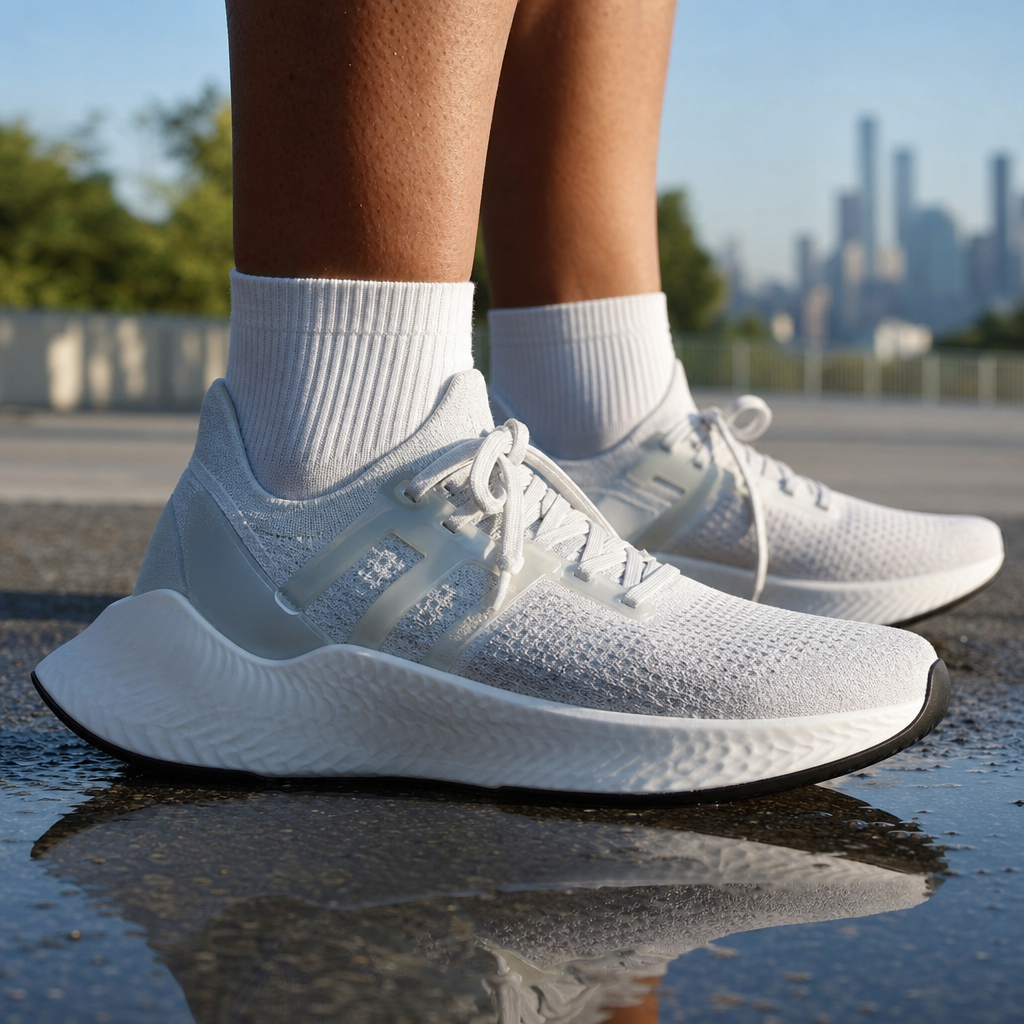
Polymers are the material backbone of modern athletic footwear, shaping how shoes cushion impact, return energy, resist abrasion, manage weight, and survive repeated flexing under real training conditions. In athletic footwear, a polymer is a large-molecule material engineered into foams, rubbers, films, fibers, adhesives, and structural plastics, each selected to solve a specific performance problem. I have worked with footwear material teams and product briefs long enough to see one consistent truth: when runners, footballers, hikers, and court athletes praise a shoe, they are usually praising polymer design without realizing it. That matters because the sports and leisure market no longer judges shoes only by style or brand heritage. Buyers compare durability, rebound, grip, sustainability, waterproofing, and injury-related comfort. Every one of those factors depends on polymer chemistry, processing, and component integration. This article serves as the hub for sports and leisure footwear applications, explaining how polymers function across midsoles, outsoles, uppers, plates, inserts, and protective systems, and why material choices determine the difference between a shoe that feels fast for one race and a shoe that performs reliably for hundreds of miles.
The role of polymers in athletic footwear begins with fit-for-purpose engineering rather than a single miracle material. Ethylene-vinyl acetate, or EVA, remains widely used in midsoles because it is lightweight, easy to mold, and cost-effective, yet expanded thermoplastic polyurethane, commonly called TPU, delivers stronger resilience and durability in many running and training models. Polyether block amide, or PEBA, has become prominent in elite racing shoes because it offers unusually low density and high energy return. Rubber compounds based on natural rubber, styrene-butadiene rubber, nitrile blends, and carbon-black-filled synthetics dominate outsoles because traction and wear resistance demand very different properties than cushioning foams. Polyester, nylon, thermoplastic polyurethane films, and engineered knit yarns define the upper. Even small components matter: heel counters often use thermoplastic polymers for shape retention, while hot-melt adhesives and seam tapes control bonding and weather resistance. For anyone researching sports and leisure applications, understanding these polymer roles clarifies why running shoes differ from basketball shoes, why trail shoes feel more protective, and why comfort claims only mean something when tied to material structure, density, hardness, and fatigue behavior.
Why Different Sports Need Different Polymer Systems
Athletic footwear design starts with the movement profile of the sport, and that immediately determines the polymer package. Distance running creates repetitive vertical loading and forward propulsion, so brands prioritize lightweight foams with controlled compression set, rocker-compatible geometry, and often stiff plates embedded in the midsole. Basketball adds high lateral forces, abrupt stops, and frequent jumping, which means softer foam alone is not enough; the shoe needs sidewall stability, durable outsole compounds, and upper reinforcement that prevents foot rollover. Football and soccer boots face a different demand again: thin, responsive polymer layers must transmit feel to the ground while studs, plates, and reinforcement zones handle torsion and traction on turf or grass. Tennis and padel shoes need abrasion-resistant polymers along the toe and medial forefoot because hard-court dragging destroys weak materials quickly. Hiking and trail running shoes require compounds that maintain grip on wet rock, foams that remain stable over uneven terrain, and membranes or coatings that balance moisture protection with breathability.
In practice, the best footwear teams build material maps rather than selecting one polymer family for the entire shoe. A marathon racer may combine PEBA foam, a carbon-fiber-reinforced plate embedded between polymer layers, a thin high-abrasion rubber outsole, and a monofilament mesh upper laminated with TPU support films. A training shoe for general gym use may instead use compression-molded EVA, a tougher rubber blend, and a sturdier polyester mesh because the user values durability and price stability over maximum rebound. That is why sports and leisure footwear should be evaluated application by application. The polymer solution for casual walking, CrossFit, indoor court sports, and mountain trail use is not interchangeable. Material science follows biomechanics.
Midsoles: Cushioning, Energy Return, and Fatigue Resistance
The midsole is where polymer innovation has had the most visible commercial impact. Historically, EVA became the standard because it could be expanded into lightweight foam, tuned across hardness levels, and molded efficiently at scale. It still dominates many categories because it is reliable and economical. However, conventional EVA can lose performance with repeated compression, especially in lower-cost formulations. That is why premium athletic footwear increasingly uses advanced foams such as expanded TPU, supercritical EVA blends, olefin block copolymers, and PEBA-based systems. Expanded TPU, popularized through bead foaming, offers excellent rebound and strong durability; many runners recognize this material family from shoes that stay lively longer than basic EVA trainers. PEBA foams push performance further, delivering very low weight and high resilience, which is one reason elite road racing shoes often feel unusually springy.
Energy return is often misunderstood, so it helps to define it clearly. When a runner lands, the foam compresses and absorbs part of the impact energy; when the runner pushes off, some of that energy is returned. No shoe returns all of it, and comfort is not the same as efficiency. The polymer’s cell structure, density, modulus, and viscoelastic behavior determine how much compression occurs, how quickly it rebounds, and how performance changes over time. In my experience reviewing wear-test data, the strongest products are not always the softest at first step-in. They are the ones that preserve geometry and rebound after weeks of use. Compression set, heat sensitivity, and moisture effects are therefore critical. A foam that tests beautifully in the lab but packs out after 150 miles is a weak real-world solution for sports and leisure consumers.
Outsoles and Ground Contact: Grip, Wear, and Surface-Specific Performance
Outsole polymers must convert force into traction while surviving abrasion, temperature shifts, and contamination from dust, water, or mud. This is why footwear brands rely on highly engineered rubber compounds rather than generic rubber sheets. Carbon-black-filled rubbers usually improve durability and are common in high-wear zones such as the heel. Blown rubber can reduce weight and soften feel, but it often trades away some wear resistance. Sticky trail compounds may increase wet grip on rock yet wear faster on pavement. Court shoes need a balance between tackiness and controlled release because excessive stick can stress joints during rotational movements, while insufficient grip causes slipping. Outsole design is therefore a compound-and-geometry problem: lugs, siping, contact area, durometer, and polymer formulation must work together.
Recognized suppliers and testing methods help standardize decisions. DIN abrasion testing, Shore A hardness measurement, flex testing, and wet coefficient assessments are common parts of development. Vibram is a well-known example in trail and outdoor footwear because it pairs branded compounds with application-specific tread architecture. Continental rubber partnerships in running shoes illustrate another pattern: when brands want stronger messaging around wet traction, they often lean on established tire and rubber expertise. The lesson for sports and leisure buyers is simple. Grip is not one feature. Road, turf, hardwood, clay, synthetic track, and rocky trail each reward a different polymer strategy.
| Footwear category | Typical polymer priorities | Common material examples | Main tradeoff |
|---|---|---|---|
| Road running | Low weight, rebound, moderate outsole coverage | PEBA or advanced EVA midsoles, thin rubber outsoles, polyester mesh | Maximum speed can reduce long-term durability |
| Basketball | Lateral stability, impact protection, durable grip | TPU support pieces, EVA or TPU foams, high-abrasion rubber | More support usually adds weight |
| Trail running | Wet grip, rock protection, upper reinforcement | Sticky rubber, EVA or TPU blends, TPU films, rock plates | Grip and protection can reduce flexibility |
| Soccer/football | Touch, torsional control, traction studs | Pebax or nylon plates, thin TPU skins, synthetic uppers | Light responsive builds can feel less forgiving |
| Tennis | Abrasion resistance, medial support, predictable slide control | Durable rubber, TPU chassis parts, reinforced textiles | Hard-court durability can increase stiffness |
Uppers, Fit Systems, and Structural Support
While midsoles get the headlines, upper polymers often decide whether performance is actually usable. A high-rebound shoe fails if the foot slides internally or the upper collapses under lateral load. Modern uppers combine textile engineering and polymer reinforcement. Polyester and nylon yarns provide strength-to-weight efficiency, while engineered mesh and knit constructions vary density by zone to support the midfoot and ventilate the forefoot. TPU films, fused overlays, and laminated skins add structure without the mass of old stitched leather panels. Thermoplastic heel counters maintain rearfoot shape, and eyestay reinforcements distribute lace pressure to improve lockdown. In football boots and sprint footwear, very thin synthetic polymer skins are used to keep touch direct and weight low. In trail models, ripstop constructions and welded rand protection guard against cuts and abrasion.
Fit also depends on creep resistance and moisture behavior. Some textiles stretch when wet or after repeated loading, changing how the shoe holds the foot during sport. That is why upper development includes tensile testing, tear testing, seam strength measurement, and dimensional stability checks after humidity exposure. Waterproof sports and leisure shoes introduce another polymer layer through membranes such as expanded polytetrafluoroethylene or polyurethane-based breathable barriers. These systems can work well in hiking and winter running, but they always involve a tradeoff: better water resistance usually means lower heat release in warm conditions. Material selection must match the environment, not just the marketing story.
Plates, Shanks, and Stability Components
Another major polymer application in athletic footwear is the use of rigid or semi-rigid components to direct motion. Running shoes now commonly use plates made from carbon-fiber-reinforced polymer composites or nylon-based alternatives to increase longitudinal stiffness and support propulsion. The plate itself is only part of the system; geometry, foam interaction, and rocker shape determine whether the shoe feels smooth, aggressive, or unstable. In basketball and training shoes, TPU shanks and chassis pieces are often added under the arch or around the heel to reduce excessive torsion. In hiking footwear, protective plates spread point loads from rocks and roots. In cleated footwear, nylon and Pebax plate systems influence stud pressure, forefoot snap, and ground penetration.
These components are valuable because soft foam alone can become mechanically inefficient. A highly compliant midsole may feel comfortable standing still but waste energy or allow too much motion during hard direction changes. Structural polymers solve that by adding guidance. The limitation is equally clear: too much stiffness can create harsh transitions, poor adaptability for slower runners, or discomfort for athletes with lower ankle mobility. Good footwear engineering uses stiffness strategically and by sport.
Sustainability, Manufacturing, and the Future of Sports and Leisure Footwear
The future role of polymers in athletic footwear is not simply to become softer or lighter. It is to become more circular, more precisely manufactured, and more transparent in performance claims. Traditional shoe construction mixes foams, rubbers, textiles, and adhesives in ways that make recycling difficult. As a result, brands are exploring mono-material concepts, recyclable thermoplastic systems, bio-based EVA feedstocks, castor-derived polyamides, and mechanically recyclable TPU components. Adidas has tested single-material directions in performance-minded footwear, while other brands have explored supercritical foaming processes that reduce chemical blowing agents and improve consistency. Additive manufacturing also matters. Lattice midsoles produced through resin-based or powder-based processes allow zone-specific tuning that conventional compression molding cannot easily match, though cost and throughput remain limiting factors for mainstream volume.
Manufacturing discipline is just as important as chemistry. Injection molding, compression molding, extrusion, expanded bead processing, lamination, and heat bonding all influence final properties. Small shifts in foam density or curing can change ride feel more than advertising admits. That is why quality control, wear testing, and standardized lab protocols remain essential. For sports and leisure consumers, the practical takeaway is reassuring: polymer innovation is real, but the best products come from systems thinking, not trend chasing. If you are building a footwear strategy, buying for a team, or choosing your next pair of shoes, evaluate the shoe by application, foam type, outsole compound, upper reinforcement, and expected lifespan. Understanding polymers turns footwear selection from guesswork into informed decision-making, and that is the clearest path to better performance, comfort, and value across every sport and leisure category.
Frequently Asked Questions
What role do polymers play in modern athletic footwear?
Polymers are the core material system behind nearly every performance feature in modern athletic shoes. They appear in midsoles, outsoles, uppers, heel counters, plates, films, adhesives, sockliners, and even the threads and coatings that hold the shoe together. In practical terms, polymers allow footwear designers to tune cushioning, stability, flexibility, traction, durability, and weight with far more precision than would be possible with traditional materials alone. A running shoe, training shoe, court shoe, or cleat may look simple from the outside, but it is usually a layered assembly of different polymer families, each chosen for a specific mechanical job.
For example, foam polymers in the midsole are engineered to absorb impact and manage how force moves through the shoe during landing and push-off. Rubber polymers in the outsole are selected for grip, abrasion resistance, and surface interaction. Thermoplastic polymers may be used in structural components to guide motion, improve torsional rigidity, or reinforce key zones without adding unnecessary bulk. Textile polymers in engineered mesh uppers can improve breathability, fit, and lockdown while still keeping overall mass low. Even adhesives and films are polymer-based, helping bond parts together, reinforce stress points, and protect against moisture or wear.
What makes polymers so important is their tunability. Chemists and material developers can adjust density, hardness, elasticity, resilience, compression set, and environmental resistance to match the demands of a specific sport or athlete profile. That is why a marathon racing shoe feels very different from a basketball shoe or a turf trainer. The polymer package changes because the movement patterns, loading conditions, and durability expectations change. In short, polymers are not just a material choice in athletic footwear; they are the design language that determines how the shoe performs under real training and competition conditions.
Why are different polymers used in different parts of an athletic shoe?
Different parts of an athletic shoe face very different stresses, so one polymer cannot do every job well. The midsole must cushion impact and recover its shape after repeated compression. The outsole must grip the ground and resist abrasion. The upper must balance flexibility, support, breathability, and light weight. Structural pieces such as shanks, clips, or plates may need stiffness and dimensional stability. Because each area has its own functional requirements, footwear engineers use multiple polymers in a single shoe to create a system rather than relying on a single material throughout.
This material segmentation is one of the reasons modern athletic footwear has become so specialized. A soft, highly resilient polymer foam may feel excellent underfoot, but it would wear down quickly if used as the outermost ground-contact layer. A durable rubber compound may provide outstanding traction, but it would be too heavy and too firm to serve as the main cushioning platform. Likewise, a supportive thermoplastic heel counter can improve rearfoot stability, but it would be uncomfortable if it replaced the flexible upper materials needed around the forefoot. Each polymer is positioned where its strengths matter most and its weaknesses can be managed.
There is also a manufacturing reason for this approach. Certain polymers are better suited for injection molding, compression molding, expanded bead processing, film lamination, or fiber extrusion. That means material selection is not just about performance on the athlete’s foot; it is also about how reliably and efficiently the component can be produced at scale while meeting quality standards. The best footwear material strategies account for lab performance, athlete feel, production consistency, and cost. When you see a well-executed shoe, what you are really seeing is a carefully orchestrated combination of polymers working together to solve different performance problems in the same product.
How do polymer foams affect cushioning and energy return in athletic footwear?
Polymer foams are central to how athletic shoes manage impact and deliver underfoot feel. In most performance footwear, the midsole foam is the primary cushioning element, and its behavior influences comfort, ride smoothness, rebound, and fatigue over time. When the foot strikes the ground, the foam compresses to absorb some of the load. As the athlete moves through stance and into toe-off, the foam recovers and returns part of that stored energy. The exact sensation depends on foam chemistry, cell structure, density, geometry, and how the foam is integrated with the rest of the shoe.
Not all foams behave the same way. Some are tuned for softness and impact attenuation, which can feel plush and protective, especially over long distances or hard surfaces. Others are tuned for resilience and rebound, creating a more responsive sensation that athletes often describe as energetic or springy. Material teams pay close attention to compression set, which is the tendency of a foam to remain partially compressed after repeated loading. A shoe may feel great out of the box, but if the polymer foam loses thickness or resiliency too quickly, performance drops and the shoe can feel dead underfoot. That is why long-term durability matters just as much as initial comfort.
Foam performance also depends on the larger construction around it. The same polymer can feel very different depending on stack height, sidewall geometry, rocker shape, plate integration, carrier foam pairing, and outsole coverage. In other words, energy return is not simply a single number attached to a foam compound. It is a system outcome. A well-designed polymer foam package can reduce harshness, maintain efficiency, and improve the athlete’s perception of speed or comfort, but it must be balanced against stability, weight, and durability. That balancing act is one of the defining challenges in athletic footwear development.
How do polymers improve durability, flexibility, and abrasion resistance in sports shoes?
Polymers improve durability in athletic footwear because they can be engineered to withstand repeated mechanical stress without failing too quickly. Shoes experience constant flexing, compression, shear, scraping, and environmental exposure, especially in high-mileage running, court sports, field training, and outdoor use. Rubber polymers in outsoles are designed to resist wear when repeatedly dragged, planted, and pivoted against surfaces like asphalt, concrete, hardwood, or turf. At the same time, polymer films, reinforcements, and coated textiles help protect high-stress upper zones from tearing, stretching out, or breaking down prematurely.
Flexibility is another area where polymers are especially valuable because they can be tuned across a wide spectrum. Some zones of a shoe need to bend easily to support natural motion, especially in the forefoot. Other zones need to remain more controlled to stabilize the foot or preserve platform integrity. By changing polymer hardness, thickness, orientation, or geometry, designers can create localized flexibility without sacrificing overall structure. This is why modern footwear often feels adaptable rather than uniformly stiff or soft. The shoe can flex where motion is needed and resist deformation where support is more important.
Abrasion resistance is closely tied to polymer chemistry and compounding. Outsole rubbers often include fillers and additives that help improve wear life, while still preserving enough traction and grip. Upper materials may use thermoplastic overlays or abrasion-resistant yarns to protect toe areas, eyestays, and lateral containment zones from repeated contact and friction. Importantly, greater durability is not always better if it comes with a major weight penalty or reduced comfort. The best footwear materials strike a functional balance: durable enough to survive real training conditions, flexible enough to move with the athlete, and efficient enough to avoid making the shoe feel overbuilt. That balance is exactly where polymer engineering delivers the most value.
What should athletes and consumers know about polymers when choosing athletic footwear?
Athletes and consumers should understand that polymer choice directly influences how a shoe feels on foot, how long it lasts, and how well it matches a specific activity. Marketing often highlights cushioning technology or energy return, but the more useful question is whether the shoe’s polymer package fits the demands of the wearer. A lightweight, highly responsive foam may be ideal for fast running or race-day use, but a more stable and durable setup might be better for daily training, court movement, or gym work. The “best” polymer is always context-dependent. It depends on body size, training volume, movement style, surface, and intended use.
It is also important to recognize that softness alone does not equal performance. Very soft polymer systems can feel impressive during a quick try-on, but they may not provide the support, consistency, or lifespan needed for regular training. Likewise, firmer polymer constructions are not automatically inferior; in some shoes they deliver better control, more stable transitions, and greater long-term reliability. Consumers should think in terms of total performance: cushioning, rebound, stability, traction, fit retention, and durability over time. Because polymers age with use, a shoe that performs well for a few workouts is not necessarily a shoe that will continue performing over weeks or months of real-world loading.
Finally, shoppers should remember that athletic footwear is a multi-material system. A standout foam or a premium plate does not guarantee the whole shoe will work for their needs. Outsole rubber, upper polymer textiles, structural reinforcements, and bonding materials all contribute to the final experience. For that reason, trying shoes in the context of actual use is ideal whenever possible. A runner should consider mileage and ride preference. A court athlete should prioritize containment and traction consistency. A general fitness user may care more about versatility and durability across mixed movements. Understanding the role of polymers helps consumers look past buzzwords and choose footwear based on how the materials actually perform in the real demands of sport and