Polymer degradation is the set of chemical and physical changes that reduce a polymer’s molecular weight, alter its structure, and weaken its performance over time. In practical terms, it is why a plastic pipe turns brittle in sunlight, why a medical device must survive sterilization without cracking, and why recycled resin can lose impact strength after repeated processing. I have seen these failures appear first as small shifts in melt flow index, color, and odor long before a part breaks, which is why understanding polymer degradation matters to engineers, students, quality teams, and anyone building reliable products.
This educational hub explains the main degradation mechanisms, the most useful analysis methods, and the decisions that connect lab data to real manufacturing and service conditions. The topic sits at the intersection of polymer chemistry, materials testing, processing science, and failure analysis. Key terms are worth defining at the start. Chain scission is the breaking of polymer backbones into shorter segments, usually lowering strength and viscosity. Crosslinking is the formation of new bonds between chains, often increasing stiffness and reducing melt processability. Oxidation is reaction with oxygen that creates carbonyls, hydroperoxides, and radicals. Hydrolysis is bond cleavage by water, especially important in condensation polymers such as PET, nylon, PLA, and polycarbonate. Photodegradation is damage caused by ultraviolet light, while thermo-oxidative degradation combines heat and oxygen during service or melt processing.
Understanding these mechanisms is essential because degradation is not a single event but a pathway controlled by temperature, stress, moisture, light, oxygen access, additives, contaminants, and time. A polypropylene crate stored outdoors degrades differently from a nylon gear run under load, and both differ from a polyethylene film exposed to reprocessing. Good analysis does more than confirm that damage occurred. It identifies the dominant mechanism, estimates the rate, distinguishes reversible physical aging from irreversible chemistry, and guides prevention through stabilization, design changes, or process control. As a hub for tutorials and guides in educational resources, this article gives you the framework needed to interpret detailed test articles, lab protocols, and case studies with confidence.
Core mechanisms of polymer degradation
The first question in any tutorial on polymer degradation is simple: what changed at the molecular level? Most failures can be traced to a short list of mechanisms. Thermal degradation occurs when heat alone breaks bonds or triggers elimination reactions. PVC is a classic example; it can undergo dehydrochlorination, producing conjugated double bonds that cause yellowing and then embrittlement. Thermo-oxidative degradation is common in polyolefins such as polyethylene and polypropylene. Heat generates radicals, oxygen reacts to form peroxy radicals and hydroperoxides, and the cycle drives chain scission or branching. In polypropylene, chain scission often dominates, so melt flow rate rises after damage.
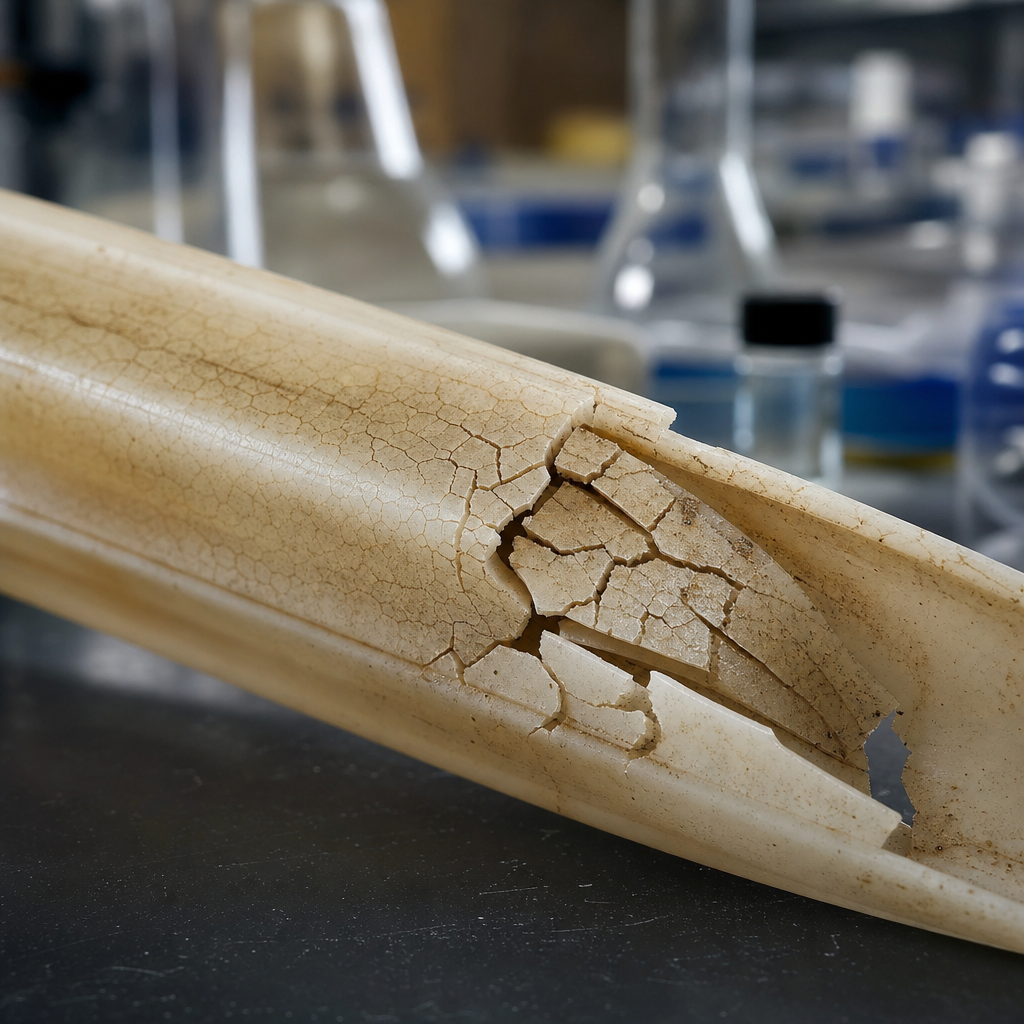
Hydrolytic degradation is especially important for polymers with hydrolyzable linkages. PET bottles, nylon components, polycarbonate sheets, TPU grades, and many biodegradable polymers can all lose molecular weight when exposed to moisture at elevated temperature. During injection molding, even a modest moisture level in PET can sharply reduce intrinsic viscosity and mechanical properties. Photodegradation adds another route. UV light can excite chromophores directly or through impurities, creating radicals that attack the backbone. This is why unstabilized polyethylene film outdoors can chalk, crack, and lose elongation. Ozone attack, environmental stress cracking, and biological degradation matter in narrower but still critical applications. In elastomers, ozone causes surface cracks perpendicular to strain. In detergents or oils, amorphous plastics under stress can craze and fail even when bulk chemistry appears intact.
Degradation is also shaped by polymer morphology. Amorphous regions are usually more accessible to oxygen and water than crystalline regions, so semicrystalline polymers often degrade unevenly. Additives further change the picture. Hindered phenol antioxidants interrupt oxidation; phosphites decompose hydroperoxides during processing; HALS protect many outdoor plastics from UV-driven radical reactions; carbon black can provide excellent light screening. Fillers and pigments can help or hurt depending on surface treatment and purity. Residual catalyst, metal contamination, and regrind history all influence stability. The practical lesson is that polymer degradation must always be assessed in the full formulation and processing context, not by resin name alone.
How degradation appears in real products
In production and field service, degradation rarely announces itself with a label. It appears as property drift, visual defects, or abnormal processing behavior. I usually start by asking when the problem emerges: during compounding, molding, storage, outdoor exposure, sterilization, chemical contact, or long-term use. A polypropylene injection molded part that suddenly shows flash, lower viscosity, and a burnt odor points toward processing oxidation or contamination. A clear polycarbonate housing with edge cracks after cleaning suggests environmental stress cracking from incompatible solvents. A nylon connector that becomes brittle after humid storage and heat cycling may have suffered hydrolysis or additive loss.
Some signals are highly diagnostic. Rising melt flow rate often indicates chain scission in polyolefins; falling melt flow can suggest branching or crosslinking. Yellowing and carbonyl growth frequently accompany oxidation. Surface crazing under tensile stress points to stress cracking. Loss of elongation at break is usually one of the earliest mechanical warnings because ductility is sensitive to small molecular changes. Recycled materials deserve special attention. Multiple heat histories, mixed streams, and trace contaminants can accelerate oxidation and hydrolysis. This is one reason converters often pair reprocessed resin with fresh stabilizer packages and stricter drying protocols. The important point for learners is that observation should always be tied to mechanism. Seeing brittleness is not enough; the task is to explain why brittleness developed in that polymer under those conditions.
Analytical methods used to identify degradation
No single test explains polymer degradation completely, so good practice combines chemical, thermal, rheological, and mechanical methods. Fourier transform infrared spectroscopy, usually in ATR mode, is often the fastest starting point. It can reveal carbonyl growth from oxidation, hydroxyl formation, or chemical changes associated with hydrolysis. Differential scanning calorimetry helps assess melting point, crystallization behavior, and oxidation induction time. OIT, standardized in methods such as ASTM D3895 for polyolefins, is particularly useful for comparing antioxidant depletion. Thermogravimetric analysis shows mass loss with temperature and can separate moisture, plasticizer loss, and decomposition stages.
Rheology and molecular weight measurements are central because degradation often changes flow before appearance. Melt flow rate is a quick shop-floor indicator, while rotational or capillary rheometry gives a richer picture of viscosity changes across shear rates. Gel permeation chromatography, also called size exclusion chromatography, directly measures molecular weight distribution and can distinguish broadening from simple shifts. For polyesters such as PET, intrinsic viscosity remains a practical industry metric. Mechanical testing then links chemistry to function: tensile strength, elongation, impact resistance, hardness, and fatigue all matter depending on application. Microscopy adds evidence. Optical microscopy can document crazes and discoloration; scanning electron microscopy can show brittle fracture surfaces, voids, and filler pullout. When contamination is suspected, techniques such as EDS, GC-MS, pyrolysis GC-MS, and ICP analysis become valuable because a tiny amount of metal residue or wrong polymer can catalyze major failure.
| Method | What it detects | Typical clue in degraded polymer | Common use case |
|---|---|---|---|
| FTIR | Functional group changes | Carbonyl peak growth from oxidation | Screening outdoor-aged PE or PP |
| DSC/OIT | Thermal transitions and antioxidant reserve | Shorter oxidation induction time | Comparing virgin and reprocessed polyolefins |
| TGA | Mass loss versus temperature | Early volatilization or lower onset temperature | Checking plasticizer loss or thermal stability |
| GPC/SEC | Molecular weight distribution | Lower Mn and Mw after chain scission | Hydrolysis in PET, nylon, PLA |
| MFR/Rheometry | Flow behavior | Higher MFR from scission, lower from crosslinking | Production monitoring and troubleshooting |
| Mechanical testing | Property retention | Loss of elongation and impact strength | Service-life validation |
Testing strategies, standards, and interpretation
The best polymer degradation analysis starts with a disciplined test plan. First define the failure mode and the exposure history. Then choose tests that can confirm or reject likely mechanisms. If a PET preform becomes brittle after molding, moisture content, drying records, intrinsic viscosity, acetaldehyde level, and GPC data are more informative than weathering tests. If a cable jacket cracks outdoors, accelerated UV exposure, FTIR, color change, and tensile retention are logical first steps. Standards provide structure. ASTM and ISO methods cover tensile testing, DSC, TGA, weathering, xenon arc exposure, salt fog, and many other conditions. They do not eliminate interpretation, but they make results comparable across labs and time.
Accelerated aging is useful only when it respects the real mechanism. Increasing temperature by ten or twenty degrees can speed oxidation, but excessive heat may trigger a different pathway from field exposure. The Arrhenius approach is often applied to estimate life from temperature-dependent rates, yet it assumes a consistent mechanism and activation energy. That assumption can fail when oxygen diffusion, crystallinity changes, or additive depletion become limiting. I treat accelerated tests as models, not shortcuts to certainty. Replication, controls, and baseline characterization are nonnegotiable. Always compare aged samples to unaged material from the same lot when possible, and preserve specimens to avoid adding new damage during handling.
Interpretation also requires balance. A carbonyl peak in FTIR suggests oxidation, but not every carbonyl means failure. Some polymers contain carbonyl groups naturally, and some additives interfere with simple index calculations. A higher melt flow rate can indicate scission, but moisture, temperature profile, and residence time may also vary between tests. Strong conclusions come from converging evidence: for example, reduced OIT, increased carbonyl content, lower molecular weight, and lower elongation together make a compelling oxidation diagnosis. That habit of triangulation is one of the most important skills in any polymer degradation tutorial.
Prevention, material selection, and educational next steps
Preventing polymer degradation is usually cheaper than diagnosing it after parts fail. The main controls are material choice, additive package, process discipline, and realistic validation. Select polymers whose chemistry matches the environment. Use hydrolysis-resistant grades where moisture and heat are unavoidable. Add UV stabilizers or carbon black for outdoor service. Follow drying specifications for hygroscopic resins and verify moisture with a dew point-controlled dryer and a resin moisture analyzer. Minimize melt residence time, dead spots, and excessive shear in screws, runners, and hot manifolds. For recycled content, monitor melt flow, color, odor, and stabilization more closely than with virgin resin.
Design also matters. Sharp corners, residual stress, and incompatible cleaners can turn a marginally stable polymer into a field failure. When qualification is critical, combine accelerated aging with periodic property checks instead of relying on a single endpoint. Educationally, this hub should lead you into deeper tutorials on FTIR interpretation, DSC and OIT workflows, GPC basics, weathering test design, hydrolysis control in polyester processing, and forensic failure analysis. Those guides build on the framework here: identify the mechanism, select the right tests, compare multiple lines of evidence, and translate data into action. Polymer degradation analysis is most valuable when it prevents repeated defects, extends service life, and gives teams confidence in material decisions. Review your materials, map the exposures they face, and use that information to choose the next guide or test method with purpose.
Frequently Asked Questions
What is polymer degradation, and why does it matter in real-world applications?
Polymer degradation is the collection of chemical and physical changes that occur in a polymer over time, causing it to lose molecular weight, change its internal structure, and deliver weaker performance. In practical terms, degradation is not just an abstract laboratory concept. It is the reason a plastic part that once felt tough and flexible can become brittle, discolored, warped, or prone to cracking after exposure to heat, sunlight, oxygen, moisture, chemicals, or repeated processing. These changes often begin at the molecular level long before a visible failure appears, which is why degradation analysis is so important in product development, quality control, and failure investigation.
What makes degradation especially significant is that even small shifts in polymer chemistry can produce major changes in performance. A reduction in molecular weight can lower toughness and impact resistance. Oxidation can introduce new chemical groups that make a material more brittle or alter its surface properties. Chain scission can increase melt flow and reduce mechanical integrity, while crosslinking can make a polymer stiffer, less processable, or more likely to crack under stress. In many applications, such as piping, packaging, automotive components, electrical insulation, and medical devices, these changes directly affect safety, service life, and regulatory compliance.
From a manufacturing perspective, degradation also matters because it often shows up first as subtle warning signs rather than catastrophic failure. A processor may notice an increase in melt flow index, a shift in color from clear to yellow or brown, or the appearance of unusual odor during extrusion or molding. These are early indicators that the polymer is being altered by thermal history, shear, oxidation, or contamination. If those signals are ignored, the final part may still pass basic dimensional inspection while already carrying a hidden loss in long-term durability. That is why understanding degradation is essential not only for explaining failures after they happen, but for preventing them before they reach the field.
What are the main causes of polymer degradation?
Polymer degradation can be triggered by several mechanisms, often acting together rather than in isolation. The most common causes include heat, oxygen, ultraviolet light, moisture, mechanical stress, chemicals, radiation, and repeated processing. Each of these factors can attack polymer chains differently, depending on the chemistry of the material and the environment in which it is used. For example, polyethylene exposed to sunlight may undergo photo-oxidation, while polyester exposed to moisture and heat may suffer hydrolysis. The exact degradation pathway depends on the polymer type, additives, stabilizers, residual catalysts, impurities, and service conditions.
Thermal degradation is one of the most common forms encountered in manufacturing and end use. When a polymer is exposed to elevated temperatures, especially for prolonged times or under high shear, its molecular chains can break apart or react further. This often happens during extrusion, injection molding, compounding, or drying if temperature control is poor. Oxidative degradation is closely related, because heat can accelerate reactions with oxygen in air. These oxidative reactions can create free radicals and oxygen-containing functional groups that weaken the material over time. Many polymers are stabilized against this with antioxidants, but once stabilizers are depleted, degradation can proceed much more rapidly.
UV degradation is another major concern, particularly for outdoor products. Ultraviolet radiation can break chemical bonds directly or initiate photo-oxidative reactions that lead to embrittlement, chalking, fading, and surface cracking. Moisture-driven degradation, especially hydrolysis, is critical in condensation polymers such as polyesters, polyamides, and polycarbonates. In these materials, water can cleave the backbone itself, lowering molecular weight and causing severe property loss. Chemical exposure can also accelerate degradation, whether through solvent attack, environmental stress cracking, plasticizer loss, or reaction with aggressive fluids. In recycled materials, repeated heat histories and mixed feedstocks can further compound these problems, making degradation analysis an important part of evaluating resin quality and processing limits.
How can polymer degradation be identified before a part completely fails?
One of the most valuable aspects of polymer degradation analysis is that deterioration often becomes detectable well before a part breaks. In many cases, the earliest warnings are process and appearance changes rather than obvious structural failure. A shift in melt flow index, for instance, can indicate that molecular weight has decreased due to chain scission. Color changes, such as yellowing, browning, or loss of clarity, may suggest oxidation, thermal damage, or UV exposure. Odor changes during processing can also be meaningful, because volatile degradation byproducts are often generated before serious physical damage is visible.
Mechanical property changes are another important early indicator. A polymer may retain its shape and dimensions while already losing impact strength, elongation, fatigue resistance, or environmental stress crack resistance. That is why relying only on visual inspection can be misleading. Routine testing of tensile properties, impact behavior, hardness, and flexural response can reveal subtle deterioration that would otherwise go unnoticed. In production settings, comparing incoming material, retained control samples, and aged parts can help establish whether a degradation trend is developing over time.
Instrumental analysis is especially powerful for early detection. Techniques such as Fourier transform infrared spectroscopy can identify oxidation products and chemical changes in the polymer backbone. Differential scanning calorimetry can reveal changes in crystallinity, oxidation induction time, or thermal transitions that indicate altered structure. Thermogravimetric analysis helps assess thermal stability and decomposition behavior. Gel permeation chromatography is often used to measure molecular weight reduction directly, making it highly useful when chain scission is suspected. Surface and fracture analysis by microscopy can also show crack initiation, crazing, or embrittled layers before full fracture occurs. Together, these tools allow engineers and analysts to detect degradation at a stage when corrective action is still possible, whether that means adjusting processing conditions, improving stabilization, redesigning the application, or tightening material specifications.
What methods are commonly used to analyze polymer degradation in the laboratory?
Laboratory analysis of polymer degradation usually combines chemical, thermal, mechanical, and microscopic methods to build a complete picture of what has changed and why. No single test provides the full answer in every case, because degradation can affect multiple aspects of a polymer at once. A strong analysis strategy starts with the application history: how the part was processed, what environment it saw, what symptoms appeared first, and whether the concern involves brittleness, discoloration, odor, cracking, loss of strength, or changes in processability. That context helps determine which analytical methods will be most informative.
Among the most widely used chemical techniques is Fourier transform infrared spectroscopy, commonly called FTIR. This method is valuable because it can detect new functional groups formed during oxidation, hydrolysis, or other chemical transformations. Analysts often use it to compare degraded and non-degraded samples and identify whether oxidation products such as carbonyl groups have increased. Gel permeation chromatography, or GPC, is another key method because it measures molecular weight distribution. If the polymer has undergone chain scission, GPC can show a clear drop in average molecular weight. In some systems, it can also indicate broadening of the distribution or other structural changes associated with processing damage.
Thermal analysis methods are equally important. Differential scanning calorimetry, or DSC, is used to assess melting behavior, crystallization, glass transition, and oxidation induction time. These results can reveal shifts in crystallinity, stabilizer depletion, or other structural consequences of degradation. Thermogravimetric analysis, or TGA, examines weight loss as temperature increases, helping analysts understand thermal stability, filler content, moisture, and decomposition behavior. Mechanical testing, including tensile, impact, flexural, and hardness measurements, connects molecular-level changes to practical performance losses. Microscopy methods such as optical microscopy and scanning electron microscopy are useful for evaluating fracture surfaces, surface cracking, voids, contamination, and failure initiation sites. In more advanced investigations, additional tools such as rheology, melt flow testing, chromatography for additives, elemental analysis, and weathering or aging studies may be used to confirm the mechanism and estimate remaining service life. The best degradation analysis is rarely about one test result; it is about integrating multiple data sets into a coherent explanation.
How can polymer degradation be reduced or prevented during processing, use, and recycling?
Reducing polymer degradation starts with understanding that prevention must be built into the entire material lifecycle, from resin selection to processing to end-use exposure and eventual recycling. The first step is choosing a polymer system that is appropriate for the actual service environment. If a product will face sunlight, heat, moisture, chemicals, or sterilization cycles, the resin and additive package must be selected accordingly. Stabilizers such as antioxidants, UV absorbers, hindered amine light stabilizers, heat stabilizers, and hydrolysis stabilizers are often essential, but they must be matched to the polymer and expected conditions. Good design practice also matters, because stress concentrators, thin sections, and poor ventilation around hot components can accelerate degradation even when the base material is sound.
During manufacturing, process control is one of the most effective defenses against degradation. Excessive barrel temperatures, long residence times, over-drying, high shear, and repeated reprocessing can all damage polymers. Maintaining proper temperature profiles, minimizing unnecessary heat history, controlling moisture in sensitive resins, and avoiding contamination are basic but critical steps. Monitoring melt flow, color, and odor during processing can provide early warning that degradation is beginning. In some operations, using inert gas blanketing,