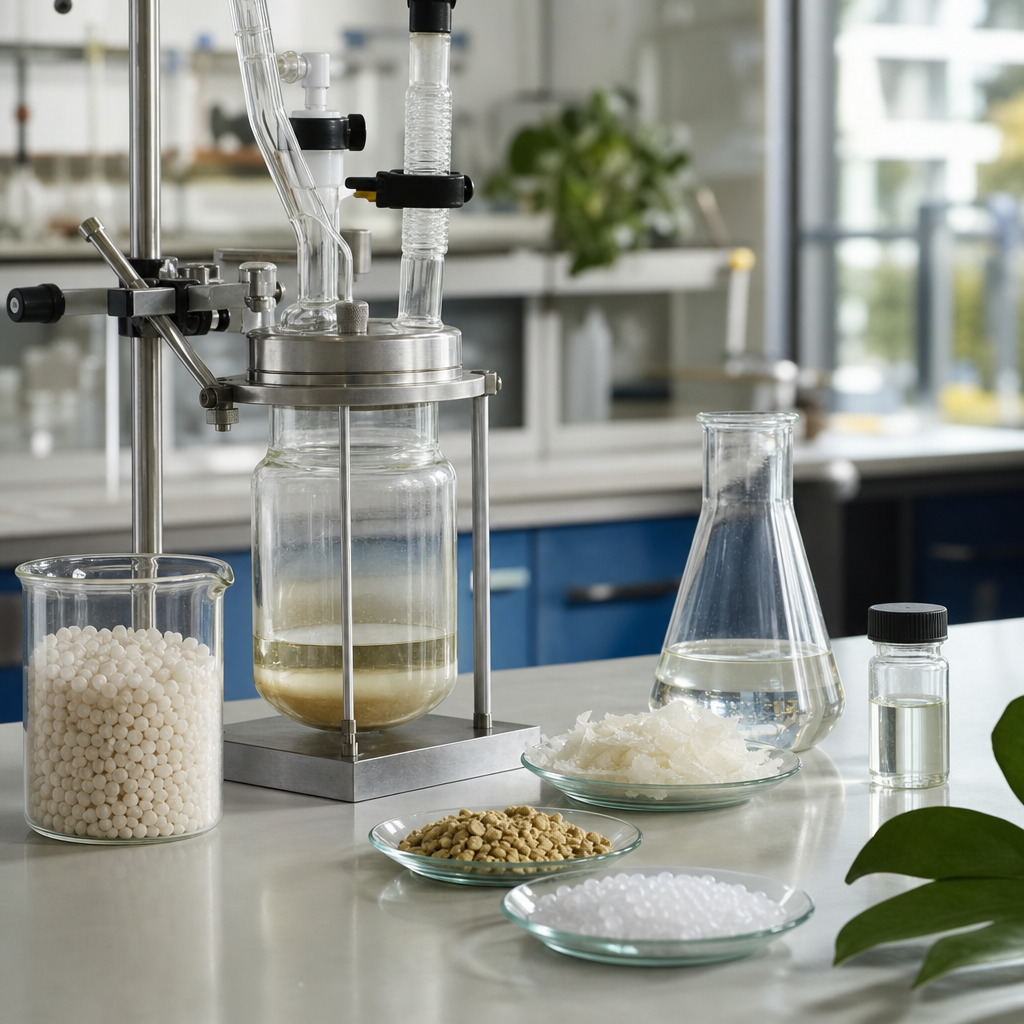
How to synthesize biodegradable polymers starts with understanding what the term actually covers: materials whose chains can be broken down by microorganisms, enzymes, hydrolysis, or oxidation into smaller molecules that re-enter natural cycles. In practice, biodegradable polymers include bio-based materials such as polylactic acid, starch blends, and polyhydroxyalkanoates, as well as fossil-derived polymers like polycaprolactone and polyglycolic acid that still biodegrade under defined conditions. I have worked with these systems in teaching labs and pilot formulation projects, and the first lesson is always the same: biodegradability is not a single property. It depends on chemical structure, molecular weight, crystallinity, additives, processing history, and disposal conditions such as industrial composting, soil burial, marine exposure, or anaerobic digestion.
For a hub article under tutorials and guides, the goal is to connect the science of polymer synthesis with the practical decisions students, researchers, and product teams need to make. That means defining key terms clearly. A monomer is the small molecule that reacts to form a polymer chain. Polymerization is the conversion process. Biodegradation is the subsequent breakdown process caused by environmental or biological action. Compostable is narrower than biodegradable and often tied to standards such as ASTM D6400 or EN 13432, which specify disintegration and ecotoxicity criteria under controlled composting conditions. A polymer can be bio-based without being biodegradable, and biodegradable without being bio-based. Confusing those categories leads to poor material selection and weak claims.
This topic matters because biodegradable polymers sit at the intersection of packaging, agriculture, biomedicine, and waste management. Medical sutures, drug-delivery microspheres, mulch films, 3D-printing filaments, and compostable food-service items all rely on controlled chain breakdown. Synthesis determines whether a material will have enough tensile strength for use, enough thermal stability for extrusion, and a predictable degradation profile after service. If you are building educational resources, this page should function as the starting point: it explains the main synthesis routes, the equipment and safety basics, the most common biodegradable polymer families, and the tradeoffs that shape real-world decisions before readers move into deeper step-by-step tutorials on specific chemistries.
Core synthesis routes and the chemistry behind biodegradability
The most important design rule is simple: biodegradable polymers usually contain bonds that water, enzymes, or microbes can cleave under realistic conditions. Ester bonds are the classic example, which is why aliphatic polyesters dominate the field. Common laboratory and industrial synthesis routes include ring-opening polymerization, direct polycondensation, microbial fermentation, and chemical modification of natural polymers. Each route creates different chain architectures, molecular-weight distributions, end groups, and impurity profiles, all of which affect performance and degradation.
Ring-opening polymerization is the workhorse route for many high-performance biodegradable polyesters. In this process, cyclic monomers such as lactide, glycolide, or epsilon-caprolactone open and link into long chains. Polylactic acid, polyglycolic acid, and polycaprolactone are standard products of this method. In a teaching lab, the appeal is that the chemistry is conceptually clean: purified cyclic monomer, catalyst, initiator, controlled temperature, and moisture exclusion. In manufacturing, it scales well and gives higher molecular weights than simple condensation. Tin(II) 2-ethylhexanoate, often called stannous octoate, is a widely used catalyst for lactide polymerization, especially for biomedical-grade PLA when residual catalyst is tightly controlled. Organocatalysts and zinc-based catalysts are also studied to reduce metal concerns and improve selectivity.
Direct polycondensation is more accessible but less forgiving. Lactic acid, succinic acid, adipic acid, and diols can be reacted to form polyesters while removing water as a byproduct. The challenge is equilibrium: if water remains in the reaction, chain growth stalls and molecular weight stays low. That is why vacuum, inert gas sweep, elevated temperature, and sometimes azeotropic removal are used. Polybutylene succinate and related aliphatic polyesters are often prepared this way. From experience, the most common beginner mistake is underestimating purification and drying. Trace water attacks growing chains, reduces molecular weight, and broadens the distribution, which later shows up as brittle molded parts or inconsistent melt flow.
Microbial fermentation creates a different class of biodegradable polymers, especially polyhydroxyalkanoates. Here, bacteria such as Cupriavidus necator accumulate intracellular polyester granules when fed carbon under nutrient-limited conditions. After fermentation, the biomass is harvested, cells are disrupted, and the polymer is extracted and purified. Polyhydroxybutyrate, or PHB, and its copolymers are notable because they are genuinely biosynthesized and often biodegrade in a wider range of environments than PLA. The tradeoff is cost, fermentation complexity, and variability tied to feedstock and recovery. Still, for educational coverage, fermentation matters because it shows that synthesis is not always a flask reaction; bioprocess engineering can be the polymerization platform.
Chemical modification of natural polymers is another practical route. Starch can be plasticized with glycerol and blended with biodegradable polyesters. Cellulose can be esterified or regenerated into films. Chitosan can be crosslinked for biomedical and packaging applications. These materials are appealing because the backbone is already renewable and often biodegradable, but processing can be harder because natural polymers degrade before melting, absorb moisture, and vary by source. As a hub concept, readers should understand that “synthesize” can mean building a polymer from monomers or transforming a natural macromolecule into a usable biodegradable material.
How to synthesize major biodegradable polymer families in practice
Polylactic acid is usually the first polymer students encounter, and for good reason. The industrial route begins by fermenting sugars from corn, sugarcane, or other biomass into lactic acid. Lactic acid is then oligomerized, converted into lactide, purified by distillation or recrystallization, and polymerized through ring-opening polymerization. In the lab, a simplified route may skip full industrial purification, but the core principles remain: dry monomer, dry glassware, measured catalyst loading, nitrogen or argon atmosphere, and temperature control around the monomer’s reactivity window. High-purity lactide and tight moisture control are what separate a robust PLA synthesis from a sticky, low-molecular-weight oligomer.
Polycaprolactone is often the easiest aliphatic polyester for demonstration because epsilon-caprolactone polymerizes readily and the resulting polymer has a low melting point, typically near 60 degrees Celsius. A basic synthesis uses caprolactone with an alcohol initiator and a catalyst such as stannous octoate. The initiator controls chain number, which helps estimate theoretical molecular weight. Because PCL is flexible and degrades more slowly than PLA, it is widely used in tissue-engineering scaffolds, long-term drug release, and blend toughening. When I teach this system, I emphasize that slower degradation is not a flaw; it is a design feature when mechanical support must last for months rather than weeks.
Polyglycolic acid and poly(lactic-co-glycolic acid), commonly called PLGA, are central in biomedical synthesis guides. PGA is highly crystalline and hydrolyzes relatively quickly, making it useful in absorbable sutures. PLGA introduces tunability because the lactic-to-glycolic ratio changes hydrophilicity, crystallinity, and degradation rate. A 50:50 PLGA composition is often cited as degrading faster than more asymmetric ratios because lower crystallinity allows water penetration. That principle appears repeatedly across biodegradable polymer tutorials: amorphous regions usually degrade before crystalline ones, so chain regularity and thermal history matter as much as monomer identity.
Polyhydroxyalkanoates require a bioprocess workflow rather than conventional polymer reactor setup. The tutorial sequence includes strain selection, sterilization, inoculum preparation, fermentation control, carbon feeding, nutrient limitation, harvest, extraction, and drying. Solvent extraction with chloroform has historical precedent but raises safety and sustainability concerns, so modern guides increasingly cover non-halogenated extraction, enzymatic digestion of biomass, and mechanical disruption. The educational benefit of PHA synthesis is that it forces readers to connect microbiology, downstream processing, and materials science in one project.
| Polymer family | Main synthesis route | Key advantage | Main limitation | Typical applications |
|---|---|---|---|---|
| PLA | Fermentation to lactic acid, then lactide ring-opening polymerization | Good stiffness, established scale | Needs industrial composting for fastest breakdown | Packaging, filament, disposable items |
| PCL | Ring-opening polymerization of epsilon-caprolactone | Flexible, easy processing | Slow degradation | Scaffolds, blends, drug delivery |
| PLGA/PGA | Ring-opening polymerization of glycolide and lactide | Tunable resorption | Higher cost, moisture sensitivity | Sutures, implants, microspheres |
| PHA/PHB | Microbial fermentation and recovery | Bio-based and broadly biodegradable | Expensive recovery and brittleness for PHB | Films, coatings, medical uses |
| Starch blends | Plasticization and blending | Low cost, renewable feedstock | Moisture sensitivity, lower strength | Bags, loose fill, mulch films |
Starch-based materials are often the most accessible for tutorials aimed at beginners because they can be demonstrated with common lab mixers, plasticizers, and twin-screw extrusion concepts. Yet it is important to state clearly that thermoplastic starch alone rarely delivers the moisture resistance or toughness required for demanding applications. Commercial materials typically rely on blends with PLA, PBAT, or other biodegradable polyesters plus compatibilizers and processing aids. That is a useful teaching example: practical biodegradable polymers are frequently blends, not pure resins.
Process control, equipment, testing, and common mistakes
A strong synthesis guide does not stop at reaction setup. It explains how to control the process and how to verify the product. At minimum, readers should understand the role of drying ovens, vacuum pumps, Schlenk lines or gloveboxes for moisture-sensitive reactions, oil baths or jacketed reactors for thermal control, and overhead stirring for viscous melts. For fermentation, bioreactors require pH, dissolved oxygen, airflow, and feed-rate management. The choice of equipment affects reproducibility as much as the chemistry itself.
Characterization is where many tutorials become too shallow, so this hub should be explicit. Nuclear magnetic resonance confirms monomer conversion, end groups, and copolymer composition. Fourier-transform infrared spectroscopy identifies ester formation and can track degradation-related changes. Gel permeation chromatography measures molecular-weight distribution, which directly influences melt strength and mechanical performance. Differential scanning calorimetry reveals glass transition, melting point, and crystallinity. Thermogravimetric analysis estimates thermal stability. Mechanical testing, water uptake, and biodegradation assays complete the picture. If a synthesis article does not discuss how to prove what was made, it is incomplete.
Biodegradation testing must also be framed correctly. A polymer disappearing visually is not proof of mineralization. Standardized methods matter. ASTM D5338 and ISO 14855 are commonly used for aerobic composting evaluation by measuring evolved carbon dioxide. Soil and marine studies require different methods and timelines. PLA, for example, can remain persistent in cool home-compost conditions because hydrolysis proceeds slowly below its glass transition range, while PHA may biodegrade more readily in soil or marine settings depending on grade and geometry. Readers need that nuance to avoid overstated conclusions.
The most common synthesis failures are predictable. Residual moisture lowers molecular weight. Poor monomer purification introduces side reactions and color formation. Excess catalyst can accelerate transesterification, scrambling chain structure and broadening distributions. Aggressive melt processing can thermally degrade PLA and PHA, especially when residence time is long. In natural-polymer systems, insufficient plasticization causes brittle films, while excess plasticizer leads to tackiness and migration. These are not minor troubleshooting notes; they are the everyday reasons a promising biodegradable polymer fails during scale-up.
Safety and compliance deserve equal attention. Lactide, caprolactone, catalysts, solvents, and sterilization chemicals all require standard laboratory controls, ventilation, and waste handling. Biomedical polymers may require residual monomer and catalyst limits, endotoxin control, and validation aligned with ISO 10993 biocompatibility testing. Packaging materials may need food-contact compliance under FDA or EU frameworks. For educational readers, the message is straightforward: synthesis success is measured not only by making a polymer, but by making one that is safe, compliant, and suited to its end-of-life pathway.
Choosing the right pathway and building a learning roadmap
If you are deciding how to synthesize biodegradable polymers for a project, start with the use case, not the monomer. Packaging that must hold stiffness on a shelf but compost after disposal points toward PLA blends, PBS, PBAT blends, or starch-containing systems depending on barrier needs and collection infrastructure. Resorbable implants push you toward PLA, PGA, PLGA, or PCL because degradation kinetics and biocompatibility data are well established. Agricultural films may favor starch blends or PHA where soil breakdown matters. The right synthesis pathway follows from performance targets, processing method, regulatory environment, and waste conditions.
As a hub for tutorials and guides, this page should direct readers into progressively deeper topics. A logical roadmap begins with polymer fundamentals and biodegradation mechanisms, then moves into monomer preparation, ring-opening polymerization procedures, condensation polymerization techniques, fermentation workflows for PHA, blending and compounding methods, and finally characterization and standards testing. That sequence mirrors how practitioners actually learn. You do not master biodegradable polymer synthesis by memorizing one recipe; you build competence by linking feedstock, chemistry, process control, testing, and application constraints into one decision framework.
The key takeaway is that successful biodegradable polymer synthesis is controlled design, not green branding. Choose a polymer family whose bond chemistry supports the required degradation pathway. Use the synthesis route that can reliably deliver target molecular weight and purity. Confirm the result with NMR, GPC, DSC, and relevant biodegradation standards. Then match the material to the application and disposal system honestly. If you are building your educational resources library, use this hub as the foundation and continue into the companion tutorials on PLA, PHA, starch blends, PLGA, testing methods, and processing best practices.
Frequently Asked Questions
What qualifies as a biodegradable polymer, and how is it different from a bio-based polymer?
A biodegradable polymer is a material whose molecular chains can be broken down into smaller compounds through natural or controlled processes such as microbial activity, enzymatic action, hydrolysis, or oxidation. The key point is that the polymer must be capable of degrading into substances that can re-enter natural cycles, such as carbon dioxide, water, biomass, or other low-molecular-weight compounds, depending on the environment and degradation pathway. This definition focuses on end-of-life behavior rather than where the raw material came from.
That distinction matters because “bio-based” and “biodegradable” are not interchangeable. A polymer can be made from renewable feedstocks and still resist degradation, and a polymer can also be derived from fossil resources yet still biodegrade under the right conditions. For example, polylactic acid, starch blends, and polyhydroxyalkanoates are widely recognized bio-based biodegradable materials, while polycaprolactone and polyglycolic acid are often fossil-derived but still biodegradable under defined conditions. When learning how to synthesize biodegradable polymers, it is important to evaluate both the polymer’s chemical structure and the conditions required for breakdown, since ester linkages, molecular weight, crystallinity, and morphology all influence degradation behavior.
What are the main methods used to synthesize biodegradable polymers?
Several established routes are used to synthesize biodegradable polymers, and the best method depends on the target material, desired molecular weight, mechanical properties, and intended application. One of the most common approaches is ring-opening polymerization, which is widely used for making aliphatic polyesters such as polylactic acid, polyglycolic acid, and polycaprolactone. In this method, cyclic monomers are opened and linked into long chains, often using catalysts to control reaction rate, molecular weight, and polymer architecture. This route is especially useful because it can produce materials with relatively predictable structures and performance characteristics.
Another major route is polycondensation, where monomers bearing complementary functional groups, such as diols and dicarboxylic acids, react step by step while releasing small molecules like water or methanol. Polycondensation can be used to produce biodegradable polyesters and related materials, although it often requires careful control of reaction conditions and removal of byproducts to achieve high molecular weight. Beyond these chemical methods, some biodegradable polymers are produced biologically. Polyhydroxyalkanoates, for example, are synthesized by microorganisms as intracellular storage materials under nutrient-limited fermentation conditions. Starch-based biodegradable materials are often prepared through blending, plasticization, grafting, or chemical modification rather than conventional polymerization alone. In practice, synthesis is rarely just about making chains; it also includes tuning composition, branching, copolymer ratio, and processing method to obtain useful biodegradation profiles and end-use properties.
Which raw materials and monomers are commonly used to make biodegradable polymers?
The raw materials used in biodegradable polymer synthesis depend on whether the polymer is bio-based, fossil-derived, or a hybrid system. For bio-based systems, common feedstocks include sugars, corn starch, cassava starch, cellulose derivatives, plant oils, and fermentation-derived intermediates. Lactic acid is one of the most important building blocks because it can be fermented from renewable carbohydrates and then converted into lactide for the production of polylactic acid. Similarly, microbial fermentation can generate the monomeric precursors or the polymer itself in the case of polyhydroxyalkanoates.
For synthetic biodegradable polyesters, frequently used monomers include lactide, glycolide, and caprolactone. These monomers are especially valuable because they form polymers with hydrolyzable ester bonds, which are central to biodegradation. In starch-based systems, starch is often combined with plasticizers, compatibilizers, or other biodegradable polymers to improve flexibility, processability, and moisture behavior. Material designers also use copolymer systems to balance degradation speed, strength, thermal stability, and processing performance. Choosing the right monomer set is one of the most important decisions in biodegradable polymer synthesis because the monomer chemistry strongly influences crystallinity, hydrophilicity, chain mobility, and ultimately how easily the material breaks down in composting, soil, marine, or biomedical environments.
What factors most affect the synthesis process and the final biodegradation behavior?
Both synthesis conditions and polymer structure have a major impact on how a biodegradable polymer performs during use and how it degrades afterward. During synthesis, critical variables include monomer purity, catalyst type, reaction temperature, pressure, residence time, moisture control, and the presence of chain transfer agents or initiators. Even small amounts of water or impurities can interfere with polymer growth, reduce molecular weight, or create inconsistencies in the final product. In industrial and laboratory settings, careful process control is essential because biodegradable polymers often require a narrow balance between processability and degradability.
Once the polymer has been made, properties such as molecular weight, crystallinity, copolymer composition, glass transition temperature, chain branching, and surface area become highly important. In general, more amorphous and hydrophilic materials tend to degrade more readily because water and enzymes can access the polymer chains more easily. Highly crystalline regions, by contrast, are usually more resistant. The environmental conditions also matter tremendously. A material may biodegrade efficiently in industrial composting conditions with elevated heat, moisture, and microbial activity, but much more slowly in ambient soil or water. That is why responsible synthesis is not just about making a polymer that can degrade somewhere in theory; it is about designing one that degrades appropriately within the real conditions of its intended disposal or application.
How do manufacturers ensure biodegradable polymers are both practical to use and genuinely biodegradable?
Successful biodegradable polymer development requires balancing performance during service life with controlled breakdown afterward. Manufacturers do this by adjusting polymer chemistry, processing conditions, and formulation additives so the material remains stable enough for storage, transport, and use, but still contains structural features that allow degradation under target end-of-life conditions. For example, copolymerization can be used to tune flexibility and degradation rate, blending can improve toughness or reduce cost, and additives can modify thermal behavior or processing performance. However, every modification must be assessed carefully because some changes that improve strength or barrier properties can also reduce biodegradation efficiency.
Verification is equally important. A polymer is not considered truly useful simply because it contains renewable ingredients or hydrolyzable bonds; it must also be tested under recognized conditions to confirm its degradation profile. Manufacturers typically evaluate biodegradation, disintegration, compostability, thermal behavior, molecular weight distribution, and mechanical properties using standardized methods. They also consider the intended application, whether that is packaging, agriculture, biomedical devices, or disposable products, because each use case places different demands on stability and degradation timing. In other words, the synthesis of biodegradable polymers is not a single reaction step but a full materials engineering process that connects monomer selection, polymerization strategy, formulation design, performance testing, and environmental validation.