Innovations in high-performance polymer composites are reshaping how engineers design aircraft, medical devices, vehicles, energy systems, and industrial equipment. High-performance polymers are plastics engineered to retain mechanical strength, dimensional stability, chemical resistance, and thermal performance under conditions that would degrade commodity materials such as polyethylene or polypropylene. When those advanced polymers are combined with reinforcements like carbon fiber, glass fiber, aramid, ceramic particles, or nano-scale additives, they become high-performance polymer composites: tailored materials that deliver specific combinations of stiffness, toughness, heat resistance, low weight, and durability. This matters because modern products are pushed to do more with less mass, lower energy use, longer service life, and tighter safety margins.
In practice, I have seen material selection change an entire program’s economics. Replacing a machined aluminum bracket with a carbon-fiber-reinforced PEEK component can cut weight, reduce part count, and eliminate corrosion concerns, but only if the resin system, fiber architecture, processing route, and inspection method are matched correctly. That is the central idea behind this high-performance polymers hub: the field is not defined by one miracle material, but by a set of engineered tradeoffs. Designers must balance temperature capability, creep resistance, moisture uptake, flame performance, dielectric behavior, manufacturability, recyclability, and cost. Standards such as UL 94 for flammability, ISO 10993 for biocompatibility, ASTM test methods for tensile and impact properties, and aerospace qualification protocols all shape what “high performance” means in a real application.
The category includes thermoplastics such as PEEK, PEKK, PPS, PEI, LCP, and polyamides, as well as thermoset matrices like epoxy, bismaleimide, cyanate ester, and polyimide. Reinforcements range from continuous fibers used in laminates to chopped fibers in injection-molded parts, plus emerging fillers like graphene, carbon nanotubes, basalt, and hollow glass microspheres. Each system supports a different design logic. Some are chosen for sustained use above 200°C, some for wear against metal counterparts, some for sterilization cycles, and others for radar transparency or electrical insulation. As the hub for this subtopic, this article maps the core material families, manufacturing methods, performance drivers, and commercial trends that define innovations in high-performance polymer composites today.
What Makes a Polymer Composite High Performance
A polymer composite earns the high-performance label when it delivers reliable properties under demanding service conditions, not merely when it posts a strong laboratory number. Engineers usually evaluate four dimensions first: mechanical performance, thermal capability, environmental resistance, and processability. Mechanical performance includes tensile strength, modulus, fatigue behavior, impact resistance, and creep. Thermal capability covers glass transition temperature, melting point for semicrystalline thermoplastics, heat deflection temperature, thermal conductivity, and long-term oxidative stability. Environmental resistance includes solvents, fuels, hydraulic fluids, UV exposure, moisture, and hydrolysis. Processability determines whether the material can be compression molded, autoclave cured, automated tape laid, injection molded, or printed with repeatable quality.
Fiber reinforcement is the fastest way to change performance. Carbon fiber can raise stiffness dramatically while keeping density low, which is why carbon-PEEK and carbon-epoxy systems are common in aerospace and premium mobility applications. Glass fiber is less expensive and offers strong electrical insulation, making it valuable in connectors, pump housings, and structural electrical parts. Aramid improves toughness and impact absorption, especially where abrasion matters. Particle and nano-fillers serve different purposes: PTFE can reduce friction, mineral fillers improve dimensional stability, and conductive carbon additives help manage electrostatic discharge. The matrix still matters just as much as the reinforcement. A carbon-fiber part built with standard nylon behaves very differently from one built with PPS or PEKK in hot, wet, chemically aggressive conditions.
The practical definition of high performance also includes consistency at scale. A material that performs beautifully in prototype form but shows voids, warpage, fiber wash, or poor weld-line strength in production is not high performance in business terms. That is why process controls, drying protocols, fiber length retention, crystallinity management, and post-cure schedules are as important as datasheet values. The best composite programs treat material science and manufacturing engineering as one discipline.
Core Material Families in High-Performance Polymers
Among thermoplastics, PEEK remains one of the benchmark materials because it combines excellent chemical resistance, wear performance, low smoke generation, and continuous-use capability near 250°C in many applications. PEKK offers similar chemistry with a wider processing window and slower crystallization, which can help additive manufacturing and thermoforming. PPS is valued for dimensional stability, flame resistance, and compatibility with aggressive fluids, so it appears often in automotive pumps, electrical systems, and filtration hardware. PEI, sold widely under the Ultem trade name, is an amorphous polymer known for high strength, good dielectric properties, and naturally flame-retardant behavior. Liquid crystal polymers excel in thin-wall precision molding and high-frequency electronics because they maintain stiffness and flow exceptionally well in miniature geometries.
Thermosets remain essential where very high structural efficiency is needed. Epoxy dominates many aerospace, sporting goods, wind energy, and industrial laminates because it adheres well to fibers and can be formulated for a broad balance of toughness, viscosity, cure speed, and thermal performance. Bismaleimide and cyanate ester systems address higher temperature and specialized dielectric requirements, especially in aircraft structures and radomes. Polyimide matrices serve some of the harshest thermal environments but are expensive and processing-intensive. In thermosets, once cured, the matrix does not melt again, which improves heat resistance but limits remolding and some recycling routes.
Material family choice usually starts with service temperature and regulatory requirements, then moves to mechanics and manufacturing. A surgeon’s reusable instrument housing may favor glass-filled PPS for sterilization durability, while an electric aircraft bracket may justify continuous-carbon PEEK for strength-to-weight and fire performance. In battery systems, engineers often compare flame-retardant polyamides, PPS, and specialty thermoset composites based on dielectric strength, thermal runaway containment, and assembly complexity.
Manufacturing Innovations Driving Adoption
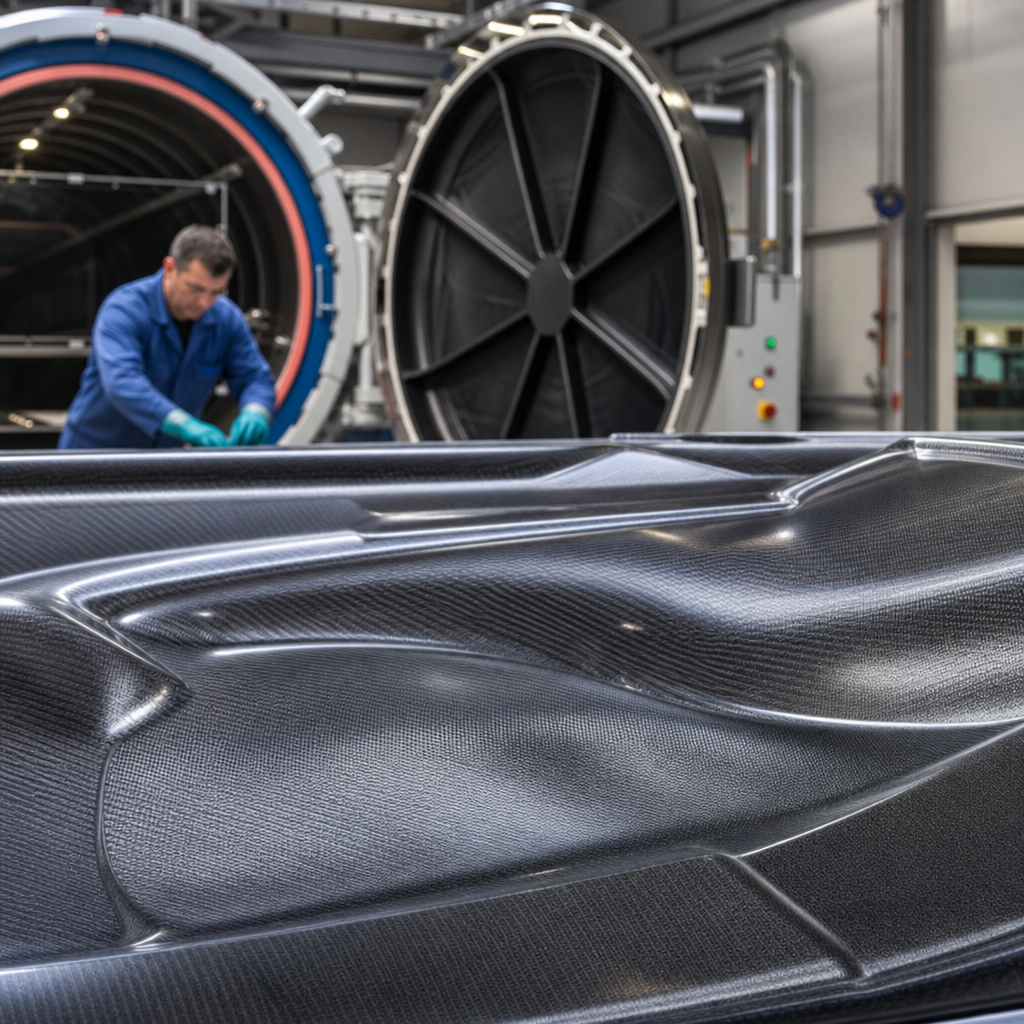
The biggest recent advances are not only new chemistries but new ways to process advanced composites with less waste and more repeatability. Automated fiber placement and automated tape laying allow aerospace manufacturers to place carbon-thermoplastic or carbon-thermoset tapes with precise orientation, minimizing scrap while tailoring stiffness exactly where loads travel. Compression molding of organosheets lets automotive suppliers combine fast cycle times with continuous-fiber reinforcement, creating lightweight seat structures, front-end carriers, and underbody shields. Overmolding takes this further by placing a continuous-fiber insert into a mold and adding short-fiber thermoplastic ribs and attachment features in one step.
Additive manufacturing has moved from concept models to end-use parts in selected high-value applications. Laser sintering and fused filament fabrication with PEKK, PEEK, PEI, and reinforced grades now support ducting, brackets, surgical guides, and low-volume aerospace parts. The gains come from geometric freedom, rapid iteration, and tooling reduction. However, printed composites still demand careful validation because layer adhesion, porosity, crystallinity, and anisotropy can reduce performance relative to molded or laminated material. In my experience, printed high-performance polymers work best when teams redesign for the process instead of expecting a one-for-one replacement of machined metal geometry.
| Process | Typical Materials | Main Advantage | Common Limitation |
|---|---|---|---|
| Injection molding | PEEK, PPS, PEI, filled polyamides | High-volume precision parts | Fiber length reduction in short-fiber grades |
| Compression molding | Organosheets, SMC, thermoset prepregs | Fast structural part production | Tooling cost and geometry constraints |
| Automated fiber placement | Carbon-epoxy, carbon-PEEK tapes | Tailored layups with low scrap | Capital intensity and programming complexity |
| Additive manufacturing | PEKK, PEI, reinforced filaments or powders | Complex shapes without tooling | Anisotropy and qualification burden |
Another innovation area is in-situ monitoring. Infrared cameras, dielectric cure sensors, machine vision, and digital twins now help manufacturers control defects before parts reach inspection. This is critical because composite failures often start at voids, delaminations, or fiber misalignment that are not obvious externally. Better process data translates directly into confidence, especially in regulated sectors.
Application Areas Changing Fast
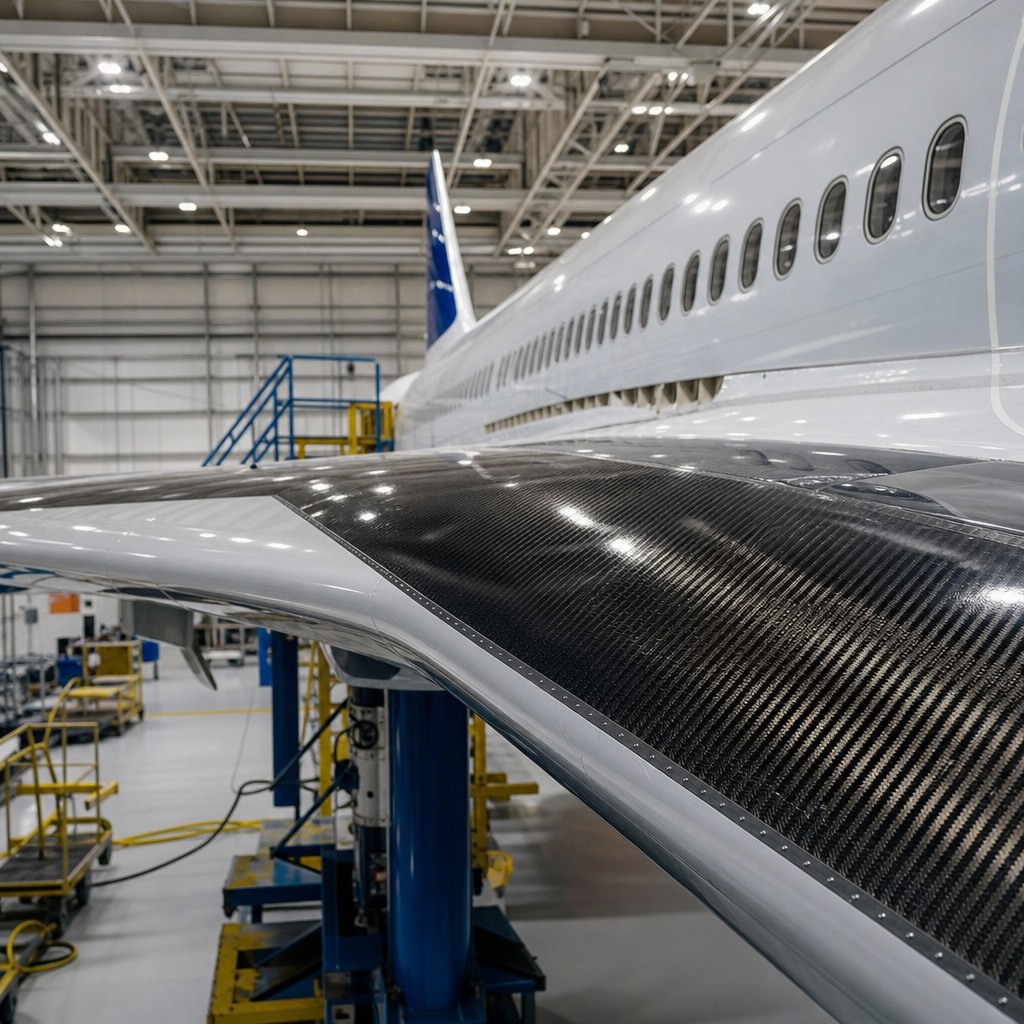
Aerospace continues to set the pace for high-performance polymer composites because every kilogram saved affects fuel burn, payload, and range. Carbon-fiber-reinforced thermoplastics are gaining attention for clips, brackets, seat components, cable management hardware, and semi-structural assemblies because they offer rapid forming, weldability, and chemical resistance. Thermoset composites still dominate large primary structures, but thermoplastics are expanding where repairability, impact tolerance, and production rate matter.
Automotive and mobility are using these materials differently. Here the challenge is not maximum performance at any cost; it is targeted performance at scale. Glass-filled PPS in pump components, carbon-reinforced polyamides in pedal carriers, LCP in electronic connectors, and composite battery enclosures are all examples of smart deployment. Electric vehicles have accelerated demand because lighter structures improve range, while power electronics require stable, flame-resistant insulating materials. Composite leaf springs, underbody protection panels, and thermal barriers around cells show how varied the field has become.
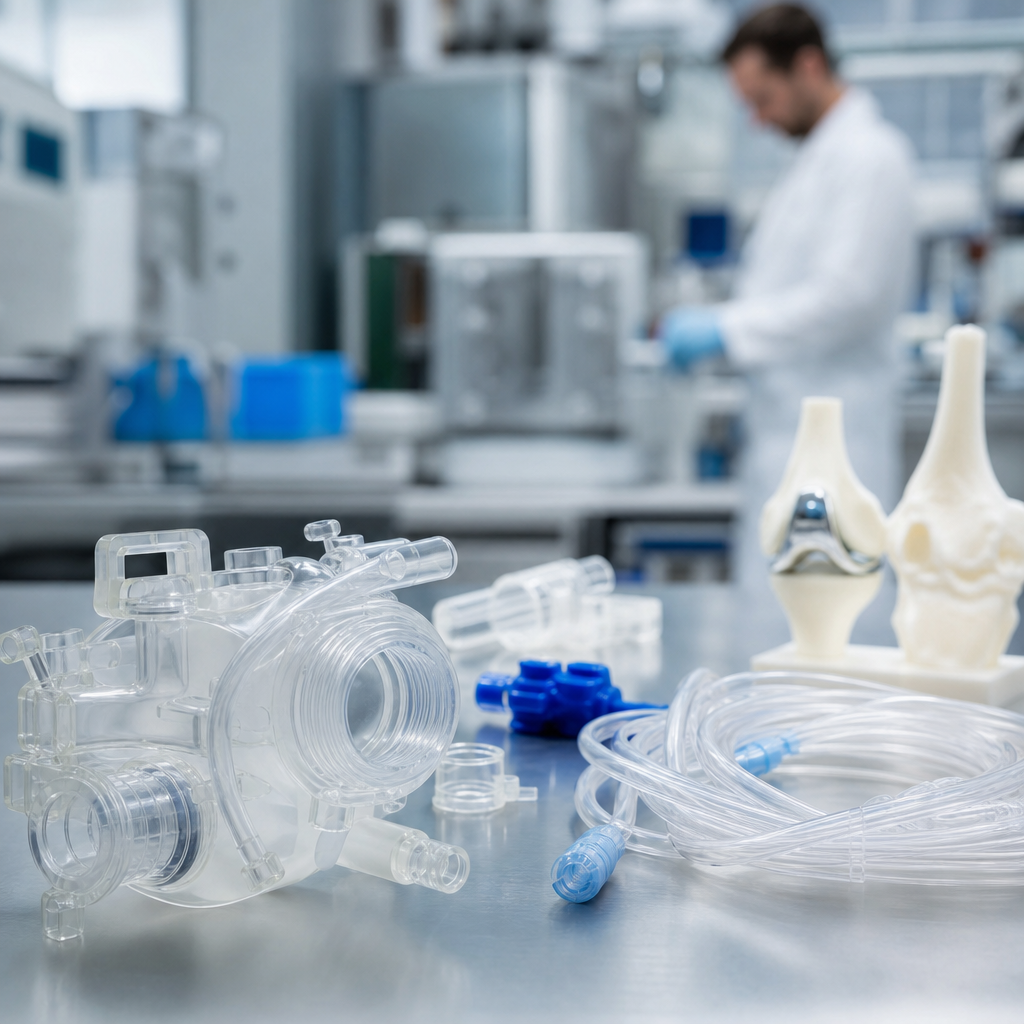
Medical devices rely on high-performance polymers where biocompatibility, sterilization resistance, and imaging compatibility are essential. PEEK has become established in spinal cages, trauma fixation, and dental applications because it is radiolucent and has a modulus closer to bone than many metals. In surgical tools and reusable equipment, PPSU, PEI, and reinforced specialty polymers withstand repeated steam sterilization better than standard plastics. Industrial applications are equally broad, from compressor parts and valve seats to semiconductor handling equipment, where low outgassing and chemical purity are decisive.
Performance Tradeoffs, Testing, and Qualification
No composite is universally superior, and most selection mistakes come from ignoring tradeoffs. Carbon fiber increases stiffness but can make a part electrically conductive, which may be undesirable in high-voltage systems. Glass fiber improves cost efficiency but adds density. Thermoplastics allow welding and recycling potential, yet some require extremely high processing temperatures and tight moisture control. Thermosets can deliver outstanding dimensional stability and structural performance, but repair, rework, and end-of-life options are more limited.
Qualification should always reflect the real duty cycle. Tensile strength alone is not enough. Engineers need data on compression after impact, interlaminar shear, fatigue, creep rupture, coefficient of thermal expansion, tribology, and environmental aging. A fuel-system component should be tested after long exposure to the actual fluid at temperature. A medical component should be evaluated after sterilization cycles, not before. A battery enclosure material must be assessed for flame spread, smoke, dielectric breakdown, and mechanical retention after heat exposure. ASTM, ISO, SAE, and OEM-specific protocols exist for good reason: composites are highly sensitive to test method and specimen preparation.
I advise teams to treat datasheets as screening tools, not final proof. The most expensive late-stage failures I have seen came from assuming a supplier’s published number represented a finished component with weld lines, inserts, molded-in stress, and environmental exposure. Real validation includes process trials, microscopy, dimensional metrology, and accelerated aging. That discipline is what turns an advanced polymer from an interesting material into a reliable product platform.
Sustainability, Supply Chains, and Future Directions
Sustainability in high-performance polymer composites is advancing, but it requires a realistic view. Lightweighting can reduce lifetime energy use, especially in transport, yet many high-end resins are energy-intensive to produce and difficult to recycle through conventional streams. The most promising progress is coming from reclaiming carbon fiber, designing thermoplastic composites for reprocessing, improving manufacturing yield, and using life-cycle assessment instead of simplistic material labels. In several industrial programs, scrap reduction delivered more immediate environmental benefit than switching resin families.
Supply chain resilience has also become a strategic factor. Aerospace-grade carbon fiber, specialty monomers, and niche additive packages can face long lead times or regional concentration risks. That pushes companies to qualify alternate sources, standardize part families, and invest in material databases tied to processing history. Digital material traceability is becoming normal in regulated sectors because provenance affects both quality and compliance.
Looking ahead, the most important innovations will combine materials, processing, and design intelligence. Expect broader use of hybrid composites that mix continuous and discontinuous reinforcement, multifunctional systems with thermal or electrical management built into the structure, better bonding between polymer matrices and recycled fibers, and simulation tools that predict warpage, fiber orientation, and failure more accurately. For companies building an innovative products and solutions strategy, high-performance polymer composites offer a practical path to lighter, tougher, safer, and more efficient products. The next step is simple: map your operating environment, shortlist candidate resin-reinforcement systems, and validate them under real service conditions before committing to full-scale production.
Frequently Asked Questions
What are high-performance polymer composites, and how are they different from standard plastics?
High-performance polymer composites are advanced materials made by combining a high-performance polymer matrix with reinforcing elements such as carbon fiber, glass fiber, aramid fiber, or specialized fillers. The polymer matrix provides the base chemical, thermal, and dimensional properties, while the reinforcement improves stiffness, strength, impact behavior, fatigue resistance, and in many cases overall durability. This combination creates a material system that can be engineered for demanding environments where ordinary plastics would soften, creep, crack, or degrade.
What sets these composites apart from standard plastics is their ability to maintain performance under extreme conditions. Commodity plastics such as polyethylene or polypropylene are useful in many everyday applications, but they generally cannot match the heat resistance, mechanical stability, and long-term reliability required in aerospace, medical, automotive, energy, and industrial systems. High-performance polymers such as PEEK, PPS, PEI, and polyimides are specifically designed to perform under high temperatures, aggressive chemical exposure, sterilization cycles, and sustained mechanical loads. When reinforced, they become even more capable, offering metal-replacement potential in parts where low weight, corrosion resistance, and precision matter.
Another important difference is design flexibility. Standard plastics are often selected primarily for cost and ease of processing, while high-performance polymer composites are chosen for application-specific performance. Engineers can tailor fiber orientation, resin chemistry, filler content, and processing methods to optimize a component for structural loads, electrical properties, wear resistance, thermal management, or dimensional stability. That level of tunability is one reason these materials are driving innovation across so many advanced industries.
What recent innovations are driving the growth of high-performance polymer composites?
Recent innovation in this field is happening on several fronts at once. One of the biggest developments is in matrix materials themselves. New grades of high-performance polymers are being formulated to improve processability without sacrificing thermal or chemical resistance. That means manufacturers can produce complex parts faster and more consistently, making these materials more practical for larger-scale use in transportation, electronics, and industrial equipment. Improved melt behavior, lower void formation, and enhanced adhesion to reinforcing fibers are all helping expand the range of viable applications.
Another major area of progress is reinforcement technology. Carbon fiber and glass fiber remain central, but there is growing use of hybrid reinforcement systems, nano-enhanced fillers, and surface-treated fibers that bond more effectively to the polymer matrix. Better interfacial bonding often translates into stronger and tougher finished parts, along with more predictable long-term performance. Engineers are also using continuous-fiber thermoplastic composites more strategically, especially in load-bearing applications where weight reduction and damage tolerance are critical.
Manufacturing innovation is equally important. Automated tape laying, compression molding of thermoplastic composites, additive manufacturing, and advanced injection molding techniques are making it easier to produce parts with tighter tolerances and repeatable properties. Simulation and digital engineering tools now allow designers to model fiber orientation, heat flow, warpage, and mechanical behavior before tooling is built, which shortens development cycles and reduces waste. In addition, recycling and circularity efforts are improving, particularly for thermoplastic composite systems that can be reprocessed more readily than some traditional thermoset materials. Taken together, these advances are moving high-performance polymer composites from niche solutions toward broader, more scalable adoption.
Why are aerospace, automotive, and medical industries investing so heavily in these materials?
These industries are investing in high-performance polymer composites because the materials solve multiple design challenges at the same time. In aerospace, every reduction in component weight can improve fuel efficiency, payload capacity, and emissions performance. At the same time, aerospace parts must withstand vibration, temperature swings, fatigue loading, and exposure to hydraulic fluids, fuels, and other harsh substances. High-performance composites offer a compelling balance of low mass, structural integrity, chemical resistance, and dimensional stability, making them ideal for brackets, clips, housings, interior structures, and selected semi-structural components.
In automotive and transportation, the push for lightweighting is closely tied to fuel economy and electric vehicle range. Replacing heavier metal parts with composite alternatives can reduce overall vehicle mass without compromising strength where it is needed. These materials also support part consolidation, allowing engineers to combine multiple functions into a single molded component. That can lower assembly complexity, reduce fastener counts, and improve manufacturing efficiency. For under-hood and powertrain-adjacent applications, high-performance polymer composites bring the additional benefit of withstanding heat, chemicals, and repeated mechanical stress.
The medical field values these materials for a different, but equally compelling, set of reasons. Many high-performance polymers offer biocompatibility, sterilization resistance, radiolucency, and excellent wear properties. That makes them useful in surgical instruments, implantable components, diagnostic equipment, and device housings. In some applications, they can replace metal while improving imaging compatibility or reducing weight for handheld tools. Across all three sectors, the common theme is clear: these composites enable better performance, smarter engineering, and more efficient systems in environments where material failure is not an option.
What are the biggest advantages and limitations of high-performance polymer composites?
The advantages are substantial. One of the most important is the high strength-to-weight and stiffness-to-weight ratio that reinforced systems can deliver. This allows engineers to reduce mass while preserving mechanical performance, which is especially valuable in aircraft, vehicles, robotics, and portable equipment. These materials also resist corrosion far better than many metals, which can extend service life and reduce maintenance in humid, saline, or chemically aggressive environments. In addition, many high-performance polymer matrices maintain their properties across a wide temperature range and can tolerate repeated exposure to solvents, fuels, cleaning agents, and sterilization processes.
Another advantage is design efficiency. Polymer composites can often be molded into complex shapes that would require multiple machining and joining steps in metal. That opens the door to part consolidation, improved ergonomics, integrated features, and lower assembly costs. Electrical insulation, low friction, wear resistance, and controlled thermal behavior can also be engineered into the same part, depending on the formulation. For product developers, this means one material platform can sometimes meet structural, environmental, and functional requirements simultaneously.
That said, there are limitations. Cost remains one of the biggest barriers, especially for premium polymers and high-grade continuous-fiber systems. Processing can be more demanding than with conventional plastics, and achieving consistent fiber distribution, bonding, and dimensional accuracy may require specialized equipment and expertise. Composite behavior can also be anisotropic, meaning performance varies with fiber orientation, so design and testing must be done carefully. Repair, inspection, and end-of-life handling can present challenges as well, depending on the material system. In short, high-performance polymer composites offer exceptional benefits, but they deliver the best value when they are selected with a clear understanding of application demands, production constraints, and lifecycle considerations.
How do engineers choose the right high-performance polymer composite for a specific application?
Material selection starts with the service environment. Engineers look first at the temperatures the part will experience, the mechanical loads it must carry, the chemicals it may contact, and whether it will face moisture, UV exposure, abrasion, sterilization, or repeated fatigue cycles. Those conditions help determine the right polymer family. For example, a part exposed to aggressive chemicals and elevated temperatures may require a matrix such as PPS or PEEK, while an application needing high dimensional stability and flame performance might lead to a different high-performance resin choice.
Next comes reinforcement strategy. Short-fiber composites may be appropriate for high-volume molded parts where cost, processing speed, and moderate structural performance are the priority. Continuous-fiber systems are often selected when maximum stiffness and strength are needed. Engineers also evaluate fiber type carefully: carbon fiber offers excellent stiffness and low weight, glass fiber provides strong cost-performance value, and aramid or hybrid systems may be chosen for impact resistance or specialized behavior. The orientation and architecture of the reinforcement are just as important as the material itself, because they strongly influence how the finished part responds to real-world loads.
Finally, engineers assess manufacturability, compliance, and total lifecycle value. A material that performs well in theory must also be compatible with the intended process, whether that is injection molding, compression molding, filament winding, thermoforming, or additive manufacturing. Regulatory requirements may matter in aerospace, medical, food-contact, or electrical applications. Long-term factors such as creep resistance, maintenance needs, recyclability, and cost per part are also part of the equation. The best material choice is rarely based on a single property; it comes from balancing performance, manufacturability, reliability, and economics to meet the exact demands of the application.