High-performance polymers are redefining how military systems are designed, protected, and sustained across land, sea, air, space, and cyber-enabled battlespaces. In defense engineering, the term refers to polymer families that maintain mechanical strength, dimensional stability, chemical resistance, and functional performance under conditions that would quickly degrade conventional plastics. That includes elevated temperatures, repeated impact, salt fog, hydraulic fluids, ultraviolet exposure, radiation, and long service intervals with minimal maintenance. In my work reviewing materials programs and supplier claims, the practical question is never whether a polymer is advanced on paper; it is whether it survives the mission profile, integrates into existing production lines, and delivers measurable gains in weight, durability, or survivability.
The category spans high-temperature thermoplastics such as PEEK, PEKK, PPS, PEI, and PAI; thermoset matrices used in structural composites; elastomers engineered for seals and vibration control; fluoropolymers for aggressive chemical environments; and specialty formulations enhanced with carbon fiber, glass fiber, aramid fiber, ceramic fillers, conductive additives, flame retardants, and self-lubricating compounds. These materials appear in armored vehicle components, aircraft interiors, radomes, cable insulation, fuel system parts, connectors, bearings, personal protective equipment, unmanned systems, and electronics packaging. Their value is not limited to replacing metal. Often the bigger advantage comes from combining several functions in one part, such as stiffness, dielectric performance, flame resistance, and corrosion immunity.
Why does this matter now? Modern military platforms are under simultaneous pressure to become lighter, quieter, more fuel efficient, more electrified, and easier to sustain in dispersed operations. Every kilogram saved on an aircraft can improve range or payload. Every corrosion-resistant component on a naval vessel can reduce maintenance burden. Every polymer component that tolerates additive manufacturing can shorten lead times for spares in contested logistics environments. Standards such as MIL-STD environmental testing protocols, FAA flammability expectations for aerospace-adjacent systems, and NATO interoperability requirements all raise the bar. High-performance polymers matter because they help defense programs meet those performance demands while enabling new architectures that older material sets could not support.
What High-Performance Polymers Actually Deliver in Military Systems
In military applications, the core benefit of high-performance polymers is mission-specific performance per unit weight. Compared with aluminum, steel, and many commodity plastics, advanced polymers can offer superior corrosion resistance, lower density, excellent fatigue behavior, and tailored electrical properties. PEEK and PEKK, for example, are frequently selected for high-load, high-temperature applications because they retain useful strength well above the operating range of nylon or acetal. PPS performs especially well in chemically aggressive environments and maintains dimensional stability, making it useful in pump components, electrical housings, and under-hood assemblies. PEI brings strong flame, smoke, and toxicity performance, which is critical in aircraft interior and electronics applications.
Defense engineers rarely choose a material based on one property. They evaluate a matrix of requirements: tensile strength, modulus, creep, outgassing, dielectric constant, moisture uptake, coefficient of thermal expansion, wear rate, and manufacturability. A polymer may look impressive in a datasheet yet fail in service because it absorbs too much moisture, creeps under constant load, or becomes brittle after sterilization, decontamination, or cold soak cycles. The most successful material substitutions occur when a team links the polymer’s property profile to the exact operational stressors the part will face. That is why material down-selection commonly includes accelerated aging, chemical immersion, thermal cycling, and vibration testing before qualification is even considered.
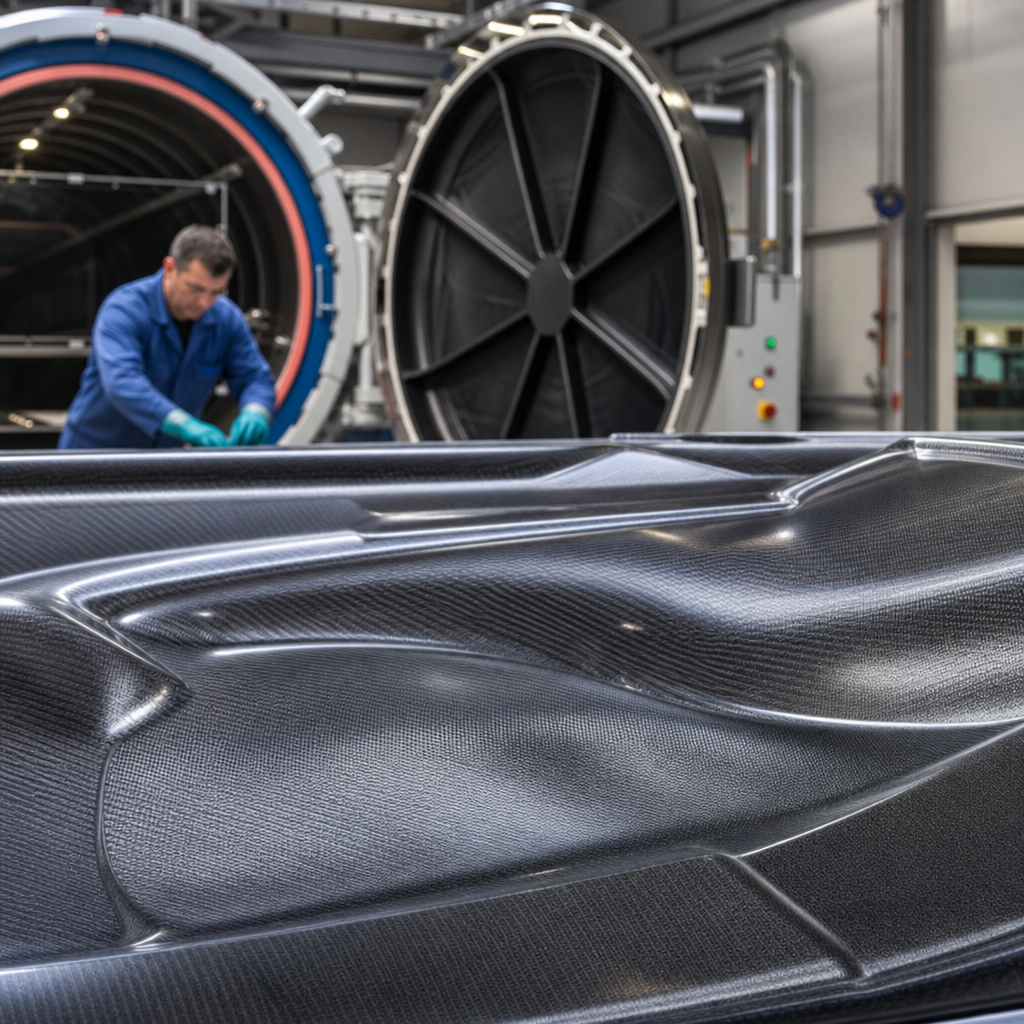
Another important advantage is design freedom. Injection molding, compression molding, filament winding, automated fiber placement, and high-performance additive manufacturing allow geometries that are difficult or uneconomical in metal. Engineers can consolidate brackets, channels, clips, and insulators into one molded component, reducing fasteners and assembly time. In one aerospace support program I reviewed, replacing a machined aluminum cable-routing assembly with a glass-filled PEI molded part reduced part count by more than half while also improving electrical isolation and eliminating corrosion at mounting points. The polymer itself was not the entire win; the system redesign created the value.
Key Polymer Families and Where They Fit Best
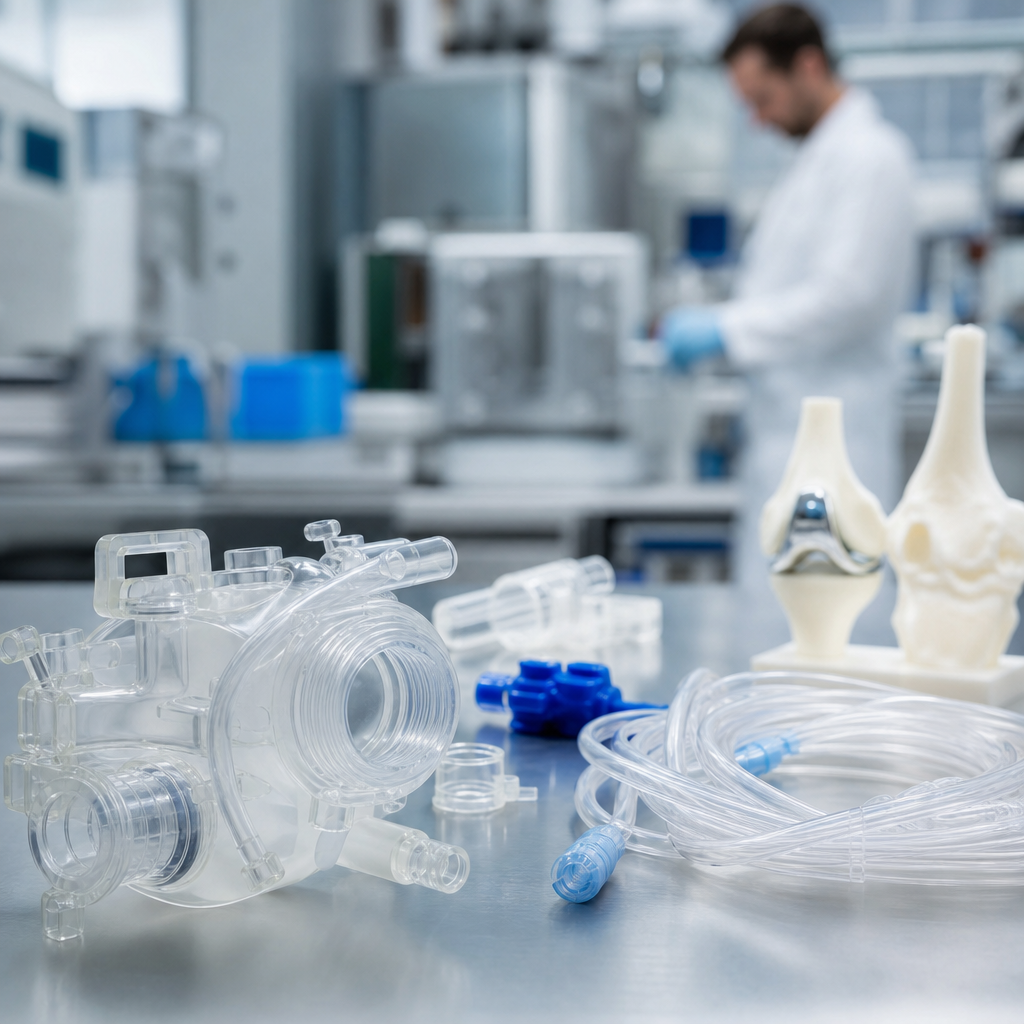
Not all high-performance polymers solve the same problem, and defense buyers should treat the category as a toolkit rather than a single class of materials. PEEK is widely known for excellent mechanical performance, hydrolysis resistance, wear characteristics, and compatibility with reinforcement fibers. It appears in bearings, compressor components, structural clips, medical support devices, and lightweight replacements for metal parts. PEKK offers many of the same high-end benefits with processing advantages in some additive manufacturing and composite applications. PPS is a proven choice for chemical resistance, flame resistance, and dimensional stability, especially in electrical and fluid-handling components. PAI, though more expensive and processing-intensive, can deliver outstanding wear and high-temperature performance in tribological applications.
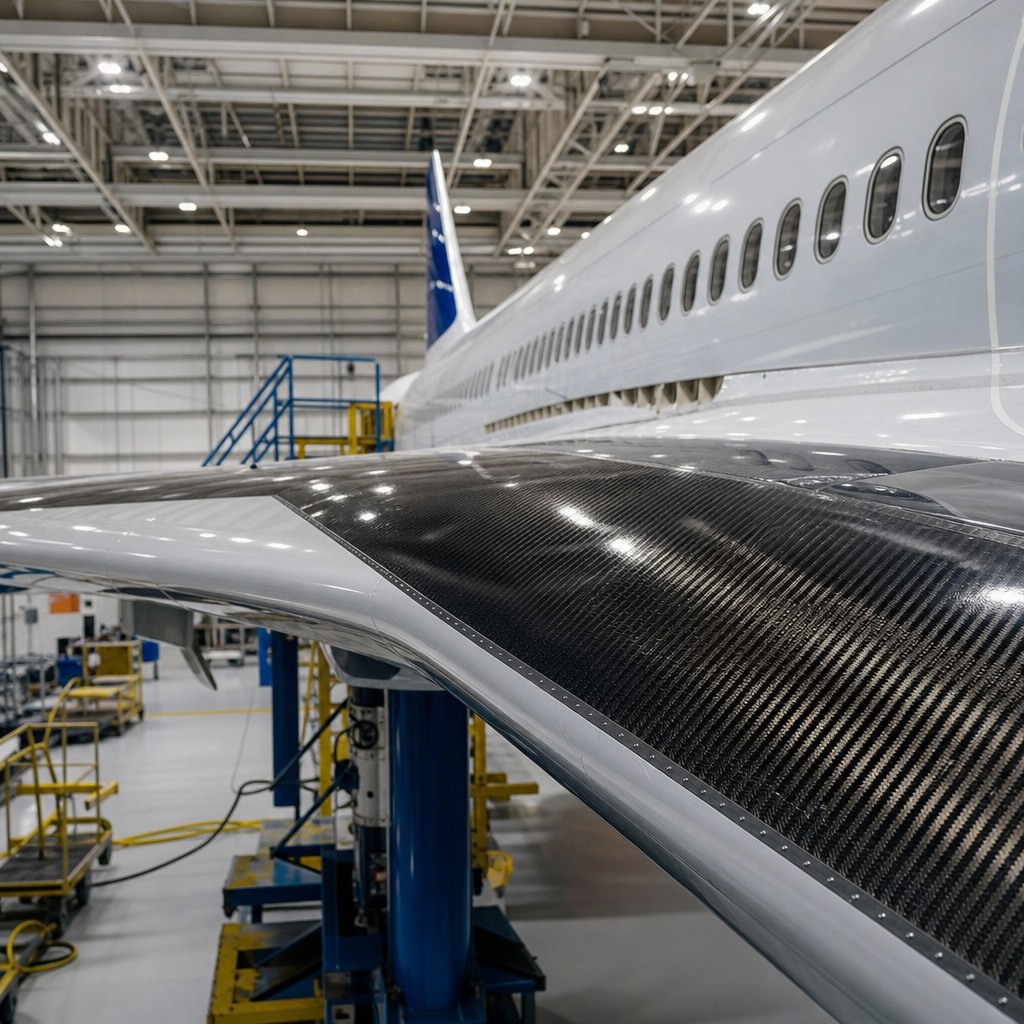
Fluoropolymers such as PTFE, FEP, and PFA remain indispensable where chemical inertness and low friction are central requirements. They are common in wire insulation, seals, and fluid-transfer systems exposed to fuels, solvents, and extreme temperatures. Polyimides are favored in demanding aerospace and electronics contexts for thermal stability. Aramid-based polymer systems contribute to ballistic protection and lightweight structural reinforcement. Thermoset epoxy, bismaleimide, and cyanate ester matrices dominate many advanced composite structures where stiffness-to-weight ratio and heat resistance are essential, such as UAV airframes, radomes, antenna supports, and missile components.
| Polymer family | Primary strengths | Common military uses | Main tradeoff |
|---|---|---|---|
| PEEK/PEKK | High strength, heat resistance, wear performance | Bearings, brackets, aircraft clips, additive parts | High material cost |
| PPS | Chemical resistance, dimensional stability, flame performance | Pump parts, connectors, housings | Lower impact toughness than some alternatives |
| PEI | Flame, smoke, toxicity performance; electrical insulation | Aircraft interiors, electronic enclosures | Can be notch sensitive |
| Fluoropolymers | Chemical inertness, low friction, dielectric strength | Wire insulation, seals, tubing | Lower structural stiffness |
| Thermoset composites | Excellent stiffness-to-weight, tailored structures | Radomes, UAV structures, panels | Repair and recycling complexity |
Selection depends on the environment, processing route, qualification burden, and target cost. A high-end polymer is not automatically the best answer if a lower-cost engineered resin satisfies the requirement with greater supply stability. In long-life defense programs, that distinction matters.
Advances in Lightweighting, Ballistic Protection, and Survivability
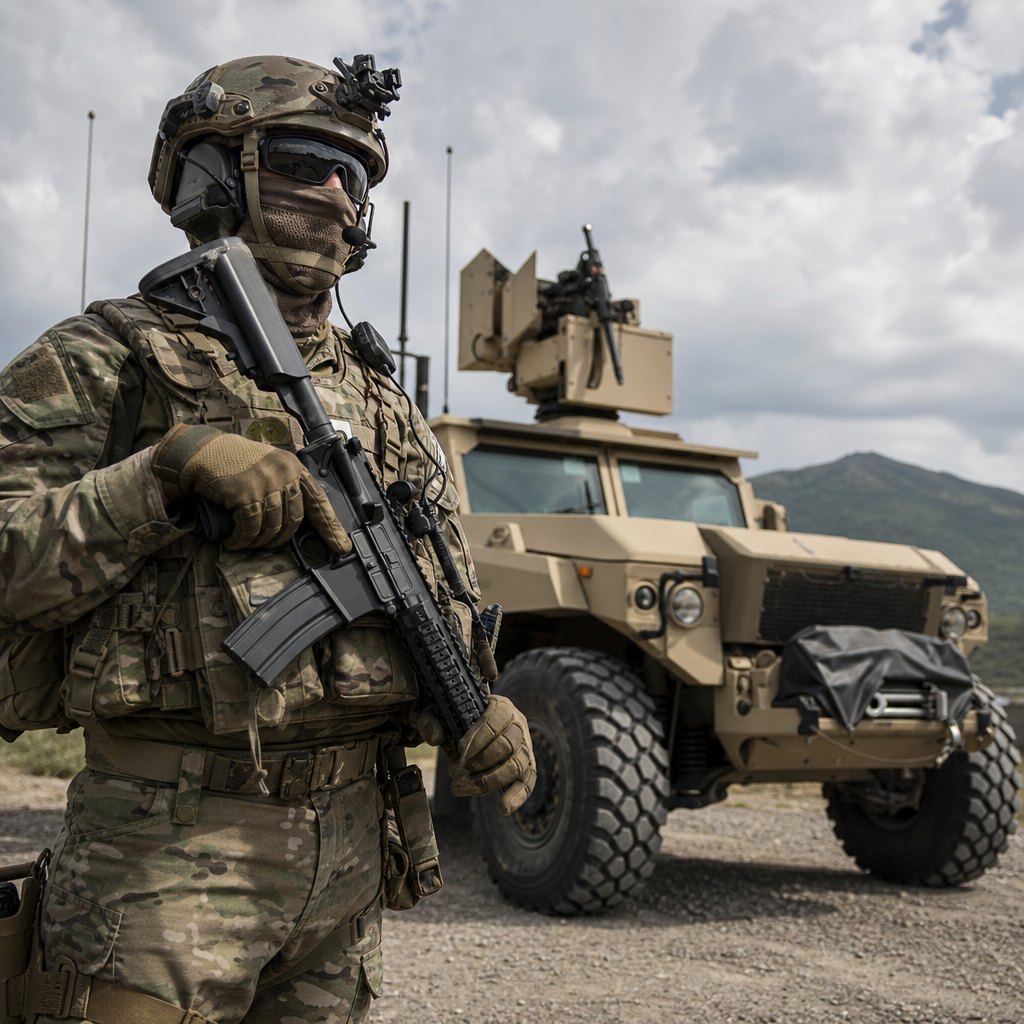
One of the most visible advances in high-performance polymers for military applications is lightweight protection. Traditional armor systems rely heavily on steel and ceramics, but modern survivability packages increasingly use polymer matrix composites and aramid systems to absorb energy, catch fragments, and reduce backface deformation. Ultra-high-molecular-weight polyethylene, although a distinct class with its own limits, has become central in helmets, hard armor backers, and spall liners because of its exceptional strength-to-weight ratio. Aramid-reinforced laminates remain important where impact resistance, toughness, and thermal stability are needed. The result is better mobility for soldiers and lower platform weight for vehicles and aircraft.
In vehicle survivability, polymers also reduce secondary hazards. Spall liners made from aramid or polyethylene composites can limit fragment propagation after impact. Blast-attenuating seat structures may use advanced polymer composites and energy-absorbing foams to manage acceleration loads. Interior panels and cable protection systems made from flame-resistant polymers help contain post-impact fire risks while avoiding corrosion problems associated with metal assemblies. These are not cosmetic substitutions. They directly affect crew survivability, repair time, and mission continuity.
Radar transparency is another critical area. Radomes and antenna covers must protect sensitive systems without distorting electromagnetic performance. High-performance polymer composites are ideal because dielectric properties can be tuned while preserving low weight and structural integrity. Cyanate ester and specialized epoxy systems are often chosen for their low moisture absorption and stable electrical characteristics. In practical terms, the material decision influences signal transmission, target detection reliability, and sensor consistency across climates. That is why radome materials are validated not just for strength, but for dielectric constant, loss tangent, water uptake, and weathering behavior over time.
Electronics, Thermal Management, and Electrified Defense Platforms
As military platforms become more electrified, polymer performance inside electronic systems matters as much as structural strength outside them. Advanced polymers serve as insulating housings, connector bodies, cable jackets, encapsulants, conformal coatings, thermal interface materials, and printed circuit substrates. The right polymer must manage heat, resist arc tracking, maintain dielectric integrity, and survive exposure to hydraulic fluid, dust, moisture, and repeated thermal cycling. Materials such as PEI, PPS, LCP, and fluoropolymers are widely used because they combine electrical performance with processing precision and flame resistance.
Thermal management is a particularly active development area. Pure polymers are generally less thermally conductive than metals, but modern formulations use graphite, boron nitride, ceramic particles, or carbon-based additives to improve heat dissipation while preserving electrical insulation where required. This matters in battery enclosures for hybrid tactical vehicles, power electronics in directed-energy subsystems, avionics housings, and compact communications equipment. The challenge is balancing conductivity, weight, moldability, and dielectric safety. A filled polymer that removes heat effectively may become more brittle or harder to process, so formulation work is highly application specific.
Electromagnetic interference shielding also has advanced significantly. Conductive polymer composites loaded with carbon fibers, carbon nanotubes, metal-coated fibers, or intrinsically conductive phases can reduce EMI without the full weight penalty of metal housings. They are especially useful in unmanned systems, portable electronics, and tightly packaged sensor modules. In programs where signature management matters, polymer-based approaches can also help reduce corrosion points and simplify assembly compared with multi-piece metallic shielding schemes.
Manufacturing, Qualification, and Supply Chain Realities
The most important recent advance may be manufacturing maturity rather than chemistry alone. High-performance polymers are increasingly compatible with repeatable industrial processes, from precision injection molding to automated layup and laser-sintered or fused-filament additive manufacturing. That opens the door to shorter development cycles, lower recurring labor, and more resilient spare-parts strategies. PEKK and PEEK, for instance, have become prominent in qualified additive manufacturing discussions because they can produce strong, heat-resistant components suited to low-volume defense parts where tooling costs are hard to justify.
Still, qualification is where many promising ideas stall. Military applications demand proof, not promise. A part may require validation against MIL-STD-810 environmental conditions, flammability criteria, fluid compatibility, fogging or outgassing limits, ballistic testing, and platform-specific airworthiness or naval engineering rules. Processing variation matters enormously. Fiber orientation, crystallinity, void content, cure schedule, and moisture conditioning can change performance enough to invalidate assumptions based on handbook values. Experienced teams therefore control not just material specification, but the entire process window, inspection plan, and traceability chain.
Supply chain stability is equally strategic. Some defense programs have learned the hard way that sole-source specialty materials create sustainment risk. Resin availability, precursor chemistry, export controls, and regional production concentration can affect readiness years after initial design release. Smart procurement teams dual-qualify materials where feasible, maintain approved vendor lists, and favor formulations with documented long-term support. The best high-performance polymer solution is one that can still be produced, repaired, and audited throughout the platform lifecycle.
What to Evaluate Before Choosing a Military Polymer Solution
When selecting high-performance polymers for military applications, start with the mission environment and failure mode, not the marketing brochure. Ask what actually causes part failure today: corrosion, fatigue, wear, dielectric breakdown, excess weight, thermal distortion, chemical attack, or a long lead time for machined metal. Then evaluate candidate materials against those exact risks. Measure continuous-use temperature instead of just melting point. Check moisture absorption and coefficient of thermal expansion if tolerances are tight. Review creep data if the part carries sustained load. Verify flame, smoke, and toxicity performance if the component sits inside crewed platforms. For composites, analyze impact behavior and field repair options as carefully as nominal stiffness.
It is also essential to compare total system cost, not resin price alone. A polymer may cost more per kilogram than aluminum yet still reduce overall cost by cutting machining hours, assembly steps, corrosion treatment, logistics burden, or fuel consumption. In several defense sourcing reviews, the business case only became obvious after lifecycle modeling included maintenance intervals and part consolidation. Conversely, some substitutions fail because hidden costs appear in tooling, inspection, training, or qualification testing. Clear selection criteria prevent expensive enthusiasm from outrunning engineering evidence.
This hub page should guide deeper exploration into polymer composites, additive manufacturing feedstocks, ballistic materials, EMI shielding compounds, and high-temperature electrical polymers. The central lesson is straightforward: advanced polymers are now strategic enablers in defense design, not niche substitutes used only when metal fails.
High-performance polymers have moved from specialty materials to core building blocks of modern military capability. They reduce weight, resist corrosion, improve electrical performance, support survivability, and enable more flexible manufacturing across defense programs. The most successful applications match a polymer family to a clearly defined mission profile, validate performance through rigorous testing, and account for qualification and supply chain realities from the start. That disciplined approach is what turns an advanced material into a dependable military solution.
For organizations working under the broader Innovative Products and Solutions umbrella, this sub-pillar matters because it connects multiple defense priorities at once: readiness, protection, efficiency, and modernization. Whether the target is a lighter UAV structure, a tougher vehicle interior, a chemically resistant naval component, or an electrically safer connector system, there is now a mature and expanding set of polymer options to consider. The field is advancing through better formulations, smarter reinforcement strategies, and more production-ready processing methods.
The next step is practical. Map your critical components, identify where weight, heat, corrosion, wear, or electrical limits are constraining performance, and build a shortlist of candidate polymer systems for qualification. Done correctly, high-performance polymers can deliver durable gains that extend well beyond a single part and improve the effectiveness of the entire platform.
Frequently Asked Questions
What are high-performance polymers, and why are they becoming so important in military applications?
High-performance polymers are advanced polymer materials engineered to retain strength, stiffness, dimensional stability, and chemical resistance in environments that would rapidly damage standard plastics. In military applications, that means they can continue performing under elevated temperatures, repeated shock and vibration, salt fog, hydraulic fluid exposure, ultraviolet radiation, moisture cycling, and long service intervals. Common examples include PEEK, PEI, PPS, PTFE, aramids, fluoropolymers, polyimides, and specialty thermoset and thermoplastic composite matrices. These materials are often selected not simply because they are lightweight, but because they combine low mass with high durability, corrosion resistance, electrical performance, and design flexibility.
Their importance in defense has grown as military systems have become more mobile, more electronic, and more dependent on multi-domain performance. Ground vehicles need lighter components without sacrificing survivability. Naval systems require materials that resist corrosion and seawater-driven degradation. Aircraft and unmanned platforms benefit from weight reduction that extends range, payload, and fuel efficiency. Space systems need materials that tolerate thermal extremes and radiation-related challenges. Even soldier-worn equipment increasingly relies on polymer-based materials for ballistic protection, insulation, sealing, cable management, housings, and structural components.
Another major reason these polymers matter is sustainment. Traditional metals can corrode, require coatings, and demand more intensive maintenance. High-performance polymers can reduce lifecycle burdens by resisting chemicals, weathering, and wear while enabling part consolidation and easier manufacturing. In a military context, that can translate into fewer replacement intervals, less downtime, improved logistics efficiency, and better mission readiness. As defense platforms continue to integrate sensors, electronics, autonomy, and advanced power systems, high-performance polymers are playing a central role in making those systems lighter, tougher, and more reliable.
How do high-performance polymers improve military equipment compared with traditional metals and conventional plastics?
High-performance polymers improve military equipment by filling the performance gap between ordinary plastics and legacy metallic solutions. Compared with conventional plastics, they typically offer far better heat resistance, higher mechanical strength, better creep resistance, stronger chemical compatibility, and greater dimensional stability. That means they can be used closer to engines, electronics, fuel systems, hydraulic systems, radar assemblies, and external structures where ordinary polymers would deform, crack, or lose function. Compared with metals, they often provide significant weight savings, corrosion immunity, lower radar-impact potential in some designs, electrical insulation, and more freedom to mold complex geometries into fewer parts.
Weight reduction is one of the most obvious advantages, but it is far from the only one. A lighter aircraft component can improve fuel economy or increase payload. A lighter ground vehicle subsystem can help mobility and transportability. A lighter soldier-carried system reduces fatigue and enhances endurance. At the same time, many of these polymers maintain excellent fatigue resistance and can be engineered into reinforced composites for added structural performance. In cable connectors, brackets, enclosures, bearings, seals, and interior-exterior assemblies, they can deliver long-term durability without the corrosion concerns associated with aluminum, steel, or magnesium alloys.
They also improve manufacturability and integration. Complex polymer parts can often be injection molded, compression molded, machined, or additively manufactured into geometries that reduce assembly steps and fastener counts. That matters in defense programs where production speed, repeatability, and maintainability are critical. High-performance polymers can also support electromagnetic management, thermal isolation, and chemical resistance in ways metals cannot. In practical terms, military engineers use them not because they replace every metal component, but because they provide a smarter solution in specific roles where environmental resistance, reduced mass, and multifunctional performance create a real operational advantage.
Where are high-performance polymers used across land, sea, air, and space defense systems?
High-performance polymers are used across nearly every defense domain because their performance can be tailored to very different mission profiles. In land systems, they appear in vehicle under-hood components, fuel and hydraulic system parts, cable insulation, sensor housings, protective covers, structural inserts, interior assemblies, bearings, seals, and armor-related composite structures. They are especially valuable in military ground vehicles because those platforms must tolerate mud, dust, vibration, thermal cycling, chemicals, and repeated mechanical shock while remaining field-serviceable and weight-conscious.
In naval applications, the corrosion resistance of high-performance polymers is a major advantage. Shipboard connectors, valve components, pump elements, cable jackets, insulation systems, coatings, bearings, and composite assemblies benefit from materials that do not rust and that resist salt fog, seawater exposure, biofouling-related environments, fuels, and cleaning chemicals. Subsea and maritime systems also benefit from polymers that provide dielectric properties, sealing performance, and long-term stability under moisture-rich conditions. For aircraft and rotorcraft, these materials are used in interior structures, wire and cable systems, radomes, brackets, ducts, clips, fasteners, insulation, composite airframe parts, and engine-adjacent assemblies where heat resistance and low weight are both essential.
In space and near-space applications, high-performance polymers support insulation, cable management, lightweight structures, thermal barriers, electronics packaging, and deployable mechanisms. Materials used in these environments must withstand vacuum-related effects, broad thermal swings, radiation exposure, and strict mass limitations. Unmanned systems across air, land, and maritime domains also rely heavily on polymer composites and engineering thermoplastics because mission endurance is strongly linked to weight efficiency. Even in cyber-enabled battlespaces, where the emphasis is often on electronics and communications infrastructure, high-performance polymers are embedded in ruggedized housings, connectors, shielding architectures, printed circuit insulation, and thermal management subsystems that protect mission-critical hardware from harsh operating conditions.
What properties matter most when selecting a high-performance polymer for a military environment?
Material selection in defense is rarely about a single headline property. Engineers usually evaluate a combination of thermal performance, mechanical behavior, environmental resistance, flammability, electrical characteristics, manufacturability, and long-term durability. Thermal resistance is often one of the first criteria because military systems may experience high ambient temperatures, engine heat, solar loading, or rapid thermal cycling. A polymer that performs well in a lab at room temperature may fail in service if it softens, creeps, or loses dimensional stability at elevated temperatures. That is why properties such as glass transition temperature, continuous use temperature, thermal expansion, and heat deflection behavior are so important.
Mechanical requirements are equally critical. Depending on the application, engineers may need high tensile strength, impact resistance, fatigue endurance, wear resistance, low friction, or the ability to absorb shock without cracking. Chemical resistance also plays a major role because military equipment is exposed to fuels, lubricants, decontamination agents, hydraulic fluids, salt, and cleaning solvents. For external or expeditionary use, ultraviolet stability and moisture resistance can determine whether a component lasts for years or degrades prematurely. In electrical and electronic systems, dielectric properties, insulation reliability, arc resistance, and electromagnetic compatibility may carry more weight than pure structural performance.
There are also mission-specific considerations that can be decisive. Flame, smoke, and toxicity behavior is essential in aircraft, ships, and enclosed vehicles. Low outgassing may be mandatory in space applications. Ballistic performance and energy absorption matter in armor and protective systems. Radar transparency or controlled electromagnetic behavior can be important in radomes and communications components. Just as important, the best polymer on paper must also be producible at the required scale, cost, and quality level. Defense engineers therefore balance performance with processability, repairability, qualification data, supply chain security, and lifecycle sustainment to ensure the chosen material will succeed in actual operational service, not just in specification sheets.
What are the biggest challenges and future trends in high-performance polymers for military use?
One of the biggest challenges is that military environments are unforgiving and highly variable. A polymer may perform exceptionally well against heat but fall short in impact resistance, or it may resist chemicals but become difficult to process into large or complex parts. Qualification is another major hurdle. Defense systems require extensive testing for durability, flammability, compatibility, aging, and mission-specific performance, and those test programs can be time-consuming and expensive. Material consistency also matters. Even a high-end polymer must be available through stable, trusted supply chains with repeatable quality, traceability, and compliance documentation. In strategic defense programs, supply assurance can be almost as important as the technical performance of the material itself.
Cost is also a real consideration. High-performance polymers often command a premium over commodity plastics and, in some cases, over traditional materials. However, procurement teams increasingly evaluate total lifecycle value rather than just initial purchase price. If a polymer component reduces weight, avoids corrosion, lowers maintenance, simplifies assembly, and lasts longer in service, the long-term economics can be favorable. Another challenge is integration with emerging defense technologies. As platforms become more electrified, autonomous, and sensor-dense, polymers must do more than act as passive materials. They may need to support thermal management, electromagnetic control, structural health monitoring, or compatibility with advanced manufacturing processes.
Looking ahead, several trends are shaping the field. Continuous-fiber reinforced thermoplastics are gaining attention for structural applications that need both strength and repair potential. Additive manufacturing is making it easier to produce complex polymer parts on demand, including for distributed logistics and field support.