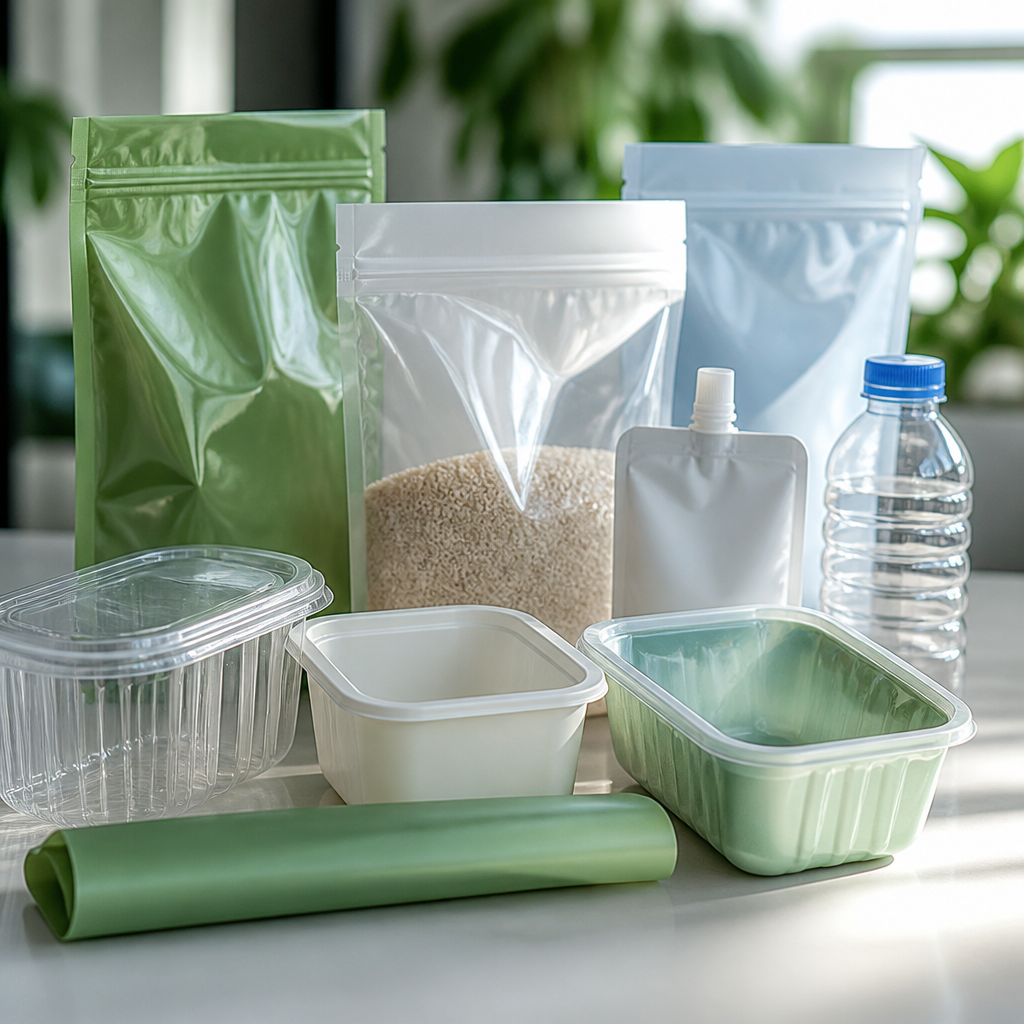
Polymer packaging is entering a decisive phase as brands, converters, and material scientists move beyond incremental film tweaks toward entirely new products designed for recyclability, product protection, and lower environmental impact. In practical terms, polymer packaging includes flexible pouches, rigid containers, trays, films, caps, labels, and multilayer structures made from plastics such as polyethylene, polypropylene, polyethylene terephthalate, polyamide, and emerging bio-based resins. When discussing the future of polymer packaging, the most important lens is new product launches: the commercial debut of novel materials, formats, barrier technologies, dispensing systems, and recovery-ready designs that reshape what packaging can do across food, beverage, healthcare, beauty, industrial, and e-commerce markets.
This matters because packaging performance is no longer judged on cost and shelf appeal alone. In the projects I have worked on with converters and brand teams, launch decisions increasingly hinge on three questions: Will the package protect the product through distribution, can it run on existing filling lines with minimal capital expense, and does it fit evolving recycling or reuse systems? Those questions reflect larger forces. Extended producer responsibility laws are spreading, major retailers are tightening packaging scorecards, and global consumer goods companies are setting targets for recycled content, mono-material design, and packaging reduction. At the same time, online retail and direct-to-consumer fulfillment demand tougher packages that survive parcel networks without excessive material use.
The result is a wave of innovation that is practical rather than speculative. Instead of promising a distant packaging revolution, leading suppliers are launching polyethylene stand-up pouches that replace mixed laminates, polypropylene tubs with in-mold labels engineered for recycling, high-barrier mono-material films for dry foods, tethered closures that anticipate regulation, refill packs that reduce virgin resin use, and chemically recycled feedstocks qualified for food contact applications. The future of polymer packaging will be defined by which new products scale reliably, satisfy compliance requirements, and deliver measurable value for packers and consumers. This hub article maps the major categories of new product launches, the technical trends behind them, and the criteria decision-makers should use when evaluating what comes next.
Mono-material packaging becomes the default direction for many launches
The clearest product development trend is the shift from difficult-to-recycle multilayer combinations toward mono-material structures, especially all-polyethylene and all-polypropylene solutions. Traditional flexible packaging often combines PET, aluminum foil, nylon, and PE to achieve stiffness, printability, puncture resistance, sealability, and oxygen or moisture barrier. That construction performs well but is hard to process in many recycling systems because the layers cannot be economically separated. New launches aim to keep performance while simplifying composition.
In the market, this shows up as recyclable PE pouches for snacks, frozen food, and home care; retortable PP containers for ready meals; and high-density polyethylene bottles redesigned with compatible labels, adhesives, and closures. Amcor, Mondi, Berry Global, Sealed Air, and Constantia Flexibles have all introduced mono-material or recycle-ready products in recent years, often targeted at one problematic packaging format at a time. The technical work behind these launches is significant. Suppliers use machine-direction orientation, advanced coextrusion, improved sealant layers, and barrier coatings such as EVOH in carefully limited percentages where accepted by local recycling guidance.
For brand owners, the benefit is not abstract. A mono-material pouch can improve recyclability claims, reduce packaging taxes tied to recycled content or recoverability, and simplify procurement across regions. The limitation is equally real: not every application can move immediately. High-fat foods, aggressive chemicals, and long shelf-life products may still require structures that current mono-material designs cannot fully replace. The future belongs to launches that openly address these tradeoffs instead of masking them.
Barrier performance is being redesigned, not abandoned
A common misunderstanding is that sustainable polymer packaging means giving up barrier performance. In reality, the strongest new product launches preserve barrier while changing how it is achieved. Barrier matters because oxygen drives oxidation, moisture changes texture, and aroma loss can ruin product quality. Coffee, meat, pharmaceuticals, and nutraceuticals all depend on tightly controlled permeation rates.
New packaging products increasingly use transparent high-barrier coatings, plasma treatments, metallization strategies compatible with specific recovery streams, and engineered tie layers that maintain package integrity with less material complexity. For example, a dry food pouch may move from PET/foil/PE to a recyclable PE structure using EVOH and orientation to create stiffness and oxygen resistance. A thermoformed tray may combine PET with post-consumer recycled content and a peelable lidding film engineered to maintain sealing performance while reducing overall gauge.
In practice, developers validate these launches through oxygen transmission rate and water vapor transmission rate testing, seal strength analysis, drop testing, migration studies, and accelerated aging. ASTM and ISO methods remain central. The future trend is not the elimination of performance testing but tighter integration of lab results with packaging design software and line trials. The best new products reach market with clear data sheets, application boundaries, and filling-line guidance, which gives procurement and operations teams confidence to switch.
Recycled content is moving from pilot claim to commercial standard
One of the most important changes in polymer packaging is the normalization of recycled content across new product launches. Mechanical recycling is already well established for PET bottles and HDPE containers, and the next stage is broader, more consistent use of post-consumer recycled resin in trays, personal care bottles, transport packaging, and some flexible formats. At the same time, chemically recycled feedstocks are gaining traction for food-contact applications where purity specifications are strict.
Mass-balance certified polymers from suppliers such as SABIC, ExxonMobil, Borealis, LyondellBasell, and Dow are appearing in films, caps, and rigid containers intended to match virgin performance while incorporating circular feedstock inputs. For decision-makers, the key distinction is between physical recycled content in the package and certified circular allocation across the production system. Both models matter, but they serve different compliance and communication goals.
| Launch trend | Typical applications | Main benefit | Primary limitation |
|---|---|---|---|
| Mono-material PE films | Pouches, wraps, refill packs | Improved recyclability design | Barrier and stiffness constraints |
| rPET rigid packaging | Bottles, trays, clamshells | High recycled content potential | Color and supply variability |
| Chemically recycled polymers | Food contact films, closures | Virgin-like quality from waste feedstocks | Higher cost and allocation complexity |
| Bio-based resins | Personal care, food service, specialty packs | Reduced fossil feedstock dependence | Infrastructure and end-of-life confusion |
| Refill and reuse formats | Home care, beauty, beverages | Lower material use per cycle | Consumer adoption and logistics demands |
From experience, recycled content launches succeed when teams solve sourcing first. A bottle design with 50 percent rPET looks compelling on paper, but if regional flake quality is inconsistent, line efficiency and color control suffer. That is why the strongest suppliers now launch not just materials, but supply assurance programs, traceability documentation, and processing support. The future of polymer packaging depends as much on resin quality management as on design ambition.
Bio-based and compostable products are finding narrower, smarter roles
Bio-based polymers and compostable packaging still attract attention, but the market is becoming more disciplined about where these launches fit. Materials such as PLA, PHA, bio-PE, and starch blends can reduce reliance on fossil feedstocks or offer compostability in specific systems, yet they are not universal replacements for conventional polymers. The most credible new product launches target applications where their benefits align with local collection realities and product requirements.
For example, compostable produce bags, food-service items contaminated by food waste, and certain agricultural films can make operational sense where industrial composting infrastructure exists. Bio-based drop-in resins such as bio-PE may be more practical for brands that want lower fossil carbon intensity without changing recycling behavior or packaging machinery. Conversely, launching compostable films into markets without composting access often creates consumer confusion and contamination risks in plastic recycling streams.
The future trend here is specialization. Product teams are moving away from broad claims and toward tightly defined use cases backed by certification from organizations such as TÜV Austria, BPI, and DIN CERTCO where relevant. That is healthy for the market. It means new launches are judged by actual system fit, not marketing appeal alone.
Smart packaging features are becoming part of mainstream polymer product launches
Another major direction is the integration of functional intelligence into polymer packaging. Smart packaging no longer means only futuristic sensors. It includes printed QR codes linked to digital product passports, tamper-evident indicators, freshness markers, near-field communication tags, and track-and-trace features that improve supply chain visibility. In pharmaceuticals and premium foods, these additions can support authentication, recall readiness, and patient or consumer engagement.
Polymer formats are well suited to this trend because they can incorporate labels, inks, molded features, and embedded components without major weight penalties. A healthcare blister pack may add serialization and anti-counterfeit elements. A flexible pouch for infant nutrition may include scannable information on sourcing, recycling instructions, and preparation guidance. E-commerce mailers increasingly combine durable polymer substrates with digitally printed return information and chain-of-custody tracking.
The practical challenge is cost discipline. Smart features must deliver measurable returns through reduced shrink, better compliance, or stronger retention. The best launches therefore focus on scalable functions rather than novelty. In my experience, packaging teams that start with a specific operational pain point, such as traceability during recalls or misuse of refill cartridges, extract more value than teams chasing technology for its own sake.
Format innovation is accelerating in refill, reuse, and e-commerce packaging
Some of the most visible new product launches are format innovations that change how polymer packaging is used, not just what resin it contains. Refill pouches for detergents, shampoos, and hand soaps are expanding because they cut plastic use per delivered product and ship efficiently. Concentrate systems go further by reducing water transport, allowing durable primary dispensers to pair with lightweight flexible refills. For household and beauty brands, this is one of the fastest routes to measurable packaging reduction.
Reuse models are also evolving. Durable polypropylene and Tritan containers, returnable crates, insulated reusable mailers, and closed-loop transit packaging are gaining adoption in food delivery, healthcare logistics, and industrial distribution. These launches require reverse logistics, cleaning validation, and asset tracking, but when the circulation rate is high enough, the material and cost savings can be substantial.
E-commerce has become its own packaging laboratory. New polymer mailers, air cushion systems with higher recycled content, protective films, and right-sized fulfillment formats are being launched specifically for parcel shipping. The design objective is to reduce dim weight, prevent damage, and maintain unboxing quality while minimizing excess packaging. Companies that test to ISTA distribution protocols are better positioned to prove performance. The future of polymer packaging will increasingly be shaped by omnichannel distribution realities, not just store shelf conditions.
What decision-makers should evaluate before adopting new polymer packaging products
For a hub on new product launches, the most useful closing body section is a practical evaluation framework. First, confirm product-package compatibility, including migration, stress cracking, barrier needs, and shelf-life targets. Second, verify machinability on current equipment: sealing window, coefficient of friction, stiffness, and forming behavior often decide whether a promising launch scales smoothly. Third, assess end-of-life fit using recognized recyclability guidance such as APR, RecyClass, CEFLEX, or local retailer requirements. Fourth, test graphics, labeling, and consumer instructions because a technically recyclable package fails if disposal guidance is unclear.
Commercial factors matter just as much. Teams should ask whether resin supply is regionally secure, whether price volatility has been modeled, and whether claims about recycled or bio-based content are supported by certification. Regulatory review is essential for food contact, medical packaging, and any cross-border launch. Finally, treat pilot results cautiously. A successful small trial does not guarantee broad manufacturing stability. The best launches move through gated validation with procurement, quality, sustainability, operations, and marketing aligned from the start.
The future of polymer packaging will not be determined by a single miracle material. It will be shaped by disciplined new product launches that solve real packaging problems while fitting modern recovery systems, regulatory expectations, and supply chain economics. Across the market, the strongest trends are already clear: mono-material structures are expanding, barrier technology is being re-engineered rather than sacrificed, recycled content is becoming standard, bio-based materials are finding more precise roles, smart features are adding operational value, and refill, reuse, and e-commerce formats are opening new design pathways.
For companies following innovative products and solutions, this subtopic deserves close attention because new product launches are where strategy becomes tangible. A package either runs, protects, complies, and recovers, or it does not. That is why the most successful organizations test rigorously, document claims carefully, and choose formats that match actual collection and distribution systems instead of chasing broad promises. Polymer packaging still offers unmatched versatility, lightweighting potential, and performance, but the next generation of products must prove those strengths in a more demanding market.
Use this hub as the starting point for deeper exploration of specific launch categories, from recyclable flexible films and high-recycled-content rigid packs to refill systems, smart packaging, and specialty barriers. If you are planning packaging updates, audit your current portfolio against these trends, identify the formats with the highest improvement potential, and prioritize launch candidates that can deliver measurable gains in performance, circularity, and cost control.
Frequently Asked Questions
1. What new products are shaping the future of polymer packaging?
The future of polymer packaging is being defined by products that do more than simply contain and protect goods. The strongest momentum is behind recyclable mono-material pouches, high-performance polyethylene and polypropylene films, lightweight rigid containers, tethered caps, advanced barrier trays, and labels engineered to work better within recycling systems. Instead of relying heavily on difficult-to-recycle mixed-material structures, many manufacturers are redesigning flexible and rigid formats so they can deliver barrier performance, seal integrity, printability, and shelf appeal while using fewer incompatible layers.
One of the most important developments is the rise of mono-material flexible packaging. These pouches and films are often based on polyethylene or polypropylene and are being engineered to replace older multilayer laminates that combined several different polymers or added foil. New resin blends, orientation technologies, and coating systems are helping these structures achieve the stiffness, puncture resistance, heat resistance, and oxygen or moisture barriers required for food, personal care, and household products. In rigid packaging, manufacturers are also introducing lighter bottles, tubs, caps, and trays that use less material without compromising performance.
Another major trend is the emergence of polymer packaging that is specifically designed for circularity. That includes containers made with post-consumer recycled content, labels that wash off more cleanly during reprocessing, and closures designed to remain attached so they are less likely to become litter. There is also growing interest in bio-based resins and compostable polymers for select uses, although these products are still highly application-dependent and require careful matching with available waste-management systems. Overall, the new products gaining traction are those that solve several problems at once: they protect the product, improve manufacturing efficiency, reduce material use, and fit more realistically into modern recycling goals.
2. Why is recyclability becoming such a central design priority in polymer packaging?
Recyclability has moved from a secondary consideration to a primary design requirement because packaging decisions are now influenced by regulation, retailer expectations, investor pressure, and consumer awareness all at the same time. Brands can no longer focus only on cost, graphics, and product protection. They also need packaging that aligns with extended producer responsibility programs, recycled-content targets, and public sustainability commitments. As a result, packaging teams are redesigning formats at the material-selection stage rather than trying to address recyclability after a package is already in the market.
In practical terms, designing for recyclability means reducing the number of incompatible materials in a package and improving how each component behaves in collection, sorting, washing, and reprocessing systems. For example, a pouch made mainly from one polyolefin family may be more compatible with future recycling streams than a package built from multiple bonded layers of unrelated materials. Similarly, a PET bottle may perform better in recycling if its label, adhesive, color, and cap are selected with the recycling process in mind. These details matter because even small components can affect the quality and yield of recycled resin.
Recyclability is also central because it increasingly affects market access. Large retailers, consumer goods companies, and packaging buyers are setting procurement standards that favor packaging with recognized recycling compatibility. At the same time, material scientists and converters understand that performance cannot be sacrificed, especially in food and medical applications. That is why the current direction of polymer packaging is not simply “use less plastic,” but rather “use smarter polymer systems.” The most successful designs are those that preserve shelf life and product safety while making recovery and reuse of materials more achievable at scale.
3. How are new polymer packaging materials balancing sustainability with product protection?
This is one of the most important questions in the industry, because sustainability claims mean little if packaging fails to protect the product inside. A damaged, contaminated, or prematurely spoiled product often carries a larger environmental cost than the package itself. That is why the newest polymer packaging materials are being developed with a dual objective: lower overall impact and maintain or improve functional performance. Material developers are using resin science, multilayer simplification, orientation technology, and selective barrier solutions to meet both goals.
For example, modern polyethylene and polypropylene structures can now be engineered to provide stronger seals, better puncture resistance, and improved stiffness compared with older generations of film. In some cases, specialized coatings or very thin functional layers are used to provide oxygen or moisture barriers while still keeping the package more compatible with recycling than traditional complex laminates. In rigid packaging, lightweighting strategies reduce material consumption, while improved geometry and resin performance help maintain top-load strength, impact resistance, and processing efficiency. PET, PP, and PE continue to play important roles because they offer a strong combination of manufacturability, protection, and broad commercial availability.
Bio-based and next-generation resins are also part of this balancing act, but they are not universal replacements. Their value depends on the application, the product’s sensitivity, the package’s required shelf life, and whether the local disposal infrastructure can handle those materials appropriately. The industry is becoming more disciplined in evaluating sustainability through full-package performance rather than marketing claims alone. That means considering material efficiency, transport weight, recycling compatibility, use of recycled or renewable feedstocks, and the ability to prevent food waste or product loss. The future belongs to packaging systems that deliver measurable environmental gains without weakening the package’s essential protective role.
4. What role do flexible packaging and multilayer films play in future packaging trends?
Flexible packaging and multilayer films remain central to the future of polymer packaging because they are highly efficient formats for many products. Pouches, sachets, wraps, lidding films, and shrink structures can deliver excellent product-to-package ratios, reduce transportation weight, and support fast, high-volume manufacturing. For food, pet care, medical, and personal care applications, flexible packaging often offers strong convenience benefits as well, including resealability, portability, and easier dispensing. These advantages ensure that flexible packaging will continue to grow, but the structure of these materials is changing significantly.
Historically, many flexible packages relied on complex multilayer constructions that combined several polymers and sometimes foil to achieve barrier performance and machinability. Those structures worked extremely well functionally, but they created major challenges for recycling. The current trend is not the elimination of all multilayer technology, but the reengineering of those films to become simpler, thinner, and more compatible with recovery systems. That includes moving toward mono-material PE or PP solutions where possible, using advanced orientation methods to improve strength, and applying coatings strategically instead of relying on bulky mixed-material laminations.
Multilayer films will still have a place, especially in applications with demanding barrier, sterilization, or durability requirements. However, the direction of innovation is clear: fewer unnecessary layers, better compatibility within polymer families, and smarter design that considers the full life cycle of the package. This is why converters and brand owners are investing heavily in film structures that maintain filling-line performance and shelf-life protection while responding to sustainability expectations. Flexible packaging is not disappearing; it is being reinvented to fit a more circular and performance-driven future.
5. What trends should brands and packaging buyers watch over the next several years?
Brands and packaging buyers should watch a combination of material, regulatory, and processing trends, because the future of polymer packaging will be shaped by all three. On the material side, expect continued movement toward mono-material flexible packaging, increased use of post-consumer recycled content in both rigid and flexible formats where regulations allow, and wider commercial testing of bio-based resins. There will also be ongoing advances in barrier coatings, compatibilizers, and resin formulations that help packages do more with less material. In short, the market is moving toward packaging systems that are engineered for performance and recovery from the beginning.
On the regulatory side, packaging decisions will increasingly be influenced by recycling mandates, labeling rules, extended producer responsibility policies, and requirements tied to recycled content or design-for-recycling standards. This means packaging buyers cannot evaluate options based only on price per unit. They need to understand how a package may perform under future compliance frameworks in different regions. A structure that looks economical today may become less attractive if it creates fees, limits recyclability claims, or fails to meet retailer sustainability guidelines.
From a manufacturing and supply-chain perspective, buyers should also pay attention to lightweighting, downgauging, digital printing compatibility, automation readiness, and the stability of resin supply. New polymer packaging solutions must run efficiently on converting, filling, sealing, and labeling equipment. That practical reality often determines whether an innovation scales successfully. The most important trend of all is integration: packaging development is becoming more collaborative across brands, converters, resin suppliers, recyclers, and equipment manufacturers. Companies that monitor not just materials but the entire packaging ecosystem will be best positioned to choose future-ready solutions.