Smart polymers are changing wearable technology from static hardware into adaptive systems that respond to heat, strain, moisture, light, and electrical signals in real time. In practical terms, a smart polymer is a material engineered to alter one or more properties when exposed to a specific stimulus. That response may involve changing shape, conductivity, stiffness, color, permeability, or adhesion. In wearable devices, those abilities matter because the human body is not rigid, predictable, or uniform. Skin stretches, sweat chemistry shifts, temperature fluctuates, and motion patterns vary by second. Traditional plastics and metals can support electronics, but they do not naturally adapt to those conditions. Smart polymers can.
That is why this topic sits at the center of new product launches across health monitoring, sports performance, rehabilitation, industrial safety, and consumer electronics. I have worked with product teams evaluating flexible sensors, skin-safe adhesives, and conductive films, and the same problem appears every time: users reject devices that feel bulky, irritate skin, or fail during movement. Smart polymers address those pain points at the material level. Instead of forcing the body to conform to the device, they let the device conform to the body. This shift influences everything from patch design and battery packaging to washability and signal quality.
For readers exploring innovative products and solutions, this hub article explains how smart polymers are revolutionizing wearable tech, why the latest launches matter, and which developments deserve attention. It also sets the foundation for deeper articles on biosensors, e-textiles, soft robotics, medical patches, and flexible power systems. The core idea is simple: when materials become responsive, wearable products become more useful, comfortable, and clinically reliable. That combination is driving the next generation of launches, and it is already reshaping the standards by which wearable devices are designed, tested, and adopted in the market today worldwide.
What Smart Polymers Actually Do in Wearable Devices
Smart polymers solve a basic engineering challenge: making electronics behave well on soft, moving, wet human tissue. In wearable tech, the most important classes include shape-memory polymers, self-healing polymers, conductive polymers, hydrogels, and stimuli-responsive elastomers. Shape-memory polymers can be deformed and then return to a programmed shape when exposed to heat or another trigger. Self-healing polymers restore structural integrity after scratches or microcracks. Conductive polymers such as PEDOT:PSS carry electrical signals while remaining flexible. Hydrogels retain water and mimic tissue softness, which improves skin contact. Stimuli-responsive elastomers adjust mechanical or surface properties based on environmental conditions.
Each class maps to a product need. A chest strap for cardiac monitoring needs stable conductivity during repeated motion. A hydration patch needs materials that tolerate sweat and preserve adhesion. A rehabilitation sleeve needs stretchability without sensor drift. In one prototype program I reviewed, a conventional film caused signal noise because bending altered electrode contact pressure. Replacing part of the stack with a soft conductive polymer reduced motion artifacts and improved user comfort. That kind of material substitution often matters more than adding new software features. Better data starts with a better interface between device and body.
Smart polymers also help manufacturers balance durability with wearability. Rigid components still exist, especially in chips and power management modules, but polymer layers now perform insulation, encapsulation, sensing, adhesion, and mechanical buffering. This is why recent launches increasingly emphasize phrases like skin-conformable, textile-integrated, breathable, and recovery-capable. Those are not marketing decorations. They point to material engineering choices that affect whether a product survives washing, supports long-term wear, or produces medical-grade readings outside a lab.
Why New Product Launches Are Accelerating
Three forces are pushing smart polymer wearables into commercial launches faster than before. First, healthcare systems want continuous monitoring outside hospitals. Remote patient monitoring for cardiac rhythm, glucose trends, wound conditions, and mobility recovery depends on devices people can wear comfortably for days or weeks. Second, athletic and workplace applications demand better biomechanical and physiological data without adding bulk. Third, flexible manufacturing techniques, including roll-to-roll printing, thin-film deposition, and advanced lamination, have improved enough to support scaled production.
Regulation and reimbursement are also influencing launch strategy. Medical wearables must show biocompatibility, electrical safety, and consistent data quality, often under standards connected to ISO 10993 testing for biological evaluation and IEC frameworks for device safety. Smart polymers contribute by reducing pressure points, improving skin compatibility, and maintaining sensor contact. In consumer markets, product success is less about formal clinical validation and more about retention. If users stop wearing a device after a week, the feature set no longer matters. Comfort is therefore a business metric as much as an engineering one.
Major launches now reflect this logic. Stretchable ECG patches, smart insoles, posture garments, and recovery sleeves increasingly highlight flexible substrate materials and adaptive adhesives. Brands that once competed on battery life or app dashboards are now competing on feel, fit, and frictionless wear. The result is a richer product pipeline and a more credible path from laboratory materials science to market-ready wearable systems.
Where Smart Polymers Deliver the Biggest Performance Gains
The greatest gains appear where wearables must maintain precise contact during movement. Cardiac monitoring is a clear example. Dry electrodes made with conductive polymers can reduce the inconvenience of gel electrodes while supporting continuous ECG tracking. Success depends on low skin-electrode impedance and stable contact pressure, both areas where polymer formulation matters. In musculoskeletal monitoring, strain-sensitive polymer composites embedded in sleeves or shirts can track joint motion, gait asymmetry, or breathing expansion. Because they stretch with fabric, they often outperform rigid add-on modules in natural movement settings.
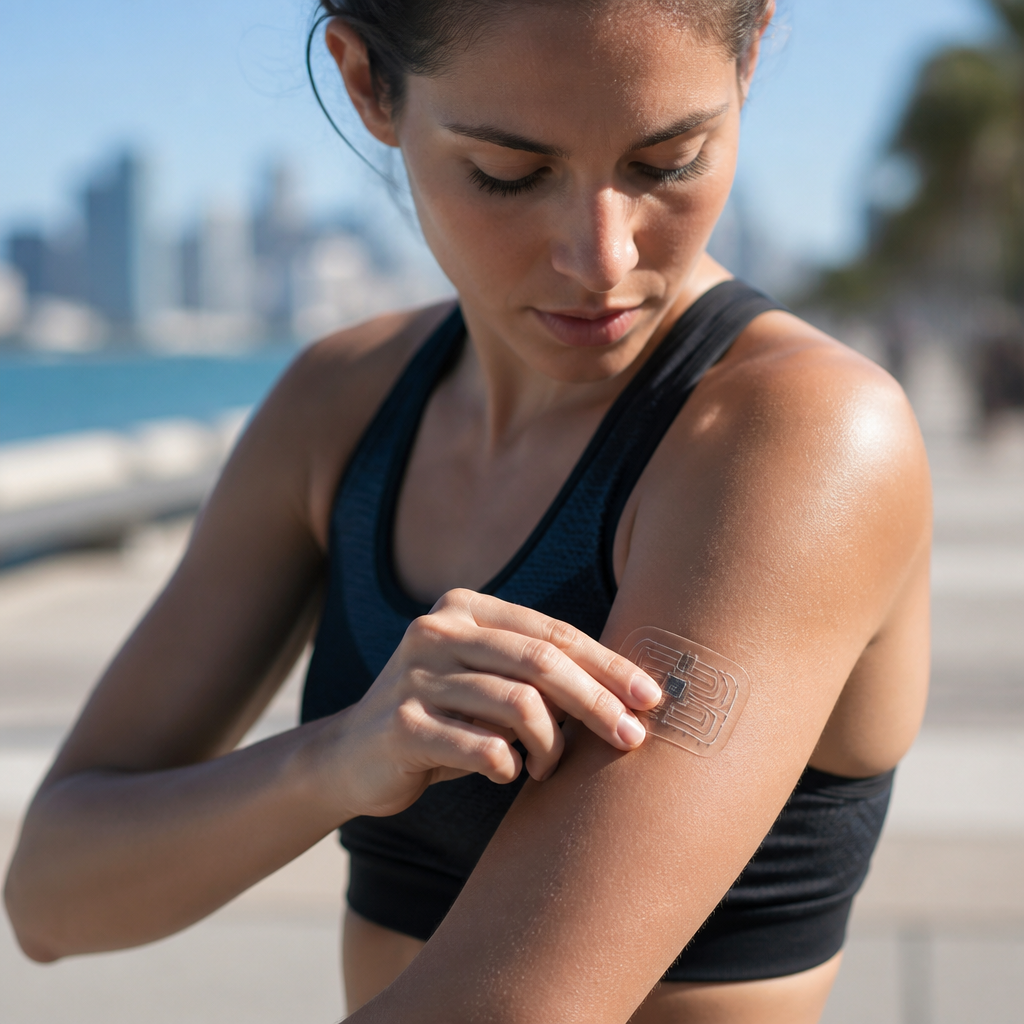
Skin patches are another major category. Smart polymer adhesives can be engineered for breathability, moisture management, and painless removal. That is critical in neonatal care, elder care, and long-duration wear, where skin fragility is a real constraint. Drug-delivery wearables also benefit from responsive membranes that regulate permeability under heat, pH, or electrical stimulation. In sports, compression garments with polymer-based strain sensors can detect fatigue patterns and asymmetries that coaching staff use to modify training loads.
Industrial wearables represent a less discussed but important growth area. Smart gloves, exosleeves, and fatigue-monitoring patches need to survive sweat, abrasion, and repeated flexing. Self-healing coatings and tough elastomeric layers extend product life and reduce signal loss from microdamage. These use cases show why smart polymers are not a niche material story. They are becoming the enabling layer that makes wearable tech more accurate, more comfortable, and more commercially viable.
Examples of Product Categories and Material Choices
When companies launch wearable products, the material stack usually determines both user experience and technical reliability. The table below summarizes common categories, the smart polymer approach behind them, and the practical advantage that users notice first.
| Wearable category | Typical smart polymer used | Main function | User benefit |
|---|---|---|---|
| ECG or biosignal patch | Conductive polymer film, hydrogel adhesive | Signal transfer and skin contact | Better readings with less irritation |
| Smart textile shirt | Stretchable conductive elastomer | Motion and respiration sensing | Comfort during exercise and daily wear |
| Rehabilitation brace or sleeve | Shape-memory polymer, strain-sensitive composite | Adaptive fit and movement tracking | More secure support with usable data |
| Temperature or sweat patch | Responsive hydrogel membrane | Fluid handling and analyte access | Longer wear time and more stable sensing |
| Protective industrial wearable | Self-healing coating, durable elastomer layer | Surface recovery and flex resistance | Longer product life in harsh conditions |
These combinations are not theoretical. Companies working in printed electronics, medical adhesives, and e-textiles already use variants of them. DuPont, Henkel, 3M, Arkema, BASF, and specialty suppliers across conductive inks and flexible substrates all play a role in turning materials research into launchable products. The most successful wearable products are rarely built around one miracle material. They depend on a tuned system that aligns sensor design, polymer behavior, packaging, and skin interaction.
Challenges Companies Must Solve Before Launch
Smart polymers improve wearables, but they also introduce design and manufacturing complexity. One challenge is long-term stability. A polymer that performs well in a controlled lab test may drift after exposure to sweat salts, repeated washing, ultraviolet light, skin oils, or cyclic strain. Another challenge is hysteresis, where the material response during loading does not perfectly match the response during unloading. For motion sensors, that can distort data. Engineers must characterize these effects early, not after pilot production.
Biocompatibility is another nonnegotiable issue. Materials touching skin for extended periods need careful assessment for irritation, sensitization, and chemical safety. Breathability, adhesive residue, and microbial growth risk all matter in real use. I have seen otherwise promising patches fail user testing because edge lifting caused friction and sweat pooling. The polymer itself was advanced; the product stack was not mature enough. That distinction matters for launch planning.
Cost and manufacturability can also limit adoption. Some high-performance smart polymers are difficult to process consistently at scale or require environmental controls that raise production costs. Others integrate poorly with legacy assembly lines. A product manager evaluating new product launches should ask practical questions: Can the material survive sterilization or washing? Does it bond reliably to textile layers? Are there supply chain backups? Can quality control detect small formulation shifts before they affect performance? The brands that answer those questions early move faster from prototype to profitable launch.
How to Evaluate Smart Polymer Wearables as a Buyer or Product Team
If you are assessing new product launches in wearable tech, focus on five criteria. First, ask what stimulus the polymer responds to and why that response improves the device. Second, verify whether the claimed benefit is linked to measurable outcomes such as lower motion artifacts, longer wear duration, better adhesion retention, or higher user compliance. Third, examine durability evidence under realistic conditions, including sweat exposure, repeated bending, wash cycles, and temperature changes. Fourth, review skin-contact claims carefully, especially for medical or extended-wear applications. Fifth, consider serviceability and end-of-life factors, because hybrid polymer-electronic systems can be harder to recycle or repair.
This hub article should help readers navigate related coverage under new product launches. If you are comparing biosensor patches, start with electrode materials and adhesives. If you are evaluating smart apparel, inspect stretch recovery, wash performance, and connector design. If you are tracking rehabilitation devices, look at adaptive fit mechanisms and calibration drift over time. Those details reveal whether a launch is a meaningful advance or simply a repackaged wearable with new branding.
Smart polymers are revolutionizing wearable tech because they let products respond to the realities of the human body instead of fighting them. They improve fit, signal quality, comfort, durability, and long-term usability across medical, athletic, industrial, and consumer applications. As new product launches continue to expand, the strongest offerings will be the ones built on disciplined material selection, validated performance data, and honest attention to wear conditions outside the lab. For anyone following innovative products and solutions, this is the hub topic to watch because it connects directly to biosensing, smart textiles, remote care, and flexible electronics. Use this page as your starting point, then explore deeper articles on specific wearable categories, component technologies, and launch trends to identify which smart polymer innovations are ready for real-world adoption now.
Frequently Asked Questions
What are smart polymers, and why are they so important in wearable technology?
Smart polymers are engineered materials that respond to specific environmental triggers such as heat, moisture, strain, light, pH, or electrical signals. Unlike conventional materials used in wearables, which typically stay fixed in their shape and performance, smart polymers can actively change how they behave in real time. That change might include becoming more flexible, altering electrical conductivity, changing color, improving adhesion, or even shifting shape. In wearable technology, this matters because the human body is dynamic. Skin stretches, temperature changes throughout the day, sweat levels rise and fall, and motion creates constant mechanical stress. A material that can adapt to those changes offers a major advantage over rigid components.
The importance of smart polymers in wearables comes down to comfort, accuracy, and functionality. Traditional wearable devices often struggle with maintaining consistent skin contact, delivering reliable sensor readings during movement, or staying comfortable over long periods. Smart polymers help solve those problems by making the device more responsive to the user’s body and environment. For example, a polymer that softens with body heat may improve fit, while one that responds to strain can help detect movement more precisely. This adaptive behavior opens the door to wearables that feel less like hardware strapped onto the body and more like integrated systems that work with the body naturally. That shift is what makes smart polymers such a transformative force in next-generation health trackers, smart textiles, medical patches, and performance monitoring devices.
How do smart polymers improve the comfort and fit of wearable devices?
Comfort and fit are among the biggest challenges in wearable design, and smart polymers directly address both. The body is constantly in motion, and skin is soft, irregular, and sensitive to pressure, friction, and moisture. A rigid wearable can create discomfort, lose alignment with sensors, or even cause irritation over time. Smart polymers can be designed to adapt to these conditions by changing their flexibility, stiffness, or surface properties in response to the wearer’s environment. That means a wearable device can conform more naturally to the body and maintain better contact without feeling restrictive.
For example, thermoresponsive smart polymers may react to body heat by becoming softer or more form-fitting, which helps a patch or band sit more comfortably against the skin. Moisture-responsive polymers can adjust when sweat is present, helping manage adhesion or breathability during exercise or prolonged use. Shape-memory polymers are another important category because they can be programmed to assume a specific form and then return to it when triggered. In wearables, this can support products that are easy to put on but then gently adapt to body contours for a secure fit. The result is improved wearability during daily activity, sports, sleep tracking, or medical monitoring. Better fit is not only about user experience; it also improves sensor performance by reducing gaps, slippage, and inconsistent contact, all of which can interfere with accurate readings.
What kinds of wearable applications benefit most from smart polymers?
Smart polymers are especially valuable in wearable applications that need to interact closely and continuously with the body. Health monitoring is one of the strongest examples. Wearable biosensors that track heart rate, respiration, hydration, body temperature, glucose-related markers, or muscle activity all benefit from materials that can maintain stable contact with skin while adapting to motion and changing conditions. In medical patches, smart polymers can support better adhesion, more comfortable long-term wear, and more reliable data collection. Some advanced systems also use these materials in drug delivery devices, where the polymer responds to a trigger such as temperature or pH to control when and how a treatment is released.
Sports and fitness wearables are another major area of impact. Athletes generate heat, sweat, and constant movement, which can compromise the performance of traditional devices. Smart polymers can help garments and sensors stay comfortable, breathable, and responsive during intense activity. In smart clothing, they may be integrated into fibers or coatings that detect strain, monitor posture, or react to environmental conditions. Consumer electronics also stand to benefit, especially as wearables become lighter, softer, and more discreet. Flexible smart bands, adaptive earbuds, responsive compression sleeves, and rehabilitation devices all become more practical when the material itself contributes to sensing or adaptation. In short, the applications that benefit most are those where comfort, continuous skin interaction, durability under movement, and real-time responsiveness are essential.
How do smart polymers help wearable sensors become more accurate and reliable?
Wearable sensor accuracy depends heavily on stable contact, consistent positioning, and the ability to function despite motion, sweat, and temperature changes. Smart polymers improve all of these factors. Because they can respond to mechanical strain, thermal shifts, or moisture, they help the wearable maintain better alignment with the body and preserve the signal quality needed for dependable measurements. A sensor built with or supported by smart polymer materials can flex with the skin rather than pulling away from it, which reduces noise and improves data consistency during everyday movement.
Some smart polymers also play a direct sensing role. For instance, conductive polymers can change their electrical properties in response to bending, stretching, or pressure, allowing the material itself to act as part of the sensor. That makes it possible to monitor motion, joint flexion, pulse signals, or muscle activity with less bulky hardware. In other cases, the polymer may regulate permeability or adhesion, which helps ensure that sweat, temperature, or micro-movements do not disrupt performance. This is especially important in medical-grade wearables, where reliable readings are critical for clinical decision-making or long-term health management. By making sensors more body-compatible and more responsive to real-world conditions, smart polymers help close the gap between lab-quality measurement and practical, everyday wearable use.
What challenges still need to be solved before smart polymers are used in more mainstream wearable devices?
Although smart polymers offer enormous potential, there are still important technical and commercial challenges to address before they become standard across the wearable market. One of the biggest issues is durability. Wearables must survive repeated stretching, bending, washing, sweating, and exposure to changing environmental conditions. A smart polymer may perform extremely well in controlled testing but still face degradation over time in real-life use. Maintaining a reliable response after hundreds or thousands of use cycles is essential, especially for products intended for daily wear or medical applications.
Manufacturing and integration are also significant hurdles. Smart polymers often need to work alongside electronics, sensors, batteries, conductive traces, and textile components, and combining all of those elements into a scalable product is not simple. Cost can rise quickly when materials require specialized processing or tight performance tolerances. There are also regulatory and safety considerations, particularly for skin-contact and healthcare wearables. Materials must be biocompatible, stable, and safe for prolonged use. In addition, developers need to ensure that the polymer’s response is predictable, repeatable, and energy-efficient. Despite these challenges, progress is moving quickly. Advances in materials science, flexible electronics, and textile engineering are steadily improving the practicality of smart polymers. As those barriers continue to fall, wearable devices are likely to become more adaptive, less intrusive, and far more capable than the static hardware designs that dominated earlier generations.