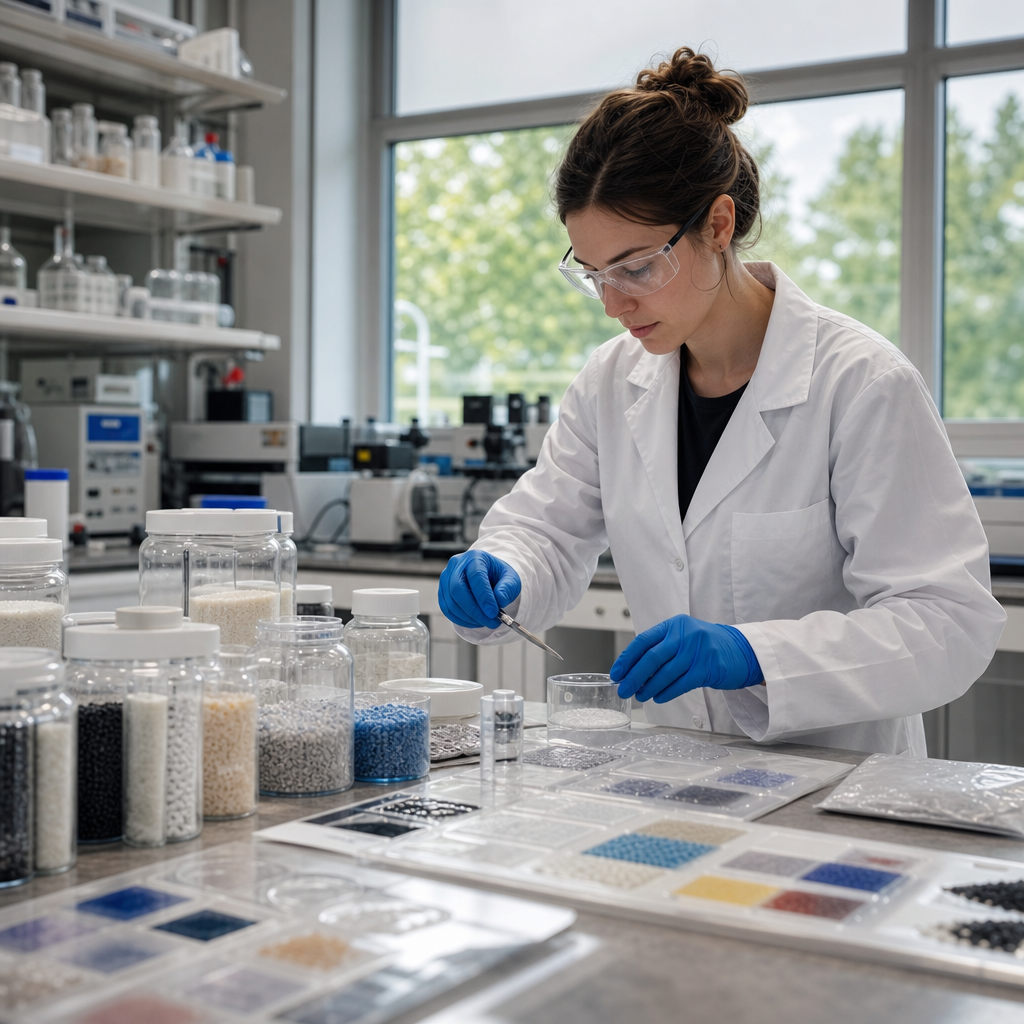
Cloud-based tools for polymer science have moved from optional convenience to core research infrastructure, changing how chemists design experiments, analyze data, model macromolecules, and collaborate across institutions. In polymer science, “cloud-based” means software, storage, and computing resources delivered over the internet rather than installed only on a local workstation. That includes electronic lab notebooks, molecular simulation platforms, laboratory information management systems, shared data repositories, notebook environments for coding, and software-as-a-service products for spectroscopy, chromatography, rheology, and thermal analysis. For researchers, educators, and industrial teams, these tools matter because polymer work generates complex, high-volume data: molecular weight distributions, conversion curves, NMR peak assignments, DSC thermograms, GPC traces, tensile data, microscopy images, and simulation outputs. Managing those assets with email attachments and disconnected desktop files creates risk, duplication, and delays.
I have seen this shift most clearly in multidisciplinary projects where synthetic chemists, characterization specialists, and data scientists must interpret the same material from different angles. A biodegradable copolymer project, for example, may start with monomer selection in a molecular modeling platform, move into reaction planning within an electronic lab notebook, continue through GPC, FTIR, and DSC analysis pipelines, and finish with cloud dashboards that compare composition, dispersity, crystallinity, and mechanical performance. When those steps happen in a connected environment, researchers spend less time reconciling filenames and more time answering scientific questions. Universities benefit because students learn reproducible digital workflows. Industrial laboratories benefit because quality records, approvals, and audit trails become easier to maintain. This guide explains the major categories of cloud-based tools for polymer science, what problems each category solves, how to evaluate them, and how to build a practical software stack that supports teaching, research, product development, and scale-up.
What cloud-based tools include in polymer science
Cloud-based tools for polymer science fall into several functional groups, and understanding those groups is the fastest way to choose the right platform. First are collaboration and recordkeeping tools such as electronic lab notebooks and laboratory information management systems. These systems capture synthesis procedures, batch records, sample metadata, and approvals. Second are data analysis platforms that process instrument output from gel permeation chromatography, nuclear magnetic resonance, differential scanning calorimetry, thermogravimetric analysis, dynamic mechanical analysis, rheometry, and spectroscopy. Third are modeling and simulation environments used for molecular dynamics, quantum chemistry, coarse-grained simulations, and property prediction. Fourth are coding and workflow tools such as hosted Jupyter environments, version control platforms, and workflow orchestration software. Fifth are repositories and dashboards for storing, searching, sharing, and visualizing polymer datasets.
Each category addresses a specific bottleneck. An electronic lab notebook prevents procedural drift and makes formulations searchable. A cloud repository creates a single source of truth for raw and processed data. Hosted notebooks let teams run Python or R workflows without forcing every student to configure packages locally. Simulation platforms give access to scalable computing that is difficult to maintain on campus hardware. Dashboard tools help managers compare batches, detect outliers, and review key performance indicators. In polymer science, the categories often overlap because a single experiment can generate both structured metadata and unstructured files. A tensile test, for instance, needs specimen dimensions, conditioning time, ASTM method references, stress-strain curves, and summary statistics. A useful cloud environment links all of those pieces rather than storing them in isolated folders.
Electronic lab notebooks, LIMS, and sample tracking
Electronic lab notebooks are usually the first cloud tools a polymer group adopts because they solve daily operational problems immediately. Platforms such as Benchling, LabArchives, Signals Notebook, and SciNote allow researchers to document monomer purification, initiator handling, polymerization conditions, workup, and characterization in a standardized format. In practice, this means a student can record exact reagent lot numbers, solids content, reactor temperature profile, stir rate, and purification steps, then attach spectra and chromatograms directly to the experiment record. Searchability is the hidden advantage. When a principal investigator asks for every RAFT polymerization using a certain chain transfer agent above a specific monomer-to-CTA ratio, a good notebook retrieves those experiments quickly.
For larger organizations, a laboratory information management system adds formal sample registration, barcoding, workflow routing, permissions, and instrument integration. This matters in polymer characterization cores and industrial laboratories where dozens of samples pass through GPC, DSC, TGA, and mechanical testing each week. A LIMS can assign identifiers, track custody, and tie final reports to the originating batch. That traceability supports ISO 9001 environments and regulated sectors such as medical devices. The tradeoff is setup complexity. ELNs are easier to deploy but can become inconsistent if templates are poorly designed. LIMS implementations are stronger for process control but require careful mapping of sample types, metadata fields, and approval pathways. For many academic groups, the practical path is starting with an ELN and adding lightweight sample registration before moving to a full LIMS.
Data analysis platforms for polymer characterization
Polymer science depends on instrument data, and cloud-based analysis tools are most valuable when they reduce manual reformatting and improve reproducibility. Common polymer datasets include molecular weight distributions from GPC or SEC, compositional information from NMR and FTIR, thermal transitions from DSC, degradation profiles from TGA, viscoelastic behavior from DMA and rheology, and morphology from SEM, TEM, AFM, or optical microscopy. Many instrument vendors still ship desktop software, but labs increasingly move processed exports and metadata into cloud workspaces for secondary analysis, peer review, and reporting. A well-designed workflow keeps raw files immutable, applies versioned analysis scripts, and stores outputs with method parameters so another researcher can reproduce the result later.
Python has become the practical language for this layer because libraries such as pandas, NumPy, SciPy, matplotlib, Plotly, and scikit-learn can handle most polymer data tasks. In hosted notebook environments, teams can standardize scripts for baseline correction, peak integration, calibration curves, smoothing, deconvolution, and statistical comparison of replicate batches. A clear example is SEC data processing. Instead of manually exporting peak tables and calculating number-average molecular weight, weight-average molecular weight, and dispersity in spreadsheets, a shared notebook can ingest standardized files, apply calibration consistently, and generate publication-quality figures automatically. The same logic applies to DSC, where heating rate, baseline choice, and integration limits strongly affect glass transition or melting enthalpy interpretation. Centralized scripts do not eliminate scientific judgment, but they make that judgment visible and reviewable.
Molecular modeling, simulation, and high-performance computing
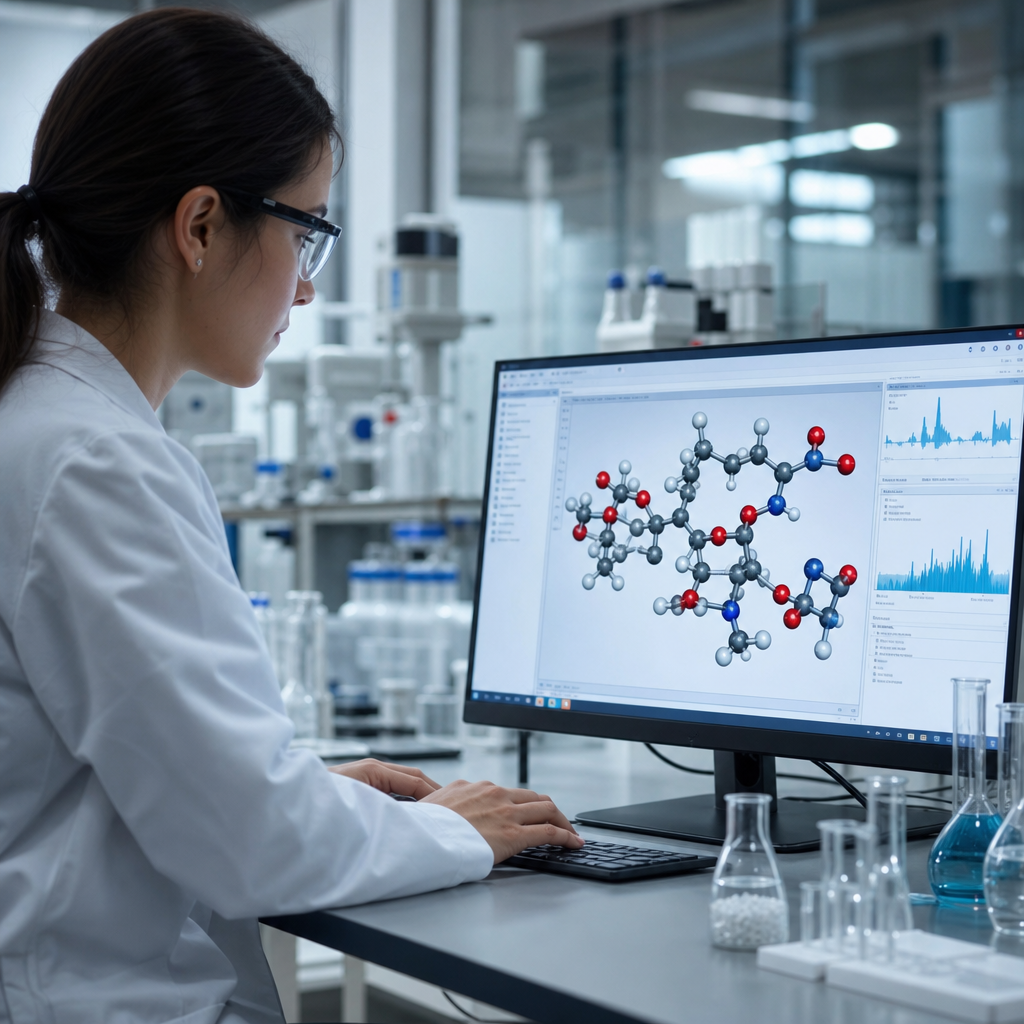
Cloud-based computing is especially useful in polymer modeling because simulations are computationally uneven. A researcher may need modest resources for a quick conformational scan, then hundreds of cores for a molecular dynamics job or a screening workflow. Cloud platforms let teams scale up when needed without maintaining local clusters. In polymer science, common modeling tasks include estimating solubility parameters, predicting miscibility, exploring chain conformation, simulating diffusion, calculating glass transition trends, and screening monomer combinations before synthesis. Tools may involve classical molecular dynamics packages such as GROMACS or LAMMPS, quantum chemistry software, mesoscale approaches, and materials informatics platforms that connect molecular descriptors to properties.
The benefit is not only raw compute. Cloud environments also improve reproducibility through containers, templates, and workflow managers. When I have set up simulation pipelines for polymer blends, the most valuable feature was not speed alone but the ability to preserve exact software versions, force fields, input structures, and post-processing scripts. That record prevents a common problem in academic labs: one student leaves, and no one can reproduce the trajectory analysis six months later. The limitation is that simulation results are only as reliable as the model assumptions. Force-field choice, equilibration time, chain length representation, and sampling strategy all matter. Cloud tools make advanced modeling accessible, but they do not replace polymer physics. Researchers still need to validate predictions against experimental data such as SAXS, DSC, permeability, or mechanical testing.
Comparing core cloud tool categories
Choosing a cloud software stack is easier when teams map each tool to a scientific or operational need. The comparison below reflects what typically matters in polymer laboratories: experiment capture, sample traceability, analysis consistency, computational scale, and data sharing. No single platform is best for every group. A teaching lab prioritizes ease of use and low administrative overhead, while an industrial formulation team may prioritize permissions, audit logs, and integration with enterprise systems such as ERP or MES. The best hub strategy is to define the workflows first, then select tools that fit them.
| Tool category | Primary use in polymer science | Best fit | Main limitation |
|---|---|---|---|
| Electronic lab notebook | Record synthesis, formulations, protocols, spectra, approvals | Academic labs, R&D teams, teaching groups | Metadata quality depends on templates and user discipline |
| LIMS | Register samples, track instruments, manage chain of custody | Shared facilities, QA labs, regulated environments | Higher setup cost and more process design work |
| Hosted notebooks and analytics | Run Python or R for GPC, DSC, rheology, spectroscopy analysis | Data-driven research groups and collaborative projects | Requires scripting skills and governance for versions |
| Cloud simulation platform | Model chains, blends, diffusion, structure-property relationships | Computational polymer science and pre-screening studies | Can be expensive and sensitive to model assumptions |
| Repository and dashboard | Store datasets, visualize trends, share reports and KPIs | Programs managing many batches or cohorts | Value depends on clean upstream data |
Data management, metadata, and FAIR practice
The most overlooked part of cloud-based polymer science is metadata design. Without consistent metadata, even the best platform turns into a file warehouse. Polymer datasets need fields that reflect chemistry and processing reality: monomer identity, feed ratio, conversion, initiator or catalyst, solvent, temperature profile, reaction time, purification route, target molecular weight, measured molecular weight, dispersity, thermal transitions, specimen geometry, processing history, humidity conditioning, and test standard. Naming conventions also matter. A sample label like “Run 7 final” is nearly useless compared with a structured identifier that encodes project, batch, composition, and date. I recommend defining a metadata schema before large-scale migration, then building templates around the minimum fields required to reproduce a result.
Good data management supports findability, accessibility, interoperability, and reuse. In practical terms, that means storing raw data separately from processed outputs, preserving provenance, using nonproprietary exports when possible, and documenting analysis steps. For polymer datasets, CSV, JSON, and open image formats improve portability compared with opaque binary files alone. Persistent identifiers, controlled vocabularies, and clear units reduce confusion across teams. A tensile modulus entered as “1.2” without stating GPa or MPa is a classic source of avoidable error. Reuse also depends on context. If a repository contains DSC curves but not heating rate, sample mass, pan type, purge gas, and thermal history, the data are hard to compare meaningfully. Cloud tools enable better stewardship, but only if labs treat metadata as part of the experiment rather than an afterthought.
Security, compliance, and collaboration across institutions
Security questions often determine whether cloud adoption succeeds. Polymer research can involve unpublished IP, customer formulations, defense-related materials, or student records, so access control cannot be casual. The baseline features to look for are single sign-on, multifactor authentication, encryption in transit and at rest, role-based permissions, audit logs, and retention policies. Vendors should clearly state where data are hosted and how backups, disaster recovery, and incident response are handled. For institutions subject to contractual restrictions, data processing agreements and export control reviews may be necessary. In industrial settings, cloud platforms should align with quality systems and validation expectations, especially when records support release decisions or regulated submissions.
At the same time, collaboration is the reason many teams move to the cloud in the first place. Multi-institution polymer projects benefit from shared workspaces where synthetic procedures, spectra, mechanical data, and modeling outputs can be reviewed without endless file transfers. A membrane research consortium, for example, might have one site synthesizing block copolymers, another running permeability testing, and a third performing simulations. A secure cloud repository with role-based access lets each partner contribute data to the same project record while preserving permissions. The hard part is governance. Someone must define folder structures, metadata standards, approval rules, and archival policy. The technology is straightforward; the operating model is what keeps collaboration efficient and defensible.
Building a practical cloud stack for education and research
For an Educational Resources hub, the most useful advice is to build a cloud stack in layers rather than buying every platform at once. Start with the core workflow that creates the most friction. In many polymer groups, that is experiment documentation and sample tracking, so an electronic lab notebook is the logical first step. Next, add a shared storage and repository layer with clear naming conventions and metadata fields. Then introduce hosted notebooks for analysis so students and researchers can run standardized workflows for common polymer data types. Finally, add specialized simulation or dashboard tools where they directly support research questions or program oversight. This staged approach reduces implementation fatigue and reveals what integrations actually matter.
Training is as important as software selection. Students should learn not just where to upload a GPC trace, but how to document calibration, state assumptions, version analysis scripts, and annotate anomalies. Research staff should know when a spreadsheet is sufficient and when a version-controlled notebook is safer. Faculty and managers should set expectations for data review, ownership, and retention. The strongest cloud environments are not the ones with the most features; they are the ones embedded into daily scientific practice. If you are building a polymer science software and tools resource center, use this article as the hub: link out to detailed guides on ELNs, polymer data analysis in Python, cloud simulation workflows, metadata standards, and instrument-specific pipelines. Start small, standardize early, and expand only when each layer is delivering clear scientific value.
Frequently Asked Questions
What are cloud-based tools in polymer science, and why have they become so important?
Cloud-based tools in polymer science are digital platforms and computing resources that are accessed over the internet instead of being installed and run only on a single local computer. In practice, this can include electronic lab notebooks, laboratory information management systems, cloud storage, shared data analysis environments, molecular modeling and simulation platforms, workflow automation tools, and collaboration software. For polymer researchers, these tools matter because polymer science often involves complex experimental records, large characterization datasets, multi-step synthesis workflows, and computationally intensive modeling of macromolecules. Managing all of that efficiently on isolated desktop systems can be limiting.
The reason these tools have become central rather than optional is that they directly support the way modern polymer research is conducted. Teams are often distributed across departments, institutions, and even countries, so they need real-time access to formulations, protocols, analytical results, and simulation outputs. Cloud platforms make it easier to standardize data entry, version experimental records, track sample histories, and connect experimental and computational work in one digital environment. They also reduce dependence on one physical machine or one local server, which improves continuity and accessibility.
Another major advantage is scalability. Polymer science can generate very different types of data, from molecular weight distributions and spectroscopy files to rheology measurements and high-throughput screening results. Cloud systems can store, organize, and process these datasets more flexibly than traditional local setups. In computational polymer science, cloud resources also allow researchers to run demanding simulations or machine learning workflows without maintaining expensive in-house hardware. As a result, cloud-based tools now support not only convenience, but also speed, reproducibility, collaboration, and more reliable decision-making throughout the research process.
How do cloud-based platforms help polymer scientists design experiments and manage research data more effectively?
Cloud-based platforms improve experimental design and data management by giving polymer scientists a centralized, searchable, and structured environment for recording and organizing research activity. Instead of keeping synthesis notes in paper notebooks, analytical data on separate hard drives, and sample metadata in spreadsheets, researchers can use cloud-based systems to connect all of those elements. This is especially valuable in polymer science because even a single study may involve monomer selection, reaction conditions, catalyst details, purification steps, thermal analysis, mechanical testing, and structure-property comparisons.
When experimental workflows are captured in a cloud-based electronic lab notebook or laboratory information system, the data become easier to standardize and reuse. A researcher can document exact feed ratios, reaction temperatures, residence times, solvent choices, and batch identifiers, then link them directly to characterization outputs such as NMR, GPC, DSC, TGA, or tensile test results. This structured approach makes it easier to compare experiments across projects, identify sources of variability, and reproduce successful protocols. It also helps teams avoid repeating failed experiments simply because the original details were incomplete or hard to locate.
These tools also support better planning. Researchers can build templates for recurring polymerization procedures, establish naming conventions for samples, automate reminders for measurements, and create dashboards that show where projects stand. For high-throughput or combinatorial polymer research, cloud systems are particularly helpful because they can track large matrices of formulations and outcomes in a consistent way. In addition, advanced cloud platforms may integrate statistics, visualization, and even predictive modeling, helping scientists move from raw data to actionable conclusions more quickly. The overall result is a more organized research environment where data are easier to trust, analyze, share, and build upon.
Can cloud-based tools support polymer modeling, simulation, and advanced data analysis?
Yes, and this is one of their most valuable roles in modern polymer science. Polymer modeling and simulation often require significant computing power because polymers are large, flexible, and structurally complex systems. Whether researchers are studying chain conformation, self-assembly, diffusion, viscoelastic behavior, interfacial interactions, or structure-property relationships, the calculations can be demanding. Cloud-based computational platforms allow scientists to access scalable computing resources without needing to purchase and maintain all of the hardware locally.
For example, a polymer scientist may use cloud-based molecular simulation tools to model polymer blends, block copolymers, crosslinked networks, or polymer-solvent interactions. Depending on the research goal, the platform may support molecular dynamics, Monte Carlo methods, quantum chemistry workflows, coarse-grained simulations, or multiscale modeling. Running these tasks in the cloud can reduce bottlenecks because computing resources can be expanded as needed, and workflows can often be launched, monitored, and shared through a web interface. This lowers technical barriers for research groups that do not have a dedicated high-performance computing infrastructure.
Cloud environments are also increasingly useful for advanced data analysis and machine learning. Polymer science datasets can be heterogeneous and difficult to integrate, but cloud platforms can bring together synthesis parameters, compositional data, processing conditions, and characterization results into a single analytical pipeline. Researchers can then apply statistical models, clustering methods, predictive algorithms, or optimization tools to identify patterns that might be difficult to detect manually. This is especially promising in materials discovery, where cloud-based tools can help prioritize promising formulations or predict performance trends. In short, cloud technology expands both the scale and sophistication of computational and analytical work in polymer science.
What should researchers look for when choosing a cloud-based tool for polymer science?
Choosing the right cloud-based tool starts with understanding the specific needs of the research group, because polymer science spans experimental synthesis, processing, characterization, simulation, and data science. A useful platform should fit the actual workflow of the lab rather than forcing the lab to work around the software. Researchers should first consider whether they need support for experimental recordkeeping, data storage, instrument integration, collaboration, computational modeling, regulatory traceability, or all of the above. The best choice often depends on whether the team is focused on academic discovery, industrial R&D, scale-up, or interdisciplinary collaboration.
Data structure and compatibility are critical. Polymer labs generate many file types and metadata categories, so the platform should make it easy to capture both raw data and contextual information such as sample identity, molecular architecture, processing history, and testing conditions. Searchability matters as well. If users cannot quickly find a polymer batch, compare related experiments, or trace a sample from synthesis to final performance testing, the system will not provide its full value. Integration with analytical instruments, modeling packages, or external databases can also be a major advantage, especially for teams that want to build end-to-end digital workflows.
Security, access control, and reliability should be evaluated carefully. Research groups need confidence that sensitive data are protected, backed up, and accessible only to authorized users. This is particularly important when projects involve intellectual property, industrial partnerships, or unpublished results. Ease of use is another key factor. Even powerful software can fail if the interface is too difficult or if adoption requires excessive training. Finally, researchers should consider scalability, vendor support, export options, and long-term flexibility. A cloud-based tool should not only solve current problems, but also support growth as the lab generates more data, collaborates more widely, and adopts more advanced digital methods.
Are there any challenges or risks associated with using cloud-based tools in polymer science?
Yes, although the benefits are substantial, cloud-based tools also come with practical and strategic challenges that researchers should address early. One common concern is data security and privacy. Polymer research can involve proprietary formulations, unpublished findings, or commercially sensitive process information, so teams need to understand how their cloud provider handles encryption, authentication, backups, compliance, and user permissions. A secure platform can be highly reliable, but only if it is configured thoughtfully and used with strong internal data governance practices.
Another challenge is data quality and standardization. Cloud systems are powerful, but they do not automatically fix inconsistent naming, incomplete records, or poorly designed workflows. If users enter polymer compositions, sample identifiers, or processing conditions in inconsistent ways, the resulting database can become difficult to search and analyze. Successful implementation usually requires agreed-upon conventions for metadata, templates for common experiments, and training so that everyone records information consistently. This is especially important in polymer science, where subtle differences in composition or processing can strongly affect final properties.
Researchers should also be aware of adoption barriers, cost structure, and dependence on internet access or external vendors. Transitioning from paper records or fragmented local systems to a cloud platform can require cultural change, process redesign, and time for onboarding. Subscription costs may also increase as storage, user counts, or computing needs grow. In addition, if a team relies heavily on one provider, it should understand how easy it is to export data and move workflows elsewhere if needed. Despite these concerns, most risks can be managed with careful planning, clear policies, and thoughtful platform selection. For many polymer science groups, the long-term gains in organization, reproducibility, and collaboration far outweigh the initial challenges.