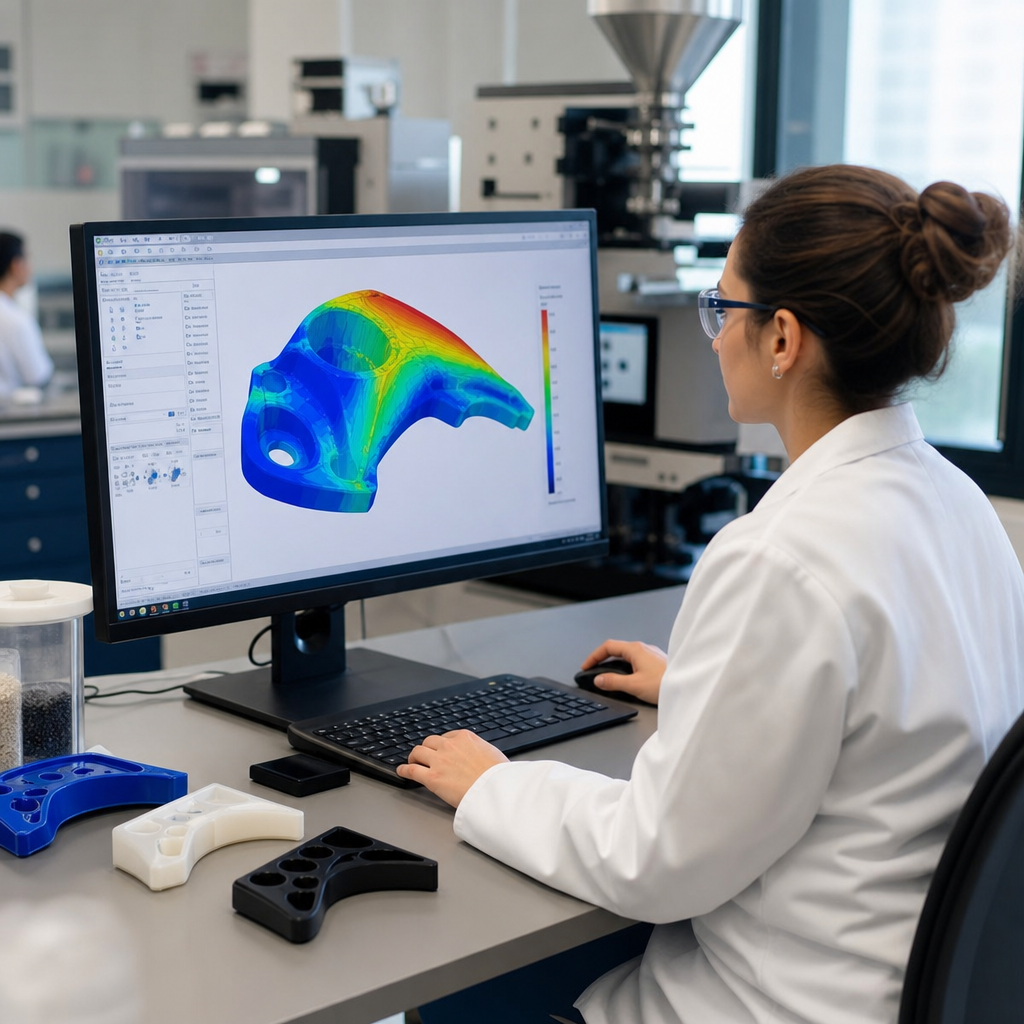
Software now sits at the center of polymer product development, shaping how teams design materials, validate performance, control manufacturing, and launch products faster with less waste. In practical terms, software and tools in the polymer industry include computer-aided design platforms, simulation environments, laboratory information systems, statistical analysis packages, manufacturing execution software, quality management systems, and product lifecycle management platforms. Together, these systems turn polymer development from a trial-and-error process into a data-driven workflow. That shift matters because polymer products face rising performance demands, tighter regulatory scrutiny, shorter commercial timelines, and increasing pressure to reduce cost and environmental impact. I have seen projects that once required months of iterative prototyping move forward in weeks when formulation data, mold-flow analysis, test results, and change records were connected inside a coherent digital process. For manufacturers of packaging, medical devices, automotive parts, consumer goods, wire and cable, and industrial components, software is no longer an administrative add-on. It is infrastructure for decision-making. A strong software stack helps teams answer the core questions early: which resin family is suitable, how will fillers affect stiffness, what geometry will mold cleanly, where will a part fail under load, can the process window hold tolerance, and what documentation will customers or regulators require. This hub article explains the main categories of software used across polymer product development, how they fit together, and where each creates measurable value. It also highlights the limits of digital tools, because simulation, databases, and automation are powerful only when grounded in sound materials science and disciplined engineering practice.
Material selection and formulation software
Material selection is often the first major decision in polymer product development, and specialized software makes that decision faster and more defensible. Databases such as UL Prospector, MatWeb, CAMPUS, and Granta Selector organize resin properties including tensile modulus, impact strength, melt flow index, glass transition temperature, heat deflection temperature, dielectric behavior, flammability ratings, and chemical resistance. In daily engineering work, these tools narrow hundreds of candidate materials into a manageable shortlist by linking requirements to property ranges. If a housing must survive 120 degrees Celsius, resist oils, meet UL 94 V-0, and retain dimensional stability, the database can quickly filter options that satisfy those constraints. That prevents teams from relying on habit or supplier brochures alone.
Formulation development requires more than property lookup. Compounders and R&D teams use statistical software such as JMP, Minitab, and Design-Expert to structure experiments for blends, additives, fillers, plasticizers, stabilizers, pigments, and reinforcements. Instead of changing one variable at a time, engineers apply design of experiments methods to identify interactions among ingredients and process settings. In one compounding program I supported, a fractional factorial design revealed that impact modifier level and screw speed interacted strongly, affecting not only toughness but also surface finish. Without software-assisted analysis, that relationship would have been difficult to detect. These platforms also support mixture design, response surface modeling, and desirability functions, which are particularly useful when balancing stiffness, elongation, shrinkage, color, and cost in the same formulation.
Material software is most effective when users understand test-method context. A tensile strength value from ASTM D638 is not interchangeable with every internal specification, and a datasheet generated from dry-as-molded samples may not predict hydrolyzed performance in service. Good tools help organize data; they do not replace technical judgment about morphology, crystallinity, orientation, or environmental aging.
CAD, CAE, and digital prototyping
Once a material path is identified, product developers use CAD and CAE software to convert requirements into part geometry and engineering evidence. SolidWorks, PTC Creo, Siemens NX, and Autodesk Inventor remain common CAD platforms for polymer product design, while simulation tools such as ANSYS, Abaqus, COMSOL, Altair HyperWorks, and Autodesk Moldflow evaluate structural, thermal, and processing behavior. For polymers, digital prototyping matters because geometry, wall thickness, rib design, gate placement, fiber orientation, and cooling strategy are deeply linked. A seemingly minor change in nominal wall can alter sink marks, warpage, cycle time, and long-term creep.
Finite element analysis helps predict deformation, stress concentration, snap-fit behavior, and fatigue risk before expensive tooling is cut. In plastics, however, simulation quality depends heavily on the material model. Linear elastic assumptions may be acceptable for an initial screen, but many applications need viscoelastic, elasto-plastic, hyperelastic, or creep-capable models. Thermoplastic elastomers, silicone-like materials, and filled nylon grades can behave very differently under sustained load, temperature swings, and moisture uptake. Engineers who treat polymer parts like metal parts inside generic FEA often miss the real failure modes. Good software allows orthotropic properties, temperature dependence, and nonlinear contact, which brings analysis closer to physical reality.
Mold-flow and process simulation are especially valuable for injection molded products. Tools can predict fill imbalance, weld lines, air traps, clamp force, shear heating, fiber orientation, sink, and warpage. In automotive interior programs, using mold-flow before tool release routinely prevents costly redesigns by identifying gate moves or cooling changes early. For extrusion and blow molding, specialized simulation software supports die design, parison control, and thickness distribution. The practical benefit is straightforward: fewer tool modifications, more stable launch conditions, and better first-pass yield.
Laboratory data systems and knowledge management
Polymer development generates data at every step: rheology curves, DSC thermograms, TGA results, FTIR spectra, color readings, mechanical tests, weathering data, microscopy images, and processing notes. Without structured software, that knowledge becomes fragmented across spreadsheets, paper notebooks, shared drives, and individual memory. Laboratory information management systems and electronic laboratory notebooks solve this problem by creating traceable records for samples, methods, instruments, and approvals. Platforms such as LabWare, STARLIMS, Benchling, and Signals Notebook are increasingly used where formulation complexity and compliance requirements justify formal data governance.
The value is not simply storage. A well-implemented laboratory system improves reproducibility and speeds problem-solving. If a customer reports brittle failure in a polycarbonate blend after six months in service, the team can retrieve the exact lot history, drying conditions, regrind percentage, molding parameters, DSC baseline, and impact data tied to that release. That is a completely different response capability from searching old emails and unlabeled Excel files. In regulated sectors such as medical devices or food-contact packaging, audit trails and version control are also essential. Software can document who changed a formulation, why the change occurred, what tests were rerun, and whether the revised product met the approved specification.
Knowledge management also supports continuity. Polymer teams often lose hard-won insight when experienced formulators retire or move on. A searchable digital record preserves lessons about filler dispersion, pigment interactions, screw configuration, moisture sensitivity, and known customer-specific issues. This hub topic matters because software is not just helping teams create new products; it is protecting organizational memory.
Process control, manufacturing software, and quality systems
Development does not end when the part design is frozen. For polymers, scale-up and production control determine whether a promising concept becomes a profitable product. Manufacturing execution systems, supervisory control and data acquisition platforms, statistical process control tools, and quality management systems connect development intent to shop-floor reality. Common examples include Siemens Opcenter, Rockwell FactoryTalk, Ignition, InfinityQS, ETQ Reliance, and MasterControl. These tools capture machine parameters, lot genealogy, operator actions, inspection results, and nonconformance records in near real time.
In injection molding, software can monitor melt temperature, cushion variation, fill time, cavity pressure, and cooling time, then flag drift before scrap rates rise. For extrusion, it can track barrel zones, screw speed, line speed, pressure, and gauge control, helping teams distinguish normal variation from emerging process instability. Statistical process control is particularly useful for polymer manufacturing because many defects appear gradually rather than as immediate catastrophic failures. A trend in part weight or cavity pressure can indicate drying problems, resin lot variation, or wear in a nonreturn valve long before visual rejects become obvious.
Quality software also strengthens root-cause analysis. When linked to test data and production conditions, nonconformance systems support structured methods such as 8D, fishbone analysis, and failure mode and effects analysis. Instead of saying a batch “ran poorly,” teams can correlate delamination with elevated moisture, excessive shear, contaminated regrind, or a supplier change in additive package. That level of traceability lowers recall risk and improves customer confidence.
| Software category | Primary use in polymer development | Typical tools | Main benefit |
|---|---|---|---|
| Material databases | Screen candidate resins and compare properties | UL Prospector, MatWeb, CAMPUS, Granta Selector | Faster, evidence-based material selection |
| Experimental design and statistics | Optimize formulations and process windows | JMP, Minitab, Design-Expert | Reduced trial counts and clearer variable interactions |
| CAD and engineering simulation | Design geometry and predict structural or process behavior | SolidWorks, Creo, ANSYS, Abaqus, Moldflow | Fewer prototypes and fewer tooling changes |
| Lab data and records systems | Manage samples, methods, and test history | LabWare, STARLIMS, Benchling | Traceability and reusable technical knowledge |
| Manufacturing and quality software | Control production, monitor variation, manage deviations | Ignition, InfinityQS, ETQ, FactoryTalk | Stable scale-up and improved product consistency |
Product lifecycle management and cross-functional collaboration
One of the biggest barriers in polymer product development is not technical capability but disconnected teams. R&D may optimize a formulation that sourcing cannot procure reliably. Design engineering may specify a wall section that tooling considers risky. Quality may require validation records that were never built into the project plan. Product lifecycle management software helps coordinate these moving parts by centralizing specifications, revisions, bills of materials, approvals, and change histories. Platforms such as Siemens Teamcenter, PTC Windchill, Dassault ENOVIA, and Arena are widely used to manage complex product records.
In real development programs, PLM software reduces revision chaos. A single source of truth ensures that the resin grade, color standard, drying requirement, gate location, inspection method, and packaging spec are aligned across functions. This matters acutely in polymers because equivalent-looking materials can behave very differently in process and in service. A quiet substitution from one polypropylene copolymer to another may alter shrinkage, odor, stiffness, or environmental stress crack resistance. PLM creates discipline around engineering changes so substitutions are reviewed rather than assumed harmless.
These systems are also the natural hub for linking related educational resources. A software and tools hub should point readers toward deeper topics such as polymer simulation, laboratory informatics, mold-flow analysis, SPC for plastics, formulation DOE, and digital traceability. That hub structure mirrors how work actually happens: no single tool solves development in isolation. Value comes from integration.
Limits, implementation challenges, and what good adoption looks like
Software improves polymer development only when the underlying data, workflows, and people are ready for it. The most common failure is poor data quality. If material records are inconsistent, if test methods are not normalized, or if machine tags are unreliable, dashboards and simulations will produce confident-looking but weak conclusions. Another challenge is overmodeling. Teams sometimes build elaborate digital workflows for products that need straightforward engineering decisions. The right approach is proportionality: use enough software to reduce risk and accelerate learning, not so much that the toolchain becomes the bottleneck.
Training is equally important. Mold-flow results can be misread, laboratory systems can be underused, and statistical software can generate false confidence when sample sizes are too small or assumptions are violated. Successful organizations define ownership, naming standards, data dictionaries, validation rules, and review checkpoints. They also connect software investments to operational metrics such as time to qualification, number of tool changes, scrap rate, complaint frequency, and cost of poor quality.
The best implementations share a common pattern. They start with one painful workflow, such as formulation screening or launch-stage process instability, then digitize that process in a disciplined way. Once teams trust the data and see measurable gains, they expand connections across design, lab, manufacturing, and quality.
Software has become essential to enhancing polymer product development because it converts scattered technical activity into a connected engineering system. Material databases improve resin selection, experimental design tools sharpen formulation work, CAD and simulation reduce prototype risk, laboratory systems preserve evidence, manufacturing platforms stabilize scale-up, and lifecycle software keeps cross-functional decisions aligned. The central benefit is not automation for its own sake. It is better judgment made earlier, with stronger traceability and fewer expensive surprises. That is especially important in polymer products, where materials are sensitive to formulation details, processing history, service environment, and regulatory expectations.
As the hub for software and tools within educational resources, this topic should guide readers toward the full digital workflow behind successful plastics development. Teams that choose tools carefully, maintain disciplined data practices, and respect the limits of modeling consistently outperform teams that rely on isolated spreadsheets and institutional memory alone. If you are building or improving a polymer development process, start by mapping where decisions are slow, repetitive, or poorly documented, then match those gaps to the software categories covered here. That practical first step will show where digital tools can create immediate technical and commercial value.
Frequently Asked Questions
1. How does software improve the polymer product development process from concept to launch?
Software improves polymer product development by connecting every major stage of work into a more accurate, efficient, and data-driven process. At the concept stage, computer-aided design and material modeling tools help teams define product geometry, select candidate polymers, and evaluate manufacturability before physical prototypes are made. During development, simulation software allows engineers to predict behavior such as flow, shrinkage, warpage, thermal response, mechanical performance, and long-term durability under expected use conditions. This reduces guesswork and helps teams identify design risks much earlier than traditional trial-and-error methods.
As projects move forward, laboratory information systems and statistical analysis tools help organize test results, compare formulations, track experiments, and support evidence-based decisions. Manufacturing execution systems, quality management platforms, and product lifecycle management software then extend that visibility into production and commercialization by helping teams standardize processes, control quality, manage documentation, and maintain traceability. The result is faster development cycles, fewer costly reworks, stronger collaboration across R&D, quality, and production teams, and a better chance of launching polymer products that meet both technical and market requirements on time.
2. What types of software are most commonly used in the polymer industry?
The polymer industry relies on a broad software ecosystem because product development requires both scientific precision and operational control. One of the most common categories is computer-aided design software, which helps engineers create detailed part models, tooling concepts, and assembly designs. Closely related are simulation environments used for mold flow analysis, finite element analysis, thermal modeling, and process simulation. These tools are especially valuable for predicting how a polymer will behave during processing and in end-use applications.
Laboratory information management systems and other laboratory data tools are also widely used to capture test results, manage samples, maintain method consistency, and support regulatory or customer documentation needs. Statistical analysis packages help teams interpret experimental data, evaluate process capability, optimize formulations, and identify meaningful relationships between variables such as additive concentration, temperature, pressure, and performance outcomes. In manufacturing, execution software is used to monitor production, enforce process controls, schedule operations, and capture real-time data from equipment and operators.
Quality management systems play an essential role by supporting nonconformance tracking, corrective and preventive actions, audit readiness, and specification control. Product lifecycle management platforms tie much of this together by managing version control, engineering changes, approvals, and product records across departments. In more advanced organizations, these core systems may also be connected to enterprise resource planning platforms, customer data systems, and analytics dashboards to create a more unified digital environment for polymer innovation and production.
3. Why are simulation and modeling tools so important in polymer design?
Simulation and modeling tools are important because polymer behavior is complex, highly sensitive to formulation and processing conditions, and often difficult to predict through intuition alone. Unlike simpler materials, polymers can respond differently depending on molecular structure, filler content, moisture, temperature history, cooling rate, and manufacturing method. Software-based simulation helps engineers account for these variables before expensive molds are cut or production trials begin. That early insight can prevent costly delays, reduce material waste, and improve confidence in design decisions.
For example, mold flow simulation can show how a resin is likely to fill a cavity, where air traps may occur, whether weld lines could weaken performance, and how processing settings may affect final part quality. Structural and thermal simulations can estimate how a polymer component will perform under load, impact, heat, or environmental exposure. These analyses help teams compare options and refine designs before committing resources to tooling or large-scale testing. In industries where performance, safety, and compliance are critical, this predictive capability is especially valuable.
Beyond risk reduction, simulation also supports innovation. It allows development teams to explore new resin systems, lightweighting strategies, recycled content integration, additive packages, and geometry changes with far greater speed than physical experimentation alone. While simulation does not replace real-world testing, it makes testing more targeted and efficient by narrowing the field of likely solutions. In practice, that means better products can be developed faster, with fewer iterations and more reliable performance outcomes.
4. How does software help polymer manufacturers reduce waste and improve quality?
Software helps reduce waste and improve quality by making polymer processes more visible, measurable, and controllable. In development, statistical tools and laboratory systems help teams identify which formulations and process conditions consistently deliver target properties, which reduces unnecessary experimentation and material consumption. During production, manufacturing execution systems can track machine settings, cycle times, material usage, operator actions, and process deviations in real time. That level of monitoring helps manufacturers detect problems earlier, before defects spread through large batches or high-volume runs.
Quality management systems add another layer of protection by standardizing inspection procedures, maintaining specification limits, documenting nonconformances, and guiding corrective actions. Instead of reacting only after customer complaints or scrap accumulation, teams can use software to analyze trends, detect recurring causes of defects, and implement preventive improvements. This is especially important in polymer manufacturing, where slight shifts in temperature, moisture, residence time, or raw material variation can significantly affect final properties.
Waste reduction also benefits from better traceability. When software connects formulation records, lot data, process settings, and test results, manufacturers can quickly isolate what went wrong and avoid broader production losses. Over time, the collected data supports continuous improvement by revealing opportunities to tighten process windows, reduce rework, improve yield, and optimize material consumption. In short, software turns quality from a mostly reactive function into a proactive system for protecting performance, profitability, and customer trust.
5. Can software really speed up innovation in polymer product development?
Yes, software can significantly speed up innovation in polymer product development because it reduces delays caused by disconnected information, manual workflows, and slow decision-making. Innovation depends on how quickly teams can generate ideas, test them, learn from results, and move toward viable products. Software accelerates each of those steps. Design tools allow rapid changes to part geometry and product concepts. Simulation platforms let engineers evaluate multiple scenarios without building physical prototypes for every option. Laboratory and data systems make it easier to compare formulations, track experiments, and preserve knowledge that might otherwise be lost in spreadsheets or isolated reports.
Software also improves cross-functional collaboration, which is often one of the biggest barriers to faster innovation. Product developers, materials scientists, quality teams, manufacturing engineers, and business stakeholders need access to the same information if they are going to make timely decisions. Product lifecycle management systems, shared data platforms, and integrated quality and manufacturing tools help keep everyone aligned around current specifications, approved changes, validation status, and launch requirements. This reduces bottlenecks and helps teams move more confidently from development into scale-up.
Perhaps most importantly, software enables smarter innovation, not just faster activity. By organizing historical data, revealing performance trends, and supporting evidence-based decisions, it helps teams focus resources on the most promising materials, designs, and processes. That means companies can respond more effectively to market demands such as sustainability, lightweighting, durability, recyclability, and cost efficiency. In a competitive polymer market, software is not just an operational convenience; it is a strategic enabler of faster product launches, stronger technical outcomes, and more resilient innovation pipelines.