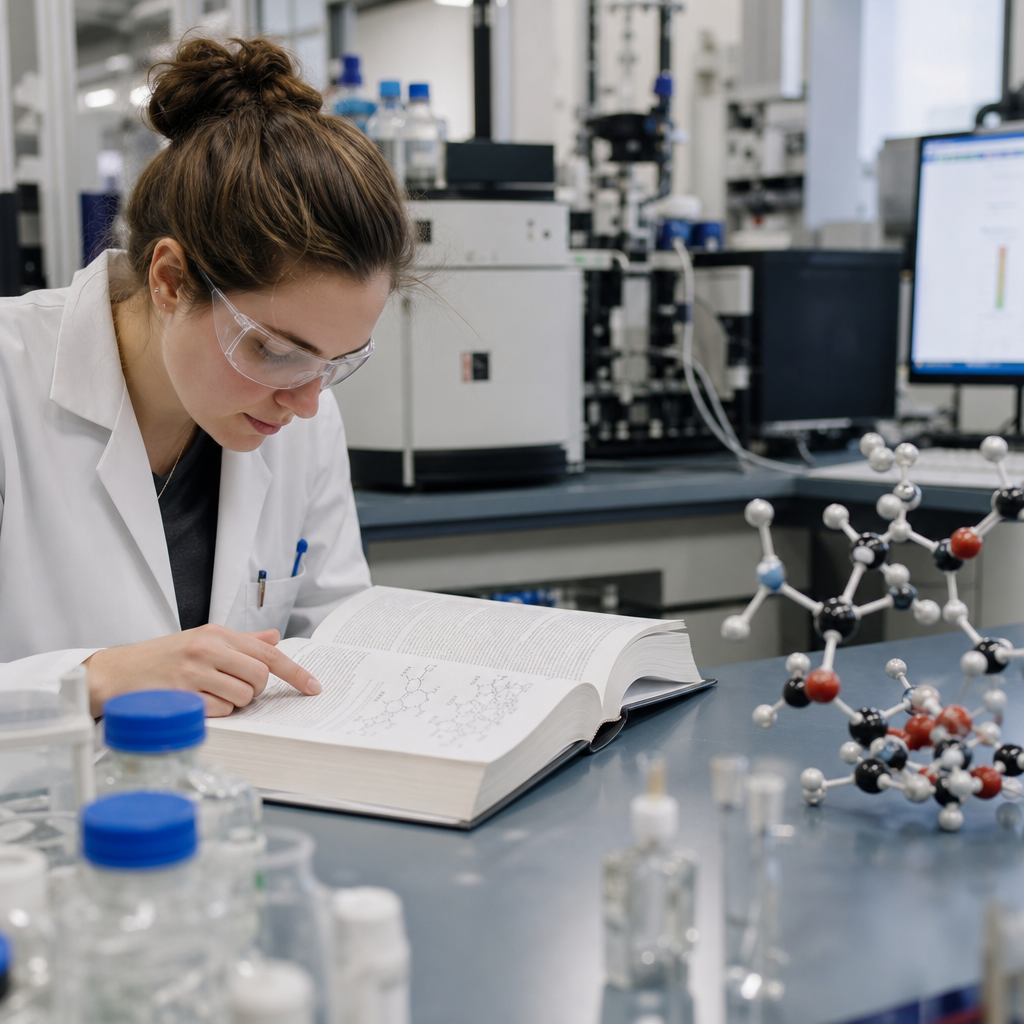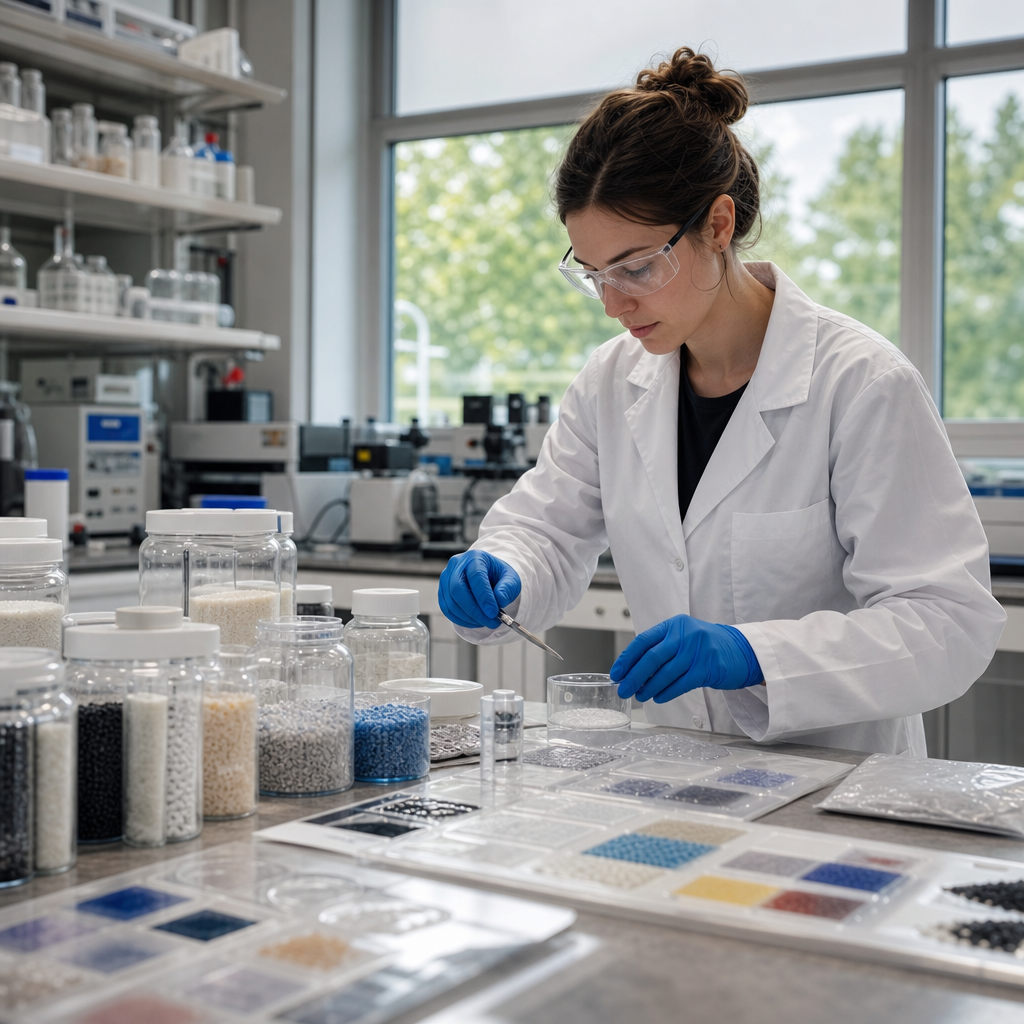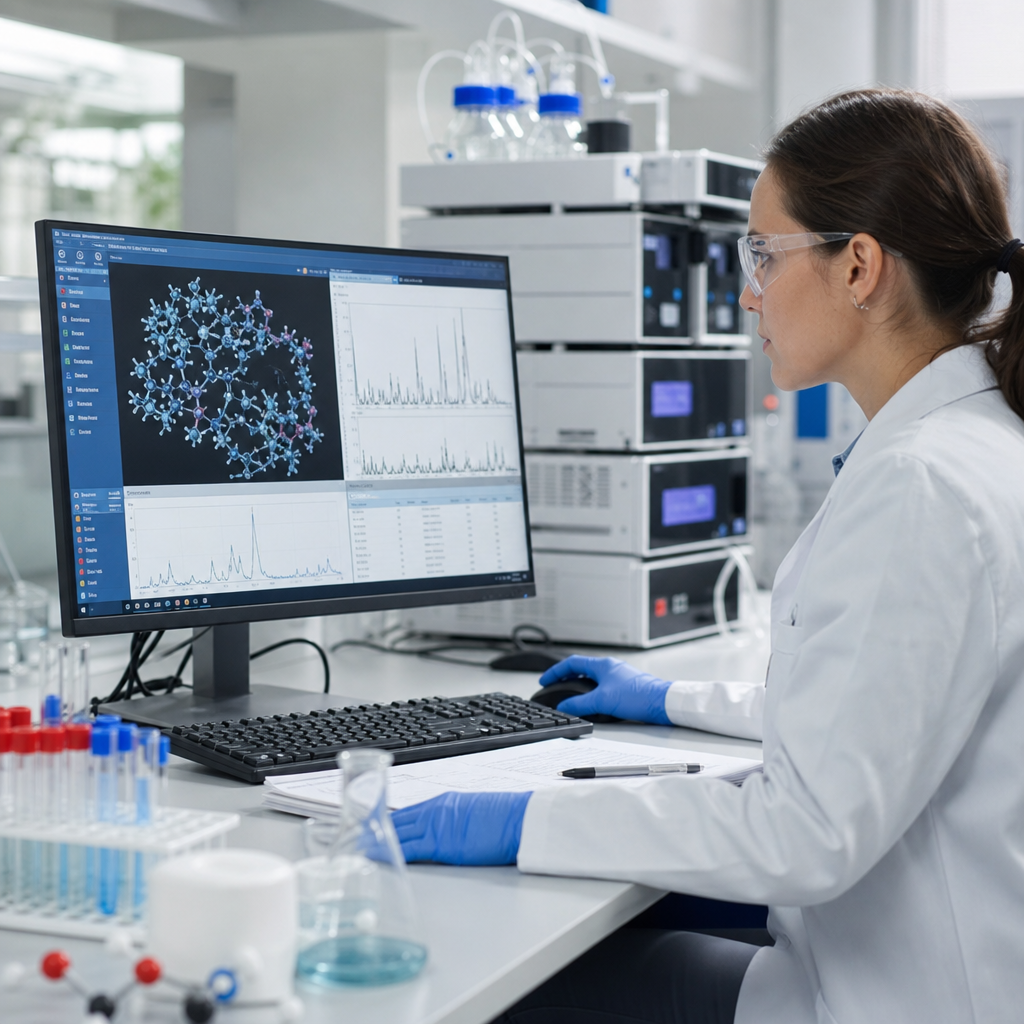
Choosing software for polymer research is not a routine purchasing task; it shapes how quickly a lab can design experiments, interpret structure-property relationships, and move materials from concept to validated data. In polymer science, software and tools span molecular modeling platforms, rheology analysis packages, chromatography data systems, thermal analysis suites, electronic lab notebooks, laboratory information management systems, and statistical environments used to connect synthesis conditions with performance outcomes. I have helped research groups evaluate each of these categories, and the pattern is consistent: teams that define research needs before comparing vendors make better decisions than teams that shop by feature list alone.
Polymer research has unusual software demands because polymers are not simple molecules with fixed, easily represented structures. Molecular weight distributions, branching, tacticity, crystallinity, viscoelastic behavior, degradation pathways, and processing history all affect results. A tool that works well for small-molecule chemistry may fail when asked to model polydispersity, predict morphology in blends, or manage data from gel permeation chromatography, differential scanning calorimetry, dynamic mechanical analysis, and spectroscopy in one workflow. Evaluating software for polymer research therefore means assessing scientific fit, data integrity, interoperability, computational performance, regulatory expectations, and long-term usability together.
This matters because software decisions ripple through every stage of work. If simulation tools cannot represent polymer architecture correctly, formulation screening starts from flawed assumptions. If instrument software exports inconsistent metadata, reproducibility drops. If analysis workflows are locked into one vendor ecosystem, collaboration slows and migration costs rise. Strong evaluation prevents these problems. It also creates a practical hub for software and tools decisions across an educational resources library: how to compare modeling platforms, how to assess analytics packages, how to choose data infrastructure, and how to determine whether a specialized polymer tool adds measurable value over a general scientific package.
The best way to evaluate software for polymer research needs is to begin with the scientific question, map it to required workflows, verify that the software handles polymer-specific complexity, and then test usability, integration, validation, support, and cost using real lab scenarios. That approach sounds obvious, but many organizations skip the middle steps. They request demos before documenting must-have capabilities, or they score products without involving synthetic chemists, analytical scientists, computational researchers, and data managers together. A disciplined process keeps the evaluation grounded in research outcomes rather than marketing claims.
Start with research objectives and polymer-specific workflows
The first evaluation criterion is scientific alignment. Ask what the software must enable over the next three to five years, not just what it can do today. In polymer R&D, common objectives include designing monomers and copolymers, predicting miscibility, simulating chain conformations, analyzing molecular weight distributions, fitting rheology data, tracking formulation stability, or managing high-throughput experimentation. Each objective translates into workflows, and workflows reveal software requirements more reliably than brochures do.
For example, a team developing pressure-sensitive adhesives may need to connect synthesis variables with viscoelastic windows, tack, peel strength, and shear resistance. Their software stack often needs instrument integrations for rheometers and thermal analyzers, multivariate data analysis, and a searchable record of formulation changes. A group focused on polymer membranes may instead prioritize molecular simulation, transport modeling, and image analysis from microscopy. In both cases, a generic “materials informatics” claim is meaningless unless the software can support the exact data types, calculations, and decision points in the workflow.
Define the sample lifecycle as well. In practical evaluations, I map software touchpoints from design to reporting: hypothesis creation, synthesis planning, sample registration, instrument acquisition, raw data storage, preprocessing, statistical analysis, visualization, peer review, and archival retrieval. This exposes hidden needs such as version control for methods, audit trails for edited chromatograms, support for batch identifiers, and the ability to compare data across projects. It also prevents buying overlapping tools that create separate data silos.
A good requirements document distinguishes between essential, important, and optional capabilities. Essential items might include support for polymer nomenclature, handling of distributions rather than single values, compatibility with key instruments, export to standard formats such as CSV or JCAMP-DX where applicable, and robust user permissions. Important items could include workflow automation, cloud deployment, and API access. Optional items may include integrated machine learning dashboards or notebook-style reporting. Clear prioritization makes vendor comparison defensible and faster.
Evaluate core scientific capabilities, not just feature volume
Once workflows are defined, examine whether the software performs the underlying science correctly. This is where many evaluations fail. A long feature list is not proof of fitness for polymer research. What matters is whether the package can represent chain architecture, model relevant physics, process instrument outputs accurately, and produce results that scientists can defend.
In molecular modeling, ask which methods are implemented and where they are reliable. Molecular dynamics engines such as GROMACS or LAMMPS can be powerful for polymer systems, but only when force fields, boundary conditions, equilibration protocols, and timescales suit the question. Quantum chemistry tools may help with monomer reactivity or local interactions, yet they are usually insufficient for predicting bulk polymer behavior on their own. Coarse-grained approaches, self-consistent field methods, and finite element tools may be better for morphology or processing-related questions. Software should be judged on methodological fit, not brand recognition.
For analytical software, scrutinize baseline correction, peak integration, calibration handling, spectral preprocessing, and statistical reporting. In gel permeation chromatography, for instance, the treatment of universal calibration, dn/dc values, detector alignment, and broad distributions can materially change conclusions. In DSC and TGA analysis, onset determination rules and smoothing settings influence transition temperatures and degradation interpretations. Good software makes these settings transparent, reproducible, and reviewable.
Ask vendors for validation examples using polymer-relevant datasets. If a package claims rheology analysis strength, request examples covering frequency sweeps, time-temperature superposition, Cox-Merz comparisons, and model fitting with stated assumptions. If it claims spectroscopy support, ask how it handles overlapping bands in filled or blended systems. A software tool earns credibility when it explains its calculations clearly and shows how results were derived.
Assess interoperability, data structure, and laboratory fit
Polymer labs rarely operate with one software environment. They run a patchwork of instrument systems, spreadsheets, code notebooks, shared drives, enterprise databases, and reporting templates. The software you choose must fit that reality. Interoperability is therefore a primary evaluation criterion, especially for a hub article on software and tools, because every related decision branches from it.
Start with data import and export. Can the software ingest outputs from major vendors used in polymer labs, such as Waters, Agilent, TA Instruments, Malvern Panalytical, Bruker, PerkinElmer, or Mettler Toledo? Does it preserve metadata, or does it only pull simplified result tables? Can it export clean machine-readable data for further analysis in Python, R, MATLAB, or JMP? API access is increasingly important because research groups want to automate repetitive steps and build internal dashboards without manual copying.
Next, examine the data model. Polymer research often requires linking one sample to multiple names, batches, precursor lots, processing histories, and test conditions. A useful system supports hierarchical relationships: monomer to polymer batch, polymer batch to formulation, formulation to specimen, specimen to test result. If the data model is flat, traceability becomes painful. I have seen labs lose weeks reconciling whether a tensile test belonged to a molded plaque made from dried pellets or an undried regrind blend simply because the software could not store processing context in a structured way.
Security and collaboration also matter. University groups may prioritize flexible sharing across projects and external collaborators, while industrial teams may require role-based access, electronic signatures, and alignment with 21 CFR Part 11 principles for regulated environments. Even in nonregulated research, audit trails build trust. When a baseline was changed or an outlier removed, the system should record who did it, when, and why.
| Evaluation area | Questions to ask | Why it matters in polymer research |
|---|---|---|
| Scientific scope | Does it support polymer architecture, distributions, morphology, rheology, and thermal analysis? | Polymer behavior depends on chain-level and processing-level complexity. |
| Instrument integration | Can it connect to GPC, DSC, TGA, DMA, FTIR, NMR, and rheometer outputs? | Disconnected instruments create manual transcription risk. |
| Data model | Can it link batches, formulations, specimens, and test conditions hierarchically? | Traceability is essential for reproducibility and root-cause analysis. |
| Computation | Does it scale from desktop work to HPC or cloud workloads when needed? | Simulation and data analysis demands can grow quickly. |
| Governance | Are permissions, audit trails, and version histories built in? | Results must be reviewable and defensible. |
| Total cost | What are license, implementation, training, support, and migration costs? | Low entry price can hide high operating friction. |
Test usability, performance, and support with realistic scenarios
After narrowing candidates, run a structured pilot. Do not rely on canned demonstrations. Use your own representative datasets, your own naming conventions, and your own researchers. Realistic testing reveals whether the software is a useful research tool or a polished interface masking scientific and operational gaps.
Create scenario-based tasks. For example: import a GPC dataset with three detectors and generate a validated molecular weight distribution report; fit a Williams-Landel-Ferry shift model to DMA data; register a new copolymer batch, link it to monomer lots, and compare properties against previous syntheses; simulate a blend system and export parameters for further analysis. Time each task, note error rates, and ask users what assumptions were hard to discover. In my experience, the strongest platforms are rarely the ones with the flashiest dashboards; they are the ones that let experienced scientists complete common tasks accurately with minimal workarounds.
Performance should be measured, not assumed. Large spectroscopy libraries, image datasets, or molecular dynamics trajectories can overwhelm poorly optimized systems. Ask how the software handles concurrent users, large files, and remote access. If cloud-hosted, request uptime commitments, backup policies, and data residency details. If on premises, clarify database requirements, hardware dependencies, and upgrade paths.
Support quality often becomes decisive after purchase. Evaluate documentation depth, training options, application scientist access, release frequency, and responsiveness to bug reports. Strong vendors provide migration help, validation documents, and clear roadmaps. Open-source tools can also be excellent, especially in modeling and analysis, but they shift support responsibility toward the internal team. That tradeoff is acceptable only if the organization has people who can maintain scripts, manage environments, and validate outputs over time.
Compare total cost, risk, and long-term research value
The final decision should balance technical fit with total cost of ownership and implementation risk. License fees are only one part of the equation. Include onboarding time, data migration, method validation, instrument connectors, cloud charges, user training, custom configuration, and the cost of maintaining parallel systems during transition. A cheaper product can become expensive if it forces manual data cleanup or duplicate record keeping.
Consider lock-in risk as well. Proprietary file formats, limited export functions, or closed integration layers can make future migration difficult. Ask for contract terms covering data access at termination and the availability of bulk export utilities. Research organizations create value through accumulated experimental knowledge; software should preserve access to that knowledge rather than trapping it.
Also weigh extensibility. Polymer research evolves quickly, especially with high-throughput experimentation, cheminformatics, and machine learning entering routine workflows. A system that supports APIs, scripting, modular deployment, and connection to tools such as Python, KNIME, or Spotfire will remain useful longer than a closed environment designed only for static reporting. Long-term value comes from enabling better decisions, faster iteration, and more reproducible science.
To move forward, build a cross-functional scorecard, pilot two or three finalists, and choose the platform that best supports your actual polymer workflows. The right software for polymer research needs will improve data quality, shorten analysis cycles, and make future educational resources on software and tools easier to apply in practice. Start by documenting one critical workflow this week, then evaluate every option against that reality.
Frequently Asked Questions
1. What should a polymer research team look for first when evaluating software?
The first priority is fit for the actual scientific workflow, not just the feature list on a vendor brochure. In polymer research, software needs vary widely depending on whether the team focuses on synthesis, formulation, characterization, simulation, scale-up, or all of the above. A good evaluation starts by mapping the lab’s core activities: designing polymer architectures, tracking batch histories, analyzing molecular weight distributions, interpreting rheology and thermal data, correlating processing conditions with final properties, and storing results in a usable, searchable way. If software does not support these practical steps efficiently, even an impressive platform can become a bottleneck.
It is also important to assess how well the software handles the complexity of polymer data. Polymer science rarely produces simple one-variable outputs. Researchers often need to connect composition, dispersity, branching, morphology, viscoelastic behavior, thermal transitions, and mechanical performance across multiple experiments and instruments. The strongest software options help users organize and compare these datasets without forcing them into generic templates designed for simpler materials workflows. In other words, the software should reflect the reality of polymer systems, where structure-property relationships are central and often non-linear.
Usability should be considered early as well. A platform may be technically capable, but if routine tasks such as importing data, labeling samples, building reports, or visualizing trends require too many steps, adoption will suffer. The best systems reduce friction for scientists while preserving rigor. During evaluation, it helps to test realistic use cases rather than relying on demos alone. Ask whether a chemist can quickly document a synthesis, whether an analytical scientist can compare SEC or GPC outputs across batches, and whether a formulation team can retrieve historical data to guide the next experiment. These practical checks reveal far more than a generic product walkthrough.
Finally, teams should look at scalability from the beginning. A software choice should work not only for today’s research questions but also for future collaboration, larger datasets, more instruments, and stronger data governance needs. A small lab may initially need basic experiment tracking and analysis, but later require integration with ELN, LIMS, modeling tools, or enterprise reporting systems. Starting with a clear view of scientific fit, data complexity, usability, and growth potential creates a much more reliable foundation for evaluation.
2. How important is integration with laboratory instruments and existing data systems?
Integration is one of the most important factors in polymer research software evaluation because labs rarely operate with a single tool or data source. Instead, polymer workflows often involve multiple instrument classes and software environments, including chromatography systems, DSC and TGA analysis tools, rheometers, spectroscopy platforms, microscopy packages, molecular modeling software, statistical tools, ELNs, and LIMS. If the new software cannot communicate effectively with these systems, researchers may end up manually transferring files, reformatting results, or duplicating records, which slows research and increases the risk of errors.
Strong integration matters because polymer decisions depend on combining information from different techniques. A team may need to connect synthesis conditions with SEC molecular weight data, thermal transitions from DSC, modulus trends from rheology, and performance outcomes from mechanical testing. When data stays trapped in separate software silos, it becomes much harder to identify meaningful structure-property relationships or compare material behavior across projects. Good software should make it easier to unify these datasets, preserve sample identity across platforms, and build a reliable chain from experiment to interpretation.
During evaluation, it is worth asking very specific integration questions. Can the software import raw and processed data from the instruments already used in the lab? Does it support common file formats, APIs, database connectors, or automated data capture? Can it link sample IDs and metadata consistently across experiments? How well does it work with current documentation and inventory systems? These details matter more than broad promises of being “compatible” or “connected.” In many cases, a vendor’s real-world experience with polymer and materials laboratories is a strong indicator of whether integration will be smooth or frustrating.
Teams should also think beyond technical connectivity and consider workflow continuity. The best integrated systems do not simply move files from one place to another; they support traceability, reduce duplicate entry, and help researchers retrieve complete experiment histories. This is especially valuable when projects span multiple scientists, methods, and timeframes. In polymer research, where reproducibility and comparison across formulations or batches are critical, integration directly affects both speed and scientific confidence. A platform that connects the lab’s ecosystem well can deliver far more value than one with a larger standalone feature set.
3. How can researchers tell whether software will support meaningful structure-property analysis in polymer science?
Researchers should evaluate whether the software can handle the kinds of multidimensional comparisons that polymer science depends on. Structure-property analysis is not just about plotting one measurement against another. It often involves linking molecular design choices, synthesis conditions, composition ratios, architecture, processing history, and characterization outputs to final material behavior. Software should therefore support flexible data modeling, robust metadata capture, and analytical tools that allow scientists to compare trends across experiments, batches, and material families. If the platform treats every dataset as isolated, it will be limited in helping researchers discover the relationships that matter.
A strong indicator is whether the software can preserve scientific context. For example, a polymer sample’s value is not defined only by a result such as glass transition temperature or viscosity. Researchers also need to know the monomer feed, catalyst or initiator conditions, purification steps, molecular weight distribution, branching level, solvent history, test method, and processing conditions. Software that captures this context systematically makes it much easier to identify why two materials performed differently. Without that supporting information, analysis becomes fragmented and conclusions become less dependable.
Another key area is visualization and statistical capability. Polymer research benefits from software that enables trend analysis, multivariable comparison, and data exploration across large experimental sets. This may include built-in statistical tools, compatibility with external analysis environments, or dashboards that help researchers identify outliers and performance clusters. For labs developing new materials, the ability to compare families of polymers by composition, processing method, or target property can significantly improve decision-making. The software should help answer practical questions such as which synthesis variables most strongly affect dispersity, which thermal signatures correlate with mechanical stability, or which formulations are worth advancing.
It is also wise to test the software using a realistic case from the lab’s own work. Load several related polymer datasets, include both successful and unsuccessful experiments, and see how easily the system supports interpretation. Can users group samples logically, search by scientific attributes, compare historical runs, and generate clear reports for internal review? If the software helps expose patterns rather than merely store files, it is far more likely to support real structure-property insight. In polymer research, the goal is not just data management but faster understanding, and that distinction should guide the evaluation process.
4. What role do usability, collaboration, and data traceability play in selecting polymer research software?
These factors play a central role because the value of software is determined not only by what it can do, but by how consistently scientists can use it to produce reliable, shareable work. In polymer research, projects often involve synthetic chemists, analytical scientists, materials engineers, formulation specialists, and quality or regulatory stakeholders. Software should support smooth collaboration across these groups without forcing each person to work outside their normal process. If the system is difficult to navigate, cumbersome to document in, or inconsistent across teams, important data may remain incomplete, scattered, or inaccessible.
Usability matters because scientists are more likely to adopt systems that make routine tasks easier rather than more bureaucratic. In practical terms, that means intuitive experiment entry, clear sample tracking, straightforward data search, efficient result comparison, and reporting tools that do not require excessive manual formatting. A platform that feels natural in day-to-day lab work can improve consistency dramatically. This is especially valuable in polymer environments where sample naming, formulation revisions, processing changes, and instrument outputs can quickly become complex. Simple, well-designed workflows help protect data quality over time.
Collaboration is equally important because polymer projects often evolve through iterative experimentation and shared interpretation. One researcher may synthesize a material, another may characterize it, and a third may model or evaluate performance. Software should make it easy for each contributor to see the relevant history, understand what was done, and build on prior results. Features such as permissions, shared notebooks, linked records, searchable metadata, version histories, and comment or review functions can greatly improve cross-functional work. When collaboration tools are weak, teams may fall back on spreadsheets, emails, and disconnected files, which undermines efficiency and scientific continuity.
Data traceability is especially critical for reproducibility, technology transfer, and decision confidence. In polymer research, small differences in formulation, synthesis conditions, purification, or processing can lead to major changes in performance. A good software system should preserve a clear record of who did what, when, using which materials, methods, and instrument settings. This level of traceability helps teams revisit past work, troubleshoot inconsistencies, support patent or regulatory needs, and transfer methods from research to development or manufacturing. In short, usability drives adoption, collaboration drives productivity, and traceability protects the integrity of the science. The best software supports all three at once.
5. How should a lab compare software cost, vendor support, and long-term value?
Cost should be evaluated as total value over time, not just the