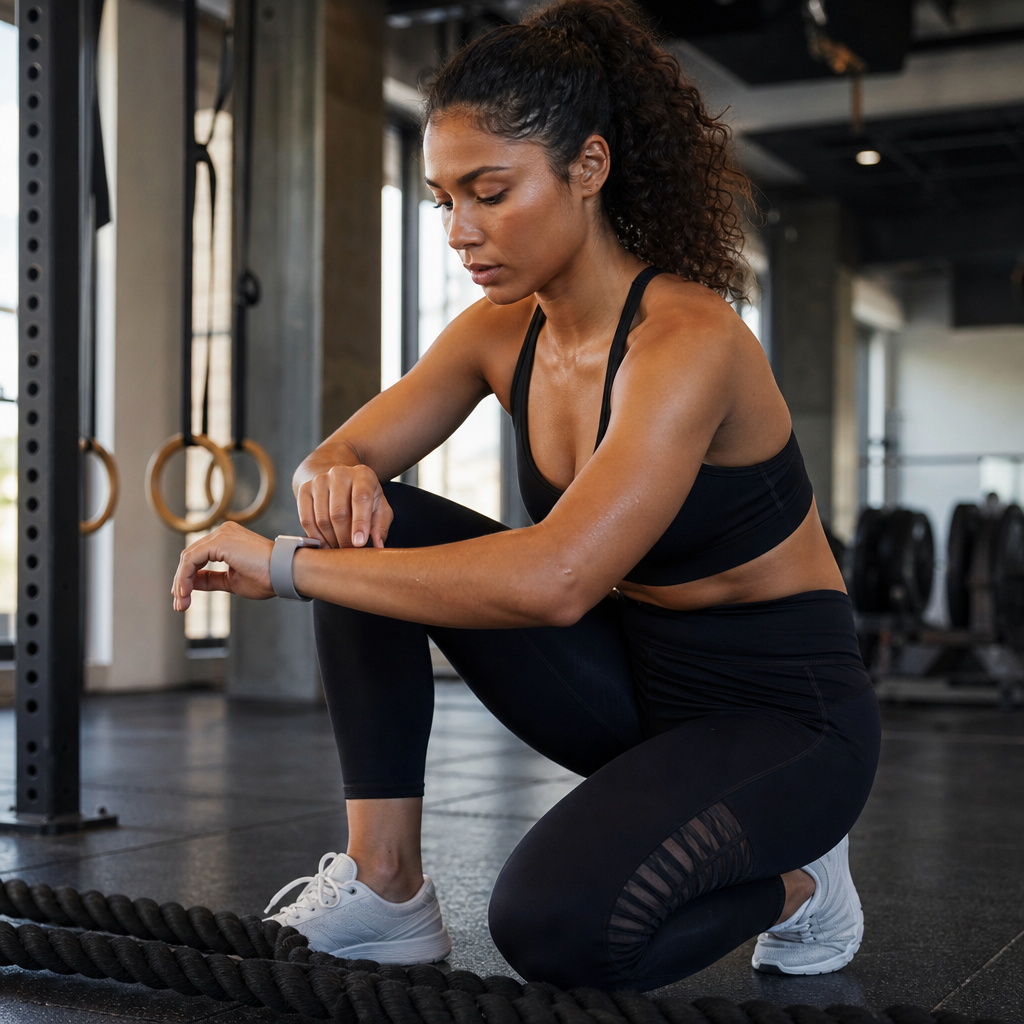
Polymers are becoming the defining material platform in fitness technology because they combine low weight, tunable flexibility, chemical resistance, and scalable manufacturing in ways metals, ceramics, and traditional textiles cannot match. In the sports and leisure market, fitness technology refers to connected wearables, smart apparel, protective gear, exercise equipment, recovery devices, and performance-tracking accessories designed for training, recreation, and health monitoring. When I evaluate products in this category, I look first at the polymer system, because the material choice usually determines comfort on skin, sensor stability, durability under sweat and UV exposure, impact behavior, and the economics of mass adoption. That is why the future of polymers in fitness technology is not a niche materials story; it is the operating foundation for how products will feel, perform, and scale.
Sports and leisure applications place unusually demanding requirements on materials. A smartwatch strap must survive flexing, salt, sunscreen, abrasion, and cleaning agents. A smart compression shirt must stretch repeatedly without signal drift in embedded conductive traces. Running shoes need midsoles that return energy while maintaining resilience across temperature swings. Helmets and pads must absorb impact without adding excess bulk. Home fitness equipment must balance stiffness, noise reduction, hygiene, and attractive industrial design. Across these use cases, polymers offer a design space that can be engineered at the molecular and composite level, from thermoplastic polyurethanes and silicones to polyamides, polyether ether ketone, expanded foams, elastomers, and bio-based blends.
This matters commercially because fitness technology is shifting from isolated hardware to integrated product ecosystems. Devices now merge sensors, wireless charging, haptics, antimicrobial surfaces, and personalized fit into compact forms worn for hours at a time. In practice, I have seen product teams abandon technically impressive sensor concepts because the substrate cracked, the adhesive failed after laundering, or the enclosure felt uncomfortable during a long run. The winning products are usually not the ones with the most features on paper; they are the ones where materials, electronics, and user behavior are aligned. Polymers make that alignment possible by supporting overmolding, soft-touch interfaces, stretchable circuits, breathable membranes, and lightweight structures that users will actually keep wearing.
As the hub page for sports and leisure within applications, this article explains where polymers are already reshaping fitness technology, which material families matter most, what performance tradeoffs manufacturers must manage, and where the next wave of innovation is likely to emerge. It covers wearables, footwear, smart textiles, protective equipment, additive manufacturing, sustainability, and design validation. For product developers, brand managers, and technical buyers, the core takeaway is simple: understanding polymer selection is now essential to understanding competitive advantage in fitness technology.
Why Polymers Dominate Wearables and Smart Apparel
Wearables and smart apparel are the clearest examples of polymer-led innovation in sports and leisure because they sit directly at the interface between the body and digital systems. Thermoplastic polyurethane, liquid silicone rubber, polyethylene terephthalate films, nylon blends, and elastane-based fabrics are widely used because they can be tuned for softness, stretch, moisture management, and electrical integration. In wrist wearables, TPU and fluoroelastomer bands dominate due to their resistance to sweat, skin oils, and environmental exposure. Silicone remains common in premium skin-contact components because it is biocompatible, stable across temperature ranges, and comfortable over long sessions. For sensor housings, polycarbonate and PC-ABS blends are preferred where impact resistance and dimensional stability matter.
The real breakthrough is not just durability; it is the ability to embed sensing and communication into flexible systems. Conductive inks printed on polymer films can support strain sensing, heart-rate electrodes, and capacitive interfaces. Stretchable substrates reduce motion artifacts in biosignal capture compared with rigid modules attached loosely to the body. In practice, chest straps, smart sleeves, and posture shirts work best when the polymer layer maintains close contact without pressure hot spots. That is why textile engineers increasingly use laminated structures that combine knitted base fabrics, elastomeric zones, breathable membranes, and encapsulated electronics. The same approach is extending into yoga apparel, cycling kits, and recovery garments where comfort and wash durability decide whether users perceive the product as premium or gimmicky.
Adhesion and fatigue remain the critical engineering challenges. Sweat contains salts that can accelerate corrosion at interfaces, and repeated laundering stresses conductive pathways and bonds. Teams that succeed usually validate designs with cyclic flex testing, laundering simulations, and skin compatibility reviews early in development rather than treating them as compliance checkpoints at the end. In my experience, the strongest products use polymers not only as packaging materials but as active functional layers that manage compression, isolate vibration, and stabilize sensor placement.
Footwear, Foams, and Energy Return
Modern athletic footwear shows how polymer science can change performance at mass-market scale. Midsoles built from ethylene-vinyl acetate once dominated because they were inexpensive and easy to process, but the category has moved toward higher-performance foams such as expanded thermoplastic polyurethane, polyether block amide, and supercritical foamed compounds. These materials can deliver better resilience, lower density, and improved energy return, which translates into a more responsive feel underfoot. The running boom pushed these materials into mainstream awareness, but the same principles now influence training shoes, hiking footwear, court sports, and even leisure sneakers marketed around all-day comfort.
Energy return is often oversimplified in consumer marketing. What matters in practice is the balance among resilience, compression set, stability, and geometry. A foam that feels springy in a lab can still perform poorly if it bottoms out, packs down, or becomes unstable during lateral movement. Polymer processing method matters as much as chemistry. Bead foaming, supercritical gas expansion, and injection-molded blends create very different cell structures, which affect rebound and long-term durability. Outsoles also rely on polymer optimization, with rubber compounds engineered for abrasion resistance, wet traction, and flexibility at lower temperatures. Uppers increasingly incorporate thermoplastic reinforcements, welded films, and knit composites that reduce stitching and enable more precise fit zones.
The next frontier is individualized footwear produced through data-driven polymer structures. Brands are using lattice midsoles made through additive manufacturing to tune cushioning by runner profile, while custom orthotic systems rely on printable elastomers and nylon-based materials. This is especially relevant in sports and leisure because recreational athletes want comfort and injury prevention, not just race-day speed. As polymer costs decline and design software improves, mass customization will move from flagship experiments to broader product lines.
Protective Equipment and Impact Management
Protective gear in sports and leisure depends on polymers because impact management requires materials that can absorb, distribute, and recover energy without creating unnecessary mass. Expanded polypropylene, expanded polystyrene, TPU foams, polycarbonate shells, and viscoelastic elastomers are common in helmets, guards, pads, and protective inserts. In cycling and skate helmets, polycarbonate shell layers fused to expanded foam liners help manage single-impact events while keeping weight low. In contact sports and mountain activities, layered polymer systems combine hard shells, energy-absorbing foam, and soft comfort liners to address multiple impact modes.
Recent development has focused on rate-sensitive materials that stiffen under sudden load while remaining flexible in normal movement. This is why viscoelastic polymer pads are replacing bulkier constructions in many protective garments. The user benefit is obvious: athletes are more likely to wear protection consistently when it does not restrict motion. Manufacturers also use finite element analysis and standardized impact testing to optimize wall thickness, vent layouts, and rib structures before tooling. Standards from organizations such as ASTM and certification schemes used in cycling, snow sports, and team sports increasingly shape design choices, pushing polymer formulations toward repeatable, testable performance rather than generic toughness claims.
| Fitness technology area | Common polymers | Primary benefit | Main limitation |
|---|---|---|---|
| Wearables | TPU, silicone, polycarbonate | Flexibility, skin comfort, impact resistance | Adhesion and sweat-related aging |
| Footwear | EVA, eTPU, PEBA | Low weight and energy return | Compression set or stability tradeoffs |
| Protective gear | EPP, EPS, polycarbonate, elastomers | Impact absorption at low mass | Some systems are single-impact or bulky |
| Smart textiles | Nylon blends, TPU films, conductive polymers | Stretch, sensing integration, washability potential | Signal drift and laundering stress |
| Equipment housings | ABS, PC-ABS, reinforced polyamides | Stiffness, moldability, good cosmetics | Environmental stress cracking in poor designs |
For brands serving the broader leisure market, protective equipment is also becoming more design-driven. Consumers expect cleaner aesthetics, better ventilation, and lower-profile forms. Polymers support these expectations through in-mold decoration, complex vent geometries, transparent or translucent components, and integrated accessory mounts for lights, cameras, or communication modules. The future lies in modular protection systems where polymer inserts, fit elements, and sensor modules can be replaced without discarding the entire product.
Connected Equipment, Recovery Devices, and Home Fitness
Home fitness and connected exercise equipment expanded rapidly, and polymers are central to making these systems quieter, safer, and easier to manufacture. Stationary bikes, rowers, strength devices, and compact smart gyms rely on reinforced thermoplastics for covers, pulley housings, cable guides, grips, and user-contact components. Glass-filled nylon and PC-ABS blends are widely used where stiffness and dimensional control are needed, while thermoplastic elastomers improve grip and reduce noise at interfaces. In recovery technology, massage guns, compression boots, percussive tools, and cold-therapy systems use polymers for enclosures, seals, flexible bladders, and damping elements. Without these materials, many products would be too heavy, too loud, or too expensive for home users.
There is also a hygiene dimension. Fitness devices are exposed to sweat, skin oils, and frequent cleaning. Polymers can be textured for grip, formulated for chemical resistance, and designed to avoid dirt-trapping seams. Antimicrobial additives are sometimes used, though they should never substitute for cleanable design and validated maintenance instructions. From an engineering standpoint, creep, stress cracking, and UV stability deserve close attention, especially in products stored near windows, in garages, or on patios. I have seen excellent mechanical designs fail after launch because housing clips embrittled under repeated disassembly or because soft-touch coatings degraded with common disinfectants.
Connected equipment also benefits from polymers in electromagnetic design. Antenna windows, wireless charging surfaces, and sensor-transparent covers often depend on nonmetallic housings to maintain signal quality. As machine learning features and subscription platforms become more common in sports and leisure, hardware will need to disappear into the user experience. Polymers enable that by making forms softer, quieter, and more visually integrated into the home.
Sustainability, Circularity, and the Next Material Shift
The future of polymers in fitness technology will be shaped as much by sustainability requirements as by performance targets. Sports and leisure products have historically mixed foams, textiles, adhesives, coatings, and electronics in ways that complicate recycling. Brands are now responding with mono-material strategies, recycled feedstocks, solvent-free lamination, and designs that separate soft goods from electronic modules. Recycled polyester already appears widely in activewear, and recycled TPU and bio-based polyamides are moving from pilot programs into commercial use. However, claims must be evaluated carefully. A product made with recycled content is not automatically low impact if it has poor durability or cannot be repaired.
The strongest sustainability strategy in fitness technology is usually life extension. If a polymer enclosure, strap, or pad lasts twice as long, the environmental benefit can exceed a modest percentage of recycled content. Repairability matters too. Replaceable straps, removable sensor pods, modular padding, and standardized fasteners can reduce waste significantly. On the manufacturing side, additive manufacturing can lower scrap for customized components, while digital knitting can reduce cut-and-sew waste in smart apparel. Chemical recycling and depolymerization technologies may improve end-of-life pathways for certain polymers, but infrastructure remains uneven by region and resin type.
Looking ahead, expect more bio-based elastomers, advanced recyclable thermoplastic composites, and polymer systems designed specifically for disassembly. Regulatory pressure, retailer scorecards, and consumer scrutiny are all increasing. In that environment, materials teams that document traceability, testing, and realistic use-phase performance will have a clear advantage over brands relying on vague green messaging.
What Product Teams Should Prioritize Now
For companies building the next generation of sports and leisure products, polymer strategy should start with the use case, not the material trend. Define the true exposure conditions first: sweat chemistry, wash cycles, UV dose, flex frequency, impact profile, and cleaning agents. Then match those conditions to polymer families, processing methods, and joining technologies. Early prototypes should test not just mechanical strength but comfort, noise, scent retention, skin feel, and cosmetic aging. The best teams use design of experiments, accelerated life testing, and failure analysis from the first development loop.
They also build cross-functional workflows. Materials scientists, industrial designers, electronics engineers, and sourcing teams need to make decisions together because a housing resin affects antenna performance, a textile lamination affects sensor accuracy, and a foam geometry affects tooling cost. Supplier selection is equally important. Established partners such as BASF, Covestro, Arkema, Lubrizol, DuPont, SABIC, and specialty textile mills bring validated grades and processing guidance that can shorten development time and reduce launch risk. Standards-based validation, including biocompatibility screening, abrasion testing, ingress protection, and impact certification where relevant, should be treated as product design inputs rather than late-stage hurdles.
The future belongs to products that feel invisible in use yet remain robust under real conditions. In fitness technology, that outcome is overwhelmingly a polymer story. Brands that treat polymers as strategic enablers rather than commodity inputs will build better wearables, smarter apparel, safer protection, more responsive footwear, and more durable home devices. Review your current sports and leisure portfolio, identify where material choice is limiting comfort or reliability, and make polymer innovation a core part of your next product roadmap.
Frequently Asked Questions
Why are polymers becoming so important in fitness technology?
Polymers are emerging as a core material platform in fitness technology because they solve several design challenges at once. Fitness products need to be lightweight enough for comfort, durable enough for repeated movement, sweat, washing, impact, and outdoor exposure, and adaptable enough to fit the body or integrate with electronics. Polymers meet these demands better than many traditional materials because their properties can be engineered very precisely. Depending on the formulation, a polymer can be soft and stretchable, rigid and protective, transparent, breathable, chemically resistant, or highly resilient under cyclic loading.
That versatility matters across connected wearables, smart apparel, exercise equipment, protective gear, and recovery devices. In a smartwatch strap, a polymer can provide skin comfort, flexibility, and resistance to moisture. In compression garments, polymer fibers can enable stretch, shape retention, and sensor integration. In helmets, guards, and padding, advanced polymer foams and elastomers can help absorb and dissipate impact energy. In equipment housings and accessory components, polymers support complex geometries, low-cost mass production, and reduced overall product weight.
Another major advantage is manufacturability. Many polymers are compatible with injection molding, extrusion, film casting, fiber spinning, additive manufacturing, lamination, and coating processes. That allows companies to scale production efficiently while customizing performance for different sports, body areas, and use conditions. As fitness technology becomes more connected and more body-centric, the ability of polymers to bridge comfort, function, electronics integration, and manufacturing efficiency makes them increasingly indispensable.
How are polymers used in smart wearables and smart apparel?
In smart wearables and smart apparel, polymers often act as both the structural foundation and the functional interface between technology and the human body. Flexible polymer substrates can hold printed circuits, conductive pathways, antennas, and sensors while bending with motion. Elastomeric materials can conform to the skin or garment surface, helping devices maintain stable contact for more accurate measurement of metrics such as heart rate, temperature, movement, muscle activity, or perspiration-related signals.
In smart clothing, polymer-based fibers and coatings enable textiles to stretch, recover, wick moisture, and remain comfortable during training. Some polymers are used to encapsulate electronic components so they can survive sweat, washing, and repeated deformation. Others support breathable membranes or barrier layers that protect internal electronics without making apparel feel bulky or stiff. This is especially important in garments designed for long workouts, outdoor sports, or recovery monitoring, where comfort and reliability must coexist.
Polymers also help designers move beyond rigid device formats. Instead of placing hard modules on the body, developers can distribute sensing and communication functions across flexible films, yarns, patches, and molded components. That opens the door to fitness technology that feels less like a gadget and more like part of the apparel itself. As wearable design advances, polymers will continue to be central to making devices thinner, lighter, more durable, and more natural to wear during real-world athletic activity.
What advantages do polymers offer over metals, ceramics, and traditional textiles in fitness products?
Polymers offer a combination of properties that is difficult for metals, ceramics, and conventional textiles to match in one material system. Compared with metals, polymers are generally much lighter, more flexible, and less prone to causing discomfort in body-worn products. They can also be easier to shape into complex ergonomic forms and may provide better insulation, corrosion resistance, and soft-touch performance. This is especially valuable in products that need to be worn for extended periods or moved rapidly during exercise.
Compared with ceramics, polymers are typically less brittle and far more suited to dynamic applications involving bending, stretching, and repeated impact. Ceramics may perform well in specific high-hardness or specialty sensing roles, but they are usually not ideal as the dominant material in products that must tolerate motion, deformation, and direct contact with the body. Polymers are better aligned with the mechanical realities of fitness environments, where flexibility and resilience are often more important than extreme stiffness.
Compared with traditional textiles alone, polymers greatly expand functional possibilities. Synthetic polymer fibers already form the basis of many modern performance fabrics, but advanced polymers go further by enabling stretch control, moisture management, thermal regulation, compression behavior, sensor compatibility, and protective cushioning. In many cases, polymers can be combined with textiles to create hybrid systems that are more durable and more intelligent than fabric by itself. This ability to tune properties, integrate electronics, and support scalable manufacturing is what makes polymers such a strong competitive platform for the next generation of fitness products.
Are polymer-based fitness devices durable enough for sweat, washing, impact, and daily use?
Yes, and durability is one of the main reasons polymers are gaining ground in fitness technology. Many polymer systems can be selected or engineered specifically for resistance to sweat, skin oils, cleaning agents, ultraviolet exposure, abrasion, and repeated mechanical stress. In body-worn applications, chemical resistance is especially important because devices are exposed to salt, moisture, and friction on a routine basis. Properly chosen polymers can maintain performance and appearance under these conditions far better than materials that corrode, crack, or lose flexibility quickly.
For smart apparel and soft wearables, durability depends not just on the base material but also on how the polymer is processed and integrated. Encapsulation layers, seam strategies, flexible adhesives, and protective coatings all play a role in helping sensors and circuits survive stretching and laundering. In impact-related applications such as protective gear, polymer foams and elastomers can be designed to absorb shocks repeatedly while retaining shape and protective capability. In equipment and accessory housings, rigid engineering polymers can deliver strong structural performance without adding unnecessary weight.
That said, not all polymers perform the same way. Long-term durability depends on formulation quality, product design, and expected use conditions. A polymer intended for a yoga mat, for example, will differ from one used in a heart-rate patch, a resistance band, or a helmet liner. The future of polymer-based fitness technology lies in increasingly application-specific material design, where durability is tailored to actual user behavior rather than assumed from a generic material category.
What does the future of polymers in fitness technology look like?
The future is likely to center on smarter, more integrated, and more personalized material systems. Rather than serving only as passive casings or flexible straps, polymers are increasingly becoming active enablers of performance. We can expect wider use of conductive polymers, stretchable substrates, printable polymer inks, responsive gels, and advanced composite systems that combine sensing, cushioning, support, and communication within a single product architecture. This shift will help fitness devices become less obtrusive and more embedded into apparel, accessories, and training environments.
Another major trend is customization. Because polymer properties can be tuned so effectively, manufacturers can create products optimized for specific sports, body types, training intensities, and recovery goals. Additive manufacturing and digital fabrication may allow custom-fit insoles, braces, grips, protective inserts, and wearable housings to be produced with precise geometry and targeted mechanical behavior. That level of personalization could significantly improve comfort, safety, data quality, and user adherence.
Sustainability will also shape the future. As the fitness industry grows, companies will face greater pressure to reduce waste, improve recyclability, and adopt bio-based or lower-impact polymer alternatives where feasible. At the same time, users will continue demanding products that are lighter, more comfortable, and more durable. The most successful innovations will come from polymer systems that balance high performance with responsible design and efficient manufacturing. In practical terms, polymers are not just part of the future of fitness technology—they are likely to define how future fitness products are built, worn, and experienced.