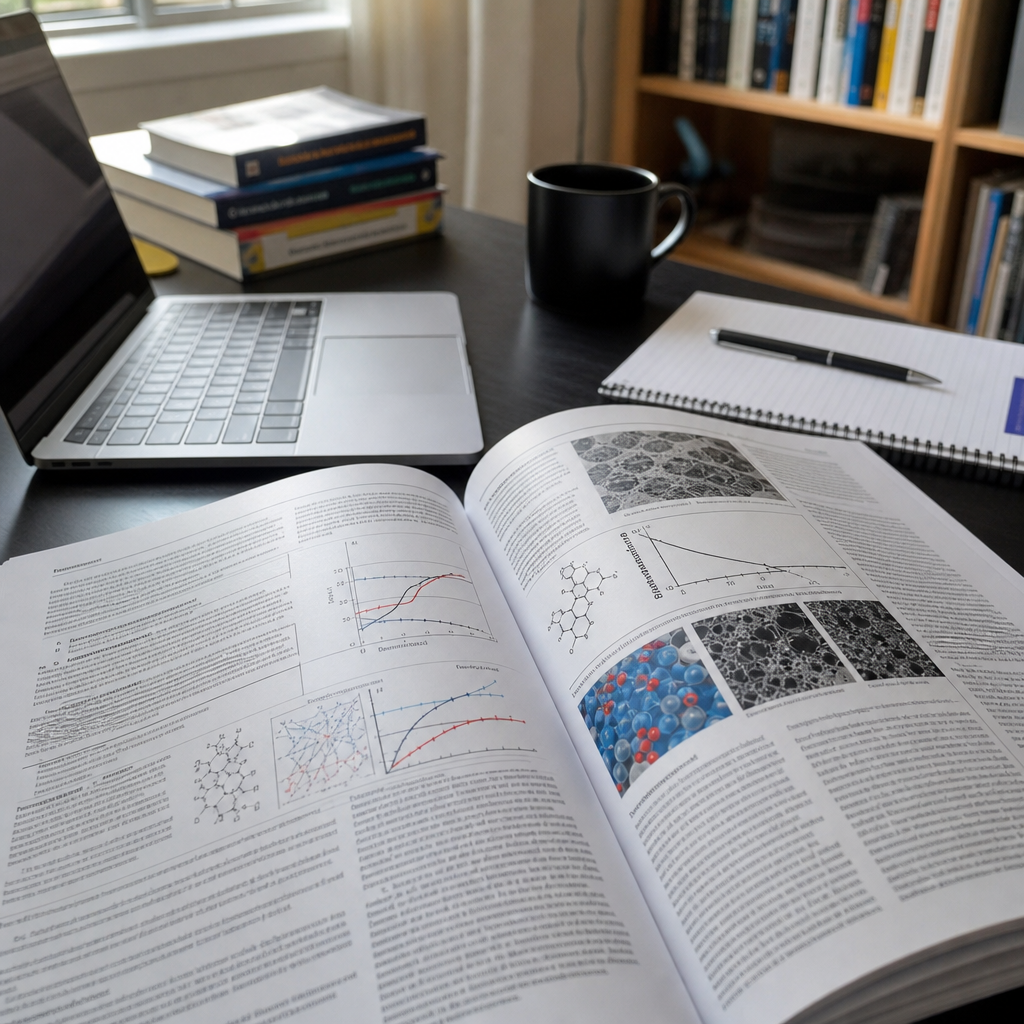
Open access books are reshaping polymer education by removing price and permission barriers that once limited who could study macromolecules, processing, characterization, and sustainable materials in depth. In this context, open access means digital books that are free to read online and usually carry licenses that permit some level of sharing, downloading, or reuse. Polymer education includes formal university teaching in polymer science, polymer chemistry, plastics engineering, elastomers, coatings, composites, and biomaterials, as well as workforce training for technicians, product developers, and manufacturing teams. As someone who has built course reading lists for materials students, I have seen the same problem recur: excellent polymer content exists, but too much of it sits behind expensive paywalls or in print editions that students cannot access when they need them. Open access books change that equation.
This matters because polymer education depends on layered learning. Students need foundational concepts such as chain architecture, molecular weight distribution, crystallinity, glass transition, viscoelasticity, and rheology before they can understand extrusion, injection molding, additive manufacturing, recycling, or polymer failure analysis. If access to core references is uneven, learning becomes uneven. Open access books help standardize availability across institutions, countries, and career stages. They also support a wider educational ecosystem around books and journals. A hub page on books and journals should explain not only why open access books matter, but how they connect to journal articles, lab manuals, handbooks, databases, and course design. Done well, that mix gives students a route from introductory explanations to current research evidence.
Why open access books matter in polymer education
Open access books improve polymer education because they solve three practical problems at once: cost, discoverability, and continuity of learning. Cost is the most obvious. Specialized materials textbooks can be expensive, and polymer titles are often priced for libraries rather than individual learners. When a student can open a chapter on polymerization mechanisms, semicrystalline morphology, or dynamic mechanical analysis without waiting for library lending rules, study becomes immediate. That immediacy matters in courses where understanding one chapter is necessary for the next lab or design assignment.
Discoverability is the second advantage. Many open access books are indexed by library services, search engines, Google Scholar, Crossref metadata, and publisher platforms such as SpringerOpen, De Gruyter, IntechOpen, OAPEN, and DOAB. A student searching for “polymer rheology explained,” “polymer degradation textbook,” or “biopolymer processing chapter” can often find a full chapter rather than a thin abstract. In my experience, that dramatically reduces the number of students who rely on fragmented notes, outdated slides, or unsourced web summaries.
Continuity of learning is the third advantage. Polymer education does not stop at one semester. A chemical engineering student may revisit diffusion, permeability, barrier properties, and melt flow years later in packaging or membrane work. A mechanical engineering student may return to fatigue, creep, impact behavior, and fracture in plastics design. Open access books remain available after course access codes expire, which supports lifelong reference use. That durability makes them especially valuable in regions where institutional subscriptions are limited or unstable.
How books and journals work together as a learning system
Books and journals serve different educational functions, and polymer programs work best when both are deliberately connected. Books build structure. They define terms, explain equations, compare models, and present topics in a logical order. Journals add currency. They show how those concepts are being tested in new catalysts, recycled feedstocks, self-healing networks, high-barrier films, conductive blends, and biomedical devices. Students who only read books may understand fundamentals but miss current methods. Students who only read journals often lack the conceptual scaffolding needed to interpret results correctly.
For example, a chapter on step-growth and chain-growth polymerization can explain kinetics, conversion, functionality, and gelation thresholds. A journal article can then show how reversible deactivation radical polymerization or ring-opening polymerization is used to control dispersity or biodegradability in a current application. A book chapter on DSC, TGA, FTIR, NMR, GPC, and SEM provides the baseline for interpreting characterization data. Journal papers then show why a researcher selected one thermal protocol, one solvent system, or one calibration method over another.
As a hub under educational resources, books and journals should be presented as a sequence. Start with an accessible book chapter to build vocabulary. Move to review articles for synthesis across studies. Then assign a recent research article to train critical reading. That progression helps students answer practical questions: What does the technique measure? What assumptions are built into the model? How does processing affect morphology? Are improvements statistically meaningful or just nominal? In polymer education, that structure reduces confusion and improves retention.
Where open access books deliver the strongest value across the polymer curriculum
Open access books are not equally useful in every teaching situation, but they are especially strong in topic areas where fundamentals remain stable while examples evolve. Core polymer chemistry is one. Chapters on monomers, initiators, catalysts, copolymerization, tacticity, branching, and crosslinking remain highly teachable over time. Polymer physics is another. Entanglement, viscoelastic response, diffusion, free volume, and thermal transitions still require careful explanation that books handle better than short articles. Processing topics also benefit, particularly when books include diagrams and case-based explanations of extrusion, blow molding, compression molding, thermoforming, and curing.
They are equally valuable in interdisciplinary modules. Biomaterials students often need concise but accurate introductions to hydrogels, drug delivery matrices, sterilization effects, and biocompatibility standards before reading primary literature. Sustainability modules need balanced chapters on mechanical recycling, chemical recycling, life cycle assessment, microplastics, and bio-based polymers. In industry-facing courses, open access handbooks and edited volumes can support practical training in formulation, compounding, additive selection, quality control, and failure investigation.
| Curriculum area | Best role for open access books | How journals extend learning |
|---|---|---|
| Polymer chemistry | Build vocabulary, mechanisms, and reaction pathways | Show new catalysts, controlled polymerization, and application-specific synthesis |
| Polymer physics | Explain chain dynamics, thermal behavior, and morphology | Test models against new materials and simulation results |
| Processing | Describe equipment, parameters, and defects in plain terms | Present optimization studies and advanced process monitoring |
| Characterization | Teach principles of DSC, TGA, FTIR, NMR, GPC, DMA, and microscopy | Demonstrate method selection, interpretation limits, and multi-technique workflows |
| Sustainability | Frame recycling routes, policy context, and material tradeoffs | Report current recycling yields, contaminants, and environmental assessments |
Quality, credibility, and how to evaluate open access polymer books
Not every free book is a strong teaching resource, so evaluation matters. Start with the publisher and editorial process. Established academic publishers, university presses, society publishers, and recognized open scholarly platforms usually provide clearer peer review and metadata than anonymous repositories. Look for editor names, author affiliations, ISBNs, DOI-linked chapters, publication dates, references, and licensing terms. In polymer science, currency matters because methods and terminology evolve. A chapter on biodegradable polymers published before current compostability standards or modern discussions of mass balance recycling may still be useful, but it needs context.
Next, check technical accuracy and scope. A good polymer education title should define number-average and weight-average molecular weight correctly, distinguish thermoplastics from thermosets without oversimplification, and explain that glass transition is not the same as melting. It should avoid common errors such as treating biodegradability as universal for all bio-based polymers or implying that one recycling route fits all resins. Strong books also cite recognized standards and tools, including ASTM and ISO test methods, differential scanning calorimetry, thermogravimetric analysis, dynamic mechanical analysis, and gel permeation chromatography.
I also look for teachability. Can a student read a chapter and identify the key mechanism, variable, and limitation? Are figures clear? Are equations defined? Does the chapter explain why moisture affects polyamides, why orientation changes PET properties, or why fillers alter modulus and toughness differently? Those details separate a useful educational book from a merely accessible one. Free access is important, but clarity and rigor determine whether a book truly improves learning.
Practical benefits for students, educators, libraries, and industry learners
For students, the biggest benefit is equal access. A commuter student, part-time worker, or distance learner can study from the same polymer text as a campus-based peer. That has direct academic effects. When everyone can read the assigned chapter on crystallization kinetics or DMA before class, discussion quality improves. Students ask better questions, labs move faster, and instructors spend less time patching access problems. Open access books also support accessibility tools such as screen readers, searchable text, and device-based annotation, although quality varies by file format and platform.
For educators, open access books reduce friction in course design. Instructors can assign a chapter without worrying about seat limits or expiring access codes. They can place links in the learning management system, align chapters with lecture topics, and combine them with journal papers, data sheets, and standards. In capstone design or lab courses, I have found open access chapters especially helpful for pre-lab preparation because students can revisit material on rheometry, spectroscopy, or thermal analysis at the bench or in the library.
Libraries benefit because open access strengthens collection breadth even when acquisition budgets are tight. Librarians can curate polymer resource guides that mix licensed journals with open books, repositories, and reference tools. Industry learners benefit as well. Process engineers, quality technicians, and product developers often need fast refreshers on polymer blends, additives, barrier testing, or environmental stress cracking. A reliable open access chapter can provide that baseline faster than piecing together scattered articles or vendor brochures.
Limitations, gaps, and what open access books cannot replace
Open access books are powerful, but they are not a complete substitute for every resource in polymer education. The first limitation is timeliness. Edited volumes and textbooks often move more slowly than journal literature, so a chapter on recycling technologies, PFAS-related material concerns, covalent adaptable networks, or machine learning in polymer discovery may lag current practice. That is why book-based learning should be paired with recent reviews and research papers.
The second limitation is uneven depth. Some open access titles provide broad introductions but stop short of mathematically rigorous treatment of rheology, crystallization, fracture mechanics, or transport modeling. Others are so specialized that they work better as references than as teaching texts. A third limitation is variability in peer review. Some chapters are excellent; others are descriptive without being analytical. Educators need to pre-screen chapters rather than assuming that open access alone guarantees quality.
There are also practical gaps. Not all platforms provide stable formatting, downloadable figures, or accessible equations. Licensing can differ significantly, affecting whether instructors can adapt images for slides or course packs. Finally, some of the most influential polymer references remain closed or hybrid access, especially handbooks, society publications, and high-value engineering texts. Students still need libraries, interlibrary loan, and journal subscriptions. The strongest educational strategy is not open versus closed. It is curated use of the best available books and journals, with open access expanding the baseline.
Building a stronger books and journals hub for polymer education
A useful books and journals hub should guide readers by need, not just by format. Start with foundational book categories: introductory polymer science, polymer chemistry, polymer physics, processing, characterization, composites, biomaterials, sustainability, and failure analysis. Then connect each category to the journal layer: review journals, core research journals, and standards-oriented sources. For example, a reader studying characterization should find book chapters on DSC, TGA, FTIR, NMR, DMA, microscopy, and GPC alongside pathways to review articles and benchmark papers that show those techniques in practice.
The hub should also include decision guidance. If you are new to polymers, begin with a foundational text. If you need the latest evidence on recycled polypropylene blends or self-healing elastomers, move quickly to recent journals. If you are teaching, pair one chapter with one review and one current paper. If you are in industry, use books for first principles and journals for process-specific updates. This structure keeps the page comprehensive while making it practical.
Open access books have already improved polymer education by making high-value knowledge easier to reach, reuse, and revisit. They support broader participation, stronger course design, and smoother transitions from fundamentals to current research. Their real impact is not simply that they are free. It is that they let more learners build durable understanding of how polymers are made, measured, processed, and improved. Use this books and journals hub to map your next step: choose a core book, connect it to a review article, and then read a current paper with sharper context.
Frequently Asked Questions
1. How do open access books improve learning outcomes in polymer education?
Open access books improve learning outcomes in polymer education by making high-quality academic content available to far more learners, regardless of budget, institution, or geographic location. In a field as layered as polymer science, students often need repeated exposure to core topics such as macromolecular structure, polymerization mechanisms, rheology, thermal behavior, processing methods, characterization techniques, and sustainability. When books are freely available online, students can revisit difficult concepts as often as needed without worrying about textbook costs or library loan limits. That repeated access supports stronger comprehension, especially in technically demanding areas like crystallinity, viscoelasticity, molecular weight distribution, and structure-property relationships.
Open access also helps instructors teach more effectively. Instead of limiting course design to whatever materials students can afford, faculty can assign complete chapters, compare multiple authors’ explanations of the same concept, and direct students to current resources on topics such as biopolymers, recycling, composites, and advanced manufacturing. This flexibility encourages deeper reading and helps students connect theory to real-world applications in packaging, medical devices, automotive materials, coatings, and energy systems. In many cases, open access books also support independent learning, which is especially valuable in polymer education because students often come from chemistry, chemical engineering, materials science, and mechanical engineering backgrounds with different levels of prior knowledge. By lowering access barriers, open access books make it easier for learners to build confidence, fill knowledge gaps, and engage more fully with the subject.
2. Why are open access books especially important for a specialized field like polymer science?
Open access books are especially important in polymer science because it is a specialized and interdisciplinary field that depends on broad, connected knowledge. A student studying polymers may need to understand organic chemistry, physical chemistry, thermodynamics, transport phenomena, spectroscopy, mechanics, and manufacturing processes all at once. Traditional access barriers can make it difficult to gather this wide range of material, particularly for students at smaller institutions, researchers in emerging economies, industry professionals seeking retraining, or educators building new polymer courses. Open access books help solve that problem by widening the pool of available resources and making advanced content easier to discover and use.
They are also valuable because polymer education often benefits from detailed, book-length treatments rather than short summaries. Articles are essential for cutting-edge research, but books provide the structured explanations needed to understand foundations such as step-growth and chain-growth polymerization, amorphous versus semicrystalline behavior, degradation pathways, filler interactions, and processing-structure-performance relationships. In a rapidly evolving area that now includes sustainable polymers, circular materials systems, and greener processing methods, open access books can accelerate knowledge transfer between academia and practice. They allow students, faculty, and professionals to move from introductory concepts to advanced applications without facing steep cost barriers. That matters in a field where innovation depends on both deep theory and practical understanding.
3. What role do open access books play in making polymer education more equitable and inclusive?
Open access books play a major role in making polymer education more equitable and inclusive because they reduce two of the most common barriers to participation: price and permission. Expensive textbooks and limited library holdings can exclude students who are fully capable of succeeding but do not have the same financial support or institutional resources as their peers. When polymer books are free to read online, more learners can access the same foundational material on subjects like plastics engineering, elastomers, polymer blends, biomaterials, and analytical methods. That creates a fairer starting point in classrooms, labs, and self-directed study environments.
Inclusion also improves when materials are easier to share and adapt within the terms of their licenses. Depending on the license, instructors may be able to distribute links freely, incorporate figures into lectures, assign chapters across multiple courses, or build teaching packets around openly available content. This is particularly helpful for multilingual classrooms, distance learning, workforce development programs, and institutions that are expanding materials science education but lack large collections of proprietary texts. Open access supports lifelong learners as well, including technicians, industry professionals, and career changers who want to understand polymer processing, failure analysis, sustainability, or testing without enrolling in a full degree program first. In short, open access books make polymer education more inclusive not only by broadening who can access knowledge, but also by supporting more flexible and diverse ways of teaching and learning it.
4. Can open access books support both academic study and industry-focused polymer training?
Yes, open access books can strongly support both academic study and industry-focused polymer training. In academic settings, they provide students with structured explanations of core principles and help faculty build courses around reliable, citable resources. A well-developed open access book can serve as a primary text for subjects such as polymer chemistry, polymer physics, composites, plastics processing, or materials characterization. Because students can access these books outside the classroom at any time, they are better positioned to prepare for labs, review for exams, and connect lecture topics with broader technical context.
In industry-oriented training, open access books can be equally useful because polymer work is highly applied. Engineers, product developers, quality specialists, and manufacturing teams often need practical understanding of extrusion, injection molding, additive manufacturing, thermal analysis, spectroscopy, mechanical testing, barrier performance, aging behavior, and recyclability. Open access resources make it easier for companies to support upskilling without purchasing large sets of expensive texts for every employee. They also help bridge communication between technical disciplines, since a chemist, process engineer, and sustainability manager can all refer to the same source material. This shared foundation is valuable in modern polymer industries where decisions must balance performance, cost, compliance, processing efficiency, and environmental impact. As a result, open access books are not just academic assets; they are practical training tools that can strengthen workforce capability across the polymer sector.
5. Are there any limitations to relying on open access books in polymer education?
Open access books offer major advantages, but they are not a complete substitute for every other type of resource in polymer education. One limitation is variation in scope, depth, and quality. Some open access books are outstanding, peer-reviewed references written by experts, while others may be narrower in focus or less suitable as standalone teaching texts. Instructors and learners still need to evaluate authorship, publisher reputation, publication date, citation practices, and technical accuracy. This is especially important in polymer science, where terminology, processing methods, sustainability standards, and research priorities can evolve quickly.
Another limitation is that books, whether open or not, may not always capture the newest developments as quickly as journal literature, standards documents, or current industrial data. For example, emerging work on chemical recycling, bio-based feedstocks, nanostructured materials, and circular design strategies may advance faster than textbook publication cycles. That means the strongest polymer education approach usually combines open access books with review articles, primary research papers, laboratory instruction, simulation tools, and real-world case studies. There can also be licensing differences between titles, so users should pay attention to what kinds of sharing, adaptation, or reuse are permitted. Even with these limitations, open access books remain highly valuable because they provide affordable, stable, and often comprehensive foundations for learning. When used thoughtfully alongside other resources, they can significantly strengthen polymer education at both introductory and advanced levels.