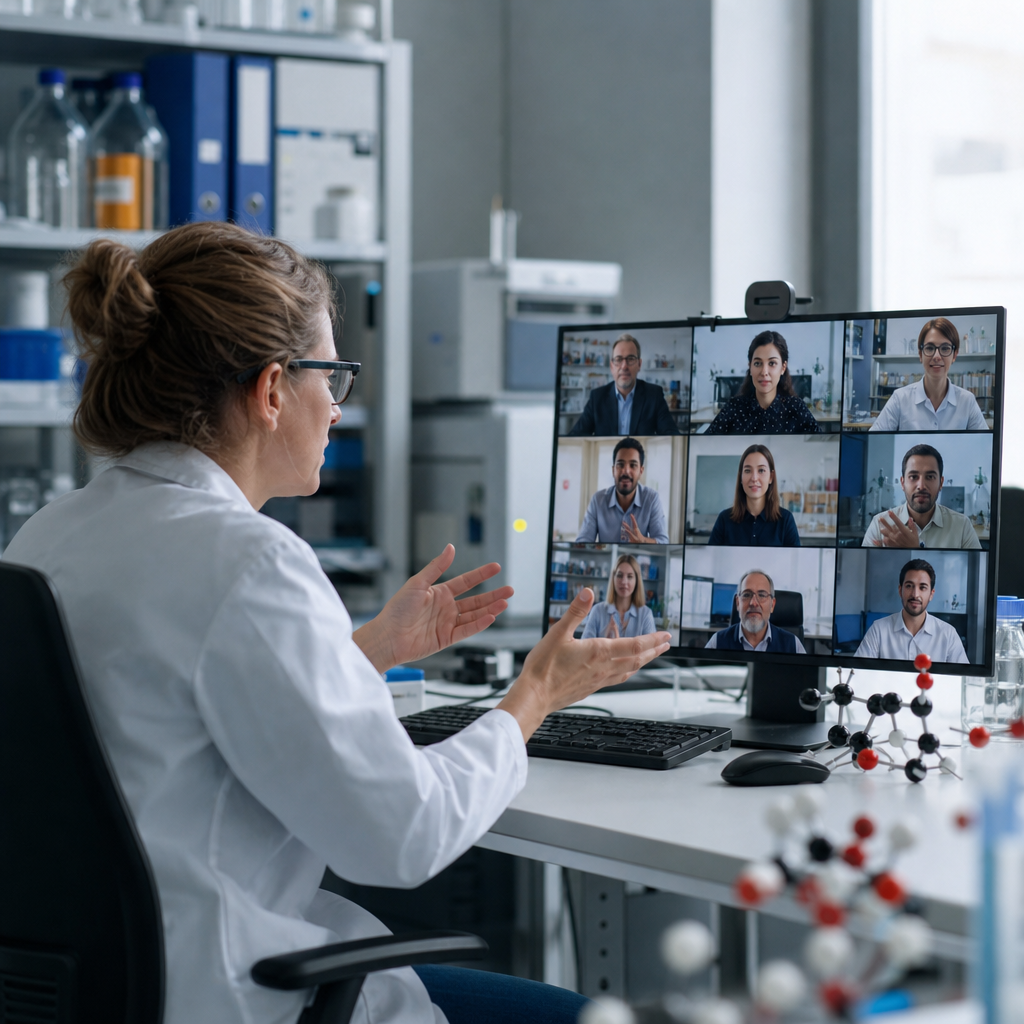
Virtual conferences have changed how polymer scientists meet, learn, publish, and build collaborations, turning conferences and workshops from location-bound events into year-round educational resources that are easier to access, easier to revisit, and often more inclusive. In polymer science, where progress depends on fast exchange between academic labs, industrial R&D teams, instrument vendors, and students, the format of scientific meetings matters as much as the content itself. A virtual conference is a professional event delivered primarily through digital platforms, usually combining livestreamed talks, poster sessions, networking rooms, exhibitor booths, and on-demand recordings. A workshop is a more focused training format built around methods, instrumentation, modeling, processing, characterization, or regulatory practice. Together, conferences and workshops shape how researchers understand new polymer chemistry, characterization methods, sustainability standards, processing technologies, and commercialization pathways.
I have worked on programs that included polymer webinars, hybrid symposia, and online training sessions for materials researchers, and the biggest change is not simply convenience. The real shift is that virtual delivery rewires who can participate, how knowledge is retained, and how quickly ideas move from one subfield to another. A graduate student studying block copolymer self-assembly can now watch a rheology tutorial, attend a session on additive manufacturing feedstocks, and revisit a recorded keynote on chemical recycling without crossing borders or paying for a week of travel. That matters because polymer science is unusually broad. It spans synthesis, reaction engineering, soft matter physics, spectroscopy, thermal analysis, mechanics, nanocomposites, biomaterials, membranes, coatings, elastomers, packaging, and recycling. No single in-person event can fully serve that range unless access is widened through digital formats.
This article serves as a hub for conferences and workshops within educational resources for polymer science. It explains what virtual conferences do well, where they fall short, and how different groups use them. It also connects the educational role of online events with practical outcomes: continuing professional development, collaboration, hiring, standards awareness, and exposure to new tools. For readers asking whether virtual conferences are now essential in polymer science, the answer is yes. They are not a complete replacement for face-to-face meetings, especially for serendipitous networking and hands-on instrument training, but they are now a permanent part of how the field teaches, evaluates, and disseminates knowledge.
Why virtual conferences matter in polymer science education
Polymer science advances through interdisciplinary translation. A breakthrough in controlled radical polymerization becomes useful only when processing scientists, analytical chemists, modelers, and product developers understand it well enough to test it in new contexts. Virtual conferences accelerate that translation by reducing barriers to attendance and expanding the life of each presentation. Instead of a twenty-minute talk disappearing after delivery, it can remain searchable and replayable for months. For educational resources, that is a major gain. Students can pause a dense lecture on Flory-Huggins interactions, revisit the explanation of glass transition behavior, and compare speakers’ approaches to topics such as living polymerization, SAXS interpretation, or viscoelastic master curves.
Online accessibility also improves participation from regions and institutions with smaller travel budgets. In traditional conference planning, airfare, visas, lodging, and registration fees can block attendance even when interest is high. Virtual formats lower direct costs and remove logistical constraints. That widens exposure to specialized workshops on DSC, TGA, DMA, GPC, NMR, FTIR, SEM, TEM, AFM, and rheometry, which are core techniques in polymer laboratories. Early-career researchers benefit most because they often need broad training before they have broad funding. The result is a more even distribution of educational opportunity across the polymer community.
Core benefits for researchers, students, and industry teams
The impact of virtual conferences on polymer science is most visible in four areas: access, documentation, pace of learning, and cross-sector interaction. Access improves because more attendees can join from universities, startups, contract labs, and global manufacturing sites. Documentation improves because slides, chat transcripts, resource lists, and recordings create a reusable learning archive. The pace of learning increases because attendees can move quickly between subtopics and compare methods. Cross-sector interaction improves when suppliers, academics, regulators, and product engineers share one digital venue without the normal constraints of booth traffic and room capacity.
For example, a coatings chemist can attend a session on waterborne polymer dispersions in the morning, join a lunch workshop on accelerated weathering protocols, and finish the day with a panel on PFAS replacement strategies in performance materials. A biomedical polymer researcher can compare hydrogel crosslinking methods, listen to a regulatory session on ISO 10993 biocompatibility considerations, and schedule one-on-one meetings with CROs. An industrial compounder can use an online event to benchmark twin-screw extrusion practices, hear case studies on recycled-content variability, and visit digital exhibitor rooms from instrument makers such as TA Instruments, Malvern Panalytical, Waters, Anton Paar, Bruker, or Netzsch.
| Conference format | Main strengths in polymer science | Main limitations | Best use cases |
|---|---|---|---|
| Virtual | Lower cost, global access, recordings, easier scheduling across specialties | Weaker informal networking, limited hands-on training, screen fatigue | Educational sessions, broad topic surveys, software demos, poster reach |
| In-person | Stronger relationship building, instrument interaction, spontaneous discussion | Higher cost, travel barriers, limited replay value | Hands-on workshops, vendor evaluation, intensive collaboration building |
| Hybrid | Combines reach with physical presence, flexible participation options | More complex production, uneven experience if poorly designed | Flagship society meetings, global communities, mixed training models |
How virtual events support specialized polymer subfields
One reason virtual conferences work well for polymer science is that the discipline contains many niche communities that need frequent contact but may not be large enough to support constant travel-based meetings. Digital events help sustain these subfields between major annual conferences. Researchers in polymer membranes can gather around separations performance, fouling, and transport modeling. Experts in self-healing polymers can compare dynamic covalent chemistries, supramolecular interactions, and durability testing. Those working on sustainable polymers can debate mass balance accounting, design for recyclability, compostability claims, and life cycle assessment assumptions.
Specialization also matters for workshops. A short online workshop can focus entirely on interpreting SEC-MALS data, selecting solvents for challenging polymers, fitting rheological models, or understanding the limitations of differential scanning calorimetry for semicrystalline materials. In my experience, these focused sessions often deliver more educational value than a broad lecture because attendees arrive with a concrete problem. They want to know why a molecular weight distribution looks suspicious, why a tan delta peak shifted, or how moisture changes nylon processing behavior. Virtual workshops make it practical to solve those narrow but important questions with the right experts in the room.
Poster sessions, networking, and collaboration in digital spaces
Critics often argue that virtual conferences weaken the human side of science, and that concern is valid. Polymer collaborations frequently begin in hallway conversations, over poster boards, or during vendor demos where someone handles a sample and asks an unexpected question. Digital platforms cannot fully reproduce that spontaneity. However, well-designed virtual events can still generate meaningful collaboration when organizers use structured networking instead of leaving interaction to chance. Topic-based breakout rooms, moderated poster hours, attendee matching, and scheduled small-group discussions work better than open chat alone.
Poster sessions are especially important in polymer science because preliminary data often appears there first. Online posters can actually improve comprehension when they include zoomable figures, short audio explanations, and asynchronous Q&A. A student presenting tensile data for a biodegradable blend can receive comments from multiple time zones, then refine the explanation before submitting a manuscript. Recorded poster pitches also help non-native English speakers because viewers can replay complex sections. The tradeoff is that presenters must work harder to invite discussion, since digital attendees are more likely to browse passively unless the platform prompts active engagement.
Training, workshops, and professional development
Conferences and workshops are not only about publishing results; they are where polymer professionals learn to do their jobs better. Online training now covers instrument fundamentals, statistical design of experiments, polymer processing troubleshooting, simulation workflows, intellectual property basics, and environmental compliance. For industrial teams, this is efficient. A manager can register a group for a workshop on rheology interpretation or failure analysis without losing several travel days. For students, virtual workshops provide exposure to practical skills that many degree programs teach unevenly, such as scale-up considerations, quality control documentation, or how to select reference standards for calibration.
Professional societies and conference organizers can extend this value by designing clear learning paths. A newcomer might start with an introductory conference session on polymer characterization, move into a workshop on thermal analysis, and then attend a panel on how those data support formulation decisions in packaging or automotive applications. That pathway approach turns one-off events into a coherent educational ecosystem. It also strengthens this conferences and workshops hub model, where readers can navigate from broad orientation to specialized articles on poster preparation, vendor sessions, hybrid event strategy, and technique-specific training.
Limits of virtual formats and how organizers can improve them
Virtual conferences are powerful, but their weaknesses are real. Time zone mismatch can reduce live participation. Screen fatigue lowers attention during dense technical sessions. Poor audio, weak moderation, or confusing interfaces can damage credibility quickly. Demonstrations are harder when a topic depends on tactile experience, such as extrusion hardware setup, sample preparation for microscopy, or physical handling of films, fibers, foams, and molded parts. Some commercial discussions also move more slowly online because trust is harder to build through short digital encounters.
The best organizers address these limits directly. They shorten session blocks, add breaks, provide recordings rapidly, and train moderators to keep discussion moving. They collect questions in advance for complex topics such as polymer degradation kinetics or regulatory trends in food-contact materials. They create regional repeat sessions when the audience is global. They also separate educational content from sales content, which matters in polymer science because instrument and software vendors are important contributors, but attendees need technical substance rather than disguised promotion. When events are designed around learning outcomes instead of simply streaming talks, attendee satisfaction rises sharply.
The future of conferences and workshops in polymer science
The future is not purely virtual and not a return to the old model. Polymer science is moving toward a durable hybrid system in which flagship meetings remain in person, while workshops, short courses, community updates, and many specialist symposia stay online or offer dual access. This model matches how the field actually works. Researchers still need face-to-face time for trust, recruiting, and hands-on equipment evaluation. They also need digital reach for education, inclusion, and continuity. As sustainability pressure increases, reduced travel can also support organizational climate goals, though the exact emissions benefit depends on event design and data handling practices.
For anyone building knowledge in this area, the key lesson is simple: virtual conferences have expanded what polymer science education can be. They make conferences and workshops more accessible, more searchable, and more adaptable to the realities of modern research and manufacturing. They help students learn faster, help professionals reskill, and help organizations share expertise across borders and sectors. Use this hub as a starting point for deeper resources on conference formats, workshop planning, poster strategy, networking methods, and technique-specific training. The strongest approach is to combine digital reach with intentional design, then choose the format that best serves the learning goal.
Frequently Asked Questions
How have virtual conferences changed communication and collaboration in polymer science?
Virtual conferences have significantly reshaped how polymer scientists communicate by removing many of the time, travel, and geographic constraints that once limited participation. Instead of relying only on a few annual in-person meetings, researchers can now engage in webinars, digital symposia, panel discussions, poster sessions, and workshops throughout the year. This has made scientific exchange much more continuous. In a field like polymer science, where progress often depends on timely discussion of synthesis methods, processing challenges, characterization data, and application performance, faster communication can directly support innovation.
Collaboration has also become more flexible and inclusive. Academic researchers, industrial R&D teams, instrument manufacturers, and graduate students can meet online without the cost and scheduling burden of long-distance travel. That broader mix of participants often leads to more diverse conversations, including practical discussions about scale-up, analytical techniques, sustainability, and commercialization. Virtual platforms also make it easier to follow up after an event through chat tools, recorded Q&A sessions, shared presentation files, and networking directories. While online interactions do not fully replace the spontaneity of hallway conversations or informal dinners, they do create many more opportunities for first contact, ongoing discussion, and international collaboration.
What are the biggest advantages of virtual conferences for polymer researchers, students, and industry professionals?
One of the most important advantages is accessibility. Virtual conferences make it easier for scientists to attend regardless of location, travel budget, visa limitations, family responsibilities, or institutional funding. This is especially valuable in polymer science, where attendees may come from universities, startups, multinational materials companies, testing laboratories, and equipment firms spread across the world. By lowering participation barriers, online events can bring more voices into the conversation and expose attendees to a wider range of ideas and technical perspectives.
Another major benefit is the ability to revisit content. Recorded lectures, poster presentations, and technical sessions allow participants to review complex material at their own pace, which is particularly useful in polymer science topics that involve detailed spectra, rheology data, molecular design strategies, processing variables, or multistep reaction pathways. Instead of choosing between simultaneous sessions and missing key presentations, attendees can often watch content later. This improves learning, supports better note-taking, and helps researchers share useful sessions with colleagues or students. For industry professionals, virtual events can also be more efficient because they allow teams to attend selectively, gather market and technical insights, and stay current on research trends without being away from the lab or office for several days.
Are virtual conferences as effective as in-person meetings for sharing polymer science research?
Virtual conferences can be highly effective for sharing polymer science research, especially when the goal is to distribute knowledge broadly and quickly. Online presentation formats are well suited to lectures, panel discussions, tutorials, poster overviews, and even instrument demonstrations. In many cases, digital platforms improve visibility because attendees can access slides more clearly, submit written questions, download supporting materials, and review recordings after the event. For presenters, this can lead to stronger engagement with their data and a longer lifespan for their research communication.
That said, effectiveness depends on what kind of interaction is most needed. For presenting new findings in polymer chemistry, biomaterials, composites, recycling technologies, or advanced characterization, virtual sessions can work extremely well. However, in-person meetings still have an edge for informal networking, trust-building, hands-on demonstrations, and serendipitous conversations that often spark new collaborations. In polymer science, where partnerships may involve shared facilities, pilot-scale processing, or confidential industry development, those face-to-face interactions still matter. The most effective approach for many organizations is a hybrid model that combines the reach and convenience of virtual access with the relationship-building strengths of physical attendance.
How do virtual conferences support education and professional development in polymer science?
Virtual conferences have become powerful educational tools because they turn scientific meetings into lasting learning resources rather than one-time events. Students, early-career researchers, and even established professionals can access lectures on polymer synthesis, additive manufacturing, sustainable materials, nanocomposites, membrane science, characterization methods, and other specialized topics without waiting for a major annual conference. This creates a more continuous learning environment and helps participants stay updated in a fast-moving field.
Professional development also benefits in several ways. Early-career scientists gain more chances to present their work, ask questions, and interact with experts in lower-pressure settings. Many virtual events include career panels, mentoring sessions, digital poster competitions, and workshops focused on publishing, grant writing, entrepreneurship, or industrial careers. Because recordings are often archived, participants can return to sessions they found technically dense or professionally relevant. For educators and lab leaders, virtual conference content can even be integrated into teaching, group meetings, and training discussions. In this way, online events are helping polymer science become more connected to year-round education, skill building, and workforce development.
What are the limitations of virtual conferences in polymer science, and what does the future likely look like?
Despite their benefits, virtual conferences do have limitations. Networking can feel less natural online, especially in a field where many productive relationships begin through informal, unplanned interactions. It is harder to replicate the experience of walking through a poster hall, meeting a future collaborator over coffee, or seeing a live instrument demonstration up close. Attention fatigue is another challenge, since long online sessions can reduce engagement and make it difficult for participants to stay focused. Time zone differences can also limit live participation for global audiences, even when events are designed to be inclusive.
There are also practical concerns around confidentiality, technical reliability, and audience interaction. Some researchers may hesitate to present unpublished polymer data in a recorded setting, particularly when their work has commercial relevance. Others may find it difficult to evaluate equipment, processing systems, or materials demonstrations without physical access. Even so, the future is unlikely to be a simple return to pre-digital conference models. Polymer science is moving toward a blended ecosystem in which virtual conferences, hybrid meetings, and on-demand educational libraries all play important roles. This model gives the community the best of both worlds: broad access, lower barriers, reusable content, and global participation, along with targeted in-person experiences for deeper networking and hands-on exchange.