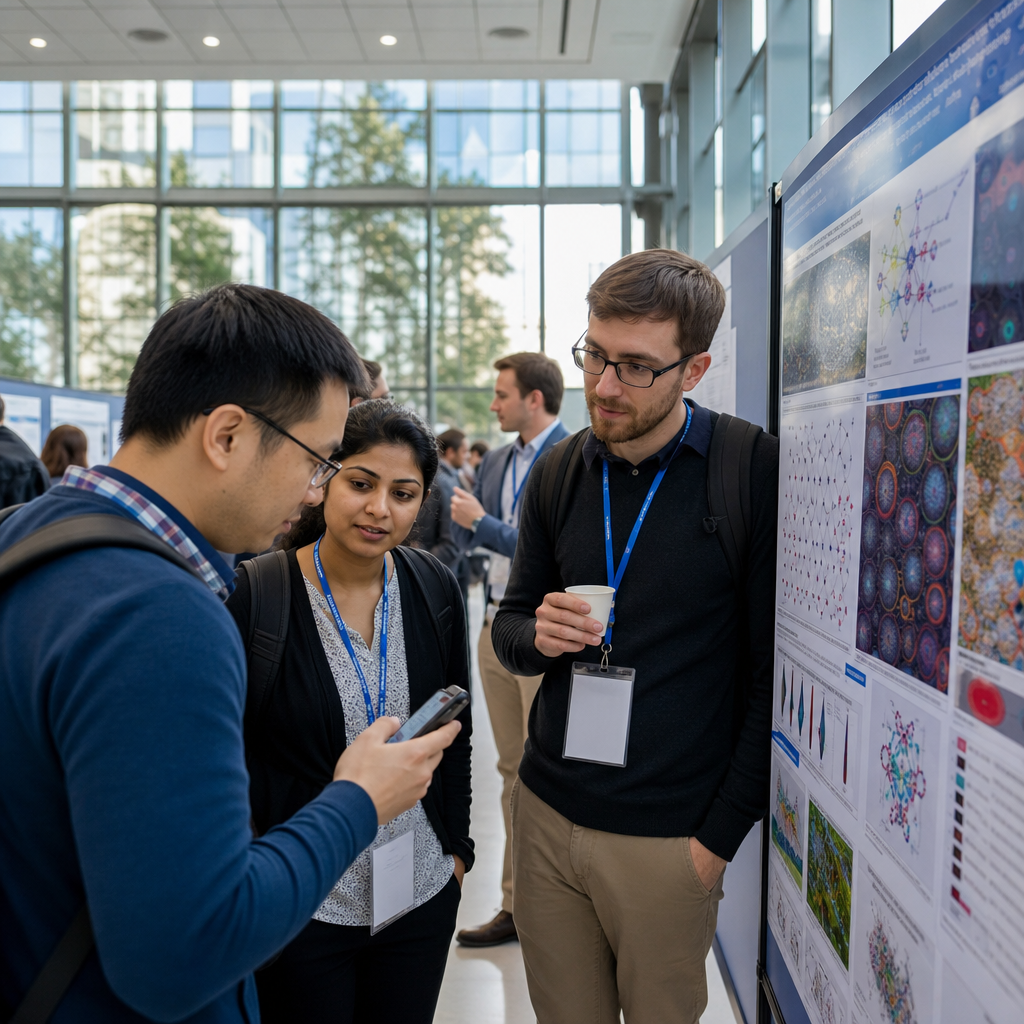
Social media has become a practical infrastructure for polymer science networking, reshaping how researchers, students, engineers, and industry partners discover information, build relationships, and create opportunities across the field. In polymer science, networking means more than exchanging business cards at conferences. It includes finding collaborators for synthesis and characterization projects, learning about instrumentation methods, tracking funding calls, following regulatory changes, discussing data interpretation, and identifying mentors, postdoctoral openings, and industrial roles. Online resources now sit at the center of that process, and social platforms often act as the first point of contact. As a hub within educational resources, this article explains how social media supports polymer science networking, which platforms matter, what benefits and risks to expect, and how to use these channels strategically. I have seen research groups fill seminar series, recruit graduate students, share preprints, and troubleshoot experimental problems faster through social networks than through email alone. Used well, these tools expand visibility and accelerate knowledge exchange. Used poorly, they waste time or amplify misinformation. Understanding the difference matters for anyone building a career or community in polymer science.
Why social media matters in polymer science
Polymer science is inherently interdisciplinary. A single project may involve organic synthesis, rheology, thermal analysis, spectroscopy, processing, microscopy, modeling, and application testing. Because expertise is distributed across departments and industries, networking has always been essential. Social media lowers the friction of making those connections. A doctoral student working on block copolymer self-assembly can follow a scattering expert, a microscopy core facility, an instrument vendor, and a company commercializing membrane materials, all in the same week. That range would have required several conferences and many introductions in the past.
The speed of information flow is a major advantage. Calls for papers, webinar announcements, conference deadlines, preprint releases, and newly published review articles now circulate in hours rather than months. Platforms also flatten hierarchy. Graduate students can ask concise technical questions in public, and principal investigators can answer without formal gatekeeping. That does not eliminate status differences, but it broadens access to conversations that used to happen in small rooms.
For online resources, social media also acts as a discovery layer. Many users do not search journal sites directly every day. They encounter content through posts linking to papers, lab websites, society pages, conference hashtags, and educational threads. In that sense, social media is not separate from the polymer knowledge ecosystem. It is a routing system that points people toward deeper resources, including databases, textbooks, standards, recorded lectures, and training modules.
Which platforms support polymer science networking best
Different platforms serve different networking goals, and effective polymer science networking usually spans several rather than relying on one. LinkedIn is strongest for professional identity, industry visibility, hiring, alumni connections, and society engagement. Research groups use it to highlight publications, patents, internships, pilot-scale capabilities, and equipment investments. Recruiters in coatings, adhesives, elastomers, packaging, biomaterials, and recycling actively scan LinkedIn for candidates with polymer processing or characterization experience.
X remains useful in many research communities for rapid academic conversation, conference commentary, and paper sharing, especially during live events. A well-timed thread on differential scanning calorimetry interpretation or polymer electrolyte design can reach specialists quickly. However, visibility can be uneven, and platform stability remains a concern. ResearchGate helps with publication discovery, question posting, and profile-based networking, though engagement quality varies. It is often more useful as a passive repository than as a primary discussion space.
YouTube has become a serious educational resource for polymer science. Instrument tutorials, recorded seminars, conference keynotes, short explainers on gel permeation chromatography, and walkthroughs of atomic force microscopy sample preparation all support networking because they reveal expertise. A clear technical video often leads to direct outreach from students, collaborators, and potential clients. Discord and Slack communities are smaller but valuable for sustained discussion, especially around computational materials science, coding workflows, and shared troubleshooting.
Society-managed channels also matter. The American Chemical Society, Materials Research Society, Society of Plastics Engineers, and Royal Society of Chemistry all publish event updates and educational content that can anchor a professional network. Following journals such as Macromolecules, Polymer, ACS Applied Polymer Materials, and Progress in Polymer Science helps users monitor emerging topics and connect with authors whose work aligns with their own.
How researchers, students, and industry professionals use these channels
The value of social media in polymer science networking depends on specific use cases. Researchers use it to recruit collaborators with complementary methods. A lab studying vitrimer chemistry may need advanced rheology expertise, while another working on recyclable thermosets may need life-cycle assessment support. Social posts make those needs visible. Students use social media to identify graduate programs, follow principal investigators, compare research cultures, and learn what techniques are actually used in active labs. Industry professionals use it to monitor academic advances, benchmark competitors, identify scalable ideas, and scout talent.
In practice, the strongest accounts do three things consistently: they share work clearly, they interpret why it matters, and they engage with other people’s work respectfully. A post saying “new paper out now” rarely drives meaningful interaction. A post explaining that a new polymer membrane maintained selectivity after humidity cycling, naming the test conditions and application relevance, is much more effective. Specificity signals competence and invites relevant responses.
I have also found that social media works especially well around events. Before a conference, attendees can identify who is presenting on conjugated polymers, additive manufacturing feedstocks, or solid polymer electrolytes. During the event, session notes and poster highlights help remote colleagues follow developments. Afterward, the platform preserves momentum, making it easier to continue technical conversations, exchange slides, or plan joint proposals.
| Platform | Best networking use in polymer science | Typical strength | Main limitation |
|---|---|---|---|
| Industry connections, hiring, alumni outreach, lab visibility | Professional credibility and recruiter access | Less technical discussion depth | |
| X | Conference dialogue, paper sharing, fast academic interaction | Speed and broad research visibility | Signal-to-noise can be poor |
| ResearchGate | Publication discovery, profile networking, question posts | Research-centered audience | Uneven engagement quality |
| YouTube | Seminars, tutorials, instrument demonstrations | High educational value and durable reach | Higher production effort |
| Slack or Discord | Niche communities, troubleshooting, code and workflow exchange | Focused peer interaction | Content is less publicly discoverable |
How social media improves access to online resources
As a hub for online resources, polymer science social media should be understood as a gateway rather than an endpoint. The best accounts direct people toward substantive materials: open-access articles, preprints on ChemRxiv, lab manuals, GitHub repositories for molecular dynamics workflows, webinar archives, instrument notes, standards documents, and university course pages. This matters because polymer science learning often requires layered resources. A user may first encounter a short post about dynamic mechanical analysis, then watch a lecture, then read ASTM guidance, then compare published data sets.
Social media also helps surface resources that are otherwise difficult to find. Many excellent polymer science seminars remain buried on departmental websites unless someone shares them. The same is true for recorded summer schools, rheology bootcamps, polymer informatics workshops, and image analysis tutorials for scanning electron microscopy. When a lab or society account curates these materials consistently, it performs a valuable educational service for the field.
Another important function is translation. Journal articles are not always written for newcomers. A concise post can explain the difference between number-average molecular weight and weight-average molecular weight, why dispersity matters, or how melt flow index differs from a full rheological characterization. That translation step makes formal resources more usable and encourages self-directed learning.
Best practices for building a credible polymer science network online
Strong networking starts with a clear profile. State your research area precisely: for example, “polymer electrolytes for lithium metal batteries,” “reactive extrusion of recycled polyolefins,” or “hydrogel mechanics for tissue engineering.” Vague labels such as “materials enthusiast” do not help relevant people find you. Include methods where appropriate, such as DSC, TGA, NMR, SEC, SAXS, DMA, extrusion, injection molding, or coarse-grained simulation. These details improve discoverability and signal technical range.
Next, post with structure. Share one key claim, one piece of context, and one reason it matters. If you are discussing a paper on self-healing elastomers, mention the healing conditions, mechanical recovery metrics, and likely application boundary. If you are posting about a webinar, explain who should attend and what they will learn. This approach respects the audience and increases useful engagement.
Credibility also depends on attribution. Tag coauthors, institutions, core facilities, and funding bodies where appropriate. Link directly to the source material. If data are preliminary, say so. If a result depends on narrow testing conditions, make that clear. In polymer science, oversimplification creates real confusion because properties depend strongly on molecular architecture, processing history, additives, humidity, temperature, and timescale.
Finally, engage consistently but selectively. Comment on work you genuinely understand or can ask about intelligently. A thoughtful question about crystallinity measurement or chain transfer effects is more memorable than generic praise. Over time, these small interactions compound into professional familiarity, and that familiarity often leads to invitations, referrals, and collaborations.
Risks, limitations, and professional standards
Social media is useful, but it is not automatically reliable. Polymer science claims can spread quickly without enough context. A dramatic recycling result may omit contamination issues. A biodegradable polymer post may ignore real disposal conditions. A conductivity figure for a polymer electrolyte may not report temperature, salt concentration, or measurement method. Readers should treat social media as a lead, then verify against primary literature, standards, or detailed presentations.
Confidentiality is another concern. Industrial polymer development often involves proprietary formulations, processing windows, customer specifications, and patent-sensitive data. Even in academia, early-stage projects may be under review, under embargo, or tied to sponsor agreements. Before posting, confirm what can be shared. Labs should have simple communication rules covering images, data, acknowledgments, and prepublication disclosure.
Professional conduct matters as well. Public criticism of methods can be constructive when specific and evidence-based, but dismissive commentary damages trust quickly. Researchers should separate disagreement from personal attack, disclose conflicts when relevant, and avoid presenting speculation as established fact. The same standards that govern conference discussions and peer review should govern online behavior.
Time management is the final limitation. Social media can support polymer science networking, but it should not displace deep reading, experimental work, or direct outreach. The most effective users treat it as part of a broader communication system that includes email, society membership, conferences, journal clubs, and one-to-one mentoring.
Making this hub part of your polymer science learning strategy
The most productive way to use online resources is to combine social media with structured learning. Follow a small number of high-quality accounts from journals, professional societies, respected labs, and technical experts. Save recurring resources such as seminar playlists, instrumentation tutorials, standards references, and job boards. Build lists around your focus area, whether that is sustainable polymers, biomedical materials, rheology, membranes, composites, or plastics processing.
Then move from passive consumption to active participation. Share one useful resource each week. Summarize a paper after you read it. Ask one precise technical question after a seminar. Congratulate peers on publications and explain what aspect of the work stood out. These actions create visibility without self-promotion fatigue and steadily strengthen your network.
For departments, labs, and professional groups, the opportunity is larger. Social media can extend outreach to prospective students, collaborators, sponsors, and practitioners who would never visit a static website regularly. A well-run account can become the front door to broader educational resources, pointing audiences toward articles, workshops, lab pages, and deeper topic guides across this sub-pillar.
Social media now plays a central role in polymer science networking because it accelerates connection, improves access to online resources, and helps expertise travel across academic and industrial boundaries. The best results come from using the right platform for the right purpose, sharing information with technical clarity, and treating posts as gateways to deeper learning rather than substitutes for it. For students, it can open mentorship and career paths. For researchers, it can surface collaborators and audiences. For industry professionals, it can shorten the distance between emerging science and practical application. Build a focused profile, follow credible sources, contribute thoughtfully, and use this hub to explore the wider online resources that support polymer science education and professional growth.
Frequently Asked Questions
How does social media improve networking in polymer science?
Social media expands polymer science networking by making professional discovery faster, broader, and more continuous than traditional conference-only interactions. Instead of waiting for annual meetings or journal publications, researchers, students, engineers, and industry professionals can follow one another’s work in real time. A polymer chemist can share new synthesis results, a materials scientist can post microscopy images, and an analytical specialist can discuss characterization methods, all within a public or semi-public professional network. This creates more opportunities to identify experts in polymer processing, rheology, sustainability, biomedical polymers, composites, coatings, membranes, and related areas.
It also improves access to people and information that might otherwise remain isolated within institutions or geographic regions. Early-career scientists can discover laboratories, funding announcements, postdoctoral openings, instrumentation tips, and emerging topics without needing an existing elite network. Social platforms help users follow conference hashtags, lab pages, professional societies, and industry accounts, which makes it easier to stay current on regulatory updates, new materials, and technical discussions relevant to polymer science. In practice, social media turns networking into an ongoing exchange of ideas, visibility, and relationship-building that supports collaboration and career growth across academia and industry.
What types of professional opportunities can polymer scientists find through social media?
Social media can support a wide range of professional opportunities in polymer science, from research collaborations to employment and industry partnerships. Scientists often use it to discover calls for papers, grant opportunities, webinars, workshops, training programs, and conference sessions. Faculty members may post openings for graduate students, postdoctoral researchers, and research staff, while companies may advertise roles in polymer formulation, product development, quality control, materials testing, and process engineering. This creates a direct channel for professionals to see opportunities early and respond quickly.
Beyond jobs and formal openings, social media helps generate less visible but equally valuable opportunities. A researcher discussing biodegradable polymer design might attract interest from a collaborator with expertise in life-cycle assessment. An engineer sharing challenges in scaling a polymerization process may connect with an academic group skilled in kinetics modeling. Instrument vendors and application scientists also use social platforms to demonstrate methods and answer practical questions, which can lead to technical partnerships and better-informed purchasing decisions. For students and early-career researchers, a thoughtful professional presence can lead to invitations to speak, contribute to panels, join collaborative projects, or connect with mentors who can influence long-term career development.
How can polymer science professionals use social media effectively without compromising credibility?
Effective use of social media in polymer science depends on balancing accessibility with scientific rigor. Professionals should share accurate, well-contextualized information and avoid overstating conclusions, especially when discussing unpublished data, early-stage findings, or controversial topics such as recyclability claims, biodegradability, regulatory compliance, or material safety. Posts should be clear about whether they reflect peer-reviewed evidence, preliminary observations, personal opinions, or educational summaries. When possible, linking to journal articles, preprints, technical reports, conference abstracts, patents, or official guidance documents helps maintain credibility and makes the content more useful to others in the field.
Credibility is also strengthened through professional conduct. That means engaging respectfully in debate, giving proper credit to collaborators and original sources, and protecting confidential or proprietary information. Polymer science often involves industrial research, sponsored projects, and unpublished formulations, so users should be especially careful about intellectual property, non-disclosure obligations, and internal data. A strong professional profile usually includes a consistent focus, thoughtful commentary on relevant topics, and meaningful engagement with others rather than self-promotion alone. In short, the most effective social media presence in polymer science is informative, accurate, ethical, and collaborative.
What role does social media play in collaboration across academia, industry, and students in polymer science?
Social media serves as a practical bridge between groups that have historically operated in separate spaces. In polymer science, academic researchers may focus on fundamental structure-property relationships, industry teams may prioritize manufacturability and performance, and students may be searching for mentorship and entry points into the field. Social platforms make these groups more visible to one another. A student can follow leaders in polymer characterization, an industrial scientist can identify academic expertise relevant to a product challenge, and a professor can see how real-world manufacturing constraints affect material selection or process design.
This visibility helps collaboration begin earlier and more naturally. Informal exchanges about topics such as additive compatibility, thermal stability, recycling pathways, nanocomposite dispersion, or testing standards can evolve into direct conversations, joint proposals, invited talks, or formal partnerships. Social media also lowers barriers for people who may not feel comfortable initiating contact through traditional channels. By commenting on a post, joining a discussion around a conference topic, or sharing a relevant technical insight, professionals can establish familiarity before moving into email or meetings. In this way, social media complements formal networking by creating an accessible, relationship-driven starting point for cross-sector collaboration in polymer science.
Are there any limitations or risks to relying on social media for polymer science networking?
Yes, social media is highly useful, but it should not be treated as a complete substitute for deeper professional engagement. One limitation is that platform algorithms reward visibility and speed, not necessarily technical depth or scientific quality. Important polymer science discussions can become oversimplified, and well-supported but less attention-grabbing work may receive limited exposure. There is also a risk of misinformation, especially when complex issues such as polymer degradation, chemical resistance, microplastics, sustainability metrics, or regulatory compliance are reduced to short posts without adequate nuance. Readers need to verify claims through primary literature, trusted organizations, and expert consensus.
There are also practical and professional risks. Public discussions can expose misunderstandings, invite unproductive conflict, or accidentally reveal confidential details about formulations, processing conditions, or business strategy. Time management is another concern, since constant online engagement can become distracting without clear boundaries. In addition, not all valuable professionals in polymer science are active on social platforms, so relying too heavily on social media can create a distorted view of the field. The most effective approach is to use social media as one part of a broader networking strategy that also includes conferences, society memberships, direct outreach, collaborative publications, technical workshops, and sustained one-to-one professional relationships.