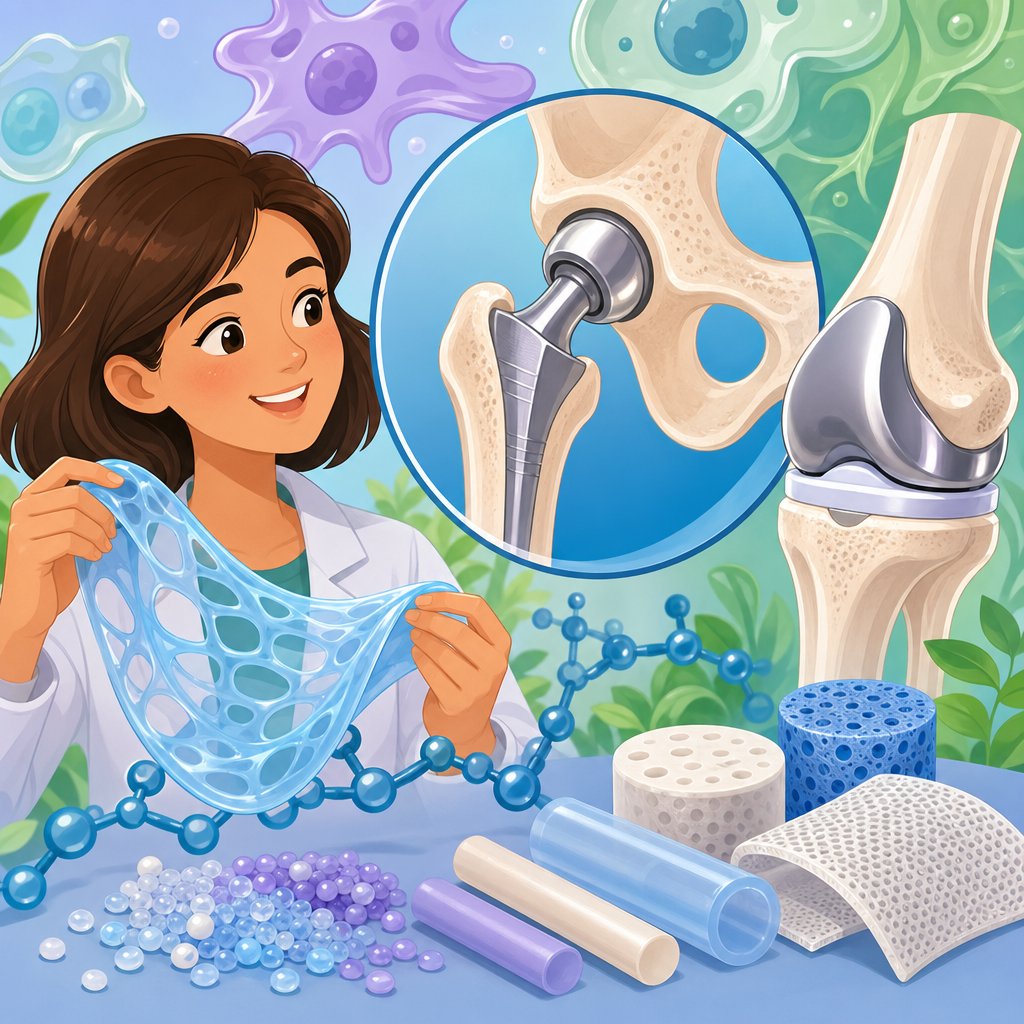
Biocompatible polymers for implants are engineered materials designed to function in contact with living tissue without causing unacceptable local or systemic effects, and they have become central to modern medical and healthcare applications because they can be tailored for flexibility, strength, degradation rate, surface chemistry, and manufacturability. In implant design, biocompatibility means more than “safe”; it includes the body’s inflammatory response, protein adsorption, cell attachment, sterilization stability, wear behavior, and the possibility of long-term integration or controlled resorption. I have worked on materials selection for device programs where choosing the wrong polymer delayed validation by months, so I treat polymer choice as a clinical decision as much as an engineering one. For this hub page, the key idea is simple: different implant categories demand different polymer behaviors, and understanding those demands helps clinicians, engineers, buyers, and researchers navigate the wider medical and healthcare landscape.
Polymers matter in implants because they solve problems metals and ceramics cannot always solve well. A polymer can be soft enough for neural tissue, clear enough for an intraocular lens, porous enough for tissue ingrowth, or bioresorbable enough to disappear after healing. Common examples include ultra-high-molecular-weight polyethylene in joint bearings, silicone elastomers in soft-tissue devices, polyether ether ketone in spinal cages, polymethyl methacrylate in bone cement and intraocular lenses, and polylactic acid in temporary fixation devices. Each one succeeds because its chemistry aligns with a clinical use case. This medical and healthcare hub covers that alignment, from permanent implants to resorbable systems, from regulatory standards to manufacturing methods, and from risk management to future directions. If you need a practical foundation for evaluating implant polymers or planning related content, this page gives the framework.
Core material classes used in medical and healthcare implants
The main families of biocompatible polymers for implants are thermoplastics, thermosets, elastomers, hydrogels, and bioresorbable polymers. Thermoplastics such as PEEK, UHMWPE, and PMMA are valued for predictable processing and mechanical performance. PEEK has an elastic modulus closer to cortical bone than titanium, which can reduce stress shielding in some spinal and craniofacial applications. UHMWPE remains the benchmark bearing material in total joint arthroplasty because of its low friction and good wear performance, especially in highly crosslinked grades used in acetabular liners. PMMA is not a structural bone substitute, but it has decades of clinical use as bone cement and as a lens material because of optical clarity and stability.
Elastomers and hydrogels address softer interfaces. Medical-grade silicone elastomers are used in catheters, cosmetic and reconstructive implants, and certain pacing leads because they stay flexible over time and tolerate sterilization well. Polyurethanes can provide superior tear resistance and abrasion performance, which is why they appear in cardiovascular and long-term indwelling devices, although hydrolytic and oxidative stability must be examined closely. Hydrogels, including poly(2-hydroxyethyl methacrylate) and polyethylene glycol-based systems, can hold large amounts of water and mimic aspects of soft tissue. In ophthalmology and drug-eluting implants, that water content and permeability are advantages. Bioresorbable polymers such as PLA, PGA, PLGA, and polycaprolactone are used when the implant should provide temporary support and then degrade into metabolizable byproducts. Degradation is useful, but only when the timeline matches tissue healing and the local environment can tolerate the byproducts.
How polymer properties determine implant performance
A useful way to evaluate implant polymers is to connect material properties directly to clinical outcomes. Mechanical properties come first. Tensile strength, fatigue resistance, creep, and modulus determine whether an implant can survive physiological loading. In spinal cages, PEEK’s radiolucency and modulus make imaging easier and load sharing more favorable than with many metals. In joint replacements, however, wear resistance dominates because microscopic wear particles can trigger osteolysis. That is why highly crosslinked UHMWPE changed orthopedic practice: by lowering wear rates compared with conventional polyethylene, it reduced a major failure mechanism, though crosslinking must be balanced against toughness and oxidation resistance.
Surface properties are just as important as bulk strength. Protein adsorption occurs within seconds after implantation and shapes the foreign body response. A hydrophobic, smooth surface may reduce some adhesion events but also limit integration; a roughened or coated surface may improve fixation while increasing complexity. Sterilization compatibility is another gatekeeper. Gamma irradiation can change polymer chemistry, ethylene oxide requires residual management, and steam sterilization is too harsh for many heat-sensitive polymers. Additives, colorants, plasticizers, and processing residues also matter because extractables and leachables can affect toxicity and regulatory acceptance. In development reviews, I often ask a simple question: what does the body actually experience over the full life of this device? That question forces teams to look beyond datasheet values and evaluate wear debris, oxidation, hydrolysis, environmental stress cracking, and packaging interactions.
Major implant applications across medical and healthcare
Biocompatible polymers for implants appear across nearly every major medical specialty. In orthopedics, UHMWPE acetabular cups and tibial inserts are standard components in hip and knee systems, while PEEK is common in spinal interbody fusion cages and trauma plates designed for radiographic visibility. Bone cements based on PMMA anchor implants and fill voids, although they generate heat during polymerization and therefore require careful surgical technique. In cardiovascular care, expanded polytetrafluoroethylene and certain polyurethanes are used in vascular grafts, patches, and leads because they combine flexibility with acceptable blood-contact performance. In ophthalmology, hydrophobic and hydrophilic acrylics dominate intraocular lenses due to clarity, foldability, and established long-term outcomes.
Dental and maxillofacial applications use PMMA for denture bases, PEEK for frameworks, and resorbable fixation systems based on PLA or PLGA where hardware removal is undesirable. In neurology, soft polymeric coatings and elastomeric encapsulations help reduce mechanical mismatch around electrodes, though chronic foreign body response remains a difficult challenge. Breast, facial, and reconstructive implants rely heavily on silicone shells and gels, supported by extensive standards, post-market surveillance, and material characterization. Drug-device combination implants extend the category further: biodegradable polymer matrices in depot systems, antibiotic-loaded bone cement, and steroid-eluting components in specialty devices show that polymers can provide both structure and controlled therapeutic release. This breadth is why a hub article matters. Medical and healthcare applications are not one market; they are a network of subfields linked by shared material science principles.
| Polymer | Common implant uses | Key advantages | Main limitation |
|---|---|---|---|
| UHMWPE | Hip and knee bearing components | Low friction, strong wear history | Wear debris and oxidation risk |
| PEEK | Spinal cages, cranial plates, dental frameworks | Radiolucent, bone-like modulus, machinable | Bioinert surface can limit osseointegration |
| Silicone elastomer | Soft-tissue implants, leads, catheters | Flexible, stable, widely used | Lower tear strength than some alternatives |
| PMMA | Bone cement, intraocular lenses, dental devices | Optically clear, established clinical use | Brittle in structural roles |
| PLA/PLGA | Resorbable screws, pins, drug-delivery implants | Temporary support, controlled degradation | Acidic degradation products can irritate tissue |
Testing, standards, and regulatory expectations
No polymer becomes an implant material on chemistry alone. It must pass a disciplined verification and validation pathway. The most widely recognized framework for biological evaluation is ISO 10993, which covers endpoints such as cytotoxicity, sensitization, irritation, systemic toxicity, implantation effects, and, where relevant, hemocompatibility and genotoxicity. The exact test plan should be risk-based, not copied blindly, because duration of contact, tissue type, and route of exposure all matter. For orthopedic wear, ASTM and ISO standards define simulator methods for hips, knees, and spinal devices. For sterilization, ISO 11135 for ethylene oxide, ISO 11137 for radiation, and ISO 17665 for moist heat shape process validation expectations. Manufacturing controls often follow ISO 13485 quality management requirements, while risk analysis aligns with ISO 14971.
Regulators also expect strong materials characterization. That includes molecular weight, crystallinity, thermal transitions, residual monomer, extractables, particulate burden, and shelf-life stability. A frequent mistake is assuming a polymer grade marketed as “medical” is automatically suitable for implantation. In practice, suppliers may distinguish short-term healthcare grades from implant grades backed by master access files, change control commitments, and long-term biocompatibility data. Traceability is essential because even small changes in resin source, compounding, sterilization dose, or packaging can alter performance. Real-world failures have shown this repeatedly. Oxidation in polyethylene, environmental stress cracking in some polymers, and unexpected discoloration after sterilization are not abstract possibilities; they are known failure modes that can trigger recalls, revision surgery, and reputational damage. Robust standards compliance reduces those risks but does not eliminate the need for application-specific judgment.
Design tradeoffs, manufacturing methods, and emerging trends
Selecting a biocompatible polymer for implants always involves tradeoffs. Permanent implants need long-term stability, but a very inert surface may integrate poorly with tissue. Resorbable implants avoid removal surgery, but degradation can lower mechanical strength before healing is complete. A transparent polymer may support visualization, yet be more brittle than an opaque alternative. Manufacturing method influences these tradeoffs. Injection molding works well for high-volume repeatable parts such as lens components and fixation devices, but mold design, gate location, and cooling history can change crystallinity and residual stress. Machining from stock shapes is common for PEEK implant components because it offers precision and lower tooling investment, though machining damage and cleanliness must be controlled. Additive manufacturing is growing for patient-specific implants and porous structures, especially with PEEK and specialized photopolymers, but consistency, anisotropy, and post-processing validation remain active concerns.
Several trends are shaping the next generation of medical and healthcare implant polymers. Surface modification is one of the most important. Plasma treatment, grafted hydrophilic layers, titanium or hydroxyapatite coatings on polymer substrates, and drug-eluting surfaces aim to improve fixation, reduce fouling, or prevent infection. Another trend is bioactive and composite systems, where polymers are reinforced with carbon fiber, barium sulfate, ceramics, or antimicrobial additives to tune stiffness, radiopacity, or biological performance. Smart polymers that respond to temperature, pH, or electric signals are advancing in niche implantable systems, especially where controlled release or minimally invasive deployment matters. Sustainability is discussed more often in medical manufacturing, but patient safety still dominates material decisions; reusable tooling, cleaner solvents, and efficient processing matter more today than switching implant chemistry for environmental marketing reasons.
The most effective way to use this hub is as a decision framework for the wider Applications topic. Start with the clinical environment: load-bearing, blood contact, neural interface, optical clarity, or temporary fixation. Then map the needed properties, standards, and failure modes. From there, evaluate candidate polymers, manufacturing routes, and sterilization methods as a connected system rather than separate choices. That systems view consistently leads to better implant outcomes, fewer regulatory surprises, and more credible product claims. Biocompatible polymers for implants are not interchangeable plastics; they are highly engineered medical materials with decades of clinical evidence behind them. Understanding their classes, properties, applications, testing requirements, and tradeoffs is the foundation for every deeper article in this medical and healthcare subtopic, from orthopedic bearings to cardiovascular grafts and resorbable fixation. Use this page as your starting point, then explore each implant category in detail and compare materials with the specific patient need in mind.
Frequently Asked Questions
What are biocompatible polymers, and why are they important for implants?
Biocompatible polymers are specially designed materials that can remain in contact with the body’s tissues, fluids, and cells without causing unacceptable harm. In the context of implants, this does not simply mean the material is “non-toxic.” A truly biocompatible polymer must interact with the body in a controlled and predictable way. That includes minimizing harmful inflammation, avoiding toxic degradation byproducts, managing protein adsorption at the implant surface, and supporting appropriate cell attachment or tissue integration depending on the application.
These polymers are important because they offer a level of design flexibility that many traditional materials cannot match. Engineers can tailor them for softness or rigidity, short-term or long-term use, faster or slower degradation, and specific surface properties that influence how the body responds. This makes them highly valuable in applications such as cardiovascular implants, orthopedic devices, sutures, drug-delivery implants, neural interfaces, and tissue engineering scaffolds. Their adaptability also supports advanced manufacturing methods, including extrusion, molding, coating, and 3D printing, which helps create patient-specific and highly functional implant designs.
In modern healthcare, biocompatible polymers are central because implant performance depends on more than mechanical fit alone. The body immediately reacts to any implanted material, beginning with protein adsorption and followed by immune and cellular responses. A polymer that is chemically stable, mechanically appropriate, and biologically well tolerated can improve healing, reduce complications, and extend device longevity. That combination of tunable performance and biological compatibility is why biocompatible polymers are so widely used in implant technology.
How is biocompatibility evaluated for polymer implants?
Biocompatibility is evaluated through a combination of material characterization, laboratory testing, preclinical assessment, and regulatory review. The process starts with understanding the polymer itself: its chemical composition, additives, residual monomers, processing aids, sterilization compatibility, and expected degradation products. Even a polymer with a strong track record can behave differently if its formulation, manufacturing method, or surface treatment changes, so evaluation must be specific to the final device.
Testing typically includes cytotoxicity studies to determine whether the material harms cells, sensitization and irritation studies to assess allergic or inflammatory potential, and hemocompatibility testing if the implant will contact blood. Additional studies may examine genotoxicity, systemic toxicity, implantation response, and long-term effects depending on the intended use. For degradable polymers, investigators also study how the material breaks down over time, what compounds are released, and whether those byproducts are safely metabolized or excreted. Mechanical and chemical stability are also critical, because cracking, wear, swelling, or unexpected chemical changes can alter the biological response.
One of the most important points is that biocompatibility is context-dependent. A polymer that performs well in a short-term catheter may not be suitable for a permanent bone implant, and a material appropriate for soft tissue may fail in a load-bearing environment. Surface properties matter greatly as well, because the body first encounters the implant’s outermost layer. Protein adsorption, surface energy, roughness, and hydrophilicity can strongly influence cell behavior and inflammation. For that reason, evaluation is not limited to the bulk polymer; it must reflect the actual finished implant, how it will be used, and how long it will remain in the body.
What properties make a polymer suitable for use in medical implants?
A suitable implant polymer must balance biological, mechanical, chemical, and manufacturing requirements. From a biological standpoint, it should not trigger unacceptable toxicity, chronic inflammation, or adverse immune reactions. It must also interact appropriately with surrounding tissue. In some implants, the goal is to minimize cell attachment and fouling; in others, such as tissue scaffolds, the goal is to encourage cell adhesion, growth, and regeneration. This means surface chemistry is often just as important as the polymer’s bulk composition.
Mechanically, the polymer must fit the demands of the implant site. Some applications require flexibility and elasticity, such as vascular or soft-tissue devices, while others require stiffness, dimensional stability, or resistance to fatigue. A mismatch between the implant’s mechanical behavior and the host tissue can lead to stress concentrations, discomfort, failure, or poor integration. Wear resistance can also be essential, particularly in articulating or repeatedly loaded systems, because particles generated by wear may provoke inflammation or device failure.
Chemical stability is another major factor. Permanent implants generally require polymers that resist hydrolysis, oxidation, and environmental stress cracking over long periods. Biodegradable implants, by contrast, must degrade at a predictable rate that matches healing or therapeutic needs. Their degradation products must be safe and manageable for the body. In addition, the polymer must withstand sterilization methods such as ethylene oxide, gamma irradiation, electron beam, or steam if applicable, without significant loss of performance.
Finally, manufacturability matters. A polymer may look ideal on paper but prove unsuitable if it cannot be processed reproducibly, formed into complex geometries, bonded to other materials, or scaled for consistent quality. Implant materials must support precise fabrication and tight quality control. In practice, the best polymer is not just biocompatible in theory; it is one that performs reliably as a finished, sterilized, clinically usable device.
Are biodegradable polymers better than permanent polymers for implants?
Biodegradable polymers are not inherently better than permanent polymers; they are simply better suited to some applications. The right choice depends on the implant’s purpose, the required lifespan, the healing timeline, and the biological environment. Biodegradable polymers are especially useful when temporary support is needed. Examples include resorbable sutures, drug-delivery systems, fixation devices that only need to stabilize tissue during healing, and tissue engineering scaffolds that gradually transfer load and function to new tissue as they disappear.
The main advantage of biodegradable polymers is that they can eliminate the need for surgical removal and can be designed to release drugs or bioactive agents over time. Their degradation rate can often be tuned by adjusting polymer chemistry, molecular weight, crystallinity, copolymer ratio, and device geometry. However, that same degradability introduces complexity. The implant must maintain adequate mechanical performance until it is no longer needed, and its breakdown products must not accumulate in ways that cause inflammation, pH shifts, or tissue irritation. If degradation occurs too quickly, the implant may fail prematurely; if too slowly, it may persist longer than intended.
Permanent polymers remain essential when long-term stability is required. Devices such as certain joint components, pacemaker leads, long-term meshes, and components of cardiovascular or neural implants often need materials that can function safely for many years. In these cases, resistance to wear, oxidation, creep, and chronic inflammatory response becomes crucial. Permanent polymers may provide superior long-term mechanical reliability, but they also must be carefully designed to avoid late complications related to fibrous encapsulation, surface fouling, or long-term degradation in vivo.
In short, the decision is application-specific. Biodegradable polymers are ideal for temporary, therapeutic, or regenerative roles, while permanent polymers are better for durable structural or functional implants. The best material is the one whose biological response, mechanical profile, and lifespan align with clinical goals.
What are some common examples of biocompatible polymers used in implants?
Several polymer families are widely used in implantable medical devices, each chosen for specific performance characteristics. Silicone is one of the most recognized examples because it offers excellent flexibility, chemical stability, and soft-tissue compatibility. It is commonly used in catheters, soft-tissue implants, and various long-term medical components. Polyurethane is another important class, valued for its versatility, elasticity, and tunable mechanical properties, making it useful in cardiovascular devices, wound-care products, and certain implantable components.
Polyethylene, especially ultra-high-molecular-weight polyethylene, is well known in orthopedic implants because of its wear resistance and mechanical durability. It has played a major role in joint replacement systems. PTFE and expanded PTFE are also prominent due to their chemical inertness and low friction, which make them suitable for vascular grafts and other implant applications. PEEK is a high-performance polymer increasingly used in spinal, craniofacial, and orthopedic implants because it combines strength, radiolucency, and favorable processing characteristics.
For biodegradable applications, polymers such as polylactic acid (PLA), polyglycolic acid (PGA), and poly(lactic-co-glycolic acid) (PLGA) are widely used. These materials are especially important in resorbable sutures, fixation devices, scaffolds, and controlled drug-delivery systems. Their degradation behavior can be adjusted to match clinical needs, which is a major reason they remain central to bioresorbable implant design. Other materials, including polycaprolactone and certain hydrogel-forming polymers, are used when softer mechanics or slower degradation are needed.
It is important to remember that no polymer is universally ideal. A material’s suitability depends on the implant location, duration of use, loading conditions, sterilization method, and intended tissue response. In many advanced devices, polymers are also modified with coatings, surface treatments, fillers, or bioactive components to improve cell interaction, reduce fouling, enhance osseointegration, or control therapeutic release. As a result, implant designers often choose not just a polymer, but