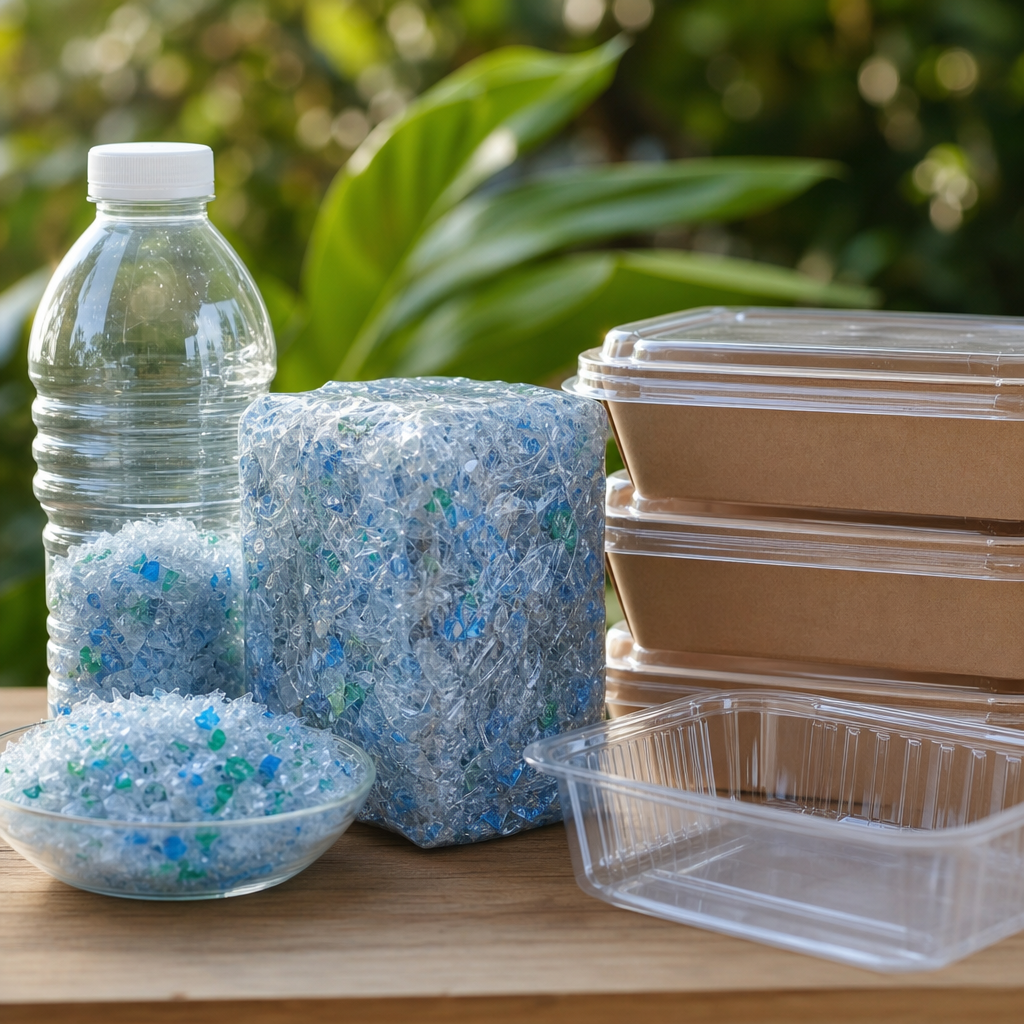
Recycled polymers are reshaping packaging by turning used plastic into feedstock for new bottles, films, trays, caps, mailers, and transport wraps. In packaging, the term usually refers to plastics recovered after consumer or industrial use, then reprocessed into resin that can replace a portion of virgin material. I have worked with packaging teams evaluating recycled polyethylene terephthalate, high-density polyethylene, low-density polyethylene, and polypropylene, and the same question comes up every time: can recycled content reduce environmental impact without compromising safety, performance, or cost? The answer is yes, but only when material selection, processing, regulations, and end-of-life design are managed together. That is why recycled polymers in packaging matter. Packaging is the largest single application for plastics globally, and it moves fast. A change in one bottle specification or one e-commerce mailer program can shift thousands of tons of material demand in a year. Governments are tightening recycled-content targets, major brands are making public commitments, and retailers increasingly expect suppliers to document material origin, recyclability, and compliance. For companies building a packaging strategy, this topic is no longer optional; it sits at the center of cost control, risk management, and brand credibility.
Not all recycled polymers are the same. Post-consumer recycled content comes from products collected after use, such as beverage bottles or detergent jugs. Post-industrial recycled content comes from manufacturing scrap, such as film trim or off-spec molded parts. Mechanical recycling grinds, washes, separates, melts, and pelletizes plastic; it is the most established route and usually the most cost-effective. Chemical recycling uses processes such as depolymerization, pyrolysis, or solvent-based purification to break plastics down or remove contaminants; it can expand feedstock options, but economics and mass-balance accounting require scrutiny. For packaging, the practical decision is not simply whether to use recycled content. It is which polymer, from which source, processed by which route, for which package format, under which regulatory constraints. This hub article explains those choices across packaging applications, performance requirements, safety rules, design principles, and implementation steps, so readers can use it as the starting point for every packaging decision tied to recycled polymers.
Why recycled polymers are now central to packaging strategy
Packaging companies adopted recycled polymers first for sustainability messaging, but today the drivers are broader and more concrete. The first is regulation. The European Union’s Single-Use Plastics framework, packaging waste rules, and taxes linked to non-recycled plastic packaging have pushed procurement teams to secure recycled resin supply. In the United States, California, Washington, New Jersey, and other states have enacted or proposed minimum post-consumer recycled content requirements for beverage containers, trash bags, and certain rigid packaging. The second driver is customer demand. Brand owners in food, beauty, home care, and e-commerce have public targets for recycled content, often ranging from 25 percent to 50 percent by 2025 or 2030. Suppliers that cannot support those targets are simply removed from bid lists.
The third driver is economics, although it is more nuanced than many headlines suggest. Recycled resin prices do not always undercut virgin resin. Food-grade rPET, for example, has often traded at a premium because demand from beverage brands exceeds supply of suitable bottle feedstock. Yet long-term economics still favor building recycled polymer capability because virgin price volatility, plastic taxes, extended producer responsibility fees, and retailer scorecards increasingly affect total packaging cost. I have seen packaging projects approved even when resin conversion cost rose slightly, because avoiding compliance risk and retaining shelf placement mattered more than a narrow material comparison. Recycled polymers also support corporate carbon goals. Mechanical recycling generally delivers lower greenhouse gas emissions than producing virgin polymer from fossil feedstocks, especially for PET and polyolefins, though actual savings depend on collection, transport, washing intensity, and yield losses. Companies that measure Scope 3 emissions often find packaging resin to be one of the quickest places to show quantified improvement.
Which recycled polymers are used most in packaging
The most important recycled polymer in packaging is rPET. It dominates beverage bottles because PET has strong clarity, good gas barrier when properly designed, established bottle-to-bottle recycling streams, and broad regulatory acceptance for food contact when sourced and processed correctly. Clear beverage bottles are especially valuable feedstock because they can be sorted efficiently and remade into high-quality resin. Brands use rPET not only in water and soft drink bottles, but also in thermoformed trays, clamshells, and some personal care containers. The main limitations are color sensitivity, contamination, and intrinsic viscosity control. If the feedstock stream contains too much colored PET, multilayer material, or PVC, quality drops quickly.
Recycled HDPE is another workhorse for packaging. It is common in milk jugs, detergent bottles, personal care containers, caps, crates, and industrial drums. Natural HDPE from closed-loop bottle streams can achieve relatively high quality, while mixed-color HDPE is often downcycled into non-food packaging or durable goods. Recycled LDPE and LLDPE are widely used in films: stretch wrap, secondary packaging, courier mailers, collation shrink, and retail bags. Film recycling is harder than bottle recycling because films are lightweight, easily contaminated, and often made from complex multilayer structures, but design improvements and store-dropoff systems have expanded opportunities. Recycled polypropylene is gaining momentum in tubs, caps, closures, and rigid containers, helped by improved sorting from near-infrared systems and digital watermarking pilots. Polystyrene, while technically recyclable, remains more challenging in packaging because collection economics are weak and food contamination is common.
| Polymer | Common packaging uses | Main advantages | Main limitations |
|---|---|---|---|
| rPET | Beverage bottles, trays, clamshells | Clarity, established bottle streams, food-contact pathways | Color contamination, IV control, limited supply |
| rHDPE | Detergent bottles, milk bottles, personal care packs | Chemical resistance, strong recycling markets | Odor, color variation, food-contact constraints |
| rLDPE/rLLDPE | Mailers, pallet wrap, retail bags, secondary film | Good toughness, useful in flexible packaging blends | Contamination, multilayer complexity, lower stiffness |
| rPP | Tubs, caps, closures, rigid containers | Heat resistance, growing availability | Sorting maturity still improving, property variation |
How recycled polymers perform in real packaging formats
Performance depends less on the recycled label itself than on the fit between resin grade and package function. In rigid packaging, the key properties are impact strength, top load, stress-crack resistance, color, odor, and process stability. A detergent bottle made with rHDPE may run well on a blow molding line but fail on shelf if environmental stress cracking resistance is insufficient for aggressive surfactant formulas. A water bottle with high rPET content may look excellent but need process adjustments to manage acetaldehyde levels, haze, or drop impact. In thermoforms, recycled PET can produce excellent trays, but sheet extrusion must control moisture and contamination, and the final structure must still meet stiffness and sealing needs.
Flexible packaging is both the biggest opportunity and the hardest challenge. Films account for a large share of packaging volume, especially in e-commerce and distribution, but they are often made from blends or multilayer laminates designed for sealability, puncture resistance, printability, and barrier. Recycled polyethylene can work very well in non-food mailers, collation shrink, and transport films when used in engineered blends. I have seen courier bags with 80 percent recycled polyethylene meet puncture and seal requirements after gauge optimization and dart impact testing. However, highly demanding food pouches remain difficult because odor, gels, and variable melt flow can disrupt sealing and appearance. The lesson is simple: recycled polymers succeed when packaging teams define the critical performance attributes first, then build a formulation and structure around them, rather than forcing a recycled content percentage into an unsuitable format.
Food safety, compliance, and quality assurance
Any serious discussion of recycled polymers in packaging must address food contact and regulatory compliance directly. For food packaging, recycled plastic must be produced from controlled feedstocks and processes that can demonstrate contaminants are removed to safe levels. In the United States, the Food and Drug Administration evaluates recycling processes through no-objection letters, commonly called NOLs. In Europe, food-contact recycled plastics are governed by detailed rules that increasingly focus on authorized technologies, input control, and traceability. These requirements are not paperwork formalities. They shape what feedstock can be purchased, how lines are audited, and where recycled resin can legally be used. A processor cannot assume that because a polymer is technically recyclable, any recycled grade is automatically acceptable for direct food contact.
Quality assurance is equally important for non-food packaging. Recycled polymers can carry variability in melt flow index, density, ash, moisture, odor, and color. Good suppliers control this with feedstock qualification, hot washing, metal removal, optical sorting, deodorization, filtration, and pellet testing. Brand owners should ask for certificates of analysis, recycled-content calculation method, process certifications such as EuCertPlast, and migration or extractables data where relevant. Chain-of-custody documentation matters because many public claims are now audited. If a package claims 30 percent post-consumer recycled content, procurement, quality, and legal teams should be able to trace that claim back to verified resin supply. In my experience, the strongest packaging programs treat recycled content like any other critical raw material specification: controlled through supplier approval, incoming inspection, process validation, and change management.
Designing packaging to work with recycled content
The best packaging outcomes come from design for recycling and design with recycled content being handled together. If a company wants reliable recycled polymer supply in the future, it must place recyclable packaging on the market today. That means simplifying structures, avoiding unnecessary pigments, minimizing carbon black where sorting systems struggle, choosing labels and adhesives that do not disrupt recycling, and designing closures, sleeves, and barrier layers so they separate cleanly or remain compatible. The Association of Plastic Recyclers and RecyClass publish practical design guidance that packaging engineers should use early in development, not after artwork approval. Small design choices have outsized impact. A full-body shrink sleeve on a PET bottle can reduce sortation accuracy; a silicone-heavy label adhesive can interfere with reprocessing; an EVOH barrier layer above compatibility thresholds can affect polyolefin recyclability.
Designing with recycled content also requires realistic specification setting. Start with the package function, then define acceptable ranges for visual and mechanical properties. Some applications can tolerate slight grayness or wider color variation; others, such as premium cosmetics, cannot. In those cases, teams often use layered structures, masterbatch adjustments, or place recycled content in opaque components first. Caps, closures, secondary packaging, trays, and e-commerce mailers are frequent entry points because they can absorb variability better than crystal-clear primary packs. Another effective strategy is phased adoption: validate 25 percent recycled content, monitor line efficiency and complaint rates, then move to 50 percent or higher. This approach reduces risk and creates usable plant data, which is more valuable than theoretical claims from a supplier data sheet.
Supply chains, economics, and the next phase of packaging
Supply is the constraint that will define the next decade of recycled polymers in packaging. Demand from global brands is growing faster than collection and processing infrastructure in many markets. That imbalance is most visible in food-grade rPET, but it affects natural rHDPE and high-quality recycled polyolefins as well. Companies that secure long-term contracts, invest in reclaimers, or support deposit return systems usually fare better than those buying spot volumes. Geography matters too. A packaging format that is practical in Germany, where collection and sorting infrastructure is mature, may be difficult in regions with weak curbside systems or limited wash capacity. Procurement teams need to understand bale specifications, yield losses, and local end-market dynamics, not just resin price per kilogram.
Looking ahead, the packaging market will use more recycled polymers, but not through a single pathway. Mechanical recycling will remain the backbone because it is commercially proven and generally lower in emissions. Chemical recycling will expand where it solves specific feedstock or purity problems, particularly for mixed polyolefins and difficult flexible packaging, though claims must be supported with transparent accounting. Digital product passports, better sortation technology, AI-assisted quality control, and stronger extended producer responsibility systems will improve material traceability and supply stability. For packaging leaders, the practical takeaway is clear: recycled polymers are not a side initiative. They are now a core packaging capability spanning design, sourcing, operations, compliance, and brand strategy. Use this hub as your starting point, then review each packaging format in your portfolio, identify the fastest viable substitution opportunities, and build a roadmap that matches recycled content ambition with technical reality.
Frequently Asked Questions
1. What are recycled polymers in packaging, and how are they made?
Recycled polymers in packaging are plastic materials that have already been used once, recovered, and then processed so they can be turned into new packaging products. In practical terms, this means used bottles, containers, films, caps, industrial scrap, or other plastic items are collected, sorted by polymer type, cleaned, shredded, melted, and converted into resin that manufacturers can use again. In packaging, these recycled resins often replace part of the virgin plastic in products such as beverage bottles, trays, flexible films, mailers, transport wraps, and closures.
There are two main feedstock streams. Post-consumer recycled content comes from materials collected after consumer use, such as bottles placed in recycling bins. Post-industrial, sometimes called pre-consumer recycled content, comes from manufacturing scrap that never reached the consumer, such as edge trim, off-spec parts, or production overruns. Both can play an important role, but post-consumer material is often especially valuable because it helps divert waste that has already entered the market.
The most common packaging polymers used in recycling programs include recycled polyethylene terephthalate (rPET), recycled high-density polyethylene (rHDPE), recycled low-density polyethylene (rLDPE), and recycled polypropylene (rPP). Each has different performance characteristics. For example, rPET is widely used in bottles and thermoformed trays, while rHDPE can appear in rigid containers and some caps, and rLDPE is often used in films and mailers. The final resin quality depends heavily on the quality of collection, sorting accuracy, contamination levels, washing efficiency, and how carefully the material is reprocessed.
It is also worth noting that not all recycled polymer is made the same way. Mechanical recycling is the most common method and involves physically reprocessing the plastic into pellets without changing its basic chemical structure. Chemical or advanced recycling breaks polymers down further into feedstock that can be reformed into new plastic. For most mainstream packaging applications today, mechanical recycling remains the dominant route, but both approaches are part of the broader conversation around circular packaging systems.
2. Why are brands and packaging teams increasing their use of recycled polymers?
Brands are increasing their use of recycled polymers because packaging is under pressure from multiple directions at once: sustainability commitments, customer expectations, regulatory changes, retailer requirements, and corporate goals around waste reduction and carbon impact. Recycled content gives companies a practical way to lower reliance on virgin fossil-based resin while supporting a more circular material economy. Instead of treating used plastic as waste, recycled polymer turns it into feedstock for new packaging.
From a business standpoint, recycled content can help companies meet public environmental targets, including commitments tied to recycled content percentages, packaging circularity, or reductions in virgin plastic use. Many consumer brands now publish packaging goals that specifically mention recycled PET, recycled polyethylene, or recycled polypropylene. Retailers and institutional buyers also increasingly expect suppliers to show progress on packaging sustainability, which makes recycled content an important competitive factor.
There is also a strong regulatory driver. In many markets, packaging policies are evolving to encourage or require minimum recycled content levels in certain product categories. Extended producer responsibility programs, recycled content mandates, plastic taxes, and reporting obligations are pushing packaging teams to redesign formats and secure recycled resin supply. As a result, procurement, R&D, quality, and sustainability teams are working more closely than ever to balance cost, compliance, and packaging performance.
At the same time, companies are learning that using recycled polymers is not just a marketing decision. It affects package appearance, supply continuity, technical performance, and manufacturing conditions. That is why experienced packaging teams usually approach recycled content as a structured material transition, not a simple material swap. When done correctly, recycled polymers can support sustainability goals without sacrificing pack integrity, but success depends on selecting the right resin, the right supplier, and the right application.
3. Which types of packaging can use recycled polymers, and are there limits?
Recycled polymers can be used in a wide range of packaging formats, including rigid bottles, jars, tubs, thermoformed trays, caps and closures, shrink films, pallet wraps, mailers, liners, pouches, and other flexible structures. In many cases, recycled resin is blended with virgin resin so the package can achieve a balance of performance, processability, appearance, and cost. The specific percentage of recycled content depends on the polymer, the product inside the package, and the technical demands of the application.
For example, rPET is commonly used in beverage bottles and food trays, especially where a well-developed bottle collection stream exists. rHDPE can work in household product bottles, personal care containers, and some industrial packaging. rLDPE is often used in secondary or tertiary packaging such as shipping films, collation shrink, and e-commerce mailers. Recycled polypropylene is being used more often in caps, tubs, and rigid containers, although supply and quality consistency can vary by region and application.
There are limits, and they matter. Food-contact applications are among the most tightly controlled because recycled material must meet strict safety and traceability expectations. Not every recycled polymer stream is suitable for direct food contact, and approvals can depend on the recycling process, source material, and local regulations. Flexible packaging can also be challenging because high-performance films often require specific mechanical properties, seal behavior, puncture resistance, gloss, or clarity that may be harder to maintain at high recycled content levels.
Another important limit is aesthetics. Recycled polymers can introduce color variation, haze, gels, black specks, or odor depending on the source stream and processing history. In some categories, such as premium consumer packaging, these visual differences can be a concern. In others, such as transport packaging or opaque household containers, they may be much less important. The most effective approach is to match the recycled polymer grade to the demands of the format rather than assuming one recycled resin can work everywhere.
4. Does recycled plastic packaging perform as well as virgin plastic packaging?
Recycled plastic packaging can perform very well, but it should not be assumed to behave exactly like virgin resin in every situation. Performance depends on the polymer type, the recycled content percentage, contamination levels, prior thermal history, additive package, and the design of the packaging itself. In many applications, especially where suppliers are experienced and quality controls are strong, recycled polymers can deliver highly functional packaging with little or no noticeable difference to the end user. In other cases, adjustments are needed.
Packaging teams usually evaluate several properties before approving recycled resin: tensile strength, impact resistance, melt flow behavior, stiffness, sealability, barrier performance, stress crack resistance, top-load strength, color consistency, and processing stability. For rigid packaging, recycled content can sometimes affect wall distribution, clarity, or drop performance. For flexible packaging, it may influence film thickness control, seal consistency, dart impact, or print appearance. These are not reasons to avoid recycled polymers, but they are reasons to test thoroughly.
In practice, success often comes from thoughtful formulation rather than simply maximizing recycled content. A package may perform best with a certain percentage of rPET, rHDPE, rLDPE, or rPP combined with virgin resin, compatibilizers, or selected additives. The converter may also need to adjust processing temperatures, drying conditions, extrusion settings, or mold design. In other words, the package system is optimized around the recycled resin rather than forcing the resin to fit an unchanged process.
It is also important to separate technical performance from perception. Some stakeholders still assume recycled polymer means lower quality, but that is often an outdated view. The real question is whether the recycled material has been qualified for the intended use. When the feedstock stream is controlled, the supplier is credible, and the package is tested under real conditions, recycled polymers can be fully viable in both consumer and industrial packaging applications.
5. What should companies consider before switching to packaging with recycled polymer content?
Before switching to recycled polymer content, companies should look beyond the headline sustainability claim and evaluate the full packaging system. The first consideration is application fit: what product is being packed, what shelf life is required, what distribution conditions will the package face, and what regulatory requirements apply? A bottle for household cleaner, a food tray, a medical component bag, and a pallet wrap all have very different technical demands. Recycled content strategy should be tailored accordingly.
The next major consideration is supply reliability and resin consistency. Recycled resin markets can be more variable than virgin markets because feedstock quality depends on collection systems, sorting infrastructure, contamination control, and regional recycling capacity. Packaging teams should assess supplier certifications, quality documentation, lot-to-lot consistency, traceability, and the supplier’s ability to scale with demand. A successful launch can quickly become difficult if the business cannot secure enough recycled material of the right grade month after month.
Testing is another critical step. Companies should validate processing behavior on actual equipment, confirm package performance under real filling and transportation conditions, and evaluate cosmetic properties such as haze, color, odor, and surface appearance. For regulated uses, including certain food-contact applications, legal and compliance review is essential. Claims around recycled content should also be verified carefully so the company can communicate accurately and avoid overstating environmental benefits.
Finally, companies should think strategically about design. Sometimes the best path is not simply adding recycled content