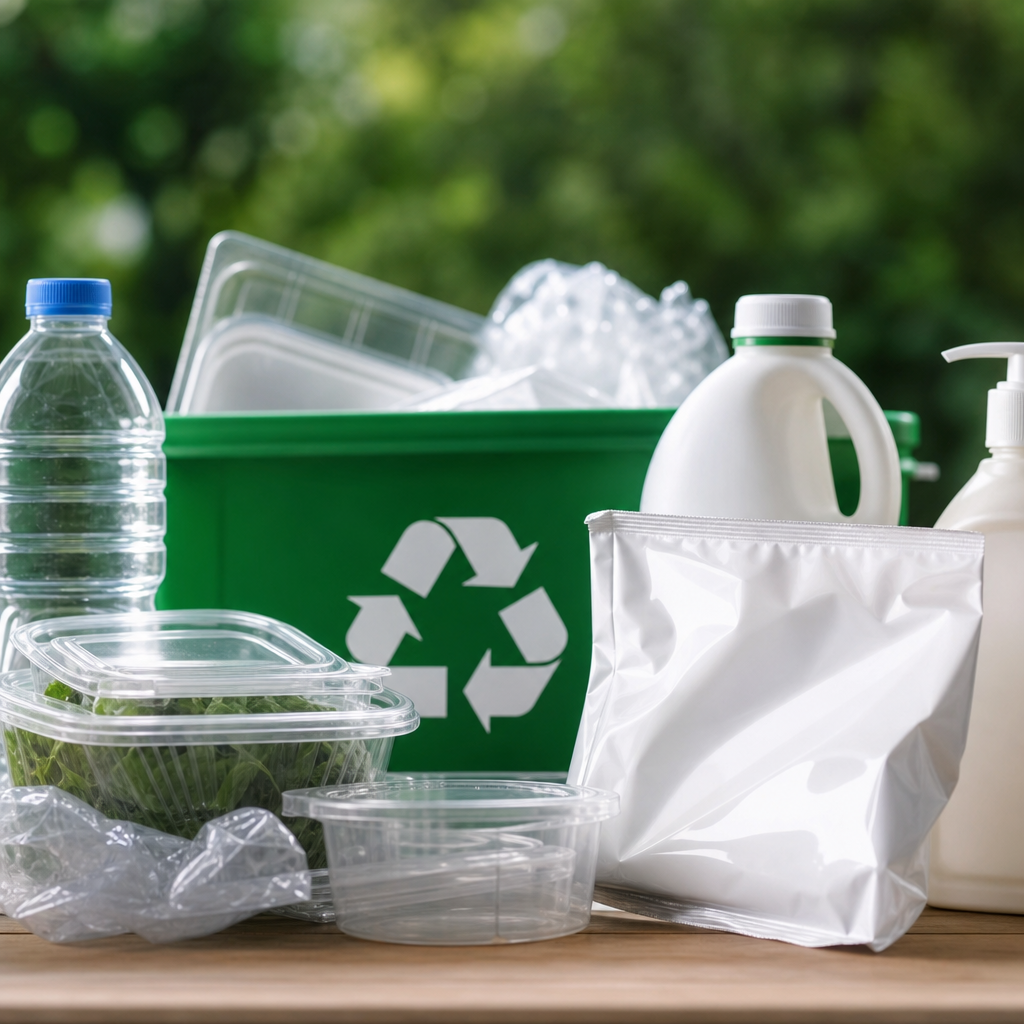
Packaging sustainability depends heavily on polymers because they determine how products are protected, transported, displayed, and recovered after use. In practical packaging work, polymer choice affects carbon emissions, food waste, recyclability, shelf life, cost, and regulatory compliance at the same time. A polymer is a large molecule made of repeating units, and in packaging it usually appears as a plastic resin such as polyethylene, polypropylene, polyethylene terephthalate, polystyrene, or a compostable alternative like polylactic acid. Sustainability in this context is not a single attribute. It is a systems outcome shaped by raw material sourcing, conversion efficiency, barrier performance, transport weight, collection infrastructure, recycling compatibility, and the risk of leakage into the environment.
The reason this topic matters is simple: packaging is one of the largest uses of polymers globally, and it sits at the center of consumer scrutiny, brand strategy, and public policy. Flexible films reduce transport emissions but are often harder to recycle. Rigid containers can fit established recycling streams but may require more material. Paper-based packs often still rely on polymer coatings, tie layers, or seals to function. I have seen packaging teams discover that a design marketed as greener failed in practice because it increased spoilage, jammed filling lines, or could not run in existing recovery systems. Sustainable packaging therefore requires decisions grounded in material science and real operating conditions, not assumptions.
For a packaging hub article, the core question is not whether polymers are good or bad. The right question is how different polymers influence the full life cycle of a package, and which design choices create measurable improvements. That includes lightweighting, mono-material design, recycled content, compostability, refill models, and the role of advanced sorting and recycling. It also includes understanding tradeoffs clearly. A high-barrier multilayer pouch may prevent enough food waste to justify its complexity in some applications, while in others a recyclable polyethylene structure is the better route. The impact of polymers on packaging sustainability is therefore best understood through performance, circularity, and fit-for-purpose application.
Why polymers remain central to modern packaging
Polymers dominate modern packaging because few other material classes combine low weight, toughness, sealability, transparency, printability, and barrier control as effectively. Polyethylene provides excellent moisture resistance and heat-seal performance. Polypropylene offers stiffness, fatigue resistance, and clarity in many formats. PET combines toughness, transparency, and gas barrier properties that support beverage bottles, thermoforms, and trays. These materials are not interchangeable in every use case. They are selected because packaging must survive filling, logistics, retail handling, and consumer use while preserving the product inside.
From a sustainability perspective, polymers often deliver value by doing more with less. A thin flexible pouch can replace a heavier rigid container and reduce transport burdens significantly. Stretch films stabilize pallet loads with a very small amount of material relative to the products protected. In food packaging, polymer barriers against oxygen, moisture, and contamination can extend shelf life by days or weeks. That matters because the environmental impact of wasted meat, cheese, coffee, or prepared meals often exceeds the impact of the package itself. In life cycle assessments, preventing product loss is frequently the decisive factor.
The downside is equally real. Many high-performance packs rely on multilayer structures, additives, pigments, adhesives, and labels that interfere with sorting and recycling. Small-format packaging is especially vulnerable to being missed in material recovery facilities. Lightweight flexible packaging can be highly resource efficient in production and transport yet remain difficult to recover at scale where film collection systems are weak. This is why packaging sustainability cannot be judged by one metric, such as recyclability labels alone.
How polymer selection shapes environmental impact across the life cycle
The environmental profile of a polymer package is determined across extraction, resin production, conversion, distribution, use, and end-of-life. Resin production is energy intensive, but package weight strongly influences downstream transport emissions. Converting resins into film, bottles, caps, trays, or closures also consumes energy and can generate trim waste. During use, the package influences product protection and convenience. At end-of-life, the local ability to collect, sort, recycle, compost, or safely dispose of the package often determines whether a theoretically sustainable design performs sustainably in practice.
In beverage packaging, PET bottles illustrate this life-cycle complexity well. They are lightweight compared with glass, reducing transport emissions, and they are widely recyclable in many markets when clear and properly collected. However, colored PET, full-body shrink sleeves, incompatible closures, and contamination can reduce recycled output quality. In detergent packaging, high-density polyethylene bottles can include substantial post-consumer recycled content while maintaining strength. In snack packaging, oriented polypropylene or polyethylene films can achieve low material use and strong machinability, but unless designed for mono-material recovery and supported by collection systems, circularity remains limited.
One lesson repeated across projects is that the best polymer for sustainability depends on the product system, not on public perception. Replacing plastic with another material can increase mass, breakage, energy use, or spoilage. A credible evaluation considers carbon footprint, water use, litter risk, food protection, recycled content, and actual end-of-life outcomes together. Standards such as ISO 14040 and ISO 14044 for life cycle assessment provide the right discipline for this analysis.
Comparing common packaging polymers and their sustainability roles
Each major packaging polymer has a distinct sustainability profile. Polyethylene, including LDPE and HDPE, is versatile, widely used, and increasingly important in mono-material film design. Polypropylene supports tubs, caps, labels, and films and has strong functionality, though collection rates vary by region. PET remains a leading circular option for clear bottles and some thermoforms because recycling infrastructure is comparatively mature. Polystyrene has lost ground in many markets due to recovery challenges and policy pressure. Compostable polymers such as PLA and PHA can play useful roles, but only where organics collection, contamination control, and application fit are strong.
| Polymer | Typical packaging uses | Main sustainability strengths | Main limitations |
|---|---|---|---|
| PE | Films, pouches, bottles, caps | Low weight, sealability, growing recycle-ready designs | Film collection uneven, multilayer formats common |
| PP | Tubs, closures, BOPP films | Stiffness, heat resistance, lightweighting potential | Sorting and recycling access less consistent than PET or HDPE |
| PET | Beverage bottles, trays, thermoforms | Established bottle recycling, clarity, strength | Colorants, labels, and tray recycling gaps reduce circularity |
| PS | Cups, trays, foamed protective packs | Low cost, insulation in foam form | Weak recovery economics, increasing restrictions |
| PLA/PHA | Compostable food-service items, niche films | Renewable feedstock potential, compostability in some systems | Requires proper infrastructure, can contaminate recycling streams |
These differences matter because packaging designers rarely optimize for one property alone. A yogurt cup needs stiffness, sealing, stackability, and branding area. A meat tray needs barrier performance and low leak risk. A stand-up pouch needs puncture resistance, seal integrity, and shelf presence. The sustainability role of a polymer therefore comes from how efficiently it delivers all required functions with the fewest life-cycle burdens.
Design strategies that improve polymer packaging sustainability
The most effective packaging improvements usually come from design choices rather than dramatic material substitutions. Lightweighting is one of the oldest and still most powerful strategies. Reducing bottle gram weight, down-gauging film, or redesigning closures can remove substantial virgin resin at scale. Mono-material design is another major trend. Replacing mixed PET-PE or PET-foil laminates with all-PE or all-PP structures can improve recyclability if barrier and runnability targets are met. Design for recycling guidelines from organizations such as APR in North America and RecyClass in Europe give specific recommendations on labels, inks, adhesives, closures, and density relationships.
Recycled content is also reshaping polymer packaging. Food-grade recycled PET is now common in beverage bottles where deposit return systems and bottle-to-bottle processes support quality. Recycled HDPE is widely used in household and personal care packaging. Using recycled content reduces demand for virgin resin, but it introduces technical challenges including odor control, color variability, melt flow management, and regulatory compliance for food contact. Companies that succeed treat PCR integration as a formulation and supply-chain project, not a simple substitution.
Another important strategy is right-sizing package performance. Overengineering is common. A package built for worst-case abuse may use more material than necessary across millions of units. Through drop testing, compression testing, migration studies, and seal analysis, engineers can often find a better balance between protection and material efficiency. Digital tools help here. Finite element modeling, package line trials, and life cycle screening can identify where a polymer change delivers real environmental gains without compromising operations.
Recycling, composting, and the infrastructure reality
The sustainability impact of polymers depends less on marketing claims than on infrastructure fit. Mechanical recycling remains the most established route for common packaging polymers, especially PET bottles and HDPE containers. It works best when materials are clean, sorted, and compositionally consistent. Clear PET bottles with compatible labels and closures are a strong example because they can be reprocessed into flakes, pellets, and then new packaging or fiber. By contrast, small flexible packs, black plastics undetectable by some optical sorters, and heavily laminated structures often face poor recovery outcomes.
Chemical or advanced recycling is expanding, especially for mixed polyolefin waste streams and food-contact applications requiring high purity. Processes such as pyrolysis and depolymerization can, in principle, recover feedstock value from materials difficult to recycle mechanically. Yet these routes are not universal solutions. They require significant capital, reliable feedstock quality, emissions controls, and transparent mass-balance accounting. In my experience, advanced recycling is most credible when used to complement, not replace, strong mechanical recycling systems.
Compostable polymers are frequently misunderstood. Industrial compostability can be useful for food-soiled serviceware, caddy liners, or niche applications where organic waste capture is the main goal. It is not a blanket answer for mainstream packaging. Many compostable plastics require controlled industrial conditions and do not break down effectively in home compost, landfill, or the natural environment. If consumers cannot distinguish them from recyclable plastics, contamination rises. The practical rule is clear: choose compostable polymers only when collection and processing systems are proven and the application benefits from organics diversion.
Regulation, brand pressure, and the future of packaging polymers
Packaging polymer decisions are now shaped by regulation as much as by engineering. Extended producer responsibility programs are shifting the financial burden of packaging waste management toward producers, rewarding designs that recycle well and penalizing problematic formats. Recycled content mandates are increasing demand for high-quality PCR. Deposit return systems improve collection rates for beverage containers and materially strengthen PET bottle circularity. At the same time, single-use plastic restrictions, packaging taxes, and labeling rules are forcing companies to document claims carefully and redesign portfolios faster than before.
Brand pressure adds another layer. Retailers want packaging that lowers emissions, avoids greenwashing risk, and still performs on shelf. Consumers ask simple questions such as “Is it recyclable?” but the technical answer is often conditional on geography and format. The companies making progress are those that align procurement, packaging development, operations, and waste system partners early. They pilot designs regionally, test them on actual filling equipment, and validate outcomes through life cycle assessment and recovery data instead of relying on generic assumptions.
Looking ahead, the future of packaging polymers will be defined by better systems integration. Expect more mono-material flexible packaging, more tethered and lightweight closures, more wash-off labels, more digital watermarking for sortation, and broader use of recycled content where regulations and supply allow. Bio-based polymers will grow selectively, especially where they match existing recycling or composting pathways. The durable lesson is that polymers are not leaving packaging. Their impact on packaging sustainability will improve when they are specified with discipline, designed for real recovery systems, and used only at the performance level the product truly needs.
Polymers have transformed packaging because they deliver protection, convenience, and efficiency with very low material use. That same versatility has created sustainability challenges when packages are complex, hard to collect, or disconnected from recycling infrastructure. The practical path forward is not blanket material rejection. It is better polymer packaging design: lighter packs, simpler structures, credible recycled content, and formats matched to the systems that actually exist. When companies evaluate polymers through the full life cycle, they make better decisions on carbon, waste, product protection, and cost at the same time.
For anyone managing packaging as an applications category, the main takeaway is straightforward. The most sustainable polymer package is the one that protects the product with the least overall burden and has a realistic end-of-life route in its target market. That requires material science, conversion knowledge, supply-chain visibility, and local policy awareness. Use this packaging hub as the starting point for deeper work on films, rigid containers, compostable formats, barrier design, recycled content, and recycling compatibility. Review your current portfolio, identify the highest-impact formats, and prioritize the polymer changes that will deliver measurable results first.
Frequently Asked Questions
How do polymers influence packaging sustainability?
Polymers sit at the center of packaging sustainability because they shape nearly every environmental and functional outcome a package can have. In simple terms, the polymer chosen for a bottle, film, tray, pouch, or cap affects how much material is required, how well the product is protected, how efficiently the package moves through manufacturing and transport, and what recovery options are available after use. A lightweight polymer can reduce shipping emissions by lowering total package weight, but that same material also needs to provide enough strength, barrier performance, and durability to prevent leaks, breakage, or spoilage. If it does not, the environmental savings from using less material can quickly be outweighed by damaged goods or wasted food.
Polymer selection also affects shelf life, which is one of the most overlooked parts of packaging sustainability. For food, beverage, healthcare, and personal care products, the right polymer can protect against oxygen, moisture, light, grease, and contamination. That protection can significantly reduce waste across the supply chain and in the home. In many cases, preventing product loss has a larger environmental benefit than reducing the packaging itself, especially when the packaged product has a high carbon footprint. This is why sustainability decisions in packaging are rarely about eliminating plastic in the abstract; they are about choosing the polymer system that delivers the best total outcome across protection, resource use, and end-of-life recovery.
From a practical business standpoint, polymers also influence cost, processing efficiency, labeling compatibility, sealing performance, food-contact compliance, and recyclability. Materials such as polyethylene, polypropylene, polyethylene terephthalate, and polystyrene each behave differently in extrusion, thermoforming, injection molding, and film conversion. That means sustainability is tied not only to what a polymer is made from, but also to how it performs in real packaging operations. The most sustainable polymer choice is usually the one that balances material efficiency, product protection, regulatory fit, consumer use, and realistic recovery infrastructure rather than focusing on a single metric alone.
Which polymers are most commonly used in packaging, and how do their sustainability profiles differ?
Several polymers dominate packaging because they offer a useful mix of performance, cost, and processability, but their sustainability profiles vary depending on the application and the system they enter after use. Polyethylene, often used in films, bags, pouches, and rigid containers, is valued for flexibility, moisture resistance, and sealing performance. High-density polyethylene and low-density polyethylene are widely used and can be recyclable in certain formats, especially when local collection and sorting systems accept them. Polypropylene is another major packaging polymer found in tubs, caps, closures, and flexible packaging. It offers good stiffness, heat resistance, and low weight, but its recyclability can depend heavily on local infrastructure and package design.
Polyethylene terephthalate, commonly known as PET, is one of the most recognized packaging polymers because it is used in beverage bottles, thermoformed trays, and some food containers. PET is often viewed favorably in sustainability discussions because clear PET bottles are widely collected and recycled in many markets, and the material can support high-value recycling streams when contamination is controlled. Polystyrene has historically been used in foodservice and protective packaging due to its light weight and insulating properties, but it often faces more limited recycling access and greater public concern, which affects its sustainability perception and practical recovery.
The key point is that no polymer is automatically sustainable or unsustainable in every context. A polymer with strong recycling potential may still underperform if it is paired with difficult labels, colorants, multilayer structures, or food contamination. Likewise, a polymer with limited curbside recyclability may still offer important environmental benefits if it dramatically reduces product damage or extends shelf life. Sustainability profiles also change when recycled content, bio-based feedstocks, downgauging, reuse systems, and chemical or mechanical recycling pathways are considered. The best way to compare polymers is through a full packaging-system view that includes material intensity, manufacturing, transportation, product protection, and actual end-of-life outcomes in the target market.
Why is recyclability only one part of sustainable polymer packaging?
Recyclability matters, but it is only one piece of packaging sustainability because a package has to succeed across its full life cycle, not just at disposal. In many applications, the primary job of packaging is to protect the product, and that role has major environmental consequences. If a package is easily recyclable but fails to prevent spoilage, leakage, or damage, the overall sustainability result may be poor. This is especially true for food, beverages, pharmaceuticals, and fragile goods, where the environmental impact of the product itself can exceed the impact of the package many times over. A polymer that preserves freshness longer or prevents transportation losses may create a better total sustainability outcome even if its recovery pathway is more limited.
Another reason recyclability is only part of the picture is that technical recyclability and actual recycling are not the same thing. A package may be recyclable in theory, but if local collection systems do not accept it, sorting equipment cannot identify it, or markets for the recycled resin are weak, then the environmental benefit is reduced. Design details matter here. The base polymer is important, but so are additives, multilayer structures, adhesives, inks, labels, closures, and residue left in the package. A packaging format that looks sustainable on paper can perform poorly in the real world if it disrupts existing recovery streams.
Sustainable polymer packaging also includes source reduction, carbon emissions, transportation efficiency, use of recycled content, and compliance with food-contact and extended producer responsibility regulations. In practice, many companies now prioritize design for circularity alongside lightweighting and product protection. That means choosing polymers and formats that use less material, maintain performance, and align with available recycling systems wherever possible. The most credible sustainability strategies do not treat recyclability as the only goal; they evaluate how polymer choice supports environmental performance from production through use and recovery.
Can polymer packaging help reduce carbon emissions and food waste?
Yes, polymer packaging can play a meaningful role in reducing both carbon emissions and food waste when it is designed correctly. One of the clearest advantages of many packaging polymers is their ability to deliver strong performance at very low weight. Lightweight materials generally require less energy to transport than heavier alternatives, which can lower fuel use and greenhouse gas emissions across distribution networks. This becomes especially important for high-volume consumer goods, e-commerce shipments, and export markets, where small reductions in package weight can add up quickly at scale. Polymer packaging can also be shaped and processed efficiently, helping manufacturers reduce material use through downgauging, optimized geometry, and high-speed production.
Food waste reduction is often an even bigger sustainability benefit. Polymers can provide barriers against oxygen and moisture, maintain seal integrity, enable portion control, and protect products from contamination and physical damage. These functions extend shelf life and keep products usable longer in retail and at home. For items such as meat, dairy, produce, snacks, sauces, and ready meals, the right polymer structure can significantly reduce waste rates. Since wasted food carries embedded impacts from farming, water use, energy, refrigeration, and transport, preventing spoilage can produce substantial environmental gains. In many life cycle assessments, preserving the product is more important than minimizing the package in isolation.
That said, these benefits depend on smart material selection. Overpackaging can undermine the value of lightweight polymers, while complex structures may improve performance but reduce recyclability. The most effective solutions balance carbon, food protection, and end-of-life practicality. Increasingly, packaging teams look for polymers that combine low material intensity with robust barrier properties and compatibility with recycling systems or recycled content goals. When polymer packaging is engineered around the full product life cycle, it can be a powerful tool for reducing emissions and avoiding unnecessary waste.
What should companies consider when choosing polymers for more sustainable packaging?
Companies should approach polymer selection as a multi-variable decision rather than a simple material swap. The first question is functional: what does the package need to do? It must protect the product, maintain shelf life, survive filling and distribution, support branding, and meet consumer expectations. From there, teams should evaluate how different polymers perform on weight, strength, barrier properties, sealability, clarity, stiffness, temperature resistance, and compatibility with manufacturing equipment. A polymer that looks environmentally attractive in theory may create quality failures, downtime, or waste if it does not run reliably in the actual production environment.
The next major consideration is end-of-life reality. Companies should assess whether the chosen polymer and package format are accepted in the regions where the product is sold, whether they are sortable in material recovery facilities, and whether the design includes features that improve or harm recyclability. Clear mono-material formats are often easier to recover than heavily colored, multilayer, or incompatible combinations, although application needs sometimes require tradeoffs. Recycled content availability is another important factor. If a company wants to lower virgin resin use, it needs to confirm supply, performance consistency, regulatory suitability, and food-contact compliance where relevant.
Cost and regulation also matter. Sustainable packaging has to be commercially viable, scalable, and compliant with evolving rules on food contact, labeling, waste reduction, recycled content, and producer responsibility. The strongest decisions usually come from cross-functional review involving packaging engineers, procurement, sustainability teams, operations, quality, and regulatory experts. Instead of asking which polymer is the greenest in the abstract, companies should ask which polymer system delivers the best overall result for the product, the