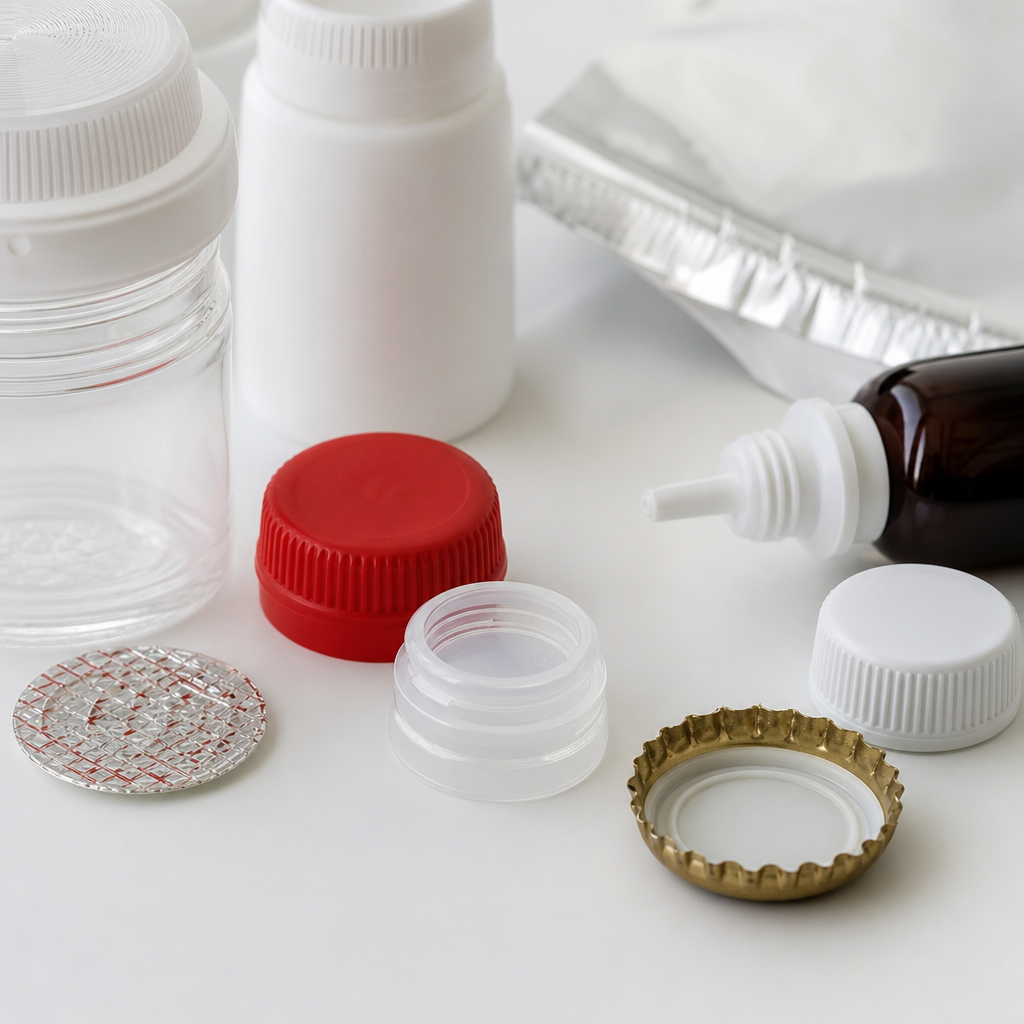
Polymers are the core materials behind modern packaging seals and closures, determining whether a pack remains leak resistant, tamper evident, resealable, lightweight, and economical from filling line to consumer use. In packaging, a seal is the interface that prevents product loss or contamination, while a closure is the component that opens, recloses, dispenses, or locks the package. I have worked with converters, cap manufacturers, and brand teams on seal failures, torque issues, liner selection, and migration testing, and one lesson is consistent: the polymer choice shapes nearly every performance outcome. For packaging teams building bottles, tubs, pouches, sachets, trays, and cartons, understanding polymers is not optional. It affects shelf life, recyclability, line speed, consumer safety, and total cost. This hub article explains how polymers function in packaging seals and closures, which materials dominate, how they are selected, where they fail, and what trends are changing the field.
Packaging relies on a set of polymer properties that are easy to name but complex to balance in practice. Sealability refers to the ability of a material to form a dependable bond under heat, pressure, induction, adhesive, or compression. Closure performance includes torque retention, stress crack resistance, hinge durability, dimensional stability, and compatibility with liners or wads. Barrier matters because water vapor, oxygen, aroma compounds, oils, alcohols, and carbon dioxide can move through some polymers far more readily than through others. Chemical resistance matters because aggressive formulations such as essential oils, bleach, fertilizers, pharmaceuticals, and solvents can swell, embrittle, or extract additives from the wrong resin. Regulatory compliance also matters, especially in food, beverage, medical, and personal care packaging, where FDA food-contact rules, EU Framework Regulation 1935/2004, and migration limits guide material selection. Packaging succeeds when these requirements are addressed together rather than in isolation.
As the hub page for packaging applications, this article covers rigid and flexible formats, the polymers used in cap shells and seal layers, liner systems, common failure modes, sustainability tradeoffs, and practical selection criteria. It also connects the technical role of polymers to real manufacturing decisions: choosing a polyethylene grade for induction seals, specifying polypropylene for living hinges, blending elastomers into seal compounds, or deciding when a multilayer barrier structure is justified. The packaging industry rarely rewards idealized material choices. It rewards materials that run efficiently on high-speed equipment, survive distribution abuse, meet compliance requirements, and still feel easy for consumers to open and reclose. That is why polymers sit at the center of packaging closure engineering.
Why polymers dominate packaging seals and closures
Polymers dominate because they provide a rare combination of processability, performance, and cost efficiency. Metals and glass can create excellent barriers, but they need polymer components to create practical consumer closures and reliable sealing interfaces. A polypropylene cap can be injection molded with threads, tamper-evident bands, and dispensing features in one part. A polyethylene sealant layer can heat seal over a broad process window, tolerate minor contamination, and conform to uneven flange surfaces. Thermoplastic elastomers can provide valve function in sports caps and personal care dispensers without secondary assembly steps. Those capabilities make polymers indispensable across food jars, beverage bottles, yogurt cups, retort pouches, blister packs, and household chemical containers.
From a manufacturing standpoint, polymers also match modern line economics. Injection molding, compression molding, extrusion coating, coextrusion, blown film, cast film, and thermoforming all operate at industrial scale with repeatable quality. Closures can be made by the millions with tight dimensional control, while sealant films can be tailored in thickness and composition to fit a specific product. In one beverage closure project, switching from a broad molecular weight distribution polyethylene liner to a more controlled grade reduced cap leakage after hot-fill cooldown because compression set improved and liner recovery was more consistent. That kind of gain is typical: small polymer changes can solve very expensive packaging failures.
Key polymers used in packaging applications
Polyethylene is the workhorse sealant polymer. Low-density polyethylene, linear low-density polyethylene, and metallocene PE are widely used in films, liners, and induction seal structures because they seal well, remain flexible, and resist moisture. LDPE offers softness and a forgiving seal window. LLDPE improves toughness and puncture resistance. Metallocene PE can deliver better seal initiation and hot tack, which matters on fast vertical form-fill-seal lines. High-density polyethylene is used more often in closure bodies and bottles where stiffness and chemical resistance are needed, though it can also appear in seal systems.
Polypropylene is equally important, especially for rigid closures. It combines stiffness, fatigue resistance, and low density, making it ideal for flip-top caps, screw closures, and living hinges. Oriented polypropylene films are also used in packaging structures, although they usually need a sealant layer because orientation narrows the sealing window. Polypropylene performs well in hot-fill and microwaveable applications, but impact resistance at low temperatures must be checked. For closures on sauces, condiments, and personal care packs, PP often strikes the best balance between hinge life, gloss, and economics.
Other polymers fill specialized roles. PET delivers excellent clarity, strength, and carbon dioxide retention, so it is common in beverage bottles, but closures on PET bottles are usually made from PP or HDPE for processing and torque reasons. EVOH is used as a barrier layer in multilayer containers and films where oxygen protection is critical. PVC has declined in many markets but still appears in some shrink seals and specialty liners. Ionomers such as Surlyn are valued in easy-peel and specialty sealing applications because of toughness and seal performance. Thermoplastic elastomers, EVA, and plastomer modifiers are blended into seal compounds to improve softness, compression, or opening characteristics.
| Polymer | Typical packaging seal or closure use | Main advantage | Main limitation |
|---|---|---|---|
| LDPE | Sealant layers, liners, squeeze closures | Easy sealing, flexibility | Lower stiffness and barrier |
| LLDPE | Pouches, liners, seal films | Toughness, puncture resistance | Can require tighter process control |
| HDPE | Bottle caps, snap lids, chemical packs | Stiffness, moisture resistance | Less flexible sealing behavior |
| PP | Flip-top caps, screw closures, hot-fill packs | Hinge fatigue resistance, rigidity | Brittleness in cold conditions |
| EVOH | Barrier layers in multilayer packaging | Excellent oxygen barrier | Barrier drops at high humidity |
| TPE | Valves, soft seals, dispensing components | Elastic recovery, tactile softness | Higher cost and recycling complexity |
How polymers create effective seals
A package seal works when the polymer surface softens or flows enough to wet the mating surface and then solidifies into a stable bond. In heat sealing, that depends on seal initiation temperature, dwell time, pressure, surface cleanliness, and polymer crystallinity. Polyethylene generally provides a broad operating window, which is why it dominates flexible packaging seal layers. On a snack pouch line, a few degrees of sealing temperature may separate a robust hermetic seal from burn-through or weak seals. Resin design matters because short-chain branching, density, and additive package all influence seal behavior. Hot tack, the strength of a seal immediately after formation while still warm, is especially important for vertical packs dropping product into the seal area.
Closure seals can be quite different from film-to-film seals. A screw cap may rely on a compression liner made from foamed PE, pulp-backed wad systems, or induction-seal structures combining paperboard, wax, aluminum foil, and polymer heat-seal layers. The polymer layer that bonds to the container finish must match the container resin and product conditions. HDPE bottles often use PE-based sealants, while PET containers may need a modified sealant designed for adhesion to polyester. Induction sealing is common in food, pharmaceuticals, and agrochemicals because it provides tamper evidence and leak prevention. When failures occur, they usually trace back to mismatched polymer chemistry, insufficient bottle land flatness, contamination, or incorrect induction energy rather than the foil itself.
Closure design, torque, and consumer use
Closures do more than close a package. They must survive capping, transport vibration, thermal cycling, and repeated opening without cracking, backing off, or losing seal integrity. Polymer stiffness and creep behavior are central here. Polypropylene and HDPE are the most common cap-shell materials because they mold efficiently and hold thread geometry under load. However, each behaves differently under torque and temperature. HDPE often offers better environmental stress crack resistance for harsh chemicals, while PP may deliver better thread definition and hinge performance for dispensing formats. In carbonated soft drinks, closure systems are engineered around pressure retention, torque retention, and linerless sealing geometry, often using HDPE caps with molded sealing features designed to interface precisely with PET neck finishes.
Consumer experience also depends on polymers. A cap that is too stiff may feel secure but become difficult for older adults or children to open. A tamper-evident band needs enough toughness to stay intact through distribution yet break predictably at first opening. Flip-top shampoo caps need hinge life over dozens or hundreds of cycles, a classic reason PP is favored. In child-resistant pharmaceutical closures, polymer friction, dimensional tolerance, and wear all affect compliance with opening-force requirements. Packaging teams often underestimate how much closure feel influences brand perception. The audible click of a snap lid, the squeeze force of a dispensing valve, and the smoothness of a threaded cap all come from polymer selection and processing control.
Barrier, compatibility, and product protection
The right closure or seal protects not only against leakage but also against oxygen ingress, moisture change, aroma loss, and product-package interaction. A coffee pouch seal must retain volatile flavor compounds. A baby food pouch must survive retort or hot-fill without delamination. A pharmaceutical bottle closure must limit moisture transmission because tablets can soften or degrade rapidly. Polymers vary widely in permeability. PE is an excellent moisture barrier but a modest oxygen barrier. EVOH is an outstanding oxygen barrier when dry, which is why it is often buried inside multilayer structures. PET offers better gas barrier than polyolefins but still may need enhancements for demanding applications. Closure liners can also include barrier foils or specialized layers when product sensitivity justifies the added complexity.
Compatibility is equally critical. Essential oils, surfactants, hydrocarbon solvents, and oxidizing chemistries can attack polymers or extract low molecular weight components. Stress cracking in HDPE closures exposed to certain detergents is a known risk. Flavor scalping, where aroma compounds absorb into a polymer, can reduce sensory quality in beverages and foods. Pharmaceutical and cosmetic packs must consider sorption, leachables, and permeation, especially for active formulations. Good packaging development includes product-specific storage trials, elevated-temperature aging, and migration evaluation rather than relying on generic resin data alone. In practice, many seal failures are not sealing failures at all; they are compatibility problems that reveal themselves months into shelf life.
Sustainability, recycling, and the next generation of materials
Packaging teams now evaluate polymers through a dual lens: performance and circularity. Mono-material designs based on PE or PP are gaining ground because they simplify recycling compared with mixed-material closure systems. Tethered caps in beverage packaging, driven by regulatory requirements in Europe, are pushing redesigns that still depend heavily on PP and HDPE because these polymers can form robust hinges and straps. Lightweighting remains one of the most effective sustainability tools, but it has limits. Reducing cap mass too far can cause paneling, torque loss, or consumer complaints. Post-consumer recycled content is increasingly used in closure and packaging components, although food-contact approvals, odor control, color variation, and mechanical consistency remain practical constraints.
Innovation is active in sealant technology as well. Recycle-ready flexible packaging often replaces incompatible layers with all-PE structures, using specialty sealant resins and oriented PE films to recover stiffness and machinability. Bio-based polymers and compostable materials attract interest, but their use in seals and closures must be judged carefully. Many compostable polymers have narrower processing windows, weaker moisture barriers, or limited compatibility with existing recycling streams. In my experience, the most credible advances are not broad claims about green materials but targeted design improvements: eliminating unnecessary liners, using tethered but lightweight closures, improving induction-seal reliability to cut waste, and selecting polymer combinations that preserve product life with the least material complexity. Better packaging is usually the result of smarter polymer engineering, not simply different branding.
Polymers make packaging seals and closures possible because they combine sealability, moldability, chemical resistance, barrier control, and consumer-friendly performance in ways few other materials can match. PE, PP, HDPE, EVOH, and elastomer-modified systems each solve specific packaging problems, from easy heat sealing on pouches to durable living hinges on flip-top caps and oxygen protection in sensitive products. The right choice depends on the product, package format, filling process, regulatory obligations, distribution environment, and recycling pathway. There is no universal best polymer, only materials that fit a defined application better than the alternatives.
For teams responsible for packaging, the practical lesson is straightforward: treat seals and closures as engineered systems, not commodity parts. Review resin properties, liner construction, compatibility data, torque performance, and shelf-life requirements together. Test under real conditions, including temperature cycling, drop exposure, and long-term product contact. If you are exploring the wider packaging subtopic, use this hub as your starting point for deeper work on films, rigid containers, barrier structures, dispensing systems, and recyclable design. Better polymer decisions produce packages that protect products longer, run faster on line, and create fewer failures in market. Start by auditing your current seals and closures against actual product demands, then refine materials where performance and sustainability can improve together.
Frequently Asked Questions
What role do polymers play in packaging seals and closures?
Polymers are the functional backbone of most modern seals and closures because they control how a package performs from the moment it is filled to the moment the consumer finishes using it. In practical terms, the polymer selected for a cap, liner, induction seal, gasket, dispensing fitment, or tamper-evident band determines whether the package will resist leaks, maintain product integrity, survive transport, open at the right force, and reclose reliably over repeated use. A seal is the actual barrier interface that prevents product escape or contamination, while the closure is the larger component that enables opening, reclosing, dispensing, or locking. Both rely heavily on polymer behavior.
Different polymers bring different properties to the package. Polypropylene is widely used for closures because it balances stiffness, hinge performance, processability, and cost. Polyethylene grades are common in liners and sealing systems because they can provide compressibility, flexibility, and good sealing conformity. Thermoplastic elastomers can improve fit, tactile feel, and reseal performance. Specialty barrier polymers may be added where oxygen, moisture, aroma, or aggressive formulations are a concern. The point is that polymers are not interchangeable commodities in this application. Their modulus, creep resistance, coefficient of friction, environmental stress crack resistance, compression set, and chemical compatibility all directly influence performance.
In real packaging systems, polymer choice also affects manufacturing consistency. Closure molding, liner insertion, capping torque, induction sealing, and consumer opening forces all depend on material behavior within a realistic production window. A closure may look fine dimensionally but still fail in use if the polymer relaxes too much, warps, cracks under stress, or loses sealing force over time. That is why polymer selection for seals and closures is not just a material decision; it is a system-level engineering decision tied to product, package geometry, filling line conditions, logistics, and end-user expectations.
How do manufacturers choose the right polymer for a packaging seal or closure?
Choosing the right polymer starts with understanding the full use case, not just the package drawing. The product inside the pack matters first. A closure used for a dry food powder has very different demands than one used for a carbonated beverage, a household cleaner, a hot-filled sauce, or a pharmaceutical tablet bottle. The polymer has to be compatible with the product so it does not crack, swell, extract unwanted substances, or lose sealing performance over shelf life. Chemical compatibility testing is one of the first filters because even a well-designed closure can fail if the resin or liner is attacked by oils, solvents, acids, surfactants, or active ingredients.
Next comes mechanical performance. Engineers look at stiffness, flexibility, impact strength, torque retention, thread performance, hinge durability, and how well the polymer maintains sealing force over time. For example, a rigid closure shell may need polypropylene for dimensional control and thread integrity, while the actual sealing interface may require a softer liner or elastomeric component to accommodate finish variation and create a dependable seal. If tamper evidence is required, the material must also support bridge formation, controlled fracture, and consumer-visible opening confirmation without premature band breakage on the line.
Processing requirements are equally important. The resin must mold consistently, cycle efficiently, and hold tolerances suited to the closure design. It also needs to work with downstream operations such as liner placement, wad insertion, induction sealing, or application torque. Then there are performance conditions after filling: temperature swings, stacking loads, vibration during transport, altitude changes, and repeated opening and reclosing. A polymer that performs well in lab conditions but creeps under warehouse heat or loses sealing force after torque relaxation is the wrong choice.
Cost and sustainability are part of the decision as well, but they should be evaluated within total package performance rather than in isolation. A lower-cost resin that increases leak rates, consumer complaints, or line stoppages is rarely a true savings. The most effective selection process combines material data, package design review, filling line validation, and shelf-life testing so the chosen polymer supports both manufacturing efficiency and real-world package integrity.
Why do seal failures and torque issues happen in polymer-based closures?
Seal failures and torque issues usually happen because packaging performance depends on an interaction of material, design, application, and use conditions rather than on any single factor. In many cases, the closure itself is blamed first, but the root cause may involve the bottle finish, liner construction, capping equipment, product exposure, or storage environment. Polymers add another layer of complexity because they are viscoelastic materials. That means they respond to force over time, not just instantly. A closure may be applied at the correct torque on the line, yet the clamping force can decay as the polymer relaxes, the liner compresses, or the container finish deforms slightly during storage.
One common issue is mismatch between closure material and package design. If the cap is too stiff, too flexible, or prone to creep under load, the seal may not remain tight enough to prevent leakage. If the liner has poor compression recovery or inadequate chemical resistance, it may lose contact at the sealing surface. Bottle finish variation can make this worse by reducing the ability of the sealing system to compensate for dimensional inconsistency. In threaded systems, friction between polymer surfaces also matters. Changes in slip additives, mold release effects, or surface finish can alter torque transfer, leading to under-application or over-application even when the capping equipment settings appear unchanged.
Process conditions are another major cause. Improper capper setup, worn chucks, inconsistent application speed, heat history, or induction sealing parameters can all create failures that look like material problems. Consumer opening complaints can also trace back to polymer behavior. If the closure has excessive thread interference, high friction, or poor tamper-band break characteristics, opening torque may climb beyond acceptable levels. On the other hand, if the material relaxes too quickly, the package may become easy to open but lose leak resistance. That is why troubleshooting requires looking at the entire package system, including resin selection, molding quality, finish dimensions, liner performance, cap application data, and environmental exposure over time.
How do liners and sealing systems work with polymer closures to prevent leaks and contamination?
Liners and sealing systems are critical because the closure shell alone does not always create the sealing barrier. In many packages, the molded polymer cap provides structure, threading, and consumer functionality, while the liner or seal creates the actual contact interface against the container finish. That interface has to conform to small variations in the land area, maintain pressure over time, and resist attack from the packaged product. The effectiveness of the seal depends on polymer compressibility, resilience, chemical compatibility, and the geometry of the sealing surfaces.
There are several common sealing approaches. Compression liners use a softer material inside the closure to deform slightly and fill micro-gaps when torque is applied. Pressure-sensitive liners can adhere to the container finish after application, though they are often more suitable for dry products and light-duty requirements. Induction seals use a multilayer structure, often with polymer layers engineered to bond to the container opening under electromagnetic heating, creating a hermetic and tamper-evident seal. In dispensing closures or fitment-based systems, elastomeric valves and specialized polymers can regulate flow while helping prevent leakage between uses.
The polymer chemistry in these systems matters enormously. The liner has to maintain enough recovery force after compression to keep sealing pressure over shelf life. It must also tolerate heat from filling or induction sealing, as well as exposure to oils, acids, alcohols, surfactants, or volatile ingredients. If the liner shrinks, embrittles, swells, or takes a permanent set, the package can lose integrity even if the cap remains intact. The closure polymer and liner polymer also need to work together. A well-designed cap with a poorly matched liner can fail just as easily as a poorly designed cap with a good liner.
From a practical standpoint, strong sealing performance comes from system alignment: the right closure resin, the right liner structure, the right finish design, and the right application conditions. When these elements are matched properly, polymer-based sealing systems can deliver leak resistance, contamination control, tamper evidence, and consumer-friendly reclosing across a very wide range of packaging formats.
How are sustainability and performance balanced when using polymers in seals and closures?
Balancing sustainability and performance in seals and closures requires a realistic view of what the package must do first. A closure that uses less material or incorporates recycled content is only a better solution if it still protects the product, runs efficiently on the filling line, and meets consumer expectations. In packaging, product loss often carries a larger environmental cost than the closure itself, so polymers used in seals and closures must still deliver reliable barrier performance, tamper evidence, resealability, and mechanical durability. The challenge is to reduce material impact without creating failures that increase waste elsewhere in the system.
One common strategy is lightweighting, where designers reduce closure mass through geometry optimization and more efficient resin use. This can work very well, but only if the polymer selected still provides sufficient stiffness, thread strength, and sealing load retention. Another approach is designing for recyclability by simplifying material combinations, reducing incompatible components, or moving toward mono-material systems where practical. That can mean rethinking liner construction, tethered cap design, or the use of elastomeric elements that may complicate recycling