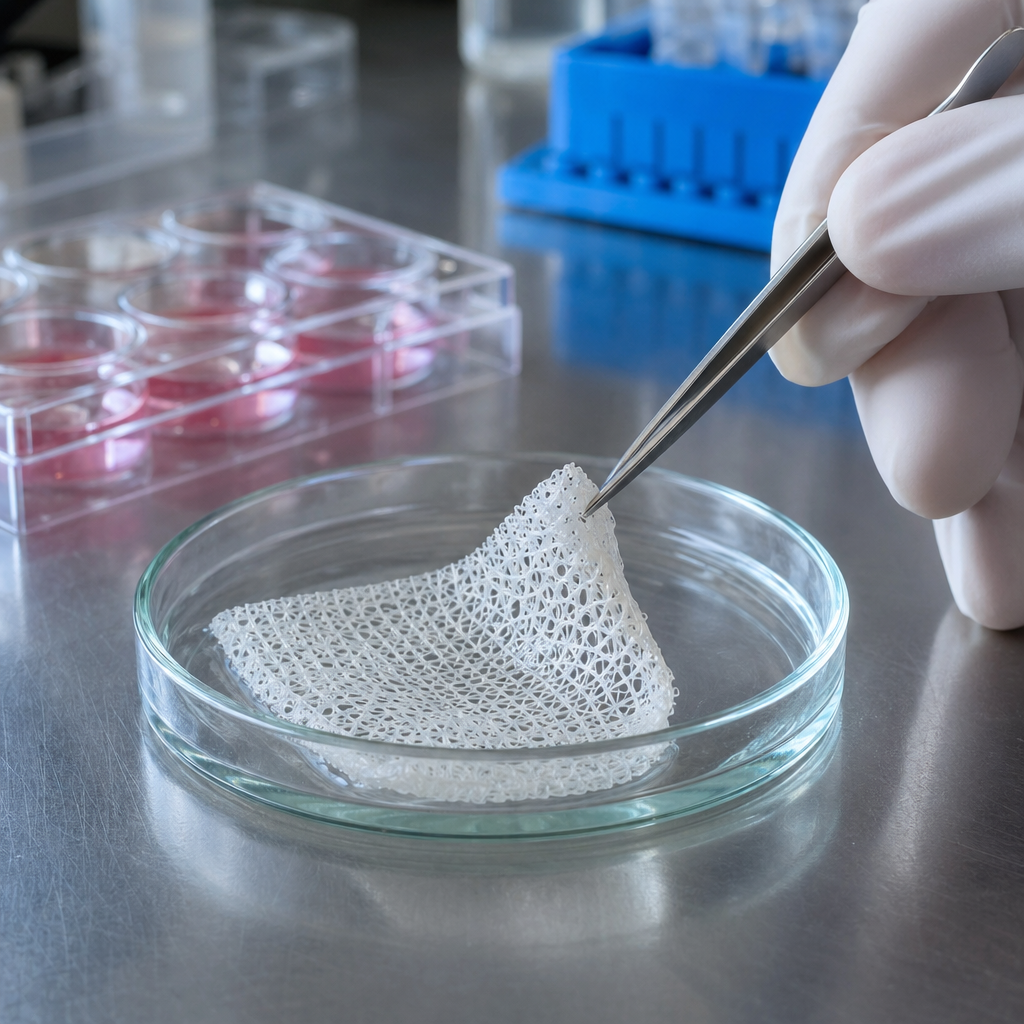
Biodegradable polymers in tissue engineering have moved from niche biomaterials research to a central role in modern medical and healthcare innovation because they provide temporary structural support, guide cell behavior, and then break down as new tissue forms. In practical terms, a biodegradable polymer is a material made of repeating molecular units that can be safely degraded inside the body through hydrolysis, enzymatic action, or other physiological processes. Tissue engineering is the interdisciplinary field that combines cells, scaffolds, bioactive molecules, and manufacturing methods to repair, replace, or regenerate damaged tissues. When these two concepts meet, clinicians and researchers gain a powerful toolkit for building implants and scaffolds that do not need permanent residence in the patient.
This matters across the medical and healthcare landscape because permanent implants can trigger chronic inflammation, stress shielding, secondary surgeries, and long-term foreign body responses. I have seen project teams spend months refining scaffold chemistry because small changes in degradation rate can determine whether a construct supports healing or collapses too soon. In hospitals and translational labs, the question is rarely whether a polymer degrades, but whether it degrades at the right pace, into the right byproducts, while maintaining the right mechanical profile. That balance directly affects outcomes in wound healing, orthopedic repair, cardiovascular devices, nerve conduits, skin substitutes, and controlled drug delivery systems integrated with regenerative therapies.
The most widely used biodegradable polymers in tissue engineering include synthetic materials such as polylactic acid, polyglycolic acid, poly(lactic-co-glycolic acid), polycaprolactone, and polydioxanone, along with natural polymers such as collagen, gelatin, chitosan, alginate, hyaluronic acid, fibrin, and silk fibroin. Synthetic polymers are valued for tunable mechanics, reproducible manufacturing, and regulatory familiarity. Natural polymers are prized for cell recognition sites, hydration, and biomimicry of extracellular matrix. The medical and healthcare challenge is selecting, blending, or modifying these materials so they perform predictably in real biological environments, not just in a benchtop assay. As a hub topic, biodegradable polymers connect nearly every application area in regenerative medicine, from scaffold design and 3D bioprinting to implantable devices, antimicrobial surfaces, and patient-specific therapies.
Core material classes and why clinicians care
In healthcare applications, biodegradable polymers are chosen by matching degradation behavior, mechanical strength, processing method, and biological interaction to the target tissue. Polylactic acid, or PLA, is relatively stiff and degrades more slowly than polyglycolic acid, making it useful in load-sharing situations and long-lasting scaffolds. Polyglycolic acid, or PGA, has higher crystallinity and degrades faster, which helped establish early absorbable sutures. PLGA, the copolymer of lactic and glycolic acid, is especially important because its degradation can be tuned by changing the monomer ratio; this is why it appears in scaffolds, microspheres, and drug-eluting regenerative systems. Polycaprolactone, or PCL, degrades more slowly than PLA and PLGA and is therefore common in long-term soft tissue and bone scaffold research, especially when fabricated by electrospinning or melt extrusion.
Natural polymers fill a different but equally important role. Collagen remains a benchmark because it is the dominant structural protein in many tissues and presents binding motifs that cells readily recognize. Gelatin, a denatured form of collagen, is easier to process and can be methacrylated into GelMA for light-based crosslinking in biofabrication. Chitosan offers antimicrobial potential and useful film-forming behavior, while alginate is favored for encapsulating cells because it gels under mild ionic conditions. Hyaluronic acid supports hydration and cell migration, especially in skin, cartilage, and ophthalmic applications. In real development programs, the decision is rarely synthetic versus natural. More often, teams build composites to combine the strength and reproducibility of synthetics with the biological signaling of natural matrices.
Clinicians care because material choice influences the whole care pathway. A bone scaffold must resist compression long enough for mineralized tissue ingrowth. A nerve conduit must avoid scar-promoting collapse while allowing axonal extension. A wound dressing must handle exudate, maintain moisture balance, and reduce infection risk. In each case, polymer chemistry translates into practical outcomes: operating room handling, sterilization compatibility, shelf life, imaging visibility, and reimbursement viability. That is why medical and healthcare adoption depends on more than lab success. It requires polymers that work within manufacturing standards, clinical workflows, and regulatory expectations.
How biodegradable polymer scaffolds support tissue regeneration
The main job of a scaffold is to create a temporary microenvironment where cells can attach, migrate, proliferate, differentiate, and organize into functional tissue. To do that well, biodegradable polymers must provide the right porosity, pore interconnectivity, surface energy, and mechanical integrity. In bone tissue engineering, for example, highly porous PLGA or PCL scaffolds are often combined with hydroxyapatite or beta-tricalcium phosphate to improve osteoconductivity. In cartilage repair, hydrogels based on hyaluronic acid, PEG derivatives, or GelMA can support chondrocytes or mesenchymal stromal cells in a hydrated three-dimensional environment. In skin regeneration, collagen-chitosan matrices can guide fibroblasts and keratinocytes while also supporting vascular ingrowth.
The degradation timeline must align with tissue formation. If a scaffold disappears before cells produce sufficient extracellular matrix, the repair site can fail mechanically. If the scaffold persists too long, it may impede remodeling or prolong inflammation. This timing problem is one of the most critical design constraints in healthcare products. I have seen preclinical data look excellent at four weeks and then deteriorate by twelve because acidic degradation products accumulated faster than tissue buffering could handle. That is a common issue with aliphatic polyesters such as PLA and PLGA. Engineers address it by reducing bulk thickness, increasing porosity, blending with basic fillers, or adjusting copolymer composition and molecular weight.
Surface modification is equally important because many synthetic polymers are biologically inert at baseline. Plasma treatment, peptide grafting, protein adsorption, and coating with extracellular matrix components can improve cell adhesion and reduce the lag between implantation and tissue integration. This is especially relevant in vascular grafts and ligament scaffolds, where rapid endothelialization or fibroblast infiltration can lower complication risk. For healthcare teams, the message is straightforward: scaffold architecture is not enough. Cells respond to chemistry, topography, stiffness, degradation byproducts, and local signaling all at once.
| Application | Common biodegradable polymers | Key requirement | Typical design tradeoff |
|---|---|---|---|
| Bone repair | PLGA, PCL, collagen composites | Mechanical support and osteoconductivity | Higher strength can reduce degradation speed |
| Cartilage regeneration | GelMA, hyaluronic acid, PCL blends | Hydration and chondrogenic support | Soft hydrogels often need reinforcement |
| Skin and wound care | Collagen, chitosan, alginate | Moist healing and cell migration | Natural polymers may have lower durability |
| Nerve conduits | PCL, PGA, collagen | Guidance without collapse | Long support can mean slower resorption |
| Cardiovascular uses | PDO, PCL, elastomeric copolymers | Compliance and hemocompatibility | Better elasticity can complicate processing |
Medical and healthcare applications across major specialties
Orthopedics is one of the clearest use cases for biodegradable polymers in tissue engineering. Resorbable fixation devices, guided bone regeneration membranes, and scaffold-based bone void fillers reduce the need for removal surgeries and can be combined with growth factors or cell therapies. PLA, PGA, and PLGA have long histories in absorbable sutures and fixation systems, while PCL-based scaffolds are frequently studied for segmental bone defects because they can be 3D printed into patient-specific lattices. In dental and craniofacial care, collagen membranes and synthetic resorbable barriers are standard tools in periodontal regeneration and implant site preservation. The clinical value is not abstract: fewer retained foreign materials and more controllable healing environments improve recovery pathways.
Wound care and skin regeneration are equally significant. Chronic wounds, diabetic ulcers, burns, and surgical defects demand materials that support granulation tissue, control moisture, and ideally reduce bacterial burden. Collagen dressings, chitosan films, alginate pads, and hydrogel matrices built from gelatin or hyaluronic acid are widely used because they manage exudate and create a favorable healing environment. In advanced products, biodegradable polymer scaffolds are seeded with cells, loaded with antimicrobials, or engineered to release cytokines in phases. Hospitals increasingly evaluate these materials not just for healing speed but for total cost of care, including dressing change frequency, infection prevention, and reduced readmission risk.
Cardiovascular, nerve, and soft tissue applications show how nuanced this field has become. Biodegradable vascular scaffolds were developed to avoid the long-term issues of permanent metallic stents, though clinical results showed that degradation behavior, radial strength, and thrombosis risk must be managed with extreme precision. In peripheral nerve repair, biodegradable conduits made from collagen, PGA, or PCL can bridge short gaps and avoid autograft morbidity, although long-gap repair remains challenging. In hernia repair and soft tissue reinforcement, absorbable or hybrid meshes aim to support healing while reducing chronic foreign body burden. These examples demonstrate a broader healthcare truth: biodegradable polymers are not universally better than permanent materials, but they are uniquely valuable when temporary support is exactly what the tissue needs.
Manufacturing methods, testing standards, and translation to practice
How a biodegradable polymer is processed often matters as much as the polymer itself. Electrospinning creates nanofibrous mats that mimic extracellular matrix and are useful in skin, tendon, vascular, and nerve applications. Solvent casting and particulate leaching can generate porous scaffolds, though solvent residues and pore consistency must be tightly controlled. Melt extrusion and fused filament fabrication enable patient-specific geometries, especially with PCL and PLA blends. Stereolithography and digital light processing allow intricate hydrogel constructs using photocrosslinkable systems such as GelMA and PEG-based materials. In commercial development, process choice affects porosity, crystallinity, mechanical anisotropy, sterilization tolerance, and scalability.
Translation into healthcare requires rigorous characterization. Material scientists measure molecular weight, glass transition temperature, crystallinity, tensile strength, compressive modulus, mass loss, water uptake, and degradation product profiles. Biologists assess cytocompatibility, cell attachment, differentiation markers, inflammatory signaling, and histological integration. Device developers run sterilization validation, packaging stability, and shelf-life studies. Standards from organizations such as ISO and ASTM guide this work, particularly ISO 10993 for biological evaluation of medical devices. For implantables, regulators expect evidence that degradation products are understood, local tissue responses are acceptable, and manufacturing variation is controlled. A scaffold that performs beautifully in one pilot batch but varies in pore architecture across production lots will struggle in clinical translation.
There is also a reimbursement and workflow dimension. Surgeons prefer materials that trim easily, hydrate predictably, and maintain shape during implantation. Hospital procurement teams look for room-temperature stability, practical packaging, and evidence of reduced complications. Payers want proof that new regenerative products improve outcomes enough to justify cost. This is why many successful healthcare products are not the most sophisticated from a laboratory standpoint. They are the ones that combine credible biological benefit with manufacturability, regulatory clarity, and ease of clinical use.
Current challenges and where the field is heading
The biggest challenges in biodegradable polymers for tissue engineering are matching degradation to healing, preventing harmful local chemistry, achieving vascularization, and delivering consistent performance across patients. Bulk-eroding polymers can accumulate acidic byproducts, especially in thick implants. Natural polymers can vary from lot to lot and may have weaker mechanics or faster enzymatic breakdown than intended. Cell-laden constructs face storage and logistics problems that off-the-shelf acellular scaffolds avoid. Infection remains a critical risk, particularly in wounds and orthopedic implants, which is why many teams now integrate silver, antibiotics, antimicrobial peptides, or surface nanotopographies into polymer systems. Each enhancement, however, adds complexity to validation and approval.
Future directions are promising because the field is becoming more precise. Researchers are designing smart polymers that respond to pH, temperature, enzymes, or mechanical loading. Four-dimensional printing approaches create structures that change shape or properties over time. Decellularized matrix components are increasingly blended with synthetic backbones to preserve tissue-specific cues while retaining manufacturability. In drug-device combinations, biodegradable polymers can release growth factors, anti-inflammatory agents, or nucleic acid therapies on programmed schedules. Machine learning is also starting to help teams predict how composition and architecture affect degradation and mechanics before expensive prototyping begins.
For anyone building a deeper understanding of medical and healthcare applications, this hub topic sits at the center of regenerative medicine. Biodegradable polymers influence scaffold design, wound management, orthopedic repair, cardiovascular devices, nerve regeneration, and biofabrication strategy. The main takeaway is simple: the best material is not the one with the strongest headline property, but the one whose degradation, mechanics, processing, and biological signaling fit the clinical job. If you are mapping this subtopic, use this page as your starting point and then explore each application area in detail to identify the polymer systems, manufacturing methods, and evidence standards that matter most for real patient care.
Frequently Asked Questions
What are biodegradable polymers in tissue engineering, and why are they so important?
Biodegradable polymers are materials made from long chains of repeating molecular units that are designed to gradually break down inside the body after they have served a useful purpose. In tissue engineering, their main role is to act as temporary scaffolds that support cells, guide tissue formation, and create a three-dimensional environment where healing and regeneration can occur. As new tissue develops, the polymer degrades into smaller byproducts that can be metabolized, absorbed, or eliminated by the body. This temporary nature is one of the biggest reasons biodegradable polymers have become so important in modern regenerative medicine.
What makes these materials especially valuable is that they do more than simply “fill space.” They can be engineered to influence how cells attach, migrate, multiply, and differentiate. In other words, they help shape the biological behavior of the tissue being repaired. A well-designed biodegradable scaffold can provide the right mechanical support early on, maintain the structure of the damaged area, and then gradually disappear as the natural tissue becomes strong enough to function on its own. That process can reduce the need for permanent implants and lower the long-term risks associated with non-degradable materials.
Biodegradable polymers are also important because they offer flexibility in design. Researchers and clinicians can select materials based on how fast they should degrade, how strong they need to be, how porous they should be, and how they interact with cells and bodily fluids. This adaptability makes them useful in a wide range of applications, including skin repair, bone regeneration, cartilage engineering, wound healing, nerve guidance, and drug delivery systems. Their growing importance reflects a broader shift in healthcare toward materials that actively participate in healing rather than merely replacing damaged structures.
How do biodegradable polymers break down inside the body?
Biodegradable polymers break down through physiological processes that gradually reduce the long polymer chains into smaller molecules. The most common mechanisms are hydrolysis and enzymatic degradation, although oxidation and other biological interactions may also play a role depending on the material. Hydrolysis occurs when water molecules in the body react with chemical bonds in the polymer, especially ester bonds, and split them apart over time. Enzymatic degradation happens when enzymes naturally present in tissues or body fluids accelerate the breakdown of specific polymers. The exact pathway depends on the chemical composition of the polymer and the environment where it is implanted.
Several factors influence how quickly and how safely this degradation happens. These include the polymer’s molecular weight, crystallinity, porosity, shape, surface area, and the local pH and temperature of the surrounding tissue. For example, a highly porous scaffold may allow water and cells to penetrate more easily, which can speed up degradation. Likewise, a polymer implanted in a highly vascular or metabolically active tissue may break down differently than one placed in a relatively isolated site. This is why material selection is never one-size-fits-all in tissue engineering.
The ideal situation is controlled degradation. If a polymer degrades too quickly, it may lose structural integrity before the new tissue has matured enough to take over. If it degrades too slowly, it may interfere with remodeling, prolong inflammation, or compromise tissue integration. Researchers therefore pay close attention to balancing degradation rate with tissue regeneration rate. Equally important is biocompatibility of the breakdown products. Materials used in tissue engineering must produce byproducts that are non-toxic, non-harmful, and manageable by the body, which is a major reason why polymers such as polylactic acid (PLA), polyglycolic acid (PGA), and polycaprolactone (PCL) are widely studied and used.
What types of biodegradable polymers are commonly used in tissue engineering?
Biodegradable polymers used in tissue engineering generally fall into two broad categories: natural polymers and synthetic polymers. Natural polymers include materials such as collagen, gelatin, chitosan, alginate, fibrin, and hyaluronic acid. These materials are attractive because they often resemble components already found in the body’s extracellular matrix, which can make them highly supportive of cell attachment and biological signaling. They tend to be especially useful in applications where promoting natural cell interaction is a top priority. However, they may have limitations related to mechanical strength, batch-to-batch consistency, or control over degradation behavior.
Synthetic polymers include widely used materials such as PLA, PGA, PLGA, and PCL. These are popular because they offer greater control over properties like strength, elasticity, degradation rate, and manufacturing reproducibility. For example, PLGA, a copolymer made from lactic acid and glycolic acid units, is often chosen because its degradation profile can be tuned by adjusting the ratio of its components. PCL is known for slower degradation and good flexibility, which can make it useful for longer-term support in certain tissues. Synthetic polymers are especially valuable when engineers need precise control over scaffold architecture, processing methods, and long-term performance.
In many advanced tissue engineering strategies, researchers combine natural and synthetic polymers to create hybrid materials that capture the best qualities of both. A hybrid scaffold might provide the mechanical reliability of a synthetic polymer while also incorporating the bioactivity of a natural material. This approach can improve cell response, mechanical performance, and tissue integration at the same time. The choice of polymer ultimately depends on the target tissue, whether that is bone, cartilage, skin, vascular tissue, or nerve, as each application has different biological and mechanical demands.
What characteristics make a biodegradable polymer suitable for a tissue engineering scaffold?
A suitable biodegradable polymer scaffold needs to meet several requirements at once, which is why scaffold design is such a specialized area of biomaterials science. First, the material must be biocompatible, meaning it should not trigger harmful immune reactions, toxicity, or chronic inflammation. Cells should be able to survive and function in contact with it, and the surrounding tissue should tolerate both the scaffold and its degradation products. Without biocompatibility, even a mechanically strong material would fail in a clinical setting.
Second, the scaffold must have the right mechanical properties for the tissue being repaired. Bone requires very different support than skin, blood vessels, or soft connective tissue. The scaffold should provide enough initial strength to maintain shape and protect the developing tissue, but it should not be so rigid that it prevents natural movement or remodeling. In addition, porosity is essential. A well-designed scaffold needs interconnected pores that allow cells to enter, nutrients and oxygen to diffuse, and waste products to leave. This internal architecture strongly influences how effectively tissue can grow throughout the material rather than only on its surface.
Another critical feature is a degradation rate that matches the healing process. Ideally, the scaffold gradually transfers mechanical and biological responsibility to the newly forming tissue. Surface chemistry also matters because it affects cell adhesion and signaling. In some cases, polymers are modified with peptides, growth factors, or other molecules to improve how cells recognize and interact with the scaffold. Manufacturability is equally important. The polymer must be processable into forms such as fibers, foams, hydrogels, films, or 3D-printed structures, depending on the intended use. In practice, the best biodegradable polymer is not simply one that degrades, but one that integrates mechanical support, biological compatibility, architectural design, and predictable performance into a single regenerative platform.
What are the biggest challenges and future trends for biodegradable polymers in tissue engineering?
Although biodegradable polymers have transformed tissue engineering, several challenges still limit their full clinical potential. One of the biggest issues is achieving the perfect match between scaffold degradation and tissue formation. Different patients heal at different rates, and different tissues regenerate on very different timelines. A scaffold that performs well in the laboratory may behave differently in the body due to immune responses, mechanical stress, local chemistry, or disease conditions. Another challenge is balancing strength with bioactivity. Many highly bioactive natural polymers do not provide enough mechanical support, while some mechanically robust synthetic polymers do not naturally encourage cell attachment or signaling as effectively.
There are also manufacturing and translational hurdles. Producing scaffolds with consistent quality, reproducible pore structure, sterilization compatibility, and scalable fabrication remains a major concern for clinical adoption. Regulatory approval can be complex, especially for advanced systems that combine polymers with cells, drugs, or biologically active molecules. Long-term safety must be carefully evaluated, including how degradation byproducts affect surrounding tissue and whether the material performs reliably across diverse patient populations. Cost and storage stability are practical concerns as well, particularly when moving from academic research to widespread medical use.
Looking ahead, the field is moving toward smarter, more personalized biomaterials. Researchers are developing biodegradable polymers that respond to environmental cues such as pH, temperature, or enzymatic activity. There is growing interest in 3D bioprinting, where polymer-based bioinks can create patient-specific scaffold geometries tailored to complex defects. Hybrid scaffolds, nanofiber systems, injectable hydrogels, and polymer platforms that deliver growth factors or genes are also expanding the possibilities of regenerative medicine. In the future, biodegradable polymers are likely to become even more sophisticated, functioning not just as temporary supports but as active, instructive materials that coordinate healing at the molecular and cellular levels.