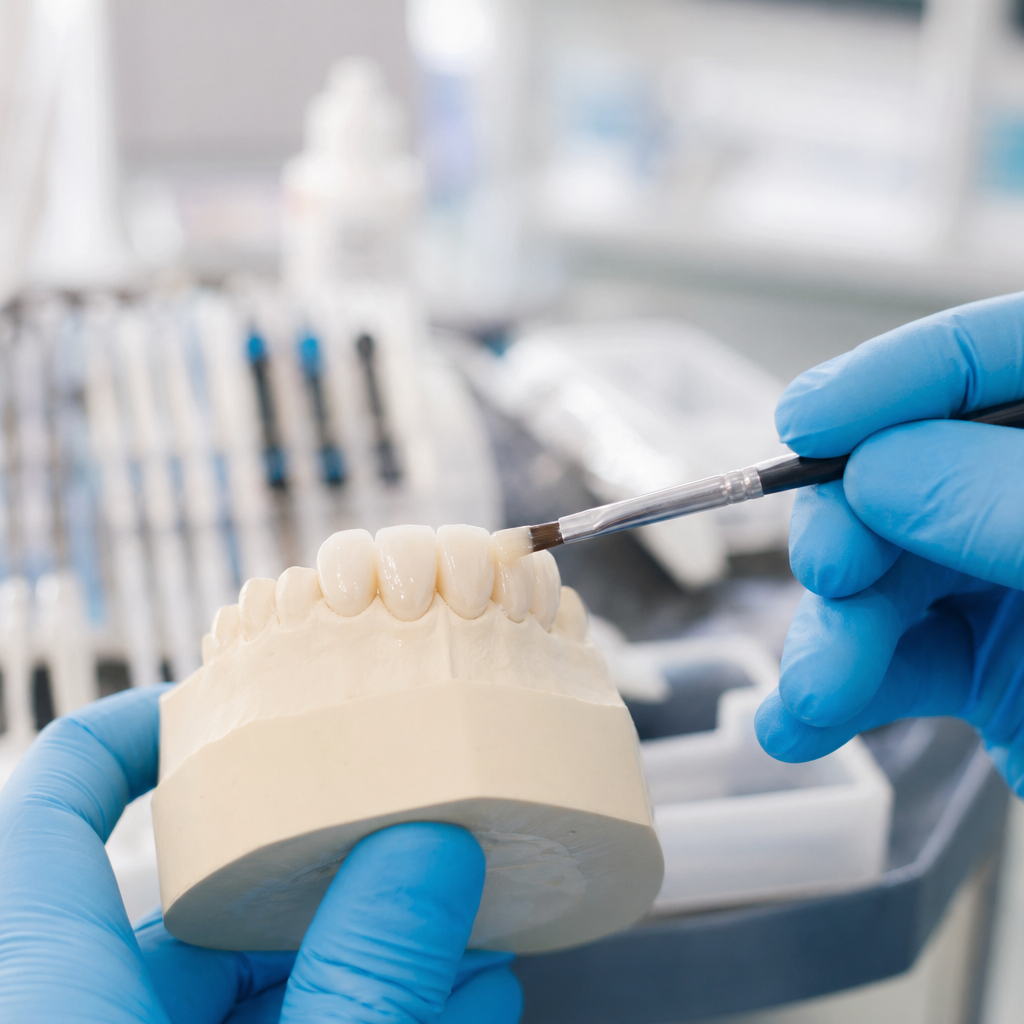
Polymers are essential to modern dentistry because they deliver the combination of biocompatibility, flexibility, strength, aesthetics, and processability that teeth and oral tissues demand. In dental applications, a polymer is a large-chain material engineered to perform as a restorative, adhesive, impression, prosthetic, orthodontic, or preventive component inside the mouth or in the laboratory. I have worked with dental material selection across restorative and device projects, and one lesson remains constant: no single material family touches as many clinical workflows as polymers. From chairside composite fillings to clear aligners, denture bases, temporary crowns, resin cements, and impression materials, polymers sit at the center of everyday care.
This breadth matters because dentistry is no longer defined only by drilling and filling. It is now a materials-driven field shaped by digital scanning, CAD/CAM fabrication, minimally invasive treatment, cosmetic expectations, and stricter infection-control standards. Patients want restorations that look natural, feel comfortable, last longer, and require fewer appointments. Clinicians need materials with predictable handling, reliable bonding, low shrinkage, controlled wear, and regulatory acceptance. Laboratories need workflows that support precision and repeatability. Polymers help satisfy all three demands because their chemistry can be tuned at the molecular level. Crosslink density, filler loading, polymerization mechanism, glass transition temperature, water sorption, and modulus can all be adjusted to target a specific dental use.
Understanding the role of polymers in dental applications also helps frame the wider medical and healthcare context. Dental materials operate in one of the most hostile routine service environments in healthcare: constant moisture, fluctuating pH, heavy cyclic loading, temperature swings from food and beverages, bacterial biofilms, and close contact with soft tissue and bone. A successful polymer must resist degradation while remaining safe and comfortable. That is why this topic functions as a hub for the broader medical and healthcare subcategory. Dental polymers overlap with biomaterials science, device manufacturing, infection prevention, tissue compatibility, and digital healthcare production. The sections below explain where polymers are used, why specific formulations dominate, and how clinicians and manufacturers evaluate performance in real practice.
Core Polymer Classes Used in Dentistry
The main polymer families in dentistry include acrylics, methacrylate-based resins, elastomers, thermoplastics, and high-performance engineering polymers. Each solves a different clinical problem. Polymethyl methacrylate, commonly called PMMA, remains the standard denture base resin and is also widely used for temporary crowns, provisional bridges, and certain milled prosthetic components. Its value comes from acceptable aesthetics, ease of processing, repairability, and cost effectiveness. However, PMMA is relatively brittle compared with some advanced alternatives, and residual monomer control is important because incomplete polymerization can irritate tissue.
Dimethacrylate systems such as Bis-GMA, UDMA, and TEGDMA dominate direct restorative composites, sealants, bonding agents, and resin cements. These materials cure by free-radical polymerization, usually initiated by light, chemical activators, or dual-cure systems. In practice, they work because they can be filled with silanized glass or ceramic particles to increase strength, wear resistance, and radiopacity while preserving polishability. Polymerization shrinkage remains a central issue, since contraction stress can affect marginal integrity, postoperative sensitivity, and secondary caries risk. Manufacturers have reduced this with bulk-fill formulations, altered monomer structures, stress-relieving additives, and improved photoinitiator packages.
Elastomeric polymers are indispensable for impression materials. Polyvinyl siloxane, often called addition silicone, is favored for dimensional stability and accuracy. Polyether is known for hydrophilicity and detail reproduction, though some formulations are stiffer and harder to remove from undercuts. These materials must flow into fine margins, recover elastically after removal, and remain stable long enough for casting or scanning. In oral surgery and maxillofacial work, silicone elastomers also appear in facial prostheses because they can mimic soft tissue texture and color.
Thermoplastic polymers have expanded through removable aligners, mouthguards, whitening trays, and flexible prosthetics. Polyethylene terephthalate glycol, polyurethane blends, and multilayer aligner sheets are common in orthodontics. Their success depends on transparent appearance, controlled force delivery, crack resistance, and manufacturability through thermoforming or direct fabrication. High-performance polymers such as PEEK, or polyether ether ketone, are increasingly studied and used for frameworks, healing abutments, temporary implant components, and metal-free prosthodontic structures because they combine low weight, chemical resistance, and a modulus closer to bone than metals.
Restorative Dentistry, Adhesives, and Cements
When most clinicians discuss dental polymers, they start with restorative dentistry. Resin-based composites have transformed how caries and fractures are treated because they bond to tooth structure and match natural shade far better than traditional amalgam. A modern composite restoration is not a single material but a polymer matrix reinforced with inorganic fillers, coupling agents, pigments, stabilizers, and initiators. Clinical performance depends on more than compressive strength. Dentists evaluate depth of cure, translucency, handling viscosity, wear against opposing enamel, polish retention, fracture toughness, and marginal adaptation.
Adhesive systems are equally important. Enamel bonding relies on acid etching to create microporosities that low-viscosity resin can infiltrate, forming resin tags after curing. Dentin bonding is more complex because moisture, collagen structure, smear layer characteristics, and dentinal tubule fluid all influence the hybrid layer. In real cases, many restoration failures trace back not to the composite itself but to adhesive degradation. Hydrolysis, enzymatic breakdown, and incomplete infiltration can reduce bond durability. This is why universal adhesives, MDP-containing primers, and selective-etch protocols have become central to contemporary practice.
Resin cements extend the role of polymers into indirect dentistry. Veneers, inlays, onlays, fiber posts, and many ceramic crowns depend on polymer-based luting agents for retention and stress distribution. Light-cure cements provide excellent color stability for thin veneers, while dual-cure cements are preferred where light transmission is limited, such as thicker ceramics or root canals. Glass ionomer and resin-modified glass ionomer materials still hold a place, especially when fluoride release or simplified handling is desired, but resin cements dominate high-aesthetic bonded workflows.
| Dental application | Common polymer system | Why it is used | Main limitation |
|---|---|---|---|
| Direct fillings | Bis-GMA/UDMA composite resin | Shade matching, bonding, conservative preparation | Polymerization shrinkage stress |
| Denture bases | PMMA | Low cost, aesthetics, repairability | Fracture risk and residual monomer concerns |
| Impressions | Polyvinyl siloxane | High accuracy and dimensional stability | Hydrophilicity can vary by formulation |
| Clear aligners | PETG or polyurethane-based sheets | Transparency, flexibility, thermoformability | Force decay over time |
| Frameworks and implant parts | PEEK | Lightweight, durable, metal-free | Bonding and surface treatment are technique sensitive |
Prosthodontics, Orthodontics, and Digital Workflows
Prosthodontics relies heavily on polymers because many removable and provisional devices need a balance of comfort, appearance, and manufacturability. Conventional complete dentures still depend largely on heat-cured PMMA, although injection-molded systems and reinforced formulations have improved fit and durability. Soft liners use plasticized acrylics or silicone-based polymers to reduce pressure on sensitive tissues, but long-term use requires monitoring because liners can harden, absorb stains, harbor microbes, or lose adhesion to the base. In maxillofacial prosthetics, silicones are often the material of choice for external facial replacements due to flexibility and realistic texture, though ultraviolet stability and edge durability remain practical concerns.
Orthodontics has become one of the clearest examples of polymer innovation changing patient experience. Traditional brackets still use polymeric ligatures, adhesives, and elastomeric chains, but clear aligner therapy has created an entirely new demand profile. Aligner materials must maintain transparency, resist saliva-induced degradation, and deliver planned force levels over days of wear. In several development projects, the challenge was not simply initial stiffness but force retention after thermal cycling and repeated insertion. Multilayer materials and refined thermoforming protocols have improved consistency, yet aligners still experience stress relaxation and surface wear, which is why replacement schedules are tightly controlled.
Digital dentistry has increased polymer relevance further. Intraoral scanning reduces dependence on conventional impressions in many indications, but polymers remain central through printable resins, milled PMMA disks, tray materials, bite registration compounds, and surgical guide materials. Additive manufacturing now supports splints, custom trays, denture try-ins, temporary restorations, and model production. The chemistry behind 3D printed dental resins usually involves photoactive methacrylate systems designed for rapid layer-by-layer curing. Post-curing is not optional; it directly affects conversion, strength, color stability, and biocompatibility. Poor post-processing can leave residual monomer and compromise fit or safety.
CAD/CAM milling has also broadened options. Industrially polymerized PMMA pucks generally show better homogeneity and lower porosity than conventionally processed chairside acrylics. Fiber-reinforced composites and hybrid materials offer another route for provisional or semi-permanent restorations. These changes matter because digital workflows reward materials with predictable machining behavior, stable dimensions, and validated processing parameters. In short, as dentistry becomes more digitized, polymers become more, not less, important.
Biocompatibility, Infection Control, and Long-Term Performance
The best dental polymer is not the strongest one on paper; it is the one that performs safely in the oral environment over time. Biocompatibility starts with composition and degree of conversion. Residual monomers, initiators, degradation byproducts, and additives can influence pulpal response, mucosal irritation, taste, and sensitization risk. Standards such as ISO 10993 for biological evaluation of medical devices and ISO 4049 for polymer-based restorative materials provide the framework for testing. Reputable manufacturers validate cytotoxicity, water sorption, solubility, and mechanical performance before clinical release, and clinicians should pay attention to those data rather than marketing labels.
Biofilm formation is another critical issue. Rough, porous, or poorly polished polymer surfaces can retain plaque and Candida species, especially on dentures and appliances worn continuously. This is why surface finish, cleaning protocol, and patient compliance matter as much as raw material choice. Antimicrobial additives such as silver nanoparticles, quaternary ammonium compounds, and protein-repellent monomers have shown promise in research, but tradeoffs exist. Some additives can alter color, curing behavior, or mechanical properties, and long-term clinical evidence is still developing.
Durability depends on fatigue resistance, wear behavior, hydrolytic stability, and thermal cycling performance. A restoration may survive a compressive strength test yet fail clinically from repeated subcritical loading or marginal breakdown. Water sorption can plasticize some polymers, change dimensions, and affect bond interfaces. Color stability matters too, particularly for anterior restorations, aligners, and provisional materials exposed to coffee, tea, wine, and smoking. In my experience, teams that focus only on initial strength often miss the real determinants of success: interface stability, finishing quality, and patient-specific habits such as bruxism, diet, and hygiene.
Looking ahead, the most important advances in dental polymers will come from smarter formulations rather than entirely new categories. Expect continued work on low-shrinkage matrices, self-adhesive systems, printable long-term biocompatible resins, bioactive composites that support remineralization, and surfaces engineered to reduce microbial adhesion. Sustainability will also matter more, especially in packaging, single-use plastics, and manufacturing waste from aligners and printed parts. For manufacturers and clinicians alike, the goal is clear: polymers that fit digital workflows, meet regulatory expectations, and deliver longer service with fewer complications.
Polymers have earned a central role in dental applications because they solve practical clinical problems across restorative care, prosthodontics, orthodontics, impressions, implant workflows, and preventive devices. They can be rigid or flexible, transparent or tooth colored, temporary or durable, and they integrate well with both conventional and digital manufacturing. PMMA, composite resins, silicones, thermoplastic aligner materials, and high-performance polymers like PEEK each occupy a defined place because their chemistry aligns with specific oral demands. That is the main lesson of this medical and healthcare hub: successful dental materials are designed around use conditions, not abstract material rankings.
For clinicians, the takeaway is to match polymer choice to indication, bonding strategy, patient behavior, and maintenance requirements. For manufacturers and buyers, the priority is validated performance data, not broad claims. The oral environment is unforgiving, and long-term success depends on conversion, surface quality, fit, biofilm control, and process discipline as much as composition. If you are building deeper knowledge across medical and healthcare polymer uses, start here, then map each application area to its specific clinical demands, regulatory standards, and fabrication methods before selecting a material or supplier.
Frequently Asked Questions
What are polymers, and why are they so important in dental applications?
Polymers are large-chain molecules made by linking many smaller repeating units together, and in dentistry they are engineered to meet the very specific demands of the oral environment. That matters because the mouth is not a gentle setting. Dental materials must tolerate moisture, temperature changes, biting forces, chemical exposure from foods and drinks, and constant contact with soft tissue and hard tissue. Polymers are especially valuable because they can be designed to balance properties that are difficult to achieve with many other material classes alone, including biocompatibility, flexibility, strength, aesthetics, and ease of processing.
In practical terms, polymers appear throughout modern dentistry. They are used in tooth-colored restorative composites, bonding agents, denture bases, impression materials, provisional crowns, orthodontic components, sealants, liners, and a wide range of preventive and laboratory products. One of their greatest advantages is tunability. By adjusting the chemistry, molecular weight, crosslink density, filler loading, and curing method, manufacturers can create a material that is rigid or elastic, translucent or opaque, fast-setting or extended-working, adhesive or non-stick, and suitable for either chairside or laboratory use.
From a clinical perspective, polymers help support treatment outcomes because they allow materials to be more precisely matched to function. A flexible impression material can capture fine detail and still be removed from undercuts without tearing. A resin adhesive can create a durable bond between restorative material and tooth structure. A denture base polymer can offer acceptable strength, polishability, and aesthetics while remaining practical to fabricate. This adaptability is why polymers are not just useful in dentistry—they are foundational to how modern dental treatment is delivered.
Which dental products and procedures rely most heavily on polymers?
Polymers are involved in nearly every major area of dentistry, and their role extends far beyond what many patients realize. In restorative dentistry, polymer-based resin composites are used to repair decayed, fractured, or worn teeth. These materials combine a polymer matrix with reinforcing fillers to create a restoration that can be shaped, bonded, and matched to natural tooth color. Adhesive systems, primers, and bonding resins are also polymer-based and are essential for attaching restorations to enamel and dentin.
In prosthodontics, polymers are central to complete and partial denture fabrication, temporary crowns and bridges, reline materials, and soft liners. Acrylic-based systems remain common because they are relatively easy to process, polish, and customize. In impression taking, elastomeric polymers such as polyvinyl siloxanes and polyethers are widely used because they capture fine detail, recover well after deformation, and support accurate transfer of oral anatomy to the laboratory or digital workflow.
Orthodontics also depends on polymers for aligners, elastomeric ligatures, retainers, and various appliance components. Preventive dentistry uses polymer-based pit and fissure sealants, fluoride varnish carriers, and protective coatings. Endodontics, periodontics, and implant dentistry also benefit from polymer-containing sealers, membranes, resin cements, and provisional materials. Even in the dental lab, polymers are used in pattern materials, trays, splints, guides, and digital manufacturing resins. The broad takeaway is that polymers are not confined to one niche; they support diagnosis, treatment planning, fabrication, restoration, prevention, and long-term maintenance across the full spectrum of care.
What properties make a polymer suitable for use inside the mouth?
A polymer intended for dental use must do far more than simply “work” at placement. It needs to function reliably over time in one of the body’s most dynamic environments. First, biocompatibility is essential. The material must be safe for contact with oral tissues and should not trigger harmful local or systemic responses under normal use. This includes consideration of residual monomers, degradation products, additives, and any potential for irritation or sensitization.
Mechanical performance is equally important, but the required properties vary by application. A denture base needs dimensional stability, acceptable impact resistance, and polishability. An impression material needs elasticity, tear resistance, and detail reproduction. A restorative resin must handle compressive and flexural forces while resisting wear and marginal breakdown. Adhesives must develop strong bonds and maintain them in the presence of moisture and repeated thermal cycling. In many cases, a polymer is not chosen because it is the strongest material available in absolute terms, but because it delivers the right combination of strength, resilience, toughness, and handling for the intended clinical task.
Aesthetics and processability also matter greatly in dentistry. Patients expect natural-looking restorations, so color stability, translucency, polish retention, and stain resistance are often major selection criteria. At the same time, clinicians need materials that are practical to use, with predictable working and setting times, manageable viscosity, and compatibility with curing systems or fabrication workflows. Finally, long-term performance depends on resistance to water sorption, hydrolytic degradation, surface wear, and chemical attack. A high-performing dental polymer is therefore one that balances biological safety, functional durability, clinical handling, and visual integration with the rest of the dentition.
How do polymers compare with metals and ceramics in dentistry?
Polymers, metals, and ceramics each bring different strengths to dental applications, and the best choice depends on the clinical objective rather than a simple ranking of which material is “best.” Polymers are often preferred when flexibility, adhesiveness, lower weight, shock absorption, aesthetic blending, or efficient fabrication are priorities. They are generally easier to shape and process than ceramics, and they can often be repaired or modified more readily in clinical or laboratory settings. This makes them especially useful for impressions, provisional restorations, denture bases, aligners, sealants, and bonded direct restorations.
Metals traditionally excel where high strength, toughness, and long-term structural reliability are needed, such as in certain frameworks or specialized components. Ceramics are highly valued for their hardness, wear resistance, and excellent aesthetics, especially in indirect restorations. However, ceramics can be brittle, and metals may be less aesthetic or less desirable in visible areas. Polymers fill an important middle ground by offering more forgiving behavior, lower modulus where needed, and easier customization. In many situations, dentistry does not rely on one material class alone but combines them strategically. For example, a composite restoration may include an inorganic filler phase within a polymer matrix, and adhesive cements may be used to bond ceramic restorations to tooth structure.
The real advantage of polymers is versatility. They can be engineered to complement other materials or function independently. They also enable minimally invasive and adhesive treatment approaches that have become central to modern dentistry. While polymers may not always match metals or ceramics in every isolated property, their ability to combine acceptable mechanical performance with biocompatibility, aesthetics, and efficient clinical workflow is exactly why they remain indispensable in both routine and advanced dental care.
What factors should clinicians and manufacturers consider when selecting a polymer for a dental application?
Polymer selection in dentistry should always begin with the intended function of the material. The clinical question is straightforward: what must this material do in the mouth, for how long, and under what conditions? A short-term provisional crown, a definitive bonding resin, a soft liner, an orthodontic aligner, and an impression material all face very different demands. That means the selection process must evaluate not only general material class but also formulation details, curing behavior, filler system, dimensional stability, moisture sensitivity, and compatibility with the broader treatment workflow.
Clinicians typically focus on handling, predictability, performance, and patient outcomes. They want materials that are easy to place, resistant to common failure modes, and supported by credible evidence. Key factors include working time, setting time, viscosity, delivery method, shade options, bond performance, wear resistance, polishability, repairability, and post-placement sensitivity risks. Manufacturers, on the other hand, must also account for scalability, shelf stability, regulatory requirements, sterilization or packaging constraints, and consistency from batch to batch. For both groups, biocompatibility and long-term durability remain central decision points, not optional extras.
Another major consideration is the trade-off between properties. Increasing stiffness may reduce flexibility. Improving flow may affect strength or shrinkage behavior. Enhancing aesthetics may influence wear or polish retention. In real-world dental material selection, the best polymer is usually not the one with the most extreme value in a single category, but the one that delivers the most balanced and reliable performance for the specific indication. That is one of the enduring lessons in restorative and device projects: successful dental polymers are chosen not just for what they are made of, but for how well their total performance profile matches the biological, mechanical, aesthetic, and procedural realities of dentistry.