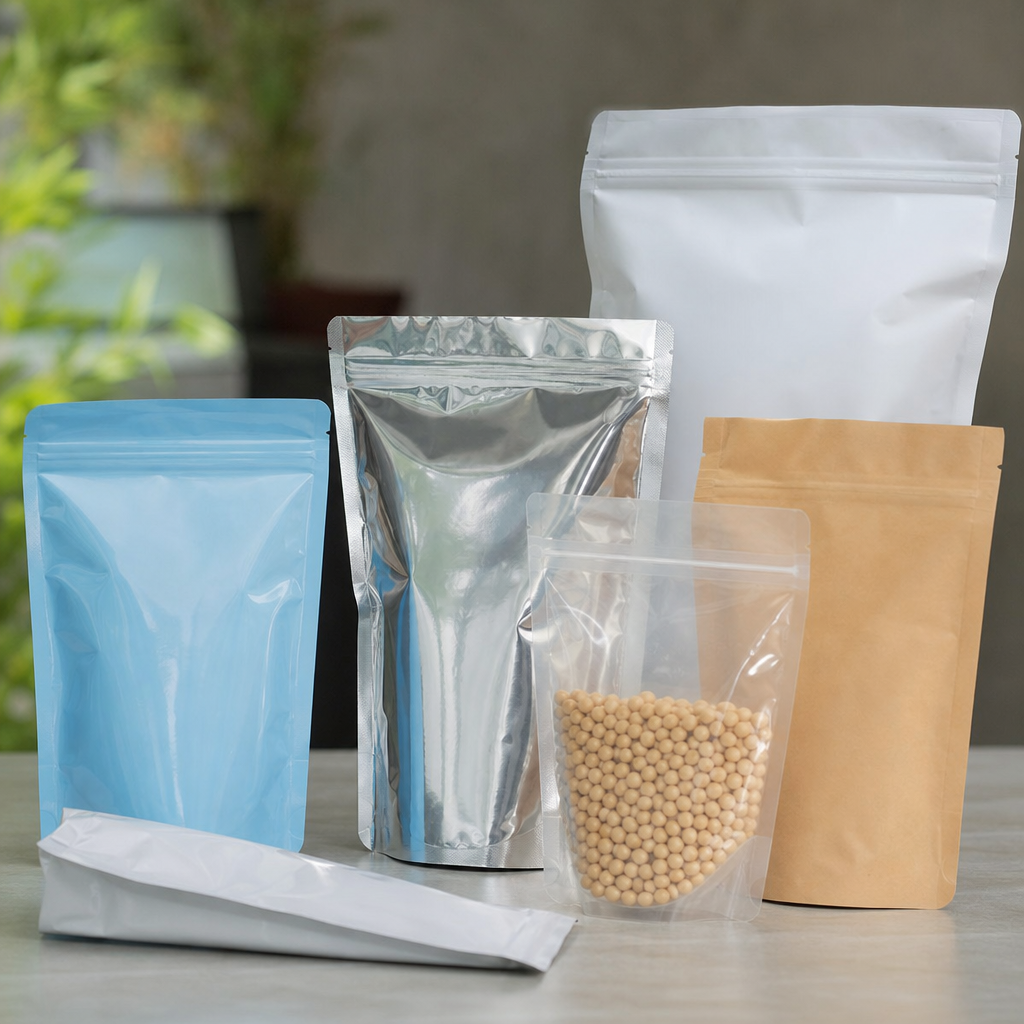
Polymers in flexible pouches and bags determine how modern packaging protects food, medicines, personal care products, and industrial goods while staying lightweight, printable, and cost efficient. In packaging, a polymer is a large-chain material such as polyethylene, polypropylene, polyester, nylon, or ethylene vinyl alcohol that can be processed into films, seals, barriers, and laminations. Flexible pouches and bags are multi-layer or mono-material structures designed to enclose products using far less material than rigid containers, yet they must still meet demanding requirements for strength, seal integrity, puncture resistance, oxygen and moisture barrier, chemical compatibility, and shelf appeal. I have worked with converters, brand teams, and film suppliers on pouch specifications, and the same pattern appears in every project: polymer choice drives performance more than graphics, format, or filling line speed alone. Get the resin selection wrong and the package may delaminate, leak, wrinkle, stale the product, or fail in transport. Get it right and the package becomes a high-performing system that protects the product, supports processing, and enables distribution across long supply chains.
Packaging teams often ask a simple question: which polymer is best for flexible pouches and bags? The accurate answer is that no single polymer is best in all cases because each resin contributes a different set of properties. Low-density polyethylene offers sealability and toughness. Linear low-density polyethylene improves puncture resistance. High-density polyethylene raises stiffness and moisture barrier. Polypropylene supports heat resistance and crisp appearance. Biaxially oriented polypropylene improves machinability and gloss. Polyethylene terephthalate adds dimensional stability and print surface quality. Nylon contributes puncture and abrasion resistance. Ethylene vinyl alcohol provides excellent oxygen barrier when kept dry. Metallized films and aluminum foil deliver very high barrier but complicate recycling. This is why the packaging hub for flexible pouches and bags must focus on structure, not just material names. A pouch is usually a deliberately engineered stack of polymers, adhesives, inks, and sometimes coatings chosen around the product, process, shelf-life target, and end-of-life requirements.
The importance of this topic has only increased as brand owners shift from rigid packaging to stand-up pouches, flat pouches, retort pouches, sachets, wicketed bags, and mailer-style flexible formats. Lightweight packaging lowers transport emissions per packed unit and can improve cube efficiency, but it also raises questions about recyclability, barrier tradeoffs, seal reliability, and food-contact compliance. For anyone building a packaging strategy, understanding polymers in flexible pouches and bags is the starting point for decisions about performance, cost, and sustainability across the broader packaging portfolio.
Core polymers used in flexible pouches and bags
The most common pouch and bag structures begin with polyethylene because it seals reliably across a broad process window and remains tough at relatively low gauge. In food packaging, sealant webs are frequently based on LDPE, LLDPE, metallocene PE, or blends that balance hot tack, seal initiation temperature, and abuse resistance. I have seen frozen food applications move from conventional LDPE to tougher metallocene-rich sealant layers specifically to reduce drop damage and fin seal failures. HDPE appears more often in bread bags, produce bags, and some mono-material recyclable formats because it provides stiffness and moisture resistance, though it can be noisier and less clear than lower-density grades.
Polypropylene is central when heat resistance, clarity, and stiffness matter. Cast polypropylene is widely used as a sealant or inner web in snack, bakery, and apparel packaging. Biaxially oriented polypropylene is a workhorse outer web for printed pouches because it runs efficiently on converting equipment and offers strong optics. Polyester, usually PET or BOPET, serves as an outer layer where dimensional stability, print quality, and heat resistance are required. Nylon, often oriented polyamide, is common in vacuum pouches and meat packaging because it resists puncture from bones or sharp product edges better than many alternatives. For oxygen-sensitive products such as coffee, sauces, and powdered nutrition, EVOH or foil may be included as a barrier layer. EVOH can outperform many clear barriers for oxygen transmission, but its barrier declines as humidity rises, so structure design matters.
In practice, converters rarely specify a polymer in isolation. They specify a function. A simple three-layer laminate may use PET for printability, metallized BOPP or EVOH for barrier, and PE for sealing. A retort pouch might combine PET, foil, and CPP to withstand thermal sterilization. A recyclable store-drop-off pouch may use all-PE layers with machine-direction-oriented PE or PE-based barrier coatings to replace mixed-material laminates. Understanding each polymer by function is the key to choosing the right pouch construction.
How polymer layers work together in a pouch structure
A flexible pouch succeeds because different layers perform different jobs. The outer layer faces handling, printing, scuffing, and heat during lamination, so it often needs stiffness and dimensional stability. The middle layer usually supplies barrier or reinforcement. The inner layer contacts the product and forms the heat seal. Adhesives bond these layers, and coatings may improve slip, anti-fog behavior, or seal-through contamination. When I review a package failure, the root cause is often not a bad polymer but a mismatch between layer functions. For example, a highly stiff outer web may look great on shelf yet crack at the fold if the laminate is not balanced for pouch converting.
Engineers evaluate these layer combinations through measurable properties. Oxygen transmission rate indicates how much oxygen passes through the film over time. Water vapor transmission rate measures moisture barrier. Coefficient of friction affects machinability on form-fill-seal equipment. Dart impact and puncture tests assess abuse resistance. Seal strength and burst testing reveal whether the inner layer can survive filling and distribution. These data points matter because package performance is cumulative. A coffee pouch with a strong oxygen barrier but poor valve integration still fails. A detergent refill pouch with excellent graphics but weak chemical resistance can stress crack or lose seal integrity. The best structures are designed backward from product hazards, then validated through testing under realistic conditions.
| Polymer | Main packaging role | Key strength | Typical limitation |
|---|---|---|---|
| LDPE/LLDPE | Sealant layer, bags, liners | Sealability and toughness | Modest stiffness and oxygen barrier |
| HDPE | Bags, mono-material films | Stiffness and moisture barrier | Lower clarity |
| CPP/BOPP | Snack packs, overwraps, outer webs | Clarity, stiffness, machinability | Lower puncture resistance than nylon |
| PET | Printed outer layer | Print surface and heat resistance | Needs sealant partner |
| Nylon | Vacuum and meat pouches | Puncture resistance | Moisture uptake can affect properties |
| EVOH | Barrier layer | Excellent oxygen barrier | Barrier drops in high humidity |
Packaging applications by product category
Different product categories impose very different demands on polymers in flexible pouches and bags. In snacks, the central concern is preserving crispness and flavor by controlling oxygen and moisture while delivering strong shelf impact. That is why snack laminates often use BOPP, metallized films, or PE sealants optimized for high-speed vertical form-fill-seal lines. In coffee packaging, oxygen barrier and aroma retention are critical, and many packages add degassing valves because roasted beans emit carbon dioxide after filling. In pet food, especially dry kibble, puncture resistance and fat barrier matter because larger packs face rough handling and oils can challenge some structures over time.
For fresh and processed meat, polymers must handle vacuum, chill-chain conditions, and puncture hazards. Nylon-PE coextrusions are common because nylon adds abuse resistance while PE seals and provides moisture protection. In cheese packaging, oxygen control is essential to limit mold growth, but excessive moisture retention can create other defects, so permeability is tuned carefully. Retort pouches for ready meals represent one of the most demanding applications because the structure must survive heat processing around 121 degrees Celsius, maintain bond strength, and still open acceptably for consumers. PET/foil/CPP has long been a standard solution because each layer contributes a necessary property.
Home and personal care products create another set of challenges. Refill pouches for detergents, shampoos, and cleaners must resist surfactants, fragrances, solvents, and stress cracking. Child-resistant features or spouts may be added, introducing fitment compatibility issues. Medical and pharmaceutical pouches require validated sterile barrier performance, lot traceability, and strict compliance with food-contact or healthcare regulations. Across all these packaging applications, polymer selection is inseparable from product chemistry, distribution environment, filling method, and user expectations.
Converting, sealing, and performance testing
Flexible packaging is not just a materials choice; it is a process choice. The same polymer can perform very differently depending on orientation, gauge, extrusion method, and converting conditions. Blown film and cast film produce distinct morphologies and handling characteristics. Oriented films gain stiffness and clarity but may lose some toughness or become more sensitive to seal conditions. Lamination methods, whether solvent-based, solventless, or extrusion lamination, affect bond development and chemical resistance. If adhesive cure is incomplete, residual issues can compromise barrier or create odor concerns.
Sealing is where many pouch projects succeed or fail. Seal initiation temperature, hot tack, dwell time, and pressure all interact with line speed and contamination from powders, oils, or particulates. I have seen a sealant resin pass lab testing yet fail on a customer line because seasoning dust contaminated the seal area at production speed. The fix was not merely raising jaw temperature; it required a sealant blend with better seal-through-contamination performance. This is why serious development programs include line trials, distribution testing, burst testing, drop testing, accelerated aging, and migration or compatibility studies where needed.
Industry standards guide this work. ASTM methods are commonly used for tensile, puncture, friction, and permeability testing. For food packaging, regulatory compliance may involve FDA requirements in the United States or Framework Regulation and specific migration limits in the European Union. For recycling claims, store-drop-off or curbside compatibility must be assessed against actual collection and reprocessing pathways, not assumed from resin identification alone. Good packaging teams document these requirements early and test against them systematically.
Sustainability, recyclability, and design tradeoffs
The strongest current debate around polymers in flexible pouches and bags is sustainability. Flexible packaging usually uses less material than rigid alternatives, which can reduce transport burdens and product-to-package ratios. However, many high-performance pouches rely on multi-material laminates that are difficult to recycle in existing municipal systems. This creates a real tradeoff: the best barrier structure for shelf life may not align with current recycling infrastructure. In practice, preventing food waste can outweigh packaging impacts for many products, especially meat, cheese, coffee, and ready meals, but the package still needs a credible end-of-life pathway where possible.
This is why mono-material PE and PP pouch development has accelerated. Machine-direction-oriented PE, PE-EVOH-PE coextrusions with compatible tie layers, and PE-based barrier coatings aim to replace PET/foil/PE or PET/metPET/PE laminates in some applications. These designs can improve recyclability where PE film collection exists, but they are not universal replacements. Barrier may be lower, stiffness can change, graphics may require adjustment, and heat resistance on filling lines may be reduced. Chemical recycling and advanced sorting may expand future options, yet most packaging decisions today must still be grounded in current local infrastructure.
Brands that improve sustainability fastest usually follow a disciplined path: remove unnecessary layers, reduce gauge without losing performance, increase post-consumer recycled content where regulations allow, and redesign structures for existing recycling streams. Clear communication also matters. A pouch labeled recyclable without access to collection can undermine trust. Effective packaging strategy balances material reduction, product protection, compliance, and realistic recovery options rather than chasing one metric in isolation.
How to choose the right polymer structure for a packaging project
The best way to select polymers for flexible pouches and bags is to begin with the product and the process, then build the structure around measurable risks. Start by asking what can damage the product: oxygen, moisture gain, moisture loss, light, aroma loss, grease migration, puncture, compression, or contamination. Then ask what can damage the package: high fill temperature, retort, freezer conditions, e-commerce drops, sharp edges, aggressive chemicals, or line-speed constraints. From there, define the shelf-life target, regulatory requirements, sustainability goals, and merchandising needs. Only after those inputs are clear should you compare resin families and laminate options.
For most packaging teams, a structured specification prevents costly redesigns. State the required barrier values, seal window, puncture threshold, haze target, coefficient of friction range, and compatibility with the intended equipment. Confirm whether the pack needs zippers, spouts, laser scoring, valves, anti-fog behavior, or microwave suitability. Require prototype trials with actual product, not inert substitutes. Finally, involve converters, resin suppliers, and filling-line engineers early. The most successful pouch programs are cross-functional because polymer performance, converting, logistics, and branding are tightly connected.
Polymers in flexible pouches and bags are the foundation of modern packaging because they combine protection, convenience, and efficiency in a format that can be precisely engineered for each product. The key lesson is straightforward: there is no universally best polymer, only the best structure for a defined application. Polyethylene, polypropylene, PET, nylon, EVOH, and foil each solve specific problems, and the most effective pouch designs use them intentionally based on barrier needs, sealing demands, product chemistry, and recovery pathways. When teams understand those relationships, they avoid common failures such as weak seals, poor shelf life, excess material use, and unrealistic recyclability claims.
As this packaging hub makes clear, flexible packaging decisions should never be reduced to a single resin name or a generic sustainability promise. They require a full view of application requirements, converting realities, compliance, distribution hazards, and end-of-life options. If you are developing or upgrading a pouch or bag, map the product risks, define the required film functions, and test the structure under actual conditions. That approach leads to packaging that performs better on shelf, on line, and in the real world.
Frequently Asked Questions
What polymers are most commonly used in flexible pouches and bags?
The most common polymers used in flexible pouches and bags are polyethylene (PE), polypropylene (PP), polyester (PET), nylon, and ethylene vinyl alcohol (EVOH). Each one brings a specific performance benefit, which is why packaging structures are often designed as layers rather than relying on a single material. Polyethylene is widely used for sealant layers because it offers excellent heat-sealing performance, flexibility, toughness, and moisture resistance. It is a foundational material in many food, household, and industrial pouches because it helps create secure seals while keeping the package lightweight and cost effective.
Polypropylene is valued for stiffness, clarity, and heat resistance, making it useful in applications where appearance and product protection matter. Polyester, especially PET, contributes strength, dimensional stability, and printability, so it is often used as an outer layer that carries graphics and branding. Nylon is chosen when puncture resistance and durability are critical, such as for products with sharp edges or demanding handling conditions. EVOH is used as a high-performance oxygen barrier layer, especially in packages designed to preserve flavor, freshness, or shelf life. Together, these polymers allow manufacturers to combine sealability, barrier protection, machinability, visual appeal, and cost control in a single pouch or bag design.
Why are multiple polymer layers used instead of just one material?
Multiple polymer layers are used because no single polymer can usually deliver every property required in modern flexible packaging. A pouch may need to protect against oxygen, moisture, light, aroma loss, grease, punctures, and rough distribution conditions, while also sealing reliably on high-speed equipment and presenting strong shelf appeal. One polymer might seal well but have poor oxygen barrier performance. Another might print beautifully but not resist punctures. A third may add stiffness but not enough moisture protection. By combining layers in a laminate or coextruded structure, packaging engineers can tailor performance to the exact needs of the product.
For example, an outer PET layer may provide strength and excellent print quality, a middle EVOH layer may reduce oxygen transmission, and an inner PE layer may create the package seal. In another design, nylon may be added to improve puncture resistance for vacuum-packed foods or heavy products. This layered approach also helps optimize cost because expensive high-barrier materials can be used only where needed rather than throughout the entire structure. In short, multi-layer packaging exists because it balances protection, functionality, appearance, and economics far more effectively than most single-material films can on their own.
How do polymers help protect food, medicines, and other sensitive products?
Polymers protect packaged products by forming barriers and structural layers that control exposure to environmental factors. For food, this often means limiting oxygen entry, moisture gain or loss, aroma migration, and contamination. If oxygen reaches a product too easily, it can cause oxidation, flavor degradation, color changes, and spoilage. If moisture is not controlled, products can become soggy, stale, clumped, or dried out. Polymer films are engineered to manage these risks. Materials such as EVOH can provide strong oxygen barrier performance, while polyethylene offers effective moisture resistance and dependable sealing. These functions work together to maintain freshness and extend shelf life.
In pharmaceuticals, personal care products, and industrial goods, the protective role of polymers becomes just as important. Medicines may require protection from humidity, oxygen, light, and tampering. Personal care items such as creams, wipes, or refill products benefit from leak resistance, chemical compatibility, and attractive print surfaces. Industrial goods may need puncture resistance, dust protection, or chemical containment. Flexible pouches and bags are effective because polymers can be selected and combined to address these exact challenges. Beyond barrier protection, polymers also allow packaging to remain lightweight, durable, and easy to transport, which reduces distribution costs while still keeping products safe through storage, shipping, and consumer use.
What is the difference between mono-material and multi-layer flexible packaging?
Mono-material flexible packaging is primarily made from one polymer family, such as all-polyethylene or all-polypropylene, even if different grades of that polymer are used in different layers. The main advantage of a mono-material approach is design simplicity, especially in relation to recycling systems that are set up to handle a specific polymer stream. Mono-material structures are gaining attention as brands and converters work toward packaging designs that are easier to recover and reprocess. However, achieving the same barrier, stiffness, clarity, and durability as a more complex laminate can be technically challenging, so performance requirements must be carefully evaluated.
Multi-layer packaging, by contrast, uses two or more different polymers to deliver a broader range of properties. This is the traditional approach for products that need high barrier protection, strong puncture resistance, premium printability, or specialized sealing behavior. A multi-layer pouch can be highly optimized for a specific application, such as coffee, sauces, frozen foods, medical products, or detergents. The tradeoff is that multi-material laminates can be more difficult to recycle in conventional systems because the layers are intentionally bonded together for performance. The choice between mono-material and multi-layer construction ultimately depends on the product’s protection needs, equipment requirements, shelf-life targets, sustainability goals, and cost constraints.
How do packaging engineers choose the right polymer structure for a pouch or bag?
Choosing the right polymer structure starts with understanding the product and the conditions it will face from filling through end use. Engineers evaluate the product’s sensitivity to oxygen, moisture, light, and aroma loss, along with its physical characteristics such as weight, sharp edges, viscosity, oil content, and chemical composition. They also consider how the package will be filled and sealed, whether it needs to survive retort, hot fill, freezing, or vacuum packaging, and how long the product must remain stable on the shelf. These practical requirements determine which polymer properties matter most, including barrier performance, heat resistance, seal strength, puncture resistance, stiffness, and compatibility with inks and adhesives.
From there, engineers build a structure that balances technical performance with manufacturing efficiency and cost. A pouch for dry snacks may prioritize moisture barrier and printability, while a medical or nutraceutical application may require stronger oxygen protection and stricter material consistency. Engineers also test how the structure runs on packaging lines, whether seals are repeatable at speed, and how the package performs in transit and storage. Sustainability goals are increasingly part of the decision as well, prompting evaluation of downgauging, recyclable mono-material options, or reduced material usage without sacrificing protection. In practice, selecting polymers for flexible pouches and bags is a highly targeted design process focused on delivering the right mix of safety, shelf life, appearance, usability, and economics.