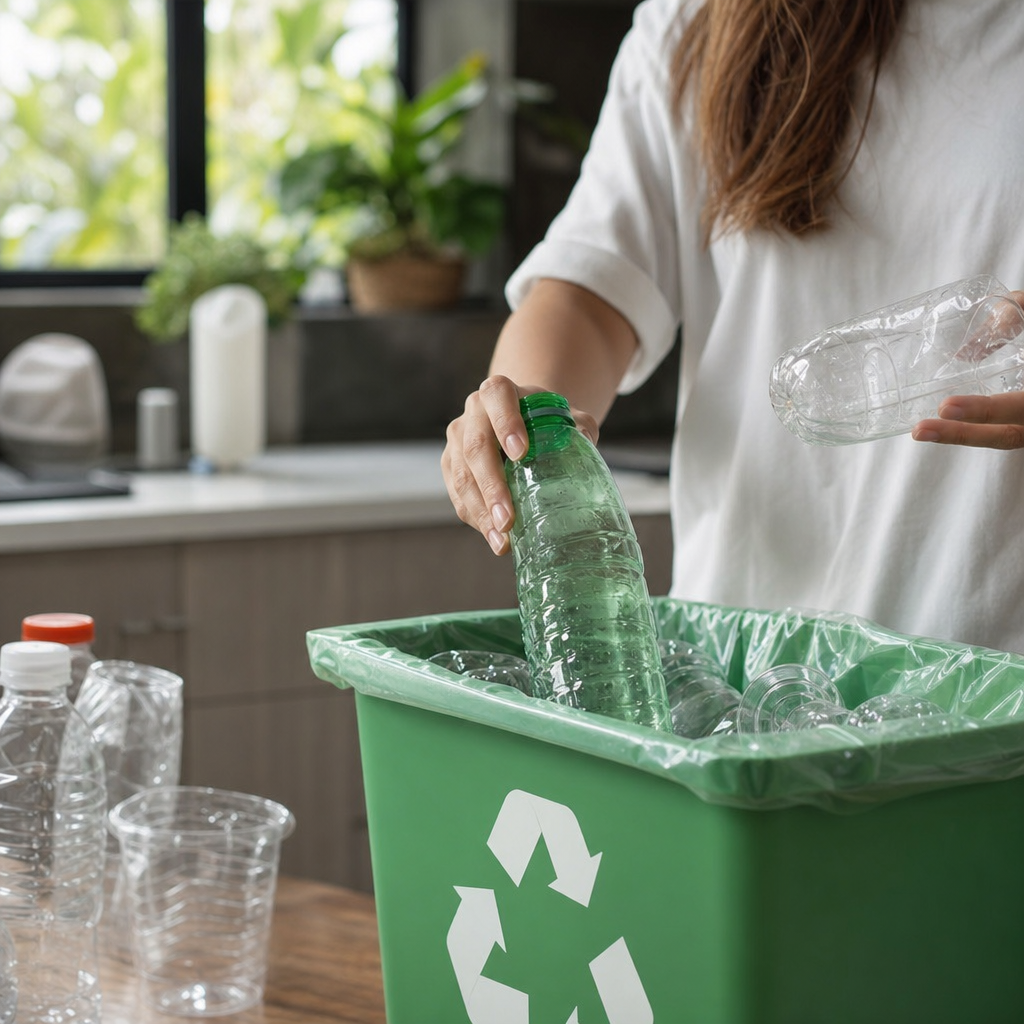
Consumer behavior plays a decisive role in enhancing polymer recycling because even the most advanced sorting plant, chemical recycling reactor, or packaging redesign fails when people do not buy, separate, return, or properly dispose of plastic products. In polymer recycling, consumer behavior refers to the choices individuals make before purchase, during product use, and at end of life, including selection of packaging formats, willingness to pay deposits, adherence to local sorting rules, and participation in refill or take-back systems. Polymer recycling itself covers the collection, sorting, reprocessing, and remanufacture of plastics such as PET, HDPE, PP, LDPE, and polystyrene into secondary raw materials. As a hub for case studies in polymer recycling, this article connects the technical side of recycling with the human side that determines whether those systems perform well in practice.
In my work reviewing recycling programs and packaging recovery data, I have seen the same pattern repeatedly: contamination rates, capture rates, and recycled resin quality often reflect consumer habits more than equipment specifications. A municipality may install optical sorters and still struggle if residents place food-soiled films in paper streams. A brand can switch to recyclable mono-material packaging and still miss targets if shoppers treat labels like “recyclable” as permission to discard carelessly. This is why consumer behavior matters. It affects yield, economics, carbon performance, and compliance with producer responsibility policies.
The topic also matters because polymer recycling is under pressure from multiple directions. Regulators are setting recycled content mandates, investors expect circularity metrics, and brands are redesigning packaging to meet recyclability guidelines from groups such as APR and RecyClass. Yet global plastic waste generation continues to rise, and real recycling rates remain far below headline collection numbers. Understanding how people respond to deposits, convenience, social norms, price signals, and communication is essential for improving outcomes. The strongest case studies in polymer recycling show that recovery systems work best when product design, infrastructure, and consumer behavior are aligned.
Why consumer behavior determines polymer recycling performance
Consumer behavior influences polymer recycling through three measurable pathways: participation, material quality, and market demand. Participation means whether consumers actually place recyclable polymers into the correct stream or return them through store take-back or deposit systems. Material quality refers to whether items are emptied, rinsed when required, kept loose rather than bagged incorrectly, and separated according to local rules. Market demand comes from shoppers choosing products with recycled content, refillable formats, or simpler packaging structures. If any one of these pathways breaks down, the recycling loop weakens.
A clear example is PET bottle recovery. PET is one of the most recyclable consumer polymers, and recycled PET has strong end markets in fiber, sheet, and increasingly bottle-to-bottle applications. However, PET recycling performs best when consumers return bottles through deposit return systems or place them in clean, well-understood curbside streams. If bottles are mixed with residual waste, contaminated with liquids, or paired with problematic components such as full-body shrink sleeves, yields drop. The chemistry of PET does not change, but the behavior around it determines whether a recycler gets food-grade feedstock or low-value mixed bales.
Behavior also affects flexible packaging, where recovery is much harder. In many regions, consumers do not know whether films belong in curbside bins, store drop-off points, or landfill. That confusion creates contamination in mechanical recycling and raises costs for material recovery facilities. In case studies from retail take-back programs, the best results come when instructions are simple, bins are visible, and accepted items are narrowly defined. When messaging becomes broad or inconsistent, participation may rise temporarily, but contamination rises faster, undermining the economics of film recycling.
Case studies in polymer recycling: what successful programs have in common
The most useful case studies in polymer recycling do not focus only on machinery. They examine behavior at every stage. Deposit return systems in countries such as Germany and Norway consistently achieve high beverage container return rates because the consumer task is obvious: keep the bottle or can, bring it back, receive value. The system pairs financial incentive with convenience and trusted infrastructure. Consumers are not asked to interpret complex resin codes or local exceptions. That simplicity produces high capture rates and cleaner streams, which in turn support closed-loop recycling.
Another strong case comes from household detergent packaging. Several brands have piloted refill pouches, concentrated formats, and returnable containers, but consumer response differs sharply by effort required. Programs that ask people to clean, store, and mail back bulky containers often see low repeat participation. By contrast, refill models integrated into routine shopping, especially where durable bottles are retained and lightweight refill packs use recognizable formats, see better adoption. The lesson is practical: consumers support polymer recycling and reuse when the action fits existing habits and does not impose cognitive friction.
Municipal curbside programs provide a third set of lessons. Where local authorities standardize accepted materials, use harmonized icons, and communicate with repeated examples, contamination falls. In cities where rules differ block by block or where labels conflict with local acceptance, residents rely on guesswork. I have seen audits where residents sincerely believed black plastic trays were recyclable because the package displayed generic recyclability claims, even though optical sorters in the region could not detect carbon-black formulations. Good case studies make this mismatch visible and treat consumer education as an operational input, not a public relations exercise.
| Case type | Behavioral driver | Observed effect on recycling | Main lesson |
|---|---|---|---|
| Deposit return for PET bottles | Cash incentive and simple return process | Higher capture rates, lower contamination | Convenience plus value changes disposal habits |
| Retail film take-back | Clear accepted-item lists and visible collection bins | Better film recovery, but only when contamination is controlled | Narrow instructions outperform vague recycling claims |
| Curbside packaging collection | Standardized local guidance | Improved sorting accuracy and bale quality | Consistency reduces wish-cycling |
| Refillable household products | Routine-based participation | Higher repeat use where refill is easy | Behavior follows low-friction systems |
How packaging design shapes consumer choices
Packaging design is one of the most powerful ways to influence behavior because consumers rarely study waste management rules in detail. They respond to cues. Size, color, closure type, label language, and material feel all signal whether an item seems recyclable, reusable, or disposable. Design for recycling therefore includes both technical compatibility and behavioral clarity. A package can meet formal recyclability criteria on paper but still fail if consumers cannot easily empty it, separate components, or understand disposal instructions.
Consider PET thermoforms versus PET bottles. Both may use the same base polymer, yet many consumers assume all PET items belong in the same stream. In practice, local acceptance varies because sortation equipment and end markets differ. If brands use the familiar resin identification code without precise disposal guidance, consumers fill the gap with assumptions. Similarly, opaque or dark packaging can reduce sortability, but the consumer usually has no way to infer that limitation. Effective case studies in polymer recycling show that brands must communicate at the package level with statements tied to actual regional infrastructure.
Labeling systems matter here. On-pack labels that say “check locally” are legally safe but behaviorally weak because they transfer effort to the user. More effective approaches use digital tools such as QR-linked disposal guidance, geolocated recycling instructions, or standardized labeling frameworks that distinguish widely recyclable items from store drop-off films and non-recyclable components. APR design guidance, How2Recycle labeling in North America, and similar systems in Europe provide stronger signals when used accurately. The best results occur when packaging structure, accepted collection pathways, and label language all point in the same direction.
Behavioral barriers that reduce polymer recovery
Most failures in polymer recycling can be traced to a few recurring behavioral barriers: confusion, inconvenience, distrust, low perceived impact, and contamination caused by “wish-cycling.” Confusion arises when local rules are inconsistent or when multiple polymers look similar. Inconvenience appears when collection points are distant, bins are small, or instructions require too many steps. Distrust grows when consumers hear that collected plastics are exported, burned, or landfilled despite their effort. Low perceived impact undermines participation because people stop sorting if they think one household cannot matter.
Wish-cycling deserves special attention. This is the habit of placing doubtful items into recycling in the hope they will be recovered. Consumers usually do this with good intentions, but it creates measurable harm. Food-contaminated clamshells, multilayer pouches, silicone components, and small-format plastics can disrupt sorting lines or downgrade bales. Material recovery facilities then incur higher labor and disposal costs. In audits, wish-cycling often rises after broad sustainability campaigns that encourage recycling without specifying exclusions. The practical answer is not louder messaging, but narrower, more explicit guidance supported by examples and images.
There is also a socioeconomic dimension. Participation is lower when recycling infrastructure is weak, housing density complicates storage, or language barriers limit access to instructions. Renters, students, and residents in multi-family buildings often face different constraints than owners of single-family homes. That does not mean they care less; it means the system is designed around the wrong user experience. Case studies that improve outcomes in dense urban areas typically add shared sorting stations, multilingual signage, and building-level feedback rather than blaming consumers for low capture rates.
Using incentives, feedback, and trust to improve recycling behavior
Behavior changes when systems make the right action easy, rewarded, and credible. Financial incentives work, but they are not the only tool. Deposits, loyalty points, and reverse vending rewards increase return rates because they create immediate value. Feedback mechanisms also matter. When households receive contamination notices with pictures of common mistakes, sorting accuracy often improves. When apartment buildings compare recycling performance by floor or block, social norms become visible. People are more likely to participate when they can see that neighbors are doing the same and that the effort leads to a real outcome.
Trust is equally important. Consumers need evidence that collected polymers are actually recycled into useful products. Brands and municipalities can strengthen trust by publishing destination data, naming recycling partners, and showing where recycled resin is used. For example, a beverage company that states its bottles contain a verified percentage of post-consumer recycled PET closes the loop in the consumer’s mind. Certification and chain-of-custody frameworks help here because they give credibility to recycled content claims. Without that transparency, even well-designed collection systems can lose participation over time.
Digital tools increasingly support these strategies. Mobile apps can identify polymer types, map return points, and remind users of collection days. Smart bins and reverse vending machines provide immediate confirmation and rewards. Retailers can connect loyalty programs to package returns. These tools are not a substitute for good infrastructure, but they can reduce friction and increase consistency. The strongest programs combine physical convenience, clear instructions, and verified outcomes. That combination moves recycling from an occasional ethical act to a predictable household routine.
What businesses and policymakers should learn from these case studies
Businesses should treat consumer behavior as a design parameter, not an afterthought. When selecting polymers, closures, labels, and formats, teams should ask a direct question: will an average consumer know what to do with this item after use? If the answer is uncertain, recovery will suffer even if the package is technically recyclable. Brands should test disposal instructions with real users, align claims with regional collection systems, and avoid complex multi-material combinations unless a proven take-back route exists. Recycled content commitments also need demand-side support through clear communication about why secondary resin matters.
Policymakers should prioritize harmonization. Consistent household guidance, standardized labeling, and well-funded collection systems reduce confusion more effectively than awareness campaigns alone. Extended producer responsibility can help when fees reward easily recycled packaging and fund infrastructure upgrades, consumer education, and data reporting. Deposit systems are especially effective for beverage containers because they directly connect behavior to material value. For harder-to-recycle polymers such as multilayer films, policy should encourage redesign, targeted collection pilots, and honest communication about current limitations rather than implying that all plastics are equally recyclable.
As the hub for case studies in polymer recycling, this topic points to a simple conclusion: recovery systems succeed when technology, packaging design, economics, and consumer behavior reinforce one another. Better behavior does not happen by accident. It is shaped by incentives, clarity, convenience, and trust. Organizations that want higher polymer recycling rates should audit real consumer actions, remove friction from collection, and publish transparent results. Start with one product line, one region, or one return pathway, measure contamination and capture rates, and improve from there. That is how circular performance becomes measurable, credible, and scalable.
Frequently Asked Questions
Why is consumer behavior so important to polymer recycling outcomes?
Consumer behavior is one of the biggest variables in whether polymer recycling systems actually work in practice. A package may be technically recyclable, and a municipality may invest in modern collection and sorting infrastructure, but those advantages are lost if consumers do not place the item in the correct stream, return it through a deposit system, or avoid contamination during disposal. In other words, recycling performance is not determined by technology alone. It depends heavily on everyday human decisions made at home, at work, in stores, and on the go.
These decisions begin before purchase. Consumers influence recycling by choosing products with simpler packaging formats, clear labeling, and recyclable polymer types. During use, behavior matters through how products are handled, emptied, cleaned, and stored before disposal. At end of life, outcomes depend on whether people understand local sorting rules, separate materials correctly, and participate consistently in collection programs. When these actions are done properly, recovered polymers are cleaner, more easily sorted, and more valuable in secondary markets. When they are done poorly, contamination rises, recovery rates fall, and more material is diverted to landfill or incineration.
Consumer behavior also shapes market signals. Brands and retailers pay close attention to what buyers prefer, including refillable systems, recycled-content packaging, or convenient take-back programs. As public expectations shift, companies are more likely to redesign packaging for recyclability and invest in circular systems. That is why consumer behavior is not just a household issue; it is a force that affects collection efficiency, material quality, policy success, and business strategy across the polymer recycling value chain.
How do purchasing decisions influence the recyclability of plastic products?
Purchasing decisions have a direct effect on the types of polymers and packaging formats that enter the waste stream. When consumers consistently choose products packaged in widely recycled materials such as clear PET bottles or HDPE containers, they support systems that already have stronger collection, sorting, and end-market demand. By contrast, when demand favors complex multi-layer packaging, dark-colored plastics, mixed-material formats, or small flexible items that are difficult to capture, recycling becomes more expensive and less efficient. What people buy today determines what waste managers must process tomorrow.
Consumers also influence packaging design indirectly through brand pressure. If shoppers reward companies that use mono-material packaging, clear disposal instructions, refill systems, and post-consumer recycled content, manufacturers have a commercial reason to simplify packaging and align with recycling infrastructure. This is especially important in polymer recycling, where design compatibility often determines whether an item can be practically recovered at scale. Even small market shifts can encourage producers to move away from hard-to-sort additives, labels, closures, and laminates that reduce recycling yields.
Price sensitivity plays a role as well. Many consumers say they support sustainable packaging, but actual purchasing behavior often changes when costs rise. That makes convenience, affordability, and visible value critical to improving outcomes. Deposit-return systems, eco-labeling, loyalty incentives, and clear communication can all help connect better purchasing choices with real consumer action. In short, buying behavior affects not only the volume of plastic consumed, but also the quality, recyclability, and economic viability of the polymers entering the recycling loop.
What common consumer mistakes reduce polymer recycling efficiency?
Several routine consumer mistakes can significantly reduce polymer recycling efficiency, even in areas with advanced collection systems. One of the most common is contamination. Food residue, liquids, and non-recyclable items placed in recycling bins can lower bale quality, increase sorting costs, and in some cases cause entire loads to be rejected. Another frequent problem is “wishcycling,” where people place items in recycling simply because they hope they are recyclable. This often includes plastic films, pouches, utensils, black plastics, or mixed-material packaging that local facilities may not accept.
Incorrect separation is another major issue. Consumers may combine materials that should be separated, such as leaving sleeves, pumps, metal components, or non-compatible caps attached when local guidance says otherwise. They may also fail to distinguish between curbside recycling, store drop-off programs, and deposit-return channels. In polymer recycling, material purity matters greatly. A small amount of the wrong polymer stream can reduce processing efficiency and affect the performance of recycled resin in new applications.
Behavioral inconsistency is equally important. Some consumers recycle properly at home but not in public spaces, at offices, or while traveling. Others understand the rules but stop participating when systems become inconvenient or confusing. Labels that are vague, inconsistent municipal rules, and lack of feedback can all make the problem worse. Improving polymer recycling therefore requires more than telling people to recycle. It requires reducing friction, standardizing guidance, and making the correct action easy, intuitive, and worth repeating every time.
How can companies and policymakers encourage better consumer participation in polymer recycling?
Companies and policymakers can improve participation by designing systems around real human behavior rather than assuming consumers will overcome confusion on their own. Clear labeling is one of the most effective starting points. Packaging should explain, in simple language, what the item is made of, whether it is accepted locally, and what steps the user should take before disposal. Consistency matters: when labels, bin colors, and collection rules vary too much across locations, participation drops and contamination increases.
Convenience is another decisive factor. Consumers are far more likely to recycle when the process is easy, nearby, and time-efficient. That is why curbside collection, accessible drop-off points, reverse vending machines, and well-designed deposit-return systems often perform better than programs that rely on high consumer effort. Financial incentives can be especially powerful for improving return rates of beverage containers and other high-volume polymer packaging. Even modest deposits or rewards can turn good intentions into repeat behavior.
Education works best when it is practical, specific, and ongoing. Broad environmental messaging has value, but behavior changes more reliably when people are told exactly what to do and why it matters. Policymakers can support this with harmonized standards, public campaigns, school-based education, and extended producer responsibility frameworks that require producers to help fund collection and communication. Companies can reinforce those efforts through packaging redesign, digital tools, loyalty programs, and transparent reporting on recycling results. The most successful strategies combine infrastructure, incentives, and clear communication so that the desired behavior becomes the easiest behavior.
What is the long-term impact of improved consumer behavior on the circular economy for polymers?
Improved consumer behavior has long-term effects that extend far beyond higher recycling rates. When consumers consistently buy recyclable products, sort materials correctly, and participate in return systems, the polymer recycling stream becomes cleaner and more predictable. That improves feedstock quality for mechanical recycling, supports more efficient preprocessing for chemical recycling where relevant, and increases the volume of polymers that can re-enter manufacturing as secondary raw materials. Better input quality also helps recyclers produce more reliable recycled resin, which is critical for brand adoption and market confidence.
Over time, this creates a reinforcing cycle. Stronger participation leads to better recovery performance, which improves recycling economics and encourages further investment in collection, sorting, and reprocessing capacity. As recycled polymers become more available and dependable, manufacturers gain confidence in using them in packaging, consumer goods, construction products, automotive components, and textiles. This helps reduce reliance on virgin fossil-based feedstocks, lowers waste leakage, and supports resource efficiency goals.
There is also an important cultural and strategic dimension. Improved consumer behavior signals to companies and governments that circular models are viable at scale. That can accelerate packaging redesign, refill and reuse systems, recycled-content mandates, and smarter waste policy. In the long run, consumer behavior helps determine whether polymer recycling remains a limited waste-management function or evolves into a central pillar of a true circular economy. When participation is informed, consistent, and supported by good system design, consumers become active contributors to material circularity rather than passive end users.