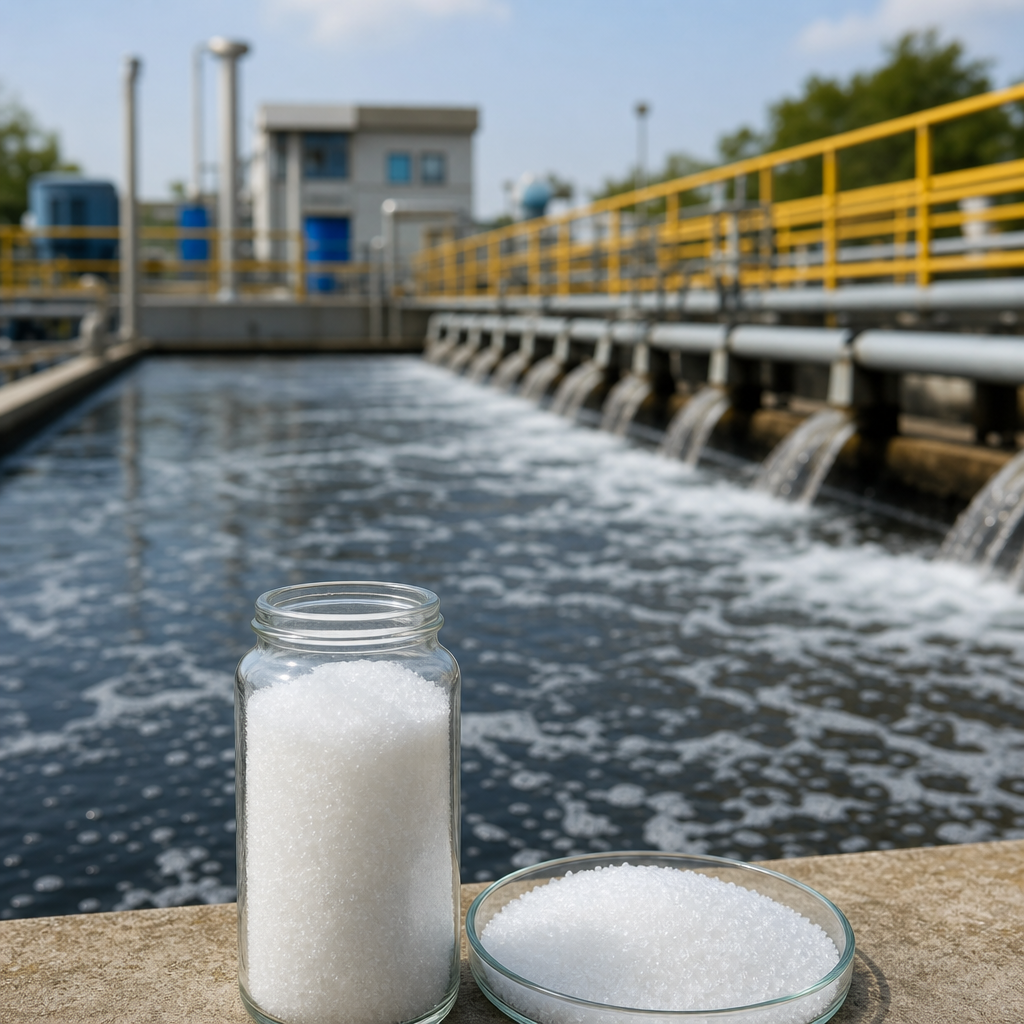
Polymers are central to modern water conservation technologies because they can absorb, filter, seal, separate, and deliver water with a level of control that traditional materials rarely match. In practical terms, a polymer is a large molecule built from repeating units, and that simple structure gives engineers enormous flexibility. By changing the monomer, molecular weight, crosslink density, crystallinity, or additive package, manufacturers can create materials that swell in soil, line reservoirs, strengthen irrigation pipes, improve membrane performance, or capture contaminants from wastewater. I have worked with polymer-based liners, piping systems, and membrane components on water efficiency projects, and the pattern is consistent: when the material is selected correctly, polymers reduce losses, extend asset life, and lower the energy needed to move or treat water.
Water conservation technologies include any system designed to reduce water use, prevent leakage, enable reuse, improve storage, or make irrigation more precise. That definition covers agricultural drip systems, municipal distribution networks, wastewater reclamation plants, rainwater harvesting tanks, desalination membranes, and erosion control products that help landscapes retain moisture. The topic matters because agriculture accounts for about 70 percent of global freshwater withdrawals, according to the Food and Agriculture Organization, while aging urban infrastructure loses vast volumes through leakage. At the same time, climate variability is stressing water supplies in both dry and historically water-rich regions. In this context, polymers are not a niche material category. They are a core enabler of environmental and sustainable applications across the entire water cycle.
Understanding how polymers improve water conservation starts with understanding performance mechanisms. Some polymers act as barriers, such as high-density polyethylene geomembranes that stop seepage in canals and reservoirs. Some act as transport materials, such as PVC, HDPE, PEX, and polypropylene pipes that deliver water with lower corrosion risk than metal. Others act as selective interfaces, such as polyamide thin-film composite membranes used in reverse osmosis. Still others function as active water managers, including superabsorbent polymers in soils, flocculants in treatment plants, and hydrophilic coatings that reduce fouling. This hub page explains those applications comprehensively and connects them into one practical framework: conserve water at the source, move it efficiently, use it precisely, recover it after use, and store it safely for later demand.
Polymer barriers and storage systems reduce seepage losses
One of the fastest ways to save water is to stop it from escaping before it is ever used. Open canals, farm ponds, industrial lagoons, and municipal reservoirs can lose substantial volumes through seepage into surrounding soils. Polymer liners address that problem directly. High-density polyethylene, linear low-density polyethylene, and polyvinyl chloride geomembranes are widely used because they provide low permeability, chemical resistance, and field-weldable seams. In irrigation districts, lining earthen canals with geomembranes can dramatically reduce conveyance losses, especially in sandy or fractured soils where infiltration is high. In reservoir covers and floating covers, reinforced polymer films also limit evaporation while improving water quality by reducing algae growth and sunlight exposure.
Material selection matters. HDPE is often favored for larger installations because of strong chemical resistance and long service life, but it is relatively stiff, which can complicate deployment around irregular geometries. LLDPE offers more flexibility and elongation, which helps in settlements or uneven subgrades. PVC can be easier to fabricate in some smaller systems but may have different plasticizer and long-term aging considerations. In every case, the conservation benefit depends on installation quality: subgrade preparation, seam testing, anchor trench design, puncture protection, and ultraviolet exposure management determine whether the barrier performs for decades or fails early. From a sustainability standpoint, the water saved over the service life usually far outweighs the material footprint, especially in water-stressed regions.
Polymer pipes and fittings improve distribution efficiency
Water utilities and irrigation operators do not conserve water if treated or pumped water leaks out of the network before reaching the user. Polymers improve distribution efficiency because they resist corrosion, scale, and many soil-related degradation mechanisms that affect metallic systems. Common materials include PVC and oriented PVC for municipal mains, HDPE for flexible buried lines and trenchless rehabilitation, PEX for building plumbing, and polypropylene random copolymer in some hot and cold systems. Their smooth internal surfaces help maintain hydraulic performance by reducing roughness buildup, and properly fused or gasketed joints can create highly reliable connections that limit leakage.
In my experience on retrofit work, polymer pipe often delivers the best conservation value where utilities are battling non-revenue water caused by a mix of old cast iron, poor joints, and corrosive soils. HDPE is especially useful in leak-prone areas because heat fusion creates monolithic systems with fewer mechanical weak points. PVC remains common because it balances cost, strength, and familiarity for contractors. Trenchless cured-in-place pipe, while a composite system rather than a simple thermoplastic pipe, also relies on polymer chemistry to rehabilitate aging sewers and water lines without full excavation. That matters for sustainability because rehabilitation can restore hydraulic integrity with lower disruption, less spoil generation, and reduced replacement water loss during prolonged construction.
Precision irrigation depends on polymer components
Agriculture is where polymer-based water conservation becomes most visible. Drip irrigation tubing, emitter housings, micro-sprinkler components, filtration vessels, and pressure-regulating parts are overwhelmingly polymer-based because these materials are lightweight, chemically resistant, and economical at scale. Drip systems deliver water close to the root zone rather than wetting the entire soil surface, which reduces evaporative losses and runoff. Pressure-compensating emitters, often built with elastomeric or flexible polymer labyrinth designs, help maintain uniform application across uneven terrain. That uniformity matters because overwatering one section to compensate for underperformance elsewhere wastes water, fertilizer, and pumping energy.
Polymers also improve irrigation through soil conditioning. Superabsorbent polymers, commonly crosslinked polyacrylates or polyacrylamide-based formulations, can absorb many times their weight in water and release it gradually near roots. They are most useful in high-value crops, landscaping, nursery production, and arid soils with low water-holding capacity. They are not a substitute for sound irrigation scheduling, and they do degrade over time, but when used appropriately they can reduce irrigation frequency and buffer plants during dry intervals. Mulch films, another polymer application, suppress evaporation and weed competition; biodegradable options are expanding, though field performance and breakdown consistency still vary by climate and soil biology.
Membranes and treatment polymers enable water reuse
Water conservation is not only about using less fresh water once. It is also about recovering water after use and returning it to service safely. Polymer membranes are foundational here. Reverse osmosis systems generally rely on thin-film composite polyamide membranes to remove dissolved salts, while ultrafiltration and microfiltration systems often use polyethersulfone, polysulfone, polyvinylidene fluoride, or polypropylene. These materials are engineered for pore structure, flux, fouling resistance, and chemical tolerance. In municipal wastewater reuse, membrane bioreactors combine biological treatment with polymer membranes to produce high-quality effluent suitable for nonpotable reuse and, with advanced polishing, indirect or direct potable reuse frameworks.
Other treatment polymers also contribute. Coagulant aids and flocculants, such as anionic or cationic polyacrylamides, improve solids removal so downstream filters run more efficiently and consume less backwash water. Ion-exchange resins, which are polymeric matrices with functional groups, selectively remove hardness, nitrate, or other ions. Adsorptive polymer media and chelating resins are used in industrial water recycling to recover metals and reduce discharge volumes. Fouling remains the operational challenge. A membrane that saves water on paper can lose value if scaling, biofouling, or organic deposition drive frequent cleaning or replacement. That is why pretreatment design, cleaning protocols, and material compatibility are as important as membrane selection itself.
Key polymer applications across environmental and sustainable water systems
| Application | Common polymer materials | Primary water-saving mechanism | Typical example |
|---|---|---|---|
| Canal and reservoir lining | HDPE, LLDPE, PVC geomembranes | Prevents seepage and sometimes evaporation | Lined irrigation pond in sandy soil |
| Water distribution piping | PVC, HDPE, PEX, PP | Reduces leakage and corrosion-related losses | Municipal main replacement |
| Drip irrigation systems | PE tubing, elastomeric emitter parts | Delivers water directly to root zones | Orchard micro-irrigation network |
| Soil water retention | Crosslinked superabsorbent polymers | Stores and slowly releases moisture | Landscape planting in arid climates |
| Water reuse treatment | Polyamide, PVDF, PES, PS membranes | Enables filtration and desalination for reuse | Membrane bioreactor at a reclamation plant |
| Stormwater control | Geotextiles, geocells, polymer tanks | Promotes infiltration, detention, and capture | Urban rainwater harvesting system |
Stormwater management and green infrastructure use polymer systems
Urban water conservation is increasingly tied to stormwater capture. Instead of treating rainfall as waste to be moved offsite quickly, cities now design systems to store, infiltrate, and reuse it. Polymer geotextiles stabilize soils in bioswales and retention basins, geocells reinforce permeable surfaces, and modular polypropylene tanks create underground storage beneath parking lots or public spaces. These systems reduce runoff peaks while preserving water for irrigation, toilet flushing, cooling tower makeup, or groundwater recharge. In dense developments, polymer storage modules are often the only practical way to add substantial volume without consuming valuable surface land.
The sustainability case is strong, but design must account for clogging, load distribution, maintenance access, and local water quality goals. A rainwater harvesting tank made from polyethylene will not conserve water effectively if first-flush diversion, screening, and overflow controls are poorly designed. Likewise, geotextiles can fail if the wrong apparent opening size is selected for the site soil, causing blinding or piping. The best outcomes come from pairing polymer products with hydrologic modeling, routine inspection, and a realistic maintenance plan. In well-managed projects, stormwater systems reduce potable demand and lower the burden on combined sewers during heavy rain events.
Durability, standards, and lifecycle tradeoffs determine sustainability
Polymers improve water conservation only when durability aligns with the operating environment. Temperature, ultraviolet exposure, disinfectants, internal pressure cycling, soil stress, and chemical contact all affect service life. That is why recognized standards matter. Pipe systems are commonly evaluated under ASTM, AWWA, NSF, and ISO frameworks; geomembranes are tested for tensile properties, puncture resistance, and oxidative induction time; membranes are assessed for salt rejection, permeability, and cleanability. Engineers should ask straightforward questions: What failure mode is most likely, what is the realistic design life, how will the asset be monitored, and can components be repaired or replaced without major water losses?
There are tradeoffs. Polymer production depends on feedstocks, energy, and additives, and end-of-life management is uneven across regions. Microplastic concerns are valid in certain applications, especially where abrasion or fragmentation may occur. Biodegradable polymers sound attractive, but a shorter life is not inherently more sustainable if premature breakdown causes leaks or replacement cycles. The responsible approach is lifecycle thinking: compare the embodied impacts of the material against the water, energy, land disturbance, and chemical savings it enables over years of operation. In most high-performing applications, especially lining, piping, precision irrigation, and advanced treatment, polymers deliver a net environmental benefit because they preserve a resource that is often more constrained than the material itself.
Polymers improve water conservation technologies by addressing the problem from multiple directions at once. They keep water from leaking out of canals, ponds, and pipelines; they deliver water more precisely in agriculture and buildings; they enable treatment systems that reclaim wastewater; and they support stormwater capture in crowded urban environments. The practical advantage is not just material versatility. It is the ability to engineer specific functions into a product, whether that means low permeability in a geomembrane, high salt rejection in a membrane, flexibility in a pipe, or controlled swelling in a soil additive. That level of tunability is why polymers now sit at the center of environmental and sustainable applications across the water cycle.
For readers using this page as a hub, the main takeaway is simple: evaluate polymer water conservation solutions by mechanism, not by category alone. Ask whether the application is trying to prevent loss, improve delivery, increase retention, or enable reuse. Then match the polymer system to the actual operating conditions, installation demands, standards, and maintenance capacity. That approach avoids common mistakes, such as choosing a liner for cost rather than puncture resistance or selecting a membrane for flux while underestimating fouling risk. If you are planning a project, audit where water is being lost first, then prioritize the polymer technologies that stop those losses most effectively and measurably.
Frequently Asked Questions
1. What role do polymers play in water conservation technologies?
Polymers play a foundational role in water conservation because they can be engineered to manage water in highly specific ways. At the most basic level, polymers are large molecules made of repeating building blocks, and that structure gives material scientists exceptional control over properties such as flexibility, strength, permeability, absorbency, chemical resistance, and durability. In water conservation technologies, this means polymers can be designed to absorb and slowly release water in soil, form watertight barriers in reservoirs and irrigation systems, separate contaminants from usable water in filtration membranes, and protect infrastructure from leakage and corrosion.
What makes polymers especially valuable is that they do not serve only one function. A single class of polymer can often be tailored for multiple water-management needs by adjusting its chemistry or physical structure. For example, superabsorbent polymers can capture large amounts of water and release it gradually to plant roots, while high-density polyethylene and similar materials are used to line canals, ponds, and storage systems to reduce seepage losses. Membrane-grade polymers are essential in desalination, wastewater reuse, and industrial filtration because they allow selective passage of water while blocking salts, particles, or microorganisms.
In practical terms, polymers help conserve water by reducing waste, improving storage efficiency, enabling reuse, and increasing precision in delivery systems. Traditional materials such as clay, metal, or untreated fabric can still be useful, but polymers often provide lighter weight, easier installation, more predictable performance, and better long-term control. That combination is why polymers are now central to modern agriculture, municipal water treatment, industrial water management, and landscape irrigation.
2. How do superabsorbent polymers help save water in agriculture and landscaping?
Superabsorbent polymers help save water by acting like miniature reservoirs in the soil. These materials can absorb and retain many times their own weight in water, then release that moisture slowly as surrounding soil dries and plant roots need it. This improves water-use efficiency because instead of irrigation water quickly draining below the root zone or evaporating from the surface, more of it remains available where plants can actually use it.
In agriculture, this can translate into fewer irrigation cycles, better seedling establishment, and more stable soil moisture between watering events. In landscaping, nurseries, and urban green spaces, superabsorbent polymers are often mixed into the root zone to reduce plant stress during hot weather and to improve survival rates after planting. They are particularly useful in sandy soils, which drain quickly, and in regions where water restrictions or drought conditions make every irrigation event more critical.
These polymers also support water conservation indirectly by improving consistency. When soil retains moisture more evenly, plants are less likely to experience repeated drought stress followed by overwatering. That can promote healthier root systems and more efficient nutrient uptake, which means growers may use inputs more effectively overall. However, performance depends on choosing the right polymer type, application rate, and soil compatibility. Not every product behaves the same way, and factors such as salinity, soil texture, and crop type influence results. When selected and applied properly, superabsorbent polymers can be a practical tool for reducing water loss while maintaining plant performance.
3. Why are polymer membranes so important in filtration, desalination, and water reuse?
Polymer membranes are important because they make selective water separation possible at scale. In simple terms, a membrane is a barrier that allows some substances to pass through while blocking others. Polymer-based membranes are widely used in microfiltration, ultrafiltration, nanofiltration, and reverse osmosis systems because they can be manufactured with extremely precise pore structures and surface characteristics. That precision allows engineers to remove suspended solids, bacteria, organic matter, dissolved salts, and other contaminants from water far more efficiently than many conventional separation methods alone.
In desalination, polymer membranes are the heart of reverse osmosis systems that turn seawater or brackish water into fresh water. In wastewater treatment and reuse, they help recover water that would otherwise be discarded, making it possible to reuse treated water for irrigation, industrial processes, or even advanced municipal applications. In industrial settings, polymer membranes support closed-loop or reduced-discharge systems, helping facilities recycle process water and lower total consumption.
Another major advantage is versatility. Different polymers can be selected or modified to improve fouling resistance, mechanical strength, chemical tolerance, and flow performance. Engineers can also incorporate surface treatments or additives to enhance durability and reduce maintenance. This matters because a membrane that lasts longer and operates more efficiently contributes directly to water conservation by reducing downtime, energy waste, replacement frequency, and treatment losses. In many modern water systems, polymer membranes are not just helpful components; they are the enabling technology that makes high-quality water recovery and reuse practical.
4. How do polymers help prevent water loss in storage, transport, and infrastructure systems?
Polymers help prevent water loss by creating reliable barriers and protective components throughout water infrastructure. One of the biggest challenges in water conservation is not just obtaining water, but keeping it from leaking, seeping, evaporating unnecessarily, or becoming contaminated during storage and transport. Polymer materials are extensively used in geomembranes, pipe systems, seals, gaskets, coatings, and tank linings because they combine flexibility with chemical resistance and long-term durability.
For example, polymer liners in reservoirs, canals, ponds, and wastewater lagoons reduce seepage into surrounding soil, which can otherwise account for major hidden losses. In pipelines, polymer-based materials such as polyethylene, PVC, elastomeric seals, and composite coatings help maintain watertight performance while resisting corrosion and mechanical wear. Compared with many traditional materials, polymers are often lighter and easier to install, which can reduce construction complexity and improve quality control in the field.
Polymers also contribute to infrastructure efficiency by extending service life. A system that cracks, corrodes, or degrades quickly is more likely to leak and require frequent repairs, both of which increase water loss and operational cost. Properly selected polymer components can improve resilience under pressure changes, ground movement, UV exposure, and chemical contact. In conservation terms, that means fewer failures, less non-revenue water, and more dependable delivery from source to end use. When utilities, farmers, or industrial operators invest in better polymer-based sealing and lining systems, they are often addressing one of the most overlooked aspects of water conservation: preventing losses before they happen.
5. Are polymers a sustainable choice for water conservation technologies?
Polymers can be a sustainable choice, but the answer depends on the material, the application, and how the product is managed across its full life cycle. From a water-conservation standpoint, polymers often deliver strong sustainability benefits because they reduce leakage, improve irrigation efficiency, enable water reuse, and support advanced treatment systems that expand usable water supplies. If a polymer membrane allows a city to reclaim wastewater, or a polymer liner prevents large seepage losses from a reservoir, the water savings can be substantial and long-lasting.
That said, sustainability should not be judged only by operational performance. It is also important to consider raw material sourcing, manufacturing energy, chemical additives, lifespan, recyclability, and end-of-life handling. Some polymers are more durable and environmentally stable than others, and some applications are better suited to recovery or recycling. In many cases, a long service life is itself a major sustainability advantage, because materials that do not need frequent replacement reduce resource consumption over time.
There is also increasing innovation in this area. Manufacturers and researchers are developing more recyclable polymer systems, lower-impact formulations, improved membrane-cleaning strategies, and application-specific products that deliver performance with less material use. For decision-makers, the best approach is usually to evaluate polymers not as a single category, but as a family of materials with very different environmental profiles. When chosen carefully and used in well-designed systems, polymers can be an effective and responsible part of sustainable water conservation strategies, especially when their water-saving benefits are weighed alongside durability, maintenance needs, and end-of-life planning.