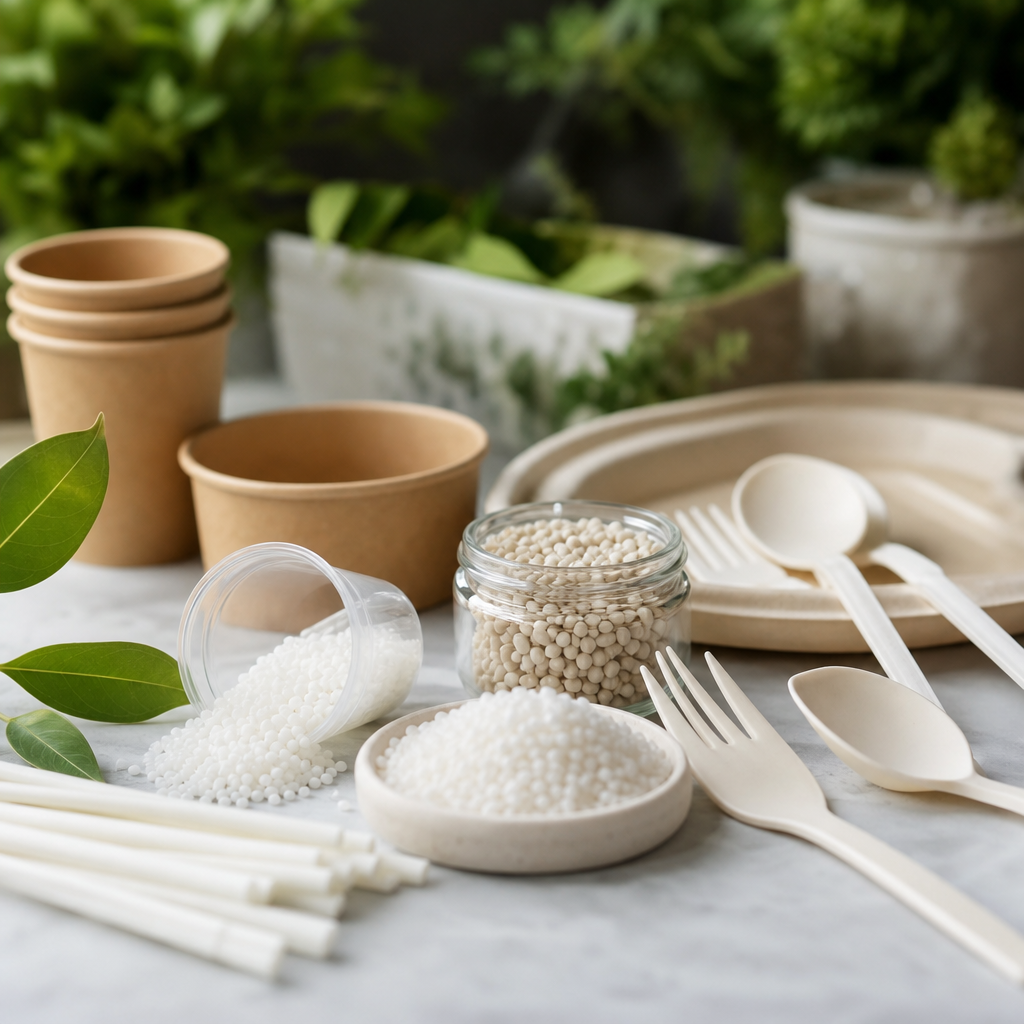
Innovations in polymers for biodegradable consumer products are reshaping how everyday items are designed, used, and discarded, especially as brands and regulators push beyond conventional plastics toward materials that fit circular and lower-impact systems. In this context, a polymer is a large molecule built from repeating units, while biodegradable means a material can be broken down by microorganisms into simpler substances such as carbon dioxide, water, methane, and biomass under specific conditions. Those conditions matter. A package labeled biodegradable may decompose efficiently in industrial composting yet remain persistent in soil, marine environments, or home compost. That distinction is central to responsible product development.
I have worked with packaging teams, materials suppliers, and sustainability leads evaluating alternatives to polyethylene, polypropylene, and polystyrene, and the same question always comes up: which polymers actually perform in real consumer products without creating a worse end-of-life problem? The answer is no longer limited to one material family. The field now includes bio-based drop-in polymers, compostable aliphatic polyesters, regenerated cellulose films, starch blends, polyhydroxyalkanoates, protein-based materials, and polymer systems designed for mechanical or organic recycling pathways. Each innovation addresses a different application window, from food-service ware and mailers to detergent pods, cosmetic packaging, fibers, and agricultural consumer goods.
This topic matters because consumer products sit at the most visible point of the plastics debate. Packaging, personal care items, textiles, wipes, and household disposables are purchased in high volume, handled briefly, and often discarded far from ideal waste systems. According to the OECD, plastic waste generation has continued to rise globally, while leakage and mismanaged waste remain persistent problems. At the same time, the European Union Single-Use Plastics framework, extended producer responsibility policies, and brand-level packaging targets are forcing procurement and design teams to move from pilot projects to commercially viable material transitions. Biodegradable polymers are not a universal fix, but in the right use cases they can reduce contamination, improve organic waste capture, and lower dependence on fossil feedstocks.
As the hub for environmental and sustainable applications in case studies and applications, this article maps the core material innovations, the product categories where they are working, the standards that define legitimate claims, and the tradeoffs that determine success. It is designed to answer practical questions: what polymers are leading the market, where do they fit, how do brands validate performance, and what should teams watch before scaling.
Core polymer innovations driving biodegradable consumer products
The most commercially important biodegradable polymer families today are polylactic acid, polyhydroxyalkanoates, starch-based blends, cellulose-based materials, and biodegradable fossil-derived polyesters such as PBAT and PBS used in blends. Polylactic acid, usually called PLA, is produced from fermented plant sugars and is widely used in thermoformed packaging, cups, films, and fibers. It offers clarity, stiffness, and processability on established converting equipment, which is why it became an early leader in compostable food-service packaging. Its limitations are equally important: standard PLA has relatively low heat resistance and generally requires industrial composting conditions to degrade efficiently. Innovations in stereocomplex PLA, nucleating agents, and chain extenders have improved heat tolerance, toughness, and process stability, expanding use into hot-fill and durable short-life applications.
Polyhydroxyalkanoates, or PHAs, represent one of the most promising advances because they are produced by microbial fermentation and can biodegrade across a wider range of environments than many other biopolymers, including certain soil, marine, and home compost settings, depending on grade and product geometry. Companies such as Danimer Scientific, RWDC, and CJ Biomaterials have advanced PHA resin commercialization for straws, cutlery, films, and coatings. In practice, PHA is rarely a drop-in solution. It can be brittle, expensive, and variable in processing behavior, so formulators often use copolymer design, plasticizers, nucleation control, and blending strategies to tailor toughness and sealing performance.
Starch blends remain relevant because starch is abundant, relatively low cost, and naturally biodegradable. Thermoplastic starch can be combined with biodegradable polyesters to improve flexibility and reduce resin cost in bags, loose-fill packaging, and some molded applications. The challenge is moisture sensitivity and property drift during storage. Effective starch systems therefore depend on compatibilizers, controlled amylose-amylopectin ratios, and barrier coatings when shelf stability matters. Cellulose-based materials, including regenerated cellulose films and cellulose acetate with appropriate formulations, continue to perform well in wraps, labels, and specialty personal care products because they provide renewable content and good transparency. They also benefit from established forestry certification pathways when fiber sourcing is credible.
Biodegradable consumer products increasingly rely on hybrid material design rather than single-resin thinking. A detergent pod film may use polyvinyl alcohol because water solubility is the core function. A coffee capsule may combine a high-barrier compostable shell with oxygen-management additives. A compostable mailer may depend on PBAT-starch blends for toughness, sealability, and puncture resistance. The innovation is not just inventing a new polymer; it is engineering a formulation that survives production, distribution, retail display, consumer use, and the intended disposal route.
Where these polymers work best in consumer product applications
The strongest biodegradable consumer product applications are those with a clear contamination or collection challenge. Food-service packaging is the classic example. Compostable cups, trays, cutlery, produce bags, and caddy liners can help divert food scraps into organics streams when they are accepted by local composting programs and clearly labeled. I have seen municipalities improve food waste participation when kitchen caddy liners hold wet scraps without leaking, because behavior changes when convenience improves. In that case, the polymer is enabling a larger environmental outcome: better organics capture.
Another effective category is agricultural-adjacent consumer products such as plant pots, mulch films sold through retail channels, and garden accessories. Traditional thin plastic mulch is difficult to collect and often contaminated with soil, so biodegradable alternatives can reduce retrieval burdens in certain systems. Standards and local field conditions still matter, but this is a use case where end-of-life friction is a real operational cost. Personal care is also evolving. Brands have explored cellulose-based wipes substrates, PHA-coated paper formats, and molded fiber packs with compostable barriers for soaps and cosmetics. The objective is usually to remove hard-to-recycle multilayer plastics from short-life packaging without sacrificing appearance.
Textiles and nonwovens present both opportunity and caution. Biodegradable fibers such as PLA and certain regenerated cellulose fibers can work in apparel, hygiene layers, tea bags, and wipes. However, if a product is likely to enter conventional textile recycling or wastewater systems, the polymer choice must align with actual infrastructure. Flushability, for example, is a separate engineering standard and should never be inferred from biodegradability alone. E-commerce packaging is another active field. Mailers, air pillows, and protective foams made from starch blends or compostable films appeal to brands trying to reduce persistent plastic waste, but they succeed only when puncture resistance, printability, and sealing are validated through transit testing such as ISTA protocols.
| Application | Common polymer options | Why biodegradable materials fit | Main limitation |
|---|---|---|---|
| Food waste caddy liners | Starch/PBAT blends, PLA blends | Supports organics collection and handles wet waste | Requires access to accepted composting systems |
| Cold food-service packaging | PLA, cellulose films | Clarity, stiffness, printability | Heat resistance can be limited |
| Straws and cutlery | PHA, PLA blends | Short-use items with high litter concern | Cost and toughness must be managed |
| Mailers and flexible packaging | PBAT/starch blends, cellulose laminates | Can replace difficult-to-recycle films in targeted systems | Barrier and puncture performance vary by design |
| Retail garden products | PBS, PHA, starch blends | Useful where soil contamination complicates collection | Field degradation is climate dependent |
The best applications share three traits: short service life, high contamination risk, and a realistic disposal pathway. When those conditions are absent, recyclable durable plastics or reusable systems may be better choices. That is why application screening is more important than marketing claims.
Performance, standards, and how brands avoid greenwashing
Biodegradable claims are credible only when they are tied to recognized standards and a specific environment. For industrial compostability, ASTM D6400 and EN 13432 are the benchmarks most packaging teams encounter. These standards evaluate disintegration, biodegradation, ecotoxicity, and heavy metals within defined composting conditions. For plastics used as coatings or films on paper substrates, related standards may apply depending on product construction. Home compostability has separate certification schemes, often with more demanding temperature assumptions because home systems are cooler and less controlled than industrial facilities.
In client reviews, I insist that teams separate four questions: is the polymer bio-based, is the finished product biodegradable, under what conditions, and is there infrastructure to handle it? A material can be bio-based and not biodegradable, like bio-PE. It can be biodegradable but derived partly from fossil feedstocks, like some PBAT-containing blends. It can pass a compostability standard in a thin film but fail as a thick injection-molded article because geometry affects breakdown rate. And even a certified item can create confusion if local composters do not accept it. Those are not academic distinctions; they determine whether a launch succeeds or backfires.
Testing must also cover functional performance. For packaging, that means oxygen transmission rate, water vapor transmission rate, seal strength, dart impact, coefficient of friction, migration compliance for food contact, and shelf-life validation. For molded items, heat deflection temperature, creep, stiffness, and notched Izod impact are common decision points. Brands that skip these checks often discover failure in the market: warped lids, brittle utensils, blocked packing lines, or barrier loss leading to stale product. The strongest case studies combine end-of-life claims with hard performance data and third-party certification marks from organizations such as TÜV Austria, BPI, or DIN CERTCO.
Clear labeling is equally critical. Consumers cannot be expected to interpret resin chemistry. Effective on-pack communication specifies whether the item is industrially compostable, home compostable, recyclable where facilities exist, or intended for another route. Simple disposal icons, region-specific guidance, and QR-linked instructions reduce contamination and build trust.
Commercial case studies, supply chain realities, and what comes next
Several high-profile launches show both the promise and limits of biodegradable polymers in consumer products. Compostable coffee pods gained traction because coffee grounds are organic waste and pods are small, contamination-prone items. Success depended on barrier engineering, machine compatibility, and consumer education. In food delivery, compostable cutlery and containers spread quickly where city ordinances and venue waste sorting supported them, but programs stumbled when mixed waste systems dominated. In personal care, brands using molded fiber packs with compostable coatings often achieved strong consumer acceptance because the sustainability story was visible, tactile, and easy to understand. Still, many had to refine sealing windows and moisture resistance before scaling.
Supply chain maturity remains the main commercial constraint. Resin pricing for PHA and specialty compostable blends is still higher than commodity polyethylene or polypropylene, and converter learning curves add cost. Feedstock volatility, limited regional compounding capacity, and inconsistent certification timelines can delay launches. I have seen projects miss retail resets because a seemingly minor issue such as seal jaw temperature range was discovered too late. Successful teams manage this by qualifying multiple resin sources, designing around available equipment, and running pilots under real production conditions instead of relying on lab samples.
Looking ahead, the most important innovations are likely to come from three directions. First, better barrier systems will expand biodegradable polymers into higher-value food and personal care packaging. Second, fermentation advances and scale economies will lower the cost of PHAs and other next-generation resins. Third, digital product passports and improved waste sorting will make disposal instructions more precise, reducing contamination and strengthening the business case for certified compostable formats. Enzymatic recycling and coated paper alternatives will also compete for the same applications, so biodegradable polymers will need to win on total system fit, not novelty.
The key takeaway is simple: innovations in polymers for biodegradable consumer products are most effective when material science, product design, certification, and waste infrastructure are planned together. The best results come from matching the polymer to a specific use case, validating performance with recognized standards, and communicating disposal clearly. For sustainability teams building an environmental applications roadmap, this category deserves serious attention because it solves real problems in food waste capture, contaminated packaging, and short-life consumer goods. Use this hub as the starting point, then evaluate each application through the lens of function, evidence, and end-of-life reality before you scale.
Frequently Asked Questions
1. What are biodegradable polymers, and how are they different from conventional plastics?
Biodegradable polymers are materials made of long chains of repeating molecular units that can be broken down by microorganisms into simpler substances such as carbon dioxide, water, methane, and biomass when exposed to the right environmental conditions. That distinction is important because biodegradability is not simply about a product disappearing over time. It depends on the chemistry of the polymer, the presence of microbes, moisture, temperature, oxygen levels, and the disposal environment itself. In other words, a biodegradable polymer is designed to interact with biological systems in a way that enables decomposition under defined conditions, whereas most conventional petroleum-based plastics are engineered for durability and resist microbial breakdown for very long periods.
In consumer products, this difference matters because traditional plastics such as polyethylene, polypropylene, and polystyrene often persist in landfills, waterways, and natural environments long after use. By contrast, newer biodegradable polymers are being developed to deliver practical performance during a product’s useful life while offering an improved end-of-life pathway when managed properly. Common examples include polylactic acid (PLA), polyhydroxyalkanoates (PHAs), starch blends, cellulose-based materials, and certain biodegradable polyesters such as PBAT or PBS in specific formulations. Each has its own balance of flexibility, strength, heat resistance, barrier performance, and processing behavior.
It is also important to separate the idea of “biodegradable” from “bio-based.” A polymer can be made from renewable feedstocks and still not biodegrade easily, and a polymer can be biodegradable even if some of its raw materials are fossil-derived. The most meaningful evaluation looks at the full material system: where it comes from, how it performs, whether it can be collected and sorted effectively, and what happens after disposal. Innovations in this field are increasingly focused on making biodegradable polymers more functional, more scalable, and more compatible with realistic waste management systems rather than relying on broad environmental claims alone.
2. What recent innovations are making biodegradable polymers more practical for consumer products?
One of the biggest advances is improved material engineering. Early biodegradable plastics often struggled with brittleness, low heat tolerance, limited shelf life, or inconsistent performance in real-world applications. New polymer formulations are overcoming many of these issues through copolymer design, molecular weight control, reactive extrusion, and blending with additives or natural fibers. These innovations are making biodegradable materials more suitable for packaging films, food service ware, personal care containers, textile applications, and molded household goods that need a better combination of strength, flexibility, clarity, and barrier protection.
Another major area of progress is fermentation and bio-manufacturing. Materials such as PHAs are gaining attention because they can be produced by microorganisms using renewable feedstocks, including sugars, plant oils, and in some cases industrial byproducts or waste streams. Researchers and manufacturers are improving strain selection, fermentation yields, downstream processing, and purification methods to lower production costs and expand commercial scale. At the same time, work on next-generation PLA and other aliphatic polyesters is delivering better thermal stability and processability, allowing these materials to run more efficiently on conventional plastic manufacturing equipment.
There is also strong innovation in coatings, multilayer systems, and functional additives. For biodegradable consumer packaging to compete with traditional materials, it often needs resistance to moisture, grease, oxygen transfer, or mechanical damage. Developers are creating compostable barrier layers, mineral-filled compounds, fiber-reinforced biopolymer composites, and surface treatments that enhance performance without undermining end-of-life goals. In parallel, digital material tracking, certification systems, and design-for-compostability frameworks are helping brands choose polymers more strategically. The result is that biodegradable polymers are no longer confined to niche applications; they are increasingly being tailored for specific product categories with measurable technical and environmental objectives.
3. Are biodegradable consumer products really better for the environment?
The honest answer is that biodegradable consumer products can offer environmental benefits, but those benefits depend heavily on product design, feedstock sourcing, manufacturing impacts, and waste management infrastructure. A biodegradable polymer is not automatically the most sustainable option in every case. Environmental performance should be assessed through a broader life-cycle perspective that considers raw material extraction, land use, energy consumption, greenhouse gas emissions, product performance, transport, and end-of-life treatment. In some applications, a well-designed durable reusable item may outperform a biodegradable single-use product. In others, biodegradable materials may provide a meaningful advantage, particularly where contamination with food or organic waste makes traditional recycling difficult.
Biodegradable polymers can be especially useful in applications where composting is a realistic pathway, such as food-contaminated packaging, compostable liners, agricultural films, or certain service items collected with organics. In these cases, the material can help divert waste from landfill and support cleaner organic waste streams, provided it meets accepted standards and is processed in appropriate facilities. There is also growing interest in reducing long-term persistence in specific environments, but this must be approached carefully. Claims about marine biodegradability, soil breakdown, or home compostability should be supported by rigorous testing because conditions vary greatly and consumer misunderstanding is common.
From a practical sustainability standpoint, the best biodegradable products are those designed for a specific use case, verified against recognized standards, and integrated into a clearly communicated disposal system. If a biodegradable item ends up in a waste stream that cannot process it properly, much of its potential benefit may be lost. That is why innovation is increasingly moving beyond material science alone toward systems thinking. The environmental value of biodegradable polymers is strongest when chemistry, product design, labeling, collection, and treatment infrastructure all work together.
4. What challenges still limit the wider adoption of biodegradable polymers in everyday products?
Cost remains one of the most significant barriers. Conventional plastics benefit from decades of industrial optimization, massive production volumes, and highly established supply chains. Many biodegradable polymers still cost more to produce, especially when feedstocks, fermentation systems, purification steps, or specialized compounding are involved. For consumer brands operating on thin margins, even a modest increase in material cost can slow adoption. However, this gap is narrowing in some markets as production scales up, regulatory pressure increases, and demand for lower-impact materials grows.
Performance is another challenge. Consumer products need to survive shipping, storage, temperature changes, humidity, and repeated handling. Some biodegradable polymers may have lower heat resistance, reduced moisture barriers, shorter shelf stability, or narrower processing windows compared with conventional plastics. This does not mean they are ineffective; it means they must be carefully matched to the application. Ongoing innovation is improving these properties, but brands still need to validate whether a biodegradable polymer can meet performance expectations without compromising product protection, safety, or user experience.
Infrastructure and communication are equally critical obstacles. Many consumers assume that a biodegradable product will break down anywhere, including in backyard conditions, landfill, or the natural environment, which is often not true. Industrial composting facilities are not available in all regions, and municipal systems may not accept all certified compostable items. In addition, biodegradable plastics can contaminate mechanical recycling streams if they are not properly identified and separated. This makes accurate labeling, standards compliance, waste stream compatibility, and public education essential. Wider adoption will depend not only on better polymers, but also on better collection systems, clearer disposal instructions, and more coordinated policy frameworks that align material innovation with real-world end-of-life options.
5. How should brands and consumers evaluate claims about biodegradable polymer products?
Both brands and consumers should start by looking for precision rather than broad marketing language. Terms like “eco-friendly,” “green,” or even “biodegradable” can be misleading if they are not tied to specific test methods, timeframes, and disposal conditions. A credible product claim should explain whether the material is industrially compostable, home compostable, soil biodegradable, or biodegradable only under certain controlled conditions. It should also reference recognized standards or certifications where relevant, such as standards for compostability, disintegration, and ecotoxicity. This level of detail helps distinguish scientifically supported claims from vague branding.
Brands should also evaluate whether the polymer fits the intended product system. That means asking practical questions: Will the item be used with food or organics? Is composting infrastructure available in the target market? Could the material interfere with recycling streams? Does the packaging need barrier performance or heat resistance that the polymer can realistically deliver? Is the feedstock renewable, responsibly sourced, and traceable? Strong decision-making in this area requires collaboration across procurement, packaging engineering, compliance, waste management, and sustainability teams. The goal is not to choose a biodegradable polymer just because it sounds better, but to select a material that improves the overall environmental profile of the product in a measurable way.
Consumers, meanwhile, should follow the disposal instructions provided rather than assuming the product will harmlessly break down anywhere. A certified compostable cup, mailer, or food container may still require access to an industrial composting program. If that program does not exist locally, disposal outcomes will differ from the ideal scenario described on the label. As innovations in polymers continue to reshape biodegradable consumer products, the most reliable approach is informed scrutiny: look for standards, understand the end-of-life pathway, and treat biodegradability as one important attribute within a larger sustainability picture rather than as a stand-alone guarantee.