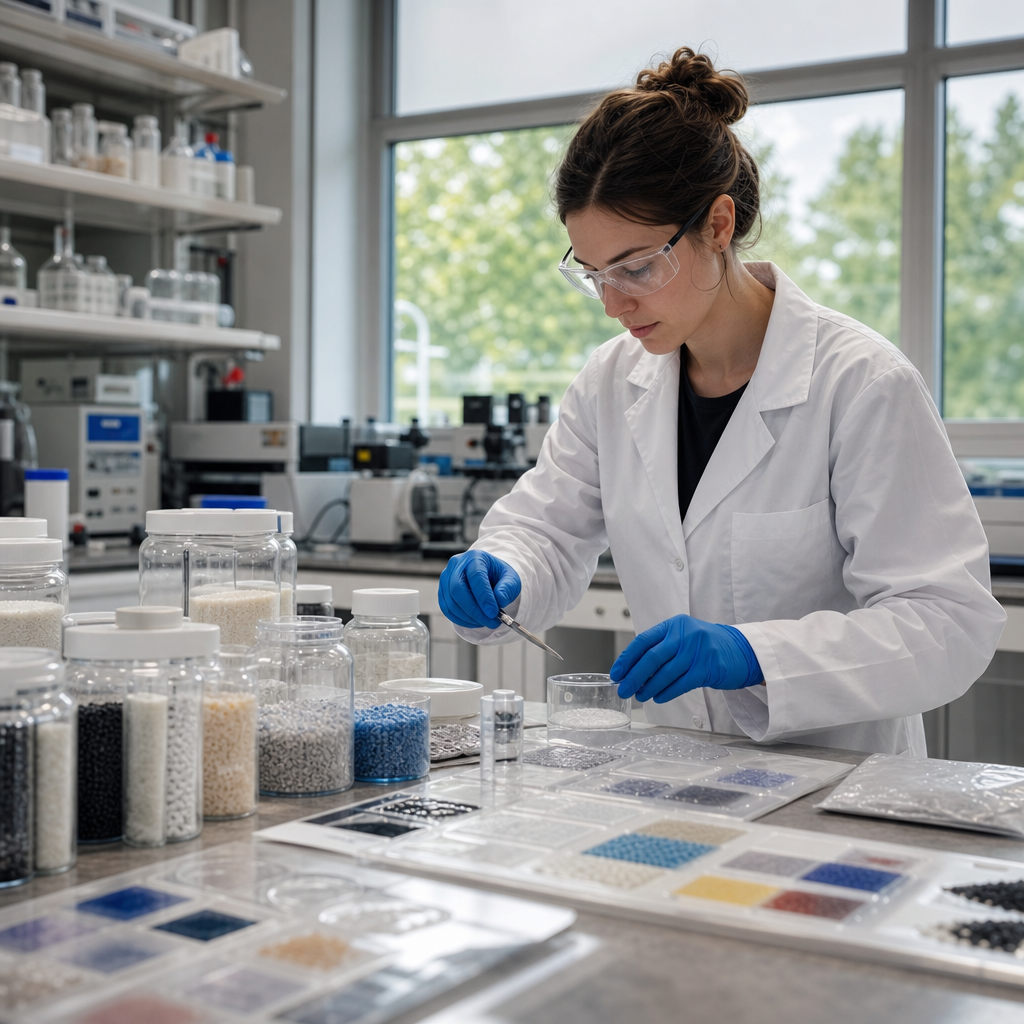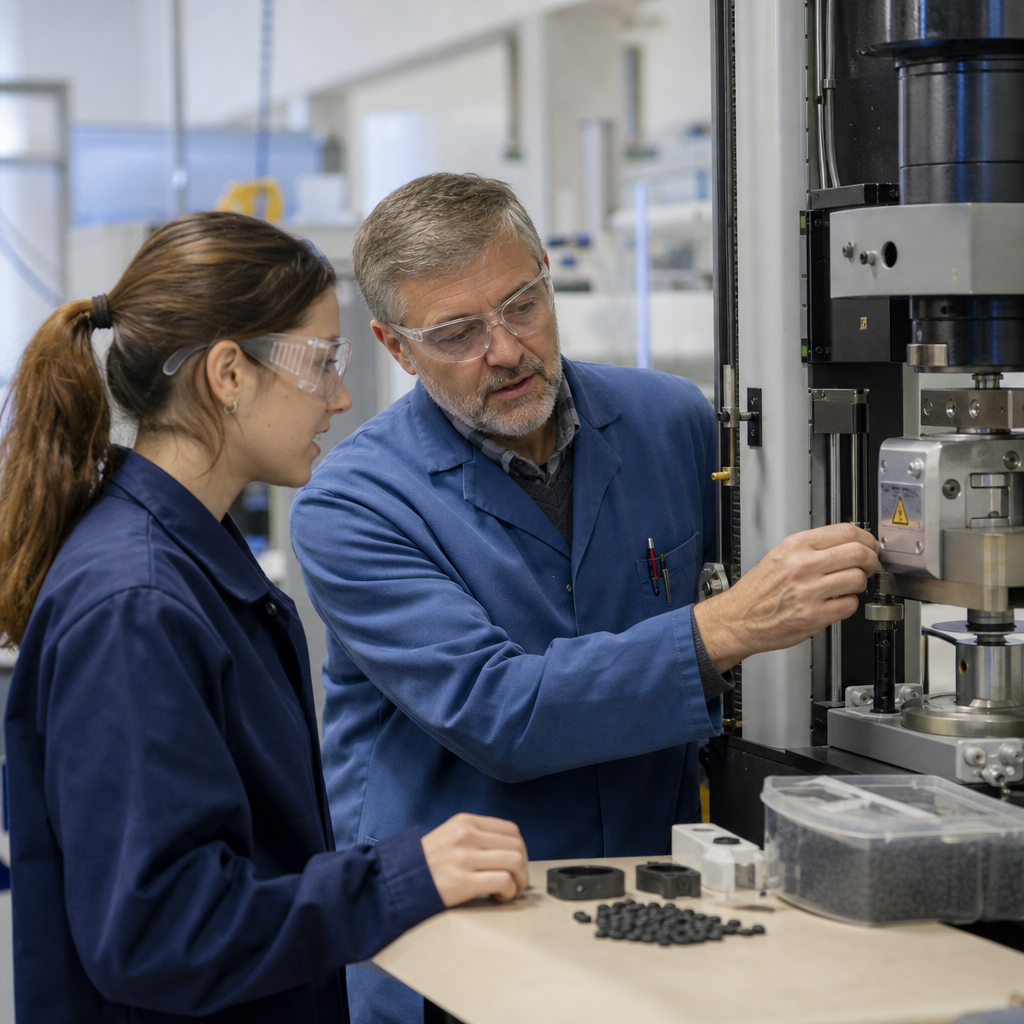
Mentorship is one of the most practical accelerators in polymer engineering careers because it converts classroom knowledge, plant-floor observations, and research experience into better decisions, stronger networks, and faster professional growth. In polymer engineering, mentorship means a structured or informal relationship in which a more experienced professional helps a student, early-career engineer, or transitioning specialist build technical judgment, career direction, and workplace effectiveness. That guidance may cover materials selection, processing methods, testing standards, project management, publication strategy, certification planning, or the realities of advancing in manufacturing, product development, quality, consulting, or academia.
This matters especially in polymer engineering because the field is broad and highly applied. A graduate may understand viscoelasticity, crystallinity, diffusion, rheology, and degradation mechanisms, yet still struggle with practical questions: Which processing role builds the strongest foundation? How do you move from compounding to R&D? When should you pursue Six Sigma, a professional engineering license, or a specialized master’s degree? How do you present failure analysis work without assigning blame? I have seen capable engineers stall not because they lacked intelligence, but because they lacked context. Mentors provide that context.
Career development in this discipline also depends on decisions that have long timelines. Choosing between thermoplastics and thermosets, extrusion and injection molding, medical devices and automotive, or technical sales and process engineering can shape the next decade of work. A strong mentor helps an engineer understand the tradeoffs behind those paths, including compensation patterns, regulatory burdens, innovation pace, travel expectations, and opportunities for leadership. Good mentorship does not simply tell someone what to do. It sharpens how they evaluate options.
As a hub for career development within educational resources, this guide explains how mentorship works in polymer engineering, where to find it, how to use it well, and how organizations can build programs that produce measurable results.
Why mentorship has outsized value in polymer engineering
Polymer engineering sits at the intersection of materials science, mechanical performance, chemistry, manufacturing, quality systems, and commercial constraints. That complexity makes mentorship unusually valuable. In a single product program, an engineer may need to evaluate melt flow index data, compare DSC and TGA results, interpret ASTM or ISO test standards, work with tooling engineers on warpage, and explain resin substitutions to procurement or customers. Books and coursework establish fundamentals, but mentors help engineers connect those fundamentals to decisions under cost, schedule, and compliance pressure.
In practice, mentorship reduces avoidable mistakes. A mentor might explain why a tensile result changed after drying conditions shifted, why screw design matters in compounding trials, or why a root-cause analysis should examine moisture, residence time, shear history, and regrind percentage before blaming a resin lot. That type of pattern recognition usually comes from years of troubleshooting. Learning it through guidance is faster and less expensive than learning only through failed runs, scrap, or customer complaints.
Mentorship also improves communication, which is often the hidden differentiator in technical careers. The best polymer engineers do more than calculate shrinkage or specify a glass transition target. They translate technical risk into language that managers, operators, suppliers, regulatory teams, and clients can act on. I have watched mentees improve dramatically once they learned how to summarize a trial plan, define acceptance criteria, and document assumptions clearly. Those skills influence promotions as much as technical competence does.
For students and early-career professionals, mentorship further closes the gap between academic preparation and industrial expectations. University programs may cover polymerization, morphology, composite behavior, and processing science, but they cannot fully replicate production realities such as line downtime, customer PPAP requirements, CAPA documentation, validation protocols, or supplier qualification. A mentor can explain which experiences employers value most and how to sequence them into a credible career story.
What a mentor can help you achieve at each career stage
The role of a mentor changes as a polymer engineer progresses. For students, mentorship often focuses on orientation. A professor, lab supervisor, or industry contact can help interpret the landscape: materials development, additive manufacturing, elastomers, packaging, aerospace composites, medical polymers, sustainability, and recycling all require different mixes of knowledge. At this stage, the best mentoring questions are concrete: Which internships build transferable skills? Which software tools should I know? How important are rheometry, DMA, DSC, FTIR, and SEM experience for the jobs I want?
For entry-level engineers, mentorship becomes more operational. New hires need help understanding process windows, design of experiments, gauge repeatability, validation, change control, and how production priorities affect technical decisions. In injection molding, for example, a mentor can teach how to distinguish a material issue from a tooling or machine setting issue by reviewing hold pressure, melt temperature, mold temperature, venting, gate location, and part geometry. In extrusion, a mentor may focus on die swell, drawdown balance, cooling rate, and line speed interactions.
Mid-career engineers usually need a different kind of support: positioning. They often face choices about whether to deepen expertise or broaden responsibility. A mentor can help evaluate paths into project leadership, people management, supplier quality, technical marketing, applications engineering, regulatory affairs, or consulting. This is where mentorship often creates the largest income and influence gains, because many strong technical contributors are never taught how to build visibility, sponsor cross-functional initiatives, or document business impact.
Senior engineers and managers benefit from mentorship too, although it may look more like peer advising or executive coaching. At advanced stages, the focus may shift to succession planning, innovation governance, patent strategy, customer escalation management, and mentoring others.
| Career stage | Typical mentorship focus | Useful examples in polymer engineering |
|---|---|---|
| Student | Exploring paths and building fundamentals | Choosing internships in compounding, testing, or processing; selecting courses in rheology or composites |
| Early career | Technical judgment and workplace execution | Running DOE trials, interpreting DSC or FTIR data, writing deviation reports, troubleshooting molding defects |
| Mid-career | Specialization versus leadership decisions | Moving from process engineering to R&D, managing customer programs, leading supplier qualification |
| Senior level | Influence, strategy, and talent development | Building mentoring systems, guiding technology roadmaps, coaching teams on risk and compliance |
How to find the right mentor in industry, academia, and professional networks
The best mentor is not always the most senior person in the room. In polymer engineering, the right mentor is someone with relevant experience, sound judgment, and a willingness to be candid. Start by defining the problem you want help solving. If you want to enter medical device polymers, a plant manager in commodity packaging may be generous but not ideal. If you want to improve failure analysis skills, a professor focused mainly on synthesis may not be your best match. Fit matters more than prestige.
Inside companies, high-value mentors are often found in adjacent functions. A process engineer can learn immensely from a quality manager who understands complaint trends, a tooling specialist who sees recurring design flaws, or a senior technician who recognizes machine behavior before the data confirms it. Some of the most effective mentoring I have seen came from experienced operators and lab staff whose practical knowledge was deeper than their titles suggested. Respect for hands-on expertise is essential in this field.
Outside the workplace, universities, alumni groups, technical societies, and conferences are reliable sources. Organizations such as SPE, formerly the Society of Plastics Engineers, SAMPE, ACS divisions relevant to polymer science, and regional manufacturing associations frequently create mentoring opportunities through events, student chapters, webinars, and technical sections. Trade shows including NPE, K Fair, MD&M events, and specialized composites conferences are also productive because conversations there are anchored in real applications, not generic networking.
When reaching out, be specific. Instead of asking, “Will you mentor me?” ask, “I am a quality engineer transitioning toward polymer product development, and your work in medical-grade thermoplastics is directly relevant. Would you be open to a 30-minute conversation about skills I should build over the next year?” Specific requests are easier to accept and more likely to start a useful relationship. Many long-term mentorships begin with one focused discussion.
How to make mentorship productive and measurable
Effective mentorship does not run on good intentions alone. It needs structure. The strongest relationships start with a defined objective, meeting rhythm, confidentiality expectations, and a shared understanding of what success looks like. In polymer engineering careers, useful goals might include leading a validation project, publishing a technical paper, improving statistical analysis skills, earning a promotion, or transitioning from lab testing into process development. Vague goals produce vague outcomes.
Preparation matters. A mentee should bring real questions, data, and decisions to each conversation. If you are troubleshooting brittle failure in a polycarbonate blend, summarize the formulation, processing conditions, drying records, fracture observations, and test results. If you want career advice, bring a resume, target roles, and examples of work you can discuss in terms of outcomes. Mentors can help most when the problem is concrete.
Measurement should be simple but real. Track milestones such as completed projects, expanded responsibilities, conference presentations, certifications, promotions, reduced scrap, shorter cycle times, better first-pass yield, or improved technical writing. Not every benefit is easily quantified, but many are. In one manufacturing environment I supported, a mentoring approach that paired junior process engineers with experienced troubleshooting leads cut time-to-independence significantly because newer engineers learned a standard method for diagnosing splay, sink, flash, burn marks, and dimensional instability.
There are also limits to mentorship. A mentor is not a therapist, recruiter, or guaranteed sponsor. Some mentors are excellent technical teachers but weak career strategists. Others are generous with networking but less helpful on day-to-day engineering decisions. Use more than one perspective when stakes are high. A mentoring network is usually stronger than a single mentoring relationship.
Common mentorship challenges and how to handle them
Not every mentoring relationship works. The most common failure points are poor alignment, inconsistent follow-through, excessive deference, and advice that is outdated for the sector you want to enter. Polymer engineering changes quickly in areas such as bio-based materials, advanced recycling, simulation tools, lightweighting strategies, and medical or food-contact compliance. A mentor whose experience is strong but narrow may unintentionally steer a mentee toward yesterday’s market.
Another challenge is hierarchy. Early-career engineers sometimes assume they must agree with every suggestion. That is a mistake. Good mentorship welcomes respectful pushback, especially when data conflicts with intuition. If a mentor recommends a path that does not fit your goals, ask clarifying questions about the assumptions behind the advice. For example, a recommendation to stay in manufacturing longer may be sound if you want stronger process intuition, but less useful if your target role values formulation design and publication history.
Time pressure is also real. Engineers in plants, labs, and customer-facing roles work under deadlines. To keep mentorship alive, use a lightweight cadence: a monthly call, a quarterly site visit, or targeted messages tied to specific decisions. Brief, consistent engagement usually beats ambitious plans that collapse after two meetings.
For underrepresented groups in engineering, mentorship may need an added layer of advocacy. Access to honest feedback, visible assignments, and sponsor-level support can affect retention and advancement. Companies that treat mentorship as a formal part of talent development tend to perform better because they reduce the randomness that often shapes opportunity.
How organizations can build mentorship into polymer engineering career development
Organizations should not leave mentorship entirely to chance. In polymer engineering environments, the strongest programs align mentoring with business needs and technical capability building. That means identifying critical roles, mapping the skills those roles require, and pairing people based on development goals rather than convenience. A rotational engineer may need exposure to compounding, molding, test methods, and quality systems, while an R&D scientist may need guidance on scale-up, intellectual property, and customer translation.
Formal programs work best when they include training for mentors, not just mentees. Senior professionals need a clear framework for listening, coaching, giving developmental feedback, and avoiding the trap of creating replicas of themselves. Good programs also recognize that mentorship complements, but does not replace, documentation, standard work, and technical training. If a company lacks robust process knowledge capture, mentorship alone cannot close the gap.
Several practical tools support success: competency matrices, individual development plans, post-project reviews, shadowing schedules, and communities of practice around topics such as extrusion, recycled content, elastomers, additive manufacturing, or analytical testing. Companies should also track outcomes such as retention, internal mobility, time to proficiency, and bench strength for critical technical positions. When leadership sees mentorship linked to faster problem solving and stronger succession pipelines, support becomes easier to sustain.
For professionals building a long-term polymer engineering career, the core lesson is simple: do not treat mentorship as optional or passive. Seek mentors intentionally, define what you need, prepare for every conversation, and measure progress against real career outcomes. For employers, build systems that make knowledge transfer visible and repeatable. In a field where materials behavior, processing variables, and market demands constantly interact, guided learning is not a luxury. It is a competitive advantage.
The best mentorship in polymer engineering does more than answer questions. It develops judgment, confidence, technical credibility, and a clearer sense of direction. It helps students enter the field with stronger awareness, helps early-career engineers avoid common mistakes, helps mid-career professionals navigate inflection points, and helps senior leaders strengthen the next generation. Whether your path leads to manufacturing, product development, quality, research, consulting, or leadership, mentorship shortens the distance between potential and performance.
If you are serious about career development, identify one gap in your polymer engineering journey today and start one focused conversation with someone who has already solved it. That single step often becomes the turning point.
Frequently Asked Questions
What does mentorship in polymer engineering actually involve?
Mentorship in polymer engineering usually involves a more experienced professional helping a student, junior engineer, researcher, or career changer connect technical knowledge to real-world practice. In this field, that can mean discussing material selection, processing methods, testing standards, scale-up challenges, sustainability considerations, quality issues, and the tradeoffs that appear in manufacturing or product development environments. A mentor does not simply provide answers. A strong mentor helps the mentee think more clearly, ask better questions, and understand why certain engineering decisions succeed while others create risk.
In practical terms, mentorship may include reviewing project goals, talking through troubleshooting methods for extrusion, injection molding, compounding, or characterization work, and helping the mentee understand how polymer behavior affects performance, cost, compliance, and manufacturability. It can also include career guidance, such as choosing between roles in R&D, process engineering, technical service, applications engineering, quality, or academia. Some mentorship relationships are highly structured, with regular meetings and defined goals, while others are informal and develop through plant visits, research collaboration, conference networking, or ongoing professional conversations. In all cases, effective mentorship helps turn scattered experience into professional judgment.
Why is mentorship especially valuable in polymer engineering careers?
Mentorship is especially valuable in polymer engineering because the field is both technically complex and highly applied. Polymer engineers rarely succeed by theory alone. They must understand chemistry, material behavior, processing conditions, testing data, design constraints, supplier realities, and production economics at the same time. Many of the most important lessons are learned through experience: why a resin that looks ideal on paper fails in processing, how additives influence long-term performance, when lab results do not translate cleanly to full-scale production, or how to balance innovation with reliability and regulatory requirements. A mentor helps shorten the time it takes to recognize these patterns.
Another reason mentorship matters is that polymer engineering careers can branch in many directions, and early decisions often shape long-term opportunities. A mentor can help someone evaluate whether they are better suited to product development, manufacturing support, failure analysis, materials testing, supplier-facing roles, or advanced research. Just as important, mentors provide context about industry expectations, communication habits, project ownership, and cross-functional collaboration with design, operations, procurement, and quality teams. This guidance helps mentees avoid common mistakes, build credibility faster, and develop a broader understanding of how technical work creates business value. In a field where practical judgment is highly respected, mentorship can accelerate growth more effectively than technical training alone.
How can a student or early-career professional find the right polymer engineering mentor?
Finding the right mentor starts with clarity about what kind of guidance is needed. Some people need technical mentorship in areas such as rheology, compounding, process optimization, or failure analysis. Others need career mentorship focused on internships, graduate study, industry transitions, networking, or workplace communication. Once that need is clear, potential mentors can often be found through university faculty, internship supervisors, research advisors, professional societies, alumni networks, conference events, company training programs, and industry associations related to plastics, rubber, composites, coatings, or materials engineering. The best mentor is not always the most senior person in the room. Often, the most effective mentor is someone with relevant experience who is willing to teach, listen, and provide direct but constructive feedback.
When reaching out, it helps to be specific and professional. Instead of asking someone to “be a mentor,” a better approach is to ask for a short conversation about a focused topic, such as career paths in polymer processing, how to build technical depth in materials selection, or what skills matter most in plant-based engineering roles. If the conversation goes well, the relationship can grow naturally over time. It is also wise to look for alignment in communication style, availability, and values. A strong mentorship relationship should feel useful, respectful, and honest. In many cases, having more than one mentor is ideal, because one person may guide technical development while another offers broader career perspective or leadership advice.
What should a mentee do to make a mentorship relationship successful?
A successful mentee takes ownership of the relationship. That means showing up prepared, asking thoughtful questions, being open to feedback, and following through on agreed actions. In polymer engineering, preparation might include bringing processing data, test results, technical questions, project summaries, or specific career decisions to discuss. Mentors are most helpful when they can react to something concrete. A vague request for advice usually leads to general guidance, while a well-defined challenge allows for deeper insight. For example, asking why a molded part is warping, how to compare candidate resins for impact resistance and chemical exposure, or how to position research experience for an industrial role gives a mentor something meaningful to work with.
It is also important for mentees to respect the mentor’s time and expertise. Regular but efficient communication works best, especially when meetings have a purpose and clear next steps. Good mentees listen carefully, apply what they learn, and report back on outcomes, including what worked and what did not. This creates a more valuable exchange because the mentor can see progress and refine their advice. Just as important, mentees should be honest about goals, uncertainty, and challenges. A mentorship relationship becomes far more effective when the mentee is willing to discuss both technical weaknesses and professional concerns. Over time, this kind of engagement helps build not only competence, but also confidence, judgment, and professional maturity.
Can mentorship help polymer engineers transition into new specialties or leadership roles?
Yes, mentorship can be extremely helpful when a polymer engineer is moving into a new specialty, industry segment, or level of responsibility. Transitions are common in this field. An engineer may move from academic research into manufacturing, from quality into product development, from plastics into elastomers or composites, or from an individual contributor role into team leadership. Each move requires more than technical learning. It requires understanding new workflows, new performance expectations, new decision-making pressures, and often a new vocabulary for communicating with customers, operators, managers, or external partners. A mentor who has already navigated a similar change can help reduce uncertainty and make the transition more strategic.
For technical transitions, a mentor can help identify knowledge gaps, recommend learning priorities, and explain which concepts are most important in practice. For leadership transitions, mentorship becomes equally valuable in areas such as delegation, cross-functional influence, conflict management, project prioritization, and communicating risk without losing credibility. In polymer engineering environments, where decisions can affect safety, cost, product performance, and production efficiency, leadership judgment matters as much as technical expertise. Mentors help emerging leaders develop that judgment by sharing experience, offering perspective on difficult situations, and helping them think beyond immediate technical tasks. As a result, mentorship supports not only entry into the profession, but also long-term advancement and adaptability across the full span of a polymer engineering career.